Acupuncture After ACL Injury and Reconstruction: What a 2026 Review Found
ACL Rehabilitation and Acupuncture: What Needling May Help, What It Cannot Do, and What the Research Leaves Out
An ACL tear is one of the longest recoveries in sports medicine. Whether you have surgery or not, rehabilitation runs for many months, and the hard parts are rarely the ligament itself. They are the pain, the swelling, the quadriceps that will not fire, and the knee that no longer feels like it knows where it is in space.
Patients often ask us whether acupuncture can help with any of that. A narrative review published in Cureus in September 2026 by a team of anatomists at the National and Kapodistrian University of Athens takes the question seriously (Kagkarakis et al., 2026). It looks at what a needle near the knee actually reaches, how needling might change pain, and what the clinical trials in ACL patients show.
The short version: acupuncture may help with symptoms during ACL rehab, and the evidence does not show that it heals a ligament or shortens the road back to sport. Below we walk through what the authors found, then add our own read on what it means in the treatment room.
- A 2026 narrative review in Cureus examined acupuncture as an add-on to rehabilitation after ACL injury and ACL reconstruction (Kagkarakis et al., 2026).
- Needles placed around the knee do not reach the ACL. They reach skin, fascia, muscle, joint capsule tissue, and sensory nerve branches.
- The ACL-specific research is small: a few randomized or controlled trials, a feasibility study, one case report, and studies that combined acupuncture with other treatments.
- Some of those studies report short-term improvements in pain, swelling, range of motion, or function when acupuncture is added to standard rehab (Ding et al., 2020).
- The evidence does not show that acupuncture repairs a ligament, helps a graft incorporate, restores stability, prevents reinjury, or shortens return to sport.
- The authors conclude acupuncture may be considered an optional adjunct for symptom control, never a replacement for structured rehabilitation.
- Our read: the most clinically interesting signal is in the quadriceps, and it is the part of the review that deserves more attention.
Is Pain or a Quiet Quadriceps Slowing Your ACL Rehab?
Acupuncture and dry needling do not heal a ligament, and they are not a substitute for physical therapy. They may help with the pain, swelling, and muscle guarding that limit how much rehab you can do. At Morningside, we focus on the muscles that cross the knee and coordinate with your surgeon and physical therapist so everyone is working from the same plan.
Schedule NowWhat the Review Set Out to Do
This is a narrative review, which means the authors searched the literature and summarized it in prose. It is not a systematic review or a meta-analysis. They searched PubMed through September 8, 2026 for studies of acupuncture or electroacupuncture in ACL injury or ACL reconstruction, then added searches on knee innervation, the anatomy under common acupuncture points, safety, and the broader knee pain literature (Kagkarakis et al., 2026).
The authors are anatomists, and that shapes the paper in a useful way. Their starting question is physical: when a needle goes in near the knee, what tissue is it in, and what nerve is it near? From there the review covers three things:
- The anatomy of the ACL, the sensory nerves of the knee, and the structures under commonly used points.
- The proposed ways needling may change pain.
- The clinical studies in people with ACL injuries, kept separate from studies of knee arthritis and chronic pain.
That last choice matters. A lot of writing on this topic borrows results from knee osteoarthritis research and applies them to ACL patients. The authors state plainly that arthritis evidence does not transfer directly to a torn ligament or a reconstructed graft.
What a Needle Near the Knee Actually Reaches
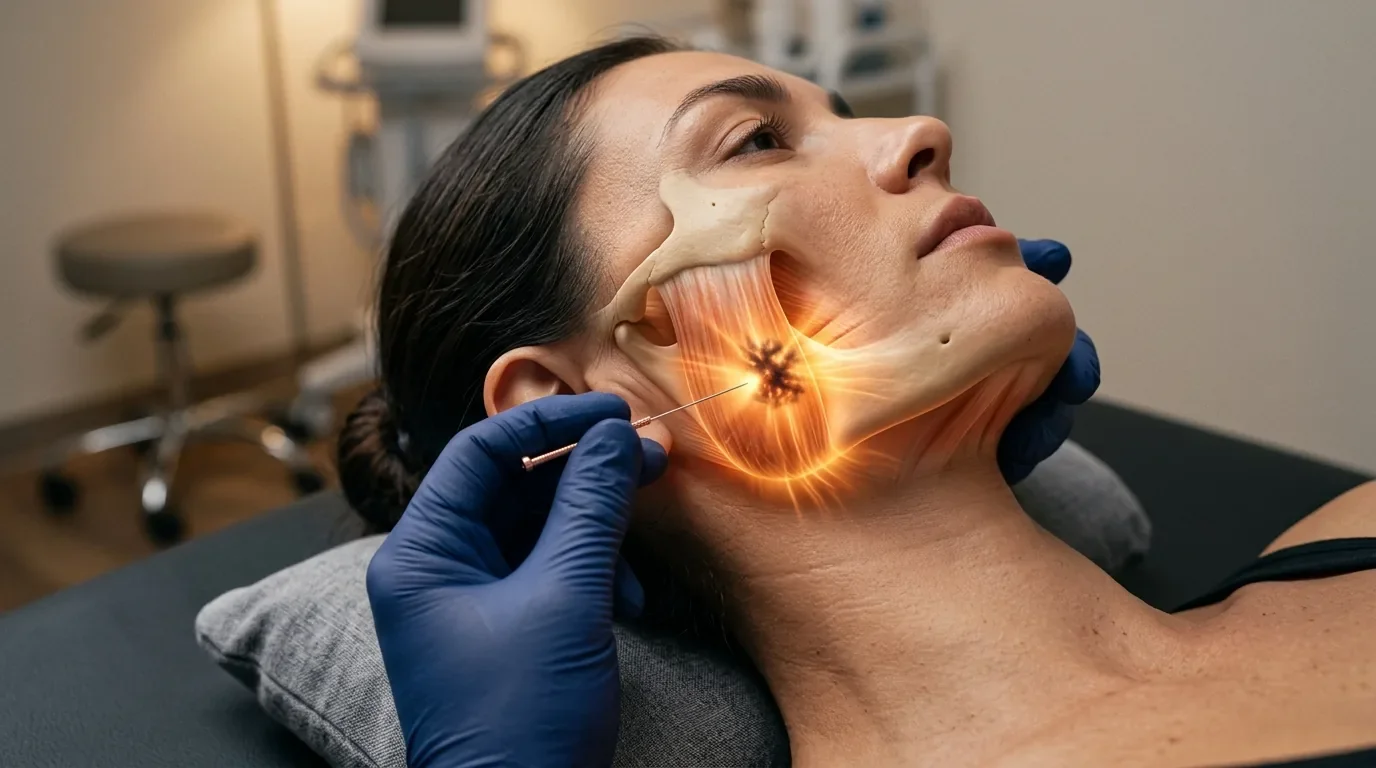
No acupuncture point around the knee reaches the ACL. The ligament sits deep inside the joint, running from the lateral femoral condyle to the front of the tibial plateau. A needle placed at the front or side of the knee passes through skin, subcutaneous tissue, fascia, muscle, tissue around the joint capsule, and small sensory nerve branches.
The review treats this as the central anatomical fact. Those tissues are rich in sensory receptors, and the knee is supplied by an overlapping network of branches from the femoral, sciatic, and obturator nerves. That supports the idea that needling can change sensory input and pain processing. It does not support the idea that needling mechanically or biologically repairs a ligament or a graft (Kagkarakis et al., 2026).
The authors map six commonly used point locations to the structures beneath them:
| Point | Location | What Is Under the Needle | Practical Note After ACL Surgery |
|---|---|---|---|
| ST35 | Depression lateral to the patellar ligament | Patellar retinaculum, anterior capsule, periarticular sensory tissue | A periarticular point, not ACL needling |
| EX-LE4 (Neixiyan) | Depression medial to the patellar ligament | Medial infrapatellar retinacular and capsular tissue, superficial sensory branches | Depth and incision location matter |
| GB34 | Anterior and distal to the fibular head | Close to the common fibular nerve and its branches | An important safety region |
| SP9 | Medial proximal tibia, below the medial condyle | Medial soft tissue near saphenous sensory pathways | Caution with marked swelling or altered sensation |
| ST36 | Anterolateral leg, below ST35 | Tibialis anterior region and the deep fibular nerve pathway; deeper levels approach the anterior tibial vessels | Depth and direction change what is encountered |
| ST34 and SP10 | Distal anterior and anteromedial thigh | Quadriceps muscle and its sensory afferents | May be relevant to quadriceps pain or inhibition |
The authors make a point we agree with: a point name alone is not enough. What matters clinically is the tissue, the nearby nerves and vessels, and how deep and in which direction the needle travels.
Related Best Acupuncture Points for Knee Pain Related Muscles That Cause Knee Pain: A Trigger Point GuideHow Needling May Change Pain
The review describes three levels at which acupuncture may influence pain. Each is plausible and has experimental support, and none of them is proof that a treatment works in patients.
Peripheral and spinal. A needle activates sensory nerve fibers in skin, muscle, and connective tissue. Activity in A-delta and C fibers may dampen pain signaling at the spinal cord segment that serves the area and may engage descending inhibitory pathways from the brainstem. Endogenous opioid release has also been implicated in experimental work.
Brain networks. Imaging studies have shown changes after acupuncture in brain networks involved in the sensory, emotional, and cognitive sides of pain. The authors are careful here: these findings tell us something about mechanism and do not, on their own, show clinical benefit.
Local tissue chemistry. Needle manipulation may also change the local chemical environment. In a mouse study, adenosine was released at the needling site, and its pain-reducing effect depended on adenosine A1 receptors (Goldman et al., 2010).
We have covered these pathways in more depth in our post on acupuncture for analgesia. The review's bottom line is the right one. These mechanisms may help explain why symptoms change. They do not show faster ligament healing, graft incorporation, or mechanical stabilization.
What the ACL Studies Show
The review found seven ACL-specific sources. They differ in design, in the kind of acupuncture used, and in what they measured, which is why the authors do not pool them.
| Study | Design | Acupuncture Intervention | Main Finding | Main Limitation |
|---|---|---|---|---|
| Ding et al., 2020 | Randomized trial, 140 patients after reconstruction | Electroacupuncture twice daily for 7 days, added to routine rehab | Less pain and swelling at 1 and 3 months; better range of motion and knee scores through 1 year | 17 dropouts; one intensive protocol; single country |
| Barbosa et al., 2020 (as reported in the review) | Controlled trial, 22 completed | Nasal and cranial microsystem acupuncture plus rehab | Greater early reduction in graft donor-site thigh pain | Small; nonstandard method; measured donor-site pain |
| Cheng et al., 2021 | Randomized feasibility trial, 40 patients | Electro-auricular acupuncture during surgery | Blinding worked; pain, nausea, and opioid use were similar; fewer rescue nerve blocks | Built to test blinding, not rehab outcomes |
| Chang et al., 2021 | Systematic review and meta-analysis, 19 trials, 1,283 participants | Several Traditional Chinese Medicine interventions pooled | Possible improvement in pain, range of motion, swelling, and Lysholm score | Low-quality, heterogeneous trials; effect cannot be assigned to acupuncture alone |
| Deng et al., 2023 | Case report, 1 patient with acute ACL injury | Deep electroacupuncture at BL39 and BL40 | Clinical improvement described | One uncontrolled case |
| Xu et al., 2024 | Prospective study, 90 patients with quadriceps atrophy | Electroacupuncture plus growth hormone plus rehab | Better thigh atrophy index, pain, swelling, and knee scores at 3 and 6 months | Growth hormone given to both groups; single center |
| Lu et al., 2026 | Randomized single-blind crossover, 20 men with prior ACL injury | One 15-minute session at ST32, ST34, ST36, SP10, and BL57 versus sham | Immediate improvement in isokinetic measures lasting about 23 to 33 minutes | Small, male-only; short-lived physiological outcome |
The largest trial is worth a closer look. Ding et al. (2020) randomized 140 patients after ACL reconstruction to routine rehab with or without electroacupuncture. At 1 and 3 months, the electroacupuncture group had less pain and swelling. By 6 months and 1 year, pain and swelling were no longer different between groups, while range of motion, IKDC, and Lysholm scores remained higher in the electroacupuncture group.
The one study run in New York, at the Hospital for Special Surgery, tested acupuncture during the operation itself. Pain scores, nausea, and opioid use in the first 24 hours were the same in both groups. Five patients without acupuncture needed a rescue nerve block and none with acupuncture did, though the trial was designed to test whether blinding was possible (Cheng et al., 2021).
The meta-analysis by Chang et al. (2021) pooled 19 trials and found improvements in pain, range of motion, and swelling. Its authors rated the underlying studies as low quality and noted that the pooled treatments went well beyond acupuncture.
What the Evidence Does Not Support
The review is direct about the limits. Current evidence does not support claims that acupuncture:
- Repairs a torn ACL
- Helps a surgical graft incorporate or mature
- Restores mechanical stability to the knee
- Prevents reinjury
- Shortens the time to a safe return to sport
The authors note that evidence remains sparse for the outcomes that matter most in ACL recovery: graft maturation, instrumented laxity, reinjury, validated return-to-sport readiness, and sustained sports participation.
The broader knee pain literature is stronger, and the authors use it for context only. The 2019 American College of Rheumatology and Arthritis Foundation guideline gives acupuncture a conditional recommendation for osteoarthritis (Kolasinski et al., 2020). An individual patient data meta-analysis of 39 trials and 20,827 patients found acupuncture superior to both sham and no-acupuncture controls for chronic musculoskeletal, headache, and osteoarthritis pain (Vickers et al., 2018). That supports a possible pain-relieving role around the knee. It cannot answer questions about ligament healing, and knee arthritis is a different condition from a traumatic ACL rupture.
Related Exploring Research on Acupuncture for Knee Osteoarthritis Related Acupuncture for Meniscus TearRecovering From ACL Surgery in New York City?
The early months after reconstruction are when pain and swelling most often limit what you can do in physical therapy. Our clinicians combine acupuncture, electroacupuncture, and dry needling for the quadriceps, hamstrings, and calf, and we plan treatment around your rehab schedule and your surgeon's precautions.
Schedule NowOur Read: What the Review Leaves on the Table
We think the review's conclusion is correct and appropriately cautious. Reading the underlying studies closely, a few things stand out that the review does not draw together.
The evidence is mostly about muscle, not the joint
The review spends most of its anatomy section on points around the knee joint. The trials did something different. In the largest one, all eight electroacupuncture points were in the thigh and lower leg, and none was at the joint line (Ding et al., 2020). In the crossover trial, three of the five points sit over the quadriceps (Lu et al., 2026). A third study enrolled patients specifically for quadriceps atrophy (Xu et al., 2024).
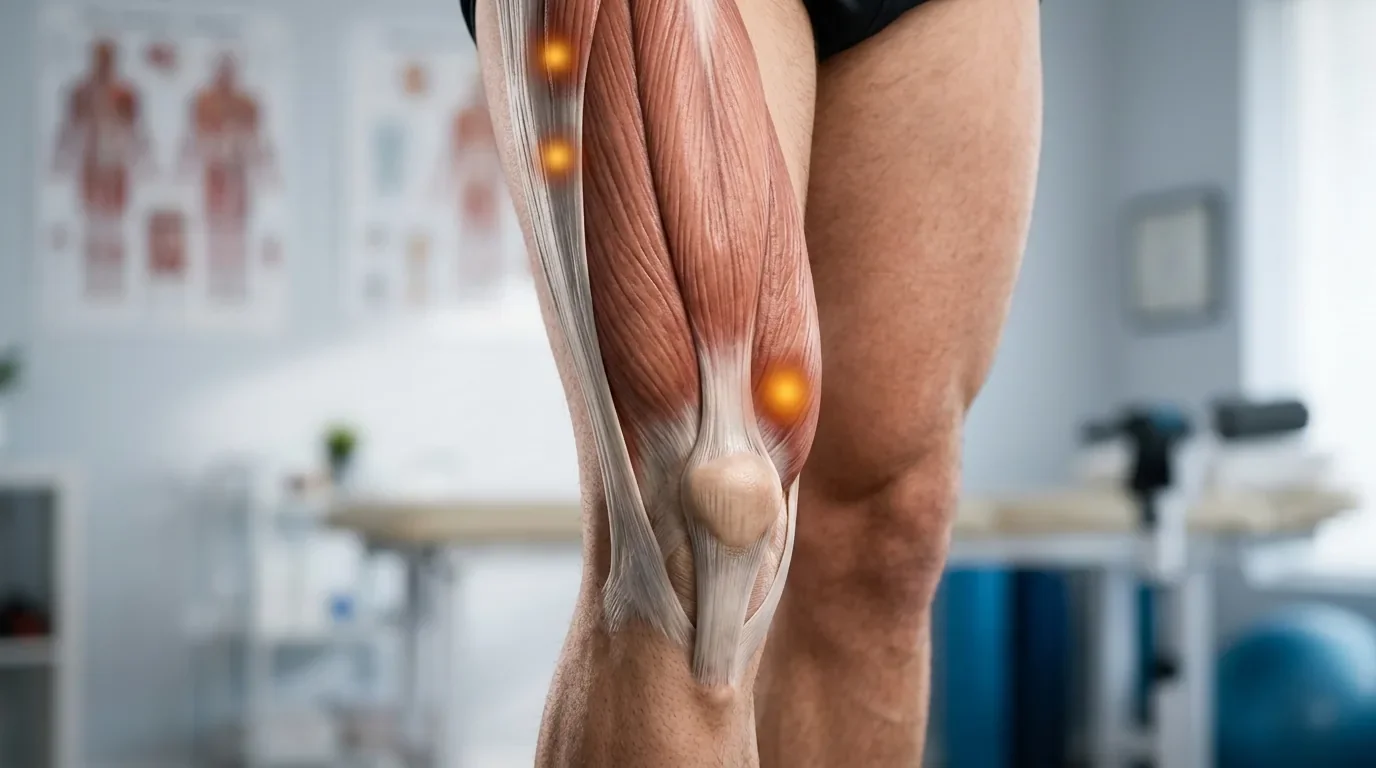
So the ACL research that exists is largely research on needling muscle. That fits the clinical problem. After a knee injury or surgery, the quadriceps often will not fully activate even though the muscle itself is intact, and that inhibition is one of the main things slowing rehab. In our practice, needling the quadriceps and the other muscles that refer pain to the knee is where we see the most relevance for post-surgical knees.
The review's two categories miss a third
The authors divide the field into Traditional Chinese acupuncture and Western medical acupuncture. We define acupuncture more simply, as the use of an acupuncture needle, with hundreds of styles under that heading. One of those styles is dry needling, which uses the same filiform needle within a myofascial and neurophysiological framework. We explain the overlap in Is Static Dry Needling the Same as Acupuncture?
The review does not discuss trigger point or intramuscular approaches by name, yet the protocols it cites look a lot like them: needles in the quadriceps, often with electrical stimulation. Future ACL trials would be easier to interpret if they described the target tissue (which muscle, what depth, what stimulation) and not only the point name. That is the same standard the review asks for.
Timing may matter more than anyone has tested
Lu et al. (2026) found that improvements in isokinetic measures lasted roughly 23 to 33 minutes after the needles came out. The review reads that as a limitation, and for return-to-sport claims it is one.
It also suggests a practical question. If needling briefly improves muscle output, a session placed shortly before rehab exercise might allow better quality work during that window. No trial has tested that sequence in ACL patients, so this is a hypothesis and not a recommendation. It is the study we would most like to see.
Dose in the trials does not match typical care
The Ding protocol was electroacupuncture twice a day for seven days, which is 14 sessions in one week. That schedule looks more like a hospital stay than outpatient care. Most people in New York see an acupuncturist once or twice a week as an outpatient. The trial's results may not carry over to that frequency, and the benefit it found for pain and swelling was concentrated in the first three months.
Proprioception was named and never measured
The review opens by listing impaired proprioception as a core challenge after ACL injury. As the authors summarize them, none of the seven ACL sources reported a proprioception outcome. Given that needling is a sensory input, this is an obvious gap.
How much weight to give this paper
This is a narrative review without a formal risk-of-bias assessment, and the authors say so. Cureus lists peer review as running from September 14 to September 22, 2026, which is fast. The authors disclose using ChatGPT for language editing, search terminology, and identifying candidate references that they then verified, and one paragraph appears twice in the published text. None of that changes the conclusion, which is conservative and matches the trials. It does mean the paper is best read as a careful map of a thin literature and not as new evidence.
Safety After Surgery
Acupuncture has a favorable safety record overall. A systematic review and meta-analysis of prospective studies estimated serious adverse events at about 1 per 10,000 patients, with minor events such as bleeding or pain at the needle site being much more common (Bäumler et al., 2021).
A post-surgical knee calls for more care than an uninjured one. The review's safety guidance is specific:
- Do not needle through surgical wounds or areas of suspected infection.
- Use extra caution with altered sensation, marked swelling, increased bleeding risk, or anticoagulant medication.
- Pay particular attention around the fibular head, where the common fibular nerve runs close to the surface near GB34.
- Mind depth in the anterolateral leg, where deeper insertion near ST36 approaches the anterior tibial vessels and the deep fibular nerve.
If you are on a blood thinner after surgery, tell your acupuncturist before treatment. It is also reasonable to let your surgeon and physical therapist know you are adding acupuncture so everyone is working from the same plan.
What This Means If You Are Recovering From an ACL Injury
Your rehab program is the treatment. Restoring full knee extension, controlling swelling, rebuilding quadriceps and hamstring strength, neuromuscular training, and passing return-to-sport testing are what determine your outcome. Nothing in this review suggests acupuncture can stand in for any of that.
Where acupuncture may help is in making that work more tolerable. Based on the current evidence, reasonable goals include:
- Reducing pain and swelling in the early months, when they limit how much rehab you can do
- Easing pain at the graft donor site in the thigh
- Addressing tightness and pain in the quadriceps, hamstrings, and calf as they adapt to changed loading
Goals the evidence does not support include healing the ligament, strengthening the graft, or getting back to sport sooner. If a provider promises those, be skeptical.
At Morningside Acupuncture, our approach to post-surgical knees is built around the muscles that cross the joint, using acupuncture and dry needling for knee pain alongside whatever your physical therapist has prescribed. If you want a sense of the points involved, see our guide to the best acupuncture points for knee pain. ACL tears often come with other injuries, and we have written separately about acupuncture for meniscus tears.
Related Dry Needling for Knee Pain Related Dry Needling for AthletesACL Rehab Support at NYC's Highest-Rated Acupuncture Clinic
Morningside Acupuncture is the highest-rated acupuncture and dry needling clinic in New York City with over 500 five-star Google reviews. If you are working through ACL rehab and pain or muscle guarding is holding you back, we can build a plan around the muscles that cross your knee and coordinate with your rehab team. We will be clear about what needling may help with and what it cannot do.
Schedule NowFrequently Asked Questions
Can acupuncture heal a torn ACL?
No. Current evidence does not show that acupuncture repairs a torn ACL, helps a surgical graft incorporate, or restores mechanical stability to the knee. Needles placed around the knee do not reach the ligament. What the research suggests is a possible role in managing symptoms such as pain and swelling while you do your rehabilitation.
Will acupuncture get me back to sport faster after ACL surgery?
The evidence does not support that claim. No study in the 2026 review showed a shorter time to a safe return to sport, and the authors note that evidence is sparse for reinjury and validated return-to-sport readiness. Your timeline is set by your rehab milestones and your surgeon's and physical therapist's criteria.
What can acupuncture reasonably help with during ACL rehab?
Based on the small number of ACL studies, acupuncture or electroacupuncture added to standard rehab may reduce pain and swelling in the early months and may ease pain at the graft donor site in the thigh. It may also help with tightness and pain in the quadriceps, hamstrings, and calf. These are short-term, symptom-level goals, and the studies behind them are small.
Is acupuncture safe after ACL reconstruction?
Acupuncture has a favorable overall safety record, with serious adverse events estimated at about 1 per 10,000 patients. After surgery, needles should not go through surgical wounds or areas of suspected infection, and extra caution is needed with marked swelling, altered sensation, or blood thinners. Tell your acupuncturist about your surgery date, your incisions, and your medications, and let your surgeon know you are adding acupuncture.
Do the needles go into the knee joint?
The points most often used around the knee sit in skin, fascia, muscle, and the tissue around the joint capsule, close to small sensory nerve branches. In the ACL trials, most of the points were in the thigh and lower leg muscles and not at the joint line. In our practice, the focus for post-surgical knees is the muscles that cross the joint.
References
- Bäumler, P., Zhang, W., Stübinger, T., & Irnich, D. (2021). Acupuncture-related adverse events: Systematic review and meta-analyses of prospective clinical studies. BMJ Open, 11(9), e045961. https://doi.org/10.1136/bmjopen-2020-045961
- Chang, H., Kim, H., Kim, K. W., Cho, J. H., Song, M. Y., & Chung, W. S. (2021). Traditional Chinese medicine for postoperative care following anterior cruciate ligament reconstruction: A systematic review and meta-analysis. Evidence-Based Complementary and Alternative Medicine, 2021, 9993651. https://doi.org/10.1155/2021/9993651
- Cheng, S. I., Norman, R. M., DeMeo, D., Zhong, H., Turteltaub, L. H., McCarthy, M. M., Marx, R. G., Strickland, S. M., & Kelly, A. M. (2021). The feasibility of blinding intraoperative electro-auricular acupuncture under neuraxial anesthesia. Medical Acupuncture, 33(4), 286-294. https://doi.org/10.1089/acu.2021.0003
- Deng, C., Zheng, H., Zhuo, X., & Lao, J. (2023). Electroacupuncture following deep needle insertion at BL39 and BL40 improves acute anterior cruciate ligament injury: A case report. Acupuncture in Medicine, 41(1), 58-60. https://doi.org/10.1177/09645284221125251
- Ding, L. B., Zhao, J., Guan, J., Li, F., Nie, X. Z., Xie, L., Wang, H. J., Zheng, X. F., & Xu, X. (2020). Effect of electroacupuncture on rehabilitation of knee joint movement after anterior cruciate ligament reconstruction [Article in Chinese]. Zhongguo Zhen Jiu, 40(2), 142-146. https://doi.org/10.13703/j.0255-2930.20190213-00014
- Goldman, N., Chen, M., Fujita, T., Xu, Q., Peng, W., Liu, W., Jensen, T. K., Pei, Y., Wang, F., Han, X., Chen, J. F., Schnermann, J., Takano, T., Bekar, L., Tieu, K., & Nedergaard, M. (2010). Adenosine A1 receptors mediate local anti-nociceptive effects of acupuncture. Nature Neuroscience, 13(7), 883-888. https://doi.org/10.1038/nn.2562
- Kagkarakis, D., Samolis, A., Chrysikos, D., Triantafyllou, G., Tsakotos, G., & Piagkou, M. (2026). Acupuncture as an adjunct to rehabilitation after anterior cruciate ligament injury and reconstruction: An anatomical and neurophysiological narrative review. Cureus, 18(9), e117053. https://doi.org/10.7759/cureus.117053
- Kolasinski, S. L., Neogi, T., Hochberg, M. C., Oatis, C., Guyatt, G., Block, J., Callahan, L., Copenhaver, C., Dodge, C., Felson, D., Gellar, K., Harvey, W. F., Hawker, G., Herzig, E., Kwoh, C. K., Nelson, A. E., Samuels, J., Scanzello, C., White, D., ... Reston, J. (2020). 2019 American College of Rheumatology/Arthritis Foundation guideline for the management of osteoarthritis of the hand, hip, and knee. Arthritis Care & Research, 72(2), 149-162. https://doi.org/10.1002/acr.24131
- Lu, F. F., Chang, L., Shen, J., Wang, L. C., Su, Y., & Wang, I. L. (2026). Effects of acupuncture on time-dependent muscle endurance in men with post-anterior cruciate ligament injury: A randomized controlled crossover trial. Journal of Integrative and Complementary Medicine, 32(8), 692-702. https://doi.org/10.1177/27683605261422972
- Vickers, A. J., Vertosick, E. A., Lewith, G., MacPherson, H., Foster, N. E., Sherman, K. J., Irnich, D., Witt, C. M., & Linde, K. (2018). Acupuncture for chronic pain: Update of an individual patient data meta-analysis. The Journal of Pain, 19(5), 455-474. https://doi.org/10.1016/j.jpain.2017.11.005
- Xu, W., Liu, J., Zheng, S., Zhang, T., Yan, Z., Xu, D., & Niu, W. (2024). Electroacupuncture and growth hormone for quadriceps atrophy management post-anterior cruciate ligament reconstruction: A prospective study. Alternative Therapies in Health and Medicine. https://pubmed.ncbi.nlm.nih.gov/38836736/
Disclaimer: This web site is intended for educational and informational purposes only. Reading this website does not constitute providing medical advice or any professional services. This information should not be used for diagnosing or treating any health issue or disease. Those seeking medical advice should consult with a licensed physician. Seek the advice of a medical doctor or other qualified health professional for any medical condition. If you think you have a medical emergency, call 911 or go to the emergency room. No acupuncturist-patient relationship is created by reading this website or using the information. Morningside Acupuncture PLLC and its employees and contributors do not make any express or implied representations with respect to the information on this site or its use. For any legal interpretation of scope of practice in your state, consult a licensed attorney or regulatory authority.
Read more from our blog