Dry Needling for Jaw Pain
Targeting Masseter and Pterygoid Trigger Points to Relieve TMJ Dysfunction, Jaw Clenching, and Facial Pain
Jaw pain, clicking, and restricted mouth opening attributed to temporomandibular dysfunction are in most cases driven primarily by trigger points in the jaw-closing muscles rather than by structural joint pathology. Dry needling offers direct access to the masseter, temporalis, and pterygoid muscles that generate and perpetuate TMJ symptoms.
- Research estimates that myofascial trigger points in the jaw-closing muscles are the primary pain source in the majority of temporomandibular disorder (TMD) presentations, with true structural joint pathology accounting for a smaller proportion of cases than commonly assumed (Simons et al., 1999).
- Masseter trigger points refer pain to the cheek, lower jaw, upper and lower molar teeth, and ear, generating toothache pain in dentally healthy teeth and ear pain without ear pathology that frequently leads to unnecessary dental and ENT workups before the muscular source is identified.
- Temporalis trigger points produce a band-like headache above the ear, temple pain, and referred pain to the upper teeth that is also indistinguishable from dental pain, contributing to delayed diagnosis of myofascial jaw dysfunction.
- Bruxism (teeth grinding and clenching) is both a cause and consequence of trigger points in the jaw-closing muscles; the sustained parafunctional loading during bruxism creates trigger points, which increase resting jaw muscle tension and drive further bruxism through the heightened arousal associated with pain (Fernandez-Carnero et al., 2010).
- Dry needling normalizes the biochemical environment at trigger point sites, including reducing sensitizing substances such as substance P and bradykinin that maintain referred facial pain and central sensitization in chronic TMD (Shah et al., 2008).
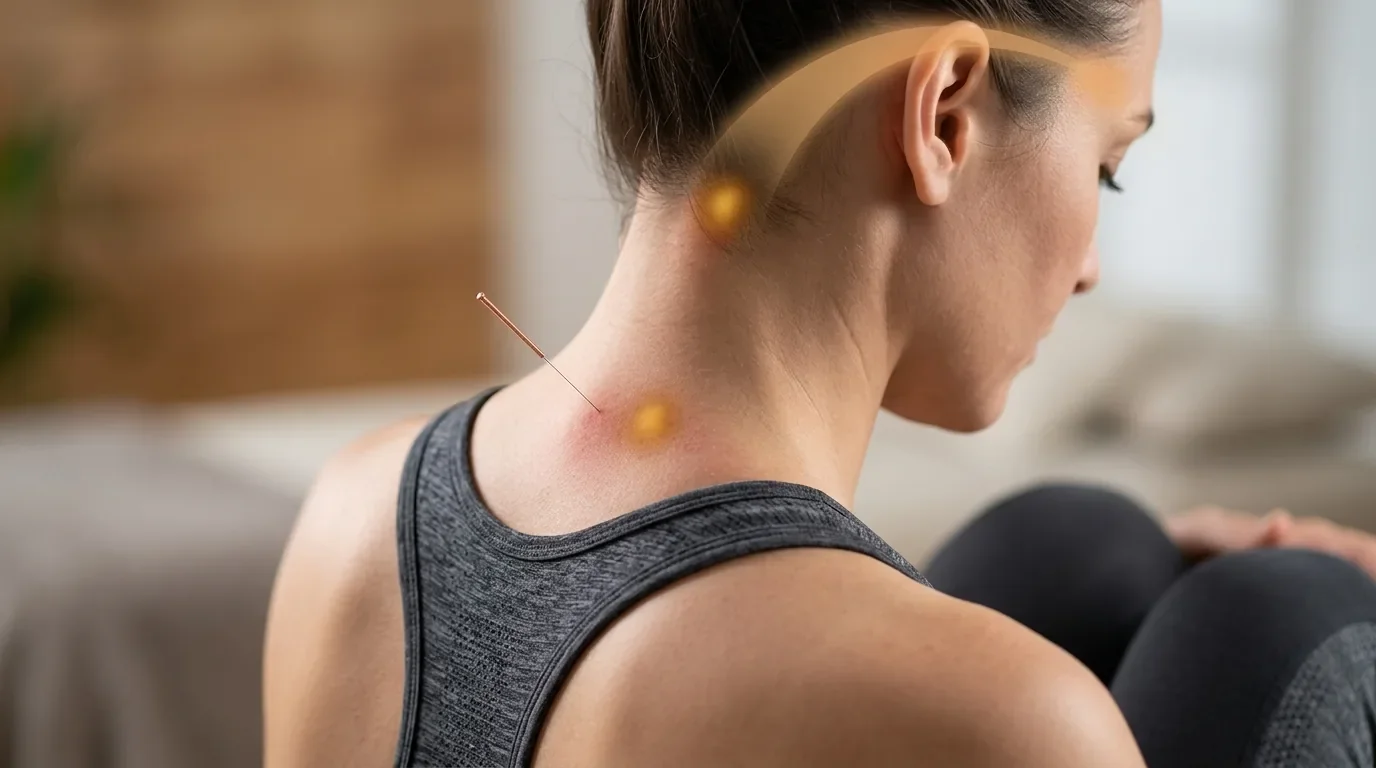
- Treating jaw pain without addressing cervical trigger points in the upper trapezius, sternocleidomastoid, and suboccipitals frequently produces incomplete outcomes, as these muscles share trigeminocervical convergence pathways with the jaw muscles that maintain mutual sensitization.
Has jaw pain, clicking, or facial pain not improved with a night guard alone?
Night guards protect the teeth but do not deactivate the masseter and temporalis trigger points driving jaw pain and headaches. At Morningside Acupuncture, dry needling addresses these trigger points directly, reducing the muscle tension that a guard alone cannot resolve.
Schedule NowWhy Jaw Pain Is Usually Muscular, Not Structural
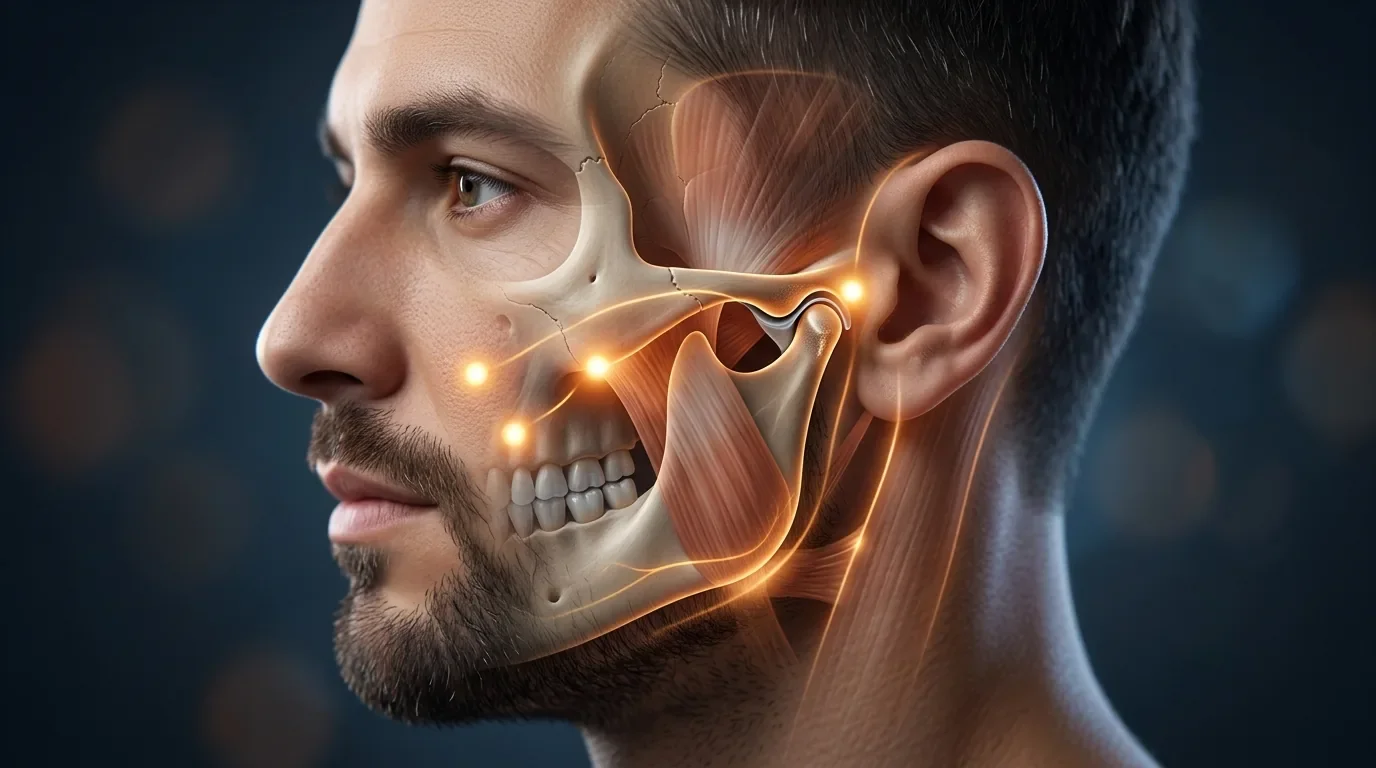
The temporomandibular joint is a hinge and gliding joint on each side of the jaw that allows the mandible to open, close, and move forward, backward, and sideways. The joint itself is anatomically small and sits between the condyle of the mandible and the temporal bone of the skull, cushioned by an articular disc. Genuine structural TMJ pathology, such as disc displacement, joint surface degeneration, or condylar fracture, does occur and does generate pain, but it accounts for a minority of the jaw pain presentations that carry the TMJ label in clinical practice.
The larger and more prevalent category is myofascial TMD: jaw pain, jaw stiffness, restricted mouth opening, and associated headaches driven by trigger points in the jaw-closing muscles. The masseter is the most powerful jaw muscle by volume and also the most common site of trigger point formation. It lies directly over the mandible on each side of the face and can be palpated easily from the outside, which makes it accessible to both manual treatment and dry needling. The temporalis fans out from the temporal bone above the ear and is equally important in the headache and upper tooth pain patterns that complicate many jaw dysfunction presentations.
The clinical consequence of this myofascial predominance is that patients who are sent from dentist to oral surgeon to ENT specialist without improvement are often experiencing trigger points in accessible muscles that have never been directly assessed or treated. Night guards, occlusal adjustments, and joint-focused interventions provide limited relief for pain that originates in muscle rather than bone or cartilage.
Related Masseter Trigger Points: Jaw Pain, Toothache, and Ear Ache PatternsThe Referred Pain Patterns That Confuse Diagnosis
What makes myofascial jaw dysfunction particularly difficult to diagnose correctly is that the trigger point referred pain patterns of the jaw muscles closely mimic the symptoms of dental disease, ear problems, and sinus conditions. A patient with masseter trigger points may present with severe throbbing pain in the upper or lower molars, have those teeth examined and even treated by a dentist who finds no pathology, and then continue experiencing pain from a muscular source that was never identified. The same pattern occurs with ear pain from masseter trigger points that are generating referred symptoms over the external ear without any audiological abnormality.
Temporalis trigger points add the headache component. The temporal headache produced by temporalis trigger points is felt at the temple, above the ear, and can radiate over the top of the head. It is often described as a band tightening around the skull and is indistinguishable from tension-type headache on history alone. The same temporalis trigger points refer pain to the upper teeth, producing dental sensitivity and occasionally leading to unnecessary root canal treatment when the tooth involved is entirely healthy. Documenting this referred pain pattern and demonstrating that palpation of the temporalis reproduces the tooth or head pain is the clinical key to identifying the muscular source.
The medial and lateral pterygoid muscles, which lie deep inside the jaw on the medial side, produce referred pain patterns including deep jaw aching, ear fullness, and pain in the maxillary sinus region. Their deep location makes them inaccessible to external massage but reachable by dry needling with appropriate technique, and their involvement often explains the residual jaw pain and ear fullness that persists after the more accessible masseter and temporalis have been treated.
| Muscle | Function | Trigger Point Referred Pain | Plain English |
|---|---|---|---|
| Masseter | Primary jaw-closing muscle; clenching and chewing | Cheek, lower jaw, upper and lower molars, ear, eyebrow | The most common jaw trigger point; generates toothache pain in healthy teeth and ear pain without ear disease |
| Temporalis | Jaw closure and retraction; sustained jaw position holding | Temple, above the ear, top of head, upper teeth, forehead | Produces the temporal headache and upper tooth pain of TMD; often indistinguishable from tension headache |
| Medial Pterygoid | Jaw closure and lateral jaw movement | Deep jaw, throat, ear, difficulty swallowing in severe cases | A deep jaw muscle generating throat and swallowing discomfort alongside the jaw pain pattern |
| Lateral Pterygoid | Jaw opening and forward protrusion; disc stabilization | TMJ area, maxillary sinus region, inner cheek | The muscle most implicated in clicking and locking of the TMJ; also generates sinus-region pain |
| Sternocleidomastoid | Head rotation and cervical stabilization; shares trigeminal pathways with jaw muscles | Ear, jaw, forehead, eye, cheekbone | A cervical muscle that amplifies jaw pain through shared pain processing pathways; almost always needs treatment alongside the jaw muscles |
Experiencing jaw pain, headaches, and neck stiffness simultaneously?
This combination is typical of the cervicotrigeminal sensitization pattern where jaw and cervical trigger points mutually amplify each other's symptoms. At Morningside Acupuncture, we assess and treat both the jaw muscles and the upper cervical muscles together to address the full pain pattern rather than each region in isolation.
Schedule NowHow Dry Needling Addresses Jaw Muscle Trigger Points
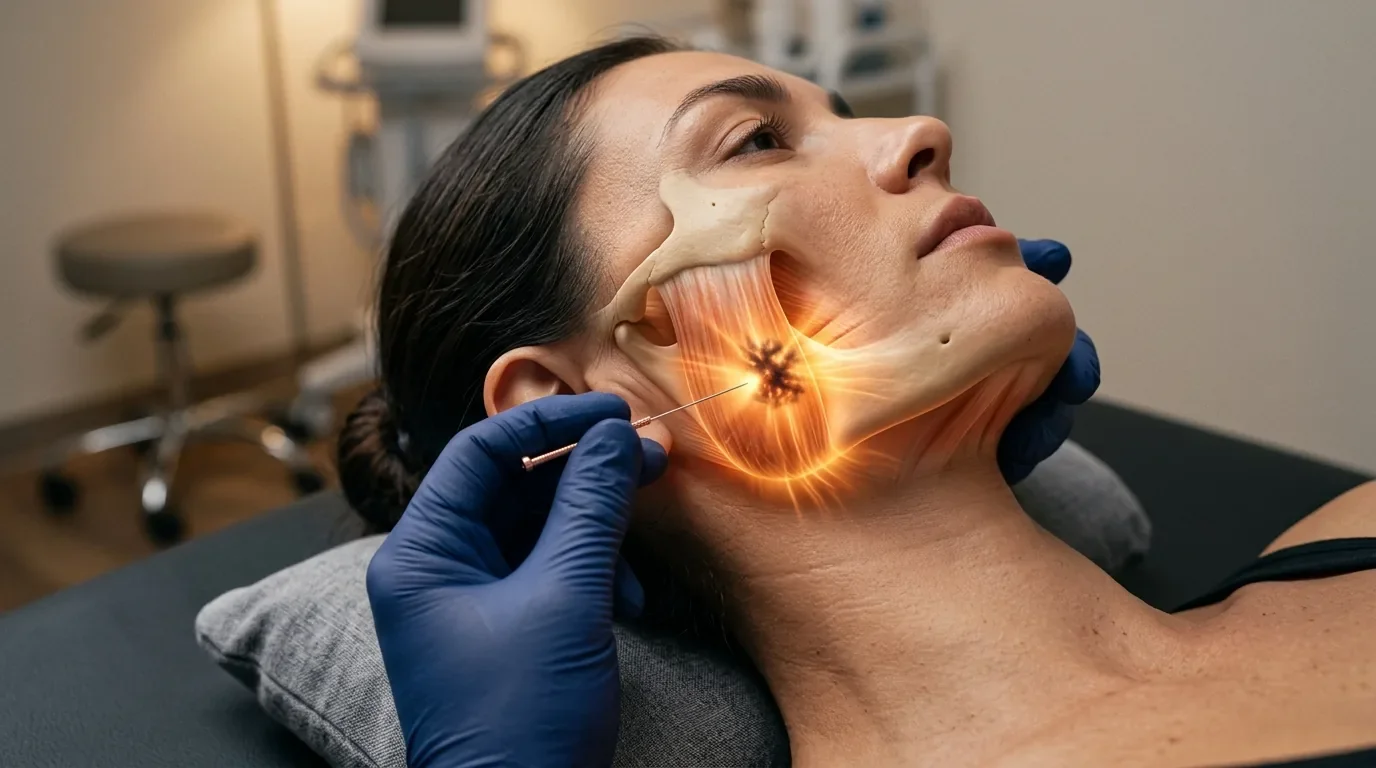
Dry needling of the masseter is performed with the needle inserted perpendicular to the outer jaw surface, with depth adjusted to reach the deep head of the masseter, which is where the most consequential trigger points typically reside. Patients often feel a deep aching pressure during needling of the masseter, and the local twitch response, when elicited, may momentarily reproduce or intensify the referred dental pain before it subsides. This reproduction and resolution sequence is considered a sign that the correct trigger point has been contacted and disrupted.
The temporalis is needled across the temporal fossa above the ear, with multiple insertions corresponding to the separate trigger point regions within the muscle. Temporalis trigger points are often exquisitely tender on palpation, and patients with chronic temporal headache frequently report immediate relief of the sustained temporal pressure during and after needling of this muscle. The reduction in headache frequency and intensity following temporalis dry needling is one of the more consistent findings in the myofascial treatment of TMD.
The pterygoid muscles require intraoral or specific external approach techniques that are performed by practitioners with specific training in jaw anatomy. The medial pterygoid can be approached from outside the jaw at the angle of the mandible; the lateral pterygoid requires greater anatomical precision given its position behind the maxillary tuberosity. Not all dry needling practitioners treat the pterygoids, and patients with symptoms suggesting pterygoid involvement may require referral to a practitioner with specific TMD training. At Morningside, the approach to jaw treatment is adapted to the specific muscles implicated in each patient's pattern of symptoms.
Related Dry Needling for Migraines: Jaw and Cervical Trigger Points in HeadacheThe Role of Bruxism and Stress
Bruxism, the parafunctional habit of teeth clenching or grinding, is among the most common perpetuating factors for jaw muscle trigger points. The sustained jaw-closing force of clenching loads the masseter and temporalis far above what normal chewing produces, and the nocturnal grinding pattern keeps these muscles active during sleep when they should be fully relaxed. Trigger points in muscles experiencing this level of sustained overload are almost inevitable.
The relationship between bruxism and stress is well-established: psychological stress increases sympathetic nervous system activation, which increases resting tone in the jaw muscles and lowers the threshold for parafunctional activity during sleep. Patients who notice that their jaw pain worsens during stressful periods at work, or that they wake with a tender jaw and headache after particularly stressful days, are experiencing this mechanism directly. Night guards address the consequences of bruxism (tooth wear) without addressing the mechanism (elevated jaw muscle tension from stress-driven parafunctional activity).
For patients with bruxism as a primary perpetuating factor, dry needling sessions are most effective when combined with strategies to reduce jaw muscle resting tone between sessions. Biofeedback, breathing techniques to reduce sympathetic arousal, and conscious jaw relaxation habits during the day help maintain the reduced tension achieved through needling and prevent rapid reformation of trigger points in muscles that are being continuously overloaded at night.
Related How Stress Affects Pain: The Sympathetic Nervous System and Muscle TensionReady to address jaw pain, TMJ clicking, and facial tension at the muscular source?
At Morningside Acupuncture, we are the highest-rated acupuncture and dry needling clinic in New York City with over 500 five-star Google reviews. We treat temporomandibular dysfunction, jaw muscle trigger points, and associated headaches using targeted dry needling of the masseter, temporalis, and cervical muscles, offering a myofascial approach for jaw pain that dental and ENT treatment alone has not resolved.
Schedule NowFrequently Asked Questions
Can dry needling into the face cause bruising?
Bruising is possible with facial needling because the face has a rich superficial vascular supply. Experienced practitioners minimize bruising risk by using fine-gauge needles, inserting and withdrawing with controlled slow technique, and applying light pressure to the needle site after removal. When bruising does occur, it is typically small, resolves within five to seven days, and is less common with experienced practitioners who are familiar with the vascular anatomy of the facial region.
How is dry needling for jaw pain different from a night guard?
A night guard protects the teeth and reduces direct grinding contact but does not reduce the muscular tension that is causing both the pain and the bruxism. Dry needling addresses the masseter and temporalis trigger points directly, reducing the resting tone of these muscles and the referred pain they generate. For patients with jaw pain, headaches, and facial tension, needling targets the source while the night guard manages the dental consequences of bruxism.
How many sessions does jaw pain typically require?
Patients with jaw pain from acute bruxism or a recent stress-related flare often respond within two to four sessions. Chronic TMD presentations with longstanding trigger points and associated cervical involvement may require six to ten sessions and a longer maintenance interval. Most patients notice meaningful reduction in jaw soreness, headache frequency, and restricted mouth opening within the first three to four sessions.
Can dry needling help with clicking in the jaw?
Jaw clicking is often attributed to the articular disc, but the position and movement of the disc is partly controlled by the lateral pterygoid muscle. When the lateral pterygoid has trigger points and associated hypertonicity, it can alter disc position during jaw opening, producing clicking or locking. Addressing lateral pterygoid trigger points may reduce or resolve the clicking in cases where the disc displacement is primarily muscular in origin rather than a result of progressive joint degeneration.
Should I continue with my dentist or oral surgeon while getting dry needling?
Yes, particularly if there are signs of structural TMJ pathology such as progressive joint degeneration or disc perforation that require dental management. Dry needling for the myofascial component and dental care for structural issues are complementary rather than competing approaches. For the majority of patients with predominantly myofascial TMD, the needling produces the most significant improvement in daily pain and function while dental monitoring continues in parallel.
References
- Simons, D. G., Travell, J. G., & Simons, L. S. (1999). Myofascial Pain and Dysfunction: The Trigger Point Manual, Volume 1 (2nd ed.). Williams & Wilkins.
- Fernandez-Carnero, J., Fernandez-de-las-Penas, C., de la Llave-Rincon, A. I., Ge, H. Y., & Arendt-Nielsen, L. (2010). Widespread mechanical pain hypersensitivity as sign of central sensitization in unilateral epicondylalgia: a blinded, controlled study. Clinical Journal of Pain, 26(1), 23–28. https://doi.org/10.1097/AJP.0b013e3181b28b3d
- Shah, J. P., Danoff, J. V., Desai, M. J., Parikh, S., Nakamura, L. Y., Phillips, T. M., & Gerber, L. H. (2008). Biochemicals associated with pain and inflammation are elevated in sites near to and remote from active myofascial trigger points. Archives of Physical Medicine and Rehabilitation, 89(1), 16–23. https://doi.org/10.1016/j.apmr.2007.10.018
- Vickers, A. J., Vertosick, E. A., Lewith, G., MacPherson, H., Foster, N. E., Sherman, K. J., Irnich, D., Witt, C. M., & Linde, K. (2018). Acupuncture for chronic pain: update of an individual patient data meta-analysis. JAMA Internal Medicine, 178(11), 1517–1524. https://doi.org/10.1001/jamainternmed.2018.0957
- Travell, J. G., & Simons, D. G. (1999). Myofascial Pain and Dysfunction: The Trigger Point Manual, Volume 1: The Upper Half of Body (2nd ed.). Williams & Wilkins.
- Dommerholt, J., & Fernandez-de-las-Penas, C. (Eds.). (2013). Trigger Point Dry Needling: An Evidence and Clinical-Based Approach. Churchill Livingstone.
Disclaimer: This web site is intended for educational and informational purposes only. Reading this website does not constitute providing medical advice or any professional services. This information should not be used for diagnosing or treating any health issue or disease. Those seeking medical advice should consult with a licensed physician. Seek the advice of a medical doctor or other qualified health professional for any medical condition. If you think you have a medical emergency, call 911 or go to the emergency room. No acupuncturist-patient relationship is created by reading this website or using the information. Morningside Acupuncture PLLC and its employees and contributors do not make any express or implied representations with respect to the information on this site or its use. For any legal interpretation of scope of practice in your state, consult a licensed attorney or regulatory authority.
Read more from our blog