What Is a Rotator Cuff Tear?
Understanding the Four Muscles Involved, the Difference Between Partial and Full Tears, and What the Evidence Says About Conservative Treatment
Rotator cuff tear is one of the most common diagnoses given after shoulder MRI, but the relationship between what shows up on imaging and what actually hurts is more complicated than most patients are told. Understanding what the rotator cuff is, what a tear actually means clinically, and what the evidence shows about recovery options helps patients make better decisions about their care.
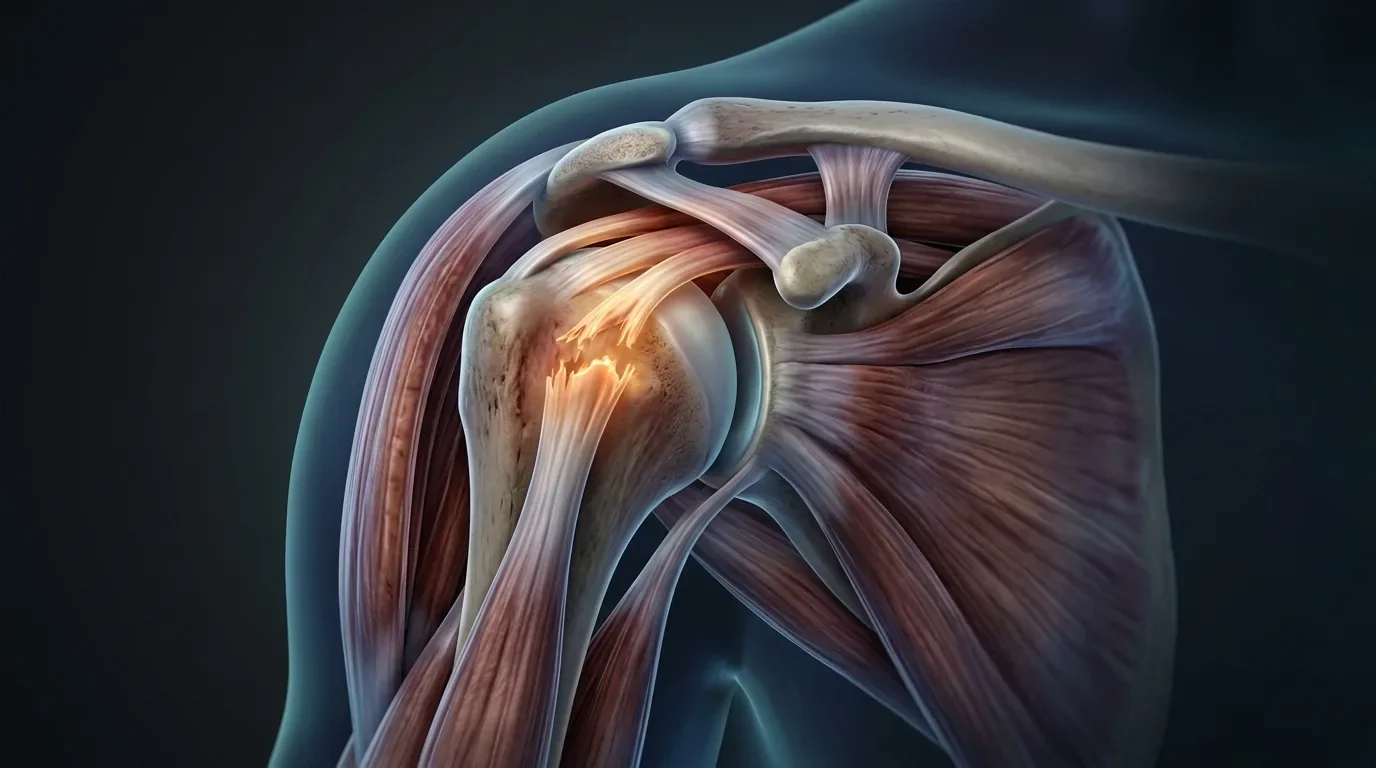
- The rotator cuff consists of four muscles (supraspinatus, infraspinatus, teres minor, and subscapularis) whose tendons blend into a cuff of tissue that wraps the humeral head and is responsible for both shoulder rotation and dynamic joint stability during arm movement.
- Rotator cuff tears are classified as partial thickness (the tear does not extend through the full thickness of the tendon) or full thickness (complete tear from one surface to the other); a full thickness tear does not necessarily mean complete rupture of the entire muscle-tendon unit, and many people with full thickness tears have functional shoulders.
- The prevalence of rotator cuff tears increases substantially with age: population-based MRI studies find rotator cuff tears in approximately 30% of people over 60 years of age, and over 50% of people over 70, the majority of whom have no shoulder symptoms, indicating that imaging findings must be interpreted in clinical context rather than in isolation.
- Conservative management, consisting of exercise rehabilitation, pain management, and activity modification, is successful for the majority of partial tears and many full thickness tears; surgery is generally reserved for cases where conservative management has failed after an adequate trial, acute traumatic tears in younger patients, or specific structural situations where the clinical evidence strongly favors operative intervention.
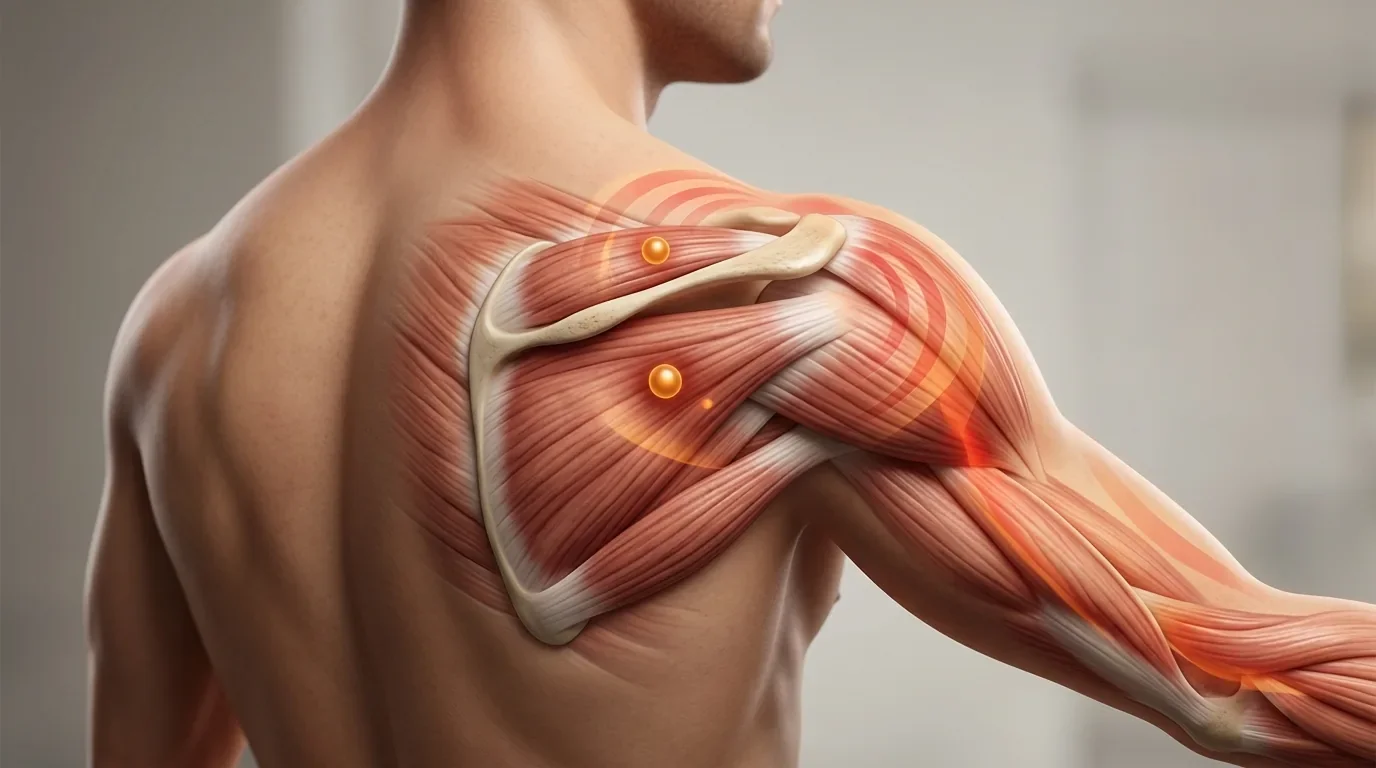
- Myofascial trigger points in the muscles of the shoulder complex, including the infraspinatus, supraspinatus, subscapularis, and surrounding muscles, contribute substantially to rotator cuff pain and are frequently the primary pain generators rather than the tear itself; addressing these trigger points through dry needling and acupuncture often produces significant pain relief and improved function.
- Post-surgical rehabilitation outcomes for rotator cuff repair are strongly predicted by the quality and consistency of post-operative exercise therapy; acupuncture and dry needling as adjuncts to post-surgical rehabilitation have been shown to reduce post-operative pain and improve range of motion recovery (Vickers et al., 2018).
Diagnosed with a rotator cuff tear and unsure about your options?
Many patients come to Morningside Acupuncture after receiving a rotator cuff tear diagnosis who are managing significant shoulder pain and limited function. Whether you are pursuing conservative management, preparing for surgery, or recovering post-operatively, acupuncture and dry needling can help reduce pain and improve the range of motion that makes rehabilitation possible. We have extensive experience treating rotator cuff conditions across the full spectrum.
Schedule NowThe Four Rotator Cuff Muscles
The rotator cuff is formed by four muscles that originate on the scapula (shoulder blade) and insert through a shared tendinous cuff onto the greater and lesser tuberosities of the humerus (upper arm bone). Each muscle has a distinct role in shoulder movement and joint stability, and each is susceptible to tearing at different locations and under different loading patterns.
The supraspinatus runs from the supraspinatus fossa of the scapula, through the subacromial space, to the greater tuberosity. It initiates abduction (raising the arm to the side) and is by far the most commonly torn rotator cuff muscle, with tears typically occurring at the "critical zone" approximately 1 cm from the insertion, where blood supply is relatively poor. The subacromial space narrows with arm elevation, and the supraspinatus tendon is repeatedly compressed between the humeral head and the acromion in this position, which is the mechanism for impingement-related supraspinatus degeneration and tearing.
The infraspinatus and teres minor are the primary external rotators of the shoulder and insert posteriorly on the greater tuberosity. The infraspinatus is the second most commonly torn cuff muscle and is a major source of posterior and lateral shoulder pain through trigger points even when no structural tear is present. The subscapularis, the largest of the four rotator cuff muscles, is the primary internal rotator and is less commonly torn, but when subscapularis tears occur they significantly impair internal rotation strength and are often associated with anterior shoulder pain and instability.
Partial vs Full Thickness Tears: What the Classification Means
| Type | Definition | Common Cause | Conservative Treatment Prognosis |
|---|---|---|---|
| Partial thickness tear (articular surface) | Tear involving the deep (joint-side) surface but not through the full thickness | Repetitive overhead loading; age-related degeneration | Good; majority respond well to conservative management |
| Partial thickness tear (bursal surface) | Tear involving the superficial (bursa-side) surface | Impingement; subacromial compression | Good to moderate; subacromial space management important |
| Full thickness small (<1 cm) | Complete tear through full tendon thickness but small area | Often degenerative; may be asymptomatic | Good; many remain stable and asymptomatic over years |
| Full thickness medium (1-3 cm) | Complete tear through larger area | Degeneration plus possible acute event | Moderate; conservative management effective in many cases |
| Full thickness large-massive (>3 cm, multiple tendons) | Large or multi-tendon complete tear | Often combination of degeneration and acute injury | Variable; surgical discussion warranted but conservative trial still reasonable in many |
| Acute traumatic full thickness (young patient) | Sudden complete tear from discrete injury event | Fall, dislocation, acute high-force mechanism | Surgery often recommended to prevent retraction and degeneration |
The Role of Trigger Points in Rotator Cuff Pain
One of the most clinically significant and underappreciated aspects of rotator cuff pain is the role of myofascial trigger points in the rotator cuff muscles and surrounding musculature. Active trigger points in the infraspinatus reproduce lateral shoulder and upper arm pain that is indistinguishable from supraspinatus tendon pain to most patients. Subscapularis trigger points refer to the posterior shoulder and can produce severe limitation of external rotation that mimics adhesive capsulitis. Supraspinatus trigger points produce pain directly over the lateral shoulder and may create impingement-type symptoms by altering the resting position of the humeral head in the glenoid.
Many patients who have been told their shoulder pain is from a rotator cuff tear find that systematic treatment of myofascial trigger points produces dramatic improvement without any structural change in the tear. This does not mean the tear is irrelevant, but it indicates that the trigger points, rather than the torn tissue itself, are often the primary pain generators. Addressing trigger points through dry needling and acupuncture can produce significant pain relief and functional improvement while conservative rehabilitation of the rotator cuff strength proceeds in parallel.
Is your rotator cuff pain actually coming from trigger points?
The only way to answer this question is through skilled clinical examination that distinguishes between tendon pain patterns and trigger point referral patterns. At Morningside Acupuncture, our assessment of shoulder pain includes identification of all active trigger points and their referral patterns alongside evaluation of rotator cuff function. Many patients are surprised to find that their familiar pain pattern is reproduced by pressing on trigger points in the infraspinatus, subscapularis, or surrounding muscles rather than by stressing the tendon directly.
Schedule NowConservative vs Surgical Management: What Does the Evidence Show?
The decision between conservative and surgical management for rotator cuff tears is one of the most actively studied questions in shoulder surgery, and the evidence is considerably more favorable to conservative management than many patients are told. A randomized controlled trial by Moosmayer et al. (2019), with 10-year follow-up, compared surgery versus exercise therapy for small to medium full thickness supraspinatus tears and found no significant difference in outcomes at 10 years. Patients who initially responded poorly to exercise and crossed over to surgery achieved similar final outcomes to those who had surgery earlier, suggesting that watchful waiting with conservative management does not compromise eventual outcomes for patients who later require surgery.
Current clinical guidelines from the American Academy of Orthopaedic Surgeons support a minimum 6-week trial of conservative management, including targeted exercise rehabilitation and pain management, before surgical consultation for degenerative full thickness tears. Many guidelines recommend 3-6 months of conservative care. The exceptions, where earlier surgical discussion is warranted, are acute traumatic full thickness tears in younger, active patients, where the risk of tendon retraction and fatty infiltration of the muscle belly increases the longer surgery is deferred.
Related Dry Needling in NYC: Shoulder Pain Applications and EvidenceShoulder pain from a rotator cuff diagnosis? Start with acupuncture and dry needling.
At Morningside Acupuncture, we are the highest-rated acupuncture and dry needling clinic in New York City with over 500 five-star Google reviews. We treat rotator cuff pain at every stage, from initial conservative management through post-surgical rehabilitation, using a combination of trigger point dry needling and acupuncture that addresses both the myofascial contributors and the central nervous system sensitization that sustains shoulder pain. We work alongside orthopedic surgeons, physical therapists, and other providers managing your shoulder condition.
Schedule NowFrequently Asked Questions
Can a rotator cuff tear heal on its own?
Tendons have limited intrinsic healing capacity, particularly in the avascular critical zone of the supraspinatus where most tears occur. Full thickness tears generally do not heal spontaneously in the sense of tissue bridging across the defect. However, many patients achieve excellent pain relief and functional recovery without surgical repair, because the surrounding rotator cuff muscles compensate for the torn one and trigger points that were the primary pain generators resolve with treatment. The question for most patients is not whether the tear will close but whether shoulder pain and function improve with conservative care.
Does a rotator cuff tear always need surgery?
No. Research with up to 10-year follow-up shows that many patients with full thickness degenerative rotator cuff tears achieve comparable outcomes with exercise rehabilitation as with surgery. Surgery is generally reserved for cases where a sufficient trial of conservative management has not produced adequate improvement, for acute traumatic tears in younger active patients, and for specific situations where the structural injury is severe enough that the muscle cannot be rehabilitated without repair. Discussing the specific tear characteristics and your activity goals with a shoulder-specialist orthopedic surgeon alongside trialing conservative management is a reasonable approach for most patients.
How long does rotator cuff recovery take?
For conservative management, meaningful improvement in pain and function typically begins within 6-12 weeks of consistent rehabilitation. Full recovery of strength and function may take 3-6 months. Post-surgical recovery from rotator cuff repair is considerably longer, with restrictions on lifting for 4-6 weeks, active rehabilitation beginning at 6-12 weeks, and full return to sports or heavy work typically requiring 9-12 months. The quality of rehabilitation during recovery significantly affects both the speed and completeness of recovery.
Can acupuncture help a rotator cuff tear?
Acupuncture and dry needling address the pain and muscle dysfunction components of rotator cuff conditions rather than the structural tear itself. For many patients, this is sufficient to produce meaningful clinical improvement, because trigger points in the rotator cuff muscles and surrounding musculature are often the primary pain generators rather than the tear. Dry needling of these trigger points, combined with exercise rehabilitation, is consistent with current evidence-based guidelines for rotator cuff conservative management and may accelerate the functional recovery that makes rehabilitation more effective.
What is the difference between a rotator cuff tear and rotator cuff tendinitis?
Rotator cuff tendinitis (more accurately called tendinopathy when chronic) refers to degeneration or overuse changes in the tendon without a discrete tear. Rotator cuff tear implies a structural disruption of the tendon, either partial or full thickness. In practice, the two conditions often coexist on a spectrum: degenerative tendinopathy weakens the tendon and predisposes it to tearing, and many partial tears occur in the context of pre-existing tendinopathy. The clinical presentation, including pain, weakness, and loss of range of motion, overlaps significantly between the two conditions.
References
- Moosmayer, S., Lund, G., Seljom, U. S., Haldorsen, B., Svege, I. C., Hennig, T., Pripp, A. H., & Smith, H. J. (2019). At a 10-year follow-up, tendon repair is superior to physiotherapy in the treatment of small and medium-sized rotator cuff tears. Journal of Bone and Joint Surgery, 101(12), 1050–1060. https://doi.org/10.2106/JBJS.18.01373
- Simons, D. G., Travell, J. G., & Simons, L. S. (1999). Travell and Simons' Myofascial Pain and Dysfunction: The Trigger Point Manual (2nd ed.). Lippincott Williams & Wilkins.
- Vickers, A. J., Vertosick, E. A., Lewith, G., MacPherson, H., Foster, N. E., Sherman, K. J., Irnich, D., Witt, C. M., & Linde, K. (2018). Acupuncture for chronic pain: Update of an individual patient data meta-analysis. Journal of Pain, 19(5), 455–474. https://doi.org/10.1016/j.jpain.2017.11.005
- Zhao, Z. Q. (2008). Neural mechanism underlying acupuncture analgesia. Progress in Neurobiology, 85(4), 355–375. https://doi.org/10.1016/j.pneurobio.2008.05.004
- Yamamoto, N., Itoi, E., Abe, H., Minagawa, H., Seki, N., Shimada, Y., & Okada, K. (2010). Contact between the coracoacromial arch and the rotator cuff tendons in nonpathologic situations: A cadaveric study. Journal of Shoulder and Elbow Surgery, 19(5), 681–687. https://doi.org/10.1016/j.jse.2009.11.050
Disclaimer: This web site is intended for educational and informational purposes only. Reading this website does not constitute providing medical advice or any professional services. This information should not be used for diagnosing or treating any health issue or disease. Those seeking medical advice should consult with a licensed physician. Seek the advice of a medical doctor or other qualified health professional for any medical condition. If you think you have a medical emergency, call 911 or go to the emergency room. No acupuncturist-patient relationship is created by reading this website or using the information. Morningside Acupuncture PLLC and its employees and contributors do not make any express or implied representations with respect to the information on this site or its use. For any legal interpretation of scope of practice in your state, consult a licensed attorney or regulatory authority.
Read more from our blog