Is Static Dry Needling the Same as Acupuncture?
Comparing Static Dry Needling vs Acupuncture
Why needle retention alone isn’t the same as acupuncture care
In a recent post, we reviewed a 2025 randomized controlled trial comparing dynamic dry needling, static dry needling, and sham needling for neck pain related to myofascial trigger points. That study suggested that dynamic dry needling produced greater short-term changes in muscle stiffness, pain sensitivity, and blood flow than static dry needling or sham treatment.
If you haven’t read it yet, you can start here:
👉 https://www.morningsideacupuncturenyc.com/blog/2025-dynamic-vs-static-dry-needling-neck-pain-study
That article prompted a common and reasonable follow-up question:
Is static dry needling basically the same thing as acupuncture?
The short answer is no, and importantly, the study itself does not make that claim.
Key Points
Static dry needling and acupuncture use the same solid filiform acupuncture needle, but they are not equivalent interventions
The study did not compare acupuncture to dry needling or evaluate acupuncture-style treatment strategies
In research, static dry needling often represents minimal local needle exposure, not full acupuncture care
When static dry needling performs similarly to sham, this likely reflects dose and context rather than a failure of needle retention
Technique, dosage, and clinical intent matter more than labels
Background: Why This Question Comes Up
In musculoskeletal research, dry needling protocols are often simplified to fit biomedical trial designs. Static dry needling, in particular, is frequently used as a standardized intervention because it:
Is easy to reproduce
Avoids acupuncture theory or diagnostic frameworks
Fits neatly into trigger-point–based models of pain
As a result, static dry needling is sometimes assumed to be interchangeable with acupuncture needle retention. That assumption is understandable, but it does not reflect how acupuncture is actually practiced or studied as a whole-system intervention.
What the Study Actually Did (and Did Not Do)
The 2025 trial examined three interventions applied to upper trapezius trigger points in people with neck pain:
Dynamic (pistoning) dry needling
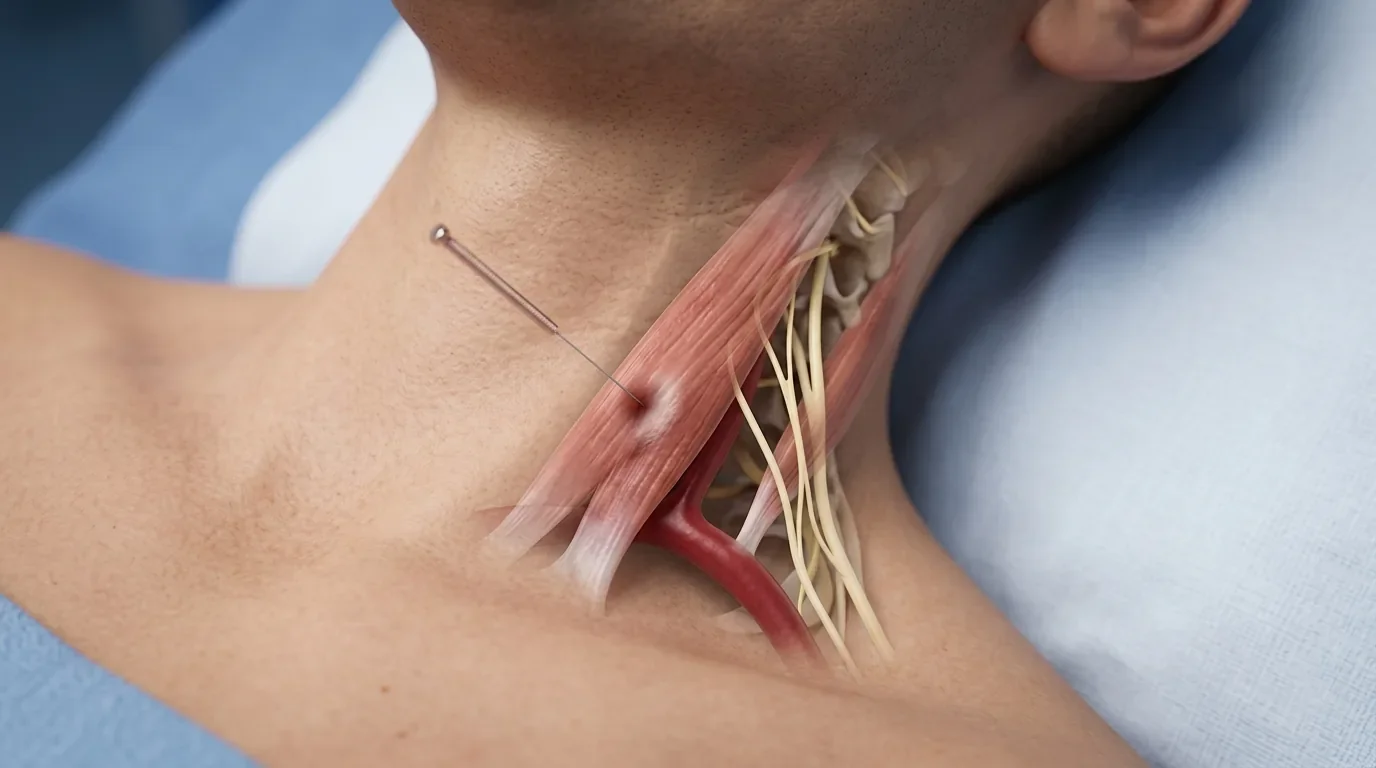
Static dry needling (needle inserted and left without manipulation)
Sham needling (non-penetrating placebo needle)
All treatments were framed strictly within a myofascial trigger point model. Outcomes focused on local, short-term measures such as muscle stiffness, tone, elasticity, pressure pain threshold, and local blood flow.
Just as important is what the study did not do:
It did not compare static dry needling to acupuncture
It did not use acupuncture-style point selection
It did not include distal or systemic treatment strategies
It did not evaluate multi-point or multi-session acupuncture care
For that reason, the findings should not be interpreted as commentary on acupuncture itself.
Why Static Dry Needling Is Not a Substitute for Acupuncture
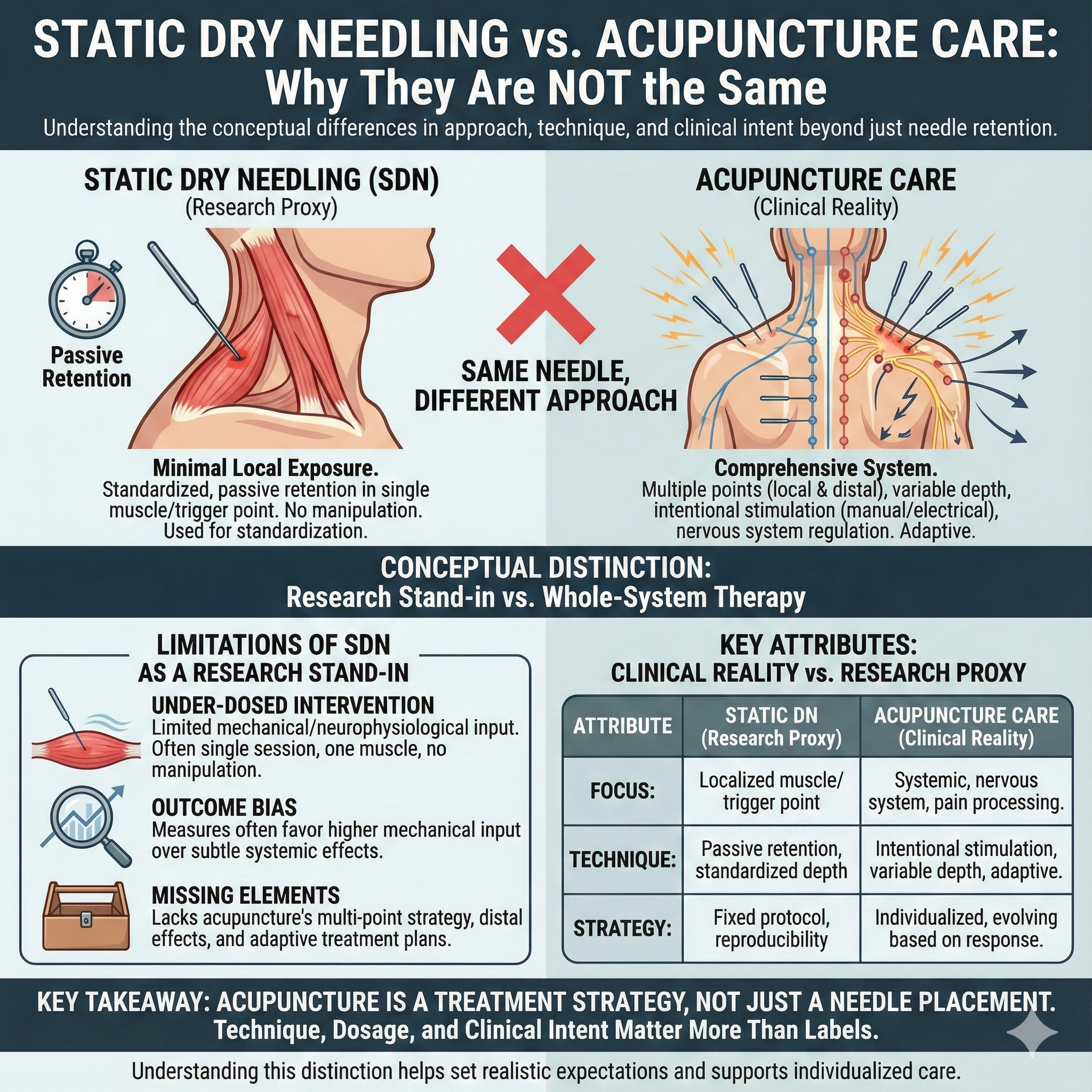
In this study, static dry needling involved:
Treating a single muscle
Using a very limited number of needles
Applying no needle manipulation
Measuring outcomes focused on local mechanical properties such as stiffness, tone, and perfusion
By contrast, acupuncture as it is typically practiced involves:
Multiple local and distal points
Variable needle depth across tissue layers
Manual stimulation during and sometimes throughout retention
Segmental and suprasegmental nervous system effects
A treatment strategy that extends beyond a single muscle or trigger point
In practical terms, the static dry needling protocol used in this trial more closely resembles minimal local needle exposure than acupuncture as a comprehensive intervention.
Why Static Dry Needling May Have Resembled Sham in This Trial
The finding that static dry needling did not differ significantly from sham needling should be interpreted carefully. It does not mean that needle retention is ineffective.
Rather, it suggests that needle retention without sufficient mechanical or neurophysiological input may be under-dosed when outcomes are defined narrowly and measured over short time frames.
Several factors likely contributed:
Single-session design: Acupuncture effects often accumulate across sessions
Trigger-point-only framing: Acupuncture frequently works through spinal, segmental, and central nervous system mechanisms, not just local tissue change
No manipulation or stimulation: Many acupuncture styles involve subtle but deliberate mechanical input during retention
Outcome selection biased toward mechanical change: Measures like stiffness and perfusion naturally favor higher-intensity mechanical interventions
From this perspective, the study highlights the limitations of using static dry needling as a proxy for acupuncture in research settings.
| Key question | Common assumption | What the evidence actually supports |
|---|---|---|
| Are static dry needling and acupuncture the same? | If the same needle is inserted and retained, static dry needling must be equivalent to acupuncture. | Both use the same solid filiform acupuncture needle, but they are not equivalent interventions. Acupuncture typically involves multiple points, variable depth, and intentional stimulation, whereas static dry needling in this study involved minimal local needle exposure. |
| Did the study evaluate acupuncture? | The results tell us whether acupuncture works better than static dry needling. | No. The trial compared dynamic dry needling, static dry needling, and sham needling using a trigger-point model in the upper trapezius. Acupuncture-style point selection or treatment strategies were not tested. |
| Why did static dry needling resemble sham? | If static dry needling does not outperform sham, needle retention must be ineffective. | The protocol likely delivered too little mechanical or neurophysiological input for the outcomes measured. A single session, minimal stimulation, and a single-muscle focus may be insufficient to produce detectable short-term changes in stiffness or pain sensitivity. |
| What was the clinical frame of the trial? | The study tested general needle retention effects. | All interventions were framed within a localized myofascial trigger point model, and outcomes focused on short-term mechanical and microcirculatory changes in a single muscle. |
| Why did dynamic dry needling show stronger effects? | Dynamic dry needling is always superior to acupuncture or static needling. | The selected outcomes naturally favor higher mechanical input. This explains the short-term differences observed in stiffness, tone, and pain sensitivity, but does not imply that dynamic dry needling is the best approach for all patients or conditions. |
| Has static dry needling replaced acupuncture? | Static dry needling is now the modern replacement for acupuncture. | In some research settings, static dry needling is used as a simplified stand-in for needle retention because it is easier to standardize and avoids acupuncture theory. This is a methodological choice, not evidence of equivalence. |
| Most accurate takeaway | The study shows that acupuncture does not work for neck trigger points. | The study shows that, in this protocol, higher mechanical needle stimulation produced greater short-term local changes than passive needle retention. It does not evaluate acupuncture as a comprehensive intervention. |
| What patients should focus on | Choosing the right label is the most important factor. | Technique, dosage, number of points, session frequency, and follow-up care are more important than whether a treatment is labeled acupuncture or dry needling. |
Has Static Dry Needling Replaced Acupuncture in Research?
In some musculoskeletal research, static dry needling has become a methodological stand-in for acupuncture-style needle retention. This is largely due to:
Easier standardization
Avoidance of acupuncture theory
Compatibility with biomedical trial design
However, this is a research convenience, not a physiological equivalence. The present study actually illustrates the risk of this substitution: when needle retention is stripped of its broader clinical context, dosage, and treatment strategy, its effects may appear minimal.
Acupuncture Is a Lot More Than “Poking Where It Hurts”
One reason static dry needling is sometimes assumed to be equivalent to acupuncture is that both may involve placing a needle near a painful area. From the outside, that can look like the same thing. Clinically, it is not.
Acupuncture is not simply about inserting a needle into a sore spot and waiting. While local needling can be part of treatment, acupuncture is typically designed to influence how pain is processed, not just where it is felt.
In practice, acupuncture often involves:
Treating areas away from the site of pain to influence spinal and brain-level processing
Using multiple points chosen for their relationship to nerves, movement patterns, and symptom behavior
Varying needle depth, stimulation, and timing based on how a patient responds
Reassessing and adjusting point selection session to session rather than repeating a fixed protocol
This is why acupuncture can be effective even when pain is diffuse, migratory, or not clearly linked to a single muscle or trigger point.
By contrast, static dry needling protocols in research are usually designed to be as simple and reproducible as possible. They often involve inserting a needle directly into a specific muscle and leaving it there without additional stimulation. That approach may be useful for studying isolated tissue effects, but it does not reflect how acupuncture is typically delivered in real-world care.
Put simply, acupuncture is a treatment strategy, not just a needle placement. The needle is a tool, but the clinical reasoning behind how, where, and why it is used is what shapes the overall effect.
This distinction helps explain why studies that reduce acupuncture to minimal local needle retention may underestimate what acupuncture can do, especially for complex or persistent pain conditions.
How This Fits Into Our Clinical Approach
At Morningside Acupuncture, we do not view acupuncture and dry needling as competing modalities. Dry needling is one needling style, and acupuncture itself encompasses hundreds of techniques that vary in stimulation, depth, and intent.
This study reinforces a principle we emphasize in practice:
Needles do not work in isolation. Technique, dosage, and context matter.
In some cases, dynamic dry needling may be appropriate to reduce muscle stiffness and pain sensitivity quickly. In others, traditional acupuncture strategies or a hybrid approach may better support nervous system regulation, recovery, and longer-term change.
Conclusion
Static dry needling is not the same as acupuncture, even though both use the same acupuncture needle. When research protocols reduce needle retention to minimal, localized exposure, they do not capture what acupuncture is designed to do clinically.
The real lesson from this study is not that static dry needling failed, or that acupuncture is unnecessary, but that how a needle is used matters far more than what it is called.
For patients navigating neck pain or muscle-related conditions, understanding this distinction can help set more realistic expectations and support more individualized, effective care.
Frequently Asked Questions (FAQ)
Does this study show that acupuncture doesn’t work?
No. The study did not test acupuncture. It compared different dry needling techniques within a trigger-point model.
Does static dry needling “not work”?
Not necessarily. It may simply have been under-dosed for the outcomes measured in this specific protocol.
Is dynamic dry needling always better than acupuncture?
No. Dynamic dry needling produced stronger short-term mechanical changes in this study, but that does not mean it is the best approach for every person, condition, or goal.
Why do some people feel better quickly but then regress?
Short-term changes in pain sensitivity and muscle stiffness often fade unless reinforced with movement, strengthening, and appropriate follow-up care.
How should I choose between acupuncture and dry needling?
Rather than focusing on labels, ask about technique, dosage, number of points used, session frequency, and how treatment fits into a broader plan.
You can read more in our overview of acupuncture styles:
👉 https://www.morningsideacupuncturenyc.com/blog/ultimate-list-of-acupuncture-styles
Ready to Try Acupuncture & Dry Needling?
Whether you’re struggling with acute or chronic pain, acupuncture and dry needling may help restore mobility and reduce pain - quickly and safely.
📍 Conveniently located in New York City
🧠 Experts in trigger point therapy, acupuncture, and dry needling
Book your appointment today with the experts at Morningside Acupuncture, the top-rated acupuncture and dry needling clinic in New York City.
Let us help you move better, feel stronger, and live pain-free.
Additional Resources & Next Steps
Learn More: Visit our Blog for further insights into our treatment approach.
What to Expect: During your initial consultation, we perform a comprehensive evaluation to develop a personalized treatment plan.
Patient Stories: Read testimonials from patients who have experienced lasting relief.
Sources:
Olaniszyn, G., et al. (2025). Comparative effects of static, classical, and sham dry needling on muscle properties and autonomic nervous system activity in cervical myofascial pain syndrome. Complementary Therapies in Medicine, 96, 103314.
Disclaimer: This web site is intended for educational and informational purposes only. Reading this website does not constitute providing medical advice or any professional services. This information should not be used for diagnosing or treating any health issue or disease. Those seeking medical advice should consult with a licensed physician. Seek the advice of a medical doctor or other qualified health professional for any medical condition. If you think you have a medical emergency, call 911 or go to the emergency room. No acupuncturist-patient relationship is created by reading this website or using the information. Morningside Acupuncture PLLC and its employees and contributors do not make any express or implied representations with respect to the information on this site or its use. For any legal interpretation of scope of practice in your state, consult a licensed attorney or regulatory authority.
Read more from our blog