Acupuncture and Dry Needling Terms

Morningside Acupuncture Glossary

Contact us to schedule now

Acupuncture & Dry Needling Glossary

This glossary is designed to bridge acupuncture, dry needling, trigger points, anatomy, and movement terminology in one place. Definitions are written in clear, scientific language for patients, athletes, and clinicians.

Note: Acupuncture is defined here as the use of an acupuncture needle (including hundreds of styles and techniques). Dry needling is included as an acupuncture style because it uses an acupuncture needle.

Acupuncture, Dry Needling & Pain Science Terms

Core terms commonly used in acupuncture, dry needling, and modern pain science.

Acupuncture
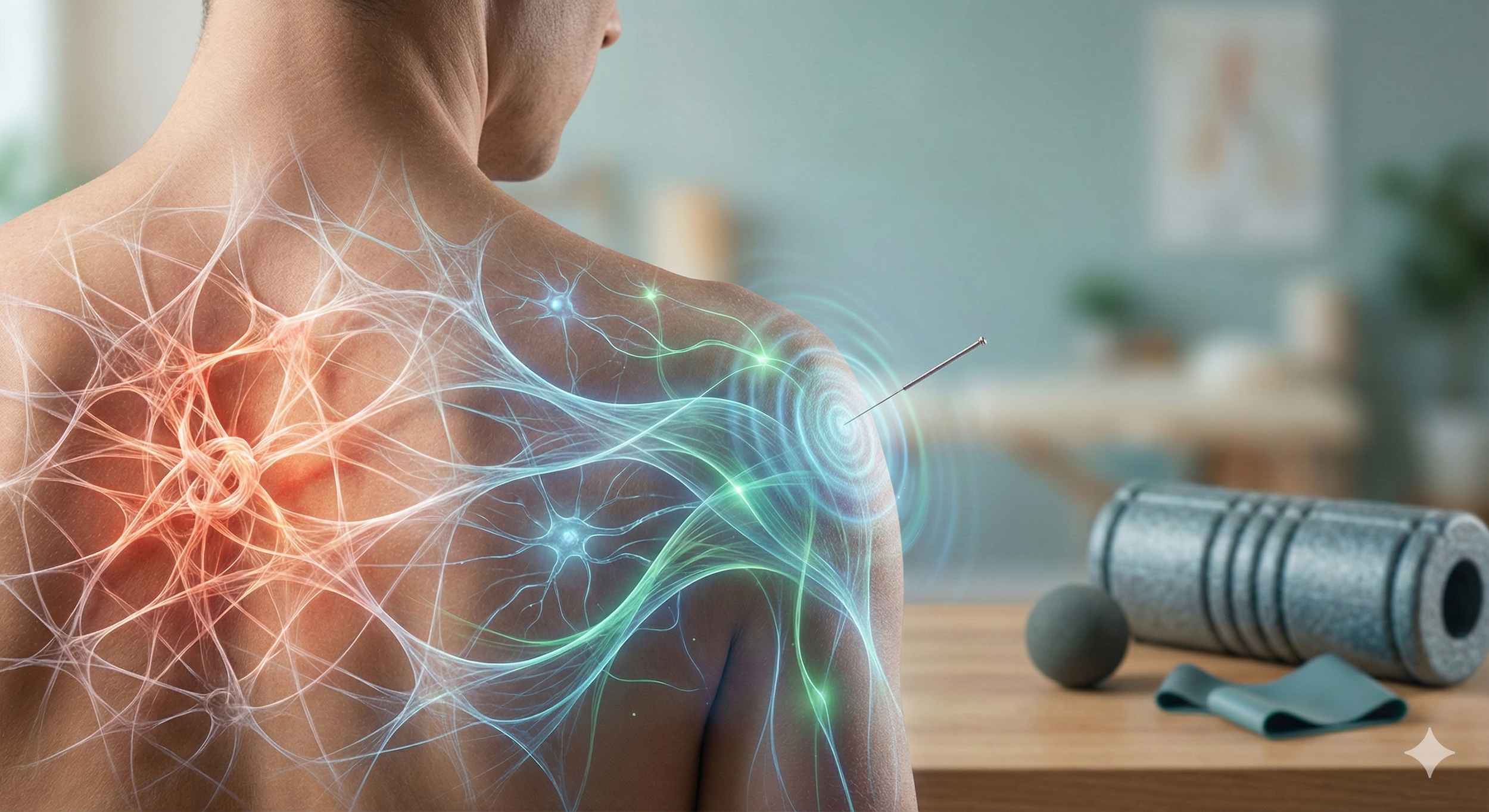
Use of an acupuncture needle (including hundreds of styles and techniques) to influence pain, muscle tone, and nervous system function.
Active Trigger Point
A trigger point that reproduces a person’s familiar symptoms when pressed or loaded.
Allodynia
Pain from a stimulus that would not normally be painful, such as light touch.
Central Sensitization
Increased sensitivity within the spinal cord and brain that can amplify pain and expand symptom patterns beyond the local tissue.
Dry Needling
An acupuncture style that uses an acupuncture needle to target muscle and connective tissue, often trigger points, to improve pain and movement.
Electroacupuncture
Low-frequency electrical stimulation delivered through acupuncture needles to modulate pain signaling and neuromuscular activity.
Hyperalgesia
Increased pain from a stimulus that would normally be painful.
Latent Trigger Point
A trigger point that is tender or limits function but does not reproduce the person’s familiar symptoms unless provoked.
Local Twitch Response
A brief involuntary contraction in a muscle region that can occur during needling of a sensitive area, reflecting a spinal reflex response.
Medical Acupuncture
A modern, anatomy-forward acupuncture approach that emphasizes neurophysiology, pain science, and tissue-based point selection.
Motor Point
A region where a motor nerve enters a muscle, often targeted for neuromuscular stimulation or needling to influence activation.
Myofascial Trigger Point
A trigger point described within the muscle and its surrounding connective tissue, linked to pain sensitivity and altered neuromuscular control.
Needle Angle
The direction of insertion relative to the skin and underlying structures, chosen for safety and target accuracy.
Needle Depth
How far the needle is inserted into tissue, selected based on anatomy, safety, and treatment target.
Needle Manipulation
Controlled needle movement used to change sensory input and tissue response.
Needling Dose
The overall intensity of needling input, including number of needles, depth, stimulation, and session frequency.
Neuromodulation
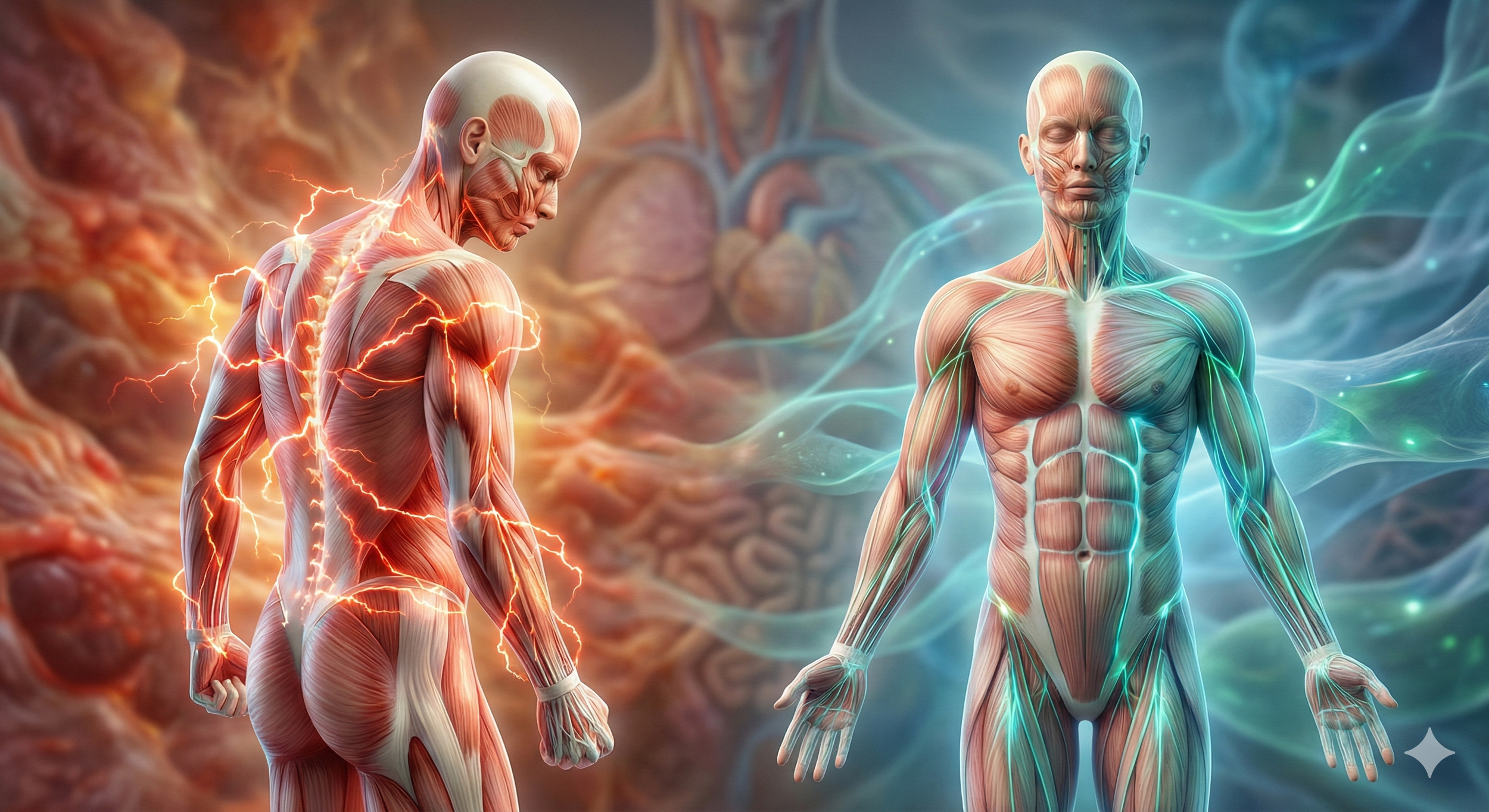
Changing nervous system signaling to shift pain sensitivity, muscle tone, and movement control.
Nociception
Neural processing of potentially harmful or threatening stimuli, which may or may not be experienced as pain.
Peripheral Sensitization
Increased sensitivity of local tissues and nerves that can amplify pain signals near the source.
Referred Pain
Pain felt in a different location from its source due to shared neural pathways and processing.
Segmental Needling
Needling chosen based on spinal segment input to influence pain and muscle tone in a related body region.
Traditional Acupuncture
Acupuncture styles such as TCM and Classical Acupuncture that use traditional acupoints and meridian frameworks, described here using modern physiologic language.
Trigger Point
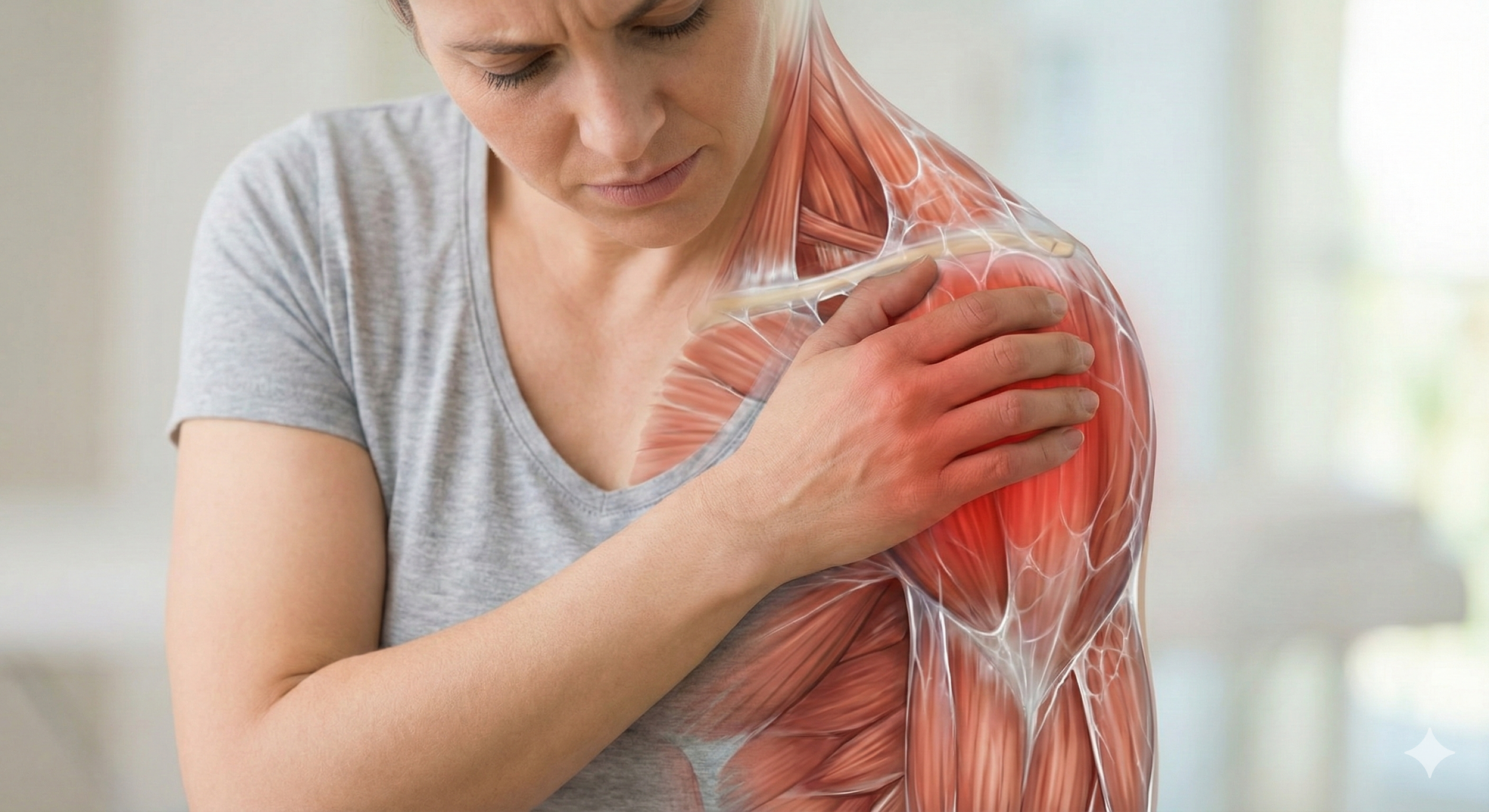
A sensitive, irritable area in muscle associated with local tenderness, stiffness, and sometimes referred pain or motor changes.

Styles of Acupuncture

Common acupuncture styles and clinical approaches you may see in modern practice.

Auricular Acupuncture
A microsystem approach using ear points associated with pain modulation and regional symptom patterns.
Community Acupuncture
A delivery model emphasizing accessible treatment in a community setting, often using simplified protocols.
Dr. Tan Balance Method
A style using mirror and balance relationships to select points, commonly used for pain and movement limitations.
Electroacupuncture (Technique)
A technique using electrical stimulation through needles to influence pain processing and neuromuscular output.
Five Element Acupuncture
A traditional approach using five-phase relationships to guide point selection and treatment strategy.
Japanese Acupuncture
A family of styles often emphasizing palpation, gentle needling, and refined technique selection.
Jeffrey Yuen Classical Acupuncture
A classical approach drawing on older texts and layered treatment frameworks while integrating modern clinical reasoning.
Kiiko Matsumoto Style
A Japanese-influenced approach emphasizing palpation findings and responsive point selection.
Master Tung Acupuncture
A system using a specialized set of points and combinations, often selected for rapid clinical effects.
Meridian Therapy
A Japanese style emphasizing meridian diagnosis and gentle technique to influence systemic and regional symptoms.
Orthopedic Acupuncture
A musculoskeletal-focused approach integrating anatomy, movement testing, and tissue-based point selection.
Scalp Acupuncture
A microsystem approach using scalp regions associated with functional neurological maps and symptom patterns.
Traditional Chinese Medicine (TCM) Acupuncture
A traditional system using acupoints and meridians, often combined with pattern-based clinical reasoning and modern anatomy considerations.

Chinese Medicine Modalities

Supportive tools and practices often used alongside acupuncture.

Acupressure
Manual pressure applied to specific points or regions to influence symptoms through sensory input and local tissue effects.
Chinese Herbal Medicine
Use of plant-based formulas within a traditional framework, often discussed alongside modern considerations of safety and interactions.
Cupping Therapy
A negative-pressure technique applied to skin and soft tissue to influence circulation, tissue mobility, and pain sensitivity.
Dietary Therapy
Food and nutrition guidance used to support recovery, energy, and symptom management within a traditional and modern health lens.
Fire Cupping
A cupping technique using brief heat to create negative pressure in the cup before application to the skin.
Gua Sha
A scraping-based soft tissue technique that can temporarily change local blood flow and pain sensitivity and may improve tissue glide.
Moxibustion
A heat-based therapy commonly applied near points or tissues to influence comfort, circulation, and tissue sensitivity.
Qi Gong
A breathing-and-movement practice used to improve relaxation, posture, and nervous system regulation via paced motion and attention.
Tai Chi
A low-impact movement practice that trains balance, coordination, and controlled loading, often used for pain and mobility support.
Tui Na
A hands-on Chinese manual therapy system using massage, mobilization, and soft-tissue techniques to reduce pain and improve function.
Free eBook: Understanding Muscle Pain

Anatomy Orientation Terms

Directional terms used to describe where something is located on the body.

Anterior
Toward the front of the body.
Bilateral
On both sides of the body.
Contralateral
On the opposite side of the body.
Deep
Farther from the surface of the body.
Distal
Farther from the trunk or point of origin.
Dorsal
Toward the back side; often used for the back of the hand or top of the foot.
Inferior
Lower on the body, toward the feet.
Ipsilateral
On the same side of the body.
Lateral
Away from the midline of the body.
Medial
Toward the midline of the body.
Posterior
Toward the back of the body.
Proximal
Closer to the trunk or point of origin.
Superficial
Closer to the surface of the body.
Superior
Higher on the body, toward the head.
Ventral
Toward the front side; often used for the palm side of the hand.

Body Positions

Common clinical and exercise positions used for assessment and treatment.

Hook-lying
Supine with knees bent and feet flat, often used for core and pelvic positioning work.
Neutral Spine
A mid-range spinal position typically used to optimize load distribution and control.
Pelvic Neutral
A mid-range pelvic position between anterior and posterior tilt.
Prone
Lying on the stomach, face down.
Quadruped
Hands-and-knees position often used for spinal control and core training.
Seated
Sitting upright with hips and knees flexed.
Side-lying
Lying on one side with the body supported laterally.
Standing
Upright posture with bodyweight supported through the feet.
Supine
Lying on the back, face up.

Joint Movements

Movement terms used to describe joint actions during assessment, exercise, and sport.

Ankle Dorsiflexion
Bringing the top of the foot toward the shin.
Ankle Plantarflexion
Pointing the foot downward away from the shin.
Foot Eversion
Turning the sole of the foot outward.
Foot Inversion
Turning the sole of the foot inward.
Hip Abduction
Moving the thigh out to the side away from the midline.
Hip Adduction
Moving the thigh toward the midline.
Hip Extension
Moving the thigh backward relative to the pelvis.
Hip External Rotation
Rotating the thigh so the knee turns outward.
Hip Flexion
Bringing the thigh toward the torso.
Hip Internal Rotation
Rotating the thigh so the knee turns inward.
Knee Extension
Straightening the knee to increase the angle between thigh and lower leg.
Knee Flexion
Bending the knee to decrease the angle between thigh and lower leg.
Shoulder Abduction
Lifting the arm out to the side away from the body.
Shoulder Adduction
Bringing the arm back toward the side of the body.
Shoulder Extension
Moving the arm backward behind the body.
Shoulder External Rotation
Rotating the upper arm so the front of the arm turns outward away from the body.
Shoulder Flexion
Raising the arm forward and up in front of the body.
Shoulder Internal Rotation
Rotating the upper arm so the front of the arm turns inward toward the body.
Spinal Extension
Bending the spine backward.
Spinal Flexion
Bending the spine forward.
Spinal Lateral Flexion
Side-bending the trunk to the left or right.
Spinal Rotation
Turning the trunk around the spine’s vertical axis.

Biomechanics & Movement Science

Terms used to describe how muscles, joints, and the nervous system coordinate movement.

Agonist
A muscle that primarily produces a given movement.
Antagonist
A muscle that opposes a given movement and helps control it.
Force Couple
A coordinated set of muscles that produce balanced rotation or positioning of a joint segment.
Kinetic Chain
How body segments influence each other during movement and load transfer.
Length-Tension Relationship
The idea that a muscle’s force output depends on its length and overlap of contractile elements.
Motor Control
How the nervous system coordinates movement timing, sequencing, and stability.
Motor Unit
A motor neuron and the muscle fibers it controls.
Prime Mover
The main muscle responsible for generating force in a specific movement.
Proprioception
Sensory input that informs the brain about joint position, movement, and load.
Reciprocal Inhibition
A nervous system mechanism where activation of one muscle group reduces activation in its opposing group.
Regional Interdependence
The concept that dysfunction or load issues in one region can contribute to symptoms in another region.
Stabilizer
A muscle that limits unwanted motion to support efficient movement.
Synergist
A muscle that assists another muscle in producing or controlling a movement.
TRY NOW: Trigger Point Pain Finder

Muscles & Trigger Point Map

Key muscles included in your trigger point reference map.

Abdominal Obliques
Core muscles that rotate and side-bend the trunk and help stabilize the pelvis and ribcage.
Abductor Digiti Minimi (Foot)
A small foot muscle that abducts the little toe and supports the lateral arch.
Abductor Digiti Minimi (Hand)
A hand muscle that abducts the little finger and supports grip mechanics.
Abductor Hallucis
A foot muscle that abducts the big toe and supports the medial arch.
Adductor Brevis
A medial thigh muscle that adducts the hip and assists hip flexion.
Adductor Longus
A medial thigh muscle that adducts the hip and contributes to pelvic control in gait.
Adductor Magnus
A large medial thigh muscle that adducts the hip and contributes to hip extension and stability.
Adductor Pollicis
A hand muscle that adducts the thumb, important for pinch and grip strength.
Anconeus
A small elbow muscle that assists elbow extension and joint stabilization.
Biceps Brachii
An upper arm muscle that flexes the elbow and supinates the forearm.
Biceps Femoris
A hamstring muscle that flexes the knee and helps extend the hip, important for sprinting mechanics.
Brachialis
A primary elbow flexor muscle located deep to the biceps.
Brachioradialis
A forearm muscle that flexes the elbow, especially in neutral forearm position.
Coracobrachialis
A shoulder muscle that assists shoulder flexion and adduction and stabilizes the humerus.
Deltoid
A shoulder muscle responsible for arm elevation and contributing to shoulder stability.
Erector Spinae
Back muscles that extend the spine and help control posture and load tolerance.
Extensor Carpi Radialis Brevis
A wrist extensor that stabilizes the wrist during gripping and lifting.
Extensor Carpi Radialis Longus
A wrist extensor that also contributes to radial deviation and wrist stability.
Extensor Digitorum
A forearm muscle that extends the fingers and helps stabilize the wrist.
Extensor Hallucis Longus
A lower leg muscle that extends the big toe and assists ankle dorsiflexion.
Extensor Indicis
A forearm muscle that extends the index finger and supports hand control.
Flexor Carpi Radialis
A wrist flexor that also contributes to radial deviation and grip support.
Flexor Carpi Ulnaris
A wrist flexor that also contributes to ulnar deviation and wrist stability.
Flexor Digitorum Profundus
A deep forearm muscle that flexes the fingers, crucial for gripping.
Flexor Digitorum Superficialis
A forearm muscle that flexes the fingers and supports grip mechanics.
Gastrocnemius
A calf muscle that plantarflexes the ankle and assists knee flexion, important for running and jumping.
Gluteus Maximus
A major hip extensor muscle that powers hip drive and supports pelvic stability.
Gluteus Medius
A lateral hip muscle important for hip abduction and pelvic stability during walking, running, and single-leg loading.
Gluteus Minimus
A deep lateral hip muscle that assists hip abduction and helps stabilize the femoral head.
Gracilis
A medial thigh muscle that adducts the hip and contributes to knee flexion and medial control.
Iliacus
A hip flexor muscle that helps lift the thigh and stabilize the hip joint.
Infraspinatus
A rotator cuff muscle that externally rotates the shoulder and supports joint stability.
Intercostals
Rib muscles that assist breathing mechanics and contribute to ribcage movement control.
Latissimus Dorsi
A broad back muscle that extends and adducts the shoulder and supports trunk-to-arm force transfer.
Levator Scapulae
A neck-shoulder muscle that elevates the scapula and can contribute to neck tension patterns.
Lumbricals
Small hand muscles that help coordinate finger flexion and extension for fine motor control.
Masseter
A jaw muscle used for chewing, commonly involved in clenching-related jaw tension.
Medial Pterygoid
A deep jaw muscle that elevates the mandible and can contribute to jaw and facial tension.
Multifidus
Deep spinal stabilizers that control segmental motion and support lumbar stability.
Obturator Internus
A deep hip external rotator that supports hip stability and can refer pain around the buttock and hip.
Palmar Interossei
Hand muscles that adduct the fingers and support grip coordination.
Pectoralis Major
A chest muscle that adducts and internally rotates the shoulder and supports pressing mechanics.
Pectoralis Minor
A small chest muscle that influences scapular position and can contribute to anterior shoulder tension.
Peroneus Brevis
A lateral lower leg muscle that everts the foot and contributes to ankle stability.
Peroneus Longus
A lateral lower leg muscle that everts the foot and supports arch mechanics.
Piriformis
A deep hip muscle that assists external rotation and can contribute to buttock pain patterns.
Plantaris
A small posterior lower leg muscle with a long tendon, sometimes sensitive with calf and Achilles region symptoms.
Popliteus
A deep knee muscle that assists knee rotation control and supports posterior knee mechanics.
Pronator Teres
A forearm muscle that pronates the forearm and assists elbow flexion.
Quadratus Lumborum
A deep trunk muscle that side-bends the spine and stabilizes the pelvis and ribcage.
Rectus Abdominis
A core muscle that flexes the trunk and supports abdominal bracing.
Rectus Femoris
A quadriceps muscle that extends the knee and flexes the hip, important for kicking and sprinting.
Rhomboid Major
An upper back muscle that retracts the scapula and supports posture and shoulder mechanics.
Rhomboid Minor
An upper back muscle that assists scapular retraction and stabilization.
Rotatores
Small deep spinal muscles that assist rotation control and segmental stability.
Sartorius
A hip and knee muscle that assists hip flexion and external rotation and contributes to knee flexion.
Scalenes
Neck muscles that assist breathing mechanics and control cervical side-bending and stability.
Serratus Anterior
A scapular control muscle that protracts and upwardly rotates the scapula, important for shoulder health.
Soleus
A deep calf muscle that plantarflexes the ankle and supports endurance-based running and walking loads.
Splenius Capitis
A neck muscle that extends and rotates the head and can contribute to head and neck tension patterns.
Splenius Cervicis
A neck muscle that extends and rotates the cervical spine and supports posture control.
Sternocleidomastoid
A prominent neck muscle involved in head rotation and flexion, often sensitive with neck and headache symptoms.
Subclavius
A small muscle under the collarbone that stabilizes the clavicle and influences shoulder girdle mechanics.
Suboccipitals
Small deep muscles at the base of the skull that control fine head motion and can contribute to headache patterns.
Supraspinatus
A rotator cuff muscle that initiates shoulder abduction and supports shoulder stability.
Temporalis
A jaw muscle involved in chewing and clenching, often linked to temple and jaw tension.
Tensor Fasciae Latae
A lateral hip muscle that assists hip flexion and abduction and contributes to IT band region load transfer.
Teres Major
A shoulder muscle that extends and internally rotates the arm and supports pulling mechanics.
Teres Minor
A rotator cuff muscle that externally rotates the shoulder and supports joint stability.
Thoracic Paraspinals
Mid-back muscles that extend the thoracic spine and support posture and breathing mechanics.
Tibialis Anterior
A shin muscle that dorsiflexes the ankle and supports foot clearance during gait.
Tibialis Posterior
A deep lower leg muscle that supports the medial arch and contributes to foot inversion control.
Trapezius (Lower)
An upper back muscle that assists scapular upward rotation and depression, important for shoulder mechanics.
Trapezius (Middle)
An upper back muscle that retracts the scapula and supports shoulder girdle positioning.
Trapezius (Upper)
An upper back and neck muscle involved in scapular elevation and neck load tolerance, often sensitive in neck and shoulder pain.
Triceps Brachii
An upper arm muscle that extends the elbow and supports pushing strength.
Transversus Abdominis
A deep abdominal muscle that supports trunk stability and abdominal bracing.
Vastus Intermedius
A deep quadriceps muscle that extends the knee and supports load tolerance in squatting and running.
Vastus Lateralis
A quadriceps muscle that extends the knee and contributes to lateral knee load tolerance and tracking.
Vastus Medialis
A quadriceps muscle that extends the knee and supports knee control, especially near terminal extension.
Zygomaticus
A facial muscle involved in elevating the corners of the mouth, relevant for facial movement and expression.
Free eBook: How to Reduce Stress Naturally


Read: Ultimate List of Acupuncture Styles

Ready to Try Acupuncture & Dry Needling?

Whether you’re struggling with acute or chronic pain, acupuncture and dry needling may help restore mobility and reduce pain - quickly and safely.

📍 Conveniently located in New York City
🧠 Experts in trigger point therapy, acupuncture, and dry needling

Book your appointment today with the experts at Morningside Acupuncture, the top-rated acupuncture and dry needling clinic in New York City.

Let us help you move better, feel stronger, and live pain-free.

Additional Resources & Next Steps

  • Learn More: Visit our Blog for further insights into our treatment approach.

  • What to Expect: During your initial consultation, we perform a comprehensive evaluation to develop a personalized treatment plan.

  • Patient Stories: Read testimonials from patients who have experienced lasting relief.


Contact Us to Schedule an Appointment


Disclaimer: This web site is intended for educational and informational purposes only. Reading this website does not constitute providing medical advice or any professional services. This information should not be used for diagnosing or treating any health issue or disease. Those seeking medical advice should consult with a licensed physician. Seek the advice of a medical doctor or other qualified health professional for any medical condition. If you think you have a medical emergency, call 911 or go to the emergency room. No acupuncturist-patient relationship is created by reading this website or using the information. Morningside Acupuncture PLLC and its employees and contributors do not make any express or implied representations with respect to the information on this site or its use. For any legal interpretation of scope of practice in your state, consult a licensed attorney or regulatory authority.


Read more from our blog

Theodore Levarda

Teddy is a licensed acupuncturist and certified myofascial trigger point therapist at Morningside Acupuncture in New York City.

Teddy specializes in combining traditional acupuncture with dry needling to treat pain, sports injuries, and stress.

https://www.morningsideacupuncturenyc.com/
Previous
Previous

Herniated Disc Treatment NYC

Next
Next

Is Static Dry Needling the Same as Acupuncture?