Herniated Disc Treatment NYC
Understanding herniated discs and pain
Acupuncture and dry needling for herniated disc symptoms, including sciatica, numbness, and radiating pain
If you have low back pain that shoots into your leg, or neck pain that radiates into your arm, an MRI that says “herniated disc” can feel like a definitive answer.
Sometimes it is. Often, it’s only part of the story.
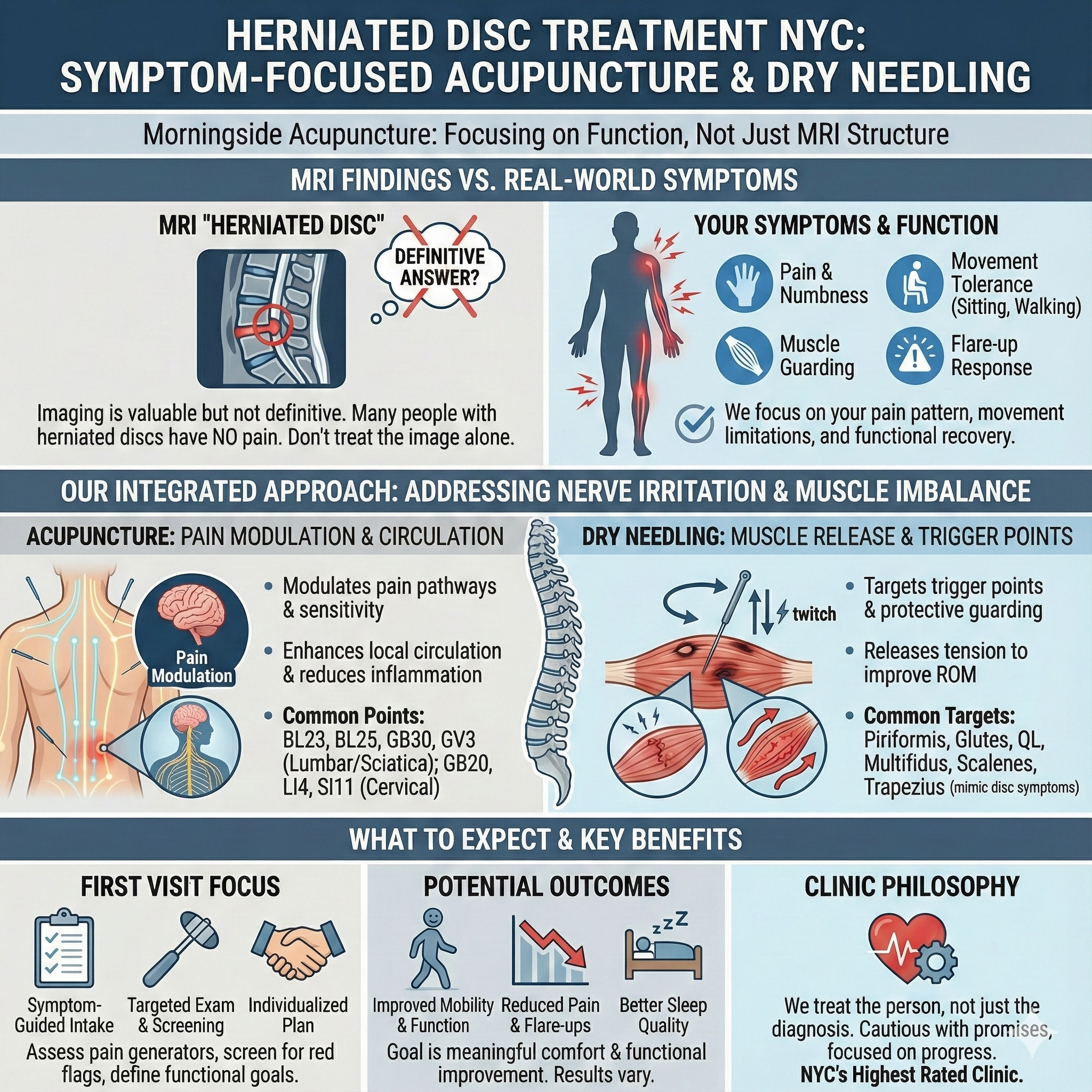
At Morningside Acupuncture, New York City’s highest rated acupuncture and dry needling clinic, we focus on symptoms and function, not “fixing” structure on imaging. Many MRI findings don’t match pain intensity, and some are present in people who have no pain at all (see the imaging research below).
Related reading:
We treat symptoms and function, not MRI “structure”
MRI is valuable for ruling out serious issues and clarifying anatomy. But large imaging research shows that many spine findings, including disc degeneration, bulges, and protrusions, are common in people without pain and increase with age. A widely cited 2015 systematic review helps explain why imaging should be interpreted alongside symptoms and exam rather than treated as a stand-alone explanation for pain.
That’s why our care is built around:
Your symptom pattern (pain, numbness, tingling, weakness, sensitivity)
Movement tolerance (sitting, bending, walking, training)
Muscle guarding and compensation patterns
Your response to treatment over time
We aim for meaningful improvements in comfort and function, but we stay cautious about promises. Response varies by person and by diagnosis.
Herniated disc symptoms
Common symptom patterns include:
Local back or neck pain
Radiating pain into the arm or leg
Numbness, tingling, burning sensations
Pain that worsens with sitting, bending, coughing, or prolonged positions
Protective muscle tightness, spasm, or “locked up” movement
Urgent red flags: bowel or bladder changes, saddle anesthesia, rapidly worsening weakness, or severe progressive neurological symptoms require urgent medical evaluation.
Bulging disc vs herniated disc
MRI wording can be confusing.
A bulging disc often means a broader, more uniform extension of the disc.
A herniated disc usually implies a more focal protrusion (sometimes described as protrusion or extrusion).
The key point is clinical: the MRI label does not automatically identify the pain generator. Imaging findings should be interpreted alongside symptoms and exam.
Sciatica vs herniated disc
“Sciatica” describes a symptom pattern (radiating nerve-type pain into the leg). “Herniated disc” describes an anatomic finding.
You can have:
Sciatica symptoms with a disc herniation
Sciatica symptoms without a disc herniation
A disc herniation with minimal or no symptoms
If you want a deeper sciatica-focused overview, see Sciatica Treatment NYC.
Understanding the Biomechanics & Mechanisms
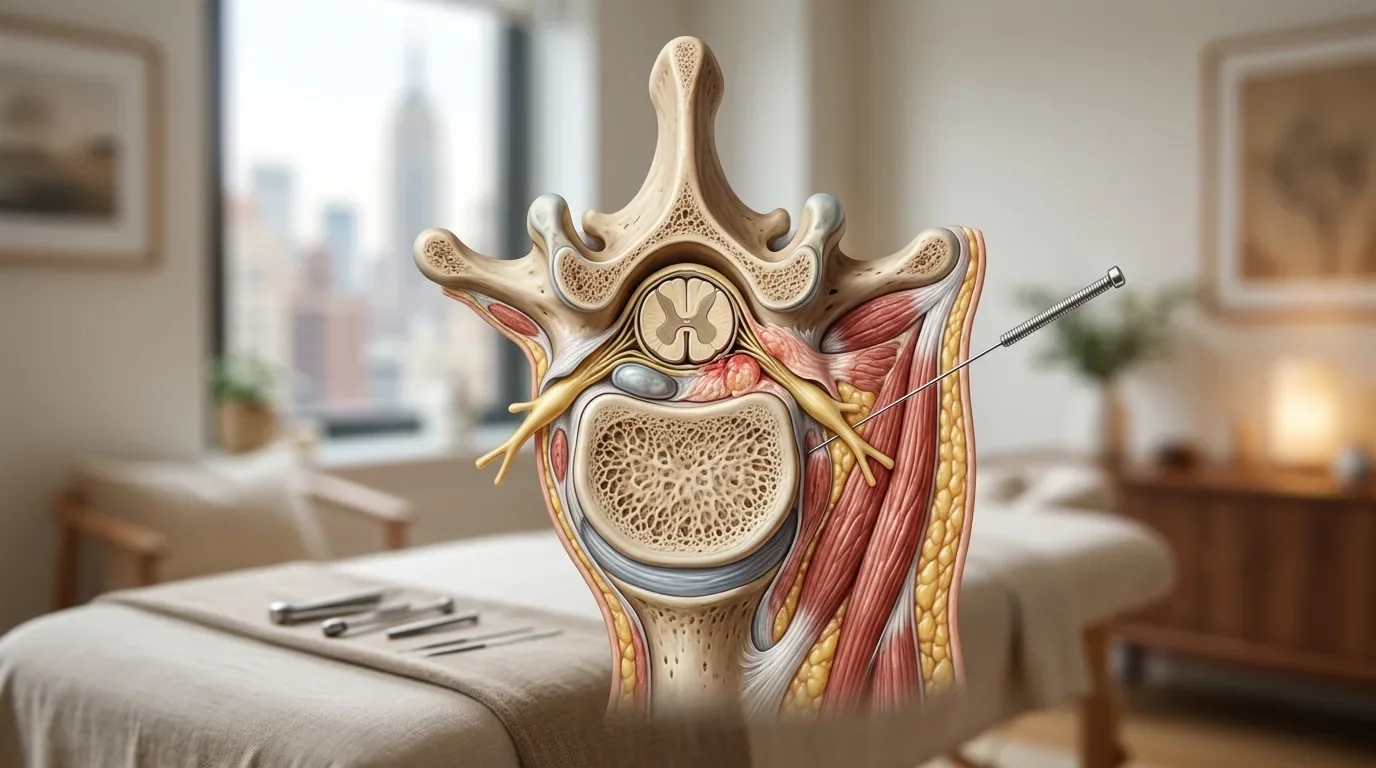
Key factors contributing to disc herniation include:
Disc Degeneration and Rupture:
Age-related wear or acute trauma can cause a disc to rupture, allowing its inner material to protrude.
Nerve Compression:
The herniated disc may compress adjacent nerve roots, leading to pain and neurological symptoms.
Inflammatory Response:
Chemical mediators released by the disc material can irritate nearby nerves, amplifying pain signals.
Types of herniated discs: cervical, thoracic, lumbar
Cervical disc herniation (neck)
Cervical disc symptoms often include neck pain with radiating symptoms into the shoulder, arm, or hand, plus possible numbness or tingling. Because muscular referral can overlap heavily with cervical patterns, we also assess for trigger points that can mimic nerve pain (see trigger point section below).
Thoracic disc herniation (mid-back)
Thoracic disc herniations are less common. Symptoms may include mid-back pain, rib-area pain, or chest-wall type symptoms. These patterns often overlap with muscular referral and rib mechanics, so differential diagnosis matters.
Lumbar disc herniation (low back)
Lumbar disc symptoms frequently include low back pain with sciatica-type radiating leg pain, numbness, tingling, or burning sensations. Symptoms may worsen with sitting or bending in some presentations.
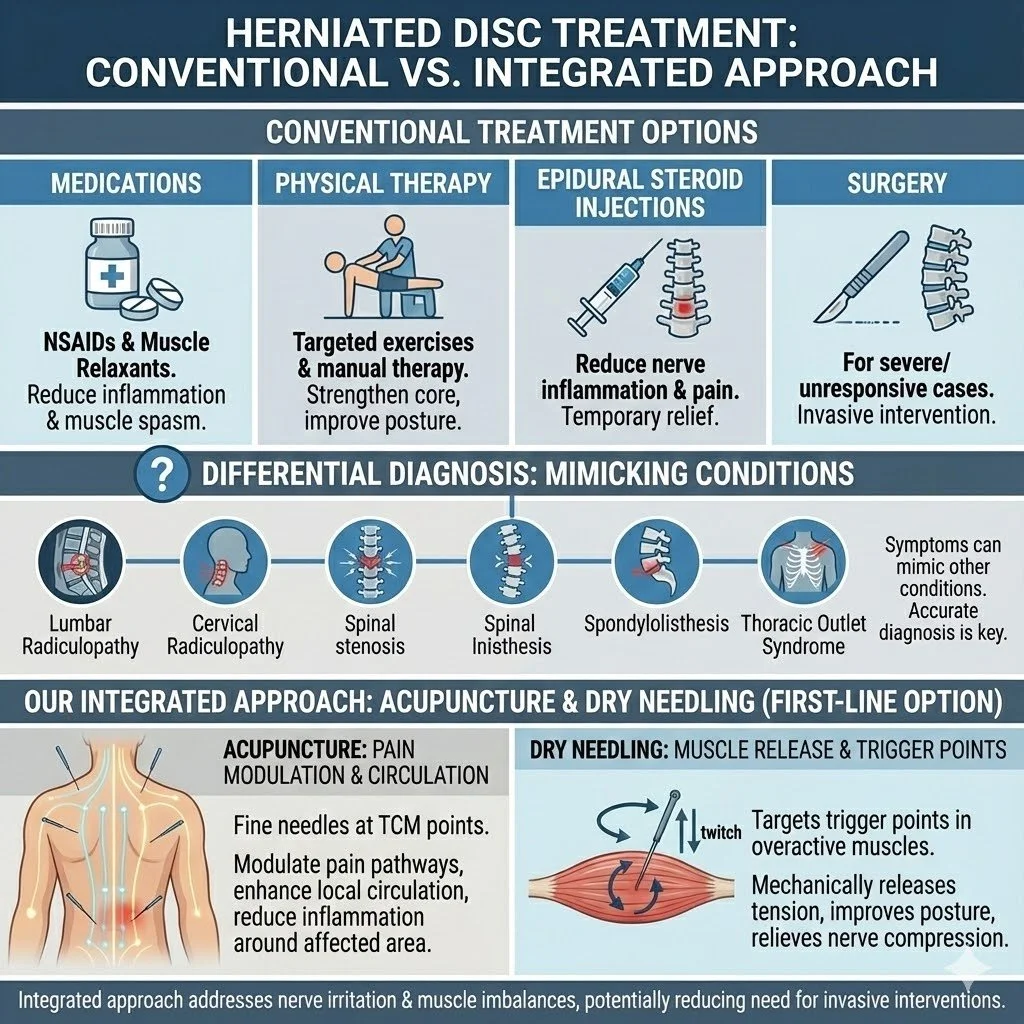
Treatment Options: A Broader Perspective
Conventional treatments for herniated discs typically include:
Medications:
Nonsteroidal anti-inflammatory drugs (NSAIDs) and muscle relaxants
Physical Therapy:
Targeted exercises and manual therapy to strengthen the core and improve posture
Epidural Steroid Injections:
To reduce nerve inflammation and pain
Surgery:
Considered for severe or unresponsive cases
Differential Diagnosis:
Disc herniation symptoms can mimic conditions such as:
Lumbar radiculopathy
Cervical radiculopathy
Spinal stenosis
Spondylolisthesis
Thoracic outlet syndrome
Our integrated approach, combining acupuncture with dry needling, is presented as a first-line option to address the underlying nerve irritation and muscular imbalances, potentially reducing the need for invasive interventions.
How Acupuncture & Dry Needling Can Help
Our dual-modality approach offers comprehensive benefits:
Acupuncture:
Fine needles are inserted at specific TCM points to modulate pain pathways, enhance local circulation, and reduce inflammation around the affected area.
Dry Needling:
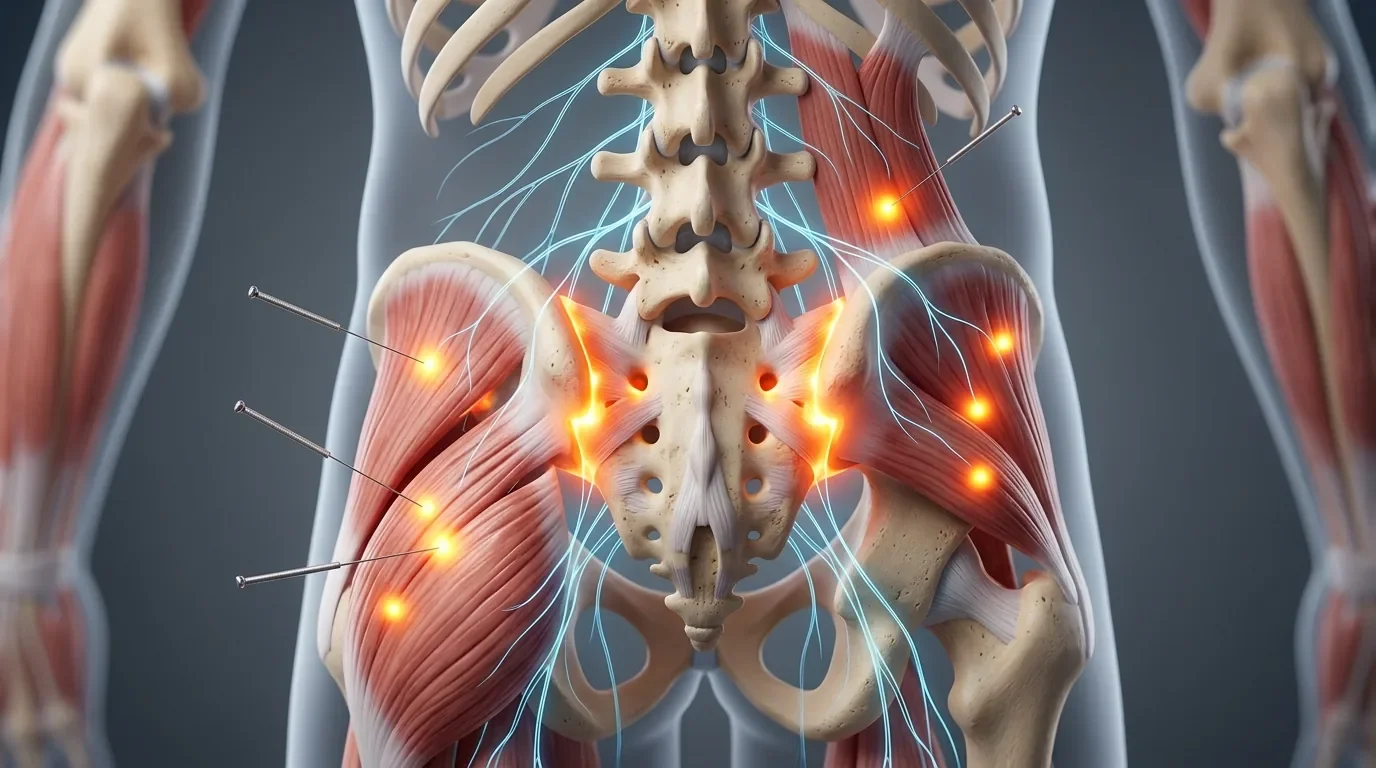
Targets trigger points in overactive paraspinal and supporting muscles to mechanically release tension, improve posture, and relieve nerve compression.
Summary Table:
| Herniated disc treatment method | What we do | What it may help (symptom-based) | Common clinical targets |
|---|---|---|---|
| Acupuncture for herniated disc symptoms | Acupuncture needle treatment using traditional acupoints and modern pain-modulation strategies | May reduce pain sensitivity and improve movement tolerance for some patients, including sciatica-type symptoms | Region-specific selections (cervical, thoracic, or lumbar) plus distal points selected based on symptoms and exam |
| Dry needling for herniated disc symptoms | Trigger point dry needling using an acupuncture needle | May decrease protective muscle guarding and reduce myofascial pain that can mimic “disc pain,” supporting better ROM and activity tolerance | Paraspinals, multifidus region, quadratus lumborum, glutes, deep hip rotators, and other muscles that reproduce your symptoms |
| Integrated plan | Symptom-guided pacing plus coordination with your care team when appropriate | Supports a gradual return to sitting, walking, training, and sport while symptoms settle | Movement tolerance tracking, flare-up plan, and progression based on response |
Acupuncture for herniated disc symptoms
Acupuncture may help by modulating pain processing in the nervous system and reducing pain sensitivity, which can improve movement tolerance for some patients.
A large randomized clinical trial in patients with chronic sciatica from herniated disk found acupuncture led to greater improvements in pain and function than sham acupuncture at 4 weeks, with benefits tracked through 52 weeks: Tu et al. (2024).
We interpret this practically: acupuncture may be a useful conservative option to reduce symptom burden and improve function, but results vary and care should be individualized.
Acupuncture points we may use
Point selection is individualized, but these are commonly considered depending on region and symptom pattern.
Lumbar disc symptoms and sciatica patterns
BL23, BL25, BL26, GV3, GV4, BL40, BL57, BL60, GB30, GB34, GB41, plus Huatuojiaji at relevant lumbar levels (when appropriate).
Cervical disc symptoms (neck with arm referral patterns)
GB20, GB21, SI11, SI12, LI4, LI11, SJ5 (selected case-by-case based on symptoms).
Thoracic disc symptoms (mid-back and rib-area patterns)
Huatuojiaji at thoracic levels (when appropriate), and region-specific points selected by exam.
Dry needling for herniated disc symptoms
Dry needling is commonly used to reduce protective muscle guarding and trigger point irritability that often develops around neck and back pain patterns.
A prospective 2022 randomized study in chronic low back pain associated with L5–S1 discopathy reported improvements in pain and functional outcomes with a structured dry needling program: Rajfur et al. (2022).
Dry needling isn’t a guarantee and isn’t intended to “fix” disc structure. The goal is symptom relief and improved movement tolerance.
Important caution: These approaches aim to improve symptoms and function. They are not “disc-repair” procedures, and we don’t promise specific structural changes on MRI.
Trigger points can mimic herniated disc symptoms (and sometimes explain the pain)
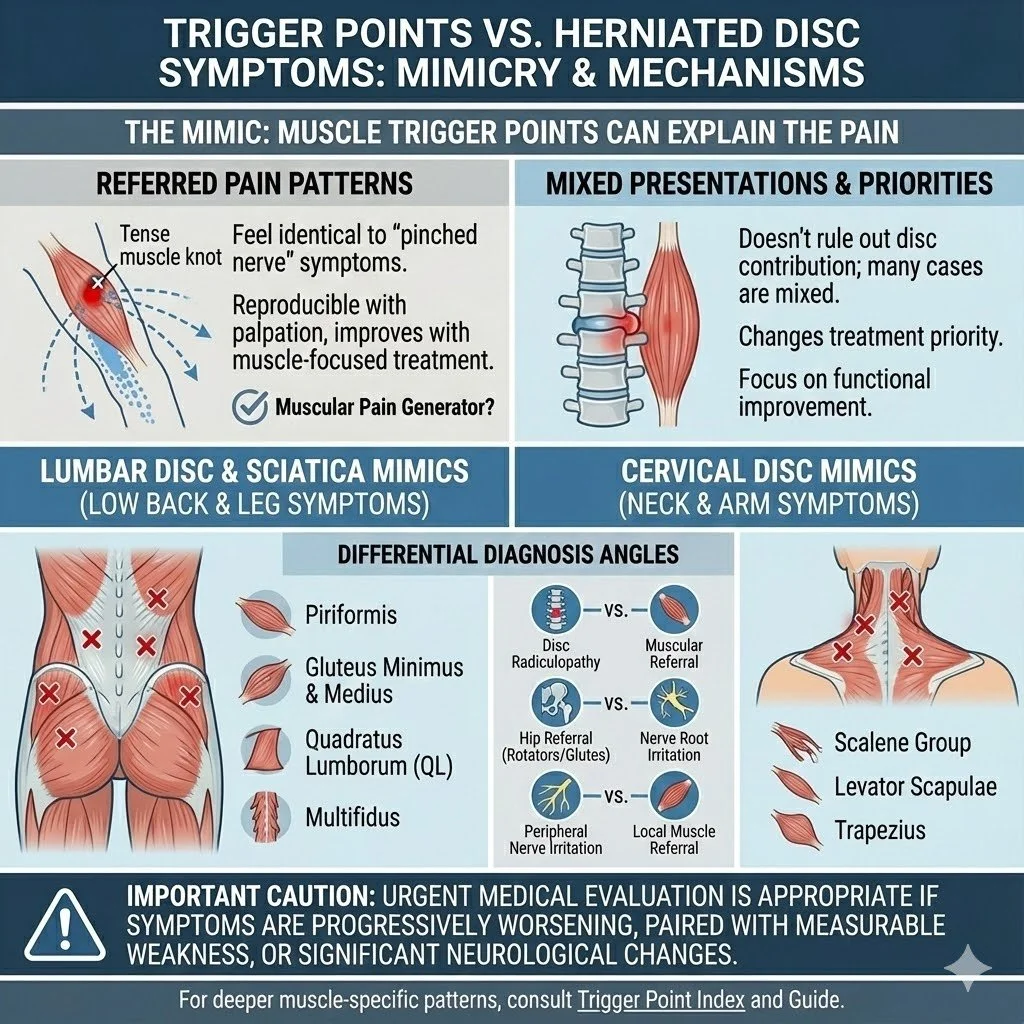
Trigger points can create referred pain patterns that feel almost identical to “pinched nerve” symptoms. If your familiar symptoms reproduce with muscle palpation and then improve substantially after muscle-focused treatment, it suggests the primary pain generator may have been muscular rather than disc-driven.
This doesn’t rule out a disc contribution. Many cases are mixed. But it can change what we prioritize in treatment.
For deeper muscle-specific referral patterns, use the Trigger Point Index and the Trigger Points Guide.
Trigger points that can mimic lumbar disc or sciatica symptoms
Differential diagnosis angles for sciatica-like trigger point patterns
Depending on the presentation, we consider overlap with:
Disc-related radiculopathy versus muscular referral
Hip referral patterns (deep rotators/glutes) versus nerve root irritation
Peripheral nerve irritation versus local muscle referral
If symptoms are progressively worsening, paired with measurable weakness, or accompanied by significant neurological changes, medical evaluation is appropriate.
Trigger points that can mimic cervical disc symptoms (neck with arm symptoms)
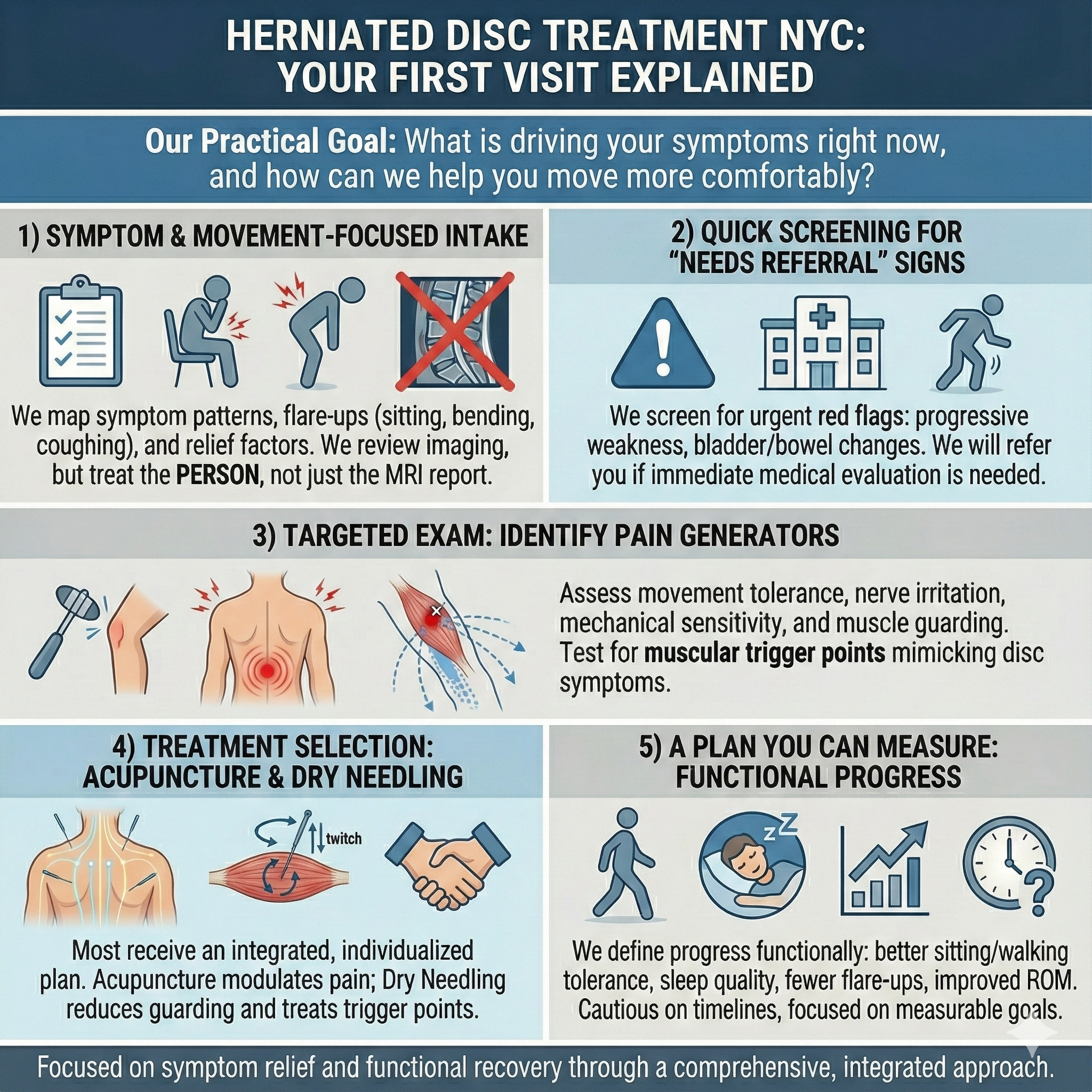
Herniated disc treatment NYC: what to expect at your first visit
Your first visit is designed to answer one practical question: what is most likely driving your symptoms right now, and what can we do to help you move more comfortably?
1) A symptom and movement-focused intake
We map your symptom pattern, what positions flare symptoms (sitting, bending, coughing, standing, walking), and what relieves them. We can review imaging if you have it, but we do not treat the MRI report as a stand-alone diagnosis.
2) Quick screening for “needs referral” signs
If your symptoms suggest urgent medical evaluation (for example, progressive weakness or changes in bowel or bladder function), we’ll tell you.
3) A targeted exam to identify likely pain generators
We assess movement tolerance and look for signs of nerve irritation, mechanical sensitivity, and protective muscle guarding. We also test for muscular referral patterns (trigger points) that can mimic disc symptoms.
4) Treatment selection: acupuncture, dry needling, or both
Most patients receive an integrated plan. Acupuncture is often used to modulate pain sensitivity. Dry needling is often used to reduce guarding and treat trigger points that amplify pain or mimic nerve symptoms. Your plan is individualized.
5) A plan you can measure
We define progress in functional terms: sitting tolerance, walking tolerance, sleep quality, fewer flare-ups, and improved range of motion. We stay cautious about timelines and do not promise a specific outcome.
Frequently Asked Questions (FAQ)
Will a herniated lumbar disc heal?
Many people improve over time. Healing is best measured by symptom reduction and function return rather than MRI appearance alone.
How long does a herniated disc take to heal?
It varies. Some people improve over weeks, others over months. Track practical markers like walking tolerance, sitting tolerance, sleep, and how quickly flare-ups settle.
What are signs a herniated disc is healing?
Common signs include less frequent radiating pain, reduced tingling, improved tolerance to sitting or walking, and flare-ups that calm faster.
How to heal a herniated disc quickly?
We can’t promise “quick” healing. In many cases, the best approach is reducing repeated aggravation, staying active within tolerance, and improving pain modulation and muscle guarding so movement is more comfortable.
Bulging disc vs herniated disc: which is worse?
The terms describe different patterns on imaging, but they don’t reliably predict pain or recovery on their own. Clinical symptoms matter most.
Sciatica vs herniated disc: are they the same thing?
No. Sciatica is a symptom pattern. A herniated disc is one possible contributor, but muscular trigger points and other causes can create similar symptoms.
Can trigger points mimic a herniated disc?
Yes. Trigger points in muscles like piriformis, gluteus minimus, QL, and hamstrings can refer pain in patterns that feel like disc-related sciatica.
Herniated disc treatment near me: do you treat this in NYC?
Yes. We treat herniated disc symptoms in NYC with acupuncture and dry needling, focusing on pain, nerve irritation, and muscle guarding rather than treating an MRI finding as the only explanation.
Ready to Try Acupuncture & Dry Needling?
Whether you’re struggling with acute or chronic pain, acupuncture and dry needling may help restore mobility and reduce pain - quickly and safely.
📍 Conveniently located in New York City
🧠 Experts in trigger point therapy, acupuncture, and dry needling
Book your appointment today with the experts at Morningside Acupuncture, the top-rated acupuncture and dry needling clinic in New York City.
Let us help you move better, feel stronger, and live pain-free.
Additional Resources & Next Steps
Learn More: Visit our Blog for further insights into our treatment approach.
What to Expect: During your initial consultation, we perform a comprehensive evaluation to develop a personalized treatment plan.
Patient Stories: Read testimonials from patients who have experienced lasting relief.
Sources:
Tu, J. F., Shi, G. X., Yan, S. Y., Ni, G. X., Yu, F. T., Cai, G. W., … Liu, C. Z. (2024). Acupuncture vs sham acupuncture for chronic sciatica from herniated disk: A randomized clinical trial. JAMA Internal Medicine. (Link: Tu et al., 2024)
Rajfur, J., Rajfur, K., Kosowski, L., Walewicz, K., Dymarek, R., Ptaszkowski, K., & Taradaj, J. (2022). The effectiveness of dry needling in patients with chronic low back pain: A prospective, randomized, single-blinded study. Scientific Reports, 12, 19980. (Link: Rajfur et al., 2022)
Brinjikji, W., Luetmer, P. H., Comstock, B., Bresnahan, B. W., Chen, L. E., Deyo, R. A., … Jarvik, J. G. (2015). Systematic literature review of imaging features of spinal degeneration in asymptomatic populations. American Journal of Neuroradiology, 36(4), 811–816. (Link: Brinjikji et al., 2015)
Qaseem, A., Wilt, T. J., McLean, R. M., & Forciea, M. A. (2017). Noninvasive treatments for acute, subacute, and chronic low back pain: A clinical practice guideline from the American College of Physicians. Annals of Internal Medicine, 166(7), 514–530. (Link: Qaseem et al., 2017)
Disclaimer: This web site is intended for educational and informational purposes only. Reading this website does not constitute providing medical advice or any professional services. This information should not be used for diagnosing or treating any health issue or disease. Those seeking medical advice should consult with a licensed physician. Seek the advice of a medical doctor or other qualified health professional for any medical condition. If you think you have a medical emergency, call 911 or go to the emergency room. No acupuncturist-patient relationship is created by reading this website or using the information. Morningside Acupuncture PLLC and its employees and contributors do not make any express or implied representations with respect to the information on this site or its use.
Read more from our blog