Referred Pain Explained
Why Your Pain Isn't Always Where the Problem Is
The neuroscience behind why shoulder muscles cause arm pain, hip muscles mimic sciatica, and neck tension generates headaches far from its source
Referred pain is one of the most commonly misunderstood phenomena in musculoskeletal medicine. Understanding how and why pain radiates from its true source to a distant site is essential for finding the right treatment rather than chasing symptoms.
- Referred pain occurs when the brain misidentifies the location of a pain signal, perceiving it at a site distant from the actual tissue generating it. This happens because sensory nerve fibers from different body regions converge onto the same spinal cord neurons (Graven-Nielsen & Arendt-Nielsen, 2010).
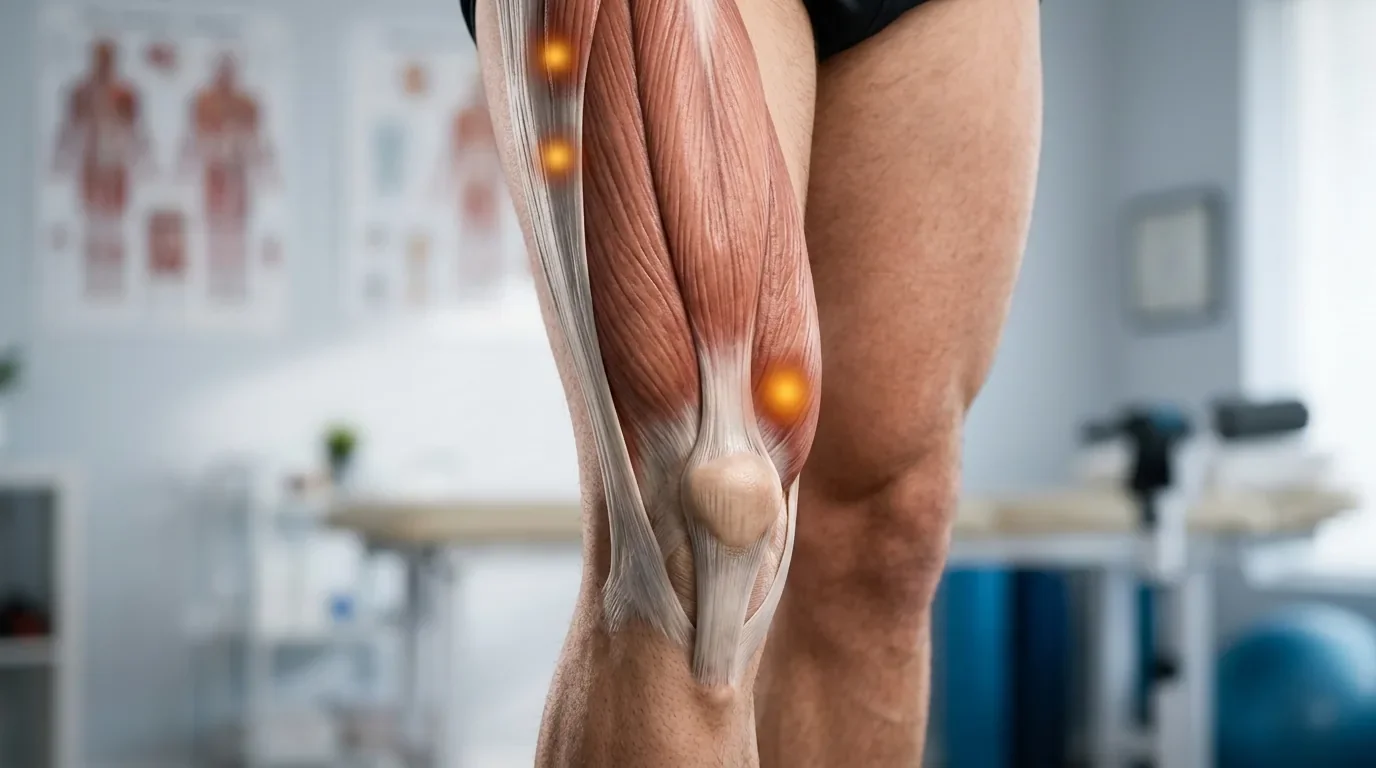
- Myofascial trigger points are among the most common sources of referred pain in the musculoskeletal system. The referred pain patterns from specific muscles are predictable and well-documented, meaning a skilled clinician can often identify the source muscle from the location of the pain (Simons, Travell, & Simons, 1999).
- Somatic referred pain from muscles is fundamentally different from radicular pain caused by nerve root compression. Referred pain tends to be deep, aching, and diffuse; radicular pain follows dermatomal distributions and is often accompanied by neurological signs such as numbness or weakness.
- Biochemical analysis of active trigger points reveals elevated concentrations of substance P, calcitonin gene-related peptide, and bradykinin at the trigger point site and at remote locations, providing a chemical explanation for how local muscle dysfunction produces widespread pain (Shah et al., 2008).
- Treating the site of felt pain rather than the source muscle is one of the primary reasons chronic musculoskeletal pain fails to resolve with conventional approaches. Effective treatment requires identifying and addressing the referring tissue.
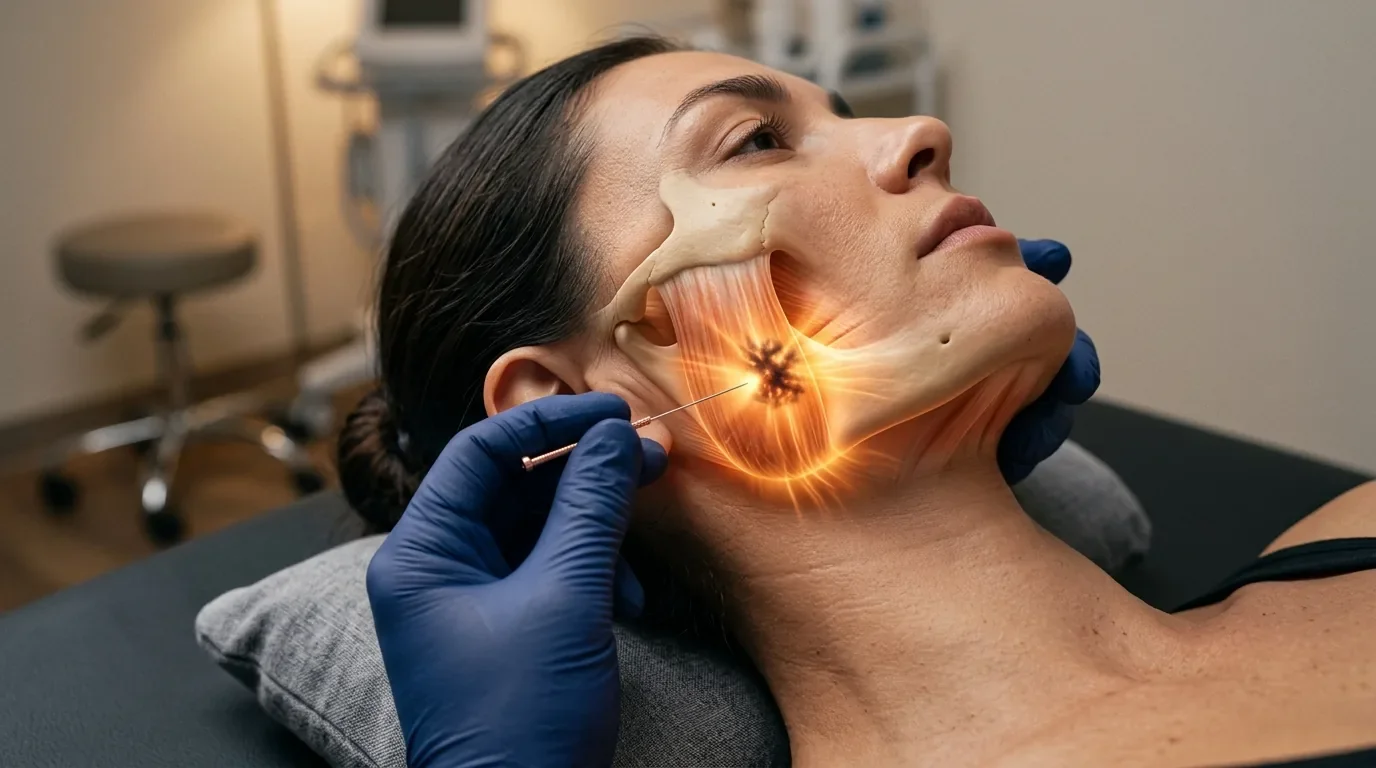
- Acupuncture and dry needling applied directly to the source trigger point can interrupt referred pain patterns by releasing the contracted muscle fibers and disrupting the sensitizing biochemical environment that sustains the pain cycle.
Tired of treating pain in the wrong place?
If you have been treating the location of your pain without lasting relief, the source may be a referring trigger point elsewhere. Our practitioners at Morningside Acupuncture are trained to trace referred pain patterns back to their origin and treat the actual problem with acupuncture and dry needling.
Schedule NowThe Fundamental Problem: Pain Location Is Not Pain Source
When you cut your finger, the pain and the injury are in the same place. This direct correspondence between tissue damage and pain location is so intuitive that most people assume it always works this way. For musculoskeletal pain, it often does not.
The human nervous system evolved to respond rapidly to threats. Speed matters more than anatomical precision, which means the brain sometimes makes educated guesses about where a pain signal is coming from based on statistical experience rather than precise anatomical mapping. When those guesses are wrong, you feel pain somewhere that has no tissue problem at all. This is referred pain: sensory experience localized to a region that is not the source of the nociceptive signal.
The clinical consequences are significant. A person with a gluteus minimus trigger point may be convinced they have sciatica and spend months treating their leg when the actual problem is in their hip. Someone with infraspinatus trigger points may be told they have shoulder impingement when the pain they feel in the front of the shoulder is referred from the posterior shoulder blade. Understanding referred pain is not an academic exercise; it is the difference between finding the right treatment and chasing a symptom indefinitely.
Related What Is Myofascial Pain Syndrome? Trigger Points, Referred Pain, and TreatmentHow the Spinal Cord Creates Referred Pain: Convergence-Projection
The most widely accepted neurological explanation for referred pain is the convergence-projection theory. Its logic is straightforward once you understand how sensory signals are organized at the spinal cord level.
Sensory neurons from the skin, muscles, joints, and internal organs do not each have their own dedicated pathway to the brain. Instead, neurons from anatomically separate structures converge onto the same second-order neurons in the dorsal horn of the spinal cord. These shared neurons then project a single signal upward toward the brain via the spinothalamic tract.
The brain receives the signal and must interpret it. Because the vast majority of sensory input to a given dorsal horn neuron comes from the skin rather than deeper structures, the brain has learned through experience to assume that a signal from that neuron means "something is wrong with this patch of skin." When the signal actually originates from a muscle or internal organ using the same shared neuron, the brain makes the same assumption and perceives pain at the skin location it associates with that pathway. The brain is not malfunctioning; it is making a probabilistic interpretation that happens to be wrong in this instance.
Animal research by Hoheisel and colleagues demonstrated this mechanism directly, showing that noxious stimulation of skeletal muscle caused previously silent dorsal horn neurons to develop new receptive fields, expanding the central representation of the painful tissue in ways that closely mirrored clinical referred pain patterns (Hoheisel, Mense, Simons, & Yu, 1993). This provides experimental support for why referred pain zones can grow larger and more diffuse as a trigger point becomes more active over time.
Trigger Point Referred Pain Patterns: A Predictable Map
One of the most clinically useful contributions of Travell and Simons' foundational research was the systematic documentation of referred pain patterns from specific muscles. These patterns are not random. Each muscle has a characteristic zone where it refers pain, and those zones are consistent across patients and cultures. A patient's description of pain in a specific location, combined with a thorough knowledge of which muscles refer there, allows an experienced clinician to identify the source muscle before even placing their hands on the patient.
The following table presents some of the most clinically common referred pain patterns. Note that in each case, the pain felt by the patient and the source of the problem are in entirely different locations.
| Source Muscle | Where the Trigger Point Is | Where Pain Is Felt | Often Misdiagnosed As |
|---|---|---|---|
| Upper Trapezius | Upper shoulder / neck-shoulder junction | Side of the head, temple, behind the eye | Tension headache, migraine |
| Infraspinatus | Posterior shoulder blade (infraspinous fossa) | Front of the shoulder, upper arm, sometimes forearm | Shoulder impingement, rotator cuff tear, biceps tendinopathy |
| Gluteus Minimus | Lateral hip / posterior lateral hip | Posterior thigh, calf, and ankle (mirroring L5-S1 dermatomes) | Sciatica, lumbar disc herniation, peroneal nerve compression |
| Quadratus Lumborum | Deep low back, lateral to lumbar spine | Posterior hip, sacroiliac joint region, sometimes anterior groin | Hip arthritis, SI joint dysfunction, hip bursitis |
| Sternocleidomastoid (SCM) | Side of the neck (sternal and clavicular heads) | Forehead, behind the eye, top of the head, sinuses, ear | Migraine, sinusitis, cluster headache, ear pain |
| Psoas Major | Deep anterior lumbar region and inner thigh | Ipsilateral low back and upper buttock | Lumbar disc disease, sacroiliac joint pain |
| Subscapularis | Anterior surface of the scapula (under the shoulder blade) | Posterior shoulder, wrist (on the dorsal aspect) | Frozen shoulder, wrist sprain, tendinopathy |
| Scalenes | Anterior and lateral neck | Chest, upper arm, radial forearm, thumb and index finger | Thoracic outlet syndrome, carpal tunnel, cervical radiculopathy |
Somatic Referred Pain vs. Radicular Pain: A Critical Distinction
One of the most consequential confusions in musculoskeletal medicine is the conflation of trigger point referred pain with radicular pain. Both can produce symptoms far from the spine, and both can travel down a limb. The distinction between them has major implications for diagnosis and treatment.
Radicular pain arises from mechanical or chemical irritation of a spinal nerve root, typically from a herniated disc, osteophyte, or foraminal stenosis. The pain follows a dermatomal distribution corresponding to the nerve root involved, and it is almost always accompanied by at least some neurological findings: reduced reflexes, dermatomal numbness, and weakness in the muscles supplied by that root. MRI findings, when present, will show structural changes at the relevant level.
Somatic referred pain from trigger points tends to be deeper and more diffuse. It does not follow clean dermatomal boundaries. Patients describe it as aching, heavy, or pressure-like rather than the sharp, electrical, or burning quality more typical of nerve root irritation. Crucially, trigger point referred pain produces no objective neurological deficits on examination. Reflexes, sensation, and strength testing are all normal in the referred pain zone because the nerve itself is healthy.
The practical problem is that sciatica-like symptoms from gluteal trigger points are extremely common, and imaging often shows disc changes at L4-5 or L5-S1 that may or may not be the true source of the patient's pain. Imaging findings and symptoms do not always correspond. A patient can have a small disc bulge on MRI and have their dominant symptoms generated by a piriformis trigger point that is entirely invisible on any scan.
Could your "nerve pain" actually be coming from a muscle?
Gluteus minimus, piriformis, and scalene trigger points each produce referred pain patterns that closely resemble radicular nerve symptoms. If you have been told you have sciatica, thoracic outlet syndrome, or cervical radiculopathy and have not responded well to treatment, a myofascial evaluation may identify a treatable source. We offer thorough assessments at Morningside Acupuncture to help clarify the picture.
Schedule NowThe Biochemistry of Referred Pain: What Shah et al. Found
For many years, referred pain from trigger points was understood primarily through clinical observation and neurological theory, without a direct biochemical explanation. Research by Shah and colleagues changed that picture substantially.
Using a microdialysis needle technique, Shah et al. sampled the interstitial fluid surrounding active trigger points in the upper trapezius and compared it to the fluid from the same muscle in subjects without trigger points. Active trigger points showed markedly elevated concentrations of substance P, calcitonin gene-related peptide, bradykinin, serotonin, norepinephrine, tumor necrosis factor-alpha, interleukin-1-beta, and several other sensitizing substances. Critically, elevated concentrations of these same chemicals were also detected at remote sites outside the trigger point zone, providing a chemical basis for how local muscle dysfunction produces widespread symptoms (Shah et al., 2008).
These findings connect the local energy crisis at the trigger point (described in the integrated trigger point hypothesis) to the systemic sensitization that underlies referred pain. The trigger point does not just refer pain centrally through neurological convergence; it also disperses sensitizing chemicals into surrounding tissue, potentially lowering the pain threshold of adjacent structures and creating satellite trigger points in muscles that fall within the original muscle's referred pain zone.
Related Central Sensitization Explained: When the Nervous System Gets Stuck in Pain ModeWhy Referred Pain Is So Often Misdiagnosed
Several features of referred pain make correct diagnosis genuinely difficult, even for experienced clinicians.
The distance between source and symptom is the most obvious problem. A muscle in the hip causing pain down to the ankle, or a muscle in the neck generating sinus pressure, does not fit the intuitive model of "something hurts where the problem is." Clinicians who are not specifically trained in referred pain patterns are likely to evaluate and treat only the symptomatic region.
The pattern can also vary somewhat between individuals. While referred pain zones are broadly consistent, there is individual variation in their precise extent and intensity. Some patients refer strongly to the distal end of the zone while others refer primarily to the proximal region. This variability makes it harder to recognize patterns without substantial clinical experience.
Compression of the referring muscle's trigger point during examination often reproduces the patient's distant pain, a finding known as a positive "jump sign" or referred pain response. This is one of the most reliable diagnostic clues available, but it requires deliberately pressing on areas that are not where the patient is complaining, which does not occur in a standard examination focused only on the painful region.
Finally, imaging does not help. Trigger points produce no findings on X-ray, MRI, or CT. A normal scan does not rule out a significant myofascial source, but a scan showing degenerative changes may receive a diagnosis that draws attention away from a concurrently active trigger point pattern.
Related Complete Guide to Trigger Points: Causes, Diagnosis, and TreatmentWhat Referred Pain Means for Treatment
The practical implication of referred pain is straightforward: treatment must be directed at the source, not the symptom. Applying heat, ice, massage, or local injections to the site of felt pain will not resolve pain that is generated elsewhere. This is not a failure of those therapies; it is a failure to treat the right location.
Identifying the referring muscle requires systematic palpation guided by knowledge of which muscles refer to the symptomatic region. Once the source trigger point is located, it can be addressed through several approaches. Manual pressure release applied directly to the trigger point can interrupt the local contraction and reduce the sensitizing biochemical load. Stretching the source muscle, once the trigger point has been deactivated, helps restore normal resting length and reduce the likelihood of reactivation.
Dry needling applied to the trigger point is particularly effective because the needle can reach depths of tissue inaccessible to manual pressure, and the local twitch response it elicits is associated with a transient spike and subsequent normalization of the sensitizing chemicals identified by Shah and colleagues. Acupuncture applied through a traditional channel lens often places needles in locations that overlap with known trigger point sites, which may account for some of its effectiveness in referred pain conditions.
Understanding which muscles cause headaches, or which muscles generate low back pain, allows clinicians to assess and treat systematically rather than reacting only to where a patient points. This source-first orientation is the foundation of effective myofascial pain management.
Ready to find the actual source of your pain?
At Morningside Acupuncture, we are the highest-rated acupuncture and dry needling clinic in New York City with over 500 five-star Google reviews. We specialize in identifying referred pain patterns and treating the source muscles that conventional care often overlooks. Whether your pain is in your arm, leg, head, or hip, our practitioners work systematically to trace it to its origin and address it directly. Schedule a visit to find out where your pain is really coming from.
Schedule NowFrequently Asked Questions
Is referred pain the same as radiating pain?
The terms are sometimes used interchangeably, but there is a meaningful distinction. Radiating pain typically describes pain that travels along the course of a nerve, often from a compressed nerve root. Referred pain more specifically describes pain perceived at a site distant from the actual source tissue, due to the convergence of sensory signals at the spinal cord. Both involve pain felt away from the injury, but their mechanisms and clinical implications differ. Trigger point referred pain falls into the referred pain category, while sciatica from a disc herniation is more precisely described as radiating or radicular pain.
Can referred pain be just as severe as pain at the source?
Yes, and sometimes it is more intense. Because the brain may weight a signal it perceives as coming from the skin surface more highly than a deep tissue signal, referred pain can feel sharp or severe even when the source muscle is generating a relatively modest nociceptive signal. Patients are often surprised to find that pressing on a muscle far from their primary complaint reproduces or intensifies their familiar pain exactly. This referred pain response is one of the most useful diagnostic tests available during a clinical examination.
How do I know if my pain is referred or local?
A few features suggest referred pain rather than a local injury: the pain has persisted despite treatment targeting the symptomatic area, there are no clear structural findings on imaging that correlate with the symptoms, pressing on muscles in a different region reproduces the pain, and the pain follows a pattern described in the trigger point literature for a specific muscle. A thorough evaluation by a practitioner trained in myofascial assessment can help identify whether referred pain is contributing to your symptoms.
Can acupuncture help with referred pain?
Acupuncture and dry needling applied to the source trigger point can be effective for referred pain conditions. Both approaches can address the sustained muscle contraction and sensitizing biochemical environment that maintains the referred pain cycle. At Morningside Acupuncture, we combine knowledge of trigger point referred pain patterns with acupuncture assessment to develop a treatment plan targeting the source tissue rather than the symptomatic area.
What happens if referred pain goes untreated for a long time?
Chronic referred pain from an active trigger point can lead to the development of satellite trigger points within the referred pain zone itself. This happens because the sensitizing chemicals released by the primary trigger point lower the activation threshold of muscles in the surrounding region, making them susceptible to developing their own trigger points. Over time, what begins as a single source muscle can generate a complex, overlapping pattern of referred pain from multiple sites, significantly complicating diagnosis and treatment. Addressing the primary trigger point early, before satellites develop, generally produces faster and more complete resolution.
Why does my pain feel like it is in my joint when the problem is actually in a muscle?
Many muscles refer pain into or around the joints they cross or support. The infraspinatus, for example, refers into the shoulder joint region; the quadratus lumborum refers into the hip and sacroiliac joint. Because joint pain has a distinctive "joint-ache" quality, and because joints are the first thing clinicians examine when a patient complains in that region, the referring muscle is often overlooked. This is one of the main reasons that joint-focused diagnoses such as bursitis or arthritis are sometimes applied to conditions that are actually myofascial in origin.
References
- Simons, D.G., Travell, J.G., & Simons, L.S. (1999). Myofascial Pain and Dysfunction: The Trigger Point Manual, Vol. 1 (2nd ed.). Lippincott Williams & Wilkins.
- Shah, J.P., Danoff, J.V., Desai, M.J., Parikh, S., Nakamura, L.Y., Phillips, T.M., & Gerber, L.H. (2008). Biochemicals associated with pain and inflammation are elevated in sites near to and remote from active myofascial trigger points. Archives of Physical Medicine and Rehabilitation, 89(1), 16–23. https://doi.org/10.1016/j.apmr.2007.10.018
- Graven-Nielsen, T., & Arendt-Nielsen, L. (2010). Assessment of mechanisms in localized and widespread musculoskeletal pain. Nature Reviews Rheumatology, 6(10), 599–606. https://doi.org/10.1038/nrrheum.2010.107
- Hoheisel, U., Mense, S., Simons, D.G., & Yu, X.M. (1993). Appearance of new receptive fields in rat dorsal horn neurons following noxious stimulation of skeletal muscle: a model for referral of muscle pain? Neuroscience Letters, 153(1), 9–12. https://doi.org/10.1016/0304-3940(93)90069-2
- Ge, H.Y., & Arendt-Nielsen, L. (2011). Latent myofascial trigger points. Current Pain and Headache Reports, 15(5), 386–392. https://doi.org/10.1007/s11916-011-0210-6
Disclaimer: This web site is intended for educational and informational purposes only. Reading this website does not constitute providing medical advice or any professional services. This information should not be used for diagnosing or treating any health issue or disease. Those seeking medical advice should consult with a licensed physician. Seek the advice of a medical doctor or other qualified health professional for any medical condition. If you think you have a medical emergency, call 911 or go to the emergency room. No acupuncturist-patient relationship is created by reading this website or using the information. Morningside Acupuncture PLLC and its employees and contributors do not make any express or implied representations with respect to the information on this site or its use. For any legal interpretation of scope of practice in your state, consult a licensed attorney or regulatory authority.
Read more from our blog