Trigger Points, Referred Pain, and Why This Condition Is So Often Misdiagnosed — A Plain-English Explanation with the Science Behind It
Myofascial pain syndrome is one of the most common causes of musculoskeletal pain and one of the most frequently overlooked. It explains why pain so often occurs away from where the actual problem is, why stretching alone rarely fixes it, and why needling the right muscle can resolve symptoms that have persisted for years.
- Myofascial pain syndrome (MPS) is defined by the presence of active trigger points — hyperirritable spots within taut bands of skeletal muscle — that produce local pain and referred pain in predictable, reproducible patterns (Simons, Travell & Simons, 1999).
- The referred pain from trigger points — pain felt in a location distant from the trigger point itself — is the defining clinical feature of MPS and the primary reason it is so frequently misdiagnosed as arthritis, nerve compression, or disc pathology.
- Trigger points are now understood through the Integrated Trigger Point Hypothesis: motor endplate dysfunction leads to persistent acetylcholine release, which maintains a contracted sarcomere, creating an energy crisis and a local release of sensitizing substances (Shah et al., 2008).
- MPS can be primary (no underlying structural pathology) or secondary (co-existing with and perpetuating other conditions like disc herniation or osteoarthritis) — distinguishing these is clinically important.
- Dry needling directly targets trigger points and is one of the most effective treatments for MPS, with evidence showing it reduces trigger point pressure sensitivity and referred pain compared with sham (Dommerholt & Fernández-de-las-Peñas, 2013).
- Without treatment of the underlying trigger points, MPS tends to persist indefinitely — passive treatments that address pain without deactivating the trigger point typically provide only temporary relief.
Pain in a Place That Doesn't Match Any Obvious Injury?
This is the hallmark of myofascial referred pain. If your imaging is normal but your pain is real and persistent, trigger points in the surrounding musculature are often the explanation. Our practitioners specialize in identifying and treating the specific muscles driving your symptoms.
Schedule NowDefining Myofascial Pain Syndrome
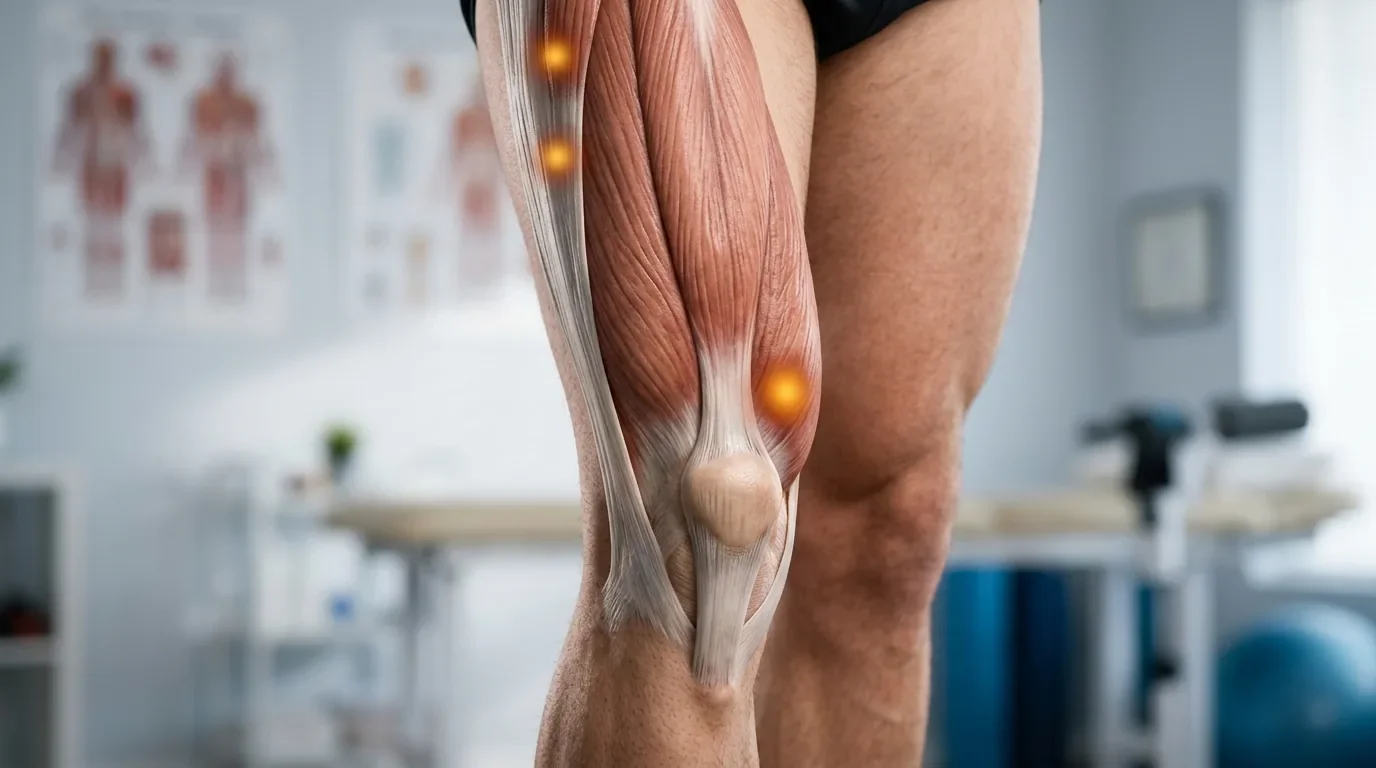
The term "myofascial" refers to muscle (myo) and fascia — the connective tissue that envelops muscles. Myofascial pain syndrome is a regional pain disorder in which specific, palpable spots within skeletal muscle generate local pain and a characteristic referred pain pattern when compressed or stimulated. These spots are called trigger points.
The condition was systematically described by Janet Travell and David Simons in their landmark two-volume work, which documented the trigger point locations and referred pain patterns of virtually every muscle in the body. Their work remains the clinical foundation for understanding MPS today, supplemented by subsequent laboratory research on the biochemical and electrophysiological characteristics of trigger points.
MPS is distinct from fibromyalgia, which is a central sensitization syndrome involving widespread pain, fatigue, and diffuse tenderness without the specific regional trigger point patterns of MPS. However, MPS and fibromyalgia frequently co-exist, and unresolved myofascial pain can contribute to the development of central sensitization over time. The relationship between the two is explored in our post on central sensitization.
Related Trigger Points Guide: How Muscle Knots Drive Referred PainWhat Causes Trigger Points to Develop?
Trigger points develop when muscle fibers are overloaded — acutely (through strain or trauma) or chronically (through sustained low-level contraction, repetitive use, or postural stress). The most common scenario in clinical practice is the chronic, low-level overload of postural muscles that are never allowed to fully rest.
For desk workers and city commuters, the muscles most prone to trigger point development are those holding the head and neck in a sustained forward position — the upper trapezius, levator scapulae, suboccipitals, and scalenes. The Cinderella hypothesis offers one mechanistic explanation: low-threshold type I motor units (the slow-twitch muscle fibers activated first and released last) are the most susceptible to trigger point formation under sustained low-level load — exactly the kind of load produced by maintaining a head position in front of a screen for hours (Hägg, 1991). The full explanation of this hypothesis is in our post on the Cinderella hypothesis.
| Muscle | Where Trigger Points Form | Where the Pain Is Felt | Commonly Mistaken For |
|---|---|---|---|
| Upper Trapezius | Upper muscle belly, near the shoulder-neck junction | Behind the ear, temple, lateral head | Tension headache, migraine |
| Infraspinatus | Mid-scapula, medial belly | Anterior shoulder, down the arm to the hand | Rotator cuff tear, bicipital tendinopathy |
| Quadratus Lumborum | Lateral lumbar, near the iliac crest attachment | Lateral low back, hip, sacrum | Sacroiliac joint dysfunction, disc herniation |
| Gluteus Minimus | Deep posterior lateral hip | Full posterior and lateral leg to the ankle | L5 radiculopathy, sciatica |
| SCM | Belly of muscle, medial head | Frontal headache, eye pain, ear fullness | Sinusitis, TMJ disorder |
| Psoas Major | Lumbar attachments, anterior spine | Ipsilateral lumbar spine, anterior thigh | Disc pathology, hip flexor strain |
How Trigger Points Work: The Integrated Hypothesis
For decades, the exact mechanism of trigger points was debated. The current best-supported explanation is the Integrated Trigger Point Hypothesis, which proposes the following sequence: abnormal motor endplate activity leads to sustained release of acetylcholine, which causes persistent depolarization of the muscle fiber membrane. This produces a contracted sarcomere — a small section of muscle held in a maximally shortened position — that cannot relax.
This contracted sarcomere compresses the local capillaries, creating an energy crisis (insufficient ATP to pump calcium back out of the sarcomere). The energy crisis triggers release of sensitizing substances including bradykinin, substance P, CGRP, and prostaglandins into the local biochemical milieu. These substances sensitize the nociceptors in and around the trigger point, producing the local tenderness and, through central sensitization mechanisms, the referred pain felt at a distance.
Shah et al. (2008) directly measured the biochemical environment of active trigger points using microdialysis and found significantly elevated concentrations of all of these substances compared with both latent trigger points and normal muscle tissue. This work provided the first direct chemical evidence for the integrated hypothesis and validated the clinical observation that active trigger points are genuinely distinct from normal muscle tissue. The full explanation of this mechanism is in our post on the integrated trigger point hypothesis.
Related Trigger Points FAQ: Common Questions AnsweredTrigger Point Patterns Can Explain Pain That Has Confused Everyone Else
At Morningside, trigger point assessment is built into every intake evaluation. If your pain has not had a clear structural explanation, we often find that the referred pain pattern matches a specific muscle that has been overlooked. Understanding where your pain is actually coming from changes everything about how it is treated.
Schedule NowDiagnosing Myofascial Pain Syndrome
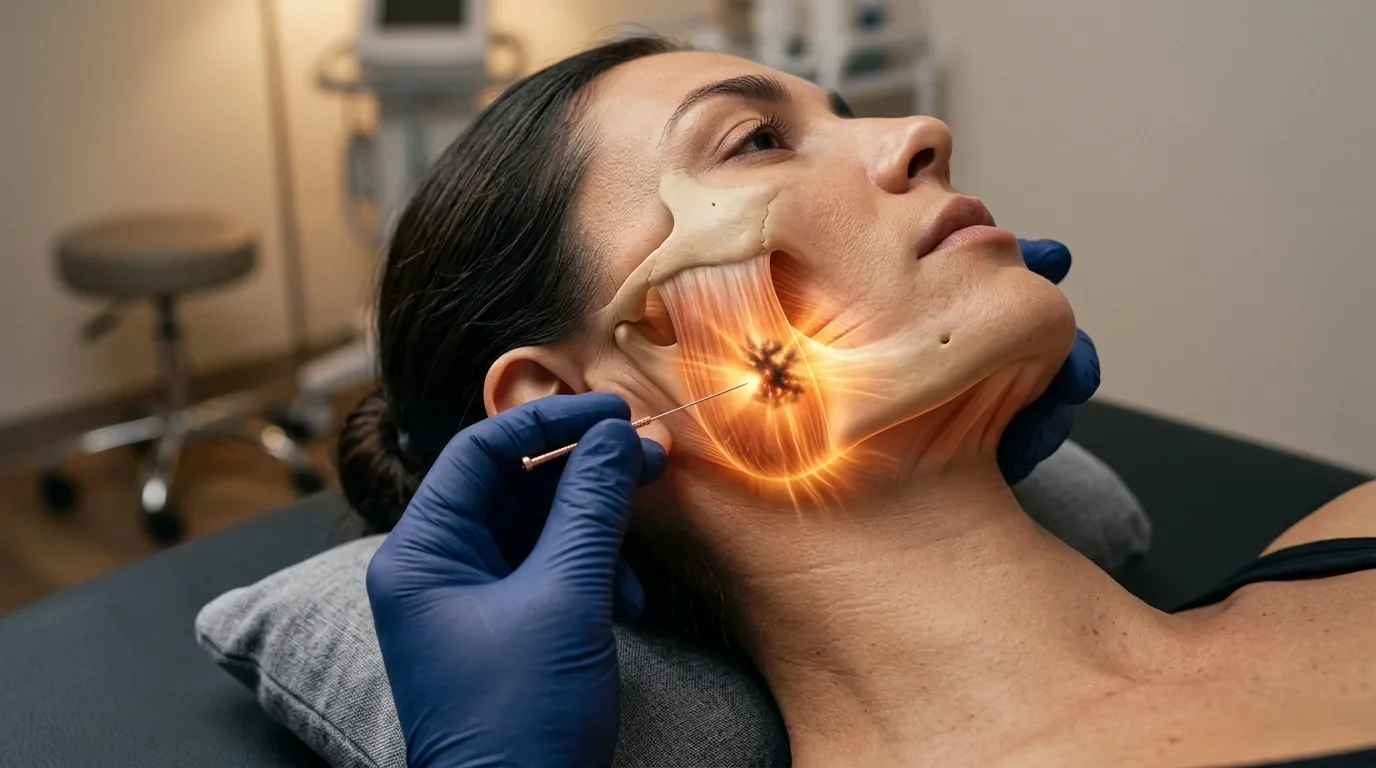
MPS is a clinical diagnosis — it requires physical examination, not imaging. The key diagnostic criteria, as established by Simons and Travell, include the presence of a taut band (a palpable ropey strand within the muscle), an exquisitely tender nodule within the taut band (the trigger point), a referred pain pattern that matches the known pattern for that muscle, and a local twitch response (a brief visible twitch of the taut band when the trigger point is flicked or needled).
The local twitch response is particularly important as an objective sign: it is an involuntary spinal cord reflex, not a voluntary muscle contraction, and cannot be faked. When a trigger point is needled during dry needling and produces a twitch, it confirms the needle has contacted the active trigger point and predicts a better treatment outcome.
Practitioners can use standardized pressure algometry (a device measuring the force required to produce pain at a point) to quantify trigger point sensitivity before and after treatment, providing an objective measure of change. Most clinical practices rely on the combination of the taut band, tenderness, and referred pain reproduction as sufficient for diagnosis.
Treatment: Dry Needling and Acupuncture
The most effective physical treatment for active trigger points is direct needling — either dry needling targeting the trigger point mechanically, or acupuncture at points that correspond to or approach the same muscular locations. Needling the trigger point produces the local twitch response, which mechanically disrupts the contracted sarcomere, releases the sustained depolarization, and allows the local biochemical milieu to normalize through fresh blood flow.
A 2013 systematic review by Dommerholt and Fernández-de-las-Peñas found dry needling significantly reduced pressure pain threshold at trigger points compared with sham, with effects lasting up to 12 weeks. The evidence is stronger for dry needling than for manual techniques like massage or stretching, likely because needling can access trigger points in deeper muscles that hands cannot reach effectively.
Traditional acupuncture overlaps substantially with trigger point needling — many classical acupuncture points are located at known trigger point sites for the underlying muscles. The acupuncture for pain conditions page covers this integration in more detail.
Related Trigger Point Pain Finder: Identify Which Muscle Is Causing Your PainIf You Have Chronic Pain That Has Not Responded to Standard Treatment, This May Be Why
At Morningside Acupuncture, we are the highest-rated acupuncture and dry needling clinic in New York City with over 500 five-star Google reviews. Myofascial pain syndrome — in all its forms and body regions — is the condition we treat most, and we have developed efficient, targeted approaches for identifying and deactivating the trigger points driving persistent pain. Schedule a first visit to find out what is actually going on in your muscles.
Schedule NowFrequently Asked Questions
What is the difference between myofascial pain syndrome and fibromyalgia?
Myofascial pain syndrome is a regional condition driven by trigger points in specific muscles, producing pain in predictable referred patterns. Fibromyalgia is a systemic central sensitization syndrome involving widespread pain, fatigue, sleep disturbance, and diffuse tenderness across the body without specific trigger point patterns. The two conditions can co-exist — unresolved MPS can contribute to the central sensitization that underlies fibromyalgia.
How do I know if I have myofascial pain syndrome?
The hallmark is pain that does not match the location of any structural pathology on imaging, that is reproducible with pressure on specific muscle locations, and that may radiate in a predictable pattern. Normal X-rays and MRIs alongside persistent pain are a common clinical scenario for undiagnosed MPS. A physical examination by a practitioner trained in trigger point assessment can usually identify the relevant muscles within a single session.
How long does myofascial pain syndrome last without treatment?
Active trigger points do not typically resolve spontaneously — the energy crisis and acetylcholine dysfunction that maintain them tend to persist indefinitely unless the trigger point is mechanically disrupted. Passive approaches like heat, rest, or gentle massage may temporarily relieve the pain but rarely deactivate the trigger point. Most patients with chronic MPS report symptoms persisting for months to years before effective treatment.
Can I treat trigger points myself?
Self-treatment with a foam roller, lacrosse ball, or manual pressure can provide temporary relief of superficial trigger points, but it is generally less effective than needling for deep muscles and for established, highly active trigger points. Self-treatment is best used as a maintenance tool between professional sessions rather than as a primary treatment for significant myofascial pain.
Does insurance cover dry needling for myofascial pain syndrome?
Coverage varies significantly by plan and state. Some insurance plans cover dry needling under physical therapy benefits; others cover acupuncture for pain conditions. Morningside can help you understand your coverage options. Our guide to acupuncture insurance in NYC provides current information on what is typically covered.
References
- Simons, D. G., Travell, J. G., & Simons, L. S. (1999). Myofascial Pain and Dysfunction: The Trigger Point Manual, Vol. 1: Upper Half of Body (2nd ed.). Williams & Wilkins.
- Shah, J. P., Danoff, J. V., Desai, M. J., Parikh, S., Nakamura, L. Y., Phillips, T. M., & Gerber, L. H. (2008). Biochemicals associated with pain and inflammation are elevated in sites near to and remote from active myofascial trigger points. Archives of Physical Medicine and Rehabilitation, 89(1), 16–23. https://doi.org/10.1016/j.apmr.2007.10.018
- Dommerholt, J., & Fernández-de-las-Peñas, C. (Eds.). (2013). Trigger Point Dry Needling: An Evidence and Clinical-Based Approach. Churchill Livingstone Elsevier.
- Hägg, G. M. (1991). Static work loads and occupational myalgia — A new explanation model. In P. A. Anderson, D. J. Hobart, & J. V. Danoff (Eds.), Electromyographical Kinesiology (pp. 141–144). Elsevier.
- Gerwin, R. D. (2010). Diagnosis of myofascial pain syndrome. Physical Medicine and Rehabilitation Clinics of North America, 21(3), 651–661. https://doi.org/10.1016/j.pmr.2010.04.002
Disclaimer: This web site is intended for educational and informational purposes only. Reading this website does not constitute providing medical advice or any professional services. This information should not be used for diagnosing or treating any health issue or disease. Those seeking medical advice should consult with a licensed physician. Seek the advice of a medical doctor or other qualified health professional for any medical condition. If you think you have a medical emergency, call 911 or go to the emergency room. No acupuncturist-patient relationship is created by reading this website or using the information. Morningside Acupuncture PLLC and its employees and contributors do not make any express or implied representations with respect to the information on this site or its use. For any legal interpretation of scope of practice in your state, consult a licensed attorney or regulatory authority.
Read more from our blog