Muscles That Cause Low Back Pain
How the Quadratus Lumborum, Multifidus, Iliopsoas, and Gluteus Medius Refer Pain to the Low Back
Low back pain is frequently myofascial in origin. Understanding which muscles develop trigger points and where they refer pain can explain why so many patients hurt in places their imaging cannot account for.
- Myofascial trigger points in the quadratus lumborum, gluteus medius, multifidus, and iliopsoas are among the most common muscular sources of low back pain, with trigger points identified significantly more often in low back pain patients than in pain-free controls (Njoo & Van der Does, 1994).
- Active trigger points in the quadratus lumborum and gluteus medius were the most prevalent finding in patients with chronic nonspecific low back pain compared to matched healthy subjects (Iglesias-González et al., 2013).
- The quadratus lumborum attaches to the 12th rib, lumbar transverse processes, and iliac crest, and can refer a deep, aching pain across the low back, into the buttock, and around the hip that closely mimics disc or joint pathology.
- The multifidus, a deep segmental stabilizer, shows rapid and localized muscle wasting at the painful spinal level in acute low back pain, often failing to recover spontaneously even after symptoms resolve (Hides et al., 1994).
- The iliopsoas travels directly alongside the lumbar vertebrae and, when shortened or harboring trigger points, loads the lumbar spine and refers pain into the lower back and anterior thigh.
- Trigger points in the gluteus medius commonly refer pain into the sacral area and posterior iliac crest, a pattern that can be mistaken for sacroiliac joint dysfunction or lumbar disc disease.
- Muscles in the low back region do not act in isolation: weakness or trigger point activity in one muscle predictably leads to compensatory overload in adjacent muscles, creating satellite trigger point cascades that amplify and perpetuate pain.
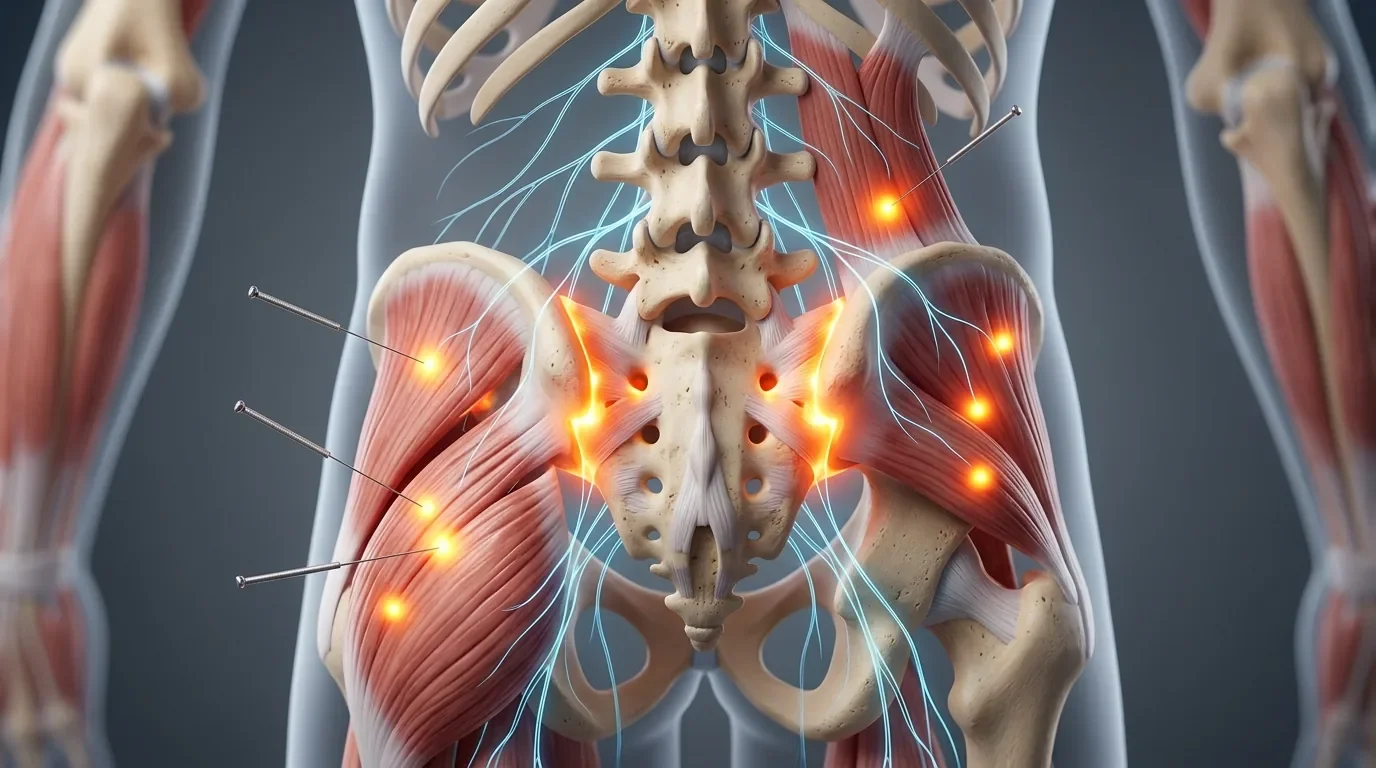
- Dry needling and acupuncture address myofascial low back pain by targeting these specific muscles to elicit local twitch responses, normalize the biochemical environment at trigger points, and activate central pain-modulating pathways.
Is Muscle Pain Driving Your Low Back Symptoms?
Identifying which specific muscles are involved is the first step toward targeted treatment. At Morningside Acupuncture, our practitioners are trained in precise palpation and dry needling techniques to locate and treat the muscle sources of your pain, not just the area where you feel it.
Schedule NowWhy Muscles Are Often the Overlooked Source of Low Back Pain
The majority of low back pain diagnoses in the United States are labeled "nonspecific," meaning no structural cause can be identified on imaging. Yet patients are in real pain. Part of the explanation lies in the myofascial system. Muscles and their surrounding connective tissue can develop hyperirritable zones called trigger points, which produce both local tenderness and referred pain in distant regions. A trigger point in the quadratus lumborum, for example, does not only hurt where it sits; it sends pain across the entire low back, into the buttock, and around the outer hip.
Referred pain from trigger points frequently mimics more serious pathology. Patients whose gluteus medius harbors active trigger points may report sacroiliac joint pain. Those with active iliopsoas trigger points may describe anterior hip and groin discomfort that travels into the back. Without systematic muscle assessment, these sources are easy to miss, particularly when imaging findings are used to anchor a diagnosis that may not reflect the true pain generator. The soft tissue contribution to low back pain is well established in the literature, though it remains underemphasized in many clinical settings (Borg-Stein & Wilkins, 2006).
Related Trigger Point Pain Finder — Interactive Muscle Pain MapThe Quadratus Lumborum: The Low Back Pain Muscle
The quadratus lumborum (QL) connects the posterior iliac crest to the 12th rib and the transverse processes of L1 through L4. It stabilizes the lumbar spine during lateral flexion, assists breathing by fixing the 12th rib during inhalation, and plays a central role in maintaining upright posture. Because it sits deep in the posterior abdominal wall, just lateral to the erector spinae, patients and clinicians alike often underestimate how much pain a dysfunctional QL can generate.
Active trigger points in the QL refer a deep, aching pain across the low back that frequently extends into the buttock, groin, and greater trochanter. The referred pattern is broad and diffuse, making it easy to attribute to a disc or facet joint. Myofascial pain and enthesopathy of the quadratus lumborum are now recognized as important and frequently undertreated causes of lower back and buttock pain (Sirh et al., 2022). The QL is particularly vulnerable to trigger point development following acute low back episodes, prolonged sitting with lateral weight-bearing (such as leaning on one armrest), and any asymmetrical loading that places unequal demand on the two sides of the lumbar spine.
Clinically, QL trigger points are often activated or perpetuated by leg-length discrepancy, hip abductor weakness, and compensatory patterns following ipsilateral hip or knee injury. When the QL develops trigger points on one side, the contralateral QL, the ipsilateral iliopsoas, and the iliocostalis between T11 and L3 frequently develop secondary trigger points in response.
Related The Integrated Trigger Point Hypothesis: Why Muscle Knots FormThe Multifidus: When Deep Segmental Stabilizers Fail
The multifidus is a short, deep muscle that spans one to three vertebral segments, running from the sacrum to the cervical spine. Its primary role is intersegmental stabilization: it controls fine rotational and translational movement between adjacent vertebrae rather than producing large-range motion. Because of this specificity, it is essentially irreplaceable for spinal stability, and its dysfunction has measurable structural consequences.
One of the most important findings in low back pain research is the rapid, localized atrophy of the multifidus at the symptomatic spinal level. Ultrasound imaging of patients with acute low back pain demonstrates significant cross-sectional area reduction in the multifidus muscle on the painful side, confined to the single vertebral level corresponding to the patient's symptoms, with the non-painful side remaining unaffected (Hides et al., 1994). This is not generalized disuse atrophy; it occurs too quickly and too focally. The leading explanation involves pain-mediated reflex inhibition, where the central nervous system down-regulates motor drive to the muscle at the affected segment in response to nociceptive input.
What makes this clinically significant is the recovery pattern. Multifidus atrophy does not reliably resolve on its own when pain subsides. Patients who receive only medication or passive treatment show incomplete and asymmetrical muscle recovery months after the acute episode. This leaves the spine segmentally unstable at the affected level, creating a vulnerability that can contribute to recurrence. Targeted rehabilitation, along with treatments that address the local musculature directly, may support more complete recovery of multifidus function.
| Muscle | Primary Function | Referred Pain Pattern | Common Activating Factors |
|---|---|---|---|
| Quadratus Lumborum | Lateral lumbar stabilizer; fixes 12th rib during breathing | Deep low back, buttock, groin, outer hip; may refer into sacrum | Prolonged sitting, leg-length asymmetry, acute lumbar episodes, asymmetrical lifting |
| Multifidus | Intersegmental spinal stabilization; controls fine vertebral movement | Local deep ache at the involved segment; may refer into the buttock | Acute low back pain episode (rapid reflex inhibition); poor stabilization patterns |
| Iliopsoas | Hip flexion; lumbar spine stabilization from anterior | Anterior thigh and groin; upper and mid-low back along the lumbar spine | Prolonged hip flexion (sitting), anterior pelvic tilt, hip flexor tightness, hip OA |
| Gluteus Medius | Hip abduction; pelvic stabilization during gait | Sacral area, posterior iliac crest, posterior hip; sometimes radiates down posterior thigh | Hip abductor weakness, altered gait, sacroiliac dysfunction, prolonged standing |
| Iliocostalis Lumborum | Bilateral spinal extension; lateral flexion | Mid and lower back, referred toward the buttock; can simulate kidney pain superiorly | Sustained forward flexion, repetitive bending and lifting, poor posture |
Ready to Find Out Which Muscles Are Involved in Your Back Pain?
Understanding the specific muscles driving your low back pain changes everything about how treatment is approached. At Morningside Acupuncture, we use precise dry needling techniques to address the quadratus lumborum, multifidus, iliopsoas, gluteus medius, and other muscles contributing to your symptoms. Our practitioners assess the whole pattern, not just the point of greatest tenderness.
Schedule NowThe Iliopsoas: The Hidden Hip Flexor That Loads the Lumbar Spine
The iliopsoas is a composite muscle formed by the iliacus and the psoas major. The psoas originates on the lateral bodies and transverse processes of T12 through L5, meaning it attaches directly to the lumbar vertebrae before descending through the pelvis to insert on the lesser trochanter of the femur. This anatomy makes the iliopsoas uniquely positioned to compress and anteriorly shear the lumbar spine whenever it is shortened, overloaded, or harboring trigger points.
In people who sit for extended periods, the iliopsoas adapts to its shortened position, effectively pulling the lumbar spine into increased lordosis and increasing compressive loading on the posterior facet joints and discs. Trigger points within the psoas refer pain upward along the lumbar spine on the ipsilateral side, producing a deep, vertical aching that many patients describe as "inside" the back rather than on the surface. The referred pattern also extends into the anterior thigh and groin, which is why patients with active iliopsoas trigger points may present with a confusing constellation of low back, hip, and groin symptoms that don't fit a clear disc or nerve pattern.
Because the iliopsoas is the primary hip flexor and an anterior stabilizer of the lumbar spine, its dysfunction also has downstream effects. When it is tight and overactive, the hip extensors (gluteus maximus and hamstrings) become relatively inhibited, forcing the erector spinae to compensate during activities like standing up from a chair or climbing stairs. This compensation loads the posterior lumbar muscles excessively and can activate secondary trigger points in the QL and iliocostalis.
Related The Cinderella Hypothesis: Why Sustained Low-Level Muscle Activity Causes Chronic PainThe Gluteus Medius: The Sacral Mimicker
The gluteus medius fans from the iliac crest to the greater trochanter of the femur, with its primary function being hip abduction and pelvic stabilization during single-leg stance. Every time you take a step, the gluteus medius on the stance leg is responsible for preventing the opposite pelvis from dropping. If it is weak or harboring active trigger points, the pelvis tilts with every step, transferring abnormal load through the sacroiliac joint and into the lumbar spine.
Trigger points in the gluteus medius refer pain predominantly to the sacral region, the posterior iliac crest, and sometimes down the posterior thigh. This pattern closely resembles sacroiliac joint dysfunction or even S1 radiculopathy, making it one of the more diagnostically misleading sources of myofascial low back pain. In the landmark prospective study of trigger point prevalence by Njoo and Van der Does (1994), trigger points in the gluteus medius and quadratus lumborum were significantly more common in nonspecific low back pain patients than in pain-free controls, underscoring their role as genuine pain generators rather than incidental findings.
The gluteus medius is particularly susceptible to overload in people with poor hip abductor strength, a wide-based gait, or any leg-length asymmetry. It is also frequently involved following ipsilateral knee or ankle injuries that alter weight-bearing mechanics during ambulation.
Related What Is a Muscle Knot? The Science Behind Trigger PointsThe Iliocostalis Lumborum and Erector Spinae: The Surface Paraspinals
The erector spinae group, including the iliocostalis lumborum and longissimus, runs along the length of the spine and produces the bulk extension strength of the back. These muscles are the most superficial of the lumbar muscles and the first to develop visible tension and tenderness with acute low back strain. While their contribution to pain is intuitive given their location, their referred pain patterns are often underappreciated.
Trigger points in the iliocostalis lumborum refer pain horizontally across the low back and downward into the buttock, mimicking the pattern of lumbar disc disease. Superior trigger points in this muscle can refer pain toward the abdomen, occasionally simulating kidney or organ pain in a way that prompts unnecessary medical investigations. The erector spinae muscles are vulnerable to trigger point development with sustained forward flexion, repetitive bending and lifting, and prolonged sitting without lumbar support. They also frequently develop secondary trigger points in response to primary dysfunction in the deeper QL and multifidus.
| Muscle Trigger Point | Commonly Mistaken For | Key Distinguishing Feature |
|---|---|---|
| Quadratus lumborum | Lumbar disc herniation, facet arthropathy | Pain is deep and aching, not sharp; no neurological deficit; hip hiking or leg-length asymmetry often present |
| Gluteus medius | Sacroiliac joint dysfunction, S1 radiculopathy | Referred pain stops at the knee; no dermatomal pattern; gluteus medius is tender to direct palpation |
| Iliopsoas | L2–L3 disc involvement, hip joint pathology | Anterior thigh referral with lumbar component; pain worsens with passive hip extension; no imaging correlate |
| Multifidus | Facet joint pain, segmental instability | Very focal, deep segmental pain; imaging may show atrophy at the involved level; no response to simple rest |
| Iliocostalis lumborum (superior TrPs) | Kidney pathology, abdominal organ pain | Paraspinal tenderness present; urinalysis negative; pain reproduces with sustained flexion postures |
How These Muscles Interact: The Cascade Problem
One of the most clinically relevant features of myofascial low back pain is that the muscles involved rarely present in isolation. The integrated trigger point hypothesis predicts that trigger points in one muscle can create satellite trigger points in any muscle whose pain referral zone overlaps the primary trigger point's location. In the low back, this creates predictable cascade patterns.
A patient who develops QL trigger points following an acute lumbar episode, for example, will often develop secondary trigger points in the ipsilateral iliopsoas (because both stabilize the lumbar spine and compensate for each other's weakness), the contralateral QL (through compensatory gait loading), and the gluteus medius (because QL dysfunction alters pelvic mechanics during walking). By the time the patient presents for care, the primary driver may be difficult to distinguish from the secondary contributors, and treating only the most symptomatic muscle often produces incomplete relief.
The multifidus adds another layer. Because its atrophy is rapid and neurologically driven, it can fail to stabilize its segment even after acute pain has subsided, placing sustained compensatory demand on the QL and erector spinae above it. This is one reason why low back pain has such a high recurrence rate without targeted rehabilitation: the structural deficit underlying the original episode persists even after the pain is gone.
Related How Dry Needling Works: The Neurophysiology and BiochemistryHow Dry Needling and Acupuncture Address Myofascial Low Back Pain
Dry needling targets trigger points in specific muscles using an acupuncture needle to elicit a local twitch response (LTR), a brief involuntary muscle contraction that signals needle contact with the dysfunctional contracture zone. The LTR is associated with measurable normalization of the local biochemical environment at the trigger point: levels of substance P, calcitonin gene-related peptide, bradykinin, and other sensitizing substances decrease after needling with an LTR, and local pH, which is abnormally acidic at active trigger points, moves toward physiological range.
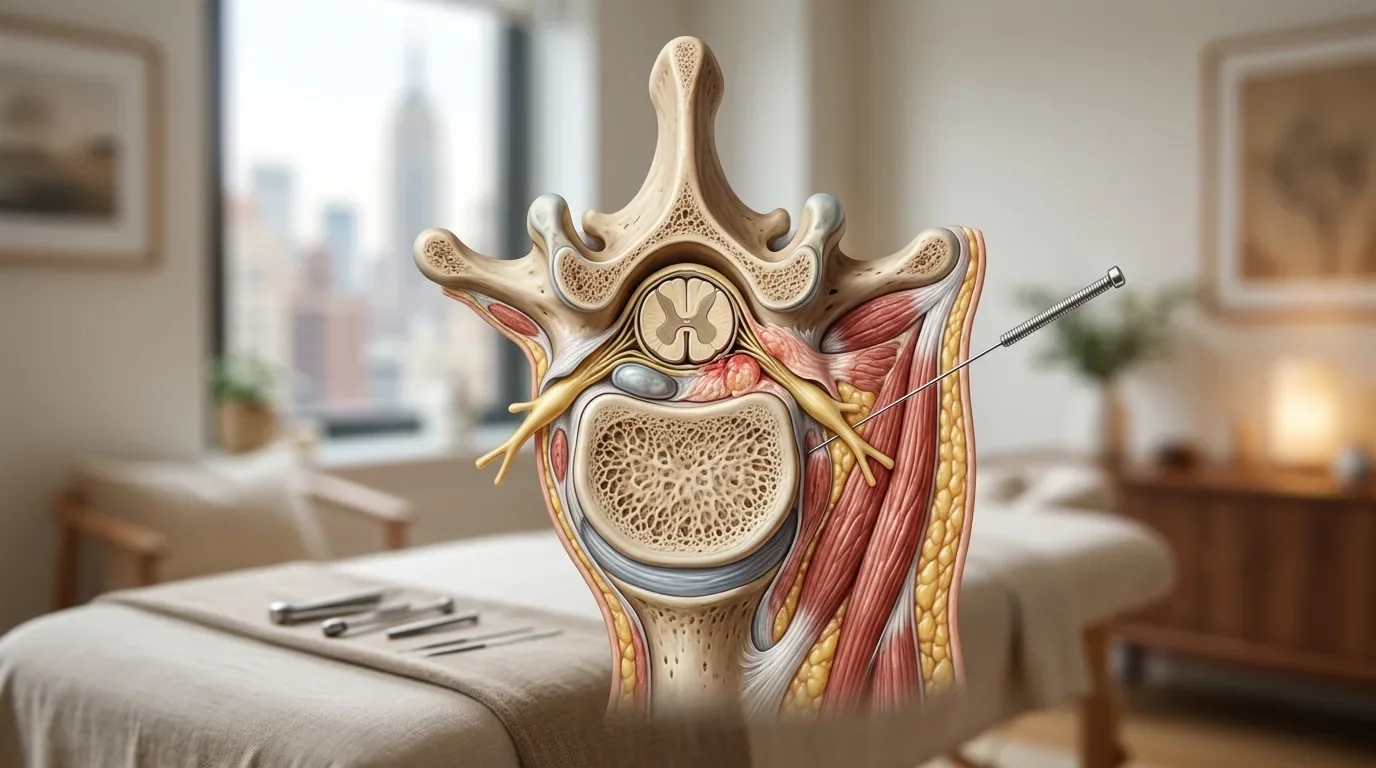
For the deep muscles of the low back, including the QL and multifidus, dry needling offers access that manual therapy cannot reliably achieve. The QL lies beneath the erector spinae and is surrounded by thick connective tissue; external pressure alone often cannot create the mechanical disruption needed to deactivate its trigger points. Direct needling of the QL, guided by anatomical landmarks and clinical palpation, allows the practitioner to reach the tissue with precision.
Acupuncture more broadly activates A-delta sensory fibers that signal to spinal inhibitory interneurons and ascending pathways, triggering descending inhibition via the periaqueductal gray and rostral ventromedial medulla. This central effect is relevant for myofascial low back pain because many patients with chronic presentations have developed some degree of central sensitization, where the spinal cord and brain have upregulated their sensitivity to the ongoing peripheral nociceptive input from active trigger points. Addressing both the peripheral muscle sources and the central amplification is important for durable outcomes.
Treat the Muscles Behind Your Low Back Pain
At Morningside Acupuncture, we are the highest-rated acupuncture and dry needling clinic in New York City with over 500 five-star Google reviews. We specialize in identifying and treating the specific muscles driving your low back pain, whether that is the quadratus lumborum, multifidus, iliopsoas, gluteus medius, or a combination of contributing muscles. If you are tired of temporary relief and want a treatment approach that goes to the source, we would like to help.
Schedule NowFrequently Asked Questions
Can trigger points in my muscles really cause all of my low back pain?
In many cases, yes. Research consistently finds that active myofascial trigger points in the quadratus lumborum, gluteus medius, and related muscles are significantly more prevalent in patients with chronic nonspecific low back pain than in pain-free controls. While structural issues like disc pathology can coexist, a substantial proportion of patients with "nonspecific" low back pain have a myofascial component that, when treated directly, reduces or eliminates their symptoms.
How do I know if my low back pain is muscular vs. a disc problem?
Myofascial low back pain tends to be a deep, aching discomfort that may spread into the buttock or hip without following a specific nerve distribution. It often changes with position and is reproducible by pressing on the involved muscle. Disc-related pain more often involves sharp, electric, or burning sensations that follow a dermatomal pattern down the leg, sometimes with associated numbness, tingling, or weakness. That said, these patterns can overlap, and a thorough clinical assessment is the best way to distinguish them. Many people with findings on MRI actually have myofascial pain as their primary driver.
Why does my low back hurt when I first get up in the morning?
Morning stiffness and pain in the low back is common with myofascial trigger points because muscles with active trigger points are sensitive to the static, shortened position they maintain during sleep. The quadratus lumborum and iliopsoas in particular are positioned in relative shortening when lying on your side with hips flexed. The first few minutes of movement essentially work out this overnight stiffness, which is why many people with myofascial low back pain feel better once they have been walking for a few minutes.
Does dry needling for low back pain hurt?
Most patients describe dry needling in the low back as a brief, deep pressure or cramping sensation when the needle contacts a trigger point and elicits a local twitch response. This sensation typically lasts a second or two and is followed by a release of muscle tension. The experience varies depending on the muscle being needled and individual sensitivity, but most patients find it tolerable, and many notice a significant reduction in tightness and pain immediately after or within the following 24 to 48 hours.
How many dry needling sessions are typically needed for low back pain?
Most patients with myofascial low back pain begin noticing meaningful improvement within two to four sessions, though the total course of treatment depends on how long the condition has been present and how many muscles are involved. Chronic presentations with multiple active trigger points generally require more sessions than acute or post-acute cases. Your practitioner at Morningside will give you a realistic estimate after the initial assessment.
Can acupuncture and dry needling help low back pain that hasn't responded to other treatments?
Many patients who come to Morningside Acupuncture have already tried physical therapy, chiropractic care, or pain medication with limited or temporary relief. Dry needling and acupuncture address the myofascial component of low back pain in a way that is distinct from manual therapy or movement-based treatments. By directly deactivating trigger points and modulating central pain processing, these approaches can produce meaningful and lasting results even in patients with longstanding symptoms. Our practitioners routinely work with patients who have complex pain histories and are committed to finding the underlying muscular contributors.
References
- Iglesias-González, J. J., Muñoz-García, M. T., Rodrigues-de-Souza, D. P., Alburquerque-Sendín, F., & Fernández-de-Las-Peñas, C. (2013). Myofascial trigger points, pain, disability, and sleep quality in patients with chronic nonspecific low back pain. Pain Medicine, 14(12), 1964–1970. https://doi.org/10.1111/pme.12224
- Hides, J. A., Stokes, M. J., Saide, M., Jull, G. A., & Cooper, D. H. (1994). Evidence of lumbar multifidus muscle wasting ipsilateral to symptoms in patients with acute/subacute low back pain. Spine, 19(2), 165–172. https://doi.org/10.1097/00007632-199401001-00009
- Njoo, K. H., & Van der Does, E. (1994). The occurrence and inter-rater reliability of myofascial trigger points in the quadratus lumborum and gluteus medius: A prospective study in non-specific low back pain patients and controls in general practice. Pain, 58(3), 317–323. https://doi.org/10.1016/0304-3959(94)90125-2
- Sirh, S.-J., Sirh, S.-W., Mun, H.-Y., & Sirh, H.-M. (2022). Importance of quadratus lumborum muscle trigger point injection and prolotherapy technique for lower back and buttock pain. Frontiers in Pain Research, 3, 997645. https://doi.org/10.3389/fpain.2022.997645
- Borg-Stein, J., & Wilkins, A. (2006). Soft tissue determinants of low back pain. Current Pain and Headache Reports, 10(5), 339–344. https://doi.org/10.1007/s11916-006-0057-4
Disclaimer: This web site is intended for educational and informational purposes only. Reading this website does not constitute providing medical advice or any professional services. This information should not be used for diagnosing or treating any health issue or disease. Those seeking medical advice should consult with a licensed physician. Seek the advice of a medical doctor or other qualified health professional for any medical condition. If you think you have a medical emergency, call 911 or go to the emergency room. No acupuncturist-patient relationship is created by reading this website or using the information. Morningside Acupuncture PLLC and its employees and contributors do not make any express or implied representations with respect to the information on this site or its use. For any legal interpretation of scope of practice in your state, consult a licensed attorney or regulatory authority.
Read more from our blog