Muscles That Cause Sciatica-Like Symptoms
Which Muscles Produce Buttock, Leg, and Foot Pain That Mimics Sciatica, How to Recognize the Difference from True Lumbar Radiculopathy, and How Dry Needling Treats These Sources
Sciatica is one of the most overused diagnostic terms in musculoskeletal medicine. True sciatica, pain from irritation or compression of the sciatic nerve at its lumbar root origin, is a specific condition with specific neurological findings. The majority of patients who have been told they have sciatica, or who describe symptoms consistent with what they understand sciatica to be, are actually experiencing trigger point referral from gluteal and hip muscles whose pain patterns follow the sciatic nerve distribution so closely that the distinction requires clinical examination to make reliably.
- The gluteus minimus is the single most important muscle for sciatica-like leg pain: its trigger points refer from the buttock down the entire lateral or posterior leg to the ankle and foot in distributions identical to L5 and S1 radiculopathy, without any neurological involvement whatsoever (Simons et al., 1999).
- The piriformis produces deep buttock pain and can compress or irritate the sciatic nerve directly as it passes through or beside the muscle, generating symptoms that may combine true nerve irritation with trigger point referral in a presentation called piriformis syndrome.
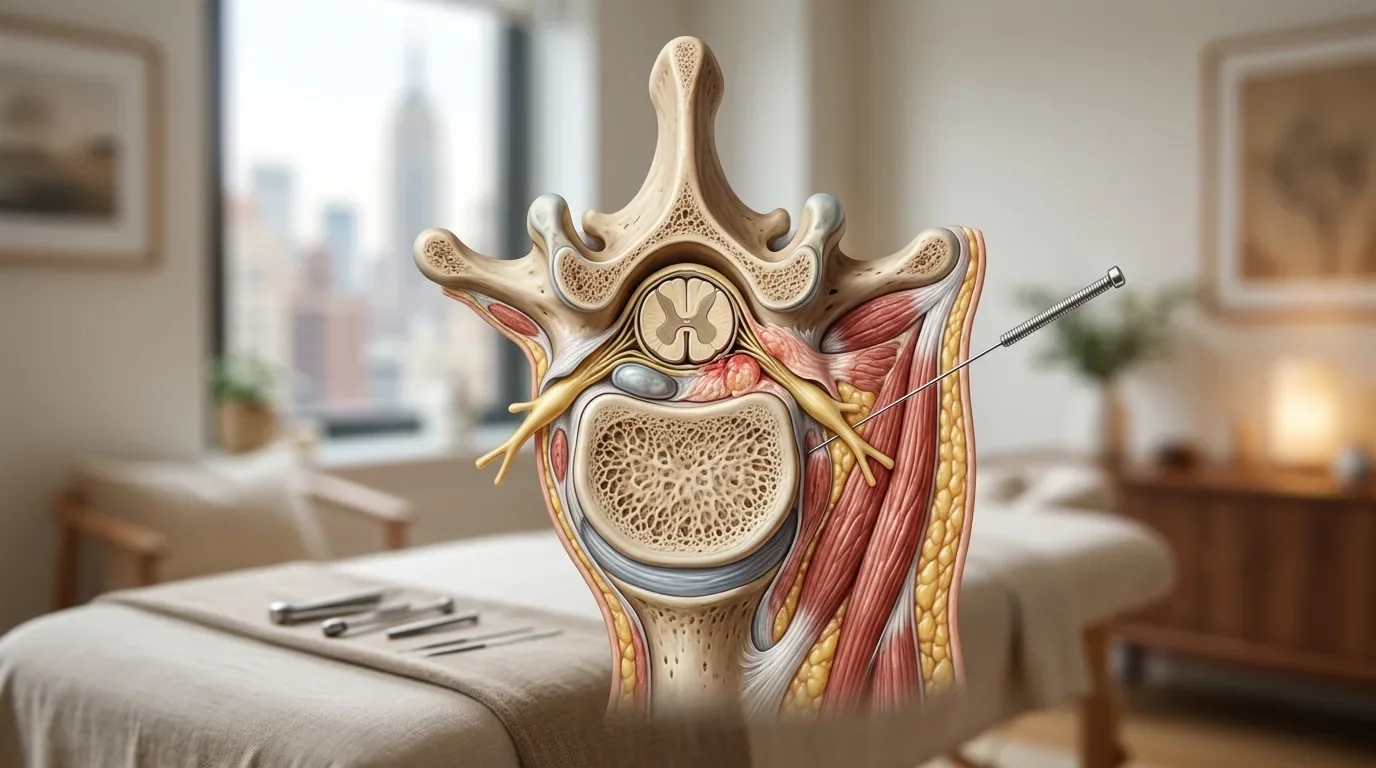
- True lumbar radiculopathy produces neurological changes that trigger point pseudo-sciatica does not: dermatomal sensory loss, reflex changes (diminished ankle jerk in S1 radiculopathy, diminished patellar reflex in L4), and in more severe cases motor weakness in the affected nerve root distribution.
- Acupuncture and dry needling targeting the gluteus minimus, piriformis, and associated deep hip rotators may produce significant relief in patients with sciatica-like symptoms whose neurological examination and electrodiagnostic studies are normal, indicating a myofascial rather than radicular source (Kietrys et al., 2013).
- The distinction between true sciatica and trigger point pseudo-sciatica is clinically critical because the treatments are fundamentally different: spinal interventions (epidural injections, surgery) are appropriate for true nerve root compression, while dry needling addresses the myofascial source in pseudo-sciatica.
Buttock and Leg Pain That Your MRI Did Not Fully Explain?
Many patients with sciatica-like symptoms have lumbar MRI findings that either are unremarkable or show disc changes that do not correlate with their symptom distribution. In these cases, trigger points in the gluteus minimus, piriformis, or hamstrings are typically the actual pain source. At Morningside Acupuncture, we assess the myofascial contribution to your sciatica-like presentation and provide targeted dry needling treatment. Schedule an evaluation now.
Schedule NowThe Muscles Most Responsible for Sciatica-Like Pain
Gluteus Minimus: The Most Underdiagnosed Sciatica Mimic
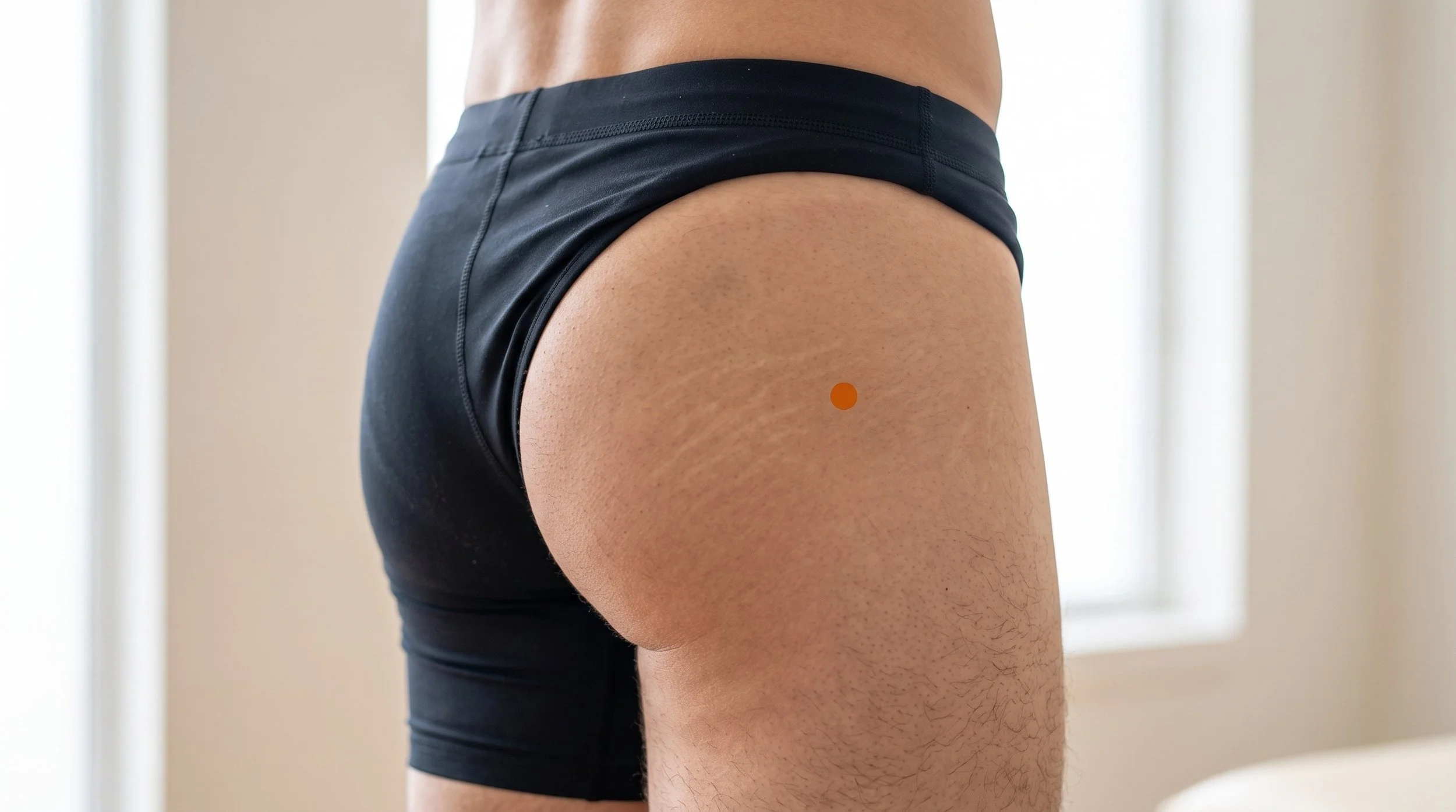
The gluteus minimus occupies the deep lateral hip, beneath the gluteus medius, and is primarily responsible for hip abduction and internal rotation stabilization during the stance phase of walking. Its trigger points produce the most dramatic sciatica-mimicking referral in the entire musculature: posterior trigger points refer down the entire posterior leg to the calf and ankle in the S1 distribution, while anterior trigger points refer down the lateral leg in the L5 distribution. Either pattern can extend to the foot (Simons et al., 1999).
Gluteus minimus trigger points are among the most commonly overlooked pain sources in clinical practice because the muscle is not directly palpable through the thick overlying gluteus medius, and because the symptom pattern of buttock and leg pain immediately directs attention to the lumbar spine and sciatic nerve rather than the lateral hip. Patients with this presentation frequently undergo lumbar MRI, see neurologists for EMG and nerve conduction studies, and receive epidural steroid injections, all of which are unremarkable or provide only temporary relief, before the gluteus minimus is assessed as a potential source.
Piriformis: True Nerve Compression and Trigger Point Referral Combined
The piriformis is a deep hip external rotator that passes from the anterior sacrum through the greater sciatic foramen to the greater trochanter of the femur. In most people, the sciatic nerve passes inferior to the piriformis; in approximately 10 to 15 percent of people, part or all of the sciatic nerve passes through the piriformis. When the piriformis develops trigger points and becomes abnormally shortened, it either compresses the sciatic nerve or produces intense referred pain into the buttock and posterior thigh through its own trigger point referral pattern.
The distinction matters clinically: in individuals with normal sciatic nerve anatomy, piriformis syndrome produces primarily trigger point referral pain in the buttock and thigh without true nerve compression signs. In those with nerve-through-muscle anatomy, piriformis tightening can produce genuine sciatic nerve compression signs including leg symptoms and potentially positive straight leg raise. In both cases, the treatment is the same: deactivating the piriformis trigger points through dry needling reduces the muscle tension and compression, resolving the symptoms regardless of the anatomical variant.
Hamstrings: Mid-Thigh to Calf Referral
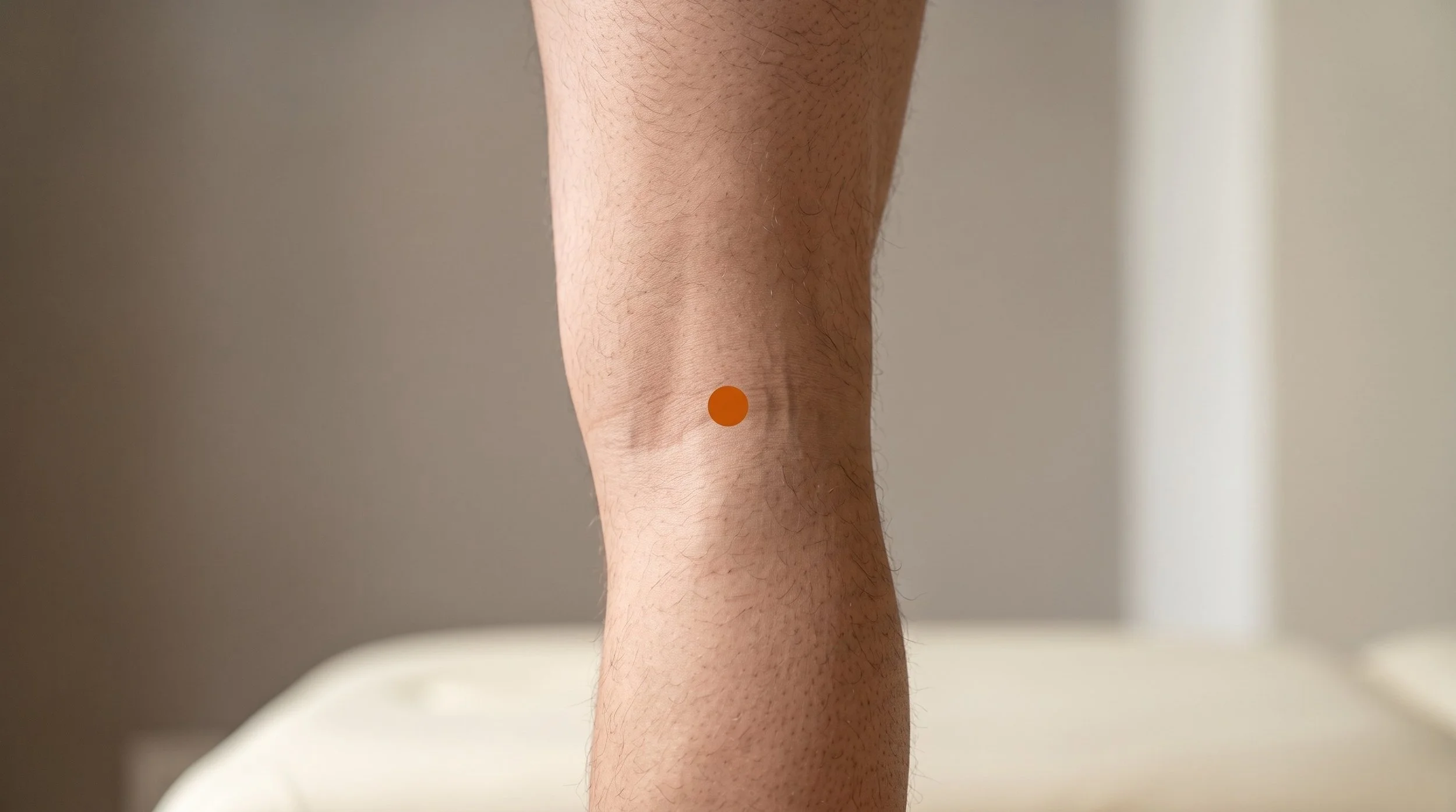
The hamstring muscles, the biceps femoris, semimembranosus, and semitendinosus, produce trigger point referral from the proximal posterior thigh downward through the thigh and into the calf. This referral pattern produces what patients describe as a pulled hamstring that never fully healed, or persistent posterior thigh tightness with calf involvement. In runners and cyclists who spend hours with the hamstrings in sustained shortening, hamstring trigger points are an extremely common source of posterior leg symptoms that get labeled as sciatica.
| Muscle | Sciatica-Like Referral Pattern | Neurological Exam | Key Activating Factor |
|---|---|---|---|
| Gluteus minimus | Buttock → entire posterior or lateral leg to ankle/foot | Normal (no reflex change, no dermatomal sensory loss) | Sustained walking, lateral lying, hip abductor overload |
| Piriformis | Deep buttock → posterior thigh, sometimes calf | Usually normal; SLR may be positive in anatomical variants with nerve through muscle | Prolonged sitting, hip external rotation tasks, asymmetric loading |
| Gluteus medius | Sacral region, posterior iliac crest, lateral buttock | Normal | Lateral lying compression, hip abductor fatigue in walking/running |
| Biceps femoris / hamstrings | Posterior thigh (proximal → distal), popliteal fossa, calf | Normal | Running, cycling, prolonged sitting with knees flexed |
| Deep hip rotators (obturators, gemelli) | Deep buttock, perineal region, posterior thigh | Normal | Asymmetric sitting posture, repetitive hip rotation tasks |
| Quadratus lumborum | Lumbar spine, iliac crest, groin, occasionally lateral thigh | Normal | Sitting asymmetry, lateral flexion tasks, heavy lifting |
How to Recognize Trigger Point Pseudo-Sciatica vs. True Radiculopathy
The clinical distinction between trigger point pseudo-sciatica and true lumbar radiculopathy relies primarily on the neurological examination, not on symptom location, quality, or severity. Trigger point referral can produce intense, burning, shooting pain down the entire leg; true radiculopathy can sometimes produce only a mild aching. Symptom quality alone is not a reliable differentiator.
True lumbar radiculopathy produces specific neurological changes that trigger point pseudo-sciatica does not. L4 radiculopathy diminishes the patellar tendon reflex and weakens knee extension and dorsiflexion. L5 radiculopathy produces sensory changes in the dorsal foot and first web space and may reduce extensor hallucis longus strength. S1 radiculopathy diminishes the Achilles tendon reflex and produces sensory changes in the lateral foot. When these reflex changes and dermatomal sensory findings are absent in a patient with buttock and leg symptoms, the neurological examination is effectively ruling out the nerve root as the primary source.
Sciatica Diagnosis That Has Not Responded to Back-Focused Treatment?
If your sciatica symptoms have not resolved with lumbar injections, physical therapy for the spine, or rest, the source may be in the gluteal and hip muscles rather than the lumbar disc. Morningside Acupuncture specializes in assessing and treating the trigger point sources of sciatica-like pain and has helped many patients resolve symptoms that were not responding to spine-focused care. Schedule a targeted assessment now.
Schedule NowDry Needling Treatment for Pseudo-Sciatica
Dry needling the gluteus minimus and piriformis is the most direct treatment for the most common sciatica-mimicking trigger point presentations. Both muscles lie deep in the gluteal region and are not accessible to superficial massage or foam rolling: the gluteus minimus is covered by the gluteus medius, and the piriformis is deep to the gluteus maximus. Direct needle penetration to these muscles is necessary to produce the local twitch response that deactivates the trigger points and resolves the referred pain.
The treatment of pseudo-sciatica through dry needling typically produces faster resolution than the typical course of spinal injections and physical therapy prescribed for lumbar radiculopathy, precisely because the actual pain source is being directly addressed. Most patients with gluteus minimus-driven pseudo-sciatica notice significant reduction in leg symptoms within one to three sessions; piriformis syndrome typically resolves within two to four sessions.
Because the gluteal muscles are large and deep, the dry needling technique requires sufficient needle length and precision to reach the trigger point within the target muscle without penetrating adjacent structures. At Morningside Acupuncture, this precision is ensured through systematic anatomical examination before each session to locate the specific trigger points active within the target muscles for each patient, rather than using standardized needle placement protocols that may not correspond to the individual patient's trigger point distribution.
Ready to Find Out Whether Your Sciatica Is Coming From a Muscle?
Morningside Acupuncture is the highest-rated acupuncture and dry needling clinic in New York City with over 500 five-star Google reviews. A thorough myofascial assessment can determine whether your sciatica-like symptoms have a treatable trigger point source and, if so, provide targeted dry needling treatment that often resolves symptoms patients have been managing unsuccessfully for months or years. Schedule your sciatica assessment today.
Schedule NowFrequently Asked Questions
How do I know if my sciatica is from my spine or from a muscle?
The neurological examination is the most reliable clinical indicator. True lumbar radiculopathy produces specific reflex changes (diminished ankle jerk for S1, diminished patellar jerk for L4) and dermatomal sensory loss that trigger point pseudo-sciatica does not produce. If your neurological examination is normal, the symptoms are most likely myofascial in origin. Electrodiagnostic studies (EMG and nerve conduction) can confirm this in ambiguous cases.
My MRI shows a disc herniation but my doctor says it may not be the source of my pain. Is that possible?
Yes, and this is clinically very common. Disc herniations are present in a substantial proportion of people over 40 without any pain. Finding a disc herniation on MRI in a patient with sciatica-like symptoms does not establish causation: the herniation may be incidental, and the actual pain source may be trigger points in the gluteal musculature. Your doctor's uncertainty is clinically appropriate, and it points toward the value of a myofascial assessment to evaluate the muscle contribution.
I have already had a lumbar epidural injection with only temporary relief. Can dry needling help?
If an epidural injection provided temporary but not lasting relief, it suggests either that the nerve root is the source and the anti-inflammatory effect wore off, or that a significant myofascial component exists and was not addressed by the injection. Dry needling the gluteal muscles may address the trigger point component that was not reached by the epidural, producing longer-lasting benefit for the portion of your pain driven by muscle sources.
Can sitting for long periods at work cause sciatica-like symptoms from muscle trigger points?
Yes. Prolonged sitting compresses the gluteal muscles directly, particularly the piriformis and gluteus minimus, activating trigger points in those muscles through the ischemic pressure on their motor endplates. Many desk workers develop sciatica-like buttock and leg symptoms that are entirely driven by sitting-activated gluteal trigger points. Standing desks, frequent position changes, and dry needling the affected muscles are the most effective management strategies for this pattern.
Can dry needling at Morningside Acupuncture reach the deep muscles like the piriformis and gluteus minimus?
Yes. Both the piriformis and gluteus minimus require longer needles and careful anatomical technique to reach reliably, and we use the appropriate needle lengths and depth assessment for deep gluteal work. We locate the specific trigger points within these muscles for each patient before each session rather than using standardized placement, ensuring the needling reaches the actual tissue dysfunction rather than the approximate anatomical region.
References
- Simons, D. G., Travell, J. G., & Simons, L. S. (1999). Travell and Simons' Myofascial Pain and Dysfunction: The Trigger Point Manual (2nd ed.). Lippincott Williams & Wilkins.
- Vickers, A. J., Vertosick, E. A., Lewith, G., MacPherson, H., Foster, N. E., Sherman, K. J., Irnich, D., Witt, C. M., & Linde, K. (2018). Acupuncture for chronic pain: Update of an individual patient data meta-analysis. Journal of Pain, 19(5), 455-474. https://doi.org/10.1016/j.jpain.2017.11.005
- Shah, J. P., Danoff, J. V., Desai, M. J., Parikh, S., Nakamura, L. Y., Phillips, T. M., & Gerber, L. H. (2008). Biochemicals associated with pain and inflammation are elevated in sites near to and remote from active myofascial trigger points. Archives of Physical Medicine and Rehabilitation, 89(1), 16-23. https://doi.org/10.1016/j.apmr.2007.10.018
- Kietrys, D. M., Palombaro, K. M., Azzaretto, E., Hubler, R., Schaller, B., Schlussel, J. M., & Tucker, M. (2013). Effectiveness of dry needling for upper-quarter myofascial pain: A systematic review and meta-analysis. Journal of Orthopaedic & Sports Physical Therapy, 43(9), 620-634. https://doi.org/10.2519/jospt.2013.4668
Disclaimer: This web site is intended for educational and informational purposes only. Reading this website does not constitute providing medical advice or any professional services. This information should not be used for diagnosing or treating any health issue or disease. Those seeking medical advice should consult with a licensed physician. Seek the advice of a medical doctor or other qualified health professional for any medical condition. If you think you have a medical emergency, call 911 or go to the emergency room. No acupuncturist-patient relationship is created by reading this website or using the information. Morningside Acupuncture PLLC and its employees and contributors do not make any express or implied representations with respect to the information on this site or its use. For any legal interpretation of scope of practice in your state, consult a licensed attorney or regulatory authority.
Read more from our blog