Acupuncture for Cervical Radiculopathy
Addressing the Nerve Root Compression, Myofascial Amplifiers, and Neural Sensitization That Sustain Neck-to-Arm Pain
Cervical radiculopathy produces neck, shoulder, and arm pain through a combination of nerve root compression, chemical irritation, and the paraspinal and scalene trigger points that significantly amplify the neurological picture.
- Cervical radiculopathy involves compression or chemical irritation of a cervical nerve root, producing pain, paresthesia, and potentially weakness in the distribution of that root, most commonly at C6 (lateral forearm to thumb and index finger) and C7 (posterior forearm to middle finger).
- Scalene trigger points in the anterior, middle, and posterior scalenes produce referred pain into the arm, forearm, and hand in patterns nearly identical to C6, C7, and C8 radiculopathy, meaning many patients receive a radiculopathy diagnosis when myofascial referred pain is the primary generator.
- The natural history of cervical radiculopathy is generally favorable: 75 to 90% of patients improve substantially with conservative management within 8 to 12 weeks, with surgery reserved for progressive neurological deficit or failure of thorough non-surgical care.
- Acupuncture shows efficacy for neck disorders and cervical radiculopathy through multiple systematic reviews, with improvements in pain intensity and functional outcomes (Trinh et al., 2006).
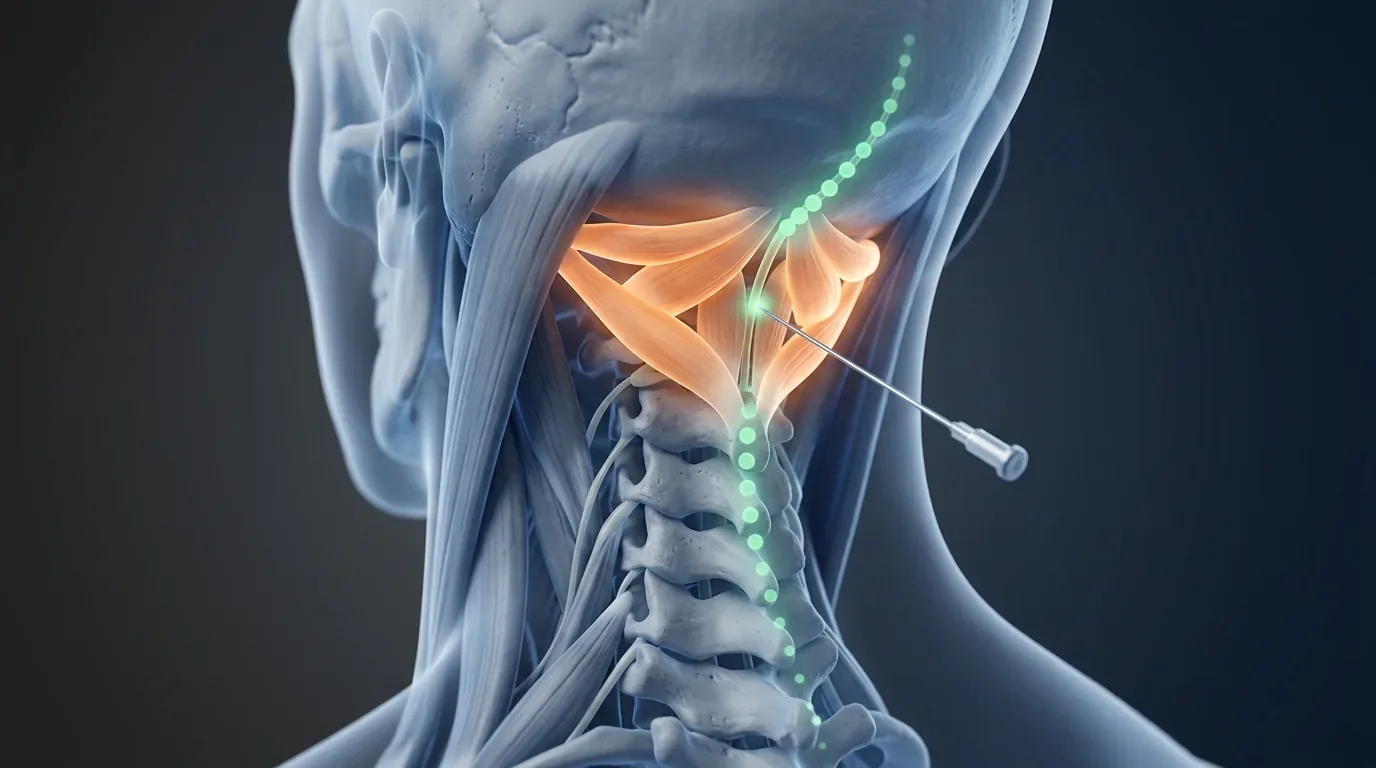
- Dry needling cervical paraspinals and scalenes reduces the protective guarding that narrows cervical foramina and compresses nerve roots, addressing a mechanical contributor to radiculopathy that is fully reversible.
- Acupuncture's activation of descending inhibitory pathways reduces neural sensitization in the cervical spinal cord that amplifies radicular pain regardless of its structural source (Zhao, 2008).
- A large meta-analysis confirmed clinically meaningful acupuncture effects on chronic neck and upper extremity pain (Vickers et al., 2018).
Neck and Arm Pain That Has Not Resolved with Rest or Medication?
Many patients with cervical radiculopathy carry a significant myofascial component in the scalenes and cervical paraspinals that amplifies their nerve root symptoms and prevents resolution. At Morningside, we systematically address both layers, often producing substantial improvement in neck-to-arm pain presentations that conventional care has not resolved.
Schedule NowUnderstanding Cervical Radiculopathy
A cervical nerve root is compressed or irritated as it exits the spinal canal through the neural foramen, a bony tunnel whose dimensions are reduced by disc herniation, osteophyte formation, or foraminal stenosis. Younger patients (under 45) more commonly develop radiculopathy from disc herniations that displace nuclear material against the exiting root; older patients more typically develop it from degenerative foraminal narrowing that develops gradually over years.
The symptoms produced depend on which root is affected. Pain and paresthesia follow dermatomal distributions, while weakness follows myotomal patterns in the muscles supplied by the affected segment. Most cervical radiculopathy involves the C5-T1 roots, with C6 and C7 being the most common presentations.
| Root | Pain Distribution | Paresthesia | Possible Weakness | Reflex Change |
|---|---|---|---|---|
| C5 | Lateral shoulder; deltoid region | Lateral upper arm; shoulder | Deltoid; shoulder abduction | Biceps reflex reduced |
| C6 | Lateral forearm; thumb side | Thumb; index finger; lateral forearm | Biceps; wrist extension | Brachioradialis reflex reduced |
| C7 | Posterior forearm; middle finger | Middle finger; posterior forearm | Triceps; wrist flexion; finger extension | Triceps reflex reduced |
| C8 | Medial forearm; ring and little fingers | Ring and little fingers; ulnar forearm | Intrinsic hand muscles; finger flexion | Finger flexor reflex reduced |
| T1 | Medial forearm; medial arm to axilla | Medial forearm; ulnar border | Intrinsic hand muscles | Finger flexor reflex reduced |
The Myofascial Mimics and Amplifiers
A critical clinical insight: scalene trigger points produce referred pain into the arm, forearm, and hand in patterns that overlap precisely with C6, C7, and C8 dermatomal distributions. Anterior scalene trigger points refer to the thumb, index, and middle fingers (C6-C7 pattern); lower trunk referral from middle and posterior scalene trigger points produces ring and little finger paresthesia (C8-T1 pattern). These patterns are generated by neuromuscular dysfunction in the muscle itself, not by nerve root compression, and they respond to scalene dry needling rather than spinal interventions.
The clinical implication is significant: a patient with arm paresthesia and a disc herniation at C5-C6 on MRI does not automatically have structural nerve root compression as the primary pain generator. If scalene trigger points can reproduce the exact symptoms on palpation, and if a few sessions of scalene dry needling resolve the arm symptoms, the myofascial component was primary, and the MRI finding was a coincidental structural observation. Treating the wrong cause explains much of the treatment-resistant radiculopathy seen in clinical practice.
Arm Paresthesia or Weakness That Has Not Been Explained?
A significant number of patients with arm numbness, tingling, or weakness have scalene or pectoralis minor trigger points as the primary cause or a major amplifying factor, regardless of what their MRI shows. Our clinicians at Morningside assess all potential contributors to arm symptoms and target the most treatable factors first, often producing rapid improvement where previous treatments have not.
Schedule NowHow Acupuncture and Dry Needling Work for Cervical Radiculopathy
Dry needling addresses three components of cervical radiculopathy simultaneously. First, it deactivates scalene and paraspinal trigger points that are either generating referred arm symptoms independently or amplifying genuine nerve root compression by adding their own chemical mediators to an already sensitized system. Second, it reduces the protective guarding in the cervical paraspinals that creates sustained foraminal narrowing above the level provided by the structural lesion; a cervical segment with a disc herniation that is guarded by taut paraspinal muscles has less foraminal space available than the same structural lesion without guarding. Third, it improves local circulation in the cervical muscles, reducing the ischemic component of paraspinal trigger point activity.
Acupuncture complements this through its cervical and thoracic spinal cord dorsal horn effects. Radiculopathy produces spinal cord sensitization in the affected root's segments, lowering the threshold for pain from all inputs arriving at those levels. Acupuncture activates supraspinal inhibitory mechanisms including the periaqueductal gray and noradrenergic brainstem nuclei that provide descending inhibition to these sensitized dorsal horn neurons (Zhao, 2008). This effect on central sensitization explains why patients with genuine structural radiculopathy also benefit from acupuncture even when the nerve root compression itself cannot be reversed.
| Component | Primary Target | Goal |
|---|---|---|
| Scalene dry needling | Anterior, middle, posterior scalene trigger points | Eliminate myofascial referred arm symptoms; open interscalene triangle |
| Cervical paraspinal needling | Semispinalis capitis/cervicis, multifidus, splenius cervicis | Reduce foraminal narrowing from guarding; improve cervical segmental mobility |
| Upper trapezius and levator scapulae needling | Upper trapezius, levator scapulae | Address forward head posture perpetuation; reduce cervical axial loading |
| Pectoralis minor needling | Pectoralis minor | Address subcoracoid plexus compression; reduce shoulder protraction and forward head |
| Systemic acupuncture | Cervical spinal cord dorsal horn sensitization | Reduce central sensitization; normalize arm pain threshold; improve sleep disruption from neuropathic pain |
A systematic review of acupuncture for neck disorders by Trinh and colleagues found evidence supporting acupuncture for neck pain reduction and concluded it may be an effective component of treatment for cervical radiculopathy (Trinh et al., 2006). Subsequent evidence in the broader chronic pain literature confirms meaningful and durable acupuncture effects on upper extremity and neck pain that are well above sham and usual care (Vickers et al., 2018).
Related Dry Needling for Neck Pain: Evidence, Technique, and What to ExpectComprehensive Cervical Radiculopathy Care in New York City
At Morningside Acupuncture, we are the highest-rated acupuncture and dry needling clinic in New York City with over 500 five-star Google reviews. We specialize in cervical radiculopathy and the complex overlapping presentations of neck-to-arm pain, with particular expertise in identifying when scalene trigger points are generating or amplifying apparent radicular symptoms. Our clinicians combine precise dry needling with acupuncture for neural sensitization reduction, providing a comprehensive conservative approach that frequently succeeds where previous treatments have not. We welcome an evaluation to assess your specific presentation.
Schedule NowFrequently Asked Questions
How long does cervical radiculopathy take to resolve?
The natural history is generally favorable. Most studies find that 75 to 90% of patients with cervical radiculopathy improve substantially within 8 to 12 weeks with conservative management alone, without surgery. The rate of recovery varies with the severity of neurological involvement; patients with primarily pain and paresthesia tend to improve faster than those with significant motor weakness. Structured conservative care including dry needling and acupuncture typically accelerates recovery compared to rest and medication alone.
Do I need an MRI before starting acupuncture for cervical radiculopathy?
An MRI is helpful for identifying the structural cause, ruling out serious pathology, and informing treatment planning. However, it is not a prerequisite for beginning conservative care. Patients who have already had imaging can share those results, and we incorporate the structural findings into our clinical assessment. We always conduct a thorough clinical examination and refer for imaging when the history or neurological findings suggest it is needed.
Will surgery be necessary for my cervical radiculopathy?
Surgery for cervical radiculopathy is generally reserved for progressive neurological deficit (worsening weakness), myelopathy signs (cord compression), or failure of thorough conservative management over three to six months. For the majority of patients without these features, conservative management is appropriate first-line care and is often sufficient for full recovery.
Can dry needling the scalenes worsen my nerve root compression?
No. Scalene dry needling reduces hypertonia in these muscles, which if anything opens the interscalene triangle and reduces the compressive load on the brachial plexus. The needle targets the muscle belly, not the nerve or joint. Patients sometimes experience a transient paresthesia into the arm during scalene needling (indicating proximity to the brachial plexus), which is a normal and expected response that resolves immediately.
How is cervical radiculopathy different from thoracic outlet syndrome?
The symptoms can overlap substantially because both involve the brachial plexus, but the compression site differs. Cervical radiculopathy involves the nerve root within or near the spinal canal and foramen; TOS involves compression further downstream at the interscalene triangle, costoclavicular space, or beneath the pectoralis minor. Both conditions involve scalene trigger points as significant contributors, and both can coexist in the same patient. Careful clinical assessment, including provocation tests for each condition, typically allows differentiation.
References
- Trinh, K., Graham, N., Gross, A., Goldsmith, C., Wang, E., Cameron, I., & Kay, T. (2006). Acupuncture for neck disorders. Cochrane Database of Systematic Reviews, (3), CD004870. https://doi.org/10.1002/14651858.CD004870.pub3
- Vickers, A. J., Vertosick, E. A., Lewith, G., MacPherson, H., Foster, N. E., Sherman, K. J., Irnich, D., Witt, C. M., & Linde, K. (2018). Acupuncture for chronic pain: Update of an individual patient data meta-analysis. JAMA Internal Medicine, 178(11), 1444-1453. https://doi.org/10.1001/jamainternmed.2018.4242
- Zhao, Z. Q. (2008). Neural mechanism underlying acupuncture analgesia. Progress in Neurobiology, 85(4), 355-375. https://doi.org/10.1016/j.pneurobio.2008.05.004
- Simons, D. G., Travell, J. G., & Simons, L. S. (1999). Travell & Simons' myofascial pain and dysfunction: The trigger point manual (2nd ed.). Williams & Wilkins.
- Kietrys, D. M., Palombaro, K. M., Azzaretto, E., Huber, R., Schaller, B., Schlussel, J. M., & Tucker, M. (2013). Effectiveness of dry needling for upper-quarter myofascial pain: A systematic review and meta-analysis. Journal of Orthopaedic & Sports Physical Therapy, 43(9), 620-634. https://doi.org/10.2519/jospt.2013.4668
Disclaimer: This web site is intended for educational and informational purposes only. Reading this website does not constitute providing medical advice or any professional services. This information should not be used for diagnosing or treating any health issue or disease. Those seeking medical advice should consult with a licensed physician. Seek the advice of a medical doctor or other qualified health professional for any medical condition. If you think you have a medical emergency, call 911 or go to the emergency room. No acupuncturist-patient relationship is created by reading this website or using the information. Morningside Acupuncture PLLC and its employees and contributors do not make any express or implied representations with respect to the information on this site or its use. For any legal interpretation of scope of practice in your state, consult a licensed attorney or regulatory authority.
Read more from our blog