Muscles That Cause Neck Pain
The Specific Muscles Behind Chronic Neck Tension, Cervicogenic Headaches, and Restricted Rotation — and Why Trigger Points Are the Most Commonly Missed Source
Most chronic neck pain originates not from disc degeneration or nerve compression but from trigger points in the muscles that hold the head upright and move the cervical spine. Knowing which muscles are involved in your specific neck pain pattern is the first step toward targeted treatment that actually addresses the source rather than managing the symptom.
- The upper trapezius, levator scapulae, sternocleidomastoid, suboccipitals, scalenes, semispinalis capitis, and splenius capitis are the muscles most commonly responsible for chronic neck pain and cervicogenic headaches through myofascial trigger points (Simons et al., 1999).
- Forward head posture from sustained screen and desk work is the primary mechanical driver of cervical trigger point development: each centimeter the head translates anteriorly from neutral adds approximately 10 pounds of effective loading to the cervical extensors and upper trapezius, compounding the trigger point formation mechanism.
- Cervicogenic headache, the headache that originates in the neck but is felt in the head, is driven by trigger points in the suboccipitals, semispinalis capitis, and upper sternocleidomastoid; treatment aimed at the head fails because the source is in the neck.
- The scalenes refer pain into the upper chest, arm, and hand in a pattern that precisely mimics thoracic outlet syndrome, carpal tunnel syndrome, and C6 radiculopathy; nerve conduction studies are typically normal because the nerve is sensitized by trigger point biochemical diffusion rather than structurally compressed (Shah et al., 2008).
- Dry needling of cervical trigger points produces clinically significant reductions in neck pain intensity and frequency, with consistent evidence across systematic reviews (Kietrys et al., 2013; Vickers et al., 2018).
- The neck's vulnerability to trigger point accumulation stems from its combination of continuous postural demand (the head weighs approximately 10-12 pounds and must be supported throughout the waking day) and high mobility requirement, placing the cervical musculature in the sustained low-level contraction state that drives trigger point formation.
Chronic Neck Tension, Stiffness, or Headaches That Originate at the Base of the Skull?
Trigger points in the cervical muscles are the most common source of chronic neck pain and cervicogenic headache, and they require hands-on trigger point assessment rather than imaging to identify. At Morningside Acupuncture, the first appointment evaluates the upper trapezius, levator scapulae, suboccipitals, SCM, scalenes, and semispinalis as the standard cervical trigger point screen, identifying which specific muscles are generating your symptoms. Schedule for a full cervical assessment.
Schedule NowWhy Neck Muscles Are Especially Prone to Trigger Points
The cervical spine supports a head weighing 10 to 12 pounds through a range of motion that spans over 160 degrees of rotation, approximately 130 degrees of flexion-extension, and 90 degrees of lateral bending. The muscles responsible for this combination of load-bearing and mobility must maintain continuous low-level activation throughout every waking hour: even in a perfectly neutral seated position, the cervical extensors are working against gravity to prevent the head from falling forward.
Modern desk, screen, and phone use creates a forward head posture that substantially amplifies this baseline load. When the head translates anteriorly, the effective gravitational load on the cervical extensor muscles increases proportionally with the distance of the head's center of mass from the cervical spine. Sustained hours in this position generate the sustained type I motor unit recruitment that produces trigger points through the energy crisis and biochemical accumulation mechanism. The result is that most adults who work at screens for more than six hours per day develop cervical trigger points, with the only variables being which muscles are most affected and whether those trigger points remain latent or become active and symptomatic.
Related What Causes Trigger Points: The Science of Why Muscles Develop These Pain-Generating NodulesThe Muscles That Cause Neck Pain: A Complete Reference
| Muscle | Primary Pain Referral | Key Symptoms | Common Trigger |
|---|---|---|---|
| Upper Trapezius | Temple, behind the eye; side of the neck; jaw angle | The classic "tension headache"; unilateral temple throbbing; neck stiffness after screen work; pain on turning the head to the ipsilateral side | Sustained screen work; carrying bags on one shoulder; emotional stress and bracing; whiplash |
| Levator Scapulae | Base of the skull; upper neck along the levator border; angle of the neck; upper shoulder | "Stiff neck" with restricted rotation toward the involved side; sharp pain at the neck-shoulder junction on turning; wry neck (torticollis) in severe cases | Awkward sustained head position (sleeping on side, phone cradled); repetitive arm work above shoulder height |
| Sternocleidomastoid (SCM) | Behind the ear; vertex of the skull; around and above the eye; cheek and forehead; sternum; chin | Dizziness and balance disturbance; visual disturbances; tearing of the eye; autonomic symptoms; atypical facial pain | Forward head posture; whiplash; sleeping with head elevated; sustained coughing |
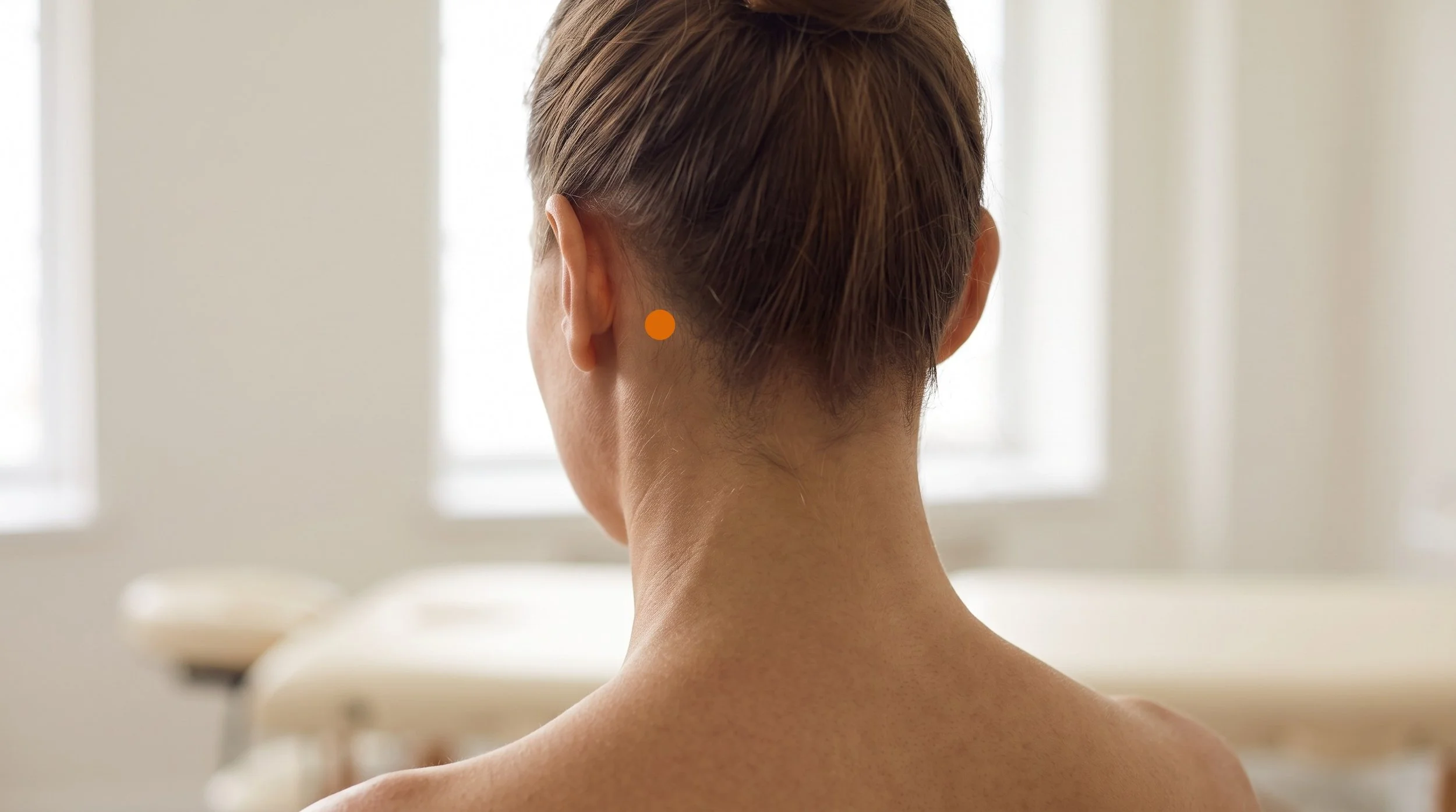
| Suboccipitals | Deep headache spreading from the base of the skull forward over the head to the eye; sometimes behind or around the eye | A "headache inside the head" rather than superficial; pressure and fullness in the occiput and behind the eye; restrictions on fine head movement; scalp hypersensitivity | Sustained reading or screen work with chin-forward posture; pillow height that flexes the neck overnight |
| Scalenes | Chest; upper arm and forearm; thumb side of the hand and wrist; upper back at the medial scapular border | Arm and hand pain mimicking thoracic outlet syndrome or carpal tunnel syndrome; persistent wrist and forearm aching; thumb-side hand numbness with normal nerve conduction studies | Paradoxical breathing (chest-breathing); whiplash; repetitive upper extremity work; first rib elevation |
| Semispinalis Capitis/Cervicis | Band of pain around the head at the level of the eyes and forehead; deep cervical aching | Bandlike headache encircling the head; deep cervical tension that does not release with stretching; headache worsened by sustained neck flexion | Forward head posture; prolonged reading; cervical whiplash |
| Splenius Capitis | Top of the skull (vertex) on the same side; behind the eye | Pain at the crown of the head; vertex aching that patients often describe as "pressure on the top of the head"; occasional eye focusing difficulties | Sustained rotated or extended neck position; whiplash; heavy lifting with neck loading |
| Splenius Cervicis | Diffuse pain in the back of the head; eye pain and blurred vision on the opposite side | Contralateral visual disturbances (the only muscle that refers to the opposite side); deep occipital aching; cervical restriction in rotation away from the involved side | Similar to splenius capitis: sustained off-center head positioning; reading or driving with unilateral head turn |
| Multifidus (cervical) | Deep cervical aching; occipital headache; may refer to the shoulder | Deep, dull cervical aching that is poorly localized; increased pain with sustained cervical loading; often present after cervical whiplash | Cervical spine injury; sustained loaded cervical posture; cervical segmental instability |
Forward Head Posture and the Trigger Point Cascade
The neutral cervical spine maintains the head's center of mass directly over the cervical vertebrae, allowing the deep cervical flexors and extensors to share the postural load efficiently. Forward head posture, defined as the head translating anteriorly so that the ear canal is in front of the shoulder rather than above it, progressively increases the eccentric demand on the posterior cervical muscles with each centimeter of anterior translation.
The mechanical consequence is that the upper trapezius, semispinalis capitis, suboccipitals, and splenius capitis are continuously loaded at a higher level than neutral posture requires. Their type I slow-twitch motor units, which are preferentially recruited for sustained postural work, maintain elevated activation throughout the workday without adequate recovery. The biochemical accumulation at these motor endplates, and the progressive development of trigger points within the taut bands that form, follows the same Cinderella hypothesis mechanism documented in other postural muscles.
The practical implication is that neck trigger points rarely develop from a single traumatic event in the majority of patients. They accumulate gradually over months of sustained screen work and forward head posture, which is why they are ubiquitous in office workers, students, and professionals and why addressing only the acute symptom without the underlying postural loading pattern produces temporary relief followed by return of symptoms.
Neck Pain That Comes Back Every Few Weeks Despite Massage and Stretching?
Recurring neck tension that provides temporary relief with massage but returns reliably within days or weeks is typically maintained by established trigger points that require dry needling rather than mechanical compression to fully deactivate. At Morningside, trigger point dry needling of the cervical muscles produces more sustained improvements than manual therapy alone, particularly when paired with postural and ergonomic guidance that addresses the loading pattern perpetuating the trigger points. Schedule for a full cervical trigger point assessment and dry needling.
Schedule NowCervicogenic Headache: When Neck Muscles Cause Head Pain
Cervicogenic headache is defined as headache with a demonstrated cervical musculoskeletal source. The upper three cervical nerve roots (C1, C2, C3) converge on the trigeminal nucleus caudalis at the level of the upper cervical cord and lower brainstem, creating a shared neural pathway between the cervical structures and the trigeminal distribution of the face and scalp. Nociceptive input from cervical trigger points in the suboccipitals, semispinalis capitis, or upper trapezius accesses this convergence zone and is perceived as head pain, producing the pattern clinically called cervicogenic headache.
The distinguishing features that separate cervicogenic headache from primary migraine and tension-type headache are the presence of neck stiffness or restricted cervical range of motion on the same side as the headache, worsening of the headache with sustained neck postures or neck movement, and reproduction of the headache by pressing specific trigger points in the upper cervical and suboccipital muscles. Not all headaches that coexist with neck tension are cervicogenic: primary migraine can produce neck tension as a secondary symptom. The key diagnostic test is whether pressing the cervical trigger points reproduces the headache that the patient reports, not merely worsens a pre-existing headache.
Related Muscles That Cause Headaches: The Complete Trigger Point Reference for Head PainHow Acupuncture and Dry Needling Treat Cervical Trigger Points
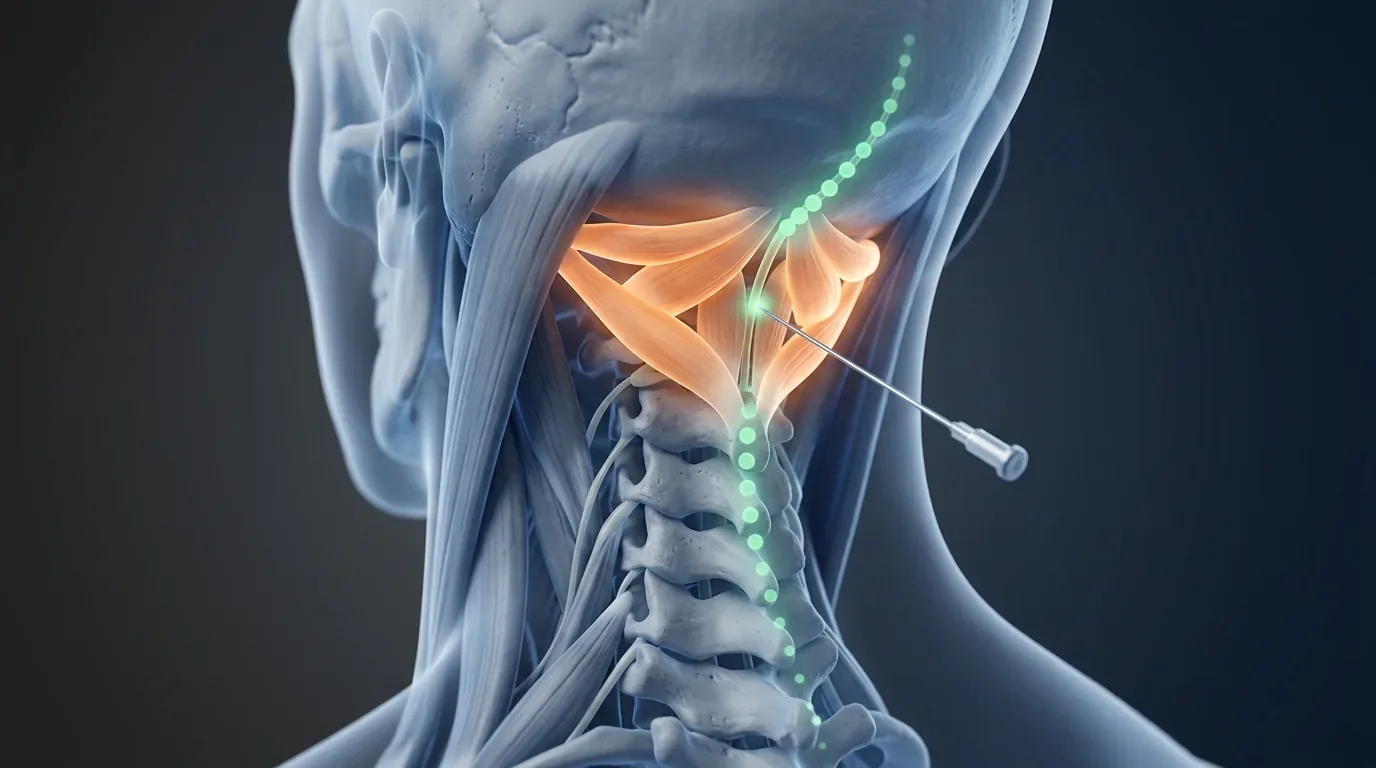
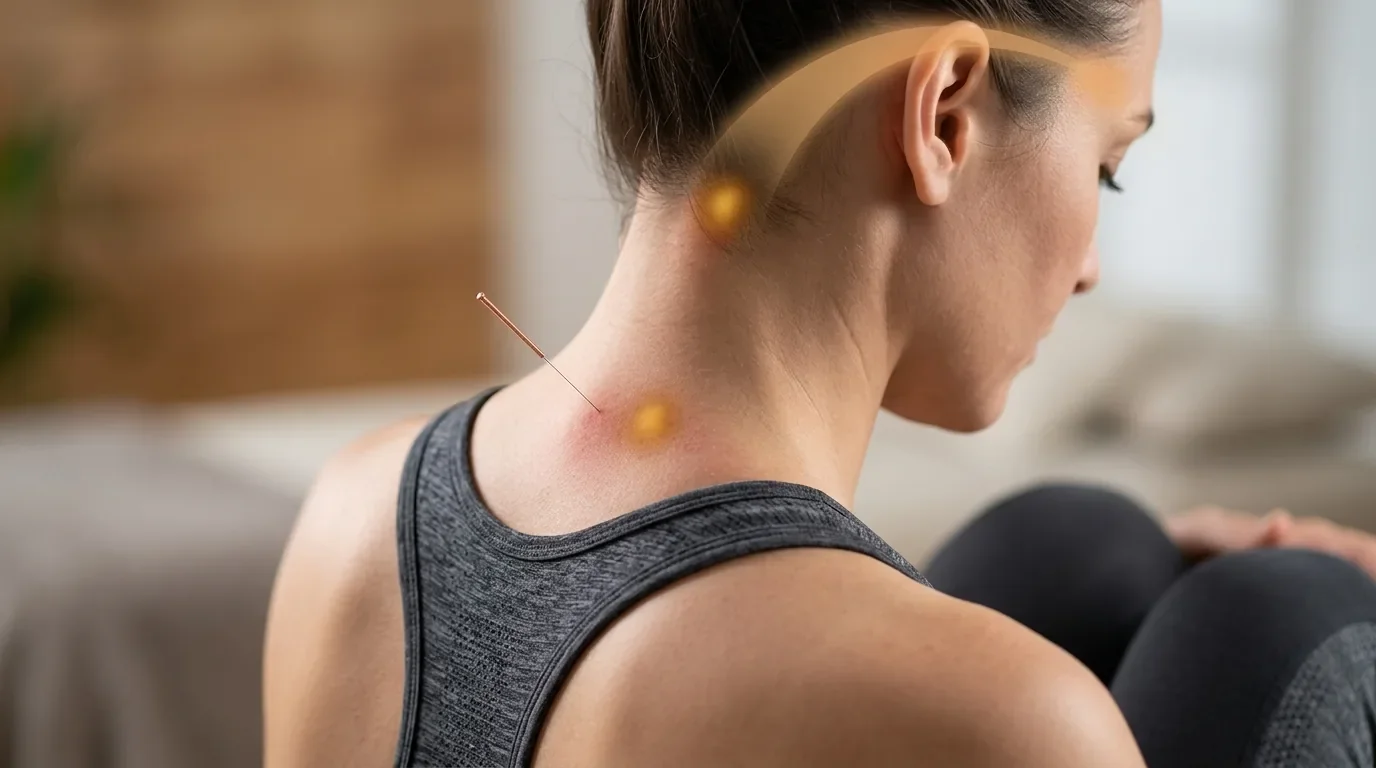
The cervical trigger points are among the most accessible in the body for dry needling because the cervical muscles are relatively superficial and well-defined on palpation. The upper trapezius is the most commonly treated muscle in the cervical region, with its trigger point in the upper border of the muscle between the neck and the shoulder accessible in virtually any patient position. The levator scapulae trigger point, at the angle of the neck where the muscle descends to the medial scapular border, is the second most commonly addressed structure for neck stiffness and restricted rotation.
The suboccipitals require more precise needling due to their depth and proximity to the cervical spine and greater occipital nerve. The rectus capitis posterior minor and major, and the obliquus capitis inferior and superior, are palpated against the posterior arch of C1 and the spinous process of C2, and needled in the suboccipital triangle with careful attention to depth and angle. When these muscles carry trigger points, the relief from accurate needling is often immediate and dramatic, with patients describing the "headache inside the head" disappearing during the session.
Traditional acupuncture techniques that activate the descending inhibitory pathways through the periaqueductal gray complement local dry needling for cervical pain, particularly for patients with central sensitization from long-standing neck pain and associated headache who require systemic pain modulation alongside the local trigger point work (Zhao, 2008).
Cervical Trigger Point Treatment at New York City's Highest-Rated Acupuncture Clinic
At Morningside Acupuncture, we are the highest-rated acupuncture and dry needling clinic in New York City with over 500 five-star Google reviews. Cervical trigger points causing neck pain, cervicogenic headaches, restricted rotation, and the arm and hand symptoms generated by scalene trigger points are the single most common presentation at the clinic. Whether your neck symptoms are recent or have been present for years, schedule for a full cervical assessment and find out which specific muscles are generating your pain.
Schedule NowFrequently Asked Questions
Can neck muscle trigger points cause arm and hand symptoms?
Yes. The scalene muscles, which attach to the cervical transverse processes and the first and second ribs, refer pain into the chest, upper arm, forearm, and the thumb side of the hand. Their trigger points also sensitize the brachial plexus, which passes through the anterior and middle scalene muscles, producing numbness, tingling, and weakness in the arm and hand that precisely mimics thoracic outlet syndrome or carpal tunnel syndrome. If nerve conduction studies are normal and cervical MRI shows no significant nerve root compression, scalene trigger points should be assessed before further structural workup.
Why does my neck hurt more on one side than the other?
Unilateral neck pain is most commonly driven by asymmetric loading: the dominant arm does more work, phone use and screen viewing often favor one side, sleeping positions tend to load one side more than the other, and postural habits like carrying a bag on one shoulder create chronic muscle loading asymmetries. These patterns generate trigger points preferentially in the upper trapezius and levator scapulae on the more loaded side. Identifying and addressing the postural and activity asymmetry alongside trigger point treatment is necessary for lasting improvement; if the loading pattern is not changed, the trigger points will reform.
Could my neck pain be coming from my upper back rather than the neck itself?
Frequently, yes. The upper trapezius spans from the occiput to the upper thoracic spine, and trigger points anywhere along its length can refer to the neck. The rhomboids and middle trapezius generate trigger points from forward shoulder posture that contribute to upper back tension perceived as neck tightness. The thoracolumbar paraspinal muscles and even the multifidus can refer upward into the lower cervical region. A comprehensive cervical assessment includes the upper thoracic musculature as well as the cervical muscles proper, and the treatment area often extends into the upper back even when neck pain is the primary complaint.
How long does it take to treat chronic neck pain with acupuncture at Morningside?
Recent-onset neck tension, typically from a specific incident like sleeping awkwardly or a minor strain, usually resolves within 3 to 5 sessions. Chronic neck pain that has been present for months or years, particularly when associated with cervicogenic headaches or arm symptoms, typically requires 6 to 10 sessions for sustained improvement. Many patients with long-standing cervical trigger points notice significant improvement in the first few sessions and continue treatment to consolidate and extend those gains. A realistic timeline estimate is provided at the first appointment based on the specific muscles involved and the duration of the problem.
Can acupuncture help with a "pinched nerve" in the neck?
When imaging shows cervical disc herniation or nerve root compression (true radiculopathy), acupuncture and dry needling can help reduce the associated muscle spasm, sensitized trigger points, and the pain sensitization that compounds the nerve root irritation, but the nerve root pathology itself requires medical management. Many patients labeled with "pinched nerve" in the neck have normal or minimally abnormal imaging and are experiencing referred symptoms from scalene or cervical extensor trigger points rather than structural nerve compression. For these patients, trigger point treatment is often the primary solution rather than a complementary one.
References
- Simons, D. G., Travell, J. G., & Simons, L. S. (1999). Travell & Simons' Myofascial Pain and Dysfunction: The Trigger Point Manual (2nd ed.). Williams & Wilkins.
- Shah, J. P., Danoff, J. V., Desai, M. J., Parikh, S., Nakamura, L. Y., Phillips, T. M., & Gerber, L. H. (2008). Biochemicals associated with pain and inflammation are elevated in sites near to and remote from active myofascial trigger points. Archives of Physical Medicine and Rehabilitation, 89(1), 16-23. https://doi.org/10.1016/j.apmr.2007.10.018
- Kietrys, D. M., Palombaro, K. M., Azzaretto, E., Hubler, R., Schaller, B., Schlussel, J. M., & Tucker, M. (2013). Effectiveness of dry needling for upper-quarter myofascial pain: A systematic review and meta-analysis. Journal of Orthopaedic & Sports Physical Therapy, 43(9), 620-634. https://doi.org/10.2519/jospt.2013.4668
- Vickers, A. J., Vertosick, E. A., Lewith, G., MacPherson, H., Foster, N. E., Sherman, K. J., Irnich, D., Witt, C. M., & Linde, K. (2018). Acupuncture for chronic pain: Update of an individual patient data meta-analysis. Journal of Pain, 19(5), 455-474. https://doi.org/10.1016/j.jpain.2017.11.005
- Zhao, Z. Q. (2008). Neural mechanism underlying acupuncture analgesia. Progress in Neurobiology, 85(4), 355-375. https://doi.org/10.1016/j.pneurobio.2008.05.004
Disclaimer: This web site is intended for educational and informational purposes only. Reading this website does not constitute providing medical advice or any professional services. This information should not be used for diagnosing or treating any health issue or disease. Those seeking medical advice should consult with a licensed physician. Seek the advice of a medical doctor or other qualified health professional for any medical condition. If you think you have a medical emergency, call 911 or go to the emergency room. No acupuncturist-patient relationship is created by reading this website or using the information. Morningside Acupuncture PLLC and its employees and contributors do not make any express or implied representations with respect to the information on this site or its use. For any legal interpretation of scope of practice in your state, consult a licensed attorney or regulatory authority.
Read more from our blog