Best Acupuncture Points for Hip Pain
GB30, GB29, BL54, and How These Points Access the Piriformis, Gluteus Medius, TFL, and Psoas Muscles That Generate Most Hip and Buttock Pain
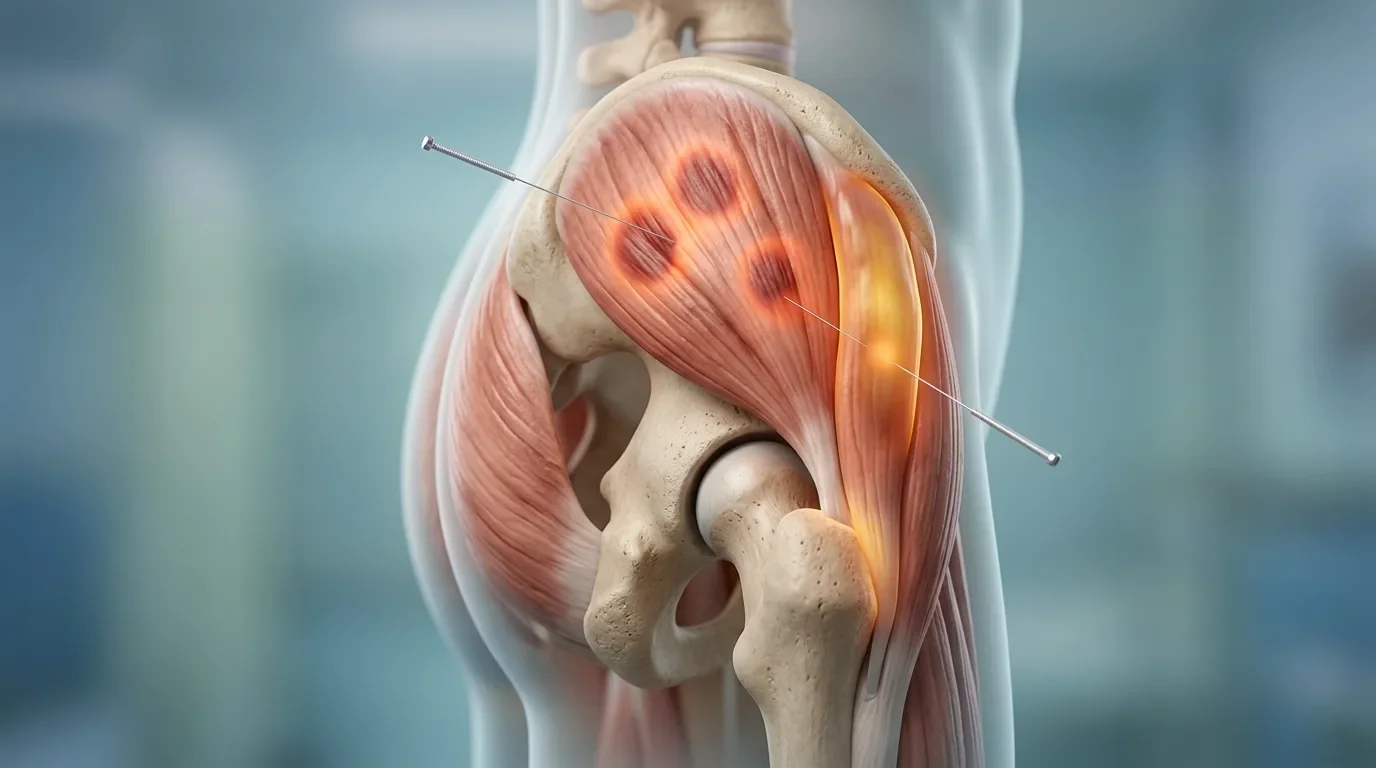
Hip pain is one of the most diagnostically complex presentations in musculoskeletal care because so many different structures can generate pain in the same region. Acupuncture point selection for the hip is designed to reach the specific deep muscles that are the most common drivers, particularly the piriformis, gluteus medius, and psoas, from the angles where needles can safely access them.
- Hip pain most commonly arises from the gluteal muscles, the piriformis, and the hip flexors rather than from the hip joint itself, and acupuncture point selection for the hip reflects this by targeting these muscle groups directly through their anatomical locations (Simons et al., 1999).
- GB30 (Huantiao) is the most important point for lateral hip and buttock pain: it is located directly over the piriformis muscle and adjacent to the sciatic nerve, making it the primary point for all presentations with buttock aching, external hip pain, and radiating leg pain from piriformis involvement.
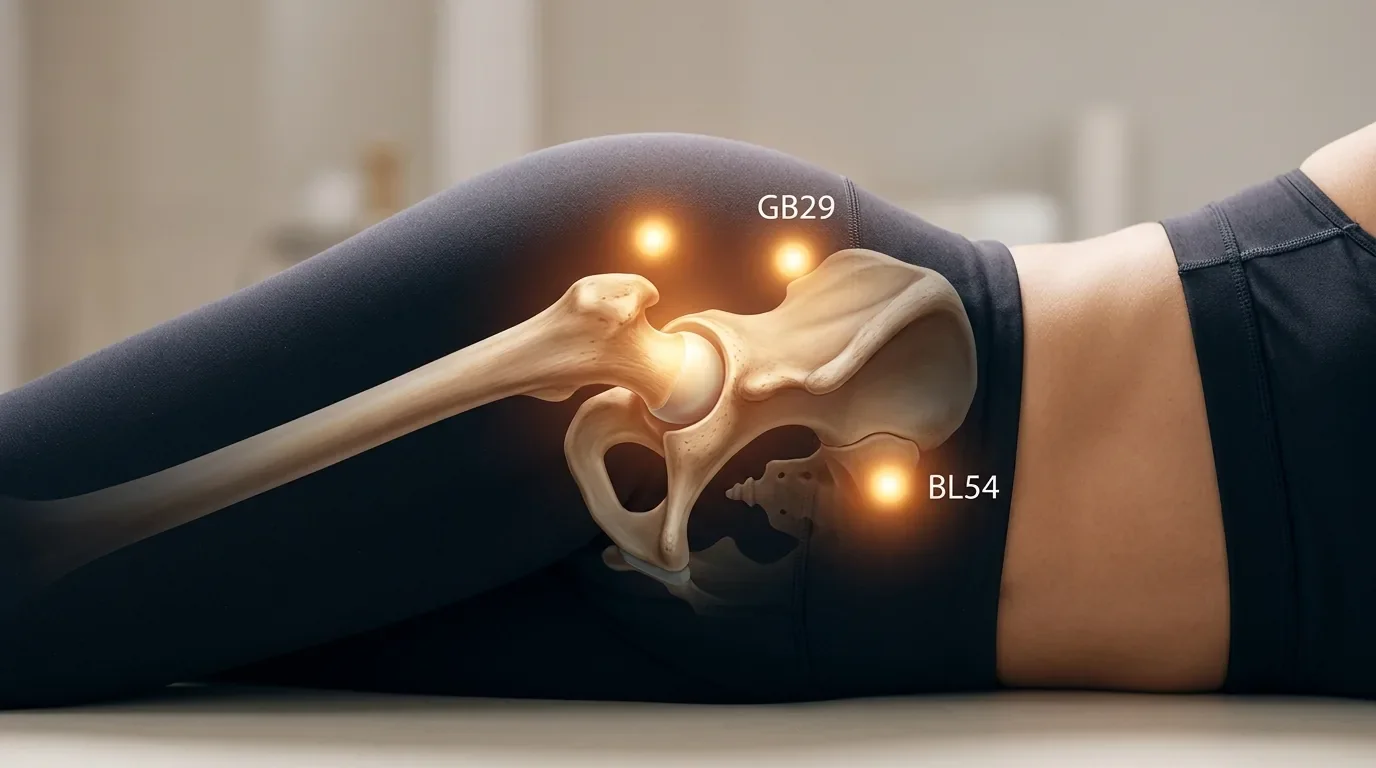
- GB29 (Juliao), on the anterior hip midway between the ASIS and the greater trochanter, accesses the tensor fasciae latae and the anterior aspect of the gluteus medius where most TFL trigger points are found; it is the key point for anterior hip and groin pain that does not originate from the hip joint itself.
- The gluteus medius and gluteus minimus are the most commonly missed drivers of lateral hip pain, thigh pain, and even knee pain; BL54 (Zhibian) in the lateral sacral region and GB30 in the lateral hip both access these muscles from different angles (Simons et al., 1999).
- Psoas and iliacus trigger points are accessed through anterior approach points in the inguinal and lower abdominal regions, and their referral into the anterior thigh and lower back explains many cases of "hip pain" that is actually hip flexor pain from prolonged desk sitting.
- A meta-analysis of acupuncture for chronic pain conditions including hip osteoarthritis showed clinically relevant improvements in pain intensity and physical function compared with sham acupuncture and usual care (Vickers et al., 2018).
Is hip pain making walking, climbing stairs, or sleeping on your side difficult?
Hip pain that persists despite rest and stretching often involves active trigger points in the gluteal muscles, piriformis, or psoas that require direct treatment to resolve. Our practitioners evaluate the full hip region, including muscles that refer pain into the hip from above and below, to identify what is actually generating your symptoms.
Schedule NowHip Pain Anatomy: Why the Muscles Matter More Than the Joint
When patients present with hip pain, the first assumption is often that the hip joint itself is the problem. For younger and middle-aged adults, this is usually incorrect. The hip joint is one of the most structurally robust joints in the body and generates specific patterns of intraarticular pain, primarily groin pain and restricted internal rotation, that are clinically recognizable when they are present. The more common presentation of lateral hip pain, buttock aching, thigh pain, or diffuse regional hip pain almost always involves the surrounding muscles rather than the joint.
The gluteus medius and gluteus minimus generate trigger point referral patterns that cover the entire lateral hip, posterior thigh, and outer calf, patterns that closely mimic L4–L5 radiculopathy and are among the most commonly misattributed pain patterns in the lower body. The piriformis refers into the buttock, posterior hip, and down the posterior thigh. The psoas major refers into the anterior thigh, lumbar spine, and groin. The TFL refers to the lateral knee. All of these referral patterns originate in the hip region but produce pain that is often perceived as being somewhere else entirely (Simons et al., 1999).
Acupuncture point selection for hip pain is designed to reach each of these deep muscles from the angles where needles can be placed safely. The points described below are not simply pain locations; they are the anatomical sites where needles can access specific muscle bellies or their adjacent neural tissue.
Related Muscles That Cause Hip Pain: A Complete Trigger Point GuideKey Acupuncture Points for Hip Pain
| Point | Anatomical Location | Muscle / Nerve Accessed | Clinical Use |
|---|---|---|---|
| GB30 (Huantiao) | Junction of outer third and inner two-thirds of the line between the greater trochanter and sacral hiatus; patient in lateral position | Piriformis; gluteus maximus; sciatic nerve adjacent | Lateral hip pain, buttock aching, external hip tenderness, sciatica; the most important single point for posterior and lateral hip presentations |
| GB29 (Juliao) | Midpoint of the line between the ASIS and the greater trochanter | TFL; anterior Gluteus Medius | Anterior hip pain, groin aching from TFL tension, lateral hip from gluteus medius; key for greater trochanteric pain syndrome |
| BL54 (Zhibian) | 3 cun lateral to the sacral hiatus (GV3 level), over the gluteal muscles at the sacral border | Gluteus Maximus; Gluteus Medius; sciatic nerve territory | Sacroiliac pain, posterior hip aching, sciatica with sacral-origin pattern; combined with GB30 for comprehensive buttock coverage |
| GB34 (Yanglingquan) | Anterior and inferior to the fibular head, between the fibula and tibialis anterior | Peroneus longus; fibular head region; deep peroneal nerve | Distal point for all musculoskeletal pain including hip; meeting point of sinews; used for TFL-related lateral thigh and hip pain |
| BL40 (Weizhong) | Midpoint of the popliteal fossa | Posterior knee fascia; tibial nerve | Distal point for hip, buttock, and posterior thigh pain; supraspinal descending inhibition |
| ST36 (Zusanli) | 3 cun below the lateral depression of the knee, 1 cun lateral to the tibial crest | Tibialis anterior; deep peroneal nerve; gastrocnemius origin adjacent | Distal analgesic and anti-inflammatory; used in all musculoskeletal protocols including hip; vagal activation and systemic pain modulation |
| SP12 / SP13 area (Chongmen / Fushe) | Inguinal region, medial to the femoral artery, over the iliopsoas at the lesser trochanter region | Psoas Major; Iliacus via inguinal approach | Anterior hip and groin pain, hip flexor tightness, psoas-referral low back pain; requires careful needle placement medial to femoral pulse |
Greater Trochanteric Pain Syndrome: When "Hip Bursitis" Is Actually Muscle
Greater trochanteric pain syndrome (GTPS), previously called trochanteric bursitis, is a lateral hip pain condition that has been significantly reframed by modern research showing that most cases involve gluteal tendinopathy and trigger points in the gluteus medius and TFL rather than bursal inflammation. The clinical presentation is consistent: lateral hip pain on lying on the affected side, pain on stair climbing, pain with prolonged walking, and tenderness directly over the greater trochanter.
The acupuncture and trigger point treatment for GTPS targets GB29 and the surrounding TFL and gluteus medius trigger points, which are typically found 1 to 3 inches above the greater trochanter along the anterior fiber line of the gluteus medius. These trigger points refer pain into the lateral hip and lateral thigh in patterns that are perceived as being at the trochanter but that originate in the muscle belly above it. Needling these trigger points, combined with dry needling the gluteal tendon insertions at the trochanter, tends to produce more sustained relief than corticosteroid injection into the bursa because it addresses the muscle tension that has been loading the tendon rather than just the local inflammatory response.
Related Gluteus Medius Trigger Points: Lateral Hip, Thigh, and Referred Leg Pain Related Piriformis Trigger Points: Buttock Pain and Sciatic Nerve IrritationHas hip pain been attributed to bursitis without lasting improvement from injections?
Greater trochanteric pain that recurs after corticosteroid injections often has an unaddressed trigger point component in the gluteus medius and TFL that injections do not reach. Dry needling and acupuncture targeting these muscles, combined with assessment of the hip loading mechanics that are perpetuating the problem, often produce more durable relief. Our practitioners at Morningside evaluate the full lateral hip presentation to identify the specific muscles involved.
Schedule NowThe Psoas Access Problem: Why Anterior Hip Points Matter
The psoas major is one of the most clinically important muscles for low back and hip pain and one of the most difficult to treat with any surface technique. It runs from the lumbar vertebral bodies (L1–L5) diagonally through the pelvis to attach at the lesser trochanter of the femur, and the bulk of its muscle belly is inaccessible from the posterior surface because it is deep to the lumbar vertebrae and abdominal contents. From the anterior approach, however, needle access through the lower inguinal region adjacent to SP12 and SP13 allows the practitioner to reach the psoas and iliacus as they converge near the lesser trochanter.
Psoas trigger points are a primary driver of the anterior hip pain and hip flexor stiffness that desk workers and runners commonly experience. They also refer prominently into the lumbar spine, creating low back pain that is often mistakenly attributed to disc pathology. Patients with hip pain that is worst on rising from a chair, that improves with walking but returns with prolonged sitting, and that is accompanied by low back stiffness, should be evaluated for psoas trigger point involvement as a likely contributor to both the hip and back components of their presentation.
Ready to get to the source of your hip pain?
At Morningside Acupuncture, we are the highest-rated acupuncture and dry needling clinic in New York City with over 500 five-star Google reviews. We evaluate and treat hip pain from all muscle sources, including the piriformis, gluteus medius, TFL, and psoas, using a combination of acupuncture point selection and trigger point dry needling. Our team has extensive experience distinguishing muscle-generated hip pain from intraarticular presentations and tailoring treatment accordingly.
Schedule NowFrequently Asked Questions
What is GB30 and why is it so important for hip pain?
GB30 (Huantiao) is located in the lateral hip, directly over the piriformis muscle and adjacent to the sciatic nerve. It is classically designated the primary point for hip, buttock, and sciatic pain, and its anatomical location explains why: needling here reaches the piriformis directly, which is the most common single-muscle driver of buttock and hip pain. It is also the best access point for treating sciatic nerve irritation from piriformis compression.
Can acupuncture help hip pain from a labral tear?
Acupuncture cannot repair a labral tear, but it can meaningfully reduce the surrounding muscle guarding and secondary trigger point activity that amplify the pain from a labral injury. Many patients with confirmed labral tears experience significant pain that comes from the muscles reacting to the joint instability rather than from the tear itself. Treating these secondary muscle contributors can reduce pain substantially even when the structural lesion remains present.
My hip pain is worse when I sleep on my side. Which points help?
Night pain in the lateral hip is the characteristic complaint of greater trochanteric pain syndrome, which typically involves gluteus medius and TFL trigger points. GB29 and the gluteus medius trigger points just above the greater trochanter are the primary targets. Treatment also includes assessment of the sleep position and pillow placement between the knees, as lateral lying with hip adduction loads the TFL and IT band in a position that can perpetuate the trigger point pattern.
Can acupuncture help hip pain from osteoarthritis?
Yes. Hip osteoarthritis pain responds to acupuncture through local anti-inflammatory effects at the joint and supraspinal pain modulation. The clinical guideline from the American College of Rheumatology conditionally recommends acupuncture for osteoarthritis of the hip. Treatment typically involves a combination of local hip points and distal analgesic points, with regular sessions during active pain periods and less frequent maintenance sessions as symptoms stabilize.
References
- Vickers, A. J., Vertosick, E. A., Lewith, G., MacPherson, H., Foster, N. E., Sherman, K. J., ... & Acupuncture Trialists' Collaboration. (2018). Acupuncture for chronic pain: Update of an individual patient data meta-analysis. The Journal of Pain, 19(5), 455–474. https://doi.org/10.1016/j.jpain.2017.11.005
- Simons, D. G., Travell, J. G., & Simons, L. S. (1999). Travell & Simons' Myofascial Pain and Dysfunction: The Trigger Point Manual (2nd ed.). Williams & Wilkins.
- Zhao, Z. Q. (2008). Neural mechanism underlying acupuncture analgesia. Progress in Neurobiology, 85(4), 355–375. https://doi.org/10.1016/j.pneurobio.2008.05.004
- Kolasinski, S. L., Neogi, T., Hochberg, M. C., Oatis, C., Guyatt, G., Block, J., ... & Reston, J. (2020). 2019 American College of Rheumatology/Arthritis Foundation guideline for the management of osteoarthritis of the hand, hip, and knee. Arthritis & Rheumatology, 72(2), 220–233. https://doi.org/10.1002/art.41142
- Yarnitsky, D. (2010). Conditioned pain modulation (the diffuse noxious inhibitory control-like effect): Its relevance for acute and chronic pain states. Current Opinion in Anaesthesiology, 23(5), 611–615. https://doi.org/10.1097/ACO.0b013e32833c348b
Disclaimer: This web site is intended for educational and informational purposes only. Reading this website does not constitute providing medical advice or any professional services. This information should not be used for diagnosing or treating any health issue or disease. Those seeking medical advice should consult with a licensed physician. Seek the advice of a medical doctor or other qualified health professional for any medical condition. If you think you have a medical emergency, call 911 or go to the emergency room. No acupuncturist-patient relationship is created by reading this website or using the information. Morningside Acupuncture PLLC and its employees and contributors do not make any express or implied representations with respect to the information on this site or its use. For any legal interpretation of scope of practice in your state, consult a licensed attorney or regulatory authority.
Read more from our blog