What Is a Muscle Knot?
The Science Behind the Taut Band, the Trigger Point, and Why That Familiar Soreness Is Not What Most People Think It Is
Nearly everyone has felt one: a firm, tender lump in a muscle that aches when pressed and sometimes sends pain to a completely different part of the body. This post explains what muscle knots actually are at a tissue level, what causes them, why the common explanations are wrong, and what it takes to resolve them.
- A "muscle knot" is the common name for a myofascial trigger point: a hyperirritable, palpable nodule within a taut band of skeletal muscle that is tender on compression and can produce referred pain at a distance from the site (Shah et al., 2015).
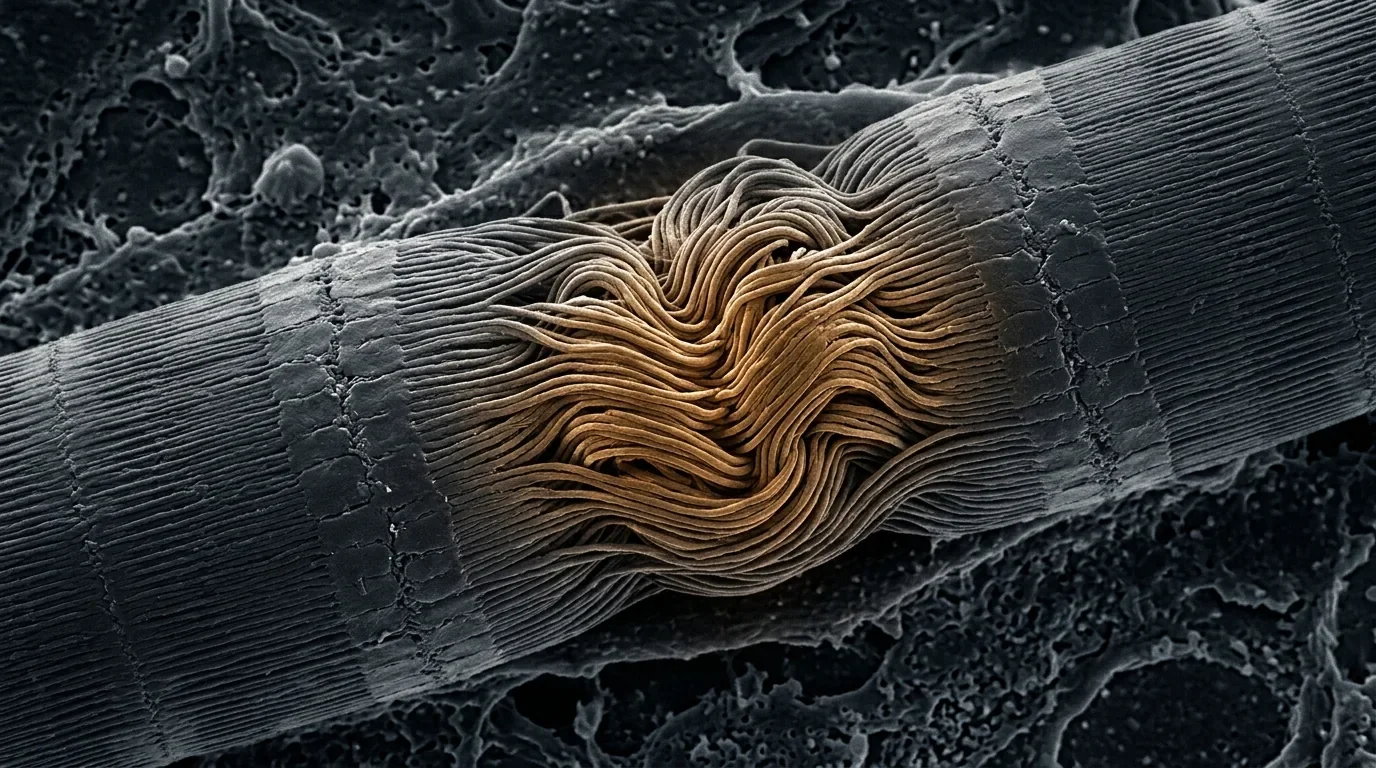
- The physical structure of a trigger point is not knotted or tangled tissue; it is a localized cluster of abnormally contracted sarcomeres, the individual contractile units of muscle fibers, that remain in a shortened state and cannot fully relax (Jin et al., 2020).
- Trigger points are not caused by lactic acid. The prevailing scientific model implicates dysfunctional motor endplates, excess acetylcholine release, localized energy depletion, and the accumulation of sensitizing substances including substance P, bradykinin, and calcitonin gene-related peptide (Jafri, 2014).
- Ultrasound imaging confirms that trigger points are real, distinct structures: they appear as focal hypoechoic nodules with measurably higher stiffness than surrounding muscle tissue, providing objective evidence for what was previously detectable only by palpation (Sikdar et al., 2009).
- Trigger points form in response to a wide range of stressors including sustained low-level muscle contraction, eccentric overload, direct trauma, psychological stress, and sleep disturbance (Bron & Dommerholt, 2012).
- Referred pain, the hallmark of active trigger points, arises from central sensitization within the spinal cord, where convergent input from the trigger point and from the referred zone leads the nervous system to misattribute the source of pain to a location distant from the generating muscle.
Persistent Muscle Knots That Keep Coming Back?
If you have been trying to manage muscle knots through massage, foam rolling, or stretching with limited lasting effect, dry needling reaches the actual trigger point structure directly. At Morningside Acupuncture, we assess which muscles are generating your symptoms, treat the underlying trigger points with precision needling, and work with you on why they keep returning. Many patients who have tried everything else find that dry needling finally produces the lasting relief they've been looking for.
Schedule NowThe Common Explanations Are Mostly Wrong
Ask most people what a muscle knot is and they will say it is built-up lactic acid, or knotted muscle fibers, or scar tissue, or something to do with circulation. None of these explanations are supported by the evidence, and some of them make no physiological sense at all.
Lactic acid is produced during intense exercise and cleared from muscle tissue within minutes to hours. It does not accumulate over days or weeks in localized nodules. Muscle fibers do not literally tangle or knot around each other; they are parallel contractile units arranged in fascicles, and the connective tissue that surrounds them does not create knots in the sense of a rope being twisted. Scar tissue is dense collagen laid down in response to tissue injury, and while chronic trigger point activity can involve some connective tissue changes, the primary structure of a trigger point is not scar tissue.
The scientific understanding of what a muscle knot actually is has developed substantially over the past three decades, moving from a largely empirical description to a mechanistic account supported by biochemical sampling, electromyographic recording, and, more recently, direct imaging (Shah et al., 2015).
Related The Integrated Trigger Point Hypothesis — The Leading Scientific Model for How Knots FormWhat a Muscle Knot Actually Is
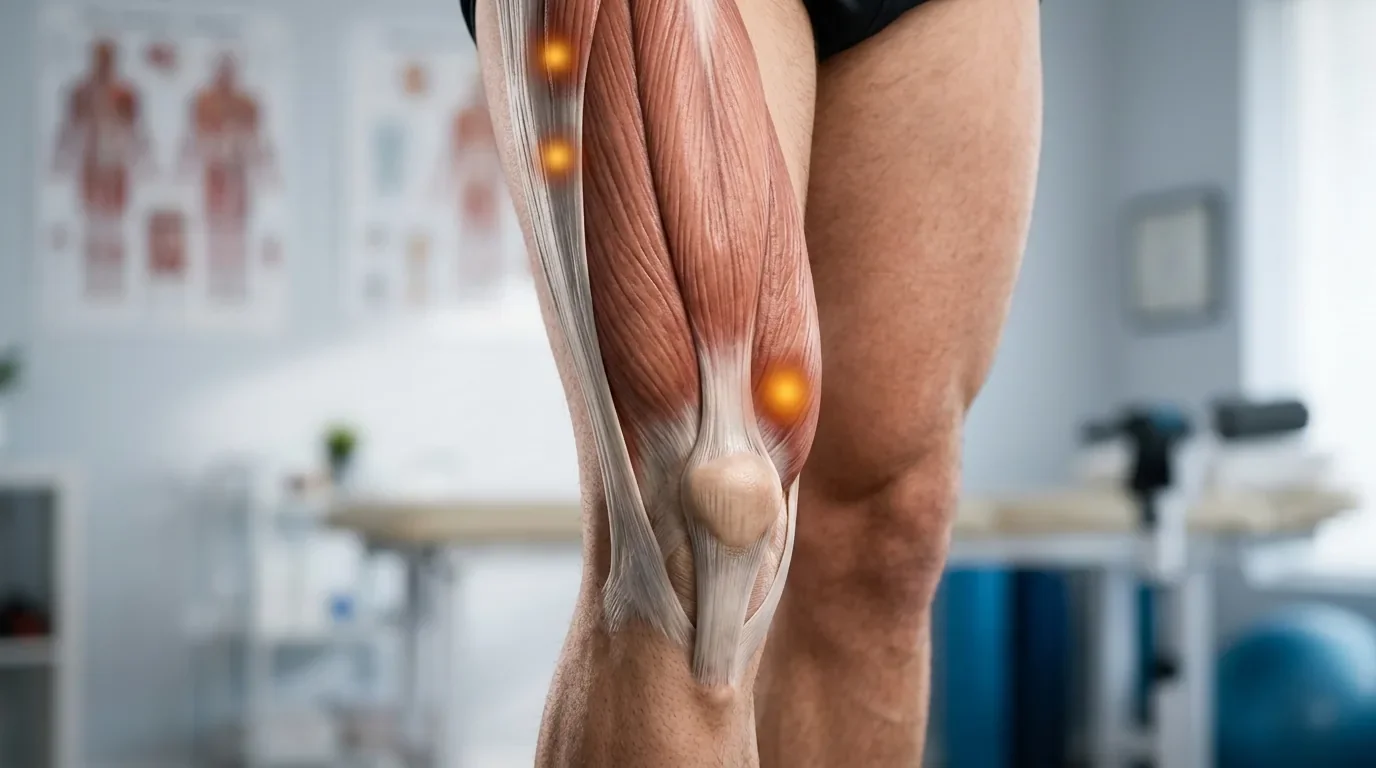
A muscle knot is a myofascial trigger point. The term "myofascial" refers to muscle tissue and its surrounding connective tissue (fascia) considered together. A trigger point is defined clinically as a hyperirritable nodule within a palpable taut band of skeletal muscle that, when compressed or stimulated, produces local tenderness and often a referred pain response at a predictable distant location.
The Taut Band
If you press into a muscle that contains a trigger point, you can often feel a cord-like hardness running through the muscle belly. This is the taut band, and it corresponds to a group of muscle fibers in which the sarcomeres are abnormally shortened. The trigger point nodule itself sits within this taut band and is the location of the greatest sarcomere contraction density. The band is not the entire muscle being tight; it is a discrete subset of fibers within the muscle that are locked in a shortened state.
The Contraction Knot
At the microscopic level, what distinguishes trigger point tissue from normal muscle is the presence of contraction knots: regions where individual sarcomeres are maximally contracted, appearing rounded and enlarged compared to the elongated resting state of healthy sarcomeres. Histological analysis of trigger point biopsy tissue has confirmed the presence of these enlarged, abnormally contracted sarcomere clusters, providing direct structural evidence for the mechanical disruption that clinicians have long palpated from the surface (Jin et al., 2020). The adjacent sarcomeres are often compensatorily overstretched to accommodate the shortened ones, which contributes to the overall disruption in muscle mechanics and helps explain why muscles with trigger points feel both tight and weak.
| Common Belief | What the Evidence Says | The Correct Explanation |
|---|---|---|
| It is built-up lactic acid | Lactic acid clears from muscle within minutes to hours of exercise and does not form localized nodules | Trigger points involve abnormal acetylcholine release and localized sarcomere contraction, not metabolic waste accumulation |
| The muscle fibers are knotted or tangled | Muscle fibers run in parallel and do not tangle; structural imaging shows no fiber disorganization in typical trigger points | A cluster of sarcomeres is maximally contracted, creating a hardened nodule within an otherwise normally organized muscle |
| It is scar tissue | Scar tissue is collagen deposited after injury; trigger points do not require tissue damage to form | Primary trigger point pathology is neuromuscular, involving motor endplate dysfunction, not fibrotic repair |
| Massage breaks it up | Massage temporarily reduces local blood flow restriction and may inhibit pain signals, but does not deactivate the motor endplate dysfunction driving the knot | Lasting resolution requires deactivating the trigger point, either by mechanical disruption (dry needling) or treating the underlying metabolic and neuromuscular drivers |
| It is not a real physical structure | Ultrasound imaging identifies trigger points as focal, hypoechoic, stiff nodules measurably different from surrounding tissue (Sikdar et al., 2009) | Trigger points are objectively detectable and distinguishable structures in soft tissue, not merely a palpation artifact |
Why Muscle Knots Form
The most widely accepted model of trigger point formation describes a cycle that begins at the motor endplate, the junction between a motor nerve fiber and the muscle fiber it innervates. Under normal conditions, the motor nerve releases a precisely calibrated amount of acetylcholine, which triggers a controlled contraction. Under conditions of sustained low-level activation, mechanical overload, or metabolic stress, the endplate begins releasing excess acetylcholine in an uncontrolled manner, producing a sustained depolarization of the muscle membrane and, consequently, a sustained contraction of that fiber segment.
This sustained contraction compresses local capillaries, reducing the oxygen and glucose available to the contracting fibers. The resulting energy deficit means the sarcomeres cannot complete their relaxation cycle, locking them in a shortened state. The oxygen debt and the energy crisis further stimulate the release of sensitizing substances including substance P, bradykinin, serotonin, and calcitonin gene-related peptide, all of which have been measured in elevated concentrations at active trigger point sites compared to healthy muscle tissue (Jafri, 2014).
Trigger points are not exclusively the result of overexertion. They also develop from sustained low-level activation, which is the state of most postural muscles during prolonged desk work, driving, or smartphone use. A muscle held at a low but constant activation level for hours at a time undergoes the same basic endplate fatigue process, just more slowly. This is why office workers, students, and others who do little physical exertion develop trigger points in the neck, shoulder, and back muscles as readily as athletes (Bron & Dommerholt, 2012).
Want to Know Which Muscles Are Behind Your Pain?
The referred pain patterns from trigger points mean that the location where you feel the pain is often not where the problem is. A thorough myofascial assessment at Morningside Acupuncture maps your pain pattern to its likely muscle source and confirms findings through palpation and pain reproduction testing. This takes the guesswork out of treatment and ensures that dry needling is directed at the right structure.
Schedule NowWhy Muscle Knots Cause Pain at a Distance
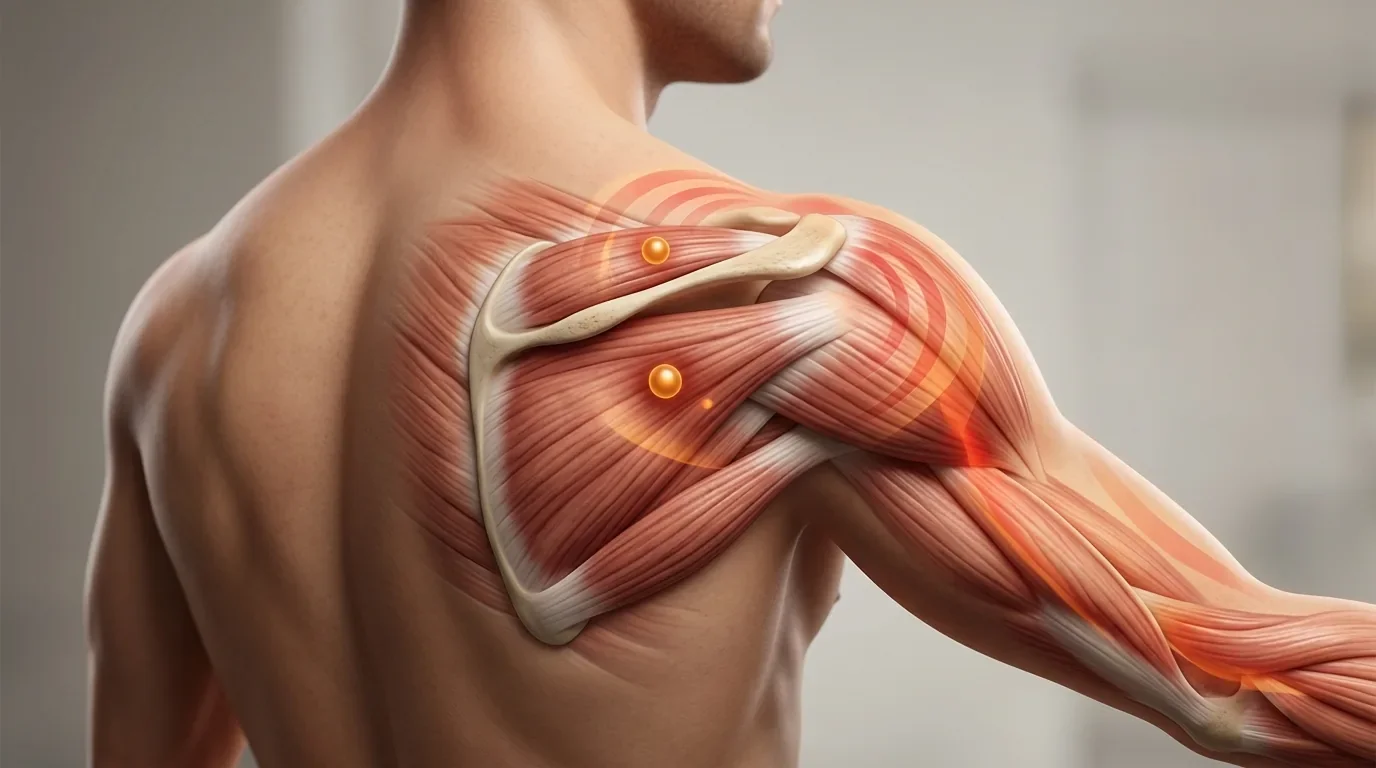
One of the most clinically significant features of trigger points is that they cause pain somewhere other than where the trigger point itself is located. A trigger point in the infraspinatus muscle in the back of the shoulder sends pain to the front of the shoulder and down the arm. A trigger point in the gluteus minimus sends pain down the entire leg. A trigger point in the upper trapezius refers pain to the temple and causes headaches. The trigger point is a local structure; the pain it generates is a systemic nervous system response.
The mechanism involves convergence within the spinal dorsal horn. Sensory signals from the trigger point and sensory signals from the referred zone share overlapping neurological pathways. When the trigger point generates sufficient nociceptive input, the dorsal horn neurons that process pain from the referred zone become activated as well, and the brain interprets this convergent activation as pain arriving from the referred zone rather than from the muscle. This is the same basic mechanism that causes left arm pain during a heart attack, where cardiac pain is felt in the arm because of convergent neural pathways.
Importantly, the referred pain from a trigger point is not random. Each muscle has a characteristic referral pattern that is consistent across individuals, which is what allows clinicians to work backward from a patient's pain location to identify the likely generating muscle. This predictability is the clinical basis for all trigger point diagnosis.
Resource Trigger Points Guide — Understanding How Muscles Refer Pain Resource Trigger Point Index — Explore Every Muscle and Its Pain Pattern| Muscle | Where the Knot Is Felt | Where the Pain Refers | Commonly Misattributed To |
|---|---|---|---|
| Trapezius | Upper shoulder/neck ridge | Temple, behind eye, side of head | Tension headache, migraine |
| Infraspinatus | Posterior shoulder blade | Front of shoulder, outer arm, hand | Rotator cuff tear, biceps tendinopathy |
| Quadratus Lumborum | Deep lateral low back | Hip, SI joint, groin, lateral thigh | Disc herniation, hip pathology |
| Gluteus Minimus | Deep outer hip/buttock | Lateral or posterior leg to ankle | Sciatica, lumbar radiculopathy |
| Sternocleidomastoid (SCM) | Side of neck | Face, eye, ear, forehead, sinuses | Sinus infection, ear infection, TMJ disorder |
| Psoas Major | Deep anterior hip/abdomen | Lumbar spine, anterior hip, groin | Hip joint pathology, lumbar disc disease |
How Muscle Knots Are Treated
The most effective treatments for trigger points are those that work directly at the level of the trigger point structure itself: deactivating the contracted sarcomeres, normalizing motor endplate activity, and restoring local circulation to clear the accumulated sensitizing substances.
Massage and manual pressure can temporarily reduce the pain signal from a trigger point by activating descending pain inhibitory pathways, but they do not reliably deactivate the underlying motor endplate dysfunction. Foam rolling accomplishes similar things and can provide symptomatic relief, but trigger points that keep returning after massage or rolling are typically not being addressed at their source.
Dry needling, in which a thin acupuncture needle is inserted directly into the trigger point, mechanically disrupts the contracted sarcomere cluster and produces a local twitch response, a brief involuntary contraction of the taut band fibers, that is associated with immediate improvement in both pain and range of motion. The needle also stimulates tissue repair pathways and normalizes the biochemical environment at the motor endplate. Among the physical interventions available, dry needling has the most consistent evidence base for deactivating active trigger points.
Related Dry Needling NYC — How It Works and What to Expect Related What Does Dry Needling Actually Do? — The Mechanism ExplainedReady to Treat the Source, Not Just the Symptoms?
At Morningside Acupuncture, we are the highest-rated acupuncture and dry needling clinic in New York City with over 500 five-star Google reviews. Our practitioners specialize in identifying the specific trigger points driving your pain and treating them precisely with dry needling. If you have been managing muscle knots with massage and foam rolling and the pain keeps coming back, a targeted myofascial evaluation may reveal why and what needs to change.
Schedule NowFrequently Asked Questions
Why do muscle knots keep coming back even after massage?
Massage applies pressure to the surface of the muscle and can temporarily inhibit the pain signal from a trigger point, but it does not reliably deactivate the underlying motor endplate dysfunction that is driving the sarcomere contraction. As long as the original stressor, whether poor posture, repetitive use, stress, or insufficient sleep, continues to reload the muscle, the trigger point will reform. Lasting resolution usually requires both direct treatment of the trigger point and addressing the factors that are reactivating it.
Is a muscle knot the same as muscle tension?
Not exactly. General muscle tension is a diffuse increase in resting tone across the whole muscle, often associated with stress or fatigue. A trigger point is a localized, discrete structure within a taut band, detectable by palpation, with a specific referred pain pattern. A muscle can be generally tense without containing trigger points, and it can contain trigger points without feeling generally tense. The two often coexist, but they are different phenomena requiring different treatments.
Can a muscle knot cause pain somewhere else in my body?
Yes, and this is one of the most clinically important features of trigger points. Each muscle has a characteristic referral zone that is consistent across individuals, which is why neck trigger points reliably cause headaches, shoulder trigger points cause arm pain, and hip trigger points cause leg pain that mimics sciatica. The pain at the referred location is real, not imagined, but the source is in the muscle, not at the site where it is felt.
How long does it take to get rid of a muscle knot?
An acute trigger point that has been present for a short time often resolves in one to three dry needling sessions. Chronic trigger points that have been present for months or years, particularly those that have become associated with central sensitization, typically require four to eight sessions and may require ongoing maintenance. The key variable is not just treatment but also addressing the lifestyle, postural, and mechanical factors that are perpetuating the trigger point activity.
Can I treat a muscle knot at home?
Self-treatment options include gentle stretch of the affected muscle, application of heat to increase local circulation, and targeted pressure with a foam roller or lacrosse ball applied to the trigger point location for 30 to 90 seconds at a time. These approaches can provide symptomatic relief, especially for mild or early-stage trigger points. They are less effective for deep muscles (the piriformis, iliopsoas, subscapularis) that are inaccessible to surface pressure, and for trigger points that have been present long enough to develop associated central sensitization.
Does dry needling for muscle knots hurt?
When the needle contacts an active trigger point, most patients feel a deep cramping sensation, often described as the "good hurt" of a deep muscle release, that typically lasts two to three seconds. This is the local twitch response and is considered a sign that the trigger point is being deactivated. Between twitches, the sensation is usually mild pressure. Post-treatment soreness resembling delayed-onset muscle soreness is common for one to two days and is followed in most cases by a measurable reduction in pain and improvement in range of motion.
References
- Shah, J. P., Thaker, N., Heimur, J., Aredo, J. V., Sikdar, S., & Gerber, L. (2015). Myofascial trigger points then and now: A historical and scientific perspective. PM&R, 7(7), 746–761. https://doi.org/10.1016/j.pmrj.2015.01.024
- Jin, F., Guo, Y., Wang, Z., Badughaish, A., Pan, X., Zhang, L., & Qi, F. (2020). The pathophysiological nature of sarcomeres in trigger points in patients with myofascial pain syndrome: A preliminary study. European Journal of Pain, 24(10), 1968–1978. https://doi.org/10.1002/ejp.1647
- Jafri, M. S. (2014). Mechanisms of myofascial pain. International Scholarly Research Notices, 2014, 523924. https://doi.org/10.1155/2014/523924
- Sikdar, S., Shah, J. P., Gebreab, T., Yen, R. H., Gilliams, E., Danoff, J., & Gerber, L. H. (2009). Novel applications of ultrasound technology to visualize and characterize myofascial trigger points and surrounding soft tissue. Archives of Physical Medicine and Rehabilitation, 90(11), 1829–1838. https://doi.org/10.1016/j.apmr.2009.04.015
- Bron, C., & Dommerholt, J. D. (2012). Etiology of myofascial trigger points. Current Pain and Headache Reports, 16(5), 439–444. https://doi.org/10.1007/s11916-012-0289-4
Disclaimer: This web site is intended for educational and informational purposes only. Reading this website does not constitute providing medical advice or any professional services. This information should not be used for diagnosing or treating any health issue or disease. Those seeking medical advice should consult with a licensed physician. Seek the advice of a medical doctor or other qualified health professional for any medical condition. If you think you have a medical emergency, call 911 or go to the emergency room. No acupuncturist-patient relationship is created by reading this website or using the information. Morningside Acupuncture PLLC and its employees and contributors do not make any express or implied representations with respect to the information on this site or its use. For any legal interpretation of scope of practice in your state, consult a licensed attorney or regulatory authority.
Read more from our blog