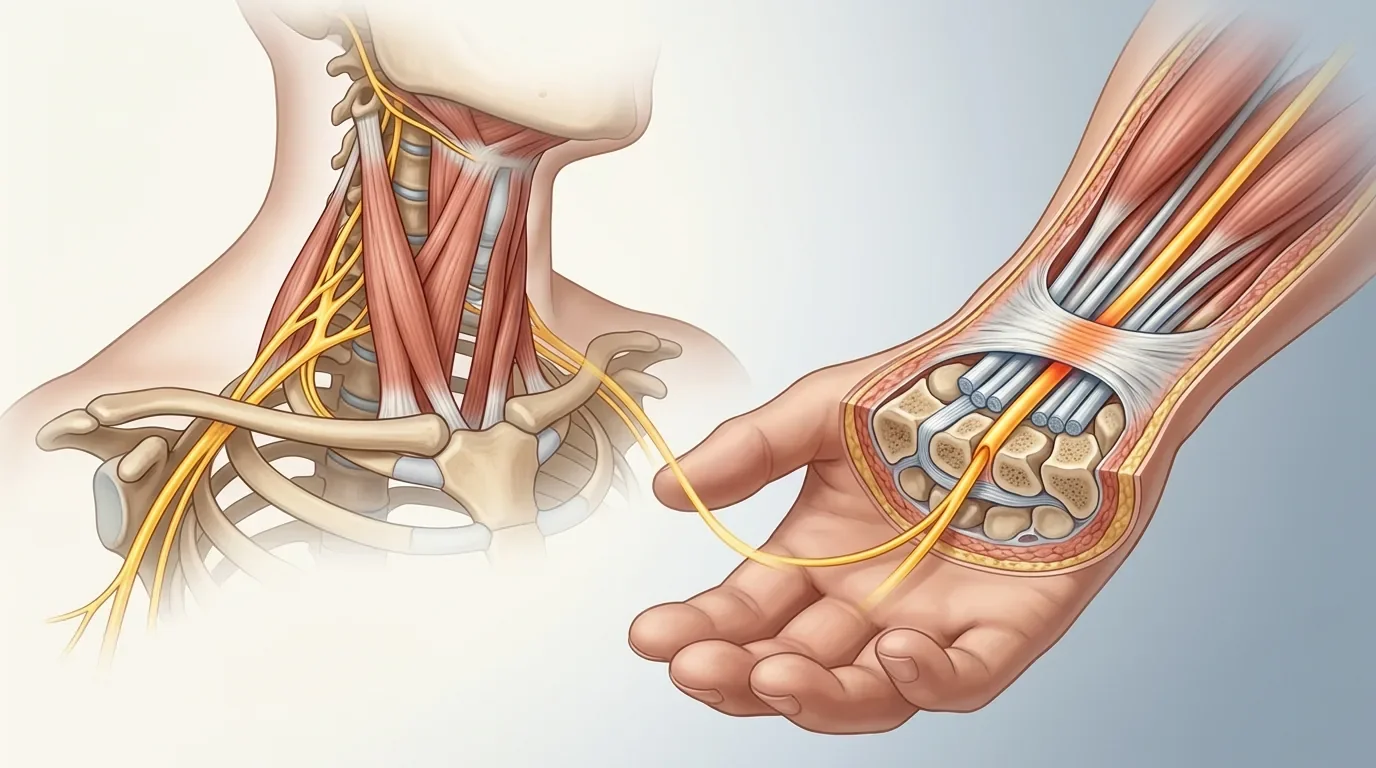
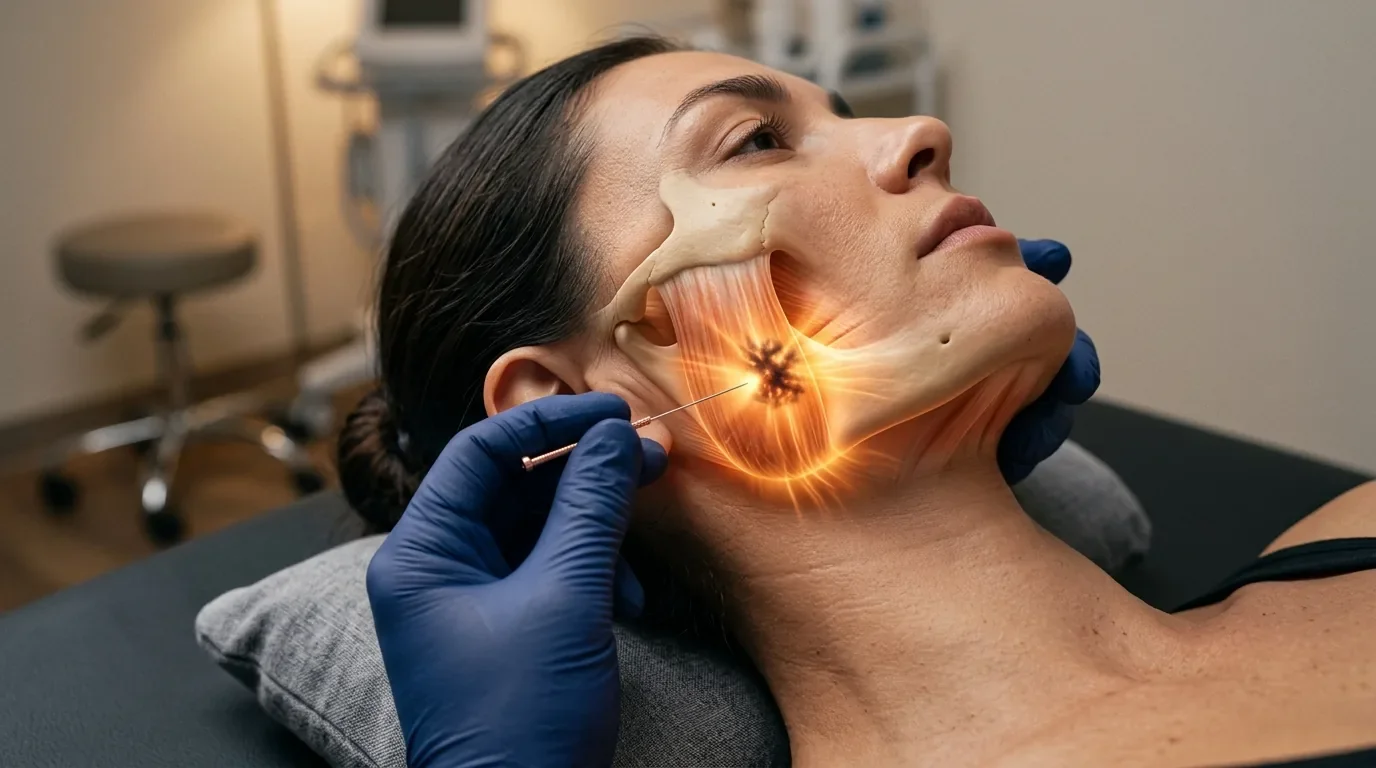
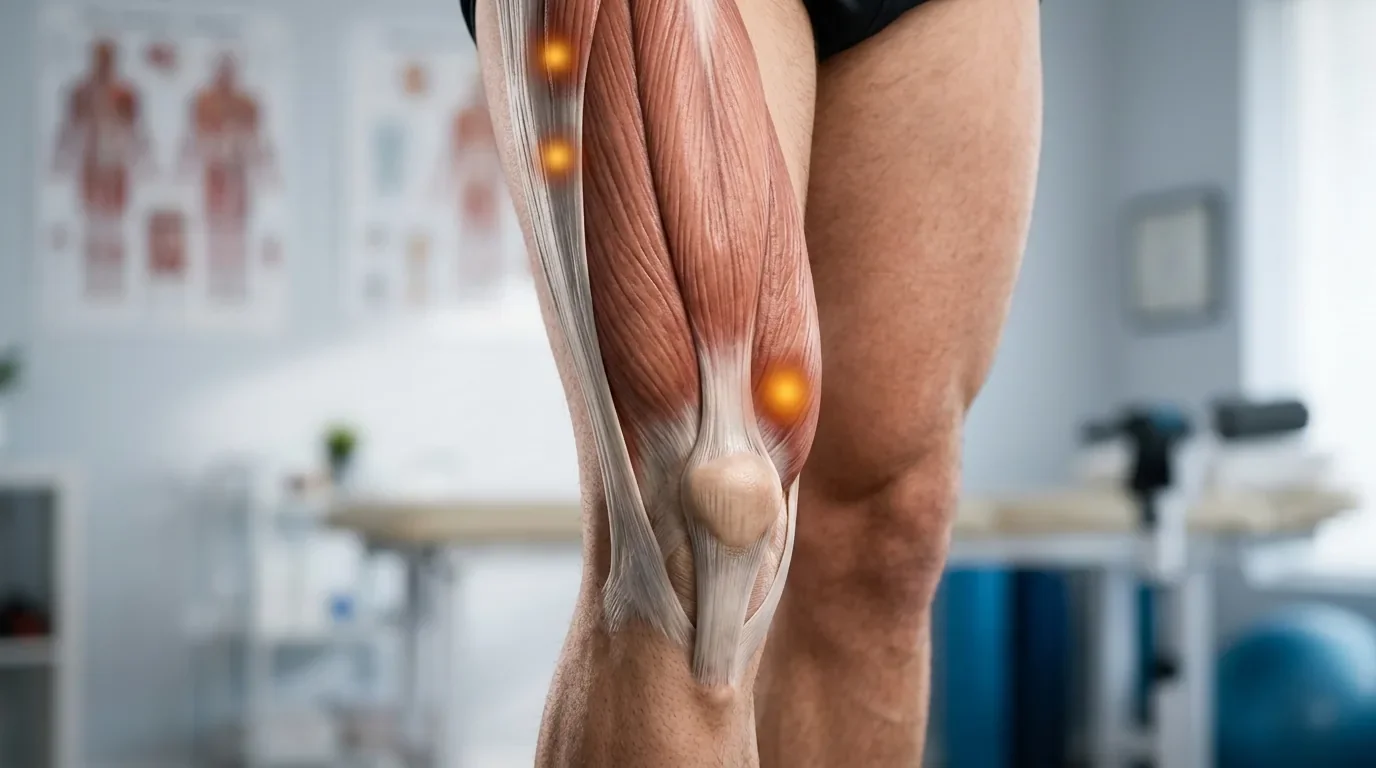
What Does Dry Needling Actually Do?
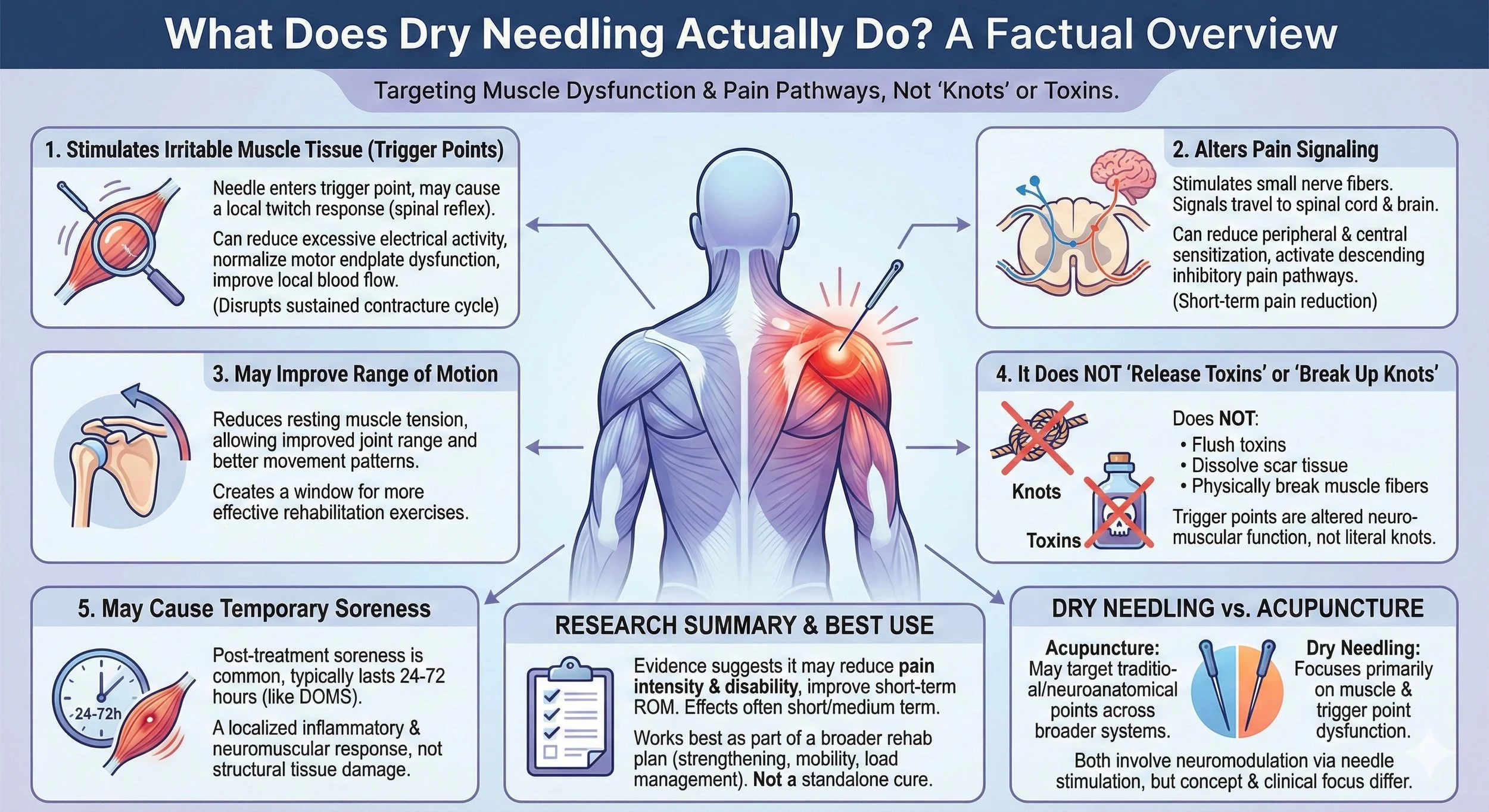
Infographic: What Does Dry Needling Actually Do?
Explaining What Dry Needling Does and Doesn’t Do
Dry needling has become increasingly popular in sports medicine, physical therapy clinics, and orthopedic practices.
But most people still aren’t exactly sure what it does.
Is it just “acupuncture with a different name”?
Is it breaking up scar tissue?
Is it releasing toxins?
Let’s clear that up.
Dry needling is a technique that uses a thin acupuncture needle inserted into muscle tissue, usually targeting myofascial trigger points.
The goal is not to inject anything (that’s why it’s called “dry”), but to mechanically and neurologically influence dysfunctional muscle and pain pathways.
Here’s what that actually means in the body.
Key Points
Dry needling targets tight, irritable muscle bands known as trigger points.
It stimulates sensory and motor nerves in muscle tissue.
It may reduce abnormal muscle contraction patterns.
It can influence spinal cord and brain pain processing.
It does not “break up scar tissue” or permanently alter muscle structure.
How Dry Needling Works in the Body
Dry needling uses a sterile, solid needle (an acupuncture needle) inserted into specific areas of the body. When that needle enters tissue, several things happen.
1. It Stimulates Irritable Muscle Tissue
Most dry needling treatments focus on myofascial trigger points — localized areas of increased muscle tension and sensitivity.
When a needle enters a trigger point, it may provoke a local twitch response. This is a brief spinal reflex involving motor unit activation.
Research suggests this response may:
Reduce excessive electrical activity in the muscle
Normalize motor endplate dysfunction
Improve local blood flow
Simons (2004) described trigger points as areas of abnormal endplate noise and sustained contracture. Needling appears to disrupt that cycle mechanically and neurologically.
2. It Alters Pain Signaling
Dry needling stimulates small-diameter afferent nerve fibers. These signals travel to the spinal cord and may influence dorsal horn processing.
This can:
Reduce peripheral sensitization
Decrease central sensitization in chronic pain
Activate descending inhibitory pathways
A 2015 systematic review by Liu et al. found dry needling was associated with short-term reductions in pain intensity for myofascial pain syndromes compared to sham or control interventions.
Importantly, the effects are likely multifactorial — mechanical stimulation plus neural modulation.
3. It May Improve Range of Motion
Trigger points can limit joint mobility by increasing resting muscle tension.
Dry needling may temporarily reduce that tone, allowing:
Improved joint range
Better movement patterns
More effective rehabilitation exercises
Gattie et al. (2017) found moderate evidence supporting dry needling for short-term improvements in pain and disability in musculoskeletal conditions.
That improvement window is often when strengthening and mobility work should be added.
4. It Does NOT “Release Toxins” or “Break Up Knots”
Let’s address common misconceptions.
Dry needling does not:
Flush toxins
Dissolve scar tissue
Physically break apart muscle fibers
Permanently lengthen muscle
Muscles are not tied in literal knots.
Trigger points represent altered neuromuscular function, not twisted tissue.
The needle’s role is to create a controlled micro-stimulus that influences nervous system output and local tissue response.
5. It May Cause Temporary Soreness
Because dry needling creates a small mechanical stimulus inside muscle tissue, post-treatment soreness is common.
This typically lasts:
24–72 hours
Similar to delayed-onset muscle soreness
This is not tissue damage in the structural sense. It is a localized inflammatory and neuromuscular response.
What Does the Research Say Overall?
Evidence suggests dry needling may:
Reduce pain intensity in myofascial pain
Improve short-term range of motion
Reduce disability scores in some musculoskeletal conditions
However:
Effects are often short to medium term
It works best as part of a broader rehab plan
It is not a standalone cure
Is Dry Needling the Same as Acupuncture?
Technically, dry needling uses an acupuncture needle.
The difference is largely conceptual and clinical:
Acupuncture may target traditional or neuroanatomical points across broader systems.
Dry needling focuses primarily on muscle and trigger point dysfunction.
Mechanistically, both involve neuromodulation via needle stimulation.
The Bottom Line
Dry needling mechanically stimulates muscle tissue and neurologically influences pain pathways.
It does not dissolve knots.
It does not rebuild torn ligaments or cartilage.
What it can do is reduce abnormal muscle tension, calm irritated nerve input, and change how the body processes pain.
For some people, especially those with primarily muscular pain, dry needling alone may be enough to significantly reduce symptoms.
For others, it works best as part of a broader plan that includes strengthening, mobility work, and load management.
Like most interventions in musculoskeletal care, the effectiveness depends on the diagnosis, the individual, and how it’s used.
Frequently Asked Questions (FAQ)
Does dry needling relieve pain?
Yes, research suggests it may reduce pain intensity, particularly in myofascial pain syndromes, at least in the short term.
How fast does dry needling work?
Some people feel immediate changes in muscle tension. Others notice improvement over several sessions.
Is dry needling safe?
When performed by properly trained practitioners using sterile technique, dry needling is considered low risk. Minor soreness is the most common side effect.
Does dry needling fix the root cause?
It may if the root cause is muscle tightness or trigger points. In other cases it may require a combination of approaches. It may also reduce protective muscle guarding, which allows rehabilitation exercises to address underlying strength or mobility deficits.
Ready to Try Acupuncture & Dry Needling?
Whether you’re struggling with acute or chronic pain, acupuncture and dry needling may help restore mobility and reduce pain - quickly and safely.
📍 Conveniently located in New York City
🧠 Experts in trigger point therapy, acupuncture, and dry needling
Book your appointment today with the experts at Morningside Acupuncture, the top-rated acupuncture and dry needling clinic in New York City.
Let us help you move better, feel stronger, and live pain-free.
Additional Resources & Next Steps
Learn More: Visit our Blog for further insights into our treatment approach.
What to Expect: During your initial consultation, we perform a comprehensive evaluation to develop a personalized treatment plan.
Patient Stories: Read testimonials from patients who have experienced lasting relief.
Sources:
Simons, D. G. (2004). Review of enigmatic MTrPs as a common cause of enigmatic musculoskeletal pain and dysfunction. Journal of Electromyography and Kinesiology, 14(1), 95–107.
https://pubmed.ncbi.nlm.nih.gov/14759755/Gattie, E., Cleland, J. A., & Snodgrass, S. (2017). The effectiveness of trigger point dry needling for musculoskeletal conditions by physical therapists: A systematic review and meta-analysis. Journal of Orthopaedic & Sports Physical Therapy, 47(3), 133–149.
https://pubmed.ncbi.nlm.nih.gov/28158962/Liu, L., Huang, Q. M., Liu, Q. G., et al. (2015). Effectiveness of dry needling for myofascial trigger points associated with neck and shoulder pain: A systematic review and meta-analysis. Archives of Physical Medicine and Rehabilitation, 99(1), 144–152.
https://pubmed.ncbi.nlm.nih.gov/25576642/
Disclaimer: This web site is intended for educational and informational purposes only. Reading this website does not constitute providing medical advice or any professional services. This information should not be used for diagnosing or treating any health issue or disease. Those seeking medical advice should consult with a licensed physician. Seek the advice of a medical doctor or other qualified health professional for any medical condition. If you think you have a medical emergency, call 911 or go to the emergency room. No acupuncturist-patient relationship is created by reading this website or using the information. Morningside Acupuncture PLLC and its employees and contributors do not make any express or implied representations with respect to the information on this site or its use. For any legal interpretation of scope of practice in your state, consult a licensed attorney or regulatory authority.
Read more from our blog