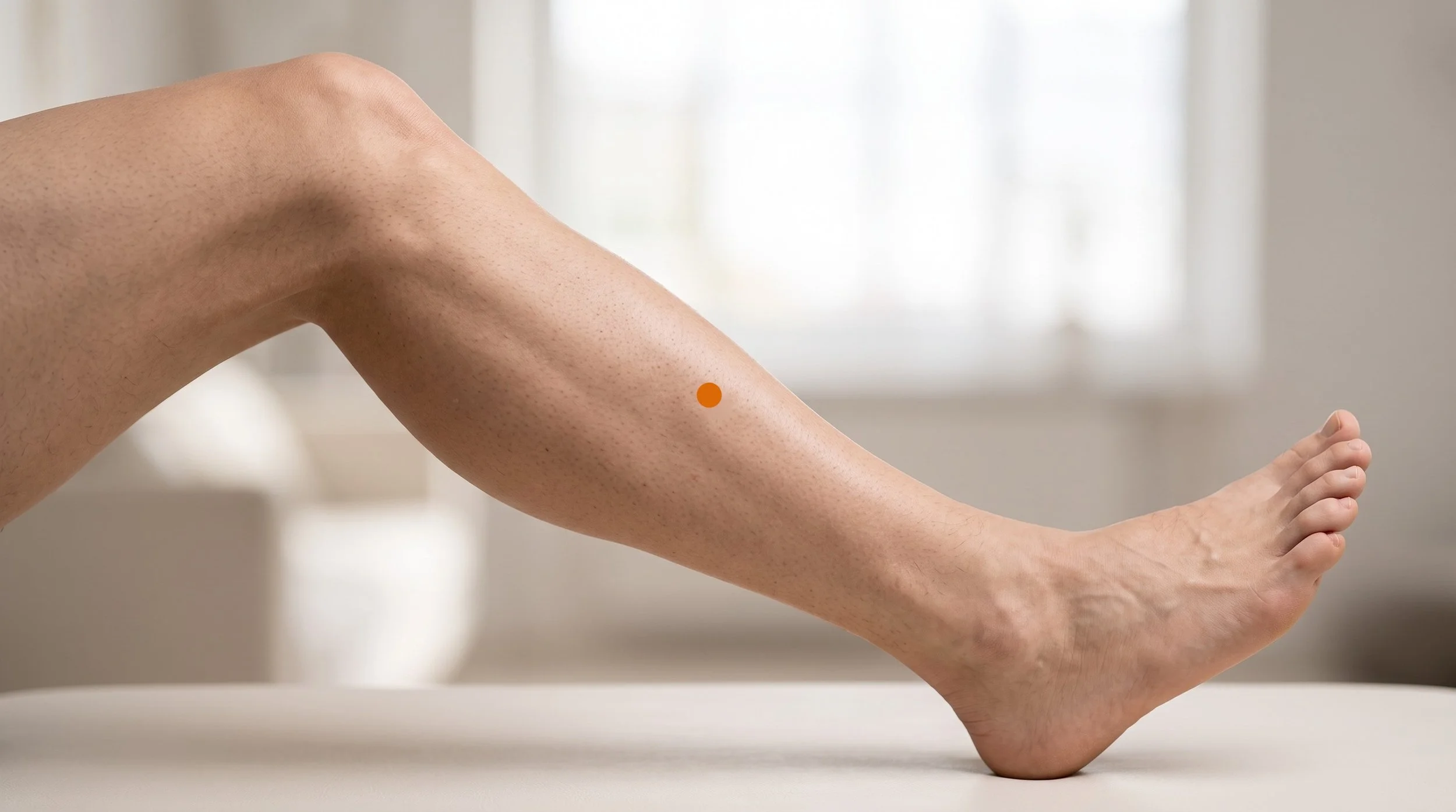
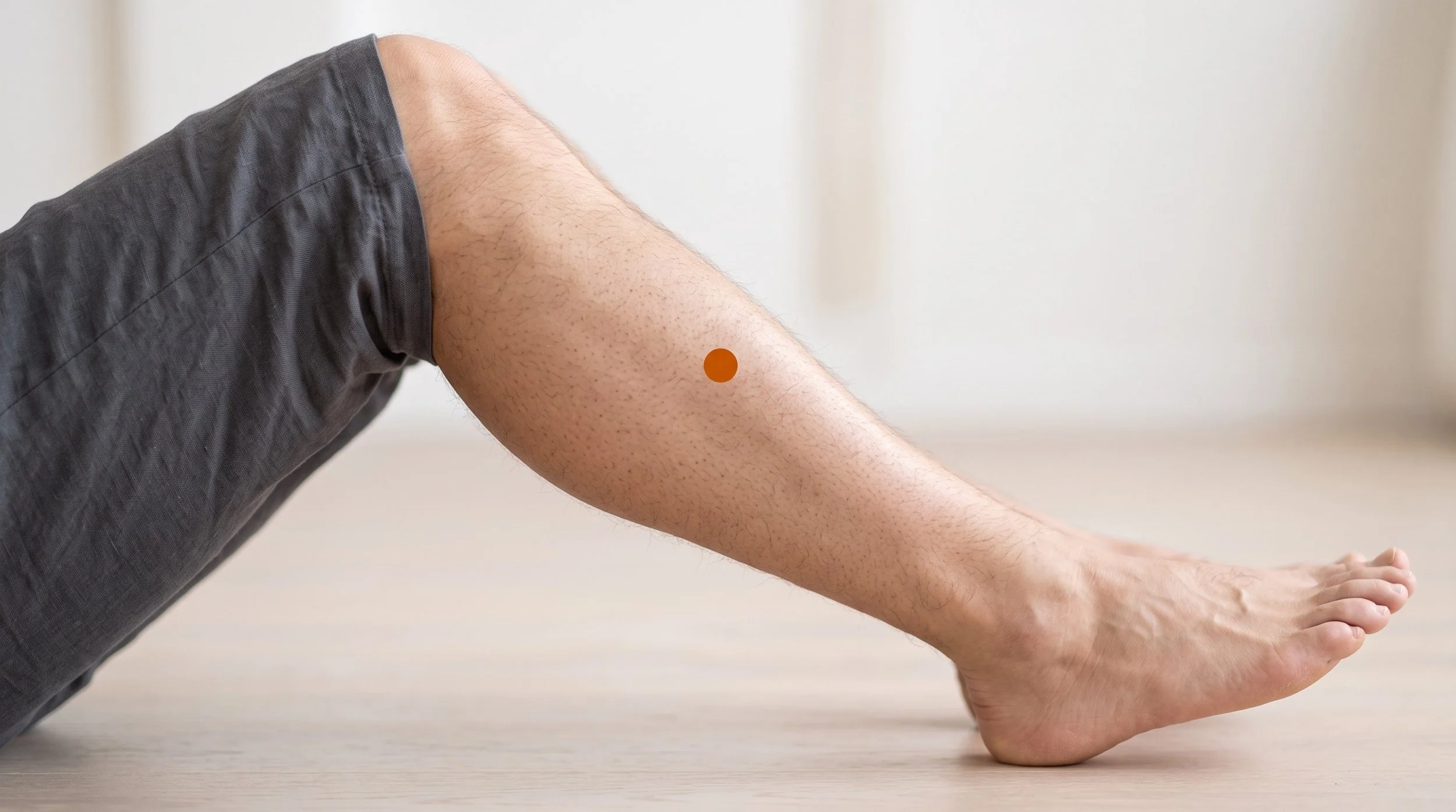
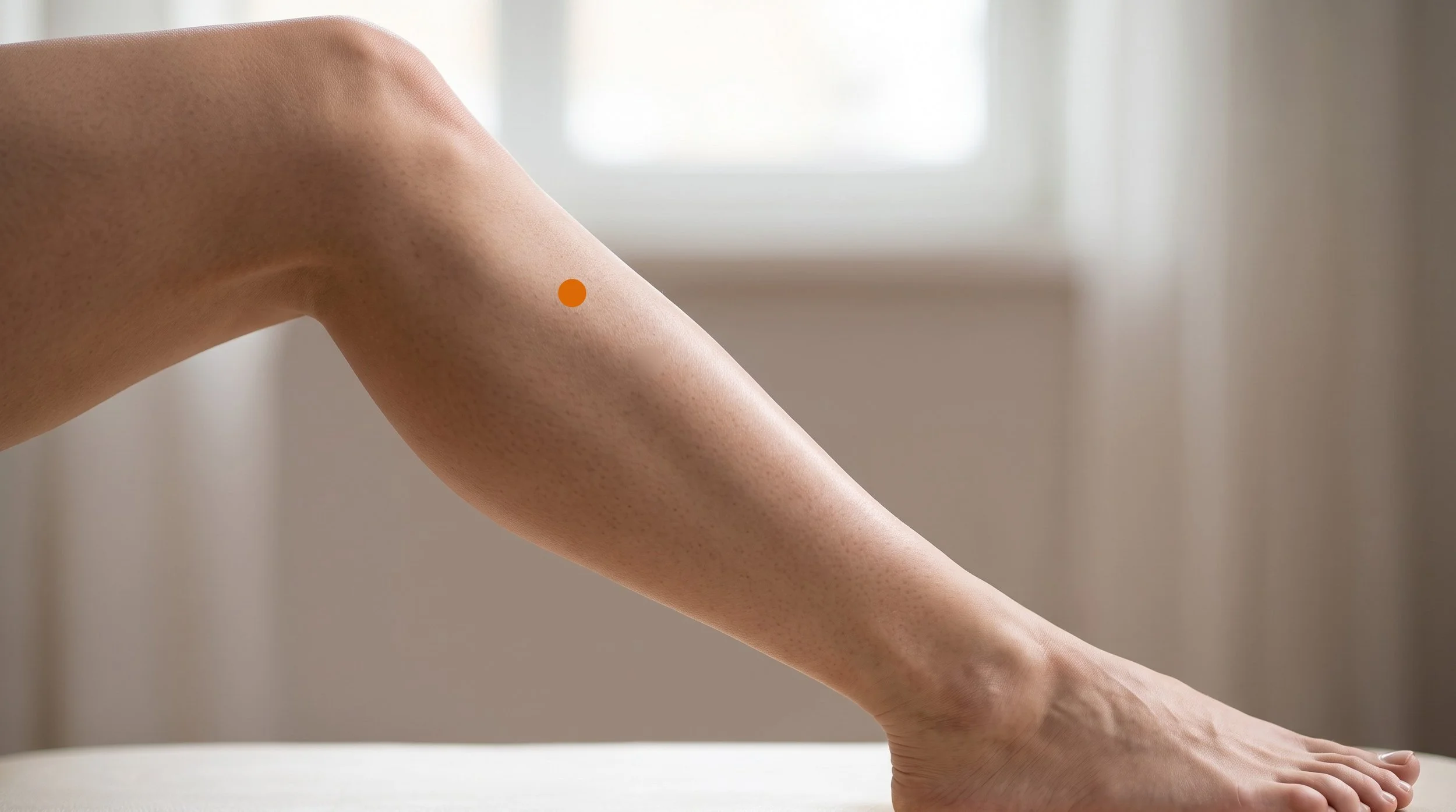
ST35 Acupuncture Point (Dubi)
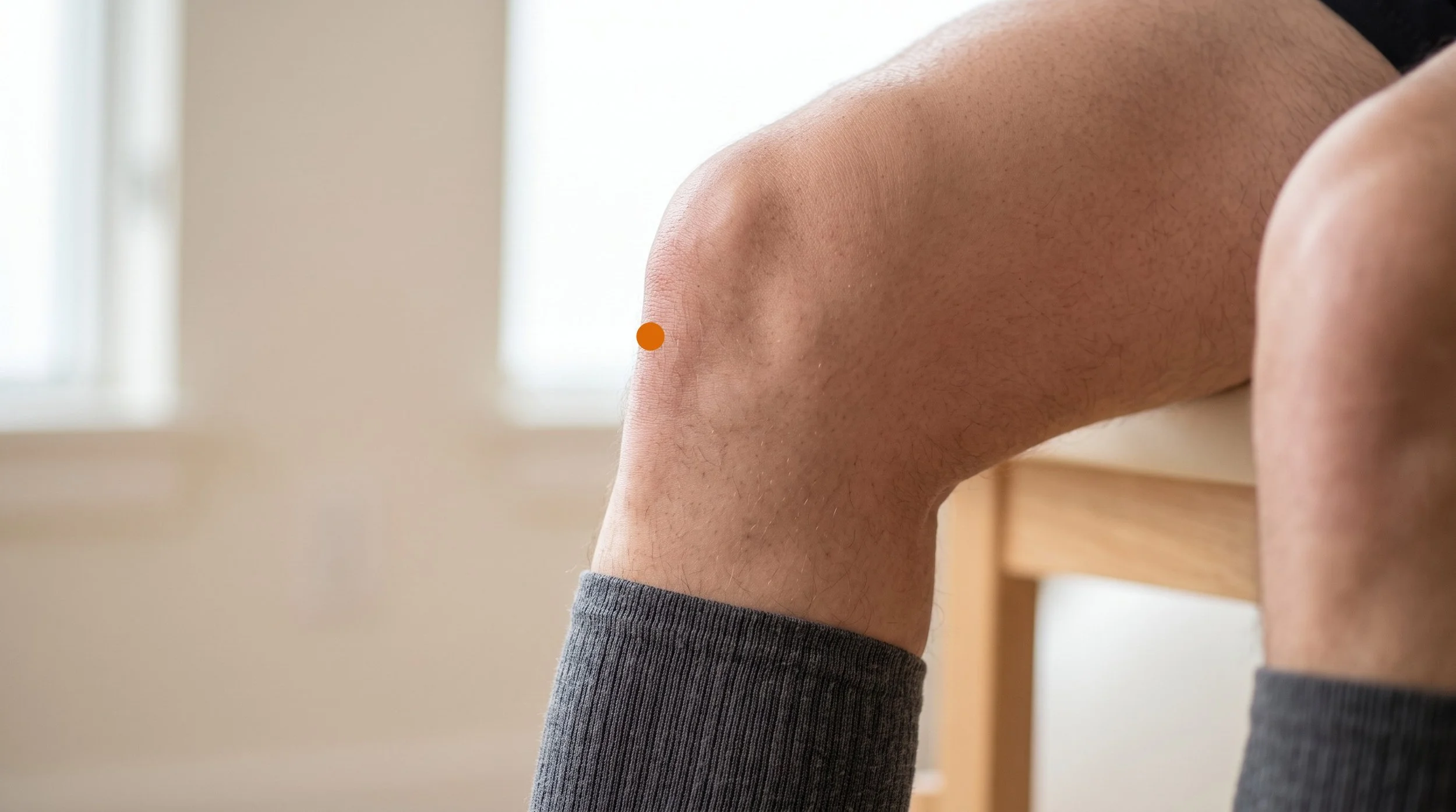
ST35 Acupuncture Point (Dubi)
The Calf's Nose Below the Kneecap: Anatomy, Mechanism, and Why This Knee Hollow Anchors Osteoarthritis Protocols
ST35, known in Chinese as Dubi and translated as Calf's Nose, sits in the visible dimple you can feel just below the kneecap on the outer side of the patellar tendon when the knee is bent. It is the lateral member of the paired hollows commonly called the eyes of the knee, and its medial twin is classified as an extra point rather than a channel point. Anatomically the needle passes into the infrapatellar fat pad, a densely innervated cushion that sits directly against the front of the joint, which is why this small depression has become one of the most consistently used locations in modern knee protocols.
If you have looked at almost any published acupuncture trial for knee osteoarthritis, the st35 acupuncture point was almost certainly in the prescription.
- ST35 (Dubi, Calf's Nose) lies in the lateral hollow immediately below the patella and lateral to the patellar ligament, best located with the knee flexed over a bolster so the depression opens. The needle travels through skin and the fibrous edge of the tendon into the infrapatellar fat pad, a structure that is richly vascularized and richly innervated and is itself considered a generator of anterior knee pain (Dragoo et al., 2012).
- Traditional sources classify ST35 as a Stomach channel point at the knee and attribute to it the functions of dispelling wind-damp, reducing swelling, activating the channel and relieving pain, with classical indications clustering around joint swelling, difficulty bending and straightening the knee, weakness and numbness of the leg (Deadman et al., 2007). We present those as traditional attributions rather than as physiology.
- The mechanism story is local and segmental. The fat pad and adjacent synovium carry substance P positive nociceptive fibers, so needling here delivers a controlled input directly into the tissue that is signaling (Bohnsack et al., 2005), and that input enters spinal segments around L3 to L5 where it may modulate convergent afferent traffic from the whole anterior knee (Zhao, 2008).
- Beyond the segment, needling recruits descending inhibitory pathways and endogenous opioid mechanisms that raise pain thresholds more broadly (Zhao, 2008), which helps explain why patients often report that the knee feels looser overall rather than numb in one spot.
- The research picture is encouraging but not settled. Individual patient data pooling across chronic pain conditions found effects that persist beyond the treatment period (Vickers et al., 2018), an older Cochrane review of peripheral joint osteoarthritis found statistically significant but small sham-controlled benefits (Manheimer et al., 2010), and a 2024 network meta-analysis of 80 trials reported that dose and the use of electroacupuncture appear to matter, at low certainty (Liu et al., 2024).
- Clinically, ST35 is rarely used alone. It is almost always needled with its medial partner and with points above and below the joint, and de qi here is typically a deep, heavy, spreading fullness inside the knee rather than a sharp surface sting.
Is Knee Pain Limiting Your Stairs, Squats, and Walks Around the City?
At Morningside Acupuncture we use ST35 and its medial partner as the anchor of most knee treatments, often with electroacupuncture across the two hollows and needling of the quadriceps and calf when the pattern is muscular. We combine that local work with points above and below the joint so the treatment addresses load, not just the sore spot. Every plan starts with an orthopedic exam so we know whether we are dealing with osteoarthritis, patellar tendon irritation, or a movement problem higher up the chain. Schedule a visit and let's get your knee moving better.
Schedule NowAnatomy of ST35: Why the Lateral Knee Hollow Is Such an Important Location
Bend your knee to about ninety degrees and two soft depressions appear below the kneecap, one on each side of the patellar tendon. ST35 is the lateral one. Under the skin the needle passes beside the tough lateral border of the patellar tendon and enters the infrapatellar fat pad, a compressible cushion that fills the front of the joint and is squeezed and stretched every time you extend, kneel, squat or descend stairs.
This fat pad is an intracapsular but extrasynovial structure that is both well supplied with blood vessels and heavily innervated (Dragoo et al., 2012), which is why the area is tender in so many knees and why the hollow is such a useful access route to the anterior joint line.
The nerve geography here is what makes ST35 more than a convenient dimple. Sensory fibers reaching the fat pad and the adjacent synovium include substance P positive nociceptors, and their distribution has been mapped in surgical specimens as a plausible contributor to anterior knee pain syndromes (Bohnsack et al., 2005). Contributions arrive from saphenous, common peroneal and tibial territories, so the point sits in an overlap zone drained by spinal segments in the L3 to L5 range.
Needling into that zone creates a strong, controlled afferent volley that converges in the dorsal horn with input from the arthritic or irritated joint, a setting where segmental modulation and descending inhibitory control are the plausible drivers of relief rather than any change in cartilage itself (Zhao, 2008).
Depth and direction matter. The classical conventions describe perpendicular insertion angled medially toward the back of the joint for roughly one to two cun, oblique insertion running medially and upward behind the patella, or a through-and-through angle joining ST35 with the medial hollow (Deadman et al., 2007; Shanghai College of Traditional Medicine, 1981). The knee should be flexed and supported so the hollow opens and the fat pad is relaxed.
Because the point sits close to the joint capsule, we use sterile single-use needles, avoid needling into a hot, acutely swollen or possibly infected joint, and take extra care with joint replacements, recent surgery, significant effusion or anticoagulant use.
Practically, this is one of the few points where the target tissue and the pain generator may be the same structure, which is part of why the two knee hollows show up in trial after trial.
Related Best Acupuncture Points For Knee Pain Related Acupuncture For Knee PainST35 at a Glance: Classification, Location, and Clinical Use
| Category | Detail |
|---|---|
| Traditional Name | Dubi (Calf's Nose), ST35, also called lateral Xiyan |
| Channel Classification | Stomach channel of Foot Yangming, at the knee |
| Point Categories | Not a five-shu or xi-cleft point. Listed as the lateral of the paired knee-hollow points and also catalogued as an extra point (M-LE-16), forming a pair with medial Xiyan. Named as the Stomach channel harmonizing point (one point proximal to the he-sea point) in luo-vessel treatment protocols. |
| Precise Location | On the knee, in the hollow that appears when the knee is flexed, immediately below the patella and lateral to the patellar ligament |
| Tissue Stimulated | Skin and subcutaneous tissue at the lateral border of the patellar tendon, the infrapatellar (Hoffa's) fat pad, and the anterior joint capsule; sensory supply from saphenous, common peroneal and tibial branches in the L3 to L5 range |
| Needle Depth / Direction | Knee flexed and supported: perpendicular insertion angled medially toward the back of the joint 1 to 2 cun, oblique insertion medially and superiorly behind the patella, or a directed angle joining the medial knee hollow. Moxibustion is traditionally used here. |
| De Qi Sensation | A deep, heavy fullness or dull ache inside the joint, often described as pressure spreading around the kneecap and sometimes downward along the shin |
| Primary Clinical Uses | Knee pain and osteoarthritis, difficulty bending and straightening the knee, knee swelling and stiffness, patellar tendon region pain, anterior knee pain |
| Common Point Combinations |
|
Deadman's point manual presents Dubi as an essential point for knee disorders of every kind, whether the traditional reading is one of deficiency or excess, of heat or of cold, which is unusually broad language for a single local point. Its traditional actions are given as dispelling wind-damp and reducing swelling, and as freeing the channel to relieve pain, and its listed indications gather into three practical clusters: swelling and pain in the joint itself, restricted bending and straightening, and weakness or numbness extending into the lower limb.
The same source notes that ST35 is so routinely combined with the extra point in the medial hollow that clinicians usually refer to it simply as lateral Xiyan. What is striking is the consistency across two thousand years and several traditions: a small dimple you can see with the naked eye when the knee bends became the default entry point to the joint, and modern trial protocols, arrived at through entirely different reasoning, keep landing in exactly the same spot.
Why ST35 Is Used for Knees That Feel Stiff and Full Rather Than Sharply Painful
Patients often describe an arthritic knee as tight, deep, and hard to place, not as a sharp point of pain. That description fits the anatomy at ST35. The infrapatellar fat pad sits at the front of the joint, changes shape with every degree of flexion, and carries nociceptive fibers that overlap with input from the capsule and synovium (Bohnsack et al., 2005; Dragoo et al., 2012). Because all of that traffic converges on the same spinal segments, a needle placed into the hollow is not treating a separate structure so much as entering the same neural conversation the joint is already having.
The second layer is central. Sustained needle stimulation activates descending inhibitory pathways from the brainstem and recruits endogenous opioid and monoamine systems, which raises pain thresholds beyond the treated segment (Zhao, 2008). This is the most plausible explanation for the pattern we see clinically, where a patient's knee feels easier to bend for a day or two after the first session and then holds the improvement longer with each subsequent visit.
Pooled individual patient data across chronic pain conditions supports that acupuncture effects are not purely short-lived, with only modest decay over a year of follow-up (Vickers et al., 2018).
It is worth being clear about what this does not do. Needling ST35 does not regrow cartilage or reverse structural change on imaging. What the evidence supports is symptom and function change, and reviews of knee osteoarthritis trials suggest benefits that can persist for some months after a course of treatment ends (Chen et al., 2024).
For most patients that means less pain on stairs, better tolerance for walking, and less reliance on medication, which is a reasonable goal to set at the outset.
What the Research Shows for ST35
One caution before the table. No high-quality trial has isolated ST35 on its own, and it would be strange to try, since the point is used as part of a knee prescription that nearly always includes the medial hollow plus points above and below the joint. What the research tells us is how those multi-point protocols perform, and ST35 sits inside almost every one of them, which is the honest way to read the numbers below.
| Study | Type | Focus | Key Finding |
|---|---|---|---|
| Manheimer et al., 2010 | Cochrane systematic review | Acupuncture for peripheral joint osteoarthritis, including the knee | Sham-controlled trials showed statistically significant but small benefits that the authors judged below their threshold for clinical relevance, while waiting list comparisons showed larger effects likely inflated by expectation. |
| Liu et al., 2024 | Systematic review with pairwise and network meta-analysis (80 RCTs, 9,933 participants) | Effect and contributing factors of acupuncture for knee osteoarthritis | Acupuncture outperformed comparators including NSAIDs and usual care on pain, with electroacupuncture and higher treatment dose associated with larger effects, though certainty of evidence was very low. |
| Tu et al., 2021 | Multicenter randomized sham-controlled trial | Intensive acupuncture (three sessions weekly for eight weeks) versus sham in knee osteoarthritis | Electroacupuncture and manual acupuncture using knee-region points including Dubi were associated with greater improvement than sham, supporting the value of adequate treatment frequency. |
| Berman et al., 2004 | Randomized controlled trial (570 patients) | Acupuncture as an adjunct to standard care in knee osteoarthritis | True acupuncture produced greater improvement in WOMAC pain and function scores than sham acupuncture or education over 26 weeks. |
| Chen et al., 2024 | Systematic review and meta-analysis | Durability of acupuncture effects after treatment ends in knee osteoarthritis | Benefits in pain and function appeared to persist for a period after the treatment course finished, though effect sizes diminished over longer follow-up. |
| Vickers et al., 2018 | Individual patient data meta-analysis (about 20,800 patients) | Acupuncture across chronic pain conditions including osteoarthritis | Acupuncture was superior to both sham and no-acupuncture controls, with roughly 85 percent of the benefit retained at one year. |
| Bohnsack et al., 2005 | Neurohistological study of surgical specimens | Distribution of substance P nerve fibers in the infrapatellar fat pad and adjacent synovium | Nociceptive fibers were identified throughout the fat pad and synovium, supporting the tissue at ST35 as a plausible source of anterior knee pain. |
Looking for Acupuncture and Dry Needling for Knee Osteoarthritis in NYC?
Knee osteoarthritis responds best to a layered plan, and the knee-eye points are where most of our protocols begin. We follow the dosing patterns used in the better trials, which means a real course of treatment rather than a single session, and we pair needling with loading advice you can actually keep up with. Our licensed acupuncturists explain what each point is doing and what to expect week by week. Book an appointment at our Upper West Side clinic to get started.
Schedule NowST35 in the Context of Trigger Point Work
Acupuncture is the use of an acupuncture needle, and that includes dry needling, so at Morningside the question is never which system to use but which tissue needs attention. Knee pain frequently has a myofascial component layered on top of joint changes, and the muscles that most often refer pain into or around the knee include vastus medialis, vastus lateralis and rectus femoris in the thigh, popliteus behind the joint, and gastrocnemius in the calf, all of which are documented referral sources in the trigger point literature (Simons et al., 1999). Needling ST35 addresses the anterior joint interface, while needling those muscles addresses the machinery that loads it.
In practice a knee session might begin with the two knee hollows, add ST34 and GB34 to cover the quadriceps and lateral compartment, then move to palpated taut bands in the vastus medialis and the calf if those reproduce the patient's pain. When a patient's discomfort sits right at the patellar tendon or feels like a pinch at the front of the joint during deep flexion, the fat pad region at ST35 is usually the primary target and the muscular work is secondary. When the pain is felt behind or below the knee with a history of running or hill walking, we often reverse that emphasis. Either way the two approaches are complementary rather than competing, and the choice is driven by examination findings, not by tradition.
ST35 Knee Pain Treatment at NYC's Highest-Rated Acupuncture Clinic
Morningside Acupuncture is the highest-rated acupuncture and dry needling clinic in New York City with over 500 five-star Google reviews, and knee pain is one of the conditions we treat most. We use Dubi with medial Xiyan, ST34, GB34 and targeted dry needling of the muscles that control the knee, adapted to your imaging, history and goals. Treatment is precise, hygienic and explained in plain language from the first visit. Schedule your appointment today.
Schedule NowFrequently Asked Questions
What does ST35 feel like when needled?
Most patients feel a heavy, deep fullness inside the knee rather than a sharp surface sensation, sometimes described as pressure or a dull ache spreading around the kneecap and occasionally traveling down the shin. That heavy, spreading quality is what practitioners call de qi. The initial skin insertion is brief and often barely noticed. If electroacupuncture is added across ST35 and the medial hollow, you will also feel a comfortable tapping or pulsing that should never be painful, and we adjust the intensity to your tolerance.
Why needle right at the sore knee instead of using distal points?
Both approaches are used, but ST35 earns its place because the tissue under the needle is plausibly part of the problem. The infrapatellar fat pad is densely innervated and is considered a source of anterior knee pain in its own right (Dragoo et al., 2012), so needling the hollow delivers input directly into the segment that is generating symptoms. Distal points such as GB34, ST36 or LV3 add a broader modulating layer through descending inhibitory pathways (Zhao, 2008), which is why a typical treatment uses local and distal points together rather than choosing between them.
Can I press ST35 myself between sessions?
Yes, and it is one of the easier points to self-treat. Sit with your knee bent to about ninety degrees, find the tendon running from the kneecap to the shin bone, and slide your thumb into the soft dimple on the outer side of that tendon just below the kneecap. Press inward and slightly toward the center of the joint with firm, steady pressure at a level you would rate about four or five out of ten, hold for 30 to 60 seconds, release, and repeat two or three times. You can do the same on the medial dimple so both knee eyes are covered. Two or three rounds a day is plenty, and gentle knee bending afterward often feels better than pressure alone. Stop if the knee is hot, acutely swollen, or if pressure sharply increases the pain.
Is ST35 safe to needle?
In trained hands it is a well-tolerated point, but it sits close to the joint capsule, so technique matters. Practitioners use sterile single-use needles, support the flexed knee, and observe the classical depth conventions of roughly one to two cun with the angle directed medially or behind the patella. We avoid needling a hot, acutely inflamed or possibly infected joint, take particular care around knee replacements, recent surgery, or a significant effusion, and modify the approach for patients on anticoagulants. Temporary soreness or a small bruise at the site is the most common side effect. If your knee is red, hot, or suddenly swollen without an obvious cause, that should be evaluated medically before any needling.
Where exactly is ST35 located?
ST35, or stomach 35, is found on the front of the knee in the hollow that appears when the knee is flexed, immediately below the kneecap and just lateral to the patellar ligament. It is the outer of the two depressions known as the eyes of the knee, and its medial partner is classified as an extra point rather than a channel point. The st 35 knee location is easiest to identify seated with the knee bent over a bolster, since the dimple flattens out when the leg is straight.
References
- Deadman, P., Al-Khafaji, M., & Baker, K. (2009). A manual of acupuncture. Journal of Chinese Medicine Publications.
- O'Connor, J., & Bensky, D. (Eds. & Trans.). (1981). Acupuncture: A comprehensive text. Shanghai College of Traditional Medicine. Eastland Press.
- Maciocia, G. (2006). The channels of acupuncture: Clinical use of the secondary channels and eight extraordinary vessels. Churchill Livingstone Elsevier.
- Cecil-Sterman, A. (2012). Advanced acupuncture: A clinic manual. Classical Wellness Press.
- Simons, D. G., Travell, J. G., & Simons, L. S. (1999). Travell & Simons' myofascial pain and dysfunction: The trigger point manual, Vol. 1: Upper half of body (2nd ed.). Williams & Wilkins.
- Manheimer, E., Cheng, K., Linde, K., Lao, L., Yoo, J., Wieland, S., van der Windt, D. A. W. M., Berman, B. M., & Bouter, L. M. (2010). Acupuncture for peripheral joint osteoarthritis. Cochrane Database of Systematic Reviews, 2010(1), CD001977. https://doi.org/10.1002/14651858.CD001977.pub2
- Liu, C.-Y., Duan, Y.-S., Zhou, H., Wang, Y., Tu, J.-F., Bao, X.-Y., Yang, J.-W., Lee, M. S., & Wang, L.-Q. (2024). Clinical effect and contributing factors of acupuncture for knee osteoarthritis: A systematic review and pairwise and exploratory network meta-analysis. BMJ Evidence-Based Medicine, 29(6), 374-384. https://doi.org/10.1136/bmjebm-2023-112626
- Tu, J.-F., Yang, J.-W., Shi, G.-X., Yu, Z.-S., Li, J.-L., Lin, L.-L., Du, Y.-Z., Yu, X.-G., Hu, H., Liu, Z.-S., Jia, C.-S., Wang, L.-Q., Zhao, J.-J., Wang, J., Wang, T., Wang, Y., Wang, T.-Q., Zhang, N., Zou, X., Wang, Y., Shao, J.-K., & Liu, C.-Z. (2021). Efficacy of intensive acupuncture versus sham acupuncture in knee osteoarthritis: A randomized controlled trial. Arthritis & Rheumatology, 73(3), 448-458. https://doi.org/10.1002/art.41584
- Berman, B. M., Lao, L., Langenberg, P., Lee, W. L., Gilpin, A. M. K., & Hochberg, M. C. (2004). Effectiveness of acupuncture as adjunctive therapy in osteoarthritis of the knee: A randomized, controlled trial. Annals of Internal Medicine, 141(12), 901-910. https://doi.org/10.7326/0003-4819-141-12-200412210-00006
- Chen, H., Shi, H., Gao, S., Fang, J., Yi, J., Wu, W., Liu, X., & Liu, Z. (2024). Durable effects of acupuncture for knee osteoarthritis: A systematic review and meta-analysis. Current Pain and Headache Reports, 28(7), 709-722. https://doi.org/10.1007/s11916-024-01242-6
- Vickers, A. J., Vertosick, E. A., Lewith, G., MacPherson, H., Foster, N. E., Sherman, K. J., Irnich, D., Witt, C. M., & Linde, K. (2018). Acupuncture for chronic pain: Update of an individual patient data meta-analysis. Journal of Pain, 19(5), 455-474. https://doi.org/10.1016/j.jpain.2017.11.005
- Zhao, Z. Q. (2008). Neural mechanism underlying acupuncture analgesia. Progress in Neurobiology, 85(4), 355-375. https://doi.org/10.1016/j.pneurobio.2008.05.004
- Bohnsack, M., Meier, F., Walter, G. F., Hurschler, C., Schmolke, S., Wirth, C. J., & Rühmann, O. (2005). Distribution of substance-P nerves inside the infrapatellar fat pad and the adjacent synovial tissue: A neurohistological approach to anterior knee pain syndrome. Archives of Orthopaedic and Trauma Surgery, 125(9), 592-597. https://doi.org/10.1007/s00402-005-0796-4
- Dragoo, J. L., Johnson, C., & McConnell, J. (2012). Evaluation and treatment of disorders of the infrapatellar fat pad. Sports Medicine, 42(1), 51-67. https://doi.org/10.2165/11595680-000000000-00000
Disclaimer: This web site is intended for educational and informational purposes only. Reading this website does not constitute providing medical advice or any professional services. This information should not be used for diagnosing or treating any health issue or disease. Those seeking medical advice should consult with a licensed physician. Seek the advice of a medical doctor or other qualified health professional for any medical condition. If you think you have a medical emergency, call 911 or go to the emergency room. No acupuncturist-patient relationship is created by reading this website or using the information. Morningside Acupuncture PLLC and its employees and contributors do not make any express or implied representations with respect to the information on this site or its use. For any legal interpretation of scope of practice in your state, consult a licensed attorney or regulatory authority.
Read more from our blog