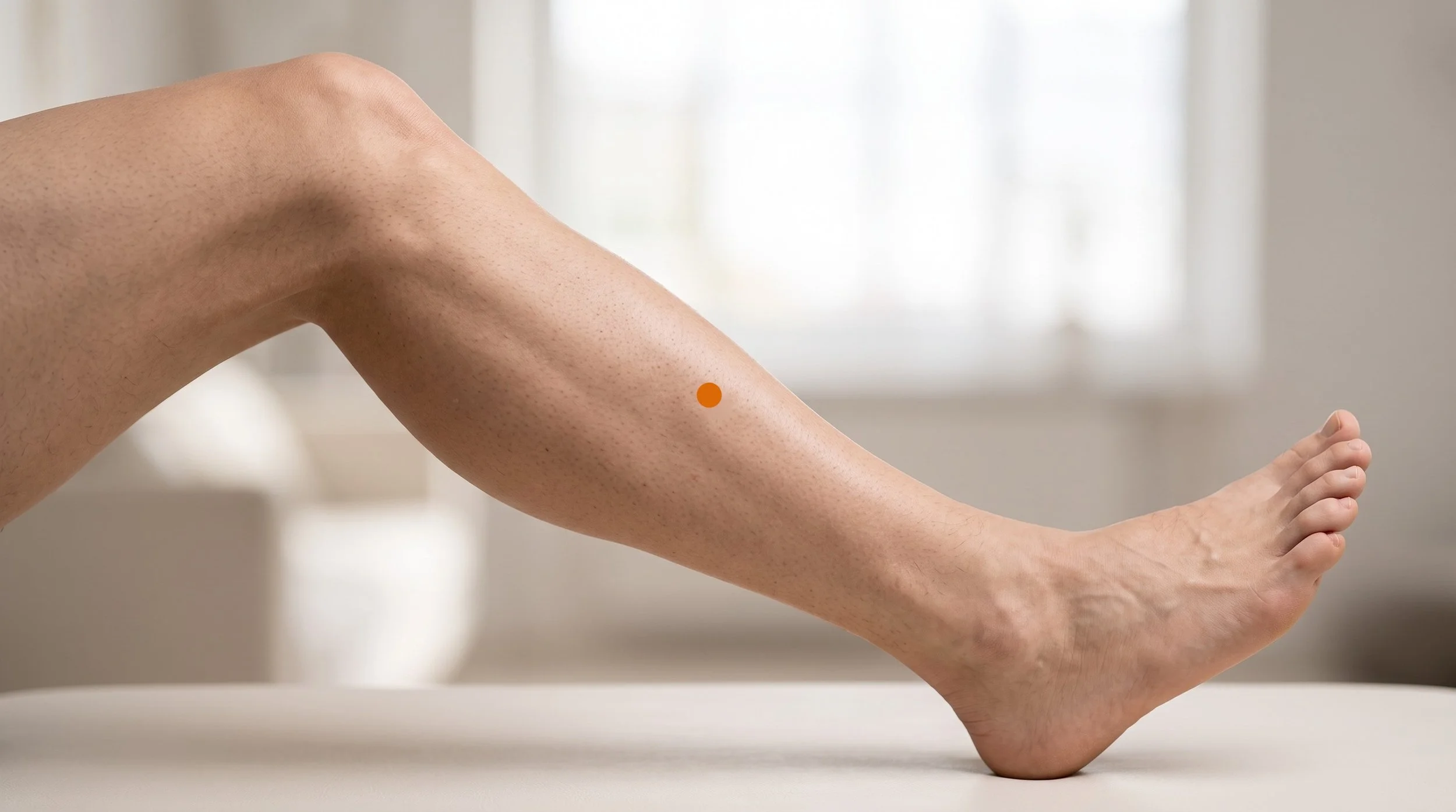
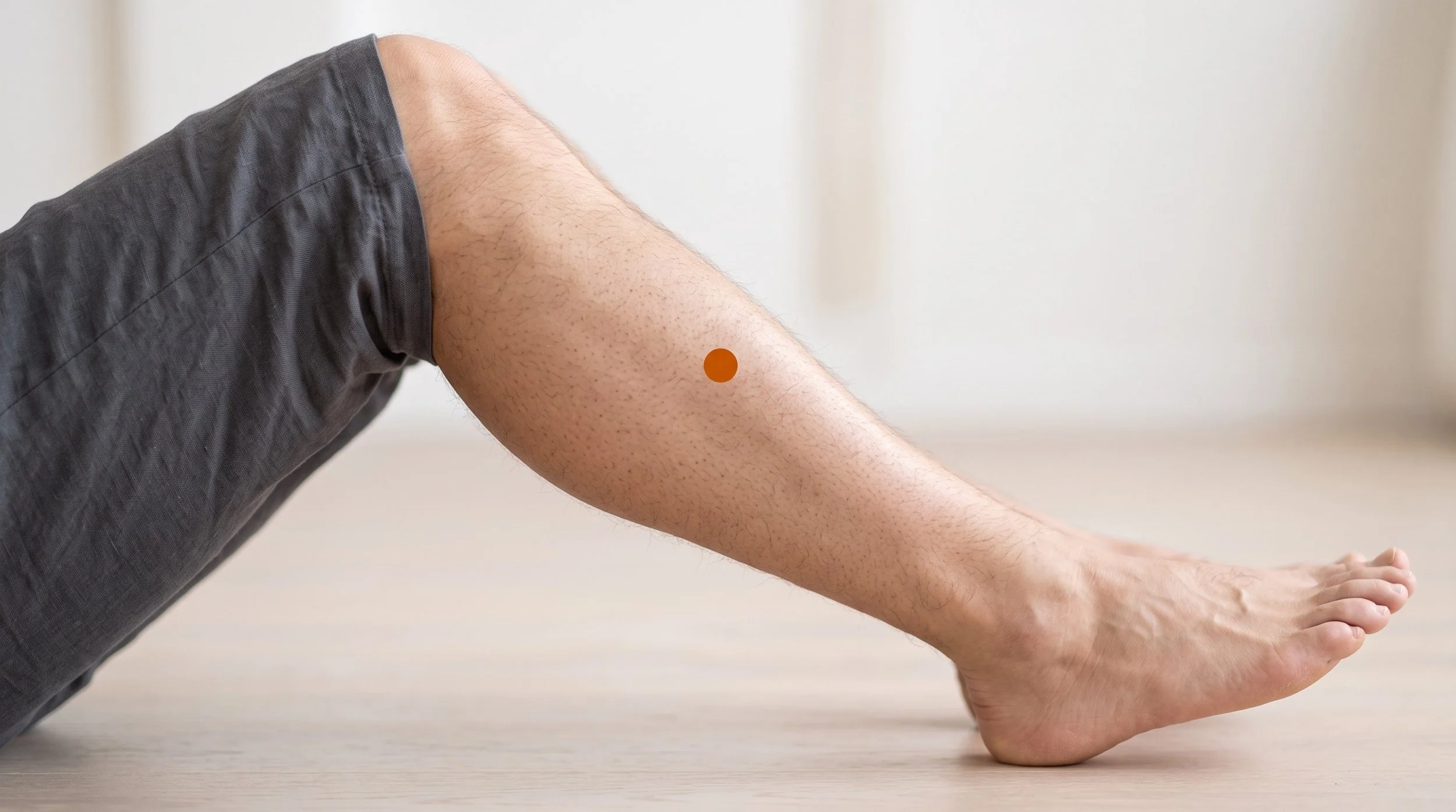
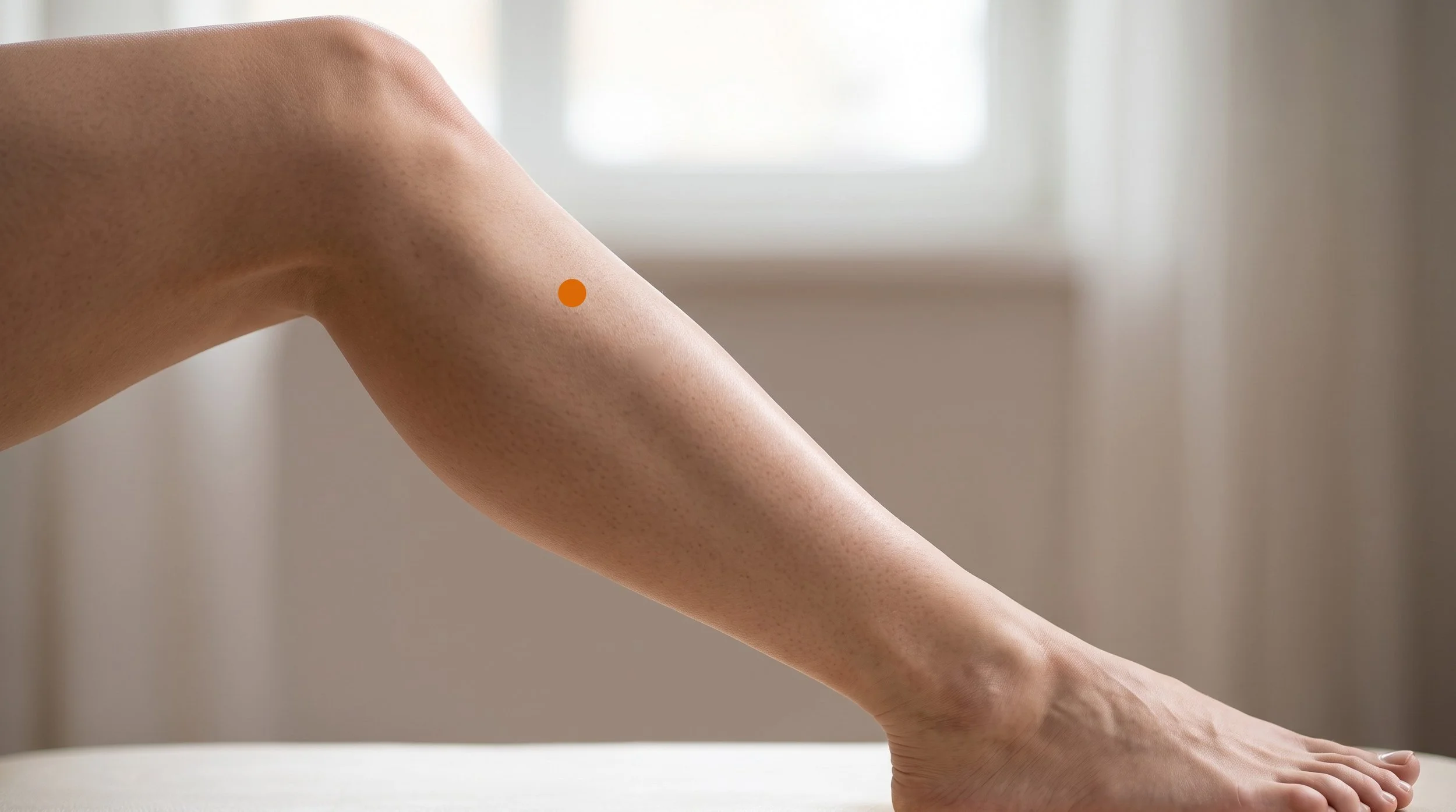
ST31 Acupuncture Point (Biguan)
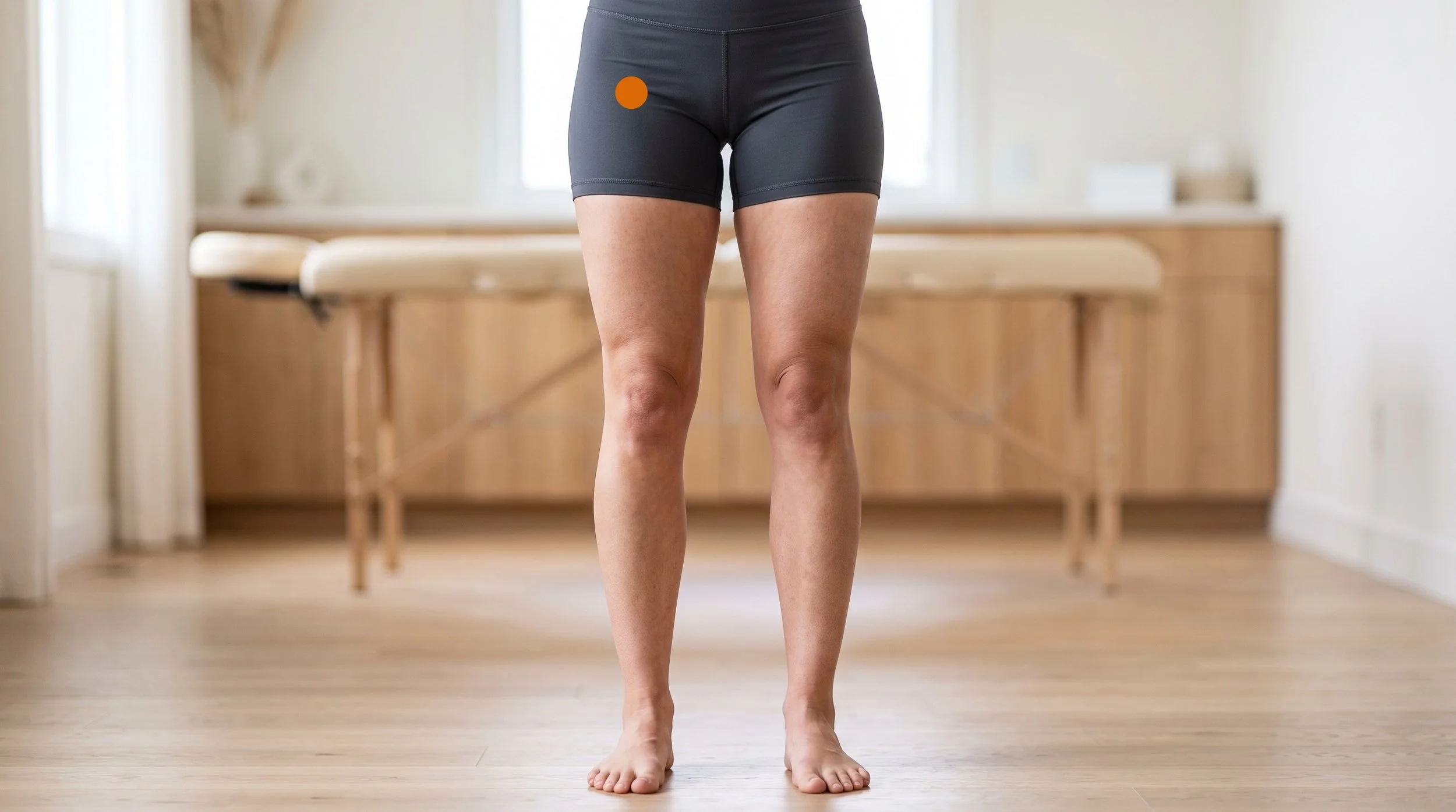
ST31 Acupuncture Point (Biguan)
The Thigh Gate at the Front of the Hip: Anatomy, Mechanism, and Why This Stomach Channel Point Anchors Hip Flexor and Anterior Thigh Treatment
ST31, known in Chinese as Biguan and usually translated as Thigh Gate, sits high on the front of the thigh in the soft depression just lateral to the sartorius muscle, roughly where a line dropped straight down from the bony point of the hip (the anterior superior iliac spine) meets a level drawn across from the bottom of the pubic bone. That places the st31 acupuncture point directly over the busiest mechanical corner of the lower limb, where the hip flexors, the fascia lata and the lateral thigh sensory nerves all converge.
Clinically, Biguan matters because it gives a needle safe access to the anterior hip region without approaching the femoral neurovascular bundle, which is why it shows up in treatment plans for anterior hip and groin-region pain, hip flexor tightness, quadriceps-territory thigh pain, and the classical listings for sciatica-pattern leg symptoms.
- Location and layers: ST31 is found in the hollow just lateral to sartorius, at the crossing of a vertical line from the anterior superior iliac spine and a horizontal line level with the lower border of the pubic symphysis, with the greater trochanter serving as a rough alternative height reference (Deadman et al., 2007). The needle passes skin, subcutaneous fat and fascia lata into the interval between sartorius, tensor fasciae latae and rectus femoris.
- Traditional categories, translated: classical texts assign ST31 the roles of moving stagnation in the channel to relieve pain and dispersing wind-damp from the limb (Deadman et al., 2007). In modern terms these describe a local point used to reduce nociceptive input and restore movement in a stiff, achy, mechanically loaded hip.
- Nerve geography: segmental input at ST31 clusters around L2 to L4, the lateral femoral cutaneous nerve travels close to the surface nearby, and the femoral nerve trunk lies well medial, so the point sits in a densely innervated but relatively forgiving corridor. Needling here recruits Aδ and C fiber afferents that engage spinal and brainstem pain-modulating circuits (Zhao, 2008).
- Research picture: individual patient data from nearly 21,000 patients found acupuncture superior to sham and to no-acupuncture control for chronic musculoskeletal pain, with effects that persisted over follow-up (Vickers et al., 2018), while the Cochrane review of hip osteoarthritis reported little or no difference versus sham but possible added benefit when acupuncture was combined with usual physician care (Manheimer et al., 2018).
- Clinical framing: ST31 is rarely used alone. Classical sources pair it up and down the Stomach channel with ST36 and ST41, and modern practice adds gluteal and lateral hip points plus dry needling of the hip flexors, an approach supported by trials showing reduced pain and improved hip function after needling iliopsoas, rectus femoris and tensor fasciae latae trigger points (Ceballos-Laita et al., 2021).
- De qi: patients usually report a deep, dull, spreading heaviness at ST31 that may travel down the front of the thigh toward the knee, sometimes with a brief twitch if the needle contacts a taut band in rectus femoris or tensor fasciae latae (Simons et al., 1999).
Is Anterior Hip Or Groin Pain Limiting Your Stride?
Front-of-hip pain that bites at the top of a stair, at the end of a long run or after hours at a desk usually involves the hip flexors, the joint capsule and the lower lumbar segments together. At Morningside Acupuncture we use ST31 as the anchor point for that anterior corridor, combining it with gluteal and lateral hip points and, when indicated, dry needling of iliopsoas, rectus femoris and tensor fasciae latae. Every plan starts with a movement assessment, not a template. Schedule a visit and let's find out what is actually driving the pain.
Schedule NowAnatomy of ST31: Why the Front of the Hip Is Such an Important Location
From the surface down, ST31 passes through skin and a variable layer of subcutaneous fat, then through the fascia lata, the tough sleeve that wraps the thigh and takes tension from the gluteal muscles above. Beneath that lies a natural gap: sartorius runs diagonally on the medial side, tensor fasciae latae sits laterally, and rectus femoris lies between and slightly deep, with the deeper hip flexor territory below.
This is exactly the tissue that loads during running, cycling, stair climbing and long periods of hip flexion at a desk, and it is also the region that stiffens after hip joint irritation because the flexors tend to guard when the joint is unhappy (Simons et al., 1999).
The nerve story here is what makes the point useful. Cutaneous supply around ST31 comes largely from the lateral femoral cutaneous nerve, while the muscles beneath answer to branches of the femoral nerve, all with segmental origins clustered around L2 to L4. The hip joint capsule and the surrounding hip flexors report into those same spinal segments, so afferent traffic from a needle at Biguan converges on the same dorsal horn neurons that receive input from the joint itself.
Stimulating that convergence is one reason a local needle can shift pain perceived as deeper than the needle reaches. Beyond the segment, needle stimulation recruits small-diameter afferents that activate descending inhibitory pathways from the midbrain and brainstem, along with local release of endogenous opioids and adenosine (Zhao, 2008).
Safety at this point is mostly a matter of staying lateral. The femoral artery, vein and nerve run through the femoral triangle well medial to ST31, and the correct location just lateral to sartorius keeps the needle away from them. Standard practice is perpendicular or oblique insertion between 1 and 2 cun depending on body size, with angling directed laterally or straight down rather than medially (Deadman et al., 2007).
Because the lateral femoral cutaneous nerve is superficial in this region, patients occasionally report a brief zing along the outer thigh; a good practitioner adjusts rather than pushes through it.
Related Best Acupuncture Points For Hip Pain Related Acupuncture For Rectus Femoris PainST31 at a Glance: Classification, Location, and Clinical Use
| Category | Detail |
|---|---|
| Traditional Name | Biguan (Thigh Gate), ST31, also written Stomach 31 |
| Channel Classification | Stomach channel of the foot, yangming; the point sits at the top of the thigh where the channel crosses from the inguinal region onto the anterior leg |
| Point Categories | No five-shu, hui-meeting or extraordinary vessel designation. Classical actions listed are activating the channel to relieve pain and dispelling wind-damp (Deadman et al., 2007). The Stomach Connecting (luo) channel arising at ST40 is described as passing through this region (Sterman) |
| Precise Location | Upper thigh, in the depression immediately lateral to sartorius, where a vertical line dropped from the anterior superior iliac spine meets a horizontal line level with the lower border of the pubic symphysis; the level of the most prominent part of the greater trochanter is an accepted alternative reference |
| Tissue Stimulated | Skin, subcutaneous fat and fascia lata, then the interval between sartorius, tensor fasciae latae and rectus femoris, overlying the deep hip flexor territory |
| Needle Depth / Direction | Perpendicular or oblique insertion, 1 to 2 cun, directed straight down or slightly laterally; avoid medial angling toward the femoral triangle |
| De Qi Sensation | Deep, heavy, spreading ache at the front of the hip, often traveling toward the knee; a local twitch may occur when a taut band in rectus femoris or tensor fasciae latae is engaged |
| Primary Clinical Uses | Anterior hip and groin-region pain, hip flexor tightness and guarding, anterior and lateral thigh pain, leg weakness and heaviness, and sciatica-pattern leg symptoms in classical listings |
| Common Point Combinations |
|
Deadman, Al-Khafaji and Baker's A Manual of Acupuncture presents Biguan as a point positioned at the pivot of the lower limb, the gate through which the leg is reached, and links it to the classical idea that the yangming channels are rich in qi and blood and therefore well suited to conditions of numbness, weakness, stiffness and pain in the limbs.
In that framing ST31 becomes the lower-body counterpart of LI15 at the shoulder, a broad regulating point for the whole leg rather than a narrow local one, and the traditional indications reflect that scope: wasting and weakness of the leg, one-sided paralysis, numbness, cold and damp leg complaints, hip joint pain, thigh pain and cramping, sciatica, and pain radiating from the hip along the Stomach channel, with several classical sources adding cold painful knees and lumbar pain.
Maciocia's channel text makes a similar clinical distinction, treating ST36 as the reference point for the lower leg and ST31 as its equivalent for the upper leg. What is striking is how consistently the old sources treat a single anterior hip point as a whole-limb lever, an intuition that maps neatly onto the modern observation that L2 to L4 segmental input from this region influences a large swath of thigh and knee sensation.
Why ST31 Is Used for Sciatica-Pattern Leg Pain and Hip Flexor Guarding, Not Just Local Soreness
Patients are often surprised that a needle at the front of the hip can change symptoms felt in the outer thigh, the groin or even down toward the knee. The explanation is segmental convergence. Sensory fibers from the hip capsule, from the hip flexors and from the skin over the anterior thigh all report to overlapping neurons in the L2 to L4 spinal segments. When those neurons become sensitized, ordinary movement gets read as threat and pain spreads beyond the tissue that started it.
Adding a controlled, well-tolerated afferent input at ST31 gives that same pool of neurons something new to process, which can turn down the amplification (Zhao, 2008).
There is a second, larger loop as well. Needle stimulation that produces de qi activates small-diameter afferents that project to the midbrain and brainstem and trigger descending inhibition, along with local biochemical changes at the needle site involving endogenous opioids and adenosine (Zhao, 2008). This is why patients often notice a general drop in pain sensitivity, not only relief at the point itself, and why sessions frequently end with a distinctly calm, heavy-limbed feeling.
Practically, this is also why ST31 keeps its place in sciatica-oriented treatment plans even though sciatic symptoms travel down the back of the leg. Classical listings placed it there, and modern protocols for sciatica typically combine lumbar segmental points with gluteal and leg points rather than chasing the pain line alone.
Trial evidence supports the broader approach: a multicenter randomized trial found that acupuncture reduced leg pain and improved function compared with sham in chronic sciatica from disk herniation, with benefits still present at one year (Tu et al., 2024), and a meta-analysis of randomized trials reached similarly favorable but cautiously worded conclusions about pain and function (Zhang et al., 2023).
What the Research Shows for ST31
It is worth being clear about what the research can and cannot say. Almost no high-quality trial tests ST31 in isolation; reviews evaluate multi-point protocols, and Biguan appears as one component of a hip, thigh or lumbar prescription. The reasonable interpretation is that the evidence supports the treatment approach in which ST31 participates rather than the point as a standalone intervention, and that findings vary considerably by condition, with sciatica and general chronic musculoskeletal pain currently better supported than hip osteoarthritis specifically.
| Study | Type | Focus | Key Finding |
|---|---|---|---|
| Vickers et al., 2018 | Individual patient data meta-analysis | Chronic musculoskeletal, head and joint pain across 39 trials | Acupuncture outperformed both sham and no-acupuncture control, with modest effect sizes that were largely maintained over twelve months. |
| Manheimer et al., 2018 | Cochrane systematic review | Acupuncture for hip osteoarthritis, six trials with 413 participants | Little or no difference from sham acupuncture, though adding acupuncture to routine physician care may improve pain and function, and no serious adverse events were attributed to treatment. |
| Tu et al., 2024 | Multicenter randomized clinical trial | Chronic sciatica from herniated disk, 216 participants, ten sessions over four weeks | Leg pain and disability improved more with acupuncture than sham at week four, and the difference persisted through week fifty-two. |
| Zhang et al., 2023 | Systematic review and meta-analysis | Acupuncture therapy for sciatica across randomized controlled trials | Reported favorable effects on pain and function with a good safety profile, tempered by heterogeneity and methodological limitations in the included trials. |
| Ceballos-Laita et al., 2021 | Double-blind randomized controlled trial | Dry needling of iliopsoas, rectus femoris, tensor fasciae latae and gluteus minimus trigger points in hip osteoarthritis | Three sessions produced greater short-term improvements in pain, physical function and hip muscle strength than sham needling or control. |
Tight Hip Flexors That Never Seem To Release?
Stretching a hip flexor that is guarding rarely changes much, because the problem is often motor rather than length. Needling at Biguan and the surrounding hip flexor territory may reduce protective tone and pressure sensitivity enough that your mobility work finally holds between sessions. We pair the needling with simple loading and breathing strategies you can do at home. Book an appointment and we'll build the plan around your training or work demands.
Schedule NowST31 in the Context of Trigger Point Work
The st 31 hip location overlaps almost exactly with the myofascial territory that clinicians target for anterior hip complaints. Rectus femoris develops taut bands near its proximal attachment that can refer discomfort toward the front of the knee, and tensor fasciae latae, sitting just lateral, tends to refer along the outer thigh (Simons et al., 1999). Because acupuncture is defined by the use of an acupuncture needle rather than by any single explanatory model, the same filiform needle can be used at the classical Biguan point and, with a change of angle and intent, at a palpable band a centimeter or two away. At Morningside we palpate before we needle, so the plan follows the tissue rather than the chart.
In practice a session for anterior hip pain often combines ST31 with dry needling of iliopsoas, rectus femoris and tensor fasciae latae, plus gluteal work when the posterior hip is contributing and lumbar segmental needling when symptoms are radiating. That combination mirrors the protocol used in hip osteoarthritis trials that reported improvements in pain, function and hip muscle strength after just a few sessions (Ceballos-Laita et al., 2021). Needling is then paired with graded loading, because reduced guarding is an opportunity to rebuild capacity, not the end of the process.
ST31 Hip and Thigh Pain Treatment at NYC's Highest-Rated Acupuncture Clinic
Morningside Acupuncture is the highest-rated acupuncture and dry needling clinic in New York City with over 500 five-star Google reviews, and hip, thigh and low back complaints are among the most common reasons patients come to us. We treat ST31 as one tool inside a broader anatomical strategy that includes the lumbar segments, the glutes and the quadriceps chain. Sessions are unhurried, evidence-informed and explained in plain language as we go. Schedule your appointment today.
Schedule NowFrequently Asked Questions
What does ST31 feel like when needled?
Most people describe a deep, heavy, slightly achy fullness at the front of the hip that may spread down toward the knee. That sensation, traditionally called de qi, usually builds over a few seconds and fades into a warm, weighted feeling. If a taut band in rectus femoris or tensor fasciae latae is engaged, you may feel a quick involuntary twitch, which is brief and normal. Sharp, electric sensations down the outer thigh are not the goal, so tell your practitioner if that happens and the needle will be adjusted.
Why needle the front of the hip when my pain runs down the back of my leg?
Two reasons. First, the classical literature listed the Biguan point for sciatica-pattern leg symptoms and for pain radiating from the hip down the limb, so it has long been used as a whole-leg point rather than a purely local one (Deadman et al., 2007). Second, anterior hip structures share spinal segments (roughly L2 to L4) with much of the thigh, and hip flexor guarding is extremely common in people whose main complaint is posterior. Treating only where it hurts often misses the mechanical contributor, which is why modern protocols combine lumbar, gluteal and anterior hip points (Tu et al., 2024).
Can I press ST31 myself between sessions?
Yes, acupressure at the biguan point is straightforward and low risk. Sit with the leg relaxed and slightly bent, find the bony point at the front of your hip (the anterior superior iliac spine), then slide straight down the front of the thigh until you reach roughly the level of your pubic bone or the widest part of your hip bone on the side. Feel for the soft groove just outside the diagonal sartorius muscle, then press with your thumb or the heel of your hand at moderate, tolerable pressure for 30 to 60 seconds, breathing slowly. Repeat two or three times per side, once or twice a day, and follow it with a gentle half-kneeling hip flexor stretch. Ease off if pressure produces tingling or numbness down the outer thigh.
Is ST31 safe to needle?
In trained hands, yes. The main anatomical consideration is the femoral artery, vein and nerve, which run well medial to the point inside the femoral triangle; correct location just lateral to sartorius, with perpendicular or slightly lateral angling to a depth of 1 to 2 cun, keeps the needle clear of them (Deadman et al., 2007). The lateral femoral cutaneous nerve runs superficially in the area, so a transient zing along the outer thigh can occur and simply prompts repositioning. Minor bruising is the most common side effect anywhere in the body, and trials of acupuncture and dry needling in hip populations have not reported serious adverse events attributable to treatment (Manheimer et al., 2018). Let your practitioner know if you are on blood thinners or have had hip surgery or joint replacement.
Where exactly is ST31 located?
Stomach 31 sits on the upper front of the thigh in the depression just lateral to the sartorius muscle. To find it, drop an imaginary vertical line from the anterior superior iliac spine, the bony bump at the front of your pelvis, then draw a horizontal line at the level of the lower border of the pubic symphysis; ST31 lies where they meet. The level of the most prominent part of the greater trochanter, the bony point on the side of your hip, works as a practical alternative reference. Bending the hip slightly makes sartorius easier to trace, and the point falls in the soft hollow immediately outside it.
References
- Deadman, P., Al-Khafaji, M., & Baker, K. (2009). A manual of acupuncture. Journal of Chinese Medicine Publications.
- Maciocia, G. (2006). The channels of acupuncture: Clinical use of the secondary channels and eight extraordinary vessels. Churchill Livingstone Elsevier.
- Cecil-Sterman, A. (2012). Advanced acupuncture: A clinic manual. Classical Wellness Press.
- Simons, D. G., Travell, J. G., & Simons, L. S. (1999). Travell & Simons' myofascial pain and dysfunction: The trigger point manual, Vol. 1: Upper half of body (2nd ed.). Williams & Wilkins.
- Vickers, A. J., Vertosick, E. A., Lewith, G., MacPherson, H., Foster, N. E., Sherman, K. J., Irnich, D., Witt, C. M., & Linde, K. (2018). Acupuncture for chronic pain: Update of an individual patient data meta-analysis. Journal of Pain, 19(5), 455-474. https://doi.org/10.1016/j.jpain.2017.11.005
- Zhao, Z. Q. (2008). Neural mechanism underlying acupuncture analgesia. Progress in Neurobiology, 85(4), 355-375. https://doi.org/10.1016/j.pneurobio.2008.05.004
- Manheimer, E., Cheng, K., Wieland, L. S., Shen, X., Lao, L., Guo, M., & Berman, B. M. (2018). Acupuncture for hip osteoarthritis. Cochrane Database of Systematic Reviews, 2018(5), CD013010. https://doi.org/10.1002/14651858.CD013010 [VERIFY BEFORE PUBLISHING]
- Tu, J. F., Shi, G. X., Yan, S. Y., Ni, G. X., Yu, F. T., Cai, G. W., Liu, Z. S., Ma, C. Y., Wang, L. Q., Yang, J. W., Zhou, X. Q., Meng, X. L., Fu, H. Y., Li, J., Wan, W. J., Sun, T. H., Wang, X. Z., & Liu, C. Z. (2024). Acupuncture vs sham acupuncture for chronic sciatica from herniated disk: A randomized clinical trial. JAMA Internal Medicine, 184(12). https://doi.org/10.1001/jamainternmed.2024.5463
- Zhang, Z., Hu, T., Huang, P., Yang, M., Huang, Z., Xia, Y., Zhang, X., Zhang, X., & Ni, G. (2023). The efficacy and safety of acupuncture therapy for sciatica: A systematic review and meta-analysis of randomized controlled trials. Frontiers in Neuroscience, 17, 1097830. https://doi.org/10.3389/fnins.2023.1097830
- Ceballos-Laita, L., Jiménez-del-Barrio, S., Marín-Zurdo, J., Moreno-Calvo, A., Marín-Boné, J., Albarova-Corral, M. I., & Estébanez-de-Miguel, E. (2021). Effectiveness of dry needling therapy on pain, hip muscle strength, and physical function in patients with hip osteoarthritis: A randomized controlled trial. Archives of Physical Medicine and Rehabilitation, 102(5), 959-966. https://doi.org/10.1016/j.apmr.2021.01.077
Disclaimer: This web site is intended for educational and informational purposes only. Reading this website does not constitute providing medical advice or any professional services. This information should not be used for diagnosing or treating any health issue or disease. Those seeking medical advice should consult with a licensed physician. Seek the advice of a medical doctor or other qualified health professional for any medical condition. If you think you have a medical emergency, call 911 or go to the emergency room. No acupuncturist-patient relationship is created by reading this website or using the information. Morningside Acupuncture PLLC and its employees and contributors do not make any express or implied representations with respect to the information on this site or its use. For any legal interpretation of scope of practice in your state, consult a licensed attorney or regulatory authority.
Read more from our blog