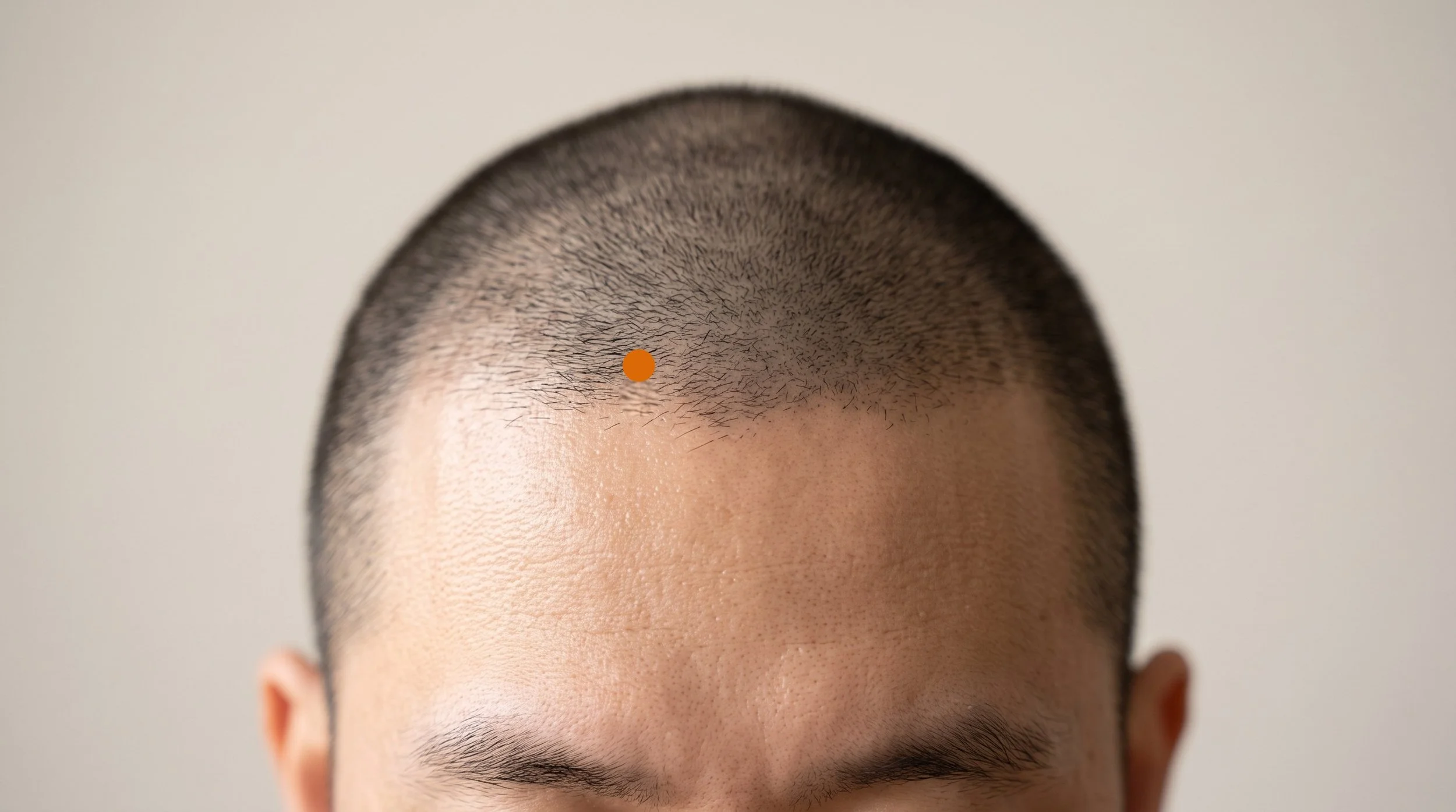
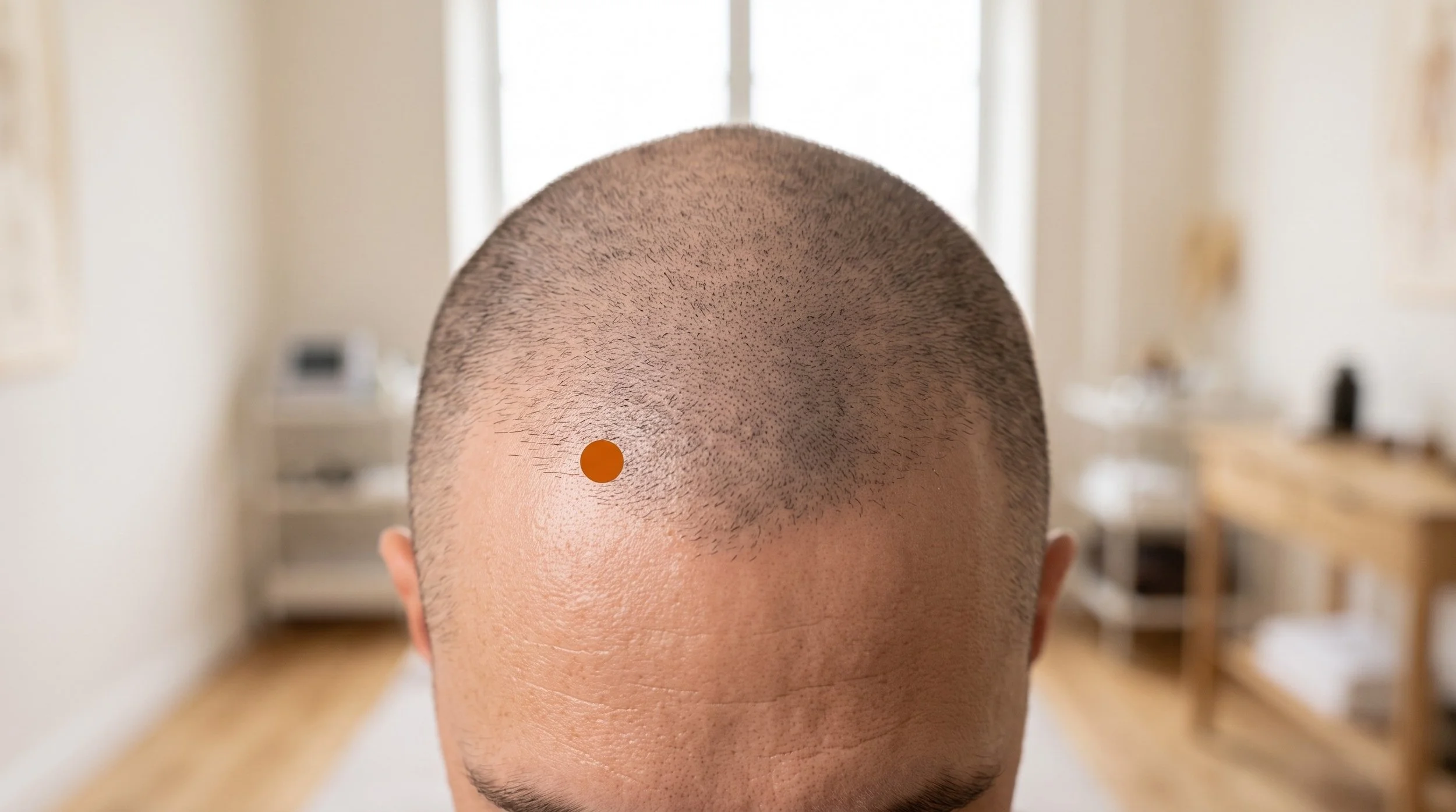
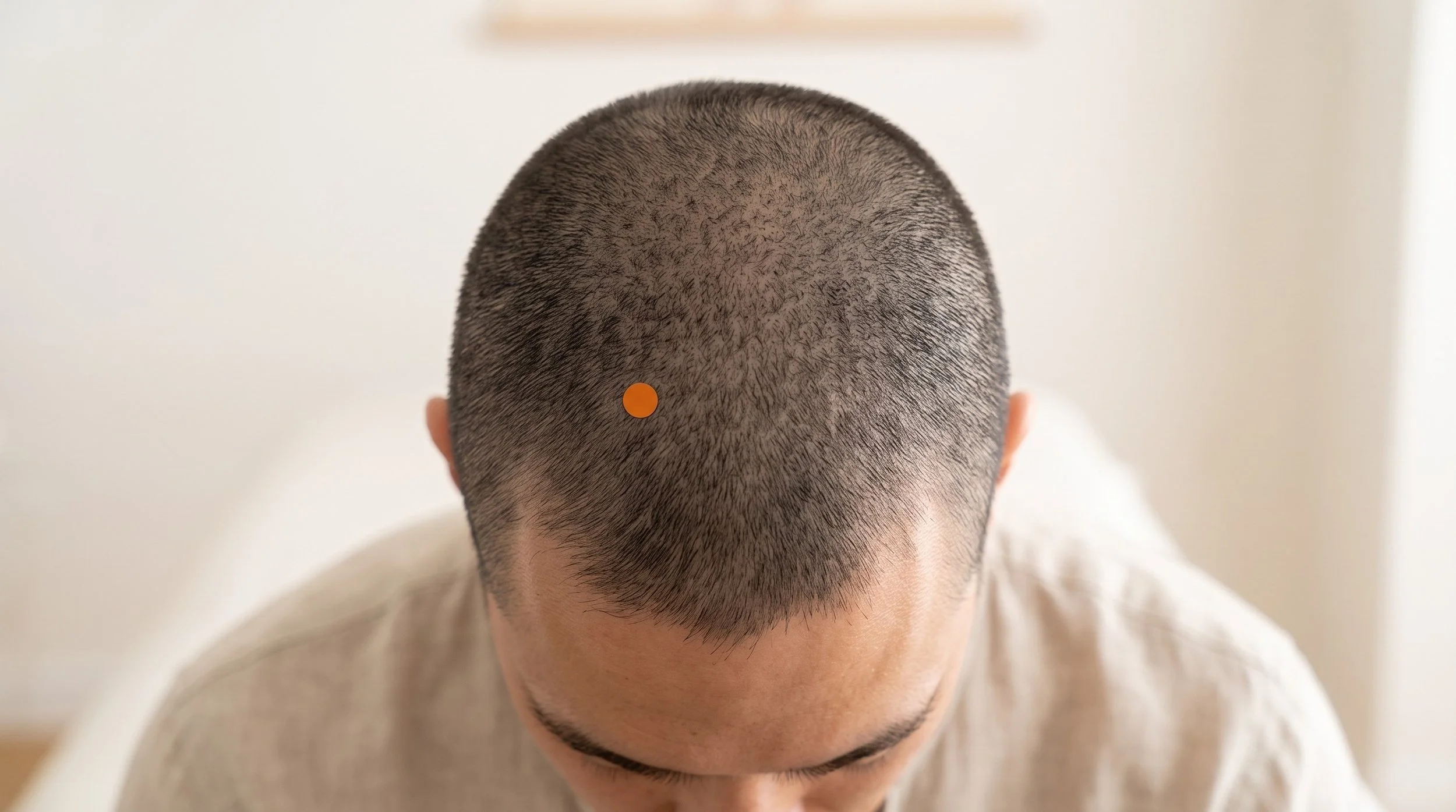
BL42 Acupuncture Point (Pohu)
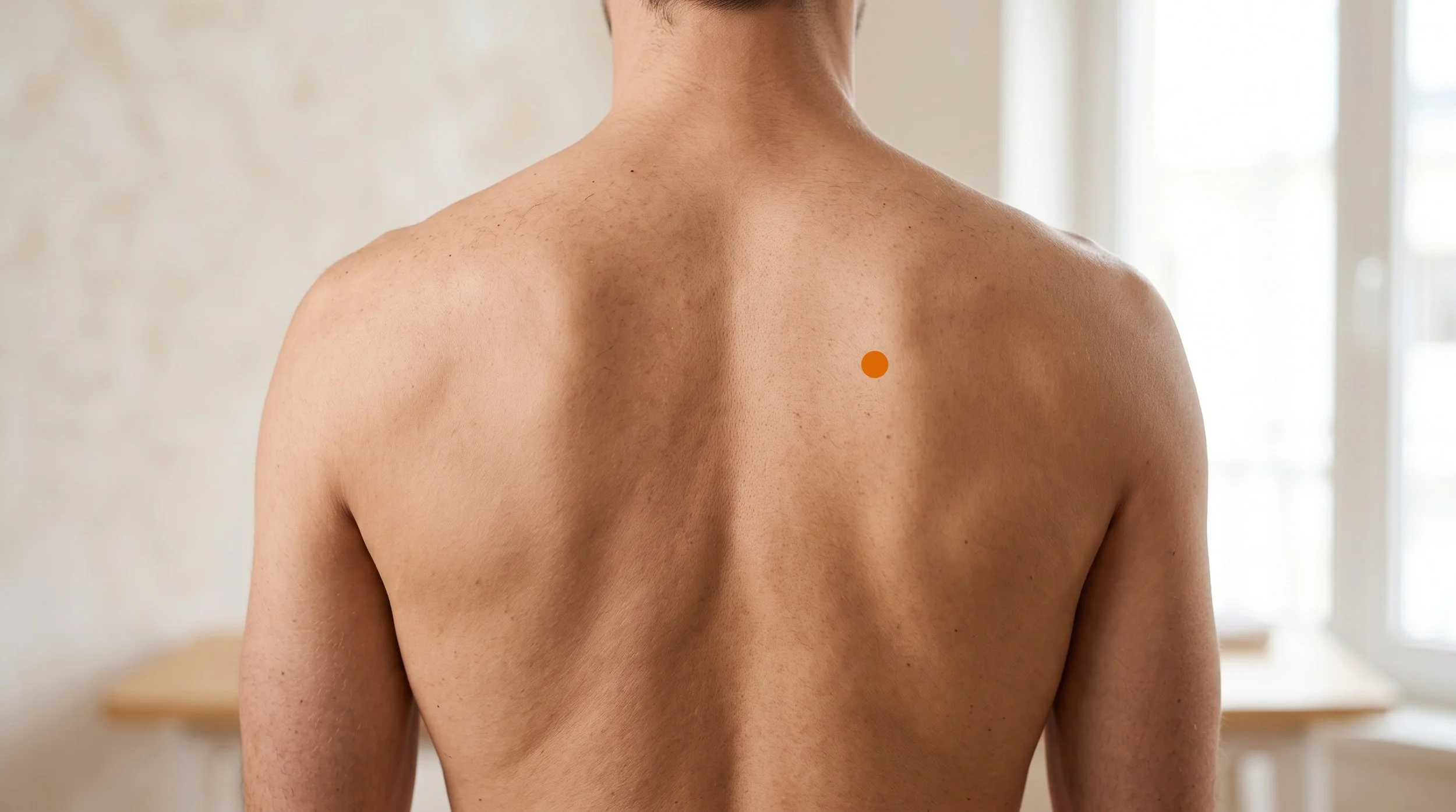
BL42 Acupuncture Point (Pohu)
The Door of the Corporeal Soul at the Medial Scapular Border: Anatomy, Mechanism, and Why This T3 Point Bridges Breathing and Upper Back Pain
BL42 (Pohu, often translated as Door of the Corporeal Soul) is the outer Bladder line point on the upper back, sitting 3 cun lateral to the midline at the level of the lower border of the T3 spinous process.
In plain terms, it lands in the muscular groove just beside the inner edge of the shoulder blade, level with BL13, the back-shu point associated with the Lung. That position is why the bl42 acupuncture point has two distinct clinical identities: it is a practical local point for interscapular tension, stiff neck and shoulder blade pain, and it is a traditional point for cough, weak or effortful breathing, and the low mood that classical texts grouped under Lung patterns.
Bladder 42 is needled shallowly and obliquely because the upper lobe of the lung lies not far beneath the rib interspaces here, which makes technique as important as point selection.
- Location and layers: BL 42 upper back needling passes through skin and superficial fascia into middle trapezius and the rhomboids near the medial scapular border, with serratus posterior superior and the erector spinae deeper still, then the ribs and intercostal muscles overlying the lung (Deadman et al., 2007).
- Traditional attribution translated: classical sources credit Pohu with tonifying and nourishing the Lung, calming cough and wheezing, and freeing the local channel to ease pain, which in modern terms maps onto autonomic modulation of an upper thoracic segment plus direct treatment of loaded scapular stabilizers (Deadman et al., 2007).
- Mechanism: needling here recruits T2 to T4 dorsal ramus afferents in a segment that also receives sympathetic and visceral input related to the airways, and needle stimulation engages spinal and supraspinal pain modulation including descending inhibitory pathways and endogenous opioid release (Zhao, 2008).
- Research picture: reviews of acupuncture for neck disorders report modest short-term pain and disability benefits from low to moderate quality trials (Trinh et al., 2016), individual patient data analyses support durable effects for chronic musculoskeletal pain (Vickers et al., 2018), while respiratory evidence remains mixed, with an older Cochrane review finding evidence insufficient for asthma (McCarney et al., 2004) and a placebo-controlled trial suggesting benefit for exertional breathlessness in COPD (Suzuki et al., 2012).
- Clinical framing: BL42 is rarely used alone. It is typically combined with BL13 on the inner line, distal points such as LU7 or LI4, and dry needling of rhomboid and trapezius trigger points when the presentation is mechanical (Kietrys et al., 2013).
- De qi: patients usually describe a dull, spreading heaviness between the shoulder blade and spine, sometimes with a warm ache traveling along the rib line or toward the shoulder, and often a spontaneous deeper breath as the surrounding muscle releases.
Is Your Upper Back Tension Never Fully Releasing?
The band of muscle between the shoulder blade and spine is one of the most common places desk work, phone use and stress accumulate. At Morningside Acupuncture we use BL42 alongside dry needling of the rhomboids and middle trapezius to reduce local tenderness and restore easier scapular movement. Treatment is paired with simple postural and breathing strategies so the relief holds between visits. Schedule a session and let us assess what is actually driving your upper back pain.
Schedule NowAnatomy of BL42: Why the Medial Scapular Border at T3 Is Such an Important Location
With the shoulder relaxed, the 3 cun line on the upper back corresponds closely to the medial border of the scapula, which makes BL42 easy to find by palpation rather than measurement. The needle enters skin and superficial fascia, then middle trapezius, then rhomboid major or minor depending on individual anatomy, with levator scapulae fibers nearby superiorly and serratus posterior superior lying deeper.
This is the tissue that works overtime in sustained forward postures: the scapular retractors lengthen and fatigue while the upper fibers of trapezius shorten, producing the familiar aching knot beside the spine. Carrying bags, long commutes, laptop work and repetitive overhead loading all concentrate strain into exactly this zone.
Sensory innervation of the skin and deep tissue here comes from the dorsal rami of the upper thoracic spinal nerves, roughly T2 to T4, while the rhomboids are supplied by the dorsal scapular nerve and trapezius by the accessory nerve. Those upper thoracic segments are also the level at which sympathetic outflow to the airways and visceral afferent traffic from the chest arrive, which is the neurophysiological reason a point over the thoracic spine can be associated with both muscular and respiratory complaints.
Needling activates small diameter afferents that engage segmental inhibition in the dorsal horn and recruit descending inhibitory pathways from the brainstem, along with endogenous opioid and monoamine mechanisms (Zhao, 2008). Clinically, that combination is what allows a single well-placed needle to reduce local tenderness while also easing the guarding that spreads into the neck and shoulder.
Deep to the muscle layer lie the ribs, intercostal vessels and nerves, and beneath the interspaces the upper lobe of the lung. Because of this, standard practice at BL42 is oblique insertion of about 0.3 to 0.5 cun directed away from the midline or along the tissue plane, and deep perpendicular or medially angled needling is avoided because of substantial pneumothorax risk (Deadman et al., 2007). Pneumothorax remains the most frequently reported serious adverse event associated with acupuncture, and it is largely a technique-dependent risk (White, 2004).
At Morningside, thoracic points are needled with the patient prone or supported, using shallow angles, appropriate needle length and clear communication about what should and should not be felt.
Related Pain Finder Upper Back Shoulder Arm Related Best Acupuncture Points For Back PainBL42 at a Glance: Classification, Location, and Clinical Use
| Category | Detail |
|---|---|
| Traditional Name | Pohu (Door of the Corporeal Soul), also rendered as Soul's Household |
| Channel Classification | Bladder channel, outer (lateral) line on the upper back |
| Point Categories | Outer Bladder line point at T3, level with BL13 Feishu, the back-shu point of the Lung; one of the five outer line points that sit level with the five zang back-shu points (with BL44, BL47, BL49 and BL52), a grouping the Essential Questions associates with draining heat from the five zang. No five-shu, command or extraordinary vessel designation. |
| Precise Location | On the upper back, 3 cun lateral to the posterior midline at the level of the lower border of the T3 spinous process, level with BL13; with the shoulder relaxed this line corresponds to the medial border of the scapula |
| Tissue Stimulated | Skin and superficial fascia, middle trapezius, rhomboid major and minor, with serratus posterior superior and thoracic erector spinae deeper; ribs, intercostal structures and lung lie beneath |
| Needle Depth / Direction | Oblique insertion 0.3 to 0.5 cun, angled laterally or along the tissue plane; deep perpendicular or medially directed needling is avoided because of pneumothorax risk |
| De Qi Sensation | Dull, heavy, spreading ache between the shoulder blade and spine, sometimes traveling along the rib line or toward the shoulder, often followed by a spontaneous deeper breath |
| Primary Clinical Uses | Interscapular and shoulder blade pain, stiff neck, upper back muscular tension; traditionally used for cough, wheezing, weak or effortful breathing, and low mood or grief framed within Lung patterns |
| Common Point Combinations |
|
In the Deadman text, Pohu is presented as the outer Bladder line point level with BL13, and its name is read as pointing toward disorders of the po, the aspect of consciousness that classical medicine housed in the Lung. The traditional actions listed there are tonifying and nourishing the Lung, soothing wheezing and cough, and activating the channel to relieve pain, and the indications cluster tightly around depletion: wasting and consumptive conditions, taxation cough with heat in the body, breathlessness, aversion to cold, along with pain of the shoulder, scapula, chest and back and a stiff neck.
One unusual entry, a Daoist category of possession disorder, sits outside that pattern, and the commentary notes that BL42 was regarded as strengthening the Lung at a deep level in a way similar to its better known neighbor BL43.
What is striking is how consistent the classical picture is: this is not a point for a passing cold but one reserved for patients whose breathing capacity, and by extension their vitality and emotional resilience, had been worn down over time.
Why BL42 Is Used for Breathlessness and Interscapular Pain That Feels Deeper Than Muscle
Patients often describe upper back discomfort that does not behave like a simple muscle knot: it aches with the breath, worsens with stress, and is accompanied by a sense that the chest cannot fully expand. Part of the explanation is convergence. The upper thoracic spinal segments receive input from skin, from the deep paraspinal and scapular muscles, and from visceral afferents traveling with sympathetic fibers to the chest.
When several sources feed the same dorsal horn neurons, sensation can be poorly localized and irritation from one source can lower the threshold for another, which is why chest and airway problems commonly show up as interscapular tenderness and why treating the interscapular tissue can change how the chest feels.
Needling at this level does more than release tight muscle. Afferent input from an acupuncture needle activates segmental gating in the dorsal horn and recruits descending inhibitory pathways from the periaqueductal gray and rostral ventromedial medulla, with endogenous opioid, serotonergic and noradrenergic involvement (Zhao, 2008). Needling also produces measurable autonomic effects, and a downshift in sympathetic tone is consistent with what patients report at BL42: slower breathing, less bracing through the chest wall, and reduced guarding through the neck and shoulders.
The respiratory evidence deserves honest framing. A placebo-controlled trial in COPD found that acupuncture added to standard medication improved dyspnea on exertion compared with placebo needling (Suzuki et al., 2012), while an earlier Cochrane review concluded that evidence was insufficient to recommend acupuncture for chronic asthma (McCarney et al., 2004). Neither result belongs to BL42 specifically, since protocols use multi-point prescriptions.
The reasonable takeaway is that upper thoracic points may contribute to comfort, chest wall mobility and perceived breathing effort in some patients, as an adjunct to medical management rather than a substitute for it.
What the Research Shows for BL42
No trial has isolated BL42. Like nearly every acupuncture point, it has been studied only as part of multi-point protocols, so the honest question is not whether this single point works but whether the treatment approaches that regularly include it show benefit. For neck and upper back pain the answer is cautiously encouraging, for respiratory conditions it is mixed, and for safety the literature is clear that technique over the thorax matters. The studies below give a sense of the evidence base surrounding the ways BL42 is actually used.
| Study | Type | Focus | Key Finding |
|---|---|---|---|
| Trinh et al., 2016 | Cochrane systematic review | Acupuncture for acute, subacute and chronic neck disorders | Reported that acupuncture was more effective than sham or inactive controls for pain and disability in the short term, though the evidence was low to moderate quality and the review was later withdrawn pending updating. |
| Vickers et al., 2018 | Individual patient data meta-analysis | Chronic musculoskeletal pain including neck and back pain | Found acupuncture superior to sham and to no-acupuncture controls, with effects that persisted over about a year. |
| McCarney et al., 2004 | Cochrane systematic review | Acupuncture for chronic asthma | Concluded that trial quality and consistency were insufficient to make recommendations about acupuncture for asthma. |
| Suzuki et al., 2012 | Randomized placebo-controlled trial | Dyspnea on exertion in COPD alongside standard medication | Reported greater improvement in exertional breathlessness with real needling than with placebo needling, suggesting a possible adjunctive role. |
| Kietrys et al., 2013 | Systematic review and meta-analysis | Dry needling for upper-quarter myofascial pain, including neck and shoulder girdle | Found evidence that dry needling of trigger points may reduce pain in the upper quarter compared with sham or control, with limitations in study quality. |
| White, 2004 | Cumulative review of adverse events | Range and incidence of significant adverse events with acupuncture | Identified pneumothorax as among the most commonly reported serious traumatic events, reinforcing shallow oblique technique over the thorax. |
Breathing Feel Shallow, Guarded, or Effortful?
Chronic cough, allergy season and long stretches at a screen all encourage a chest that stays braced and an upper back that stops moving with the breath. Pohu sits at the thoracic level traditionally linked to the Lung, and we use it to help downshift the nervous system while releasing the muscles that restrict rib and scapular motion. We work within your medical care, never in place of it. Book a visit to see whether this fits your picture.
Schedule NowBL42 in the Context of Trigger Point Work
Acupuncture at Morningside means the use of an acupuncture needle, which covers hundreds of styles including dry needling. That matters at BL42 because the point sits directly over territory the myofascial literature maps in detail: rhomboid major and minor, the middle fibers of trapezius, and the upper attachment region of the scapular stabilizers, with levator scapulae and serratus posterior superior close by.
Trigger points in these muscles refer pain along the vertebral border of the scapula and into the upper back and neck, a pattern patients often describe as burning or gnawing beside the shoulder blade (Simons et al., 1999). When palpation at the BL42 location reproduces a patient's familiar ache, the classical point and the myofascial target are effectively the same spot approached with different reasoning.
In practice we assess scapular mechanics and cervical range of motion first, then decide whether the session emphasizes local needling, distal points, or both. Trigger point needling in this region uses the same shallow, angled approach dictated by thoracic safety, and it is frequently combined with work at the upper trapezius, levator scapulae and infraspinatus when the referral pattern extends into the neck or shoulder.
Reviews of dry needling for upper-quarter myofascial pain report short-term pain reduction compared with sham or control conditions, with the usual caveats about study size and quality (Kietrys et al., 2013). Manual therapy, breathing retraining and postural loading strategies are added so the change outlasts the visit.
BL42 Upper Back and Breathing Treatment at NYC's Highest-Rated Acupuncture Clinic
Morningside Acupuncture is the highest-rated acupuncture and dry needling clinic in New York City with over 500 five-star Google reviews. Our licensed acupuncturists combine classical point selection with modern orthopedic assessment, treating bladder 42 with the shallow oblique technique that safety over the thorax demands. Whether your concern is interscapular pain, a stiff neck or breathing that feels tight, we build a plan around your goals. Schedule your appointment today.
Schedule NowFrequently Asked Questions
What does BL42 feel like when needled?
Most people feel a dull, heavy fullness beside the shoulder blade that spreads a few inches in each direction, sometimes with a warm ache tracking along the rib line or toward the shoulder. If the needle contacts a taut band in the rhomboids or trapezius, there may be a brief twitch and a stronger cramping sensation that fades within seconds. A common and welcome response is a spontaneous deeper breath as the chest wall lets go. Sharp, electric or breathless sensations are not expected, and you should tell your acupuncturist immediately if you feel them.
Why treat the upper back for cough or breathing complaints instead of the chest?
The upper thoracic segments receive sensory input from skin, paraspinal and scapular muscles, and visceral afferents traveling with sympathetic fibers to the chest, so stimulation at this level reaches circuitry shared with the airways. Needling here also engages spinal and descending pain modulation, which reduces the muscular guarding that makes breathing feel effortful (Zhao, 2008). Traditional practice arrived at the same region from a different direction by placing the Lung back-shu point BL13 and its outer counterpart Pohu at T3. Practically, the back is also safer and more comfortable to needle than the anterior chest.
Can I press BL42 myself between sessions?
Yes, acupressure is safe here as long as you use pressure rather than anything sharp. Find the inner edge of your shoulder blade, then feel for the tender band of muscle between that edge and the spine at about the level of the top of the shoulder blade. Because it is hard to reach, most people use a tennis or lacrosse ball against a wall, leaning in until you feel a firm ache at about 5 or 6 out of 10, never sharp pain. Hold steady pressure for 30 to 90 seconds per spot while breathing slowly, repeat two or three times, and finish with gentle shoulder blade squeezes and a few slow diaphragmatic breaths. Once or twice daily is plenty, and you should skip it over bruised, inflamed or recently injured tissue.
Is BL42 safe to needle?
It is safe in trained hands, but it is a point that demands respect for anatomy. The lung lies deep to the rib interspaces here, so classical and modern texts specify oblique insertion of roughly 0.3 to 0.5 cun and warn against deep perpendicular or medially angled needling because of substantial pneumothorax risk (Deadman et al., 2007). Pneumothorax is rare overall but is the most frequently reported serious traumatic complication in the acupuncture safety literature, and it is closely tied to technique (White, 2004). Choose a licensed practitioner, mention any lung disease, thin build or prior chest surgery, and seek urgent medical care for sudden chest pain or breathlessness after any thoracic needling.
Where exactly is BL42 located?
BL42 sits on the upper back, 3 cun lateral to the posterior midline, level with the lower border of the T3 spinous process and level with BL13 on the inner Bladder line. To find T3, locate the prominent C7 spinous process at the base of the neck and count down three vertebrae. With the arms relaxed at the sides, the 3 cun line runs along the medial border of the scapula, so the point falls in the soft muscular hollow just beside that bony edge. On most people it is tender to firm palpation, especially after long periods of desk work.
References
- Deadman, P., Al-Khafaji, M., & Baker, K. (2009). A manual of acupuncture. Journal of Chinese Medicine Publications.
- Simons, D. G., Travell, J. G., & Simons, L. S. (1999). Travell & Simons' myofascial pain and dysfunction: The trigger point manual, Vol. 1: Upper half of body (2nd ed.). Williams & Wilkins.
- Zhao, Z. Q. (2008). Neural mechanism underlying acupuncture analgesia. Progress in Neurobiology, 85(4), 355-375. https://doi.org/10.1016/j.pneurobio.2008.05.004
- Vickers, A. J., Vertosick, E. A., Lewith, G., MacPherson, H., Foster, N. E., Sherman, K. J., Irnich, D., Witt, C. M., & Linde, K. (2018). Acupuncture for chronic pain: Update of an individual patient data meta-analysis. Journal of Pain, 19(5), 455-474. https://doi.org/10.1016/j.jpain.2017.11.005
- Trinh, K., Graham, N., Irnich, D., Cameron, I. D., & Forget, M. (2016). Acupuncture for neck disorders. Cochrane Database of Systematic Reviews, 2016(5), CD004870. https://doi.org/10.1002/14651858.CD004870.pub4 [VERIFY BEFORE PUBLISHING]
- McCarney, R. W., Brinkhaus, B., Lasserson, T. J., & Linde, K. (2004). Acupuncture for chronic asthma. Cochrane Database of Systematic Reviews, 2004(1), CD000008. https://doi.org/10.1002/14651858.CD000008.pub2 [VERIFY BEFORE PUBLISHING]
- Suzuki, M., Muro, S., Ando, Y., Omori, T., Shiota, T., Endo, K., Sato, S., Aihara, K., Matsumoto, M., Suzuki, S., Itotani, R., Ishitoko, M., Hara, Y., Takemura, M., Ueda, T., Kagioka, H., Hirabayashi, M., Fukui, M., & Mishima, M. (2012). A randomized, placebo-controlled trial of acupuncture in patients with chronic obstructive pulmonary disease (COPD): The COPD-acupuncture trial (CAT). Archives of Internal Medicine, 172(11), 878-886. https://doi.org/10.1001/archinternmed.2012.1233
- Kietrys, D. M., Palombaro, K. M., Azzaretto, E., Hubler, R., Schaller, B., Schlussel, J. M., & Tucker, M. (2013). Effectiveness of dry needling for upper-quarter myofascial pain: A systematic review and meta-analysis. Journal of Orthopaedic & Sports Physical Therapy, 43(9), 620-634. https://doi.org/10.2519/jospt.2013.4668
- White, A. (2004). A cumulative review of the range and incidence of significant adverse events associated with acupuncture. Acupuncture in Medicine, 22(3), 122-133. https://doi.org/10.1136/aim.22.3.122
Disclaimer: This web site is intended for educational and informational purposes only. Reading this website does not constitute providing medical advice or any professional services. This information should not be used for diagnosing or treating any health issue or disease. Those seeking medical advice should consult with a licensed physician. Seek the advice of a medical doctor or other qualified health professional for any medical condition. If you think you have a medical emergency, call 911 or go to the emergency room. No acupuncturist-patient relationship is created by reading this website or using the information. Morningside Acupuncture PLLC and its employees and contributors do not make any express or implied representations with respect to the information on this site or its use. For any legal interpretation of scope of practice in your state, consult a licensed attorney or regulatory authority.
Read more from our blog