BL4 Acupuncture Point (Quchai)
BL4 Acupuncture Point (Quchai)
The Crooked Curve at the Anterior Hairline: Anatomy, Mechanism, and Why This Forehead Point Supports Frontal Headache and Nasal Symptom Treatment
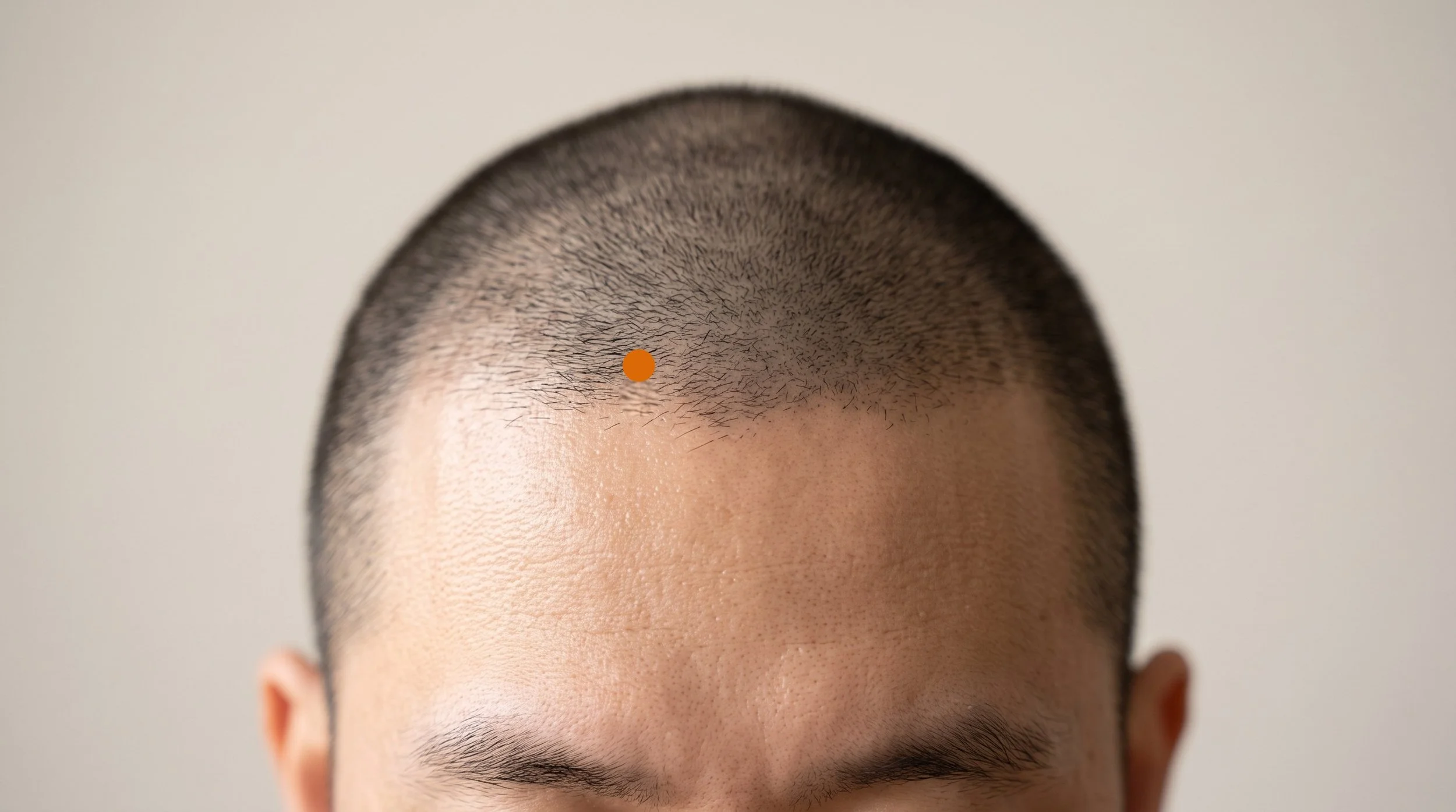
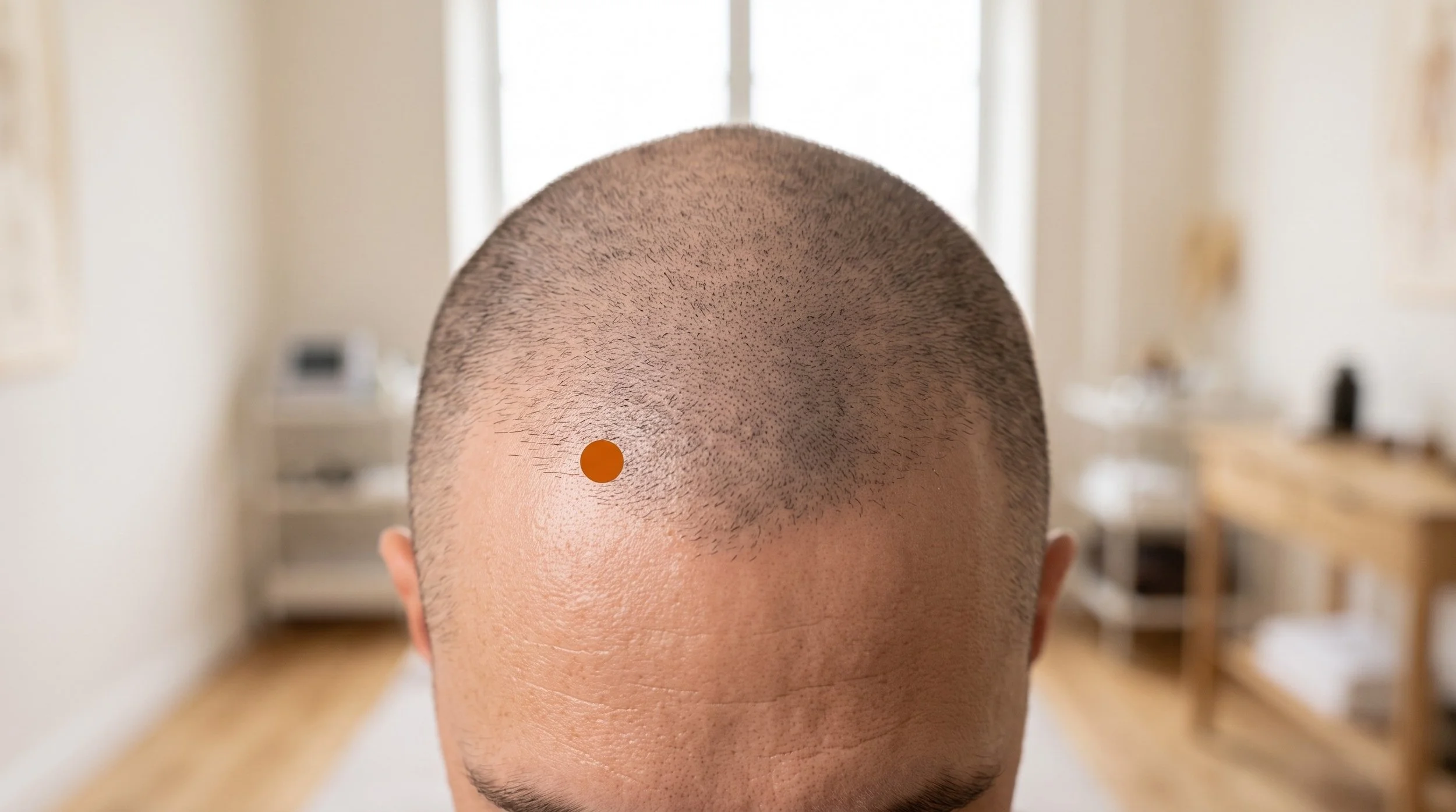
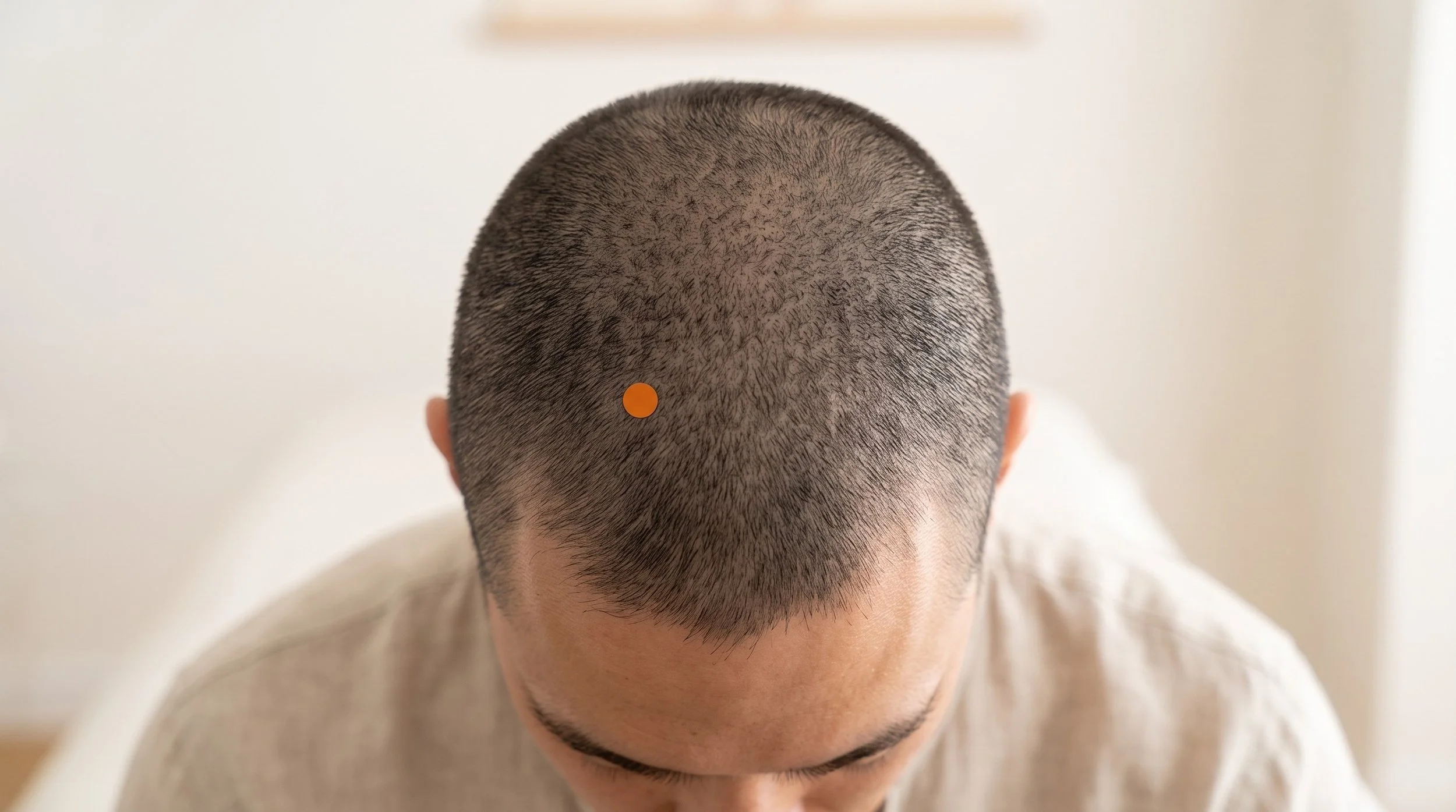
BL4 (Quchai), usually translated as Crooked Curve or Bending Turn, is the fourth point of the Bladder channel and the second of the three Bladder points that sit just inside the front hairline. In plain terms, the bl 4 location is on the forehead, half a cun above the hairline and about an inch and a half out from the midline, roughly a third of the way along the arc from GV24 to the corner of the hairline at ST8.
It's a shallow, threaded point rather than a deep one, and clinically it matters because it sits directly over the supratrochlear and supraorbital nerve territory, the same sensory field that carries frontal headache, brow tension, and referred sinus pressure. That combination of a superficial needle and a dense trigeminal sensory field is why the bl4 acupuncture point keeps showing up in headache and nasal congestion protocols, and why the classical literature attributed it with both head pain and nose and eye functions.
- Bladder 4 sits in a thin layered zone: skin, a fatty subcutaneous layer rich in small vessels and free nerve endings, the galea aponeurotica, and the loose areolar plane beneath it, with the frontalis belly just anterior. There's no thick muscle to penetrate, so the needle is laid flat under the scalp rather than pushed down (Deadman et al., 2007).
- Traditional sources describe Quchai as expelling wind, clearing the head, easing pain, and benefiting the eyes and nose (Deadman et al., 2007). Translated into modern language, that reads as a superficial cranial point used for frontal and vertex head pain, eye strain, and nasal blockage, all of which share trigeminal first-division input.
- Mechanistically, needling here stimulates V1 branches (supratrochlear and supraorbital) that converge in the trigeminocervical complex, the same relay that receives upper cervical afferents, which helps explain why a forehead point can influence pain felt at the vertex or behind the eyes (Zhao, 2008).
- Local needling also triggers an axon-reflex release of CGRP and related mediators with measurable increases in local blood flow, a plausible contributor to the warmth and flushing patients sometimes report across the forehead after treatment (Shinbara et al., 2013).
- Fluorescent histochemical mapping of forehead and face point sites has shown sensory, sympathetic, and parasympathetic fibers running together in the local tissue around blood vessels and skin appendages, which supports the idea that superficial facial and frontal points engage autonomic as well as sensory pathways (Wang et al., 2022).
- De qi at BL4 is mild by design: a dull spreading pressure or tightness under the scalp, sometimes a light ache toward the brow or a sense of warmth, rather than the strong grabbing sensation of a deep muscular point.
Frontal Headaches That Sit Behind Your Brow and Won't Let Go?
Pain across the forehead is often a mix of trigeminal sensitization, referred tension from the neck and jaw, and long hours at a screen. At Morningside Acupuncture, BL4 is threaded along the hairline as part of a local plus distal plan, usually alongside neck and shoulder work that addresses the muscles feeding the pattern. We track headache frequency and intensity across sessions rather than guessing at progress. Schedule a visit and let's map where your headaches actually start.
Schedule NowAnatomy of BL4: Why the Anterior Hairline Is Such an Important Location
The tissue at Quchai is unusually thin and unusually well supplied. From the surface down there's skin, a dense subcutaneous fat layer laced with small arteries, veins, and nerve endings, then the galea aponeurotica, the tough fibrous sheet that links the frontalis in front to the occipitalis behind. Below the galea is a loose areolar plane that lets the scalp glide, and below that the pericranium and frontal bone.
What loads this area isn't heavy mechanical work: it's sustained frontalis contraction from squinting, screen glare, and low-grade bracing, along with tension transmitted forward through the galea from a chronically tight occipital region. Patients often describe it as a band or a helmet rather than a single sore spot.
The nerve geography is the whole story here. BL4 lies in the field of the supratrochlear and supraorbital nerves, both terminal branches of the ophthalmic division of the trigeminal nerve, with the frontalis supplied motor-wise by the temporal branch of the facial nerve. Those V1 afferents synapse in the trigeminocervical complex, where input from the upper cervical roots arrives at the same second-order neurons, and that convergence is a standard explanation for why forehead pain, vertex pain, and neck-driven headache blur together clinically (Zhao, 2008).
Needling into this field is thought to recruit A-delta and C fiber afferents that feed segmental gating and descending inhibitory pathways involving periaqueductal gray and rostral ventromedial medulla circuitry, along with opioid and monoamine mechanisms (Zhao, 2008). Anatomical mapping of comparable forehead and face point sites has also demonstrated sensory, sympathetic, and parasympathetic fibers distributed together around local vessels and skin structures, which fits the mixed sensory and vasomotor responses clinicians observe (Wang et al., 2022).
The vascular structures here are small but real: branches of the supratrochlear and supraorbital arteries medially, and the frontal branch of the superficial temporal artery laterally. They're superficial and easy to bruise, which is why scalp points bleed a little more often than points elsewhere. Standard technique is transverse (subcutaneous) insertion of about 0.5 to 1 cun along the scalp, angled toward the intended direction of effect, with some texts using a shallower 0.3 to 0.5 cun threading (Deadman et al., 2007).
There's no deep viscus or lung risk at this location, the bone lies immediately underneath the areolar plane, and clean technique plus a moment of pressure on withdrawal handles most of what can go wrong.
Related Bladder Channel Related Best Acupuncture Points For HeadachesBL4 at a Glance: Classification, Location, and Clinical Use
| Category | Detail |
|---|---|
| Traditional Name | Quchai (Crooked Curve, also translated as Bending Turn) |
| Channel Classification | Bladder channel of Foot Taiyang, fourth point of the channel, one of the anterior hairline points of the head |
| Point Categories | No five-shu, luo-connecting, xi-cleft, hui-meeting, or extraordinary vessel designation is recorded for BL4 in the classical sources consulted here. It's classified simply as a Bladder channel point of the head at the anterior hairline, sitting between BL3 medially and BL5 posteriorly (Deadman et al., 2007). |
| Precise Location | On the head, 0.5 cun inside the anterior hairline and 1.5 cun lateral to GV24 (Shenting), which places it one third of the distance along the hairline from GV24 to ST8 (Touwei). If the hairline is receded or indistinct, measure from the glabella using the standard head proportions rather than from visible hair. |
| Tissue Stimulated | Skin, subcutaneous fat, and the galea aponeurotica overlying the frontal bone, with the frontalis belly just anterior. Related myofascial contributors to this pain territory are often addressed separately, including the Suboccipital Trigger Points. |
| Needle Depth / Direction | Transverse (subcutaneous) insertion 0.5 to 1 cun along the plane of the scalp, threaded medially toward BL3 or posteriorly along the hairline depending on the target. Some traditions use a shallower 0.3 to 0.5 cun threading. Never perpendicular to depth. |
| De Qi Sensation | Mild and diffuse: a dull pressure or tight, spreading sensation under the scalp, occasionally a light ache toward the eyebrow or a passing warmth across the forehead. Sharpness usually means the needle is too superficial in the dermis and should be adjusted. |
| Primary Clinical Uses | Frontal and vertex headache, brow and forehead tension, eye strain and blurred vision in classical listings, nasal congestion and rhinitis, and nosebleed in classical listings. |
| Common Point Combinations |
|
Deadman's Manual of Acupuncture attributes BL4 with expelling wind, clearing the head and easing pain, and benefiting the eyes and nose, and lists it traditionally for headache including vertex pain and vertex swelling, blurred or dimming vision, eye pain, nasal congestion, nasal sores, nosebleed, and rhinitis. Alongside that expected head-and-face cluster sits a second, stranger group of indications: agitation and fullness in the chest, laboured breathing, an absence of sweating, and heat with restlessness through the body.
The recorded combinations follow the same split, with one classical pairing joining BL4 to SI6 and LI4 for failing vision, another joining it to GV23 for foul-smelling nasal discharge, and a third joining it to BL15, the Heart back-shu point, for agitation without sweating. All of this is traditional attribution rather than tested indication, but the pattern is striking: a point that a modern clinician would file under frontal headache was also, in classical hands, part of a formula aimed squarely at the chest.
Why BL4 Is Used for Blocked Noses and Sinus Pressure, Not Just Headaches
The nasal indications look odd until you follow the nerves. The forehead skin at BL4 and the mucosa lining the nasal cavity and paranasal sinuses are both supplied by branches of the trigeminal nerve, and both funnel into the trigeminocervical complex in the upper spinal cord and brainstem. When sinuses are inflamed or congested, that shared relay is part of why the pain is felt as a dull frontal band rather than as something located precisely inside the head. Stimulating the surface of a convergent territory is a well-described way to modulate what happens at that relay (Zhao, 2008).
There's a vascular and autonomic layer too. Needling superficial tissue triggers an axon reflex with local release of CGRP and other vasoactive mediators, producing measurable increases in regional blood flow (Shinbara et al., 2013), and anatomical work on forehead and face point sites has shown sensory fibers running alongside sympathetic and parasympathetic fibers at the same locations (Wang et al., 2022).
Since nasal patency is largely a question of mucosal vascular tone under autonomic control, that's a coherent, if still incomplete, explanation for why patients sometimes report their nose opening during treatment.
None of this means BL4 by itself treats sinus disease. In practice it's one element of a protocol, most often threaded along the hairline while LI20, GV23, and Yintang address the nose directly and distal points support the whole picture. Systematic review evidence for acupuncture in allergic rhinitis suggests improvements in nasal symptom scores and quality of life with a favourable safety record, though trial quality is mixed and the protocols vary widely (Feng et al., 2015). Persistent nasal obstruction always deserves a medical workup first.
What the Research Shows for BL4
It's worth being direct about what the research can and can't say. No trial has isolated BL4 and tested it against a control, and it's unlikely one ever will. What exists is evidence for multi-point acupuncture protocols in conditions where this point commonly appears, mainly headache and rhinitis, plus mechanistic work on how needling superficial cranial tissue affects nerves and blood flow. Read the table below as context for why BL4 earns a place in a treatment plan, not as proof that any single needle does the work.
| Study | Type | Focus | Key Finding |
|---|---|---|---|
| Linde et al., 2016a | Cochrane systematic review | Acupuncture for the prevention of tension-type headache | The review found that acupuncture appears effective for frequent episodic or chronic tension-type headache, while noting a continued need for comparisons against other treatment options. |
| Linde et al., 2016b | Cochrane systematic review | Acupuncture for the prevention of episodic migraine | Pooled results suggested acupuncture was at least as effective as prophylactic drug treatment for reducing migraine frequency, with fewer dropouts due to adverse effects, on moderate-quality evidence. |
| Vickers et al., 2018 | Individual patient data meta-analysis | Acupuncture across chronic pain conditions including headache | Effects were superior to both sham and no-acupuncture controls and persisted over time, though differences from sham were modest. |
| Feng et al., 2015 | Systematic review and meta-analysis | Acupuncture for allergic rhinitis | The analysis pointed toward improved quality of life in patients with allergic rhinitis, with no serious treatment-related events reported across included trials. |
| Shinbara et al., 2013 | Experimental physiological study | Local blood flow changes following manual acupuncture | Increases in local blood flow after needling appeared to depend on CGRP released through an axon reflex, supporting a peripheral vascular component to point stimulation. |
| Wang et al., 2022 | Histochemical anatomical study | Innervation at forehead and face point locations | Sensory, sympathetic, and parasympathetic fibers were all demonstrated in the local tissues at these sites, each distributed to its own targets, suggesting superficial cranial points engage mixed neural territory. |
| Zhao, 2008 | Narrative review of mechanisms | Neural basis of acupuncture analgesia | Analgesic effects are attributed to afferent stimulation acting through segmental gating and descending inhibitory pathways involving opioid and monoamine systems. |
Stuffy Nose, Sinus Pressure, and That Heavy Forehead Feeling?
Classical sources listed Quchai for nasal blockage and congestion, and modern practice uses the hairline points with nose and face points to influence the same trigeminal and autonomic territory. Our acupuncturists combine BL4 with LI20, GV23, and gentle facial techniques, and we adjust the plan if your congestion is allergic, structural, or post-viral. Nothing here replaces medical evaluation for persistent sinus symptoms, and we'll tell you when a referral makes more sense. Book a session and let's take a careful look.
Schedule NowBL4 in the Context of Trigger Point Work
BL4 isn't a trigger point. There's no substantial muscle belly at the hairline, only the thin frontalis anteriorly and the galea underneath, so needling here is a superficial neuromodulatory technique rather than an intramuscular one. What makes it useful in a trigger point session is that the frontal territory it covers is a common referral destination.
Trigger points in the sternocleidomastoid, upper trapezius, suboccipitals, temporalis, and semispinalis capitis are described as referring pain into the forehead, temple, and behind the eye (Simons et al., 1999), which means a patient pointing at their brow may be describing a problem that lives in the neck.
In practice at Morningside, we palpate first. If pressing a taut band in the suboccipitals or upper trapezius reproduces the familiar headache, dry needling those muscles is the priority, and BL4 is added as a local point threaded along the hairline to address the field where the pain is actually experienced. Because acupuncture and dry needling both involve inserting an acupuncture needle, the two approaches sit comfortably in the same treatment: one addresses the myofascial source, the other the sensitized surface territory.
Patients often notice the forehead pressure easing before the neck tightness fully resolves, which is a useful sign that the convergent pathway is responding.
BL4 Headache Treatment at NYC's Highest-Rated Acupuncture Clinic
Morningside Acupuncture is the highest-rated acupuncture and dry needling clinic in New York City with over 500 five-star Google reviews, and headache care is one of the things we're asked about most. We use points like BL4 inside a broader plan that may include dry needling of the suboccipitals, temporalis, and upper trapezius, plus practical guidance on desk setup and sleep. Every treatment is built around your presentation, not a template. Schedule your appointment and start with a full assessment.
Schedule NowFrequently Asked Questions
What does BL4 feel like when needled?
Milder than most people expect. Because the needle is laid flat under the scalp rather than pushed downward, the usual sensation is a dull spreading pressure or a tight, slightly heavy feeling across the forehead, sometimes with a light ache toward the eyebrow or a passing warmth. The initial tap through the skin can register briefly, since scalp skin is well innervated. A sharp or stinging sensation usually means the needle is sitting too shallow in the dermis, and a small adjustment resolves it.
Why needle the forehead for a headache that feels like it's behind my eyes or at the top of my head?
Because the sensory nerves at BL4 (branches of the ophthalmic division of the trigeminal nerve) and the nerves from the upper neck converge on the same relay neurons in the trigeminocervical complex. That shared wiring is a large part of why headache pain rarely stays neatly in one spot and why stimulating one part of the territory may influence sensation elsewhere in it (Zhao, 2008). Practically, this is also why a good headache treatment rarely stops at the head: local points like BL4 are usually paired with neck, shoulder, and distal points.
Can I press BL4 myself between sessions?
Yes, and it's a reasonable self-care option. Find the spot by placing a fingertip about half an inch above your hairline and roughly an inch and a half out from the midline, on a line up from the inner end of your eyebrow but slightly lateral to it. Use a fingertip or thumb with steady, moderate pressure, small circles or simple sustained pressure, for 30 to 60 seconds per side, repeated two or three times. Many people find it helps to work both sides at once with the thumbs while resting the fingers on the scalp. Two or three rounds a day is plenty. Stop if it increases your headache, and don't press over broken skin, a recent injury, or any surgical site.
Is BL4 safe to needle?
In trained hands, yes. There's no lung, major vessel, or organ at risk here, and the frontal bone lies just beneath the loose tissue plane, so needling is kept transverse and superficial. The main practical issue is bruising: the scalp is vascular, and small vessels including branches of the supratrochlear, supraorbital, and superficial temporal arteries run through this area, so a brief press with clean gauze on withdrawal is standard. Tell your acupuncturist if you take blood thinners or have a bleeding disorder, since technique and needle choice may be adjusted. It's also avoided over open lesions, active skin infection, or recent scalp surgery.
Where exactly is BL4 located?
On the head, 0.5 cun inside the anterior hairline and 1.5 cun lateral to GV24, which itself sits on the midline 0.5 cun inside the hairline. Another way to find it: the distance from the midline to the corner of the hairline at ST8 is measured as 4.5 cun, so dividing that span into thirds puts the quchai point at the first division, one third of the way out. BL3 lies medial to it and BL5 lies behind it on the same line. If your hairline has receded, don't measure from visible hair; use the standard proportional measurements from the glabella instead, which is exactly what an experienced practitioner does.
References
- Deadman, P., Al-Khafaji, M., & Baker, K. (2009). A manual of acupuncture. Journal of Chinese Medicine Publications.
- Simons, D. G., Travell, J. G., & Simons, L. S. (1999). Travell & Simons' myofascial pain and dysfunction: The trigger point manual, Vol. 1: Upper half of body (2nd ed.). Williams & Wilkins.
- Linde, K., Allais, G., Brinkhaus, B., Fei, Y., Mehring, M., Shin, B.-C., Vickers, A., & White, A. R. (2016a). Acupuncture for the prevention of tension-type headache. Cochrane Database of Systematic Reviews, 2016(4), CD007587. https://doi.org/10.1002/14651858.CD007587.pub2
- Linde, K., Allais, G., Brinkhaus, B., Fei, Y., Mehring, M., Vertosick, E. A., Vickers, A., & White, A. R. (2016b). Acupuncture for the prevention of episodic migraine. Cochrane Database of Systematic Reviews, 2016(6), CD001218. https://doi.org/10.1002/14651858.CD001218.pub3
- Vickers, A. J., Vertosick, E. A., Lewith, G., MacPherson, H., Foster, N. E., Sherman, K. J., Irnich, D., Witt, C. M., & Linde, K. (2018). Acupuncture for chronic pain: Update of an individual patient data meta-analysis. Journal of Pain, 19(5), 455-474. https://doi.org/10.1016/j.jpain.2017.11.005
- Feng, S., Han, M., Fan, Y., Yang, G., Liao, Z., Liao, W., & Li, H. (2015). Acupuncture for the treatment of allergic rhinitis: A systematic review and meta-analysis. American Journal of Rhinology & Allergy, 29(1), 57-62. https://doi.org/10.2500/ajra.2015.29.4116
- Shinbara, H., Okubo, M., Kimura, K., Mizunuma, K., & Sumiya, E. (2013). Participation of calcitonin gene related peptide released via axon reflex in the local increase in muscle blood flow following manual acupuncture. Acupuncture in Medicine, 31(1), 81-87. https://doi.org/10.1136/acupmed-2012-010253
- Wang, J., Cui, J.-J., Xu, D.-S., Su, Y.-X., Liao, J.-Y., Wu, S., Zou, L., Guo, Y.-T., Shen, Y., & Bai, W.-Z. (2022). Sensory and autonomic innervation of the local tissues at traditional acupuncture point locations GB14, ST2 and ST6. Acupuncture in Medicine, 40(5). https://doi.org/10.1177/09645284221085579
- Zhao, Z. Q. (2008). Neural mechanism underlying acupuncture analgesia. Progress in Neurobiology, 85(4), 355-375. https://doi.org/10.1016/j.pneurobio.2008.05.004
Disclaimer: This web site is intended for educational and informational purposes only. Reading this website does not constitute providing medical advice or any professional services. This information should not be used for diagnosing or treating any health issue or disease. Those seeking medical advice should consult with a licensed physician. Seek the advice of a medical doctor or other qualified health professional for any medical condition. If you think you have a medical emergency, call 911 or go to the emergency room. No acupuncturist-patient relationship is created by reading this website or using the information. Morningside Acupuncture PLLC and its employees and contributors do not make any express or implied representations with respect to the information on this site or its use. For any legal interpretation of scope of practice in your state, consult a licensed attorney or regulatory authority.
Read more from our blog