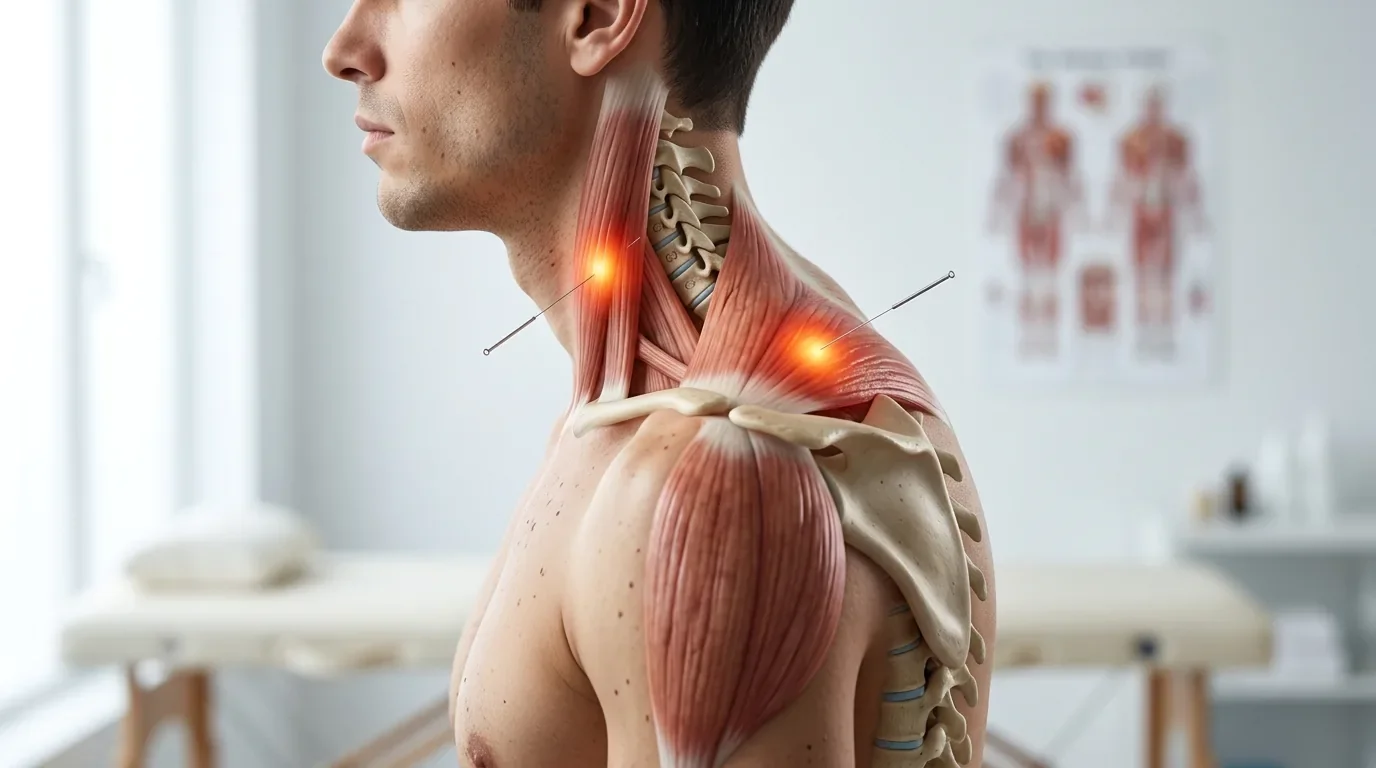
Best Acupuncture Points for Back Pain
The Key Acu Points Used For Back Pain, Their Anatomical Locations, and Why Distant Points on the Leg Often Work as Well as Local Points on the Back
Back pain is the condition acupuncture treats most often, and the points selected for it reflect one of the more interesting features of the practice: some of the most effective locations are on the back of the leg, far from where the pain is. This post explains the anatomy and physiology behind these selections in plain terms.
- A large individual patient data meta-analysis found acupuncture produced significantly greater pain reduction and functional improvement for chronic back pain than either sham acupuncture or usual care, with effects that persisted at 12-month follow-up (Vickers et al., 2018).
- Acupuncture points selected for back pain fall into two categories: local points placed directly over the painful spinal segments, which produce segmental spinal cord modulation, and distal points on the leg and foot, which activate supraspinal descending pain inhibition pathways (Zhao, 2008).
- BL40 (Weizhong), in the popliteal fossa at the back of the knee, is traditionally called the "command point" for the back and is consistently among the most-selected points in clinical trials for low back pain, despite being far from the spine.
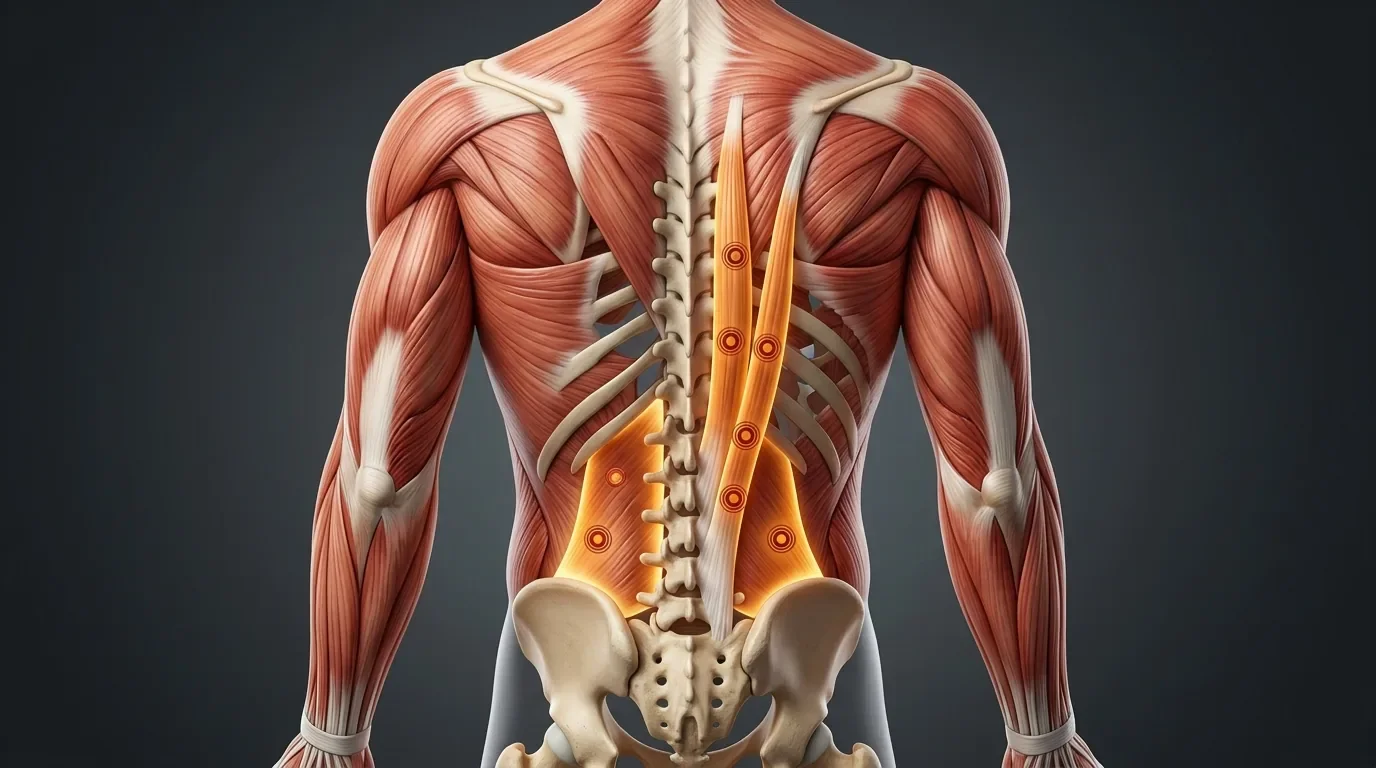
- The erector spinae points along the inner bladder line (BL23, BL25) are local points that stimulate the iliocostalis lumborum and longissimus thoracis at their respective spinal levels, producing segmental modulation that reduces the sensitivity of dorsal horn neurons receiving input from those segments.
- GB30, over the piriformis and adjacent to the sciatic nerve in the lateral hip, is the most commonly selected point when back pain radiates into the buttock or down the leg, and its effects may derive partly from direct influence on sciatic nerve irritation at this location.
- Acupuncture and dry needling share many needle placements for back pain, but differ in their selection rationale: dry needling targets active myofascial trigger points within taut muscle bands, while acupuncture point selection integrates segmental, distal, and clinical pattern-based considerations.
Has your back pain been treated locally without lasting results?
One of the first things patients notice about acupuncture for back pain is that the needles often go places other than the back. Understanding why distal points on the leg can reduce lumbar pain is the key to understanding how acupuncture works. Our practitioners at Morningside combine local and distal point selection to address both the pain site and the modulation pathways that influence it.
Schedule NowLocal vs. Distal: How Acupuncture Targets Back Pain from Two Directions
The neurophysiology of acupuncture analgesia involves at least two distinct mechanisms that operate at different levels of the nervous system (Zhao, 2008). Understanding these mechanisms makes it much easier to understand why the point selections for back pain look the way they do.
Local or near-local points placed at or near the painful spinal segments produce what is called segmental modulation. Needle stimulation generates afferent signals through Aδ and C fibers that enter the dorsal horn of the spinal cord at the corresponding level. These signals activate interneurons that inhibit the transmission of pain signals arriving from the same segmental territory, in a process similar to the gate control mechanism first described by Melzack and Wall. Points on the back at L2, L4, or L5 level thus reduce the excitability of dorsal horn neurons receiving input from those spinal levels.
Distal points, by contrast, activate supraspinal descending inhibition. Needling a point on the leg or foot generates sensory input that travels to the brainstem and activates the periaqueductal gray (PAG) and raphe nuclei, which send descending serotonergic and noradrenergic projections down the dorsal columns. These projections inhibit pain transmission throughout the spinal cord, not just at the segmental level. The mechanism is similar to conditioned pain modulation, where a noxious stimulus applied at one body site reduces pain perception at a distant site (Yarnitsky, 2010). BL40 in the popliteal fossa works through this supraspinal pathway, which is why its effects on lumbar pain can be as dramatic as points placed directly on the back.
Related Acupuncture NYC: How It Works and What to ExpectKey Acupuncture Points for Back Pain
| Point | Anatomical Location | Tissue Stimulated | Primary Mechanism |
|---|---|---|---|
| BL40 (Weizhong) | Midpoint of the popliteal fossa, between the tendons of biceps femoris and semitendinosus | Posterior knee fascia, near the tibial nerve and popliteal vessels | Supraspinal descending inhibition; traditionally the "command point" for back pain; strong distal analgesic effect |
| BL23 (Shenshu) | 1.5 cun lateral to the inferior border of the L2 spinous process, over the erector spinae | Iliocostalis lumborum and longissimus thoracis at L2 level | Segmental modulation at L2; local muscle effect; stimulates paraspinal musculature relevant to mid-lumbar pain |
| GB30 (Huantiao) | Junction of outer one-third and inner two-thirds of the line between the greater trochanter and sacral hiatus | Gluteus maximus, piriformis; adjacent to sciatic nerve | Segmental hip/sacral modulation; direct influence on piriformis and sciatic nerve; key point for radiating pain |
| GV4 (Mingmen) | Between L2 and L3 spinous processes, midline | Supraspinous and interspinous ligaments, deep multifidus | Central segmental modulation at L2–L3; influences deep stabilizer muscles; used for lumbar stiffness and diffuse low back pain |
| BL25 (Dachangshu) | 1.5 cun lateral to the L4 spinous process, over the erector spinae | Iliocostalis and longissimus at L4 level | Segmental modulation at L4; relevant to sacroiliac and lower lumbar pain, L4-L5 disc-related presentations |
| BL57 (Chengshan) | Midline of the posterior calf, in the hollow at the junction of the two gastrocnemius bellies | Gastrocnemius, deep to soleus; near tibial nerve | Distal point; activates descending inhibition; also used for calf cramping and Achilles tendon conditions in patients with combined presentations |
| BL60 (Kunlun) | Depression between the posterior aspect of the lateral malleolus and the Achilles tendon | Superficial peroneal nerve territory; deep to peroneal tendons | Distal point for cervical and lumbar spine; anti-inflammatory and analgesic via supraspinal pathways; also locally useful for Achilles and ankle |
BL40: Why a Point Behind the Knee Relieves Low Back Pain
BL40 (Weizhong) is one of the classical "command points" in acupuncture, a set of four distal points traditionally considered to have broad authority over distant body regions. Its designation as the command point for the back reflects a clinical observation that has been made by practitioners for centuries and is now being explored through neurophysiological research.
Anatomically, BL40 sits at the midpoint of the popliteal fossa, the diamond-shaped depression at the back of the knee. The point is flanked by the tendons of the biceps femoris laterally and the semitendinosus medially, and the needle passes through the posterior knee fascia toward the tibial nerve and popliteal vessels. The sensory territory of the tibial nerve at this location includes fibers from S1 and S2 nerve roots, which also supply the lumbar paraspinal muscles and the skin of the posterior thigh and calf.
When needled to elicit the characteristic de qi sensation (a spreading ache or heaviness at the point), BL40 generates afferent input through these S1-S2 fibers that travels centrally and activates the periaqueductal gray-brainstem descending inhibition system. This system reduces pain sensitivity across multiple spinal levels simultaneously, including the lumbar segments where the patient's pain is concentrated. The distant needling creates a temporary shift in the nervous system's pain processing state that can outlast the session itself, which is why acupuncture for back pain often produces effects that accumulate across treatments rather than disappearing immediately when the needles are removed (Cherkin et al., 2009).
Related GB30 (Huantiao) Acupuncture Point: Hip Pain, Sciatica, and the PiriformisThe Local Bladder Line: Segmental Points Along the Spine
The inner bladder line runs parallel to the spine approximately 1.5 cun (roughly 3–4 cm) lateral to the spinous processes, and the points along this line correspond closely to the levels of the lumbar vertebrae. BL23 at L2, BL24 at L3, BL25 at L4, and BL27/BL28 at the sacral levels are all over the erector spinae group at their respective spinal heights. Their local effects are segmental: stimulation at BL23 modulates dorsal horn sensitivity at the L2 level and, through convergence mechanisms, influences pain signals arriving from the dermatomal territory of L2 and adjacent levels.
This segmental approach is clinically relevant because different lumbar pain presentations tend to involve different spinal levels. Upper lumbar pain with referred groin or anterior thigh aching implicates L2-L3, while the more common lower lumbar patterns with posterior leg referral involve L4-L5. A practitioner selecting BL23 versus BL25 is making a deliberate segmental decision based on the distribution of the patient's pain, which is why the initial consultation at Morningside includes a thorough pain mapping evaluation.
GV4 (Mingmen), placed at the midline between L2 and L3, complements the inner bladder line points by accessing the supraspinous and interspinous ligaments and the deep multifidus fibers that provide segmental spinal stability. Patients with lumbar stiffness, hypomobility, or the stiff, "locked" quality of lumbar pain that is worse on waking and improves with movement often respond particularly well to GV4 combined with the bilateral BL23 and BL25 local points.
Related Quadratus Lumborum Trigger Points: Referred Low Back and Hip Pain Related Dry Needling for Back Pain: Trigger Points in the Low BackIntegrating Acupuncture Points with Trigger Point Work for Back Pain
At Morningside, acupuncture point selection for back pain is integrated with trigger point assessment because the two approaches address different but complementary aspects of the same problem. Trigger point dry needling targets the specific muscle bands within the quadratus lumborum, iliocostalis lumborum, multifidus, piriformis, and gluteus medius that are actively generating referred pain and altering movement mechanics. Acupuncture point selection addresses the broader pain processing state: the central sensitization, the heightened dorsal horn excitability, and the impaired descending inhibition that explains why the pain has persisted despite periods of rest and general exercise (Vickers et al., 2018).
In practice, a typical session for chronic low back pain at Morningside might include dry needling of the active trigger points in the QL and multifidus combined with acupuncture needles at BL40, BL23, and GB30, creating both a local myofascial release and a systemic shift in pain sensitivity. The local and distal mechanisms support each other, and many patients report that combined treatment produces more complete and durable relief than either approach alone.
Ready to address your back pain from multiple angles at once?
At Morningside Acupuncture, we are the highest-rated acupuncture and dry needling clinic in New York City with over 500 five-star Google reviews. We treat chronic and acute low back pain using a combination of acupuncture point selection and trigger point dry needling, tailored to the specific spinal levels and muscle groups involved in your presentation. Whether your pain is local, radiating, or both, we are glad to evaluate what is driving it and develop a treatment plan that addresses it directly.
Schedule NowFrequently Asked Questions
Why do acupuncture needles for back pain go in the leg?
Distal points like BL40 in the popliteal fossa activate descending pain inhibition pathways in the brainstem and spinal cord that reduce pain sensitivity throughout the lumbar region, even though the needles are placed far from the back. This mechanism, sometimes called supraspinal modulation, is one of the best-documented neurophysiological effects of acupuncture and explains why classical practitioners observed that leg points could be powerfully effective for spinal pain.
How many acupuncture sessions are typically needed for back pain?
Most research on acupuncture for chronic low back pain uses 10 to 12 sessions as the treatment course, and clinical outcomes tend to improve cumulatively over that period rather than appearing fully after a single session. For acute or recently onset back pain, fewer sessions may be sufficient. Your practitioner will assess your response after the first few treatments and adjust the plan accordingly.
Can acupuncture help if my back pain is from a disc problem or sciatica?
Acupuncture is commonly used for both disc-related back pain and radiating leg pain from sciatic nerve irritation. The selection of points like GB30, which is placed adjacent to the sciatic nerve at the hip, is specifically relevant to presentations with buttock and leg radiation. Research supports acupuncture for these presentations, though severe disc herniation with progressive neurological deficits requires medical evaluation alongside or before conservative care.
Is acupuncture for back pain covered by insurance in New York?
Coverage for acupuncture varies by insurance plan. Many plans now cover acupuncture for chronic low back pain following updated guidelines from major medical bodies. We recommend calling your insurance provider directly to confirm your specific coverage. Our front desk can also assist with billing questions when you schedule.
Does Morningside use acupuncture and dry needling together for back pain?
Yes. Our practitioners commonly integrate acupuncture point selection with trigger point dry needling in the same session for back pain, particularly for chronic or recurring presentations. The acupuncture addresses central pain modulation and systemic sensitization, while dry needling targets the specific myofascial trigger points in the QL, multifidus, piriformis, and glutes that are generating local pain and referred symptoms. The combination tends to produce more complete and durable outcomes than either approach alone.
References
- Vickers, A. J., Vertosick, E. A., Lewith, G., MacPherson, H., Foster, N. E., Sherman, K. J., ... & Acupuncture Trialists' Collaboration. (2018). Acupuncture for chronic pain: Update of an individual patient data meta-analysis. The Journal of Pain, 19(5), 455–474. https://doi.org/10.1016/j.jpain.2017.11.005
- Zhao, Z. Q. (2008). Neural mechanism underlying acupuncture analgesia. Progress in Neurobiology, 85(4), 355–375. https://doi.org/10.1016/j.pneurobio.2008.05.004
- Cherkin, D. C., Sherman, K. J., Avins, A. L., Erro, J. H., Ichikawa, L., Barlow, W. E., ... & Deyo, R. A. (2009). A randomized trial comparing acupuncture, simulated acupuncture, and usual care for chronic low back pain. Archives of Internal Medicine, 169(9), 858–866. https://doi.org/10.1001/archinternmed.2009.214
- Yarnitsky, D. (2010). Conditioned pain modulation (the diffuse noxious inhibitory control-like effect): Its relevance for acute and chronic pain states. Current Opinion in Anaesthesiology, 23(5), 611–615. https://doi.org/10.1097/ACO.0b013e32833c348b
- Simons, D. G., Travell, J. G., & Simons, L. S. (1999). Travell & Simons' Myofascial Pain and Dysfunction: The Trigger Point Manual (2nd ed.). Williams & Wilkins.
Disclaimer: This web site is intended for educational and informational purposes only. Reading this website does not constitute providing medical advice or any professional services. This information should not be used for diagnosing or treating any health issue or disease. Those seeking medical advice should consult with a licensed physician. Seek the advice of a medical doctor or other qualified health professional for any medical condition. If you think you have a medical emergency, call 911 or go to the emergency room. No acupuncturist-patient relationship is created by reading this website or using the information. Morningside Acupuncture PLLC and its employees and contributors do not make any express or implied representations with respect to the information on this site or its use. For any legal interpretation of scope of practice in your state, consult a licensed attorney or regulatory authority.
Read more from our blog