ST40 Acupuncture Point (Fenglong)
ST40 Acupuncture Point
The Abundant Bulge of the Lateral Shin: Anatomy, Mechanism, and Why the Stomach Channel's Luo-Connecting Point Bridges Leg Pain and Phlegm Patterns
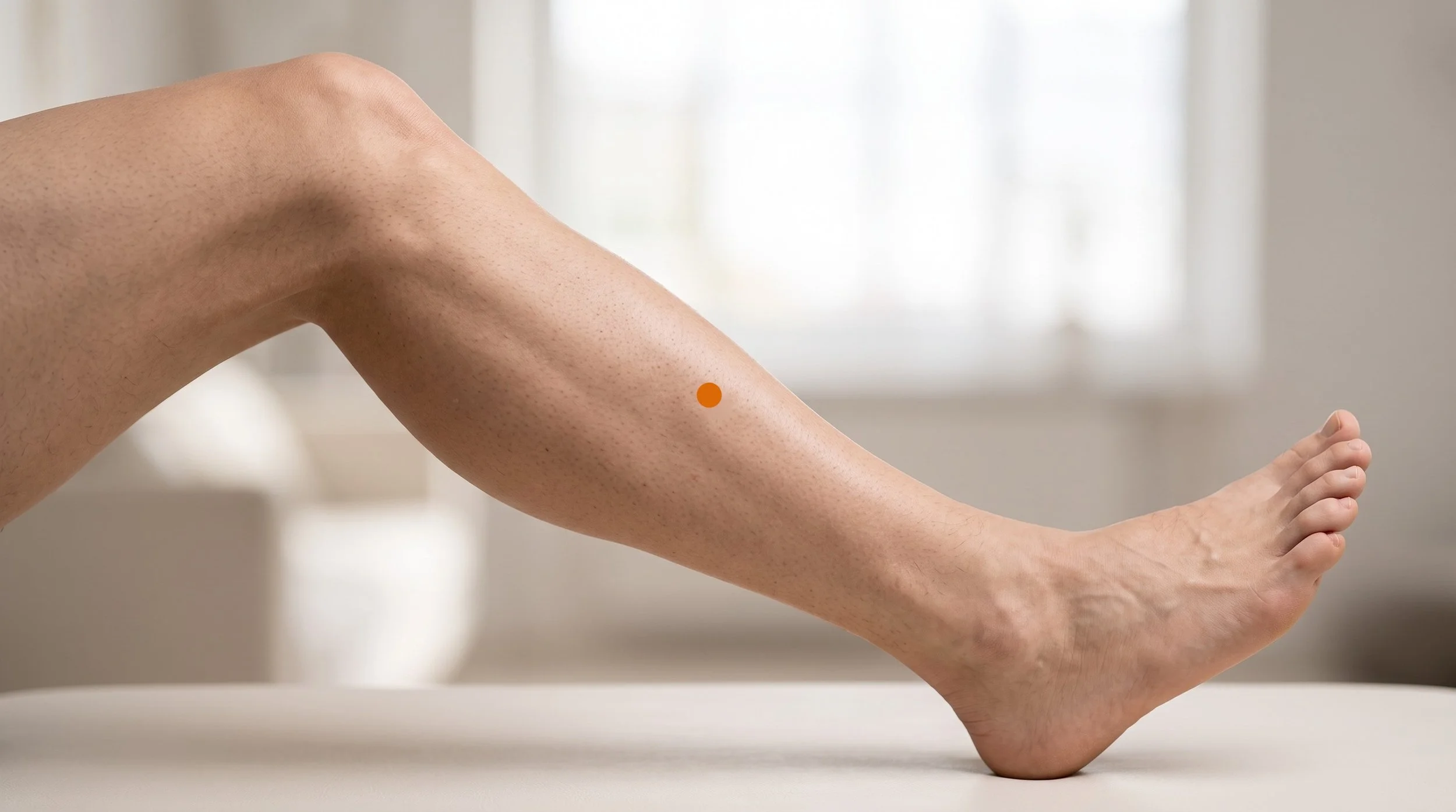
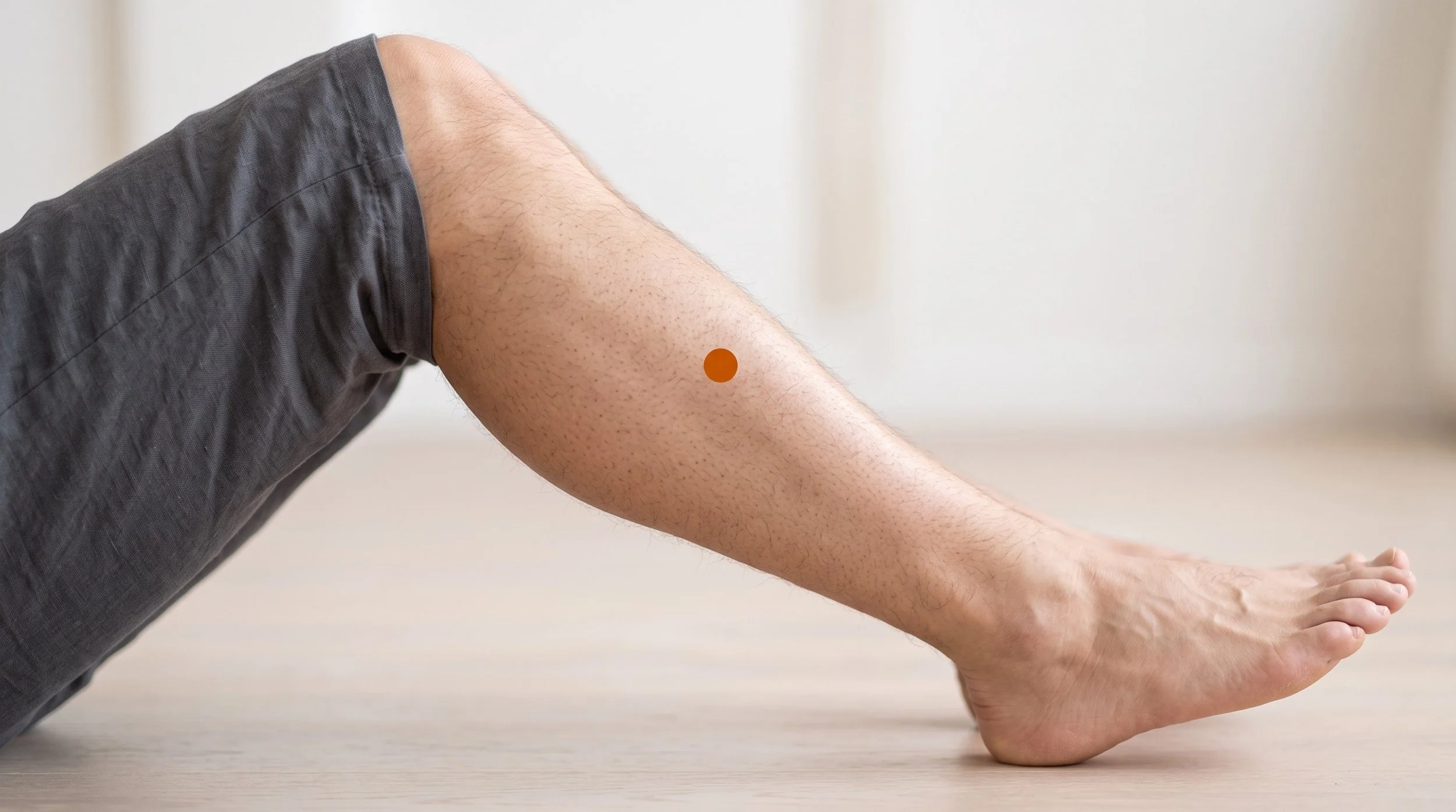
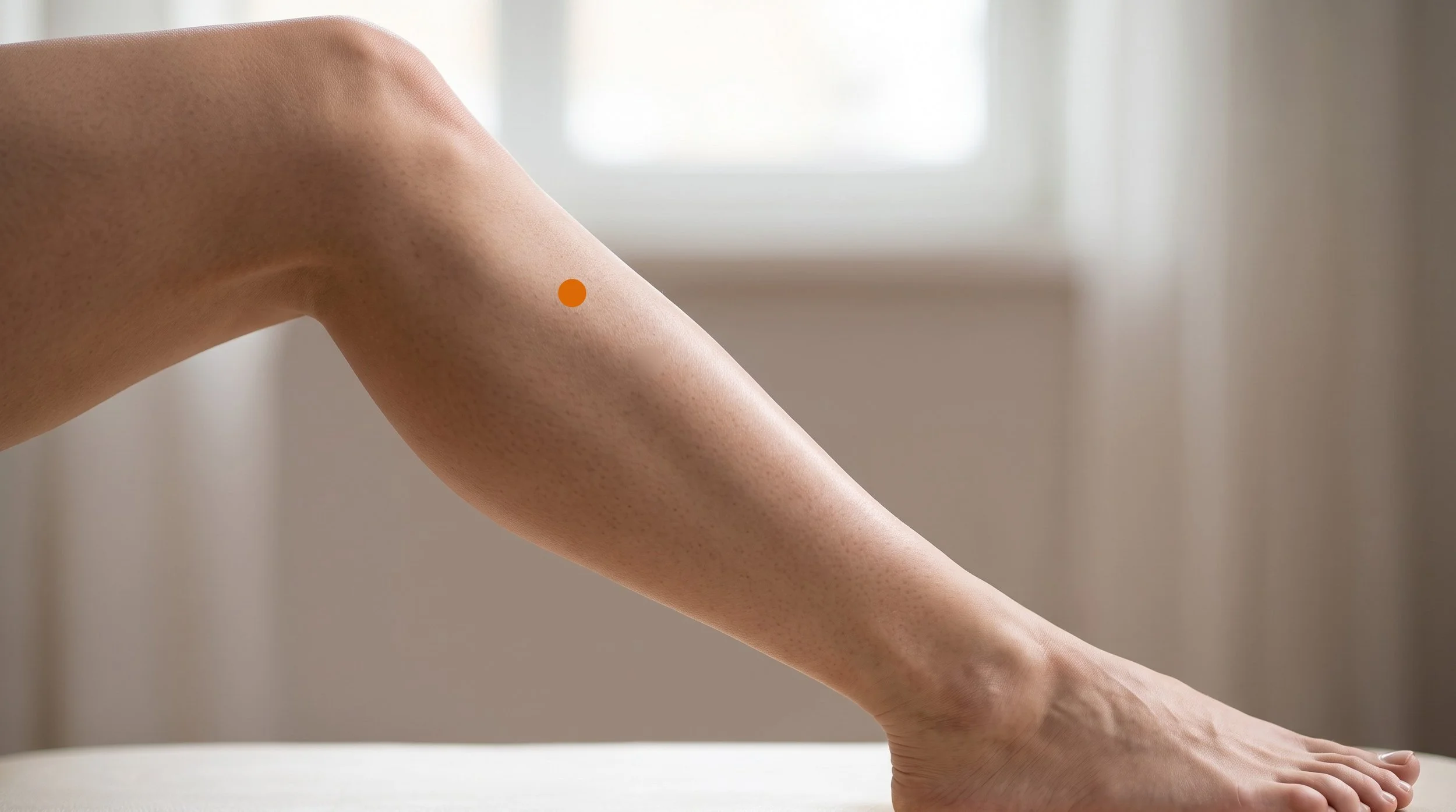
ST40, called Fenglong ("Abundant Bulge"), sits on the muscular swell of the outer lower leg, halfway between the knee joint line and the tip of the outer ankle bone and about two finger-breadths out from the sharp front edge of the shin bone. In classical terms it is the Luo-connecting point of the Stomach channel, the place where the Stomach channel is said to link with its paired Spleen channel, and it carries one of the largest classical indication lists of any point on the leg.
For a modern clinic, the st40 acupuncture point is doubly useful: it lands directly in the anterior and lateral shin muscles that ache in runners, walkers, and people who stand all day, and it is the historical anchor point for what Chinese medicine calls phlegm patterns (heaviness, congestion, a foggy head, a tight chest), which gives it a long track record in respiratory and metabolic protocols that researchers have since studied on its own.
- Location and layers: stomach 40 lies midway between the tibiofemoral joint line and the prominence of the lateral malleolus, roughly 8 cun above the ankle and one finger-breadth lateral to ST38, in the belly of tibialis anterior and extensor digitorum longus (Deadman et al., 2007).
- Traditional categories translated: as the Luo-connecting point of the Stomach channel it was classically described as transforming phlegm and damp, benefiting the chest, calming the spirit, and activating the channel to relieve leg pain (Deadman et al., 2007; Kim, 2016). In neurophysiological language, those descriptions map onto local myofascial effects plus segmental and autonomic modulation rather than any literal movement of substance.
- Mechanism: needling here recruits branches of the superficial and deep fibular nerves, which carry L4 to S1 input into the lumbosacral dorsal horn where shin, calf, knee, and ankle afferents converge, and it engages descending opioid and monoaminergic inhibition from the midbrain and medulla (Zhao, 2008).
- Research picture: individual patient data pooling across chronic pain trials supports modest, durable benefit from acupuncture protocols that routinely include lower leg points (Vickers et al., 2018), while trials naming Fenglong specifically have looked at breathlessness in COPD (Suzuki et al., 2012; Li et al., 2025) and serum lipids (Rerksuppaphol & Rerksuppaphol, 2014). Findings are promising rather than settled.
- Point-specific physiology: animal work using electroacupuncture at ST40 reported cholesterol lowering alongside broad changes in hepatic gene expression, which is intriguing evidence of an organ-level autonomic effect but not a basis for treating lipid disorders without medical care (Li & Zhang, 2007).
- Clinical framing and de qi: at Morningside we use ST40 both as a local target in shin and calf complaints and as a distal point inside broader protocols, and patients usually report a deep, spreading heaviness or dull ache in the outer shin that may travel toward the ankle or the top of the foot rather than a sharp pain.
Struggling With Shin Pain, Calf Tightness, or Heavy Legs?
Shin and calf pain rarely comes from one muscle, so we assess the whole chain from foot mechanics up through the hip before needling anything. ST40 gives us direct access to tibialis anterior and extensor digitorum longus, the two muscles that fatigue first in runners and in anyone pounding pavement all day in New York City. We pair it with dry needling of the calf, targeted loading, and gait advice so the relief holds between visits. Schedule an evaluation and let's map where your shin pain is actually coming from.
Schedule NowAnatomy of ST40: Why the Anterolateral Shin Is Such an Important Location
Finding stomach 40 is a two-step process. First locate the midpoint between the knee joint line and the tip of the outer ankle bone, then slide two finger-breadths laterally off the sharp front ridge of the tibia. Your finger will drop onto a firm muscular mound, which is where the name Abundant Bulge comes from (Deadman et al., 2007). Under the skin and thin fascia sit tibialis anterior, the muscle that lifts the foot and decelerates it on landing, and just lateral to it extensor digitorum longus, which lifts the toes.
These are the muscles that burn during hill running, long walks on hard pavement, sudden mileage increases, and hours of standing in stiff shoes, and they are common sources of front-of-shin aching, morning stiffness, and a heavy, fatigued feeling in the leg.
The nerve geography explains why a point this far from the chest or head was ever considered systemically useful. The skin and muscle at ST40 are supplied by branches of the superficial and deep fibular (peroneal) nerves, both derived from the common fibular division of the sciatic nerve, carrying sensory information from roughly the L4 to S1 spinal segments.
Those fibers enter the lumbosacral dorsal horn alongside afferents from the knee, ankle, foot, and the fascia of the whole lower leg, so a needle here can influence the same neurons that are processing shin and calf pain, a phenomenon usually called segmental convergence. Needling also triggers longer loops: brainstem structures including the periaqueductal gray and rostral ventromedial medulla release descending inhibition using endogenous opioids, serotonin, and noradrenaline, which dampens pain signaling well beyond the needled segment (Zhao, 2008).
Local effects matter too, since needling a taut band in tibialis anterior alters muscle tone and blood flow in the tissue itself (Simons et al., 1999).
Deeper in the anterior compartment run the anterior tibial artery and the deep fibular nerve, which is why insertion at ST40 is conventionally perpendicular to a depth of about 1 to 1.5 cun, with some texts favoring a shallower 0.5 to 1 cun depending on build (Deadman et al., 2007; Kim, 2016). A practitioner angles slightly away from the tibia rather than jamming into periosteum, uses clean technique, and adjusts depth for lean or heavily muscled legs.
Anyone with severe exertional shin pain, numbness, or a tight, swollen compartment after activity needs medical evaluation to rule out stress fracture and compartment syndrome before any needling, and patients on blood thinners or with a bleeding disorder should tell their clinician so technique can be modified.
Related Tibialis Anterior Trigger Points Related Acupuncture For Tibialis Anterior PainST40 at a Glance: Classification, Location, and Clinical Use
| Category | Detail |
|---|---|
| Traditional Name | Fenglong (Abundant Bulge), Stomach 40 |
| Channel Classification | Foot Yangming Stomach channel, lower leg |
| Point Categories | Luo-connecting point of the Stomach channel, the point from which the Stomach connecting channel links with the paired Spleen channel; classically given specific excess and deficiency indications for a Luo point in the Great Compendium of Acupuncture and Moxibustion |
| Precise Location | On the lower leg, midway between the tibiofemoral joint line (level with the popliteal crease) and the prominence of the lateral malleolus, two finger-breadths lateral to the anterior crest of the tibia, one finger-breadth lateral to ST38 |
| Tissue Stimulated | Skin and crural fascia over tibialis anterior and extensor digitorum longus, in the territory of the superficial fibular (peroneal) nerve, with the deep fibular nerve and anterior tibial artery lying deeper in the anterior compartment |
| Needle Depth / Direction | Perpendicular insertion 1 to 1.5 cun, angled slightly away from the tibial crest; shallower 0.5 to 1 cun in lean legs. Moxibustion is traditionally permitted. |
| De Qi Sensation | A deep, dull heaviness or spreading ache in the outer shin, sometimes traveling toward the ankle or dorsum of the foot; a brief electric flick can occur if a superficial fibular branch is brushed, and the needle is then repositioned |
| Primary Clinical Uses | Shin pain and shin splints, calf and anterior compartment tightness, foot drop and lower leg weakness, plus traditional use for phlegm and congestion, chest oppression, cough and wheeze, dizziness, heavy-headedness, and mental fog |
| Common Point Combinations |
|
Deadman, Al-Khafaji, and Baker's clinical manual treats Fenglong as the single most important point in the classical repertoire for what Chinese medicine calls phlegm, a broad pattern concept covering thick secretions, heaviness of the body and head, chest congestion, dizziness, throat blockage, and clouded thinking.
Traditionally the point was attributed with transforming phlegm and damp wherever it was thought to have collected, benefiting the chest, easing cough and wheeze, settling the spirit when phlegm was said to mist the Heart, and activating the channel to relieve pain, weakness, and wasting of the lower leg.
Because it is the Luo-connecting point of the Stomach channel, the texts described it as reaching both the Stomach and its paired Spleen channel, and the Great Compendium of Acupuncture and Moxibustion even split its indications by state: agitated, manic presentations for excess, and legs that will not obey with thinning of the lower leg muscles for deficiency.
What is striking about the classical pattern is not the physiology it proposed but the clinical map it produced: one small patch of outer shin repeatedly linked to the chest, the throat, the head, and the state of mind, a set of associations that later research into breathing, lipids, and autonomic reflexes has kept circling back to.
Why ST40 Is Used for Chest Tightness, Cough, and Mental Fog
The first half of the answer is straightforward and local. ST40 sits in muscle that works constantly during walking, running, and standing, and taut bands in tibialis anterior and extensor digitorum longus refer pain forward along the shin and into the ankle and big toe region (Simons et al., 1999). Needling that tissue produces a local twitch and tone change, and because the point's nerve supply enters the L4 to S1 segments alongside afferents from the rest of the lower leg, the effect is not limited to the exact spot needled. That segmental convergence is why a needle at the outer shin can change how a tender medial shin or a gripping calf feels within a session.
The second half of the answer is about systems rather than segments. Needle stimulation activates ascending pathways that engage brainstem control centers, releasing endogenous opioids and monoamines that inhibit pain transmission and shift autonomic balance away from a sympathetically driven state (Zhao, 2008).
Autonomic shifts are the plausible bridge between a leg point and organ-level outcomes, and ST40 is one of the rare points with dedicated physiological research: electroacupuncture at ST40 in mice lowered cholesterol and altered a wide range of liver genes involved in lipid handling, signaling, and immune response (Li & Zhang, 2007). A small randomized trial in people with dyslipidemia reported reductions in total and LDL cholesterol with a Fenglong-based protocol compared with a control group (Rerksuppaphol & Rerksuppaphol, 2014). This is early, mostly single-center evidence, and nobody should replace prescribed lipid or respiratory medication with acupuncture.
For breathing and the foggy, congested feeling patients describe, ST40 usually appears inside multi-point protocols rather than alone. A placebo-controlled trial found that acupuncture added to standard medication reduced exertional breathlessness in people with COPD (Suzuki et al., 2012), and a 2025 systematic review of adjunctive acupuncture in acute exacerbations reported improvements in several clinical measures while noting variable trial quality (Li et al., 2025).
The honest summary is that ST40 is a well-chosen component of protocols that may help comfort and breathing ease, studied mainly as an add-on to conventional care.
What the Research Shows for ST40
Almost no trial isolates a single point, so the research picture for ST40 has to be read carefully. Most clinical evidence tests whole protocols in which Fenglong is one of several points, which tells us the protocol may help but not how much of the effect belongs to this location. The exception is a small cluster of laboratory and clinical studies that deliberately stimulated ST40 alone, mainly for lipid outcomes, and those give a rare window into point-specific physiology.
Taken together the literature supports ST40 as a reasonable, evidence-informed choice within a broader treatment plan rather than as a standalone intervention.
| Study | Type | Focus | Key Finding |
|---|---|---|---|
| Vickers et al., 2018 | Individual patient data meta-analysis | Acupuncture for chronic musculoskeletal, headache, and osteoarthritis pain | Acupuncture was associated with modest but statistically significant benefit over sham and no-acupuncture controls, with effects that persisted over about a year. |
| Zhao, 2008 | Narrative mechanistic review | Neural mechanisms of acupuncture analgesia | Needle stimulation of somatic afferents engages spinal and supraspinal pathways, including endogenous opioid and monoaminergic descending inhibition. |
| Li & Zhang, 2007 | Animal study with cDNA microarray | Electroacupuncture at ST40 in hypercholesterolemic mice | Stimulation at ST40 lowered cholesterol and altered hepatic gene expression related to lipid metabolism and signaling, though animal findings may not transfer directly to patients. |
| Rerksuppaphol & Rerksuppaphol, 2014 | Randomized controlled trial | Electroacupuncture including a Fenglong protocol for dyslipidemia | Both acupuncture groups showed lower total and LDL cholesterol than controls at follow-up, in a small open-label study that needs replication. |
| Suzuki et al., 2012 | Randomized placebo-controlled trial | Acupuncture as an adjunct for dyspnea on exertion in COPD | Real acupuncture added to standard medication improved breathlessness scores more than placebo needling in a single-region trial. |
| Li et al., 2025 | Systematic review and meta-analysis | Adjunctive acupuncture in acute exacerbations of COPD | Pooled results across 31 trials favored acupuncture added to conventional care on several clinical outcomes, with the authors noting limitations in trial quality. |
| Singh et al., 2024 | Randomized controlled trial | Dry needling of soleus trigger points in athletes with medial tibial stress syndrome | Dry needling reduced shin pain in the short term but did not significantly improve ankle range of motion. |
Chest Tightness, Lingering Cough, or That Foggy, Heavy Feeling?
Fenglong is the point classical texts reached for when patients described congestion, a heavy head, and a chest that would not open, and it still earns its place in modern respiratory and stress protocols. We use it alongside points on the chest, upper back, and forearm, and we always ask you to keep your physician in the loop for any respiratory or metabolic condition. Acupuncture works best here as an adjunct that improves comfort, breathing ease, and sleep. Book a session and we will build a plan around your primary care, not around it.
Schedule NowST40 in the Context of Trigger Point Work
The st 40 point location overlaps almost exactly with the classic myofascial targets in the anterior compartment. Tibialis anterior trigger points refer pain down the front of the shin toward the ankle and big toe, and extensor digitorum longus can send symptoms into the top of the foot and toes, patterns that patients often describe as shin splints or a nagging ankle ache (Simons et al., 1999).
When we needle ST40 in someone with anterior shin pain, we are treating both a named acupuncture point and a predictable myofascial target, which is one reason the point translates so cleanly between acupuncture and dry needling frameworks. Acupuncture, after all, is defined by the use of an acupuncture needle, and dry needling is one of the hundreds of styles that use it.
In practice ST40 is rarely needled alone for leg complaints. At Morningside we typically combine it with dry needling of soleus and gastrocnemius, the fibularis group, tibialis posterior when the medial shin is involved, and often gluteal and hip musculature if the loading pattern starts higher up.
Trial evidence for dry needling in medial tibial stress syndrome suggests meaningful short-term pain reduction from soleus trigger point work without a clear change in ankle mobility (Singh et al., 2024), which matches what we see clinically: needling reduces pain and tissue sensitivity, then graded loading, calf and foot strengthening, and training adjustments do the durable work. We also review footwear, running surfaces, and weekly mileage, since New York City pavement is unforgiving on the anterior compartment.
ST40 Shin and Calf Pain Treatment at NYC's Highest-Rated Acupuncture Clinic
Morningside Acupuncture is the highest-rated acupuncture and dry needling clinic in New York City with over 500 five-star Google reviews, and lower leg pain is one of the complaints we see most. Every visit combines precise point selection like ST40 with trigger point dry needling, movement screening, and clear home guidance. You get a licensed acupuncturist who explains the anatomy behind every needle. Schedule your appointment today and start treating the cause, not just the sore spot.
Schedule NowFrequently Asked Questions
What does ST40 feel like when needled?
Most people feel a firm pressure as the needle passes the skin, then a deep, dull heaviness or spreading ache in the outer shin. That sensation, traditionally called de qi, may travel toward the ankle or the top of the foot, and if a taut band in tibialis anterior is engaged you may feel a brief involuntary twitch. Sharp or electric sensations are a signal to reposition, not something to endure, so tell your practitioner right away. The area can feel mildly tender or fatigued for a day afterward, similar to the feeling after a hard workout.
Why would a point on my shin be used for a cough, chest tightness, or a foggy head?
Classically, Fenglong was the primary point attributed with transforming phlegm and opening the chest, and the Stomach connecting channel was described as reaching the chest, throat, and head (Deadman et al., 2007). In modern terms, needling somatic tissue in the lower leg activates sensory pathways that reach brainstem centers governing pain modulation and autonomic tone (Zhao, 2008), which is the plausible route by which a leg point could influence breathing comfort or a sense of heaviness. Trials that included ST40 in COPD protocols reported improvements in breathlessness and other measures as an add-on to standard care (Suzuki et al., 2012; Li et al., 2025). It is an adjunct, not a substitute for medical treatment of any respiratory condition.
Can I press ST40 myself between sessions?
Yes, and it is an easy point to self-treat. Sit with your knee bent, find the midpoint between your knee joint line and the tip of your outer ankle bone, then move two finger-breadths outward from the front ridge of the shin bone onto the muscular bulge. Press with your thumb or knuckle at a firm but tolerable intensity, hold steady pressure for 30 to 60 seconds, then add slow circles for another 30 seconds, repeating on both legs for two or three rounds. Doing this once or twice a day, or after long walks and runs, often reduces anterior shin tightness. Combining it with gentle ankle pumps and calf stretching works better than pressure alone, and you should stop if pressing produces sharp pain, numbness, or worsening symptoms and get evaluated instead.
Is ST40 safe to needle?
In trained hands it is a low-risk point. The needle stays in the muscular anterior compartment at a depth of about 1 to 1.5 cun, angled away from the tibial crest, since the anterior tibial artery and deep fibular nerve lie deeper (Deadman et al., 2007; Kim, 2016). Expected minor effects include brief soreness or a small bruise. Tell your practitioner if you take anticoagulants, have a bleeding disorder, have reduced sensation in the leg, or have any implant or hardware in the lower leg. Severe exertional shin pain with swelling, numbness, or a rock-hard compartment needs medical assessment for stress fracture or compartment syndrome before needling.
Where exactly is ST40 located?
Fenglong is on the outer lower leg, midway between the tibiofemoral joint line at the knee (level with the crease behind the knee) and the prominence of the lateral malleolus, which places it roughly 8 cun above the ankle bone. From that level, move two finger-breadths laterally from the sharp anterior crest of the tibia, which puts you one finger-breadth lateral to ST38 (Deadman et al., 2007). You should land on a firm muscular mound between tibialis anterior and extensor digitorum longus that becomes more prominent when you lift your foot and toes toward your shin.
References
- Deadman, P., Al-Khafaji, M., & Baker, K. (2009). A manual of acupuncture. Journal of Chinese Medicine Publications.
- Kim, H. (2008). Handbook of Oriental medicine (3rd ed.). Harmony & Balance Press.
- Maciocia, G. (2005). The foundations of Chinese medicine: A comprehensive text for acupuncturists and herbalists (2nd ed.). Elsevier Churchill Livingstone.
- Simons, D. G., Travell, J. G., & Simons, L. S. (1999). Travell & Simons' myofascial pain and dysfunction: The trigger point manual, Vol. 1: Upper half of body (2nd ed.). Williams & Wilkins.
- Zhao, Z. Q. (2008). Neural mechanism underlying acupuncture analgesia. Progress in Neurobiology, 85(4), 355-375. https://doi.org/10.1016/j.pneurobio.2008.05.004
- Vickers, A. J., Vertosick, E. A., Lewith, G., MacPherson, H., Foster, N. E., Sherman, K. J., Irnich, D., Witt, C. M., & Linde, K. (2018). Acupuncture for chronic pain: Update of an individual patient data meta-analysis. Journal of Pain, 19(5), 455-474. https://doi.org/10.1016/j.jpain.2017.11.005
- Li, M., & Zhang, Y. (2007). Modulation of gene expression in cholesterol-lowering effect of electroacupuncture at Fenglong acupoint (ST40): A cDNA microarray study. International Journal of Molecular Medicine, 19(4), 617-629. https://doi.org/10.3892/ijmm.19.4.617
- Rerksuppaphol, L., & Rerksuppaphol, S. (2014). A randomized controlled trial of electroacupuncture at body acupoints and Fenglong for regulating serum lipids in dyslipidemic patients in Thailand. Complementary Therapies in Clinical Practice, 20(1), 26-31. https://doi.org/10.1016/j.ctcp.2013.10.009
- Suzuki, M., Muro, S., Ando, Y., Omori, T., Shiota, T., Endo, K., Sato, S., Aihara, K., Matsumoto, M., Suzuki, S., Itotani, R., Ishitoko, M., Hara, Y., Takemura, M., Ueda, T., Kagioka, H., Hirabayashi, M., Fukui, M., & Mishima, M. (2012). A randomized, placebo-controlled trial of acupuncture in patients with chronic obstructive pulmonary disease (COPD): The COPD-acupuncture trial (CAT). Archives of Internal Medicine, 172(11), 878-886. https://doi.org/10.1001/archinternmed.2012.1233
- Li, G., Liu, J., Yang, G., Li, J., He, Y., Fei, X., Wei, L., & Zhao, D. (2025). Efficacy of acupuncture as adjunctive therapy for patients with acute exacerbation of chronic obstructive pulmonary disease: A systematic review and meta-analysis. Frontiers in Medicine, 12, 1513888. https://doi.org/10.3389/fmed.2025.1513888
- Singh, A., Wadhwani, N., & Sharma, M. (2024). Short-term effectiveness of dry needling on pain and ankle range of motion in athletes with medial tibial stress syndrome: A randomized control trial. Journal of Manual & Manipulative Therapy, 33(1), 47-53. https://doi.org/10.1080/10669817.2024.2384611
Disclaimer: This web site is intended for educational and informational purposes only. Reading this website does not constitute providing medical advice or any professional services. This information should not be used for diagnosing or treating any health issue or disease. Those seeking medical advice should consult with a licensed physician. Seek the advice of a medical doctor or other qualified health professional for any medical condition. If you think you have a medical emergency, call 911 or go to the emergency room. No acupuncturist-patient relationship is created by reading this website or using the information. Morningside Acupuncture PLLC and its employees and contributors do not make any express or implied representations with respect to the information on this site or its use. For any legal interpretation of scope of practice in your state, consult a licensed attorney or regulatory authority.
Read more from our blog