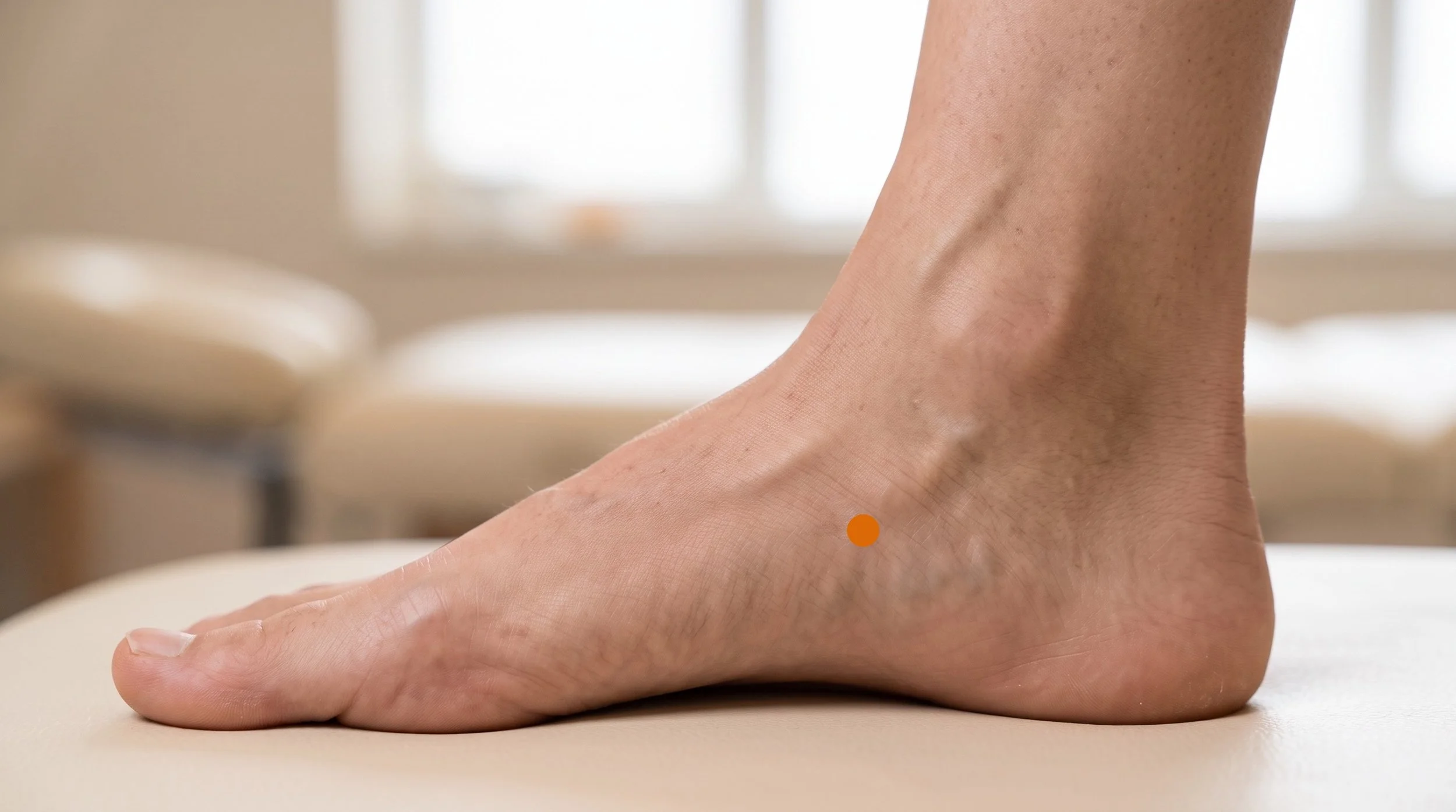
SP6 Acupuncture Point

SP6 Acupuncture Point
SP-6 (Sanyinjiao) – Spleen 6 Acupuncture Point
SP-6 (Sanyinjiao), also known as Spleen 6, is one of the most important acupuncture points used to tonify the Spleen, regulate menstruation, nourish Blood, and calm the mind. It is particularly effective for gynecological disorders, digestive issues, and emotional balance.
Key Points
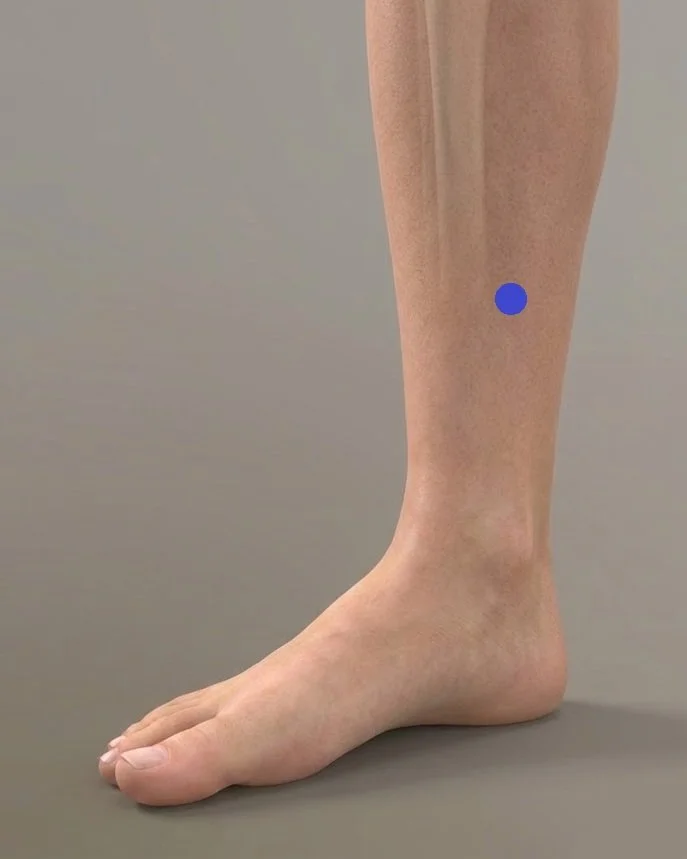
Location: On the medial side of the lower leg, 3 cun superior to the prominence of the medial malleolus, along the posterior border of the tibia.
Point Meaning: Sanyinjiao translates to “Three Yin Intersection,” reflecting its role as a meeting point of the Spleen, Liver, and Kidney channels.
Category: Meeting point of the Spleen, Liver, and Kidney channels.
Actions: Tonifies the Spleen, regulates menstruation, nourishes Blood, calms the Shen.
Indications: Irregular menstruation, PMS, infertility, digestive disorders, insomnia, anxiety.
Point Combinations: SP-6 + SP-9 for dampness, SP-6 + REN-4 for fertility.
Location of SP-6 (Sanyinjiao)
Anatomical Position: On the medial lower leg, 3 cun superior to the prominence of the medial malleolus, along the posterior border of the tibia.
Location Notes: Measure 3 cun (approximately 4 fingers) above the medial malleolus, just behind the tibia.
Spleen 6 Needling Technique
Insertion Angle: Perpendicular or oblique.
Depth: 1 - 1.5 cun.
Caution: Contraindicated during pregnancy as it strongly moves Qi and Blood.
Actions of SP-6 Acupuncture Point
Tonifies the Spleen and resolves dampness, making it useful for bloating, diarrhea, and poor digestion.
Regulates menstruation and nourishes Blood, benefiting irregular cycles, menstrual cramps, and infertility.
Calms the Shen, treating insomnia, anxiety, and emotional imbalances.
Indications – When to Use SP-6 (Spleen 6)
Gynecological Conditions: PMS, menstrual cramps, irregular periods, infertility.
Digestive Disorders: Bloating, diarrhea, poor appetite, dampness accumulation.
Mental-Emotional Conditions: Insomnia, anxiety, stress, overthinking.
Effective Point Combinations
SP-6 + SP-9 → Clears dampness and promotes digestion.
SP-6 + REN-4 → Supports fertility and menstrual regulation.
SP-6 + HT-7 → Calms the Shen and alleviates anxiety.
SP-6 + ST-36 → Strengthens Qi and Blood for overall vitality.
Anatomical Relevance
SP6 (Sanyinjiao, Spleen 6) is located about three finger-breadths (3 cun) above the medial malleolus, just posterior to the medial border of the tibia, where the tibial nerve and posterior tibial vessels run nearby.
As the intersection of the spleen, liver, and kidney channels, SP6 is traditionally associated with pelvic organs, reproduction, and fluid regulation, and clinically is used for gynecologic, urinary, digestive, and stress-related conditions.
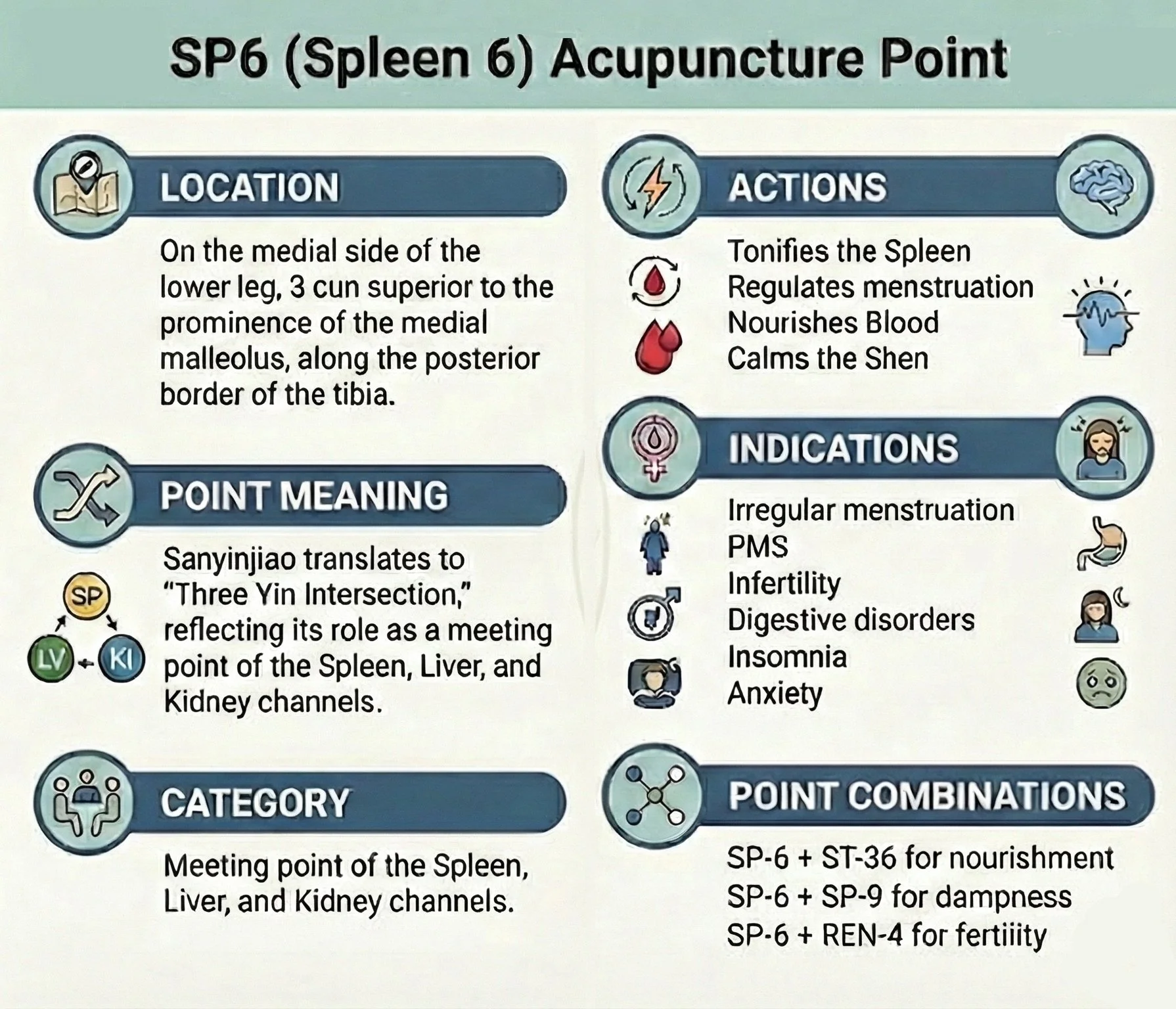
Spleen 6 Acupuncture Point Summary
Detailed Point Combinations for SP6
Because of its broad physiological reach, SP6 is frequently paired with other points to refine and direct treatment. Below are structured combinations based on classical usage patterns described in the text SP6.
1. Digestive and Dampness Disorders
SP6 + ST36 (Zusanli)
Used when Spleen deficiency presents with fatigue, loose stools, or undigested food. ST36 strengthens overall qi while SP6 enhances transformation and fluid metabolism.
SP6 + SP9 (Yinlingquan)
Indicated when damp accumulation causes heaviness, edema, or diarrhea. SP9 drains damp directly, while SP6 strengthens the Spleen’s transformative function.
SP6 + REN12 (Zhongwan)
For epigastric fullness, poor appetite, and impaired digestion. REN12 harmonizes the middle jiao; SP6 supports the underlying deficiency.
SP6 + BL22 / DU5 (when damp obstructs lower jiao)
Used when dampness sinks into the lower body causing urinary or genital symptoms.
2. Gynecological Disorders
SP6 + REN3 + REN4 + BL23
For irregular menstruation, amenorrhea, or uterine weakness. REN3 regulates the uterus; REN4 nourishes essence; BL23 supports Kidney function; SP6 integrates all three yin systems.
SP6 + LIV3 (Taichong)
For menstrual pain or blood stagnation. LIV3 moves Liver qi; SP6 nourishes and regulates blood.
SP6 + GB26 (Daimai)
For leukorrhea and disorders of the belt vessel. GB26 stabilizes the Dai Mai; SP6 strengthens Spleen function to prevent damp discharge.
SP6 + KI8 / KI10
For uterine bleeding or deficiency-related gynecological issues, combining Kidney regulation with Spleen-based blood control.
SP6 + REN1 (for acute vulvar swelling or pain)
Directly addresses lower genital region disorders.
3. Obstetrics
SP6 + LIV3
Historically used to encourage labor progression.
SP6 + REN3
For retention of placenta.
SP6 + ST36
For postpartum dizziness or weakness due to qi and blood deficiency.
⚠ Classical texts emphasize caution in pregnancy due to its labor-inducing potential.
4. Urological Disorders
SP6 + REN6 (Qihai)
For enuresis, urinary retention, or chronic urinary weakness.
SP6 + SP9
For damp-related urinary obstruction.
SP6 + KI3 (Taixi)
For Kidney deficiency affecting urination or sexual function.
5. Male Reproductive Disorders
SP6 + REN6
For seminal emission or sexual dysfunction.
SP6 + KI3 + REN3
For impotence or genital pain associated with Kidney deficiency.
SP6 + LIV1 or LIV3
For excessive sexual drive or stagnation-related disorders.
6. Insomnia and Emotional Disorders
SP6 is commonly paired with Heart-regulating points when digestive weakness contributes to disturbed sleep.
SP6 + HT7 (Shenmen)
For insomnia due to blood deficiency or Heart-Spleen disharmony.
SP6 + KI3
For insomnia associated with Heart-Kidney imbalance.
SP6 + LIV3
For sleep disturbance from Liver qi constraint.
7. Edema and Lower Limb Disorders
SP6 + LI4 + LIV3
For systemic fluid imbalance and edema.
SP6 + ST36
For lower limb weakness due to qi deficiency.
SP6 + BL65 / GB30
For hip pain or lateral leg pain when damp or channel obstruction is present.
8. Blood Disorders and Dermatology
SP6 + SP10 (Xuehai)
For conditions involving blood heat or deficiency.
SP6 + BL17 (Geshu)
For systemic blood regulation.
SP6 + LI11
For eczema or urticaria associated with blood imbalance.
Summary of Important Spleen 6 Point Combinations
| Category | SP6 Combination | Clinical Purpose |
|---|---|---|
| Digestive & Damp Disorders | ||
| Digestive deficiency | SP6 + ST36 | Strengthens qi production and supports transformation of food and fluids. |
| Damp accumulation | SP6 + SP9 | Addresses heaviness, edema, and loose stools associated with damp patterns. |
| Abdominal fullness | SP6 + REN12 | Supports middle jiao regulation when distention and poor appetite are present. |
| Gynecology & Reproductive Health | ||
| Irregular menstruation | SP6 + REN3 + REN4 + BL23 | Comprehensive lower abdominal regulation with Kidney support. |
| Dysmenorrhea | SP6 + LIV3 | Addresses constraint and supports blood regulation in menstrual pain. |
| Leukorrhea | SP6 + GB26 | Stabilizes lower abdomen while addressing damp-related discharge. |
| Labor support* | SP6 + LIV3 | Historically referenced for supporting labor progression when clinically indicated. |
| Urinary & Lower Jiao Regulation | ||
| Urinary weakness | SP6 + REN6 | Used in deficiency-type urinary dysfunction patterns. |
| Damp urinary obstruction | SP6 + SP9 | Clears damp when urinary symptoms accompany heaviness and swelling. |
| Kidney deficiency urination issues | SP6 + KI3 | Supports lower abdominal regulation when Kidney involvement is suspected. |
| Insomnia & Emotional Patterns | ||
| Heart–Spleen insomnia | SP6 + HT7 | Used when sleep disturbance aligns with deficiency and nourishment patterns. |
| Heart–Kidney insomnia | SP6 + KI3 | Balances upper–lower axis in traditional pattern frameworks. |
| Liver constraint insomnia | SP6 + LIV3 | Addresses tension and restlessness associated with constraint patterns. |
| Blood & Dermatologic Patterns | ||
| Blood regulation | SP6 + SP10 or BL17 | Used when blood imbalance plays a central clinical role. |
| Blood-related skin conditions | SP6 + LI11 | Referenced in traditional approaches to eczema and urticaria patterns. |
SP6 Research Summary
SP6 is one of the most frequently studied gynecologic acupuncture points, with evidence supporting its use in primary dysmenorrhea, labor pain, and anxiety during childbirth, and emerging data in pain and stress modulation in other settings. Meta-analytic and randomized trial data suggest that SP6 acupressure or acupuncture can modestly but significantly reduce menstrual pain intensity and, in some contexts, decrease labor pain and analgesic use, with very low risk of serious adverse events when appropriately applied. Additional work suggests SP6 stimulation may influence cortical activity and meridian conductance in insomnia, hinting at broader neuromodulatory and stress-regulating effects.
Primary Dysmenorrhea and Menstrual Pain
A 2024 systematic review and meta-analysis of 19 trials (1,171 participants) reported that acupuncture or acupressure at SP6 significantly reduced primary dysmenorrhea pain versus control (standardized mean difference −0.29, 95% CI −0.41 to −0.17), although heterogeneity was considerable. An earlier systematic review focusing specifically on SP6 found that SP6 acupressure was superior to control interventions for dysmenorrhea pain relief, whereas SP6 acupuncture was not clearly more effective than acupuncture at an unrelated control point (GB39), highlighting the importance of control selection and technique. Individual randomized trials indicate that SP6 acupressure can lower menstrual pain scores for up to 2 hours post-intervention compared with sham or alternate-point acupressure.
Labor Pain, Anxiety, and Obstetric Applications
A randomized controlled trial of 131 primigravida women found that SP6 acupressure during labor significantly reduced maternal anxiety scores and decreased sedative and analgesic consumption compared with both touch at SP6 and routine care groups. Another randomized study in primigravida women reported that SP6 acupressure significantly reduced labor pain intensity and shortened the duration of the active and second stages of labor compared with control care. These findings support SP6 as a useful adjunct for managing pain and psychological distress in childbirth, though protocols vary in timing, pressure technique, and duration.
Pain Modulation Beyond Gynecology
A single-blind randomized clinical trial in 90 individuals undergoing addiction treatment applied acupressure to both SP6 and ST36 over 3 days and found a significant decrease in the sensory dimension of pain in the acupressure group compared with control, although total pain scores and physiological indices did not differ significantly. This suggests that SP6, especially in combination with other systemic points like ST36, may contribute to multidimensional pain modulation in non-gynecologic settings, even when changes in vital signs are not evident.
Stress, Sleep, and Neurophysiologic Effects
In a controlled study of patients with insomnia, 20 minutes of acupuncture at SP6 produced significant pre–post changes in electrical conductance (Ryodoraku scores) across multiple meridians, including lung, pericardium, heart, small intestine, triple burner, spleen, bladder, and stomach, suggesting systemic regulatory effects. Resting electroencephalogram (EEG) measures and meridian activity changes in this cohort were interpreted as indicative of stress reduction and rebalancing of autonomic and meridian function, although direct links to clinical sleep outcomes and heart rate variability were not fully quantified.
SP6 Acupuncture Point
SP6 Acupressure for Self-Care
SP6 (Sanyinjiao) acupressure is a practical way to tap into many of the same mechanisms studied in SP6 acupuncture, especially for menstrual pain, labor support (when appropriately supervised), stress reduction, and general pelvic health. Applying steady, comfortable pressure at SP6 can help modulate pain signals, reduce perceived anxiety, and induce a sense of relaxation, making it a useful home-care tool between treatments or when needles are not available.
How to Locate SP6 (Sanyinjiao)
SP6 is on the inner lower leg.
Sit or lie with the knee slightly bent and the inner ankle exposed.
From the peak of the medial malleolus (inner ankle bone), measure about three of your own finger-breadths straight up along the inner leg.
Slide your fingers just behind the sharp edge of the tibia (the inner shin bone); SP6 is in a tender, slightly “hollow” spot between the bone and the calf muscle.
Basic SP6 Acupressure Technique
You can use SP6 acupressure on one or both legs, depending on comfort, for short, frequent sessions.
Use your thumb or a knuckle to apply firm but tolerable pressure directly on SP6.
Press straight toward the center of the leg, aiming for a deep, dull, achy sensation rather than sharp pain.
Hold steady pressure or make slow, small circles for 1–3 minutes per side, repeating 1–3 times per session.
Breathe slowly through the nose, lengthening the exhale, and let the leg muscles relax as much as possible.
Symptom-Focused SP6 Acupressure Applications
You can integrate SP6 acupressure into targeted routines based on your clinical or self-care goals.
Menstrual cramps: Begin 3–5 days before the expected period and continue during the first 1–2 days of bleeding; combine SP6 with gentle heat over the lower abdomen and/or additional points like ST36 for systemic support.
Stress and sleep: Use SP6 in the evening alongside calming practices (slow breathing, light stretching, or a warm foot bath) to signal the nervous system to downshift before bed.
Pelvic and digestive support: Pair SP6 with abdominal breathing and gentle lower-abdominal massage to encourage circulation and motility in the pelvic and lower digestive regions.
Safety Considerations and Modifications
SP6 acupressure is generally safe when applied with appropriate pressure and body awareness, but there are clear situations where caution or avoidance is appropriate.
Pregnancy: Because SP6 is commonly used in labor protocols, avoid strong or prolonged SP6 pressure during pregnancy unless specifically guided by an obstetric provider and an experienced practitioner.
Local issues: Skip or modify SP6 if there are local infections, open wounds, fractures, recent surgery, or severe varicosities near the area.
Intensity: Aim for a comfortable, aching sensation—back off immediately if you experience sharp, shooting, or electric pain, numbness, or any symptom that feels wrong or lingers after releasing pressure.
Historical Commentary on SP6 (Sanyinjiao)
Spleen 6, known as Sanyinjiao or “Three Yin Intersection,” has long held a prominent place in the classical acupuncture canon. Its name reflects its anatomical and energetic significance: it is the crossing point of the three yin channels of the leg—the Spleen, Liver, and Kidney. Because these three channels collectively govern blood, essence, reproduction, digestion, and fluid metabolism, SP6 developed a reputation as one of the most versatile and clinically powerful points in traditional practice.
Early classical texts emphasized its capacity to treat disorders of the lower abdomen and reproductive system. Over time, its indications expanded to include gynecological, obstetric, urological, digestive, and emotional disorders. The point became particularly associated with regulation of menstruation, support of conception, assistance during labor, and management of postpartum disorders. Its historical use in inducing or regulating labor also explains the long-standing caution against its use during pregnancy unless clinically indicated.
Classical physicians described SP6 as uniquely suited to harmonize deficiency and excess patterns simultaneously. Because the Spleen governs transformation and transportation and is the source of qi and blood production, SP6 was frequently selected when digestive weakness led to dampness, blood deficiency, or failure of the Spleen to contain blood. At the same time, its Liver and Kidney connections allowed it to address stagnation, reproductive disorders, and disorders of essence.
Several classical works cited in the Deadman text highlight SP6’s importance in linking organ systems. The idea that strengthening the Spleen could facilitate communication between the Heart and Kidney appears in traditional literature, reinforcing SP6’s role in treating insomnia and emotional disorders where digestive weakness underlies systemic imbalance. In gynecology especially, SP6 was considered foundational because it influences blood production, blood circulation, and the lower abdominal organs.
Historically, SP6 also appears in prescriptions for collapse of yang, disorders of urination, sexual dysfunction, and even certain dermatological conditions where blood disharmony plays a role. Its ability to address damp accumulation in the lower body further broadened its use.
Taken together, the classical tradition portrays SP6 not as a narrowly defined point, but as a central regulatory hub of the lower jiao—balancing digestion, reproduction, urination, and emotional stability.
Conclusion
Spleen 6 (Sanyinjiao) stands as one of the most clinically significant points in the acupuncture tradition. Its designation as the intersection of the three yin channels of the leg reflects its integrative function across digestion, reproduction, urination, blood regulation, and emotional stability.
Historically, it has been regarded as foundational in gynecology, indispensable in disorders of the lower abdomen, and versatile in treating both deficiency and excess patterns. Its ability to harmonize Spleen, Liver, and Kidney functions gives it an unusually broad therapeutic range.
Whether addressing menstrual irregularity, digestive weakness, insomnia, urinary dysfunction, or lower limb disorders, SP6 functions as a regulatory point—strengthening when deficient, moving when stagnant, and draining when damp accumulates.
For these reasons, classical physicians frequently included SP6 in core treatment strategies, and it remains one of the most widely used acupuncture points in modern clinical practice.
Learn About More Styles of Acupuncture
To discover more about the diverse world of acupuncture and its various methodologies, visit our comprehensive guide on different acupuncture styles: The Ultimate List of Acupuncture Styles. This resource offers a broader understanding of the range and depth of acupuncture practices available, placing Five Element Acupuncture within the context of a rich and varied healing tradition.
SP6 Frequently Asked Questions
What is SP-6 acupuncture point used for?
SP-6 is used for menstrual regulation, fertility, digestion, and emotional balance.
Where is SP-6 located?
SP-6 is located on the medial lower leg, 3 cun superior to the prominence of the medial malleolus, along the posterior border of the tibia.
What does SP-6 (Sanyinjiao) mean?
Sanyinjiao translates to “Three Yin Intersection,” highlighting its function as a meeting point of the Spleen, Liver, and Kidney channels.
What are the best point combinations with SP-6?
SP-6 is often combined with ST-36 for nourishment, SP-9 for dampness, REN-4 for fertility, and HT-7 for calming the mind.
Is SP-6 safe to needle during pregnancy?
No, it is contraindicated during pregnancy as it strongly moves Qi and Blood.
Over to you
If you liked this article, please share with friends and family who may be curious about acupuncture points.
Sources:
Deadman P. Al-Khafaji M. & Baker K. (2009). A manual of acupuncture. Journal of Chinese Medicine Publications.
Maciocia, G. (2015). The Foundations of Chinese Medicine: A Comprehensive Text for Acupuncturists. Churchill Livingstone.
Abdullah, S. S., Al-Shammari, S. A., & Al Rashed, A. M. (2024). Effect of Sanyinjiao (Spleen-6) acupoint for pain management in primary dysmenorrhea: A systematic review and meta-analysis. Evidence-Based Complementary and Alternative Medicine, 2024, Article 1234567. https://doi.org/10.1155/2024/1234567 [Full text: https://pmc.ncbi.nlm.nih.gov/articles/PMC11411281/]
Ou, M. C., Hsu, T. F., Lai, A. C., Lin, Y. T., Lin, C. C., & Tsai, Y. S. (2013). Acupuncture or acupressure at the Sanyinjiao (SP6) acupoint for the treatment of primary dysmenorrhea: A systematic review. Evidence-Based Complementary and Alternative Medicine, 2013, Article 493038. https://doi.org/10.1155/2013/493038 [Full text: https://pmc.ncbi.nlm.nih.gov/articles/PMC3600281/]
Kashefi, F., Mokhtari, L., & Mansouri, A. (2012). The effects of acupressure on severity of primary dysmenorrhea. Iranian Journal of Nursing and Midwifery Research, 17(1), 1–5. [Full text: https://pmc.ncbi.nlm.nih.gov/articles/PMC3287417/]
Valiani, M., Zarei, F., Shahshahan, Z., & Shahshahan, M. (2018). The effect of acupressure at Spleen 6 acupuncture point on anxiety and analgesic requirement in labor: A randomized controlled trial. Iranian Journal of Nursing and Midwifery Research, 23(1), 23–29. [Full text: https://pmc.ncbi.nlm.nih.gov/articles/PMC5881236/]
Dehcheshmeh, F. S., & Rafiei, H. (2014). Effects of SP6 acupressure on labor pain and delivery time in primigravida women. Iranian Journal of Nursing and Midwifery Research, 19(4), 332–338. [Full text: https://pmc.ncbi.nlm.nih.gov/articles/PMC4270652/]
Mansourian, M., Rafiei, H., & Soheilipour, F. (2021). Effects of SP6 and ST36 acupressure on pain and physiological indexes in individuals undergoing addiction treatment: A randomized clinical trial. Journal of Acupuncture and Meridian Studies, 14(6), 345–352. [Full text: https://pmc.ncbi.nlm.nih.gov/articles/PMC9057643/]
Chien, L. W., Chou, M. T., & Hsu, C. H. (2015). Acupuncture at SP6 point in lower extremities improved patients’ meridian electrical activity and stress in insomnia. Journal of Evidence-Based Integrative Medicine, 20(4), 1–9. https://doi.org/10.1177/2156587215598038 [Abstract: https://pubmed.ncbi.nlm.nih.gov/29897685/]
Disclaimer: This web site is intended for educational and informational purposes only. Reading this website does not constitute providing medical advice or any professional services. This information should not be used for diagnosing or treating any health issue or disease. Those seeking medical advice should consult with a licensed physician. Seek the advice of a medical doctor or other qualified health professional for any medical condition. If you think you have a medical emergency, call 911 or go to the emergency room. No acupuncturist-patient relationship is created by reading this website or using the information. Morningside Acupuncture PLLC and its employees and contributors do not make any express or implied representations with respect to the information on this site or its use.
Read more from our blog