ST37 Acupuncture Point (Shangjuxu)
ST37 Acupuncture Point
The Upper Great Void Below the Knee: Anatomy, Mechanism, and Why the Large Intestine's Lower He-Sea Point Sits on the Shin
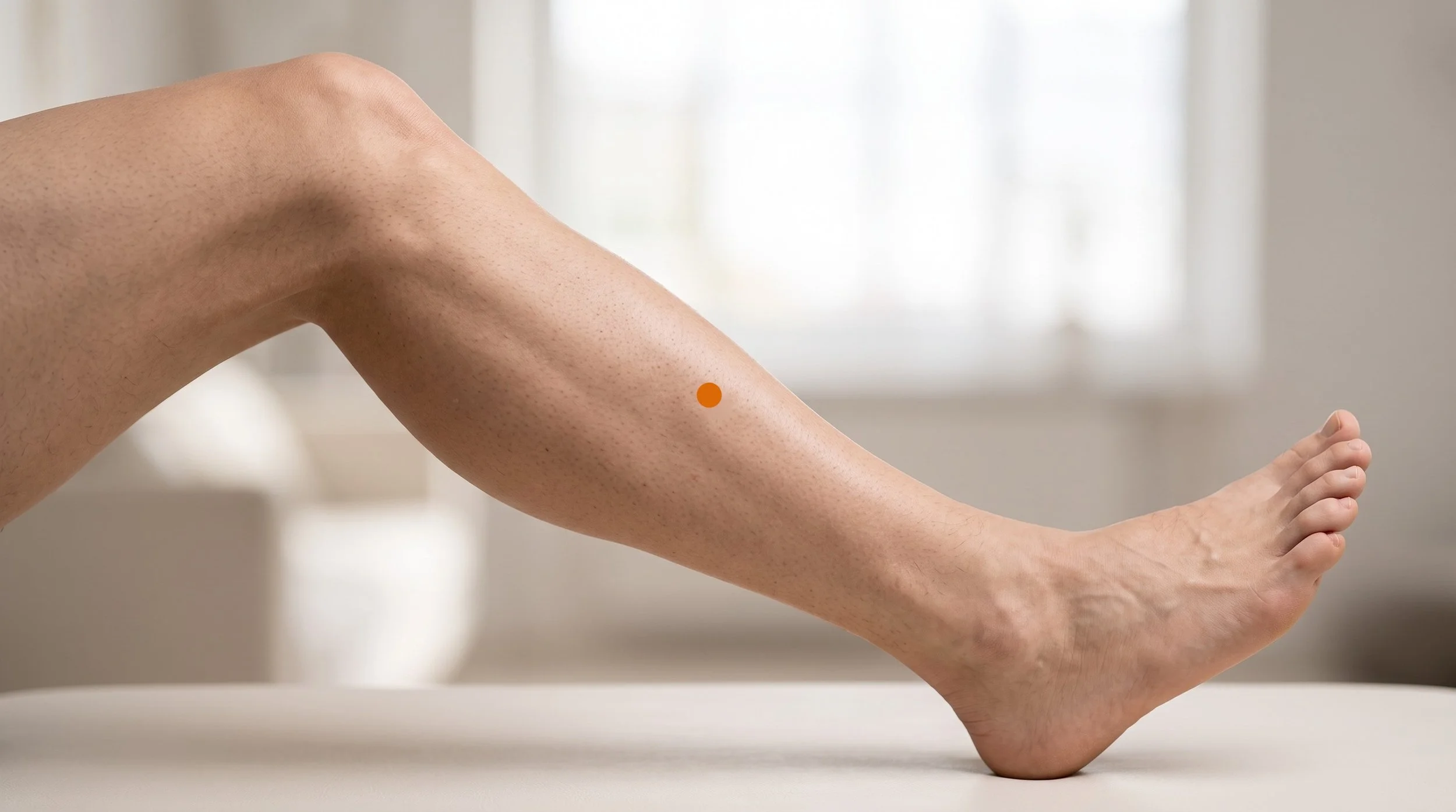
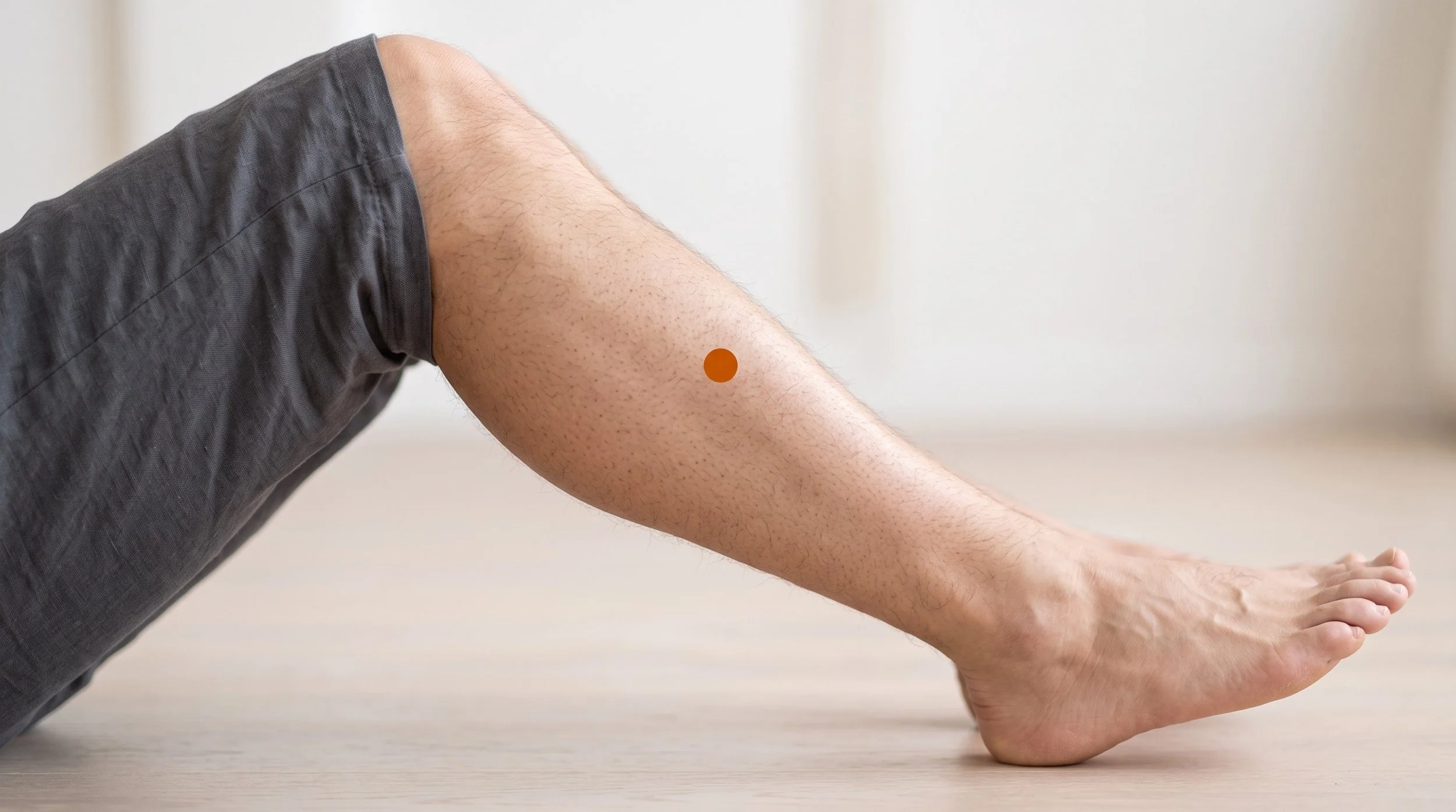
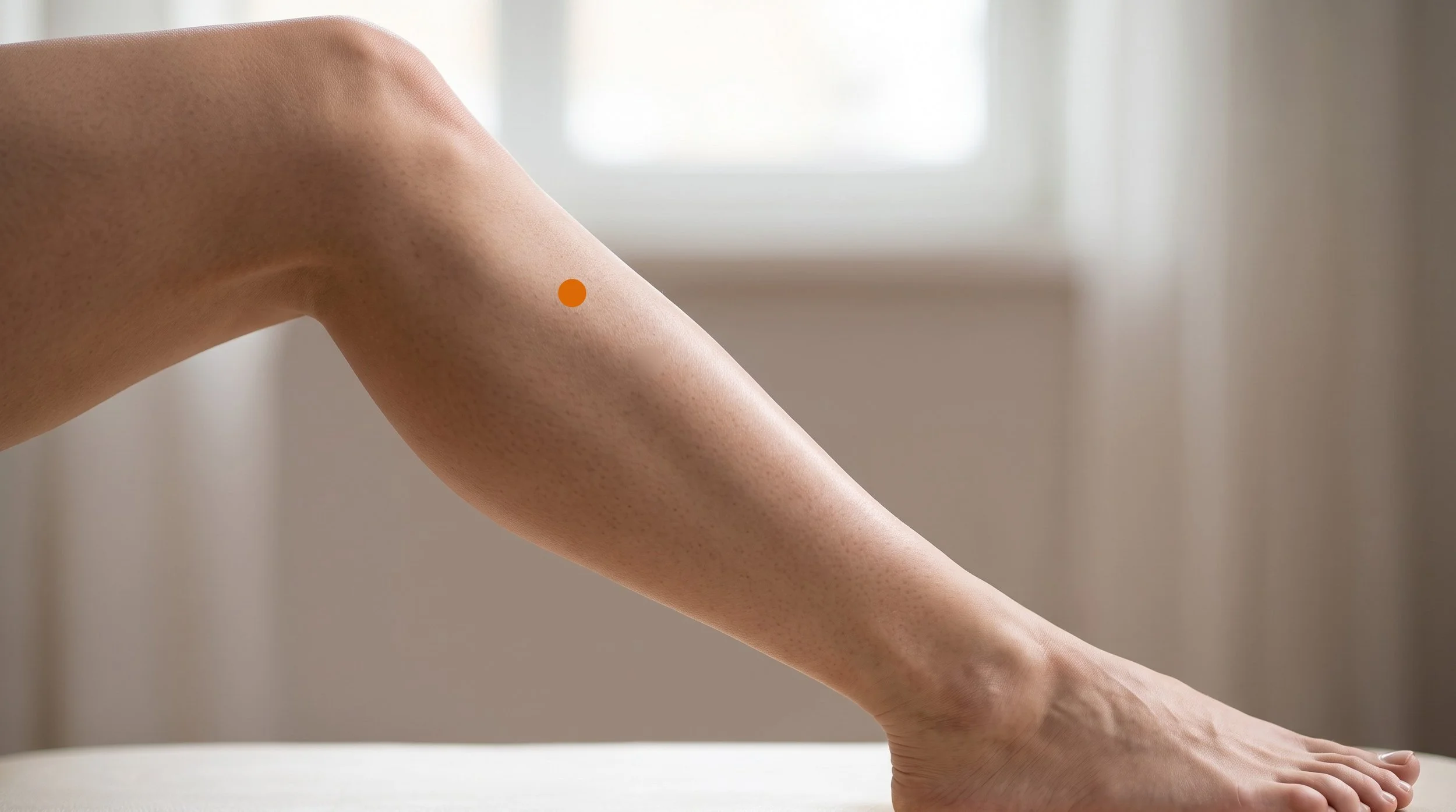
ST37 (Shangjuxu, often translated as Upper Great Void or Upper Great Emptiness) sits on the outer shin, one handbreadth below ST36, just off the sharp front edge of the tibia in the belly of tibialis anterior. It is best known as the lower he-sea point of the Large Intestine, which is the classical way of saying that a point on the leg was assigned responsibility for the large bowel rather than a point on the arm.
That assignment turns out to be clinically useful: the st37 acupuncture point is one of the most consistently used distal points for abdominal pain, bloating, loose stools, and IBS-type presentations, and because it lies in a muscle that works hard in runners and walkers, it doubles as a local treatment site for shin and anterior compartment complaints.
- Location and layers: stomach 37 lies 3 cun below ST36, one finger-breadth lateral to the anterior tibial crest, with the needle passing through skin and fascia into tibialis anterior and toward the interosseous membrane (Deadman et al., 2007).
- Category translated: the classical designation of lower he-sea point of the Large Intestine reflects an early observation that leg points below the knee influence bowel function more reliably than the arm points of the same channel, an observation modern work reframes as somatovisceral reflex control of intestinal motility (Yuan et al., 2016).
- Nerve story: needling here recruits deep peroneal and local muscular afferents entering the cord around L4 to L5, feeding spinal circuits that modulate autonomic outflow to the gut and engaging descending inhibitory systems relevant to pain (Zhao, 2008).
- Point-specific physiology: in animal models, electroacupuncture at ST37 increased jejunal motility largely through parasympathetic (muscarinic) pathways with an intensity-response relationship, and improved transit and enteric neuron markers in constipation models (Yuan et al., 2016; Liang et al., 2016).
- Research picture, honestly stated: large sham-controlled trials of multi-point protocols including ST37 have shown benefit for chronic severe functional constipation and for IBS symptoms, while a Cochrane review of IBS trials found no advantage over credible sham, so expectations should stay measured (Manheimer et al., 2012; Liu et al., 2016; Pei et al., 2020).
- De qi and practice: patients usually report a deep, heavy, slightly achy fullness that spreads along the shin, sometimes toward the ankle or up under the knee, and a sharp electric sensation means the needle should be redirected away from the deep peroneal nerve.
Bloating, Cramping, or Bowel Habits That Run Your Day?
At Morningside Acupuncture we use ST37 as an anchor point for digestive complaints, usually paired with abdominal points and gentle electroacupuncture when motility is the main problem. Treatment is built around your pattern, whether that is loose stools after meals, alternating habits, or the tight, distended feeling that shows up by mid afternoon. We coordinate with your gastroenterologist rather than replacing that care. Schedule a visit and we can map out a realistic course of treatment.
Schedule NowAnatomy of ST37: Why the Tibialis Anterior Belly Below ST36 Is Such an Important Location
From the surface down, ST37 passes through thin shin skin, the crural fascia, and then into the muscle belly of tibialis anterior, the strap of muscle that runs alongside the outer edge of the tibia and lifts the foot with every step. Deeper still, the needle heads toward the interosseous membrane between tibia and fibula. This muscle controls the foot as it lowers to the ground, so it takes repeated eccentric load in walking, running, and hill work, and it is a common source of the diffuse front-of-shin ache that patients call shin splints.
Tibialis anterior is also a well described source of referred pain into the ankle and great toe in the myofascial literature (Simons et al., 1999), which is one reason the area is often tender long before anyone thinks about the digestive tract.
The nerve geography explains most of what this point does. Cutaneous and muscular afferents from this part of the leg converge on dorsal horn segments around L4 to L5, and the deep peroneal nerve travels in the compartment just deep to tibialis anterior. Stimulating those afferents produces two broad effects. The first is local and segmental: gating of nociceptive input from the shin and reflex change in muscle tone.
The second is systemic: sustained small-fiber input from the limb recruits brainstem and hypothalamic circuits that release endogenous opioids and monoamines, the descending inhibition that underpins much of acupuncture's analgesic effect (Zhao, 2008). Both mechanisms are consistent with the modest but real benefits seen for chronic pain in individual patient data meta-analysis (Vickers et al., 2018).
Deep to the muscle lie the anterior tibial artery and vein alongside the deep peroneal nerve, which is why textbook guidance keeps insertion at roughly 1 to 1.5 cun, perpendicular or slightly oblique, angled into muscle rather than driven hard toward the membrane (Deadman et al., 2007).
In practice we needle to the depth that produces a spreading, dull heaviness and stop there. A sharp, radiating zap toward the foot suggests proximity to the nerve and the needle is withdrawn and redirected. The lateral, off-the-crest position also keeps the needle away from the periosteum of the tibia, which is unnecessarily uncomfortable and adds nothing.
Related Acupuncture For Tibialis Anterior Pain Related Stomach ChannelST37 at a Glance: Classification, Location, and Clinical Use
| Category | Detail |
|---|---|
| Traditional Name | Shangjuxu (Upper Great Void, also translated Upper Great Emptiness), Stomach 37 |
| Channel Classification | Stomach channel of the leg, yangming |
| Point Categories | Lower he-sea point of the Large Intestine; point of the Sea of Blood, described in the Spiritual Pivot as a lower emergence of the Penetrating vessel along with ST39; listed in the Essential Questions among the eight points used to clear heat from the Stomach (with ST30, ST36 and ST39) |
| Precise Location | On the lower leg, 3 cun below ST36 (one handbreadth), one finger-breadth lateral to the anterior crest of the tibia, in the tibialis anterior muscle. For st 37 location, find ST36 first, then drop a hand's width straight down and stay just off the shin bone. |
| Tissue Stimulated | Tibialis anterior muscle belly toward the interosseous membrane; see Tibialis Anterior Trigger Points |
| Needle Depth / Direction | Perpendicular or oblique insertion, 1 to 1.5 cun, angled into muscle and away from the deep peroneal neurovascular bundle |
| De Qi Sensation | Deep, heavy, dull fullness spreading along the shin, sometimes toward the ankle or up toward the knee; with electroacupuncture, a rhythmic tapping or pulling in the muscle |
| Primary Clinical Uses | Abdominal pain and bloating, diarrhoea and irregular bowel habits, IBS-type presentations in modern protocols, constipation and sluggish transit, lower limb weakness and anterior shin pain |
| Common Point Combinations |
|
Deadman's A Manual of Acupuncture records ST37 as the point where the classical texts placed responsibility for the large bowel, quoting the Inner Classic's view that the intestines fall under the Stomach's influence and noting that the three arm yang channels have their organs in the lower abdomen even though their pathways run through the upper body. Because of that mismatch, the elbow-level he-sea points of those channels were considered relatively weak for their own organs, and each was given a lower he-sea point on the leg instead.
The traditional actions attributed to ST37 follow directly from that logic: regulating the intestines and moving stagnation, clearing damp-heat with diarrhoea and dysenteric disorder, supporting Spleen and Stomach function, and opening the channel for leg pain and weakness. Classical indication lists cluster into bowel symptoms (rumbling, loose or undigested stools, cramping pain, distension, constipation, intestinal abscess), digestive weakness with breathlessness and fatigue, and lower limb complaints ranging from shin pain and knee swelling to hemiplegia.
What is striking is how early and how specifically the texts tied a point on the shin to the large intestine, centuries before anyone could describe a spinal reflex.
Why ST37 Is Used for Bowel Symptoms When the Needle Goes Into the Shin
The short answer is that the gut has no useful way of telling you exactly where it hurts, and the nervous system it shares with the leg is not as separate as it looks. Visceral afferents from the intestines and somatic afferents from the lower limb converge on overlapping segments of the spinal cord, and the reflex arcs that leave those segments influence smooth muscle tone, secretion, and blood flow in the bowel. Needling into tibialis anterior generates a steady stream of afferent traffic into that shared territory.
Traditional practice arrived at the same place from the other direction, calling ST37 the lower he sea large intestine point because that is where treating the bowel actually seemed to work.
Laboratory work has given this a more specific description. In rats and mice, electroacupuncture at ST37 increased jejunal motility, and the effect largely disappeared when muscarinic receptors were blocked, pointing to a parasympathetic (vagally mediated) pathway with a dose-like relationship to stimulation intensity (Yuan et al., 2016). In a mouse constipation model, stimulation at the same location improved intestinal propulsion and shortened defecation time while shifting markers of enteric neuron function (Liang et al., 2016).
A later comparison found that ST37 and ST25 do not act identically, with the leg point influencing both excitatory and inhibitory enteric neurons in the proximal colon (Liang et al., 2018). Animal findings do not transfer directly to people, but they do explain why practitioners keep reaching for a leg point when the complaint is abdominal.
The pain side is more familiar. Afferent input from limb points recruits descending inhibitory pathways involving endogenous opioids and monoamines, which dampens nociceptive transmission in the dorsal horn (Zhao, 2008).
For patients whose main complaint is visceral cramping rather than transit, that mechanism may matter as much as the motility story, and it is also why ST37 is often kept in the prescription when abdominal pain, not bowel frequency, is the thing keeping someone up at night.
What the Research Shows for ST37
A fair reading of the evidence starts with a caveat: almost no trial tests ST37 alone. Studies test protocols, usually abdominal points plus leg points, often with electrical stimulation, and ST37 is one component. Results also depend heavily on what the comparison is, since sham needling is itself a physiologically active intervention. The picture below is mixed, with better signals for constipation than for IBS against credible sham, and the honest summary is that acupuncture may help some digestive presentations as part of broader care rather than as a stand-alone answer.
| Study | Type | Focus | Key Finding |
|---|---|---|---|
| Manheimer et al., 2012 | Cochrane systematic review and meta-analysis | Acupuncture for irritable bowel syndrome | No benefit was found compared with credible sham acupuncture for symptom severity or quality of life, though patients in Chinese comparative trials reported more improvement than with drug therapy. |
| Liu et al., 2016 | Multicentre randomized sham-controlled trial (1,075 patients) | Electroacupuncture at abdominal and lower leg points including ST37 for chronic severe functional constipation | Eight weeks of electroacupuncture increased mean weekly complete spontaneous bowel movements more than sham, with effects that persisted into follow-up. |
| Pei et al., 2020 | Randomized controlled trial | Acupuncture for irritable bowel syndrome | Acupuncture was associated with greater improvement in IBS symptom scores than the comparison treatment, suggesting a possible role as an adjunct. |
| Yuan et al., 2016 | Animal physiology study (rats and mice) | Electroacupuncture at ST37 and jejunal motility | Stimulation enhanced jejunal motility mainly through parasympathetic muscarinic pathways, with an intensity-response relationship. |
| Liang et al., 2016 | Animal model study | Electroacupuncture at ST37 in mouse constipation | Treatment improved intestinal propulsion and defecation time and partly restored enteric neuron function markers. |
| Liang et al., 2018 | Animal physiology study | ST37 compared with ST25 on colonic motility | Both points relieved constipation-type changes but acted differently in the proximal colon, with ST37 affecting excitatory and inhibitory enteric neurons. |
| Vickers et al., 2018 | Individual patient data meta-analysis | Acupuncture for chronic pain conditions | Acupuncture was better than sham and no-acupuncture controls, with effects that persisted over twelve months, supporting a genuine but moderate treatment effect. |
Shin Pain and Tired Legs From Running the Loop?
ST37 sits directly in tibialis anterior, the muscle that fatigues first in runners, walkers, and anyone new to hills or speed work. We combine needling at this location with dry needling of the anterior compartment, calf work, and simple loading drills so the tissue tolerates more than it did last month. Many patients notice the shin feels less tight within the first two or three sessions. Book an appointment to have the leg assessed properly.
Schedule NowST37 in the Context of Trigger Point Work
ST37 sits squarely in the upper third of tibialis anterior, which puts it inside one of the most commonly treated muscles in a running city. Trigger points in this muscle refer pain down the front of the shin and into the ankle and great toe, and they often accompany the diffuse anterior shin pain that follows a jump in mileage, a change of shoes, or a lot of downhill walking (Simons et al., 1999).
When a patient comes in for shin pain rather than digestion, we needle the same territory with a different intention, targeting taut bands in the muscle belly and using palpation rather than the cun measurement to choose the exact spot.
In practice the two frameworks overlap more than they conflict. A typical session for anterior shin pain at Morningside might combine needling at ST37 and ST36 with dry needling of tibialis anterior, extensor digitorum longus, and the peroneal group, plus attention to gastrocnemius and soleus, since a stiff posterior chain increases the demand on the front of the leg. We then add calf and ankle loading work so the change lasts beyond the treatment table.
For patients being treated for digestive complaints, we may find the same area unexpectedly tender, and it is worth noting that local muscular tenderness at this site does not diagnose anything about the bowel.
ST37 Digestive and Shin Pain Treatment at NYC's Highest-Rated Acupuncture Clinic
Morningside Acupuncture is the highest-rated acupuncture and dry needling clinic in New York City with over 500 five-star Google reviews, and our approach blends classical point selection with modern anatomy and pain science. ST37 shows up in both halves of that work, as a distal bowel point and as a needling site inside a hardworking shin muscle. Every plan includes clear reassessment points so you know whether treatment is helping. Schedule your first session and see how the two approaches fit together.
Schedule NowFrequently Asked Questions
What does ST37 feel like when needled?
Most people describe a deep, dull, heavy fullness in the shin muscle that builds over a few seconds and spreads a short distance up toward the knee or down toward the ankle. It is a distinctly different sensation from the sharp pinch of skin penetration, which is brief and usually mild. With electroacupuncture, the muscle may twitch or tap rhythmically, which is expected. A sharp, shooting, electric feeling into the foot is not the goal and means the needle should be adjusted.
Why treat the shin for a problem in the abdomen?
Because the classical texts assigned the large intestine to a leg point rather than an arm point, and because the nervous system supports that choice. Sensory input from the lower leg enters spinal segments that also handle reflex control of the intestines, so limb stimulation can influence motility, blood flow, and pain processing in the gut. Animal studies of ST37 specifically have shown increased intestinal motility through parasympathetic pathways (Yuan et al., 2016). In clinic, distal points are also easier to combine with abdominal points and are usually more comfortable to keep in place for a full session.
Can I press ST37 myself between sessions?
Yes, and it is one of the more forgiving points for self-care. Sit with the knee bent, find the bony ridge at the front of the shin, then slide one finger-width to the outside into the soft muscle, at a point one hand's width below ST36 (which is itself a hand's width below the knee). Press firmly with a thumb or knuckle until you feel a dull ache rather than sharp pain, hold for 30 to 60 seconds, release, and repeat two or three times per leg. Doing this once or twice a day, or after meals if bloating is the issue, is reasonable. Stop if the area becomes bruised or if pressure produces numbness or tingling into the foot.
Is ST37 safe to needle?
In trained hands it is a low-risk point. The main structures to respect are the deep peroneal nerve and the anterior tibial vessels, which lie deep to tibialis anterior near the interosseous membrane, so standard practice keeps insertion around 1 to 1.5 cun and angles the needle into muscle (Deadman et al., 2007). Minor bruising is the most common side effect. Anyone on anticoagulants, with reduced sensation in the leg, with a history of compartment syndrome, or with new unexplained swelling or calf pain should say so before treatment, and severe or worsening abdominal symptoms should always be evaluated medically first.
Where exactly is ST37 located?
On the outer front of the lower leg, 3 cun (about one hand's width across the four fingers) below ST36, and one finger-breadth lateral to the sharp front edge of the tibia, in the tibialis anterior muscle. A simple way to find stomach 37 is to locate ST36 first, one hand's width below the lower border of the kneecap and one finger-width off the shin bone, then measure another hand's width straight down while staying the same distance lateral to the bone. The right spot feels soft and muscular, not bony, and is often mildly tender to firm pressure.
References
- Deadman, P., Al-Khafaji, M., & Baker, K. (2009). A manual of acupuncture. Journal of Chinese Medicine Publications.
- Simons, D. G., Travell, J. G., & Simons, L. S. (1999). Travell & Simons' myofascial pain and dysfunction: The trigger point manual, Vol. 1: Upper half of body (2nd ed.). Williams & Wilkins.
- Manheimer, E., Cheng, K., Wieland, L. S., Min, L. S., Shen, X., Berman, B. M., & Lao, L. (2012). Acupuncture for treatment of irritable bowel syndrome. Cochrane Database of Systematic Reviews, 2012(5), CD005111. https://doi.org/10.1002/14651858.CD005111.pub3
- Liu, Z., Yan, S., Wu, J., He, L., Li, N., Dong, G., et al. (2016). Acupuncture for chronic severe functional constipation: A randomized trial. Annals of Internal Medicine, 165(11), 761-769. https://doi.org/10.7326/M15-3118
- Pei, L., Geng, H., Guo, J., Yang, G., Wang, L., Shen, R., et al. (2020). Effect of acupuncture in patients with irritable bowel syndrome: A randomized controlled trial. Mayo Clinic Proceedings, 95(8), 1671-1683. https://doi.org/10.1016/j.mayocp.2020.01.042
- Yuan, M., Li, Y., Wang, Y., Zhang, N., Hu, X., Yin, Y., Zhu, B., Yu, Z., & Xu, B. (2016). Electroacupuncture at ST37 enhances jejunal motility via excitation of the parasympathetic system in rats and mice. Evidence-Based Complementary and Alternative Medicine, 2016, 3840230. https://doi.org/10.1155/2016/3840230
- Liang, C., Wang, K., Xu, B., & Yu, Z. (2016). Electroacupuncture at acupoint ST 37 (Shangjuxu) improves function of the enteric nervous system in a novel mouse constipation model. BMC Complementary and Alternative Medicine, 16, 392. https://doi.org/10.1186/s12906-016-1377-5
- Liang, C., Wang, K., Xu, B., & Yu, Z. (2018). Electro-acupuncture at ST37 and ST25 induce different effects on colonic motility via the enteric nervous system by affecting excitatory and inhibitory neurons. Neurogastroenterology & Motility, 30, e13318. https://doi.org/10.1111/nmo.13318
- Zhu, X., Liu, Z., Qu, H., et al. (2016). The effect and mechanism of electroacupuncture at LI11 and ST37 on constipation in a rat model. Acupuncture in Medicine, 34(3), 194-200. https://doi.org/10.1136/acupmed-2015-010897
- Zhao, Z. Q. (2008). Neural mechanism underlying acupuncture analgesia. Progress in Neurobiology, 85(4), 355-375. https://doi.org/10.1016/j.pneurobio.2008.05.004
- Vickers, A. J., Vertosick, E. A., Lewith, G., MacPherson, H., Foster, N. E., Sherman, K. J., Irnich, D., Witt, C. M., & Linde, K. (2018). Acupuncture for chronic pain: Update of an individual patient data meta-analysis. Journal of Pain, 19(5), 455-474. https://doi.org/10.1016/j.jpain.2017.11.005
Disclaimer: This web site is intended for educational and informational purposes only. Reading this website does not constitute providing medical advice or any professional services. This information should not be used for diagnosing or treating any health issue or disease. Those seeking medical advice should consult with a licensed physician. Seek the advice of a medical doctor or other qualified health professional for any medical condition. If you think you have a medical emergency, call 911 or go to the emergency room. No acupuncturist-patient relationship is created by reading this website or using the information. Morningside Acupuncture PLLC and its employees and contributors do not make any express or implied representations with respect to the information on this site or its use. For any legal interpretation of scope of practice in your state, consult a licensed attorney or regulatory authority.
Read more from our blog