Dry Needling for Headaches
How Trigger Points in the Neck, Shoulders, and Jaw Contribute to Head Pain, and What Dry Needling Can Do About It
Persistent headaches often have a muscular component that medication alone does not address. Dry needling targets the trigger points in cervical, suboccipital, and jaw muscles that generate and sustain many common headache patterns.
- Trigger points in the suboccipital, upper trapezius, sternocleidomastoid, temporalis, and splenius muscles are among the most common sources of referred head pain (Gerwin, 2014).
- Tension-type and cervicogenic headaches show the strongest evidence for a muscular trigger point contribution, making them the most responsive headache types to dry needling.
- Research indicates that patients with migraine also carry significantly more active trigger points in cervical and pericranial muscles than headache-free controls, suggesting these muscles may lower the threshold for migraine attacks (Fernández-de-las-Peñas et al., 2007).
- A systematic review found that dry needling reduced pain intensity and headache frequency compared to sham and control interventions in multiple headache populations (Gattie et al., 2017).
- The local twitch response, a brief involuntary contraction elicited by the needle, is thought to disrupt the dysfunctional motor endplate activity sustaining a trigger point and its referred pain pattern.
- Because headaches have many causes, dry needling is most effective when the clinical assessment identifies a clear myofascial component, rather than as a blanket treatment for all head pain.
- Multiple sessions are typically needed; some patients notice a reduction in headache frequency within two to four weeks, while others benefit from a longer course of care alongside other evidence-based strategies.
Could Muscle Tension Be Behind Your Headaches?
If your headaches come with neck tightness, jaw clenching, or shoulder tension, there may be a significant myofascial component. At Morningside Acupuncture, our practitioners assess the muscles most commonly involved in headache generation and develop a treatment plan around your specific pattern.
Schedule NowWhy Muscles Matter in Most Headaches
Headaches are rarely caused by a single, isolated problem. Even when a diagnosis like migraine or tension-type headache captures the dominant pattern, the muscles of the neck, shoulders, and jaw frequently play a sustaining role. Trigger points in these muscles develop in response to sustained postures, repetitive strain, stress-related bracing, and sleep disruption, all of which are common in the same populations most affected by chronic headaches.
A trigger point is a hyperirritable spot within a taut band of muscle that produces local tenderness and, when compressed or needled, generates a characteristic referred pain pattern. The suboccipital muscles, which sit at the base of the skull, refer pain across the back of the head and behind the eye. The upper trapezius refers to the temple and lateral head. The sternocleidomastoid produces a diffuse pattern across the forehead and around the ear. These referral zones overlap precisely with the locations patients describe as their headache pain.
Related Which Muscles Cause Headaches? A Trigger Point GuideHeadache Types and the Role of Dry Needling
Not all headaches respond equally to dry needling. The distinction matters because selecting the right intervention depends on understanding the primary mechanism driving the pain. For headaches with a strong myofascial component, dry needling is well-supported. For headaches driven primarily by central neurological mechanisms, it may still help as an adjunct, but should be part of a broader management plan.
| Headache Type | Myofascial Component | Dry Needling Role | Key Muscles Involved |
|---|---|---|---|
| Tension-type | Strong; trigger points in pericranial and cervical muscles are a primary driver | Primary intervention for myofascial component; well-supported in literature | Upper trapezius, suboccipitals, temporalis, SCM, semispinalis |
| Cervicogenic | Strong; headache originates from cervical spine structures and surrounding musculature | Primary intervention; addresses the cervical trigger points generating referred head pain | Suboccipitals, splenius capitis, semispinalis capitis, upper trapezius |
| Migraine | Moderate; trigger points may lower attack threshold, not cause migraines directly | Adjunctive; may reduce frequency and intensity by reducing peripheral sensitization | Upper trapezius, SCM, suboccipitals, temporalis, masseter |
| Post-concussion headache | Variable; cervical and suboccipital involvement common after whiplash-type injury | Adjunctive, with caution; address cervical myofascial component as part of broader rehab | Suboccipitals, cervical paraspinals, SCM, upper trapezius |
| Cluster headache | Minimal; primarily autonomic/trigeminal mechanism | Limited direct evidence; not a primary indication | Not applicable as primary driver |
The Muscles Most Often Treated
Suboccipital Group
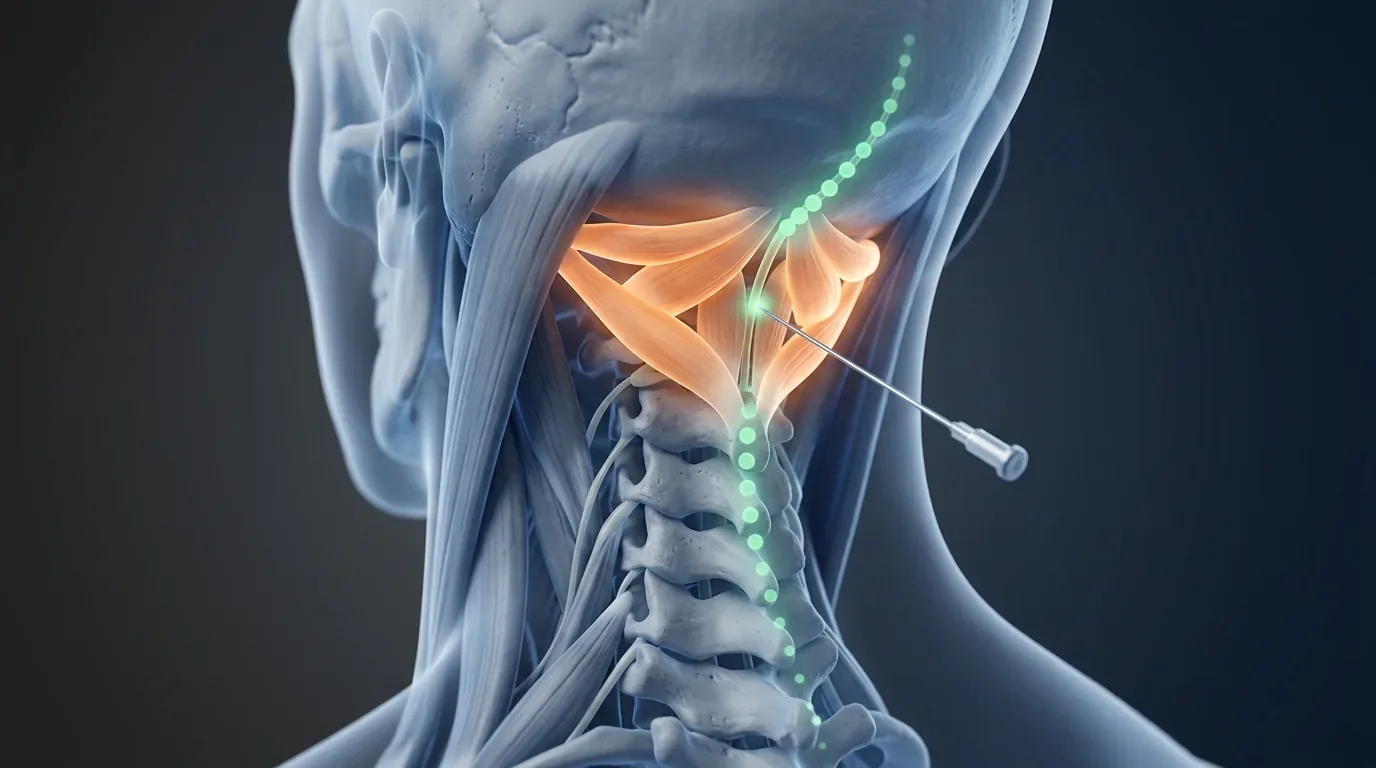
The four suboccipital muscles sit between the base of the skull and the upper two cervical vertebrae. They control fine head rotation and extension, but they also serve as postural stabilizers during sustained forward-head postures, which means they are frequently overloaded in desk workers, drivers, and anyone spending long hours looking at screens. Trigger points in the suboccipitals refer pain along the back of the head, over the crown, and into the area behind the eye, a pattern that many patients describe as a "deep headache" that worsens when pressing on the base of the skull.
Trigger Point Page Suboccipital Trigger Points: Referral Patterns and TreatmentUpper Trapezius
The upper trapezius is among the most commonly implicated muscles in both tension-type and migraine headaches. Its trigger points refer pain along the lateral neck and up toward the temple, producing the characteristic "tight band" sensation that runs from shoulder to skull. Sustained carrying, stress-related shoulder elevation, and asymmetrical workstation setups all contribute to upper trapezius overload. Because this muscle is so close to the surface, it responds well to dry needling with a short needle depth and often elicits a vigorous local twitch response.
Trigger Point Page Trapezius Trigger Points: Patterns, Causes, and TreatmentSternocleidomastoid (SCM)
The SCM runs from behind the ear down to the sternum and clavicle, and its trigger points produce one of the most complex referral patterns of any muscle in the head and neck region. They can refer to the forehead, the orbit, the cheek, above and around the ear, and even cause autonomic symptoms like tearing or redness of the eye on the affected side. SCM trigger points are particularly common after whiplash injuries and in people who sleep in awkward positions or carry bags on one shoulder for extended periods.
Trigger Point Page Sternocleidomastoid Trigger Points: Referral Zones and Clinical SignificanceTemporalis and Masseter
These jaw muscles are frequently overlooked in headache assessment. The temporalis, which spans much of the side of the skull, refers pain directly into the temporal region and upper teeth. The masseter, the large jaw-closing muscle, refers to the cheek, lower teeth, and the ear. Both muscles develop trigger points in response to jaw clenching, bruxism, and prolonged dental procedures. Patients with temporomandibular dysfunction often present with headaches that have been attributed to migraine but actually have a dominant jaw-muscle component.
Is Your Jaw Contributing to Your Headaches?
Trigger points in the temporalis and masseter muscles are a commonly missed source of head pain. If you clench your teeth, wake up with jaw tightness, or notice your headaches are worse in the morning, a myofascial assessment of these muscles is worth exploring. Our practitioners at Morningside Acupuncture evaluate the full picture, including the jaw, neck, and shoulders, before designing your treatment plan.
Schedule NowWhat the Research Shows
The relationship between trigger points and headache is one of the more thoroughly studied areas of myofascial pain research. A systematic review by Gattie et al. (2017) examined dry needling across musculoskeletal pain conditions and found moderate evidence supporting its use for reducing headache frequency and pain intensity. The mechanisms proposed include reduction in nociceptive input from peripheral trigger points, normalization of motor endplate activity, and attenuation of central sensitization that had been amplified by sustained peripheral input.
Studies specifically investigating trigger point prevalence in headache populations have been illuminating. Fernández-de-las-Peñas et al. (2007) found that individuals with episodic migraine carried significantly more active trigger points in the suboccipital, upper trapezius, and SCM muscles than headache-free controls, and the pressure pain thresholds of these muscles were lower in the migraine group. This suggests that, even in a condition typically understood as neurological, the peripheral muscular environment plays a meaningful sensitizing role.
For cervicogenic headache, the evidence for a cervical trigger point contribution is strong enough that addressing these muscles is considered a core component of management. Bron and Dommerholt (2012) described the pathophysiological mechanisms by which trigger points sustain sensitization of trigeminal and cervical afferents, providing a mechanistic basis for the clinical observation that releasing cervical trigger points often produces meaningful headache relief.
What Dry Needling for Headaches Involves
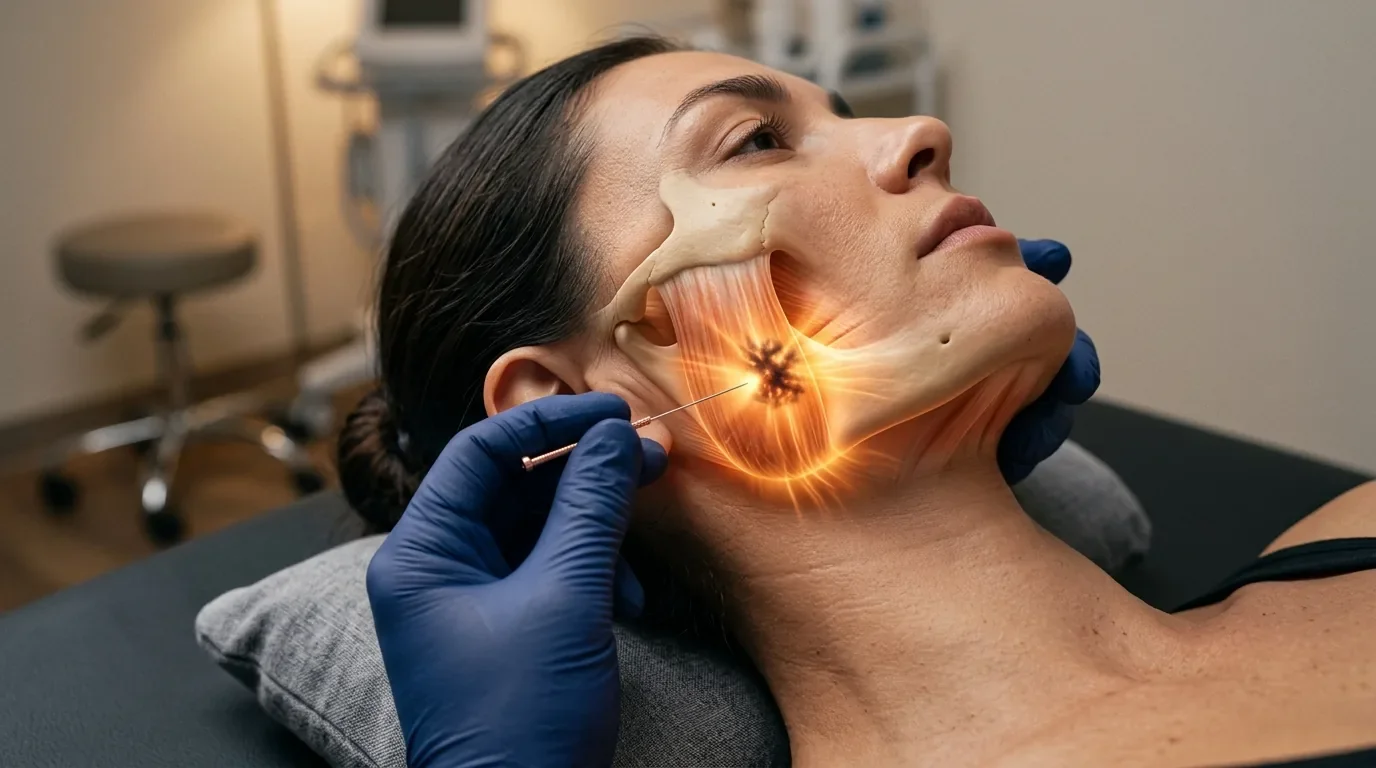
A dry needling session for headache management typically begins with a thorough assessment of the cervical spine, the suboccipital region, the shoulder girdle, and, where indicated, the jaw muscles. The practitioner identifies which muscles are harboring active trigger points that correspond to the patient's specific pain pattern. Treatment focuses on those muscles, using a thin acupuncture needle inserted directly into the trigger point and manipulated to elicit a local twitch response.
The local twitch response is often described as a brief, involuntary "jump" of the muscle. It is momentarily uncomfortable but typically subsides within a few seconds. Research using microdialysis has shown that the biochemical environment around an active trigger point, including elevated levels of substance P, calcitonin gene-related peptide, and bradykinin, normalizes after a local twitch response is elicited (Shah et al., 2015). This is the proposed mechanism by which dry needling produces more than just temporary relief.
Sessions generally last 30 to 45 minutes and are spaced one to two weeks apart, depending on the patient's response. Most headache patients require three to six sessions to achieve a meaningful reduction in frequency or intensity, though individual responses vary. Some patients notice improvement after the first session; others require a longer course before the cumulative effect becomes apparent.
Related Dry Needling for Tension Headaches: A Closer Look Related What to Expect After Dry Needling: Soreness, Timeline, and RecoveryWhen Dry Needling Is and Is Not Appropriate
Dry needling is most appropriate for headaches where a myofascial component has been identified through clinical assessment, meaning the practitioner can reproduce or modify the patient's headache by compressing relevant trigger points. It is less likely to be the primary driver of relief for headaches caused predominantly by intracranial pressure changes, hormonal shifts, or structural pathology.
A thorough intake also screens for headache red flags that require medical evaluation before any manual or needling intervention: new onset severe headache, headache that wakes someone from sleep, headache associated with neurological symptoms, fever, or progressive worsening over weeks. These presentations require imaging or neurological assessment, not trigger point treatment.
For patients whose headaches have a mixed presentation, combining dry needling with cervical mobilization, postural correction, sleep hygiene, and stress management tends to produce better outcomes than any single intervention alone (Fernández-de-las-Peñas & Dommerholt, 2018).
Ready to Address the Muscle Component of Your Headaches?
At Morningside Acupuncture, we are the highest-rated acupuncture and dry needling clinic in New York City with over 500 five-star Google reviews. We assess the cervical, suboccipital, shoulder, and jaw muscles that contribute to headache pain, and develop individualized treatment plans grounded in current myofascial pain research. If your headaches have not responded fully to other treatments, a myofascial evaluation may identify a component that has been missed.
Schedule NowFrequently Asked Questions
How do I know if my headaches have a muscle component?
A common sign is that your headaches come with neck tension, shoulder tightness, or jaw soreness, and pressing on the base of the skull or upper trapezius reproduces or worsens the headache. Headaches that are worse after prolonged desk work, poor sleep, or stressful periods often have a significant myofascial element. A clinical assessment that includes trigger point palpation can clarify this more precisely.
Can dry needling help migraines, or only tension headaches?
The evidence is stronger for tension-type and cervicogenic headaches, where trigger points play a more direct role. For migraine, the research suggests that reducing peripheral trigger point activity in the cervical and pericranial muscles may lower the frequency or intensity of attacks, though it is unlikely to eliminate migraines entirely. Dry needling is best understood as one component of a broader migraine management plan that may also include medication, lifestyle modification, and stress management.
Will dry needling hurt during or after treatment?
The needle insertion itself is rarely painful, as the needles used are very thin. The local twitch response, if it occurs, produces a brief deep ache or cramping sensation that typically resolves within seconds. After treatment, some patients experience muscle soreness in the treated areas for 12 to 48 hours, similar to delayed onset muscle soreness after exercise. Most people find this manageable and report that it diminishes with subsequent sessions.
How many sessions will I need for headache relief?
Most patients with chronic headaches require three to six sessions spaced one to two weeks apart before noticing a sustained reduction in frequency or intensity. Some notice improvement after the first or second session, while others with longer-standing patterns take longer to respond. Your practitioner will reassess progress regularly and adjust the treatment plan accordingly.
Can dry needling for headaches be combined with other treatments?
Yes, and it often produces better outcomes when combined with other evidence-based strategies. Cervical mobilization or physical therapy, ergonomic adjustments, stress management, and sleep optimization address different contributing factors that dry needling alone cannot resolve. For patients on migraine medication, dry needling is generally compatible with ongoing pharmacological management.
Does Morningside Acupuncture treat headaches with dry needling?
Yes. Our practitioners regularly assess and treat patients whose headaches have a myofascial component, including tension-type, cervicogenic, and migraine-associated patterns. We conduct a thorough intake to identify the specific muscles involved and develop a treatment plan tailored to your headache pattern and history. New patients can book an initial consultation through our website.
References
- Bron, C., & Dommerholt, J. D. (2012). Etiology of myofascial trigger points. Current Pain and Headache Reports, 16(5), 439–444. https://doi.org/10.1007/s11916-012-0289-4
- Fernández-de-las-Peñas, C., & Dommerholt, J. (2018). International consensus on diagnostic criteria and clinical considerations of myofascial trigger points: A Delphi study. Pain Medicine, 19(1), 142–150. https://doi.org/10.1093/pm/pnx207
- Fernández-de-las-Peñas, C., Cuadrado, M. L., & Pareja, J. A. (2007). Myofascial trigger points, neck mobility, and forward head posture in episodic tension-type headache. Headache: The Journal of Head and Face Pain, 47(5), 662–672. https://doi.org/10.1111/j.1468-2982.2007.01295.x
- Gattie, E., Cleland, J. A., & Snodgrass, S. (2017). The effectiveness of trigger point dry needling for musculoskeletal conditions by physical therapists: A systematic review and meta-analysis. Journal of Orthopaedic and Sports Physical Therapy, 47(3), 133–149. https://doi.org/10.2519/jospt.2017.7096
- Gerwin, R. D. (2014). Diagnosis of myofascial pain syndrome. Physical Medicine and Rehabilitation Clinics of North America, 25(2), 341–355. https://doi.org/10.1016/j.pmr.2014.01.011
- Shah, J. P., Thaker, N., Heimur, J., Aredo, J. V., Sikdar, S., & Gerber, L. (2015). Myofascial trigger points then and now: A historical and scientific perspective. PM&R: The Journal of Injury, Function, and Rehabilitation, 7(7), 746–761. https://doi.org/10.1016/j.pmrj.2015.01.024
Disclaimer: This web site is intended for educational and informational purposes only. Reading this website does not constitute providing medical advice or any professional services. This information should not be used for diagnosing or treating any health issue or disease. Those seeking medical advice should consult with a licensed physician. Seek the advice of a medical doctor or other qualified health professional for any medical condition. If you think you have a medical emergency, call 911 or go to the emergency room. No acupuncturist-patient relationship is created by reading this website or using the information. Morningside Acupuncture PLLC and its employees and contributors do not make any express or implied representations with respect to the information on this site or its use. For any legal interpretation of scope of practice in your state, consult a licensed attorney or regulatory authority.
Read more from our blog