Best Acupuncture Points for Migraines
GB20, LV3, TE5, and GB41 — How Acupuncture Targets the Trigeminovascular System, Cortical Hyperexcitability, and Autonomic Dysregulation That Drive Migraine
Migraines are neurological events, not just bad headaches. They involve cortical spreading depression, trigeminovascular inflammation, central sensitization, and autonomic dysregulation — a cascade of events that acupuncture can interrupt at multiple points. A growing body of evidence positions acupuncture as an effective prophylactic treatment for migraine, at least comparable to standard pharmacological prevention, with a better tolerability profile for many patients.
- Migraines are distinct from tension headaches in their pathophysiology: they involve cortical spreading depression (a wave of neuronal depolarization), activation of the trigeminovascular system, release of calcitonin gene-related peptide (CGRP) that dilates meningeal vessels, and central sensitization that produces the allodynia many migraineurs experience during attacks.
- A 2012 Cochrane review of acupuncture for migraine prophylaxis found that acupuncture reduced the frequency of migraines by at least 50% in 57% of participants, comparable to topiramate and beta-blockers with fewer side effects, and that these benefits persisted through 12 months of follow-up (Linde et al., 2016).
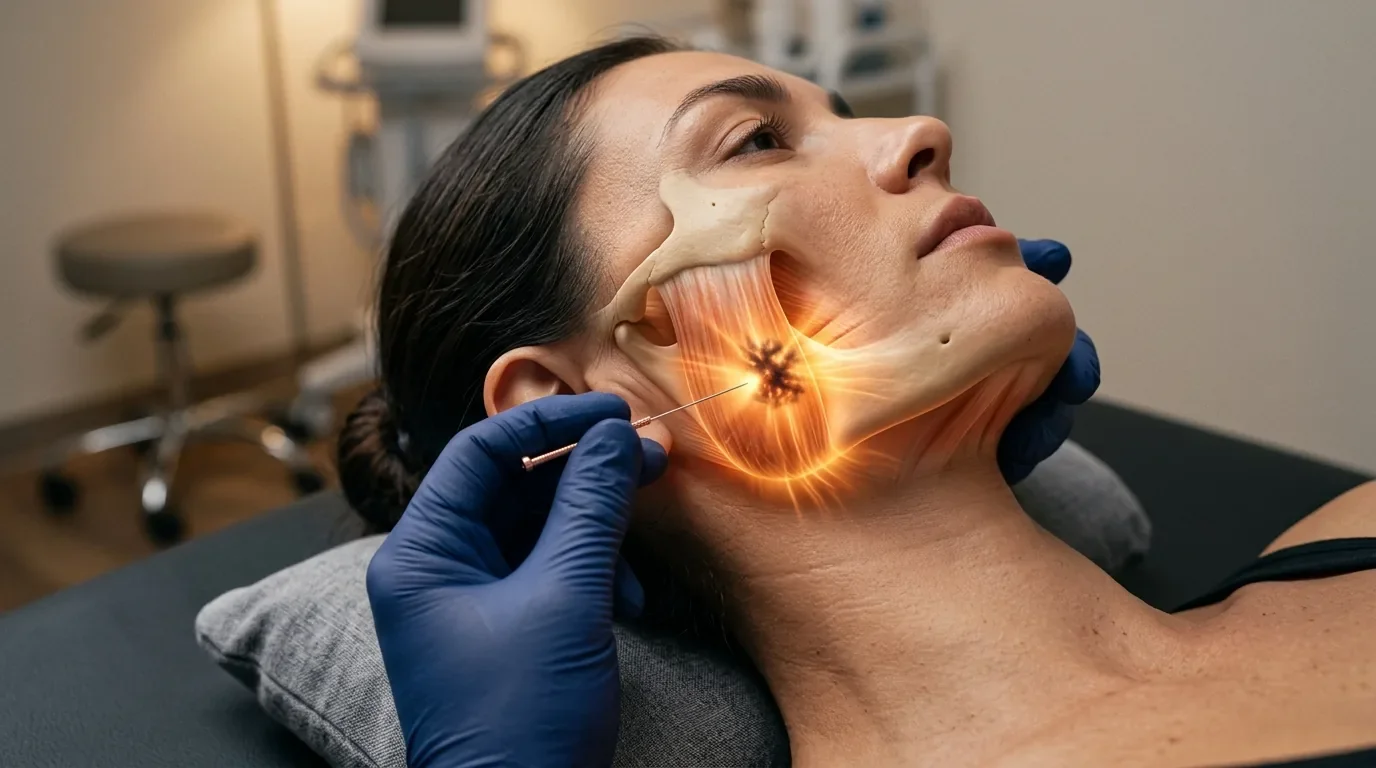
- GB20 (Fengchi) at the suboccipital region directly addresses the greater occipital nerve and trigeminocervical convergence, the anatomical meeting point of trigeminal and cervical pain pathways that is central to migraine chronification, making it the most important local point in migraine treatment.
- LV3 (Taichong) and LI4 (Hegu) together as the Four Gates combination generate supraspinal descending inhibition via the periaqueductal gray and may reduce the cortical excitability that predisposes migraineurs to frequent attacks through their combined afferent activation at multiple spinal cord levels (Zhao, 2008).
- TE5 (Waiguan) on the outer forearm and GB41 (Zulinqi) on the dorsal foot are classically paired as an "opening combination" for the lateral head and temple territory and target the temporal and auriculotemporal nerve distributions involved in the temporal pain of migraine with aura.
- Acupuncture's effectiveness for migraine prevention may be partly explained by its documented ability to reduce central sensitization, normalize autonomic tone, and increase pain thresholds between attacks, addressing the interictal state that determines migraine frequency rather than just treating individual episodes.
Are migraines disrupting your work and life multiple times each month?
At Morningside Acupuncture, migraine prevention protocols focus on reducing the cortical hyperexcitability and trigeminovascular sensitization that drive attack frequency. Our practitioners build individualized protocols based on your migraine pattern, including aura characteristics, prodrome symptoms, and trigger patterns, to identify which combination of points will be most effective for you.
Schedule NowWhy Migraines Are Different From Other Headaches
Migraine is a neurological disorder characterized by recurrent attacks of moderate to severe head pain, typically unilateral and pulsating, accompanied by nausea, photophobia, and phonophobia. What distinguishes migraine from tension-type headache is not just its severity but its underlying neurobiology.
A migraine attack typically begins with a prodrome phase, hours before the headache, in which the hypothalamus activates and generates the yawning, mood changes, and food cravings many migraineurs recognize as warning signs. In the roughly 30% of migraineurs who experience aura, this is followed by cortical spreading depression: a slowly propagating wave of neuronal depolarization that moves across the cortex at approximately 3–5 mm per minute and generates the visual, sensory, or speech disturbances that constitute the aura.
Cortical spreading depression activates the trigeminal nerve fibers surrounding meningeal blood vessels, triggering release of calcitonin gene-related peptide (CGRP), substance P, and other inflammatory neuropeptides that cause the characteristic throbbing pain of the migraine headache phase. The pain signals travel through the trigeminal ganglion to the trigeminal nucleus caudalis in the brainstem, which connects with the cervical dorsal horn at C1-C3, creating the trigeminocervical complex where central sensitization occurs during prolonged or frequent attacks.
The Key Acupuncture Points for Migraine
| Point | Location | Mechanism for Migraine | Best Phase |
|---|---|---|---|
| GB20 (Fengchi) | Suboccipital region, in the depression between the SCM and trapezius, at the base of the skull | Greater occipital nerve and trigeminocervical complex modulation; C1-C2 dorsal horn inhibition; suboccipital muscle deactivation | Prevention (primary); acute (reduces duration) |
| LV3 (Taichong) | Dorsal foot, between 1st and 2nd metatarsals, 2 cun proximal to web margin | Deep peroneal nerve afferents; supraspinal periaqueductal gray activation; limbic deactivation; cortical excitability reduction | Prevention (primary); interictal period |
| LI4 (Hegu) | Dorsal hand, between 1st and 2nd metacarpals, radial nerve territory | Radial nerve afferents; trigeminocervical complex modulation from C6-C7 convergence; descending inhibition activation | Acute (most effective); prevention in Four Gates combination |
| TE5 (Waiguan) | Posterior forearm, 2 cun proximal to wrist crease, between radius and ulna | Posterior interosseous nerve; lateral head and temporal territory modulation; auriculotemporal nerve zone overlap | Prevention; temporal migraine; migraine with aura |
| GB41 (Zulinqi) | Dorsal foot, in the depression proximal to the 4th-5th metatarsal junction | Peroneal nerve afferents; lateral head and gallbladder channel territory modulation; paired with TE5 | Prevention; temporal migraine; lateral head pain |
| GV20 (Baihui) | Vertex of skull, at the midpoint of a line connecting the apices of the ears | Greater occipital nerve; HPA axis modulation; autonomic regulation; cortical input via pericranial nerves | Vertex migraine; prevention; cortical hyperexcitability |
GB20: The Most Important Point for Migraine
GB20 (Fengchi) at the base of the skull, between the sternocleidomastoid and trapezius muscles in the suboccipital region, is the single most important point in migraine treatment. Its position at the greater occipital nerve and the suboccipital muscle attachments places it directly at the anatomical substrate of the trigeminocervical complex, the region where trigeminal and cervical pain pathways converge and where central sensitization during frequent migraines is most concentrated.
Needling GB20 directly deactivates the suboccipital muscles (rectus capitis posterior major and minor, obliquus capitis inferior), which are a frequent source of trigger points that contribute to cervicogenic headache components in migraineurs. It also stimulates the greater occipital nerve, generating afferent signals that enter the C1-C2 dorsal horn and competitively inhibit the trigeminocervical sensitization responsible for the allodynia and cutaneous hypersensitivity that develop during prolonged migraine attacks. Several clinical trials specifically examining GB20 for migraine have shown significant reductions in attack frequency and duration compared to sham needling.
LV3 and LI4: The Four Gates for Supraspinal Modulation
In migraine prevention, LV3 and LI4 are typically used together as the Four Gates combination, generating convergent supraspinal descending inhibition from four extremity sites simultaneously. The rationale for their use in migraine specifically involves two mechanisms beyond their general pain modulation effects.
First, LV3's documented limbic deactivation, including reduction in amygdala and anterior cingulate activity, may address the hypothalamic and limbic drivers of migraine that are active in the prodrome phase and that contribute to the emotional sensitivity and cortical hyperexcitability characteristic of the migraineous brain. Second, LI4 at the radial nerve in the C6-C7 territory shares spinal overlap with the trigeminocervical complex through the central trigeminal pain pathways, making it one of the few distal points with direct segmental relevance to the trigeminal system rather than only supraspinal effects.
TE5 and GB41: The Lateral Head Combination
TE5 (Waiguan) on the posterior forearm and GB41 (Zulinqi) on the dorsal foot are paired in classical acupuncture as the opening points of the Dai Mai and Yang Wei Mai extraordinary vessel pathways, which classically govern the lateral body and head. In clinical terms, both points stimulate peripheral nerves whose spinal territory includes the C5-C8 range for TE5 and L4-S1 for GB41, generating convergent supraspinal signals that may specifically reduce sensitization in the temporal and lateral cranial nerve territory most affected in temporal migraine.
TE5 is also used for ear-related symptoms including tinnitus, ear pressure, and vestibular disturbance, which commonly accompany migraine with brainstem aura. The combination of TE5 and GB41 is particularly useful when migraine pain is predominantly temporal, unilateral, and associated with ear pressure or jaw clenching, as in vestibular migraine presentations.
Has medication for migraine prevention caused side effects that made it hard to continue?
Acupuncture for migraine prevention has a well-documented tolerability advantage over standard preventive medications including topiramate and valproate, with no cognitive side effects, no weight concerns, and no contraindications in pregnancy. Morningside's practitioners design migraine prevention protocols around your attack pattern and accompanying symptoms — temporal vs. vertex pain, aura vs. no aura, hormonal triggers, stress patterns — to identify the combination of points most likely to reduce your specific migraine frequency.
Schedule NowAcupuncture for Migraine: What the Evidence Says
Acupuncture for migraine has been studied in more than 40 randomized controlled trials and is now included in treatment guidelines from several European neurology and pain medicine organizations. The 2016 Cochrane review by Linde and colleagues, updated with additional trials, found that acupuncture reduced migraine frequency by 50% or more in 57% of patients compared to usual care, and that this effect was maintained through at least twelve months following a course of treatment. Comparison with prophylactic drugs showed acupuncture to be at least as effective as topiramate, propranolol, and valproate for migraine prevention in the trials where direct comparisons were made.
The evidence is stronger for migraine prevention than for acute migraine treatment, though several trials have shown that acupuncture initiated during the early phase of a migraine attack can reduce its duration and severity. For prevention, a typical course of six to twelve weekly sessions produces the best documented outcomes, with the benefits accumulating over the treatment period and persisting for several months after treatment ends.
Electroacupuncture, in which a mild electrical current is applied to the needle, has shown additional benefits in some migraine trials, particularly for reducing CGRP levels in the blood, suggesting that the electrical component may add a specific anti-inflammatory mechanism to the standard needle stimulation effects.
Ready to try an evidence-based approach to migraine prevention?
At Morningside Acupuncture, the highest-rated acupuncture and dry needling clinic in New York City with over 500 five-star Google reviews, our practitioners use individualized migraine protocols that address your specific attack pattern, trigger sensitivities, and accompanying symptoms. A new patient visit includes a detailed migraine history to build the most targeted prevention plan possible.
Schedule NowFrequently Asked Questions About Acupuncture for Migraines
How is acupuncture for migraines different from acupuncture for tension headaches?
The point selection differs substantially because the underlying pathophysiology differs. Tension headaches are primarily myofascial and involve trigger points in the pericranial and cervical muscles with local referred pain to the head. Acupuncture for tension headaches focuses heavily on deactivating those trigger points at GB20, BL10, GB21, and the upper trapezius. Migraine treatment uses a broader systemic approach that includes supraspinal modulation points like LV3 and LI4, lateral head points like TE5 and GB41, and a stronger focus on reducing the cortical hyperexcitability and trigeminovascular sensitization that drive the migraine attack cycle.
How many sessions are needed to reduce migraine frequency?
Most migraine prevention trials used protocols of eight to twelve sessions over six to twelve weeks. Clinically, many patients begin noticing a reduction in frequency or severity after the third or fourth session, with the full preventive effect building over the course of treatment. Patients who have had migraines for many years with significant central sensitization typically need the full course and possibly maintenance sessions every four to six weeks afterward to sustain the benefit.
Can acupuncture help during an acute migraine attack?
Yes, particularly if initiated in the early stages before central sensitization is fully established. LI4 is the most commonly used point for acute migraine because its radial nerve afferents can rapidly shift pain processing in the trigeminocervical territory. GB20 may also be effective during an acute attack for reducing pain duration. Some patients prefer to use acupressure at LI4 and PC6 as self-management tools during a migraine when they cannot get to a practitioner, though the effect is smaller than with needle stimulation.
Are there acupuncture points that are contraindicated during migraine?
During an active migraine, strong stimulation at GB20 or other pericranial points can occasionally intensify symptoms in highly sensitized patients, particularly those in the central sensitization phase with significant allodynia. Our practitioners assess this before treatment and may begin with gentler distal points like LV3 and LI4 during an active attack, adding local points as tolerated. Outside of active attacks, no specific points are contraindicated for migraine patients.
Does acupuncture help menstrual migraines specifically?
Yes. Menstrual migraines, which occur in the two days before through three days after menstruation onset and are driven by the estrogen withdrawal that accompanies menstruation, typically respond well to protocols that combine standard migraine points with the reproductive-regulating points SP6, LV3, and SP8. Treating in the week before the expected migraine window, when estrogen levels are dropping, may help reduce the neurological sensitization that estrogen withdrawal triggers. Many patients with menstrual migraines find that their overall migraine frequency across the month also improves with a full treatment course.
References
- Linde, K., Allais, G., Brinkhaus, B., Fei, Y., Mehring, M., Shin, B. C., Vickers, A., & White, A. R. (2016). Acupuncture for the prevention of episodic migraine. Cochrane Database of Systematic Reviews, Issue 6, CD001218. https://doi.org/10.1002/14651858.CD001218.pub3
- Zhao, Z. Q. (2008). Neural mechanism underlying acupuncture analgesia. Progress in Neurobiology, 85(4), 355–375. https://doi.org/10.1016/j.pneurobio.2008.05.004
- Vickers, A. J., Vertosick, E. A., Lewith, G., MacPherson, H., Foster, N. E., Sherman, K. J., Irnich, D., Witt, C. M., & Linde, K. (2018). Acupuncture for chronic pain: Update of an individual patient data meta-analysis. The Journal of Pain, 19(5), 455–474. https://doi.org/10.1016/j.jpain.2017.11.005
- Yarnitsky, D. (2010). Conditioned pain modulation (the diffuse noxious inhibitory control-like effect): Its relevance for acute and chronic pain states. Current Opinion in Anaesthesiology, 23(5), 611–615. https://doi.org/10.1097/ACO.0b013e32833c348b
- Diener, H. C., Kronfeld, K., Boewing, G., Lungenhausen, M., Maier, C., Molsberger, A., Tegenthoff, M., Trampisch, H. J., Zenz, M., & Meinert, R. (2006). Efficacy of acupuncture for the prophylaxis of migraine: A multicentre randomised controlled clinical trial. The Lancet Neurology, 5(4), 310–316. https://doi.org/10.1016/S1474-4422(06)70382-9
Disclaimer: This web site is intended for educational and informational purposes only. Reading this website does not constitute providing medical advice or any professional services. This information should not be used for diagnosing or treating any health issue or disease. Those seeking medical advice should consult with a licensed physician. Seek the advice of a medical doctor or other qualified health professional for any medical condition. If you think you have a medical emergency, call 911 or go to the emergency room. No acupuncturist-patient relationship is created by reading this website or using the information. Morningside Acupuncture PLLC and its employees and contributors do not make any express or implied representations with respect to the information on this site or its use. For any legal interpretation of scope of practice in your state, consult a licensed attorney or regulatory authority.
Read more from our blog