KI10 Acupuncture Point (Yingu)
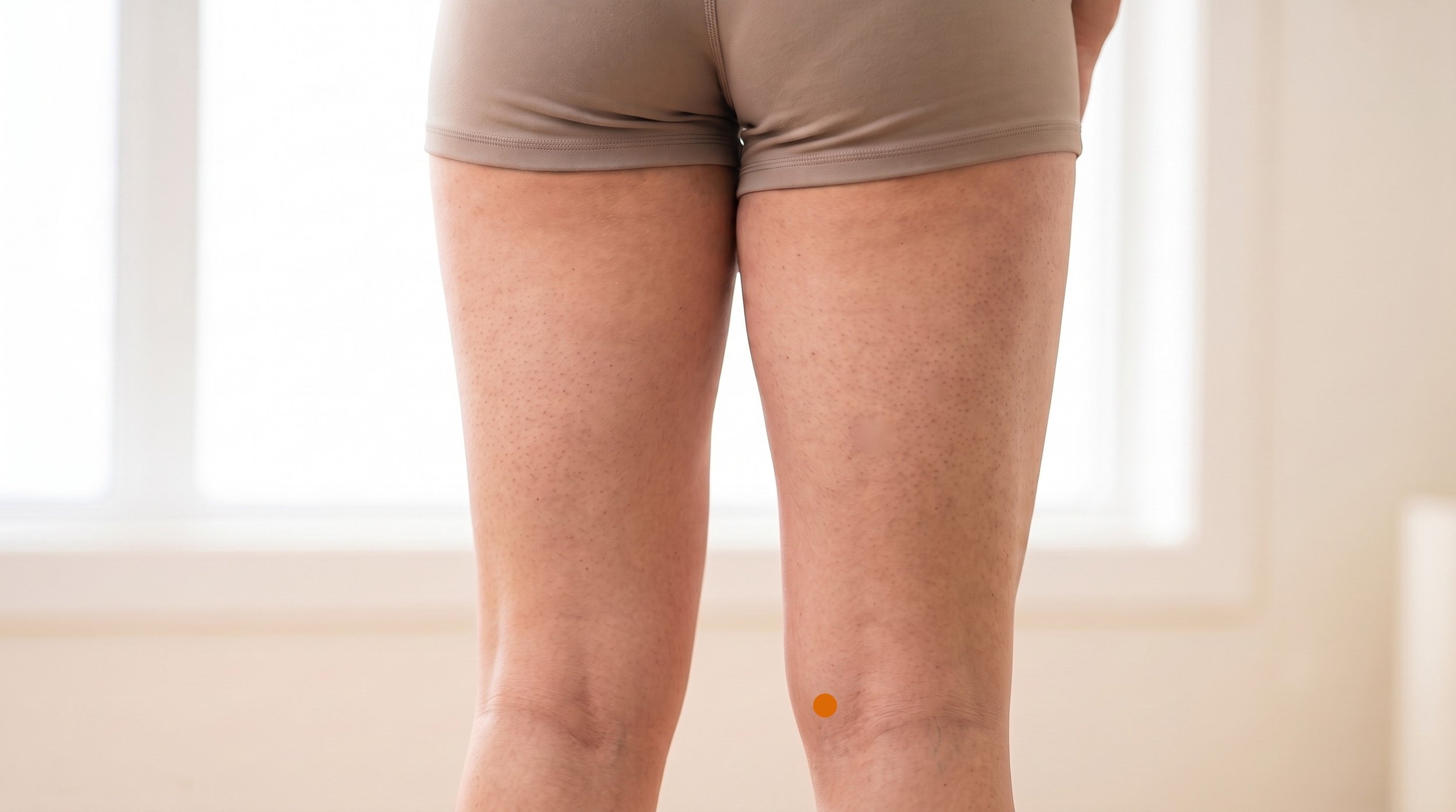
KI10 Acupuncture Point (Yingu)
The Yin Valley Between the Hamstring Tendons: Anatomy, Mechanism, and Why This Inner Knee Point Links Medial Knee Pain With Pelvic and Urinary Complaints
KI10 (Yingu, often translated as Yin Valley) is the he-sea and water point of the Kidney channel, and it sits in a genuine anatomical valley: the soft gap at the medial end of the popliteal crease, framed by the tendons of semitendinosus and semimembranosus. It's an easy point to find once you ask a patient to bend the knee slightly and gently tighten the hamstrings, because the two tendons stand up like the walls of a small ravine.
Clinically the ki10 acupuncture point earns its place twice over: it's a local and segmental option for medial knee and posteromedial hamstring pain, and in classical texts it's one of the main lower limb points for urinary difficulty, genital irritation and pelvic patterns described as damp-heat of the lower jiao. That double identity, a knee point that classical authors reached for in genito-urinary complaints, is what makes kidney 10 worth understanding in detail.
- Location and layers: KI10 lies at the medial end of the popliteal crease between the semitendinosus and semimembranosus tendons, with the knee slightly flexed; needling passes through skin and subcutaneous fascia into the tendon interval and the medial floor of the popliteal fossa (Deadman et al., 2001).
- Traditional categories translated: classical sources list KI10 as the he-sea and water point of the Kidney channel and credit it with clearing damp-heat from the lower jiao, supporting the Kidneys and freeing the channel; in modern terms these are best read as descriptions of a point used for pelvic, urinary and medial knee complaints rather than as claims about literal fluid or energy movement (Deadman et al., 2001).
- Nerve story: the point sits in tibial nerve territory near the inferior and superior medial genicular vessels, and needle stimulation here recruits A-delta and group III afferents that engage spinal segmental inhibition and descending pain control from the midbrain and brainstem (Zhao, 2008).
- Research picture: no trial isolates KI10, but it appears within multi-point knee and pelvic protocols; Cochrane analysis of acupuncture for peripheral joint osteoarthritis found small benefits for pain and function that the authors judged to be partly non-specific (Manheimer et al., 2010), while individual patient data from chronic pain trials show modest, persistent effects over sham and no-acupuncture control (Vickers et al., 2018).
- Clinical framing: at Morningside we tend to use ki 10 knee needling alongside local knee points and hamstring dry needling for posteromedial knee pain, and as part of a broader pelvic protocol when urinary urgency, pelvic pain or discomfort with urination is the main complaint (Sun et al., 2021).
- De qi: most people feel a deep, heavy ache filling the tendon gap, sometimes spreading up the inner thigh or down toward the calf; a brief electric flick means the needle is too close to a nerve branch and the angle should be changed.
Stubborn Inner Knee Pain That Doesn't Settle With Rest?
Medial knee pain often involves more than the joint line, and the hamstring tendons that form the yingu knee point are a frequently missed contributor. Our licensed acupuncturists combine KI10 with local knee points, orthopedic assessment and targeted dry needling of the semitendinosus and semimembranosus to address both the joint and the soft tissue that loads it. Treatment is paired with simple loading and mobility work so gains hold between visits. Schedule a visit at Morningside Acupuncture and let's map out where your knee pain is actually coming from.
Schedule NowAnatomy of KI10: Why the Medial End of the Popliteal Crease Is Such an Important Location
At the surface, KI10 occupies the soft hollow between two distinct cords at the inner back of the knee. The more posterior and more prominent of the two is the semitendinosus tendon; the broader, deeper structure just in front of it is semimembranosus (Deadman et al., 2001). Both muscles cross two joints, extending the hip and flexing the knee, which is why they take a beating in sprinting, hill running, deep squatting, cycling and long hours of sitting with the knees bent.
Beneath and between the tendons sit fatty tissue, the posteromedial joint capsule and the bursae that separate tendon from bone. Tenderness at this exact spot is common in runners with hamstring tendinopathy, in patients with medial meniscus irritation and in knees that have been chronically held in slight flexion.
Neurologically, this is tibial nerve territory, with medial sural and medial crural cutaneous branches nearby supplying skin, and articular branches supplying the posteromedial knee. That matters because the knee joint, the hamstring tendons and the skin over them all send afferents into overlapping segments of the lumbosacral cord. Needling KI10 stimulates mechanoreceptive and nociceptive afferents that converge on those same dorsal horn neurons, and that input can dampen the transmission of pain signals arriving from the joint itself.
Alongside this segmental effect, needling recruits descending inhibitory pathways involving the periaqueductal gray and rostral ventromedial medulla, with endogenous opioid and monoaminergic signaling contributing to analgesia (Zhao, 2008). Local effects matter too: needle insertion produces a small, controlled tissue response with changes in local blood flow and reduced sensitivity of taut, irritable tissue (Simons et al., 1999).
Deep to the point lie the medial genicular vessels, and further laterally, in the center of the popliteal fossa, sit the popliteal artery and vein and the tibial nerve itself. KI10 is deliberately placed at the medial end of the crease, away from those central structures, which is why perpendicular insertion of roughly 1 to 1.5 cun with the knee slightly flexed is the standard convention (Deadman et al., 2001). Practitioners angle the needle within the tendon interval rather than fanning laterally toward the middle of the fossa, and any sharp, electric or radiating sensation is a signal to withdraw and redirect.
Slight knee flexion, ideally with the patient prone or side lying, opens the interval and keeps the tendons relaxed enough to accept the needle comfortably.
Related Acupuncture For Knee Pain Related Best Acupuncture Points For Knee PainKI10 at a Glance: Classification, Location, and Clinical Use
| Category | Detail |
|---|---|
| Traditional Name | Yingu (Yin Valley), KI10, also written Kidney 10 or KID-10 |
| Channel Classification | Kidney channel of the foot shaoyin, tenth point of the channel and the last before the trunk points begin |
| Point Categories | He-sea point of the Kidney channel; water point of the Kidney channel within the five-shu system, making it the water point of a water channel; grouped with the he-sea points of the other leg yin channels (SP9 and LV8) for lower jiao damp-heat in classical commentary |
| Precise Location | At the medial end of the popliteal crease, in the gap between the semitendinosus tendon (the more prominent, posterior cord) and the semimembranosus tendon, level with BL40; located with the knee slightly flexed |
| Tissue Stimulated | Skin and subcutaneous fascia, the tendon interval between semitendinosus and semimembranosus, posteromedial knee capsule and fascia, with tibial nerve cutaneous and articular branches nearby |
| Needle Depth / Direction | Perpendicular insertion 1 to 1.5 cun with the knee slightly flexed, directed into the tendon interval and not laterally toward the center of the popliteal fossa; moxibustion is traditionally permitted here |
| De Qi Sensation | Deep, heavy, spreading ache filling the space between the tendons, occasionally traveling up the inner thigh or down the calf; sharp electric sensations mean the needle should be withdrawn and redirected |
| Primary Clinical Uses | Medial and posteromedial knee pain, hamstring tendon pain near the knee, and, in classical listings, difficult or urgent urination with discomfort, genital itching, pelvic and hypogastric pain, and gynecological complaints including abnormal uterine bleeding and vaginal discharge |
| Common Point Combinations |
|
Deadman, Al-Khafaji and Baker's A Manual of Acupuncture presents Yingu KI10 as the he-sea and water point of the Kidney channel and attributes to it three traditional actions: clearing damp-heat from the lower jiao, benefiting the Kidneys, and activating the channel to relieve pain. The commentary places it in a family with the he-sea points of the other leg yin channels, each said to drain dampness from the lower body, with LV8 weighted toward the genitals, SP9 toward dampness generally, and KI10 toward the urinary and genital system in particular.
Its classical indication list is heavily genito-urinary: difficult, urgent or painful urination with dark urine, urgency that radiates toward the thigh, genital pain and itching, abnormal uterine bleeding and discharge, hypogastric pain spreading to the inner thigh, plus a scattering of tongue, speech and mental-emotional entries. The knee entry that stands out is an old description of drilling knee pain with immobility, a vivid phrase for a deep, boring ache that locks the joint.
Sources also note that later authors have credited KI10 with strongly nourishing Kidney yin even though the classical record doesn't support that emphasis strongly, which is a useful reminder that point indications shift across centuries. What's striking is the pattern itself: a point at the back of the knee that classical clinicians consistently reached for when the complaint was in the pelvis.
Why KI10 Is Used for Urinary and Pelvic Symptoms From a Point Behind the Knee
The idea that a point at the inner knee can influence the bladder or pelvis sounds strange until you look at how the nervous system is wired. Sensory information from the lower limb, the pelvic floor and the pelvic viscera converges in overlapping regions of the lumbosacral spinal cord, and somatic input from a limb can modulate the excitability of neurons that also receive visceral input. This is the same convergence that makes referred pain possible in reverse, and it's one of the mechanisms proposed for somato-visceral effects of needling.
Repeated stimulation also shifts autonomic balance, and reflex changes in pelvic floor and bladder activity have been described in response to somatic afferent input.
Alongside that segmental story, needling engages descending inhibitory systems from the midbrain and brainstem that release endogenous opioids, serotonin and noradrenaline at the spinal level, damping nociceptive transmission broadly rather than only at the segment needled (Zhao, 2008). This is why a well-chosen distal point can reduce pain that isn't anatomically adjacent to it.
Clinically, the most relevant human evidence comes from pelvic pain and continence trials: a multicenter sham-controlled trial found acupuncture reduced symptoms of chronic prostatitis and chronic pelvic pain syndrome with effects that persisted for months after treatment (Sun et al., 2021), and a large randomized trial of electroacupuncture in women with stress urinary incontinence reported reduced urine leakage compared with sham (Liu et al., 2017).
None of that proves KI10 specifically drives those results, and we're careful to say so. Those protocols centered on lumbosacral and abdominal points, with lower limb points as supporting selections. What the research does support is that needling protocols including points like kidney 10 may reduce symptom burden in some pelvic and urinary presentations, which lines up with why classical clinicians kept this point in the rotation.
What the Research Shows for KI10
Acupuncture research almost never isolates a single point, so there's no trial testing KI10 on its own. What exists are trials of multi-point protocols for knee osteoarthritis, chronic musculoskeletal pain and pelvic or urinary conditions, in which points at the inner knee are commonly included. Reading that literature honestly means accepting modest effect sizes, real debate about how much of the benefit is specific to needle placement, and a decent safety record when needling is performed by trained clinicians. The table below summarizes the reviews and trials most relevant to how we use this point.
| Study | Type | Focus | Key Finding |
|---|---|---|---|
| Manheimer et al., 2010 | Cochrane systematic review | Acupuncture for peripheral joint osteoarthritis, including the knee | Reported small improvements in pain and physical function at 8 and 26 weeks, with the authors cautioning that sham-controlled benefits were small and probably partly non-specific. |
| Vickers et al., 2018 | Individual patient data meta-analysis | Chronic musculoskeletal pain including knee osteoarthritis | Found acupuncture superior to both sham and no-acupuncture control, with effects that persisted over roughly a year and only modest decay. |
| Jiménez-del-Barrio et al., 2022 | Systematic review and meta-analysis | Dry needling of trigger points in hip and knee osteoarthritis | Very low quality evidence suggested short-term reductions in pain and improvements in function, with medium and long term effects undetermined. |
| Sun et al., 2021 | Multicenter randomized sham-controlled trial | Chronic prostatitis and chronic pelvic pain syndrome | Twenty sessions over 8 weeks produced greater symptom improvement than sham, with benefits maintained through 24 weeks of follow-up. |
| Liu et al., 2017 | Randomized clinical trial | Electroacupuncture for stress urinary incontinence in women | Reported greater reduction in urine leakage than sham electroacupuncture over 6 weeks of treatment, using lumbosacral points. |
| Zhao, 2008 | Narrative review of mechanisms | Neural pathways underlying acupuncture analgesia | Describes segmental spinal inhibition and descending opioid and monoaminergic control as the principal mechanisms behind needling analgesia. |
Pelvic Discomfort, Urinary Urgency or Chronic Pelvic Pain?
Classical texts reached for Yingu when urination was difficult, urgent or uncomfortable, and modern trials of acupuncture for chronic pelvic pain syndromes suggest needling protocols may reduce symptom burden for some patients. We use kidney 10 as part of a pelvic and lower abdominal protocol, always alongside appropriate medical care rather than in place of it. Sessions are calm, unhurried and built around your history rather than a template. Book an evaluation and we'll talk through whether acupuncture fits your case.
Schedule NowKI10 in the Context of Trigger Point Work
KI10 sits directly in the tendon interval of the medial hamstrings, so the point location and the myofascial target overlap almost perfectly. Trigger points in semitendinosus and semimembranosus refer pain into the buttock crease and down the back of the thigh toward the posteromedial knee, and patients often describe the result as a deep ache behind and inside the knee that worsens with sitting and with the first few steps afterward (Simons et al., 1999).
When we palpate at KI10 and find a tender, ropey band rather than a clean tendon interval, that finding shapes the treatment: we needle the point as a channel point and then work proximally into the muscle bellies where the taut bands actually live.
In practice this means combining acupuncture and dry needling in the same session, because both use an acupuncture needle and both are useful for different reasons. KI10 and LV8 give us a local, segmental input at the medial knee, while dry needling of the medial hamstrings, adductor magnus and gastrocnemius addresses the soft tissue that keeps loading the joint.
Review-level evidence for dry needling in knee osteoarthritis remains low quality and short-term (Jiménez-del-Barrio et al., 2022), so we treat it as one tool inside a plan that also includes loading exercise, gait and desk setup review, and realistic timelines rather than promises.
KI10 Knee Pain Treatment at NYC's Highest-Rated Acupuncture Clinic
Morningside Acupuncture is the highest-rated acupuncture and dry needling clinic in New York City with over 500 five-star Google reviews, and knee pain is one of the conditions we see most. Our approach blends classical point selection like KI10 and LV8 with modern trigger point needling of the hamstrings, quadriceps and calf. You get a clear explanation of what we're treating and why at every visit. Schedule your appointment on the Upper West Side and get started this week.
Schedule NowFrequently Asked Questions
What does KI10 feel like when needled?
Most patients report a deep, heavy, slightly full ache that seems to expand inside the gap between the two tendons, sometimes traveling a short distance up the inner thigh or down toward the calf. Because the knee is slightly flexed and the area is soft, insertion itself is usually barely noticed. A dull heaviness that lingers for a minute or two after the needle is placed is typical de qi. What isn't typical is a sharp electric zap or shooting sensation into the foot, which means the needle is near a nerve branch and should be adjusted right away.
Why needle behind the knee for a urinary or pelvic complaint?
Sensory nerves from the lower limb and from the pelvic organs converge in overlapping segments of the lumbosacral spinal cord, so input from a limb point can modulate the same neurons that process pelvic sensation. Needling also activates descending inhibitory pathways from the brainstem that reduce pain signaling more broadly (Zhao, 2008). Classical texts arrived at the same clinical use by a different route, listing Yingu for difficult urination, genital irritation and pelvic pain (Deadman et al., 2001). Trials of pelvic acupuncture protocols suggest symptom reduction is possible, though those protocols use multiple points and none isolate KI10 (Sun et al., 2021).
Can I press KI10 myself between sessions?
Yes, and it's an easy one to self-treat. Sit with your knee bent to about 45 degrees, feel behind the inner knee for the two firm cords that stand up when you gently press your heel into the floor, and settle your thumb into the soft valley between them at the level of the crease. Apply steady, moderate pressure for 30 to 60 seconds, breathing slowly, then release; repeat two or three times per side and once or twice daily. You can add small circular movements or slowly straighten and bend the knee while holding pressure. Stop if you feel any sharp, electric or radiating sensation, if you have varicose veins, a known blood clot or recent knee surgery in the area, and check with your clinician first if you're on anticoagulants.
Is KI10 safe to needle?
In trained hands, yes. The point is placed at the medial end of the popliteal crease specifically to stay clear of the popliteal artery, vein and tibial nerve trunk that run through the center of the fossa, and standard technique is perpendicular insertion of about 1 to 1.5 cun into the tendon interval with the knee slightly flexed (Deadman et al., 2001). The medial genicular vessels sit nearby, so gentle technique and post-needle pressure reduce the chance of bruising. Practitioners avoid angling laterally toward the middle of the fossa, take extra care with patients on blood thinners or with known vascular problems behind the knee, and reposition immediately if a patient reports electric sensations.
Where exactly is KI10 located?
Bend the knee slightly and look at the crease at the back of it. Follow that crease toward the inner side of the leg until you reach the two tendons that stand out when the hamstrings tighten. The more prominent, more posterior cord is semitendinosus and the broader one just in front of it is semimembranosus; KI10 is in the soft depression between them, level with BL40 at the midpoint of the crease (Deadman et al., 2001). If you can't feel the tendons, press your heel lightly into the table or floor to contract the hamstrings and they'll become obvious.
References
- Deadman, P., Al-Khafaji, M., & Baker, K. (2009). A manual of acupuncture. Journal of Chinese Medicine Publications.
- Simons, D. G., Travell, J. G., & Simons, L. S. (1999). Travell & Simons' myofascial pain and dysfunction: The trigger point manual, Vol. 1: Upper half of body (2nd ed.). Williams & Wilkins.
- Manheimer, E., Cheng, K., Linde, K., Lao, L., Yoo, J., Wieland, S., van der Windt, D. A. W. M., Berman, B. M., & Bouter, L. M. (2010). Acupuncture for peripheral joint osteoarthritis. Cochrane Database of Systematic Reviews, 2010(1), CD001977. https://doi.org/10.1002/14651858.CD001977.pub2
- Vickers, A. J., Vertosick, E. A., Lewith, G., MacPherson, H., Foster, N. E., Sherman, K. J., Irnich, D., Witt, C. M., & Linde, K. (2018). Acupuncture for chronic pain: Update of an individual patient data meta-analysis. Journal of Pain, 19(5), 455-474. https://doi.org/10.1016/j.jpain.2017.11.005
- Zhao, Z. Q. (2008). Neural mechanism underlying acupuncture analgesia. Progress in Neurobiology, 85(4), 355-375. https://doi.org/10.1016/j.pneurobio.2008.05.004
- Jiménez-del-Barrio, S., Medrano-de-la-Fuente, R., Hernando-Garijo, I., Mingo-Gómez, M. T., Estébanez-de-Miguel, E., & Ceballos-Laita, L. (2022). The effectiveness of dry needling in patients with hip or knee osteoarthritis: A systematic review and meta-analysis. Life, 12(10), 1575. https://doi.org/10.3390/life12101575
- Sun, Y., Liu, Y., Liu, B., Zhou, K., Yue, Z., Zhang, W., Fu, W., Yang, J., Li, N., He, L., ... Liu, Z. (2021). Efficacy of acupuncture for chronic prostatitis/chronic pelvic pain syndrome: A randomized trial. Annals of Internal Medicine, 174(10), 1357-1366. https://doi.org/10.7326/M21-1814
- Liu, Z., Liu, Y., Xu, H., He, L., Chen, Y., Fu, L., Li, N., Lu, Y., Su, T., Sun, J., ... Liu, B. (2017). Effect of electroacupuncture on urinary leakage among women with stress urinary incontinence: A randomized clinical trial. JAMA, 317(24), 2493-2501. https://doi.org/10.1001/jama.2017.7220
Disclaimer: This web site is intended for educational and informational purposes only. Reading this website does not constitute providing medical advice or any professional services. This information should not be used for diagnosing or treating any health issue or disease. Those seeking medical advice should consult with a licensed physician. Seek the advice of a medical doctor or other qualified health professional for any medical condition. If you think you have a medical emergency, call 911 or go to the emergency room. No acupuncturist-patient relationship is created by reading this website or using the information. Morningside Acupuncture PLLC and its employees and contributors do not make any express or implied representations with respect to the information on this site or its use. For any legal interpretation of scope of practice in your state, consult a licensed attorney or regulatory authority.
Read more from our blog



