KI9 Acupuncture Point (Zhubin)
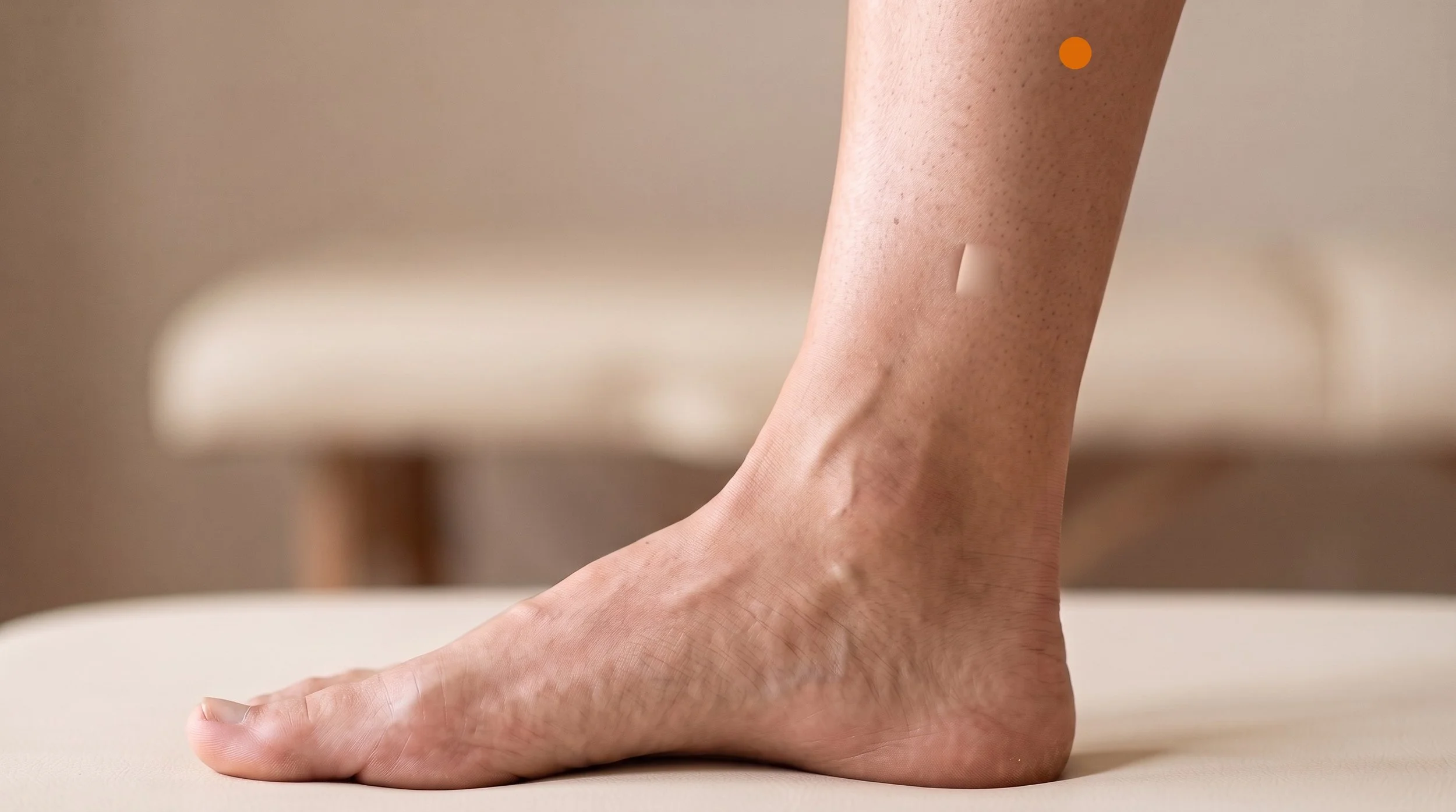
KI9 Acupuncture Point (Zhubin)
The Guest House on the Medial Calf: Anatomy, Mechanism, and Why This Lower Leg Point Bridges Calf Tension and Emotional Agitation
KI9 (Zhubin), translated as Guest House, sits on the medial aspect of the lower leg at the lower edge of the calf muscle belly, roughly a hand's width above the inner ankle and about a thumb's width behind the back edge of the shinbone. It is classified in the traditional literature as the xi-cleft point of the Yin Linking vessel (yin wei mai), the extraordinary vessel that classical texts describe as linking the yin channels of the body (Deadman et al., 2001).
That double identity is what makes the ki9 acupuncture point interesting in clinic: it is a soft tissue access point over the soleus and deep flexor layer where runners, walkers and long-standing New Yorkers accumulate calf tension, and it is also one of the few lower leg points whose classical indication list is dominated by agitation, restlessness and mental unrest rather than local pain alone.
- Location and layers: kidney 9 is found five cun above KI3 on the KI3 to KI10 line, about one cun behind the medial border of the tibia and level with LV5, where the needle passes through skin and fascia into the distal medial gastrocnemius and soleus, with the deep flexor group and tibialis posterior lying deeper (Deadman et al., 2001; Maciocia, 2006).
- Traditional categories, restated: classical sources list KI9 as the xi-cleft point of the Yin Linking vessel and as the vessel's starting point, and attribute to it actions of settling agitation and easing pain along the medial leg (Deadman et al., 2001; Kim, 2013). In modern terms, these describe a distal lower limb site used both for calf and medial leg symptoms and for downregulating a keyed-up nervous system.
- Mechanism: needling here engages saphenous nerve cutaneous territory superficially and the tibial nerve field more deeply, feeding sensory input into lumbosacral segments that also supply the calf, so effects are best understood through segmental convergence and descending inhibitory pathways rather than any flow of energy (Zhao, 2008).
- Research picture: no trial isolates this single point, but individual patient data from chronic pain trials support acupuncture as more than placebo for persistent musculoskeletal pain (Vickers et al., 2018), needling of calf trigger points has measurably reduced resting muscle stiffness at the treated site (Albin et al., 2020), and reviews of heart rate variability suggest needling can shift autonomic balance toward parasympathetic activity, though the evidence quality is mixed (Chung et al., 2014; Hamvas et al., 2023).
- Clinical framing: at Morningside the ki 9 calf location is typically used within a broader plan, combined with local calf needling for cramping and stiffness, or with SP6 and PC6 when the presentation is anxiety with restless legs, poor sleep and tight calves. Anxiety reviews report modest benefit for acupuncture protocols overall, with meaningful heterogeneity (Yang et al., 2021; Li et al., 2022).
- De qi: patients usually describe a deep, dull, slightly heavy ache that can spread down toward the inner ankle or up into the calf, sometimes with a brief cramping twitch if a taut band in the gastrocnemius or soleus is engaged (Simons et al., 1999).
Tight, Cramping Calves That Never Fully Let Go?
Persistent calf tightness rarely resolves with stretching alone when the soleus and deep flexors are involved. Our licensed acupuncturists use the zhubin calming point alongside dry needling of the gastrocnemius, soleus and tibialis posterior to reduce local muscle stiffness and restore comfortable ankle motion. Treatment is paired with loading advice so the gains hold between visits. Schedule an evaluation and let's map what is actually driving your calf symptoms.
Schedule NowAnatomy of KI9: Why the Lower Medial Calf Is Such an Important Location
KI9 sits where the medial calf begins to taper. Under the skin and a thin layer of subcutaneous tissue lies the deep fascia of the leg, then the lower portion of the medial gastrocnemius belly as it transitions toward its aponeurosis. Beneath that sits the soleus, and deeper still the flexor digitorum longus and tibialis posterior of the deep posterior compartment (Deadman et al., 2001; Kim, 2013). This is a heavily loaded zone.
Every step, hill, stair and push-off transmits force through the triceps surae, and limited ankle dorsiflexion, long standing hours, hard city surfaces and sudden increases in running volume all raise the tension load. Taut bands in the gastrocnemius and soleus commonly refer discomfort into the calf, behind the knee, and toward the heel and arch (Simons et al., 1999).
The neural geography explains why a point this far from the torso can have effects beyond the calf. Superficially the medial leg skin here is served by branches of the saphenous nerve, while the deeper muscular layers are innervated by the tibial nerve, drawing on lower lumbar and sacral segments. Needle stimulation activates A-delta and group III afferents, which project to dorsal horn neurons that also receive input from the calf muscles, joints and skin.
That convergence, together with descending inhibitory control from the brainstem and the release of endogenous opioids, is the mainstream explanation for acupuncture analgesia (Zhao, 2008). Pooled individual patient data indicate acupuncture produces effects on chronic musculoskeletal pain that exceed sham needling, though the differences are modest and require ongoing care to maintain (Vickers et al., 2018).
Safety at this location is mostly about depth and awareness of what lies deep. The posterior tibial artery, its accompanying veins and the tibial nerve travel within the deep posterior compartment, and the great saphenous vein runs superficially along the medial leg.
Deadman lists perpendicular insertion of 1 to 1.5 cun for the ki9 acupuncture point, while more conservative texts suggest 0.5 to 0.7 cun (Deadman et al., 2001; Kim, 2013). In practice, angling into the muscular layer rather than boring straight toward the neurovascular bundle keeps the technique both effective and comfortable. Clinicians should also screen for calf swelling, warmth, redness or unilateral tenderness suggestive of deep vein thrombosis, in which case the calf is not needled and the patient is referred for medical evaluation.
Related Calf Pain Treatment NYC Related Kidney ChannelKI9 at a Glance: Classification, Location, and Clinical Use
| Category | Detail |
|---|---|
| Traditional Name | Zhubin (Guest House), also rendered as Guest Building |
| Channel Classification | Kidney channel (foot shaoyin), lower leg |
| Point Categories | Xi-cleft (accumulation) point of the Yin Linking vessel (yin wei mai); described in classical sources as the point where the Yin Linking vessel begins and as one of that vessel's coalescent points; located level with LV5 on the medial leg |
| Precise Location | On the medial aspect of the lower leg, 5 cun above KI3 on the line drawn from KI3 to KI10 (at the junction of the lower third and upper two thirds of that line), about 1 cun posterior to the medial border of the tibia, at the lower end of the calf muscle belly and level with LV5 |
| Tissue Stimulated | Skin and subcutaneous tissue of the medial leg, deep fascia, distal medial gastrocnemius and soleus, with the deep flexor group and tibialis posterior lying deeper |
| Needle Depth / Direction | Perpendicular insertion 1 to 1.5 cun per Deadman, with more conservative sources suggesting 0.5 to 0.7 cun; direct into the muscular layer and avoid deep thrusting toward the posterior tibial neurovascular bundle |
| De Qi Sensation | A deep, dull, heavy ache that often spreads toward the inner ankle or up the calf; a brief cramping twitch may occur if a taut band in the gastrocnemius or soleus is engaged |
| Primary Clinical Uses | Traditionally used for agitation and mental restlessness (with severe classical listings including mania and raving), contraction and pain of the calf and medial leg, weakness of the legs, and goitre in classical listings; used in modern clinic for calf tension, medial leg pain and as a supporting point in anxiety and stress-related presentations |
| Common Point Combinations |
|
Deadman's Manual of Acupuncture presents KI9 as the xi-cleft point of the Yin Linking vessel, the extraordinary vessel that traditional theory holds together the yin channels of the arms and legs along with the Conception vessel, and it notes that the Classic of Difficulties attributes Heart pain to disease of that vessel (Deadman et al., 2001). What stands out in the traditional attribution is that the point's own indication list does not centre on cardiac symptoms at all.
Instead it gathers a cluster of severe mental and emotional presentations, described in the classical vocabulary as madness, mania depression disorder, raving, fury and cursing, alongside vomiting of watery saliva and tongue thrusting, all interpreted by the commentary as phlegm or phlegm-fire disturbing the Heart. Swelling in the neck region (goitre) and shan disorder, including umbilical shan in infants, appear as well, and the local indications cover pain of the medial leg, calf contraction and weak legs.
It is a striking pattern precisely because it is so lopsided: a point on the lower calf whose classical reputation was built almost entirely on unrest of the mind rather than on the muscles it sits over.
Why KI9 Is Used for Agitation and Restlessness, Not Just Calf Pain
Patients are often surprised that a point below the knee could matter for how settled they feel. The physiological account starts with the fact that needle stimulation is sensory input, not a delivery of anything into the body. Afferent signals from the medial calf enter the lumbosacral spinal cord, where dorsal horn neurons integrate them with input from surrounding skin, muscle and joints. This convergence dampens the responsiveness of those neurons and recruits brainstem-based descending inhibition, which lowers pain signalling in the region and beyond (Zhao, 2008). For someone with a chronically braced calf, that shift can be felt within a session as a release of guarding rather than as pain relief alone.
The second half of the story is autonomic. Systematic reviews of heart rate variability report that needling tends to reduce markers associated with sympathetic dominance and, in some analyses, increase indices of parasympathetic activity, though study quality and heterogeneity mean these findings should be read cautiously (Chung et al., 2014; Hamvas et al., 2023). This is the plausible modern bridge to the traditional picture of the zhubin calming point: a distal limb site that gives the nervous system a strong, non-threatening sensory signal in a quiet setting, with measurable shifts in autonomic balance.
Clinically, this is why KI9 usually appears in a supporting role for anxiety-type presentations rather than as a standalone answer. Meta-analyses of acupuncture for anxiety report benefit over control conditions, but with modest effect sizes and clear methodological limitations across included trials (Yang et al., 2021; Li et al., 2022). Our honest framing is that the point may help a treatment plan work better, particularly when there is physical tension in the legs alongside a restless mind, and that it is not a substitute for psychotherapy, medication or medical evaluation when those are indicated.
What the Research Shows for KI9
It is worth being direct about the state of the evidence. There is no clinical trial that tests kidney 9 in isolation, and there almost certainly never will be, because acupuncture is delivered as multi-point protocols selected for the individual. What the literature can tell us is whether needling protocols that include lower leg points help the conditions this point is traditionally used for, and whether the underlying physiological mechanisms are real. On both counts the answer is a qualified yes, with important limits on effect size and study quality.
| Study | Type | Focus | Key Finding |
|---|---|---|---|
| Vickers et al., 2018 | Individual patient data meta-analysis (39 trials, around 20,827 patients) | Acupuncture for chronic musculoskeletal, headache and osteoarthritis pain | Acupuncture was superior to both sham and no-acupuncture controls, with effects that persisted over time, though the difference from sham was modest. |
| Zhao, 2008 | Narrative review of mechanism research | Neural pathways of acupuncture analgesia | Analgesic effects are attributed to afferent nerve stimulation, spinal segmental modulation and descending inhibitory systems involving endogenous opioids. |
| Albin et al., 2020 | Randomized controlled trial (102 participants) | Dry needling of latent gastrocnemius trigger points | Resting muscle stiffness at the treated trigger point site was significantly lower after needling than after sham, with no differences in strength. |
| Chung et al., 2014 | Systematic review with meta-analysis (14 RCTs) | Acupuncture and heart rate variability | Needling was associated with reductions in low frequency power and the LF/HF ratio, consistent with a shift away from sympathetic dominance. |
| Hamvas et al., 2023 | Systematic review and meta-analysis (9 RCTs) | Manual acupuncture versus placebo on heart rate variability | Real acupuncture was associated with increased parasympathetic indices compared with sham, though the authors urge caution given study quality and heterogeneity. |
| Yang et al., 2021 | Systematic review and meta-analysis (20 RCTs) | Acupuncture for anxiety disorder | Acupuncture showed beneficial effects on anxiety symptoms compared with controls, with the authors calling for higher quality trials. |
| Li et al., 2022 | PRISMA-compliant systematic review and meta-analysis | Acupuncture for generalized anxiety disorder | Acupuncture reduced anxiety symptom scores with few adverse effects, but larger, higher quality trials are needed to confirm the result. |
Anxious, Wired and Physically Tense at the End of the Day?
Many patients arrive describing a mind that will not settle and a body that stays braced, right down to the calves. KI9 is one of the leg points we may select for that combination, often with SP6 and points that support a calmer autonomic state. Sessions are quiet, unhurried and designed so your nervous system has room to shift. Book a visit and see how your body responds to a treatment built for downregulation.
Schedule NowKI9 in the Context of Trigger Point Work
The ki 9 calf location overlaps directly with territory that trigger point clinicians treat every day. The distal medial gastrocnemius, the medial soleus and, deeper, the tibialis posterior and flexor digitorum longus all lie within reach of this site, and taut bands in these muscles are classic contributors to calf tightness, cramping, Achilles region discomfort and referred pain into the heel and arch (Simons et al., 1999).
Because acupuncture is defined by the use of an acupuncture needle across hundreds of styles, including dry needling, treating this area as a channel point or as a myofascial target uses the same tool with different reasoning. At Morningside we frequently do both in a single visit: needle KI9 as a classical point, then address the taut bands we actually palpate.
In practice that might mean KI9 with dry needling of the gastrocnemius and soleus for a runner with recurrent calf cramps, or KI9 with tibialis posterior work for someone with medial shin and arch symptoms. Trial data support the plausibility of this approach, with needling of latent calf trigger points producing measurable reductions in local resting muscle stiffness compared with sham needling (Albin et al., 2020). We combine this with dorsiflexion mobility work and graded calf loading, since needling reduces guarding and sensitivity but tissue capacity is built through exercise.
KI9 Calf and Anxiety Treatment at NYC's Highest-Rated Acupuncture Clinic
Morningside Acupuncture is the highest-rated acupuncture and dry needling clinic in New York City with over 500 five-star Google reviews. We integrate classical point selection, including kidney 9, with orthopedic assessment and evidence-informed dry needling of the calf complex. Every plan is individualized, explained in plain language, and adjusted as you progress. Schedule your appointment and start with a thorough evaluation rather than a template.
Schedule NowFrequently Asked Questions
What does KI9 feel like when needled?
Most patients report a deep, dull, slightly heavy ache at the point, sometimes with a spreading sensation traveling down toward the inner ankle or up into the calf. If a taut band in the gastrocnemius or soleus is engaged, there can be a brief involuntary twitch followed by a cramping sensation that settles quickly. Sharp, electric or radiating pain into the foot is not the goal and should be reported immediately so the needle can be adjusted.
Why would a point on the calf be used for anxiety and restlessness?
Traditionally, KI9 is the xi-cleft point of the Yin Linking vessel, and classical texts attribute to that vessel a relationship with the Heart and with unsettled mental states (Deadman et al., 2001). Physiologically, needling the lower leg is simply strong sensory input that reaches the spinal cord and brainstem, and reviews of heart rate variability suggest such input can shift autonomic balance away from sympathetic dominance (Chung et al., 2014; Hamvas et al., 2023). Distal points are also comfortable and accessible, which matters when the aim of a session is for the nervous system to settle.
Can I press KI9 myself between sessions?
Yes, acupressure here is straightforward and low risk. Sit with your ankle crossed over the opposite knee, find the inner ankle bone and the Achilles tendon, then measure roughly a hand's width plus a thumb up the inner leg and move about a thumb's width behind the back edge of the shinbone until you feel soft muscle rather than bone. Press with your thumb using steady, moderate pressure for 30 to 60 seconds per side, breathing slowly, and repeat two or three times, or use small circular pressure for one to two minutes. Once or twice daily is plenty. Stop if the pressure produces sharp pain, tingling into the foot, or increasing calf soreness.
Is KI9 safe to needle?
In trained hands, yes. The main considerations are depth and direction, since the posterior tibial artery, veins and tibial nerve run deep in the posterior compartment and the great saphenous vein runs superficially along the medial leg. Standard references list perpendicular insertion of 1 to 1.5 cun, with more conservative depths suggested elsewhere (Deadman et al., 2001; Kim, 2013). We avoid needling the calf when there is unexplained calf swelling, warmth, redness or unilateral tenderness that could indicate a deep vein thrombosis, and we take extra care with patients on anticoagulants.
Where exactly is KI9 located?
On the medial lower leg, 5 cun above KI3 (between the inner ankle bone and the Achilles tendon) along the line running from KI3 up to KI10 at the knee, which places it at the junction of the lower third and upper two thirds of that line. It sits about 1 cun behind the medial border of the tibia, at the lower end of the calf muscle belly, and it is level with LV5 on the same leg. Practically, most clinicians find it by palpating for the tender, slightly denser tissue just behind the shinbone where the calf begins to narrow.
References
- Deadman, P., Al-Khafaji, M., & Baker, K. (2009). A manual of acupuncture. Journal of Chinese Medicine Publications.
- Kim, H. (2008). Handbook of Oriental medicine (3rd ed.). Harmony & Balance Press.
- Maciocia, G. (2005). The foundations of Chinese medicine: A comprehensive text for acupuncturists and herbalists (2nd ed.). Elsevier Churchill Livingstone.
- Simons, D. G., Travell, J. G., & Simons, L. S. (1999). Travell & Simons' myofascial pain and dysfunction: The trigger point manual, Vol. 1: Upper half of body (2nd ed.). Williams & Wilkins.
- Vickers, A. J., Vertosick, E. A., Lewith, G., MacPherson, H., Foster, N. E., Sherman, K. J., Irnich, D., Witt, C. M., & Linde, K. (2018). Acupuncture for chronic pain: Update of an individual patient data meta-analysis. Journal of Pain, 19(5), 455-474. https://doi.org/10.1016/j.jpain.2017.11.005
- Zhao, Z. Q. (2008). Neural mechanism underlying acupuncture analgesia. Progress in Neurobiology, 85(4), 355-375. https://doi.org/10.1016/j.pneurobio.2008.05.004
- Albin, S. R., Koppenhaver, S. L., MacDonald, C. W., Capoccia, S., Ngo, D., Phippen, S., Pineda, R., Wendlandt, A., & Hoffman, L. R. (2020). The effect of dry needling on gastrocnemius muscle stiffness and strength in participants with latent trigger points. Journal of Electromyography and Kinesiology, 55, 102479. https://doi.org/10.1016/j.jelekin.2020.102479
- Chung, J. W. Y., Yan, V. C. M., & Zhang, H. (2014). Effect of acupuncture on heart rate variability: A systematic review. Evidence-Based Complementary and Alternative Medicine, 2014, 819871. https://doi.org/10.1155/2014/819871
- Hamvas, S., Hegyi, P., Kiss, S., Lohner, S., McQueen, D., & Havasi, M. (2023). Acupuncture increases parasympathetic tone, modulating HRV: Systematic review and meta-analysis. Complementary Therapies in Medicine, 72, 102905. https://doi.org/10.1016/j.ctim.2022.102905
- Yang, X. Y., Yang, N. B., Huang, F. F., Ren, S., & Li, Z. J. (2021). Effectiveness of acupuncture on anxiety disorder: A systematic review and meta-analysis of randomised controlled trials. Annals of General Psychiatry, 20, 9. https://doi.org/10.1186/s12991-021-00327-5
- Li, M., Liu, X., Ye, X., & Zhuang, L. (2022). Efficacy of acupuncture for generalized anxiety disorder: A PRISMA-compliant systematic review and meta-analysis. Medicine, 101(49), e30076. https://doi.org/10.1097/MD.0000000000030076
Disclaimer: This web site is intended for educational and informational purposes only. Reading this website does not constitute providing medical advice or any professional services. This information should not be used for diagnosing or treating any health issue or disease. Those seeking medical advice should consult with a licensed physician. Seek the advice of a medical doctor or other qualified health professional for any medical condition. If you think you have a medical emergency, call 911 or go to the emergency room. No acupuncturist-patient relationship is created by reading this website or using the information. Morningside Acupuncture PLLC and its employees and contributors do not make any express or implied representations with respect to the information on this site or its use. For any legal interpretation of scope of practice in your state, consult a licensed attorney or regulatory authority.
Read more from our blog



