Dry Needling for SI Joint Pain
How Targeting the Muscles That Stabilize the Sacroiliac Joint Can Relieve Pelvic Girdle Pain
Sacroiliac joint pain is among the more frequently misdiagnosed causes of low back and buttock pain, often attributed to lumbar disc disease when the actual source is a joint with inadequate muscular support. Dry needling addresses the trigger points in the muscles responsible for SI joint stability, reducing pain and restoring the coordinated force closure the joint depends on.
- The sacroiliac joint is stabilized by a combination of bony interlocking (form closure) and compressive muscular force (force closure); when the muscles contributing to force closure develop trigger points or become inhibited, the joint is subjected to increased shear stress and pain sensitization (Vleeming et al., 2008).
- Gluteus medius trigger points generate pain directly over the SI joint and lower sacrum in a pattern so consistent that they are frequently mistaken for SI joint pathology itself; in many cases the gluteus medius is the primary pain generator rather than the joint.
- Clinical diagnosis of SI joint pain requires a cluster of provocative tests rather than any single test; a positive response on three or more of five specific maneuvers increases diagnostic accuracy substantially (Laslett, 2008).
- Dry needling normalizes the local biochemical environment at active trigger points in the gluteal, lumbar, and posterior hip muscles, reducing the sensitizing chemical load that maintains referred pain in the SI joint region (Shah et al., 2008).
- The multifidus, which provides direct segmental stability to the lumbar-sacral junction, is consistently inhibited and develops trigger points in people with chronic SI joint and low back pain; restoring multifidus function is essential for lasting SI joint stability.
- Pregnancy-related pelvic girdle pain involving the SI joints affects a significant proportion of pregnant women; evidence supports active physical treatment approaches over passive rest for this population (Elden et al., 2005).
Is lower back and buttock pain on one side not improving with standard treatment?
Asymmetric low back pain that worsens with single-leg activities, rolling in bed, or prolonged standing often points to SI joint dysfunction with a muscular component. At Morningside Acupuncture, we assess the full set of SI joint stabilizers and identify which trigger points are undermining joint stability before beginning targeted dry needling.
Schedule NowHow the Sacroiliac Joint Works and Why It Fails
The sacroiliac joints connect the sacrum to the two iliac bones of the pelvis, forming the posterior anchor of the pelvic ring. Unlike most joints in the body, the SIJ has very limited range of motion and derives most of its stability from an elaborate system of ligaments and muscles rather than from joint geometry. Biomechanical researchers Vleeming and colleagues introduced a framework distinguishing two stability mechanisms: form closure, the inherent stability from the irregular, interlocking joint surfaces and dense ligament system; and force closure, the compressive force applied across the joint by muscles that cross or attach near it (Vleeming et al., 2008).
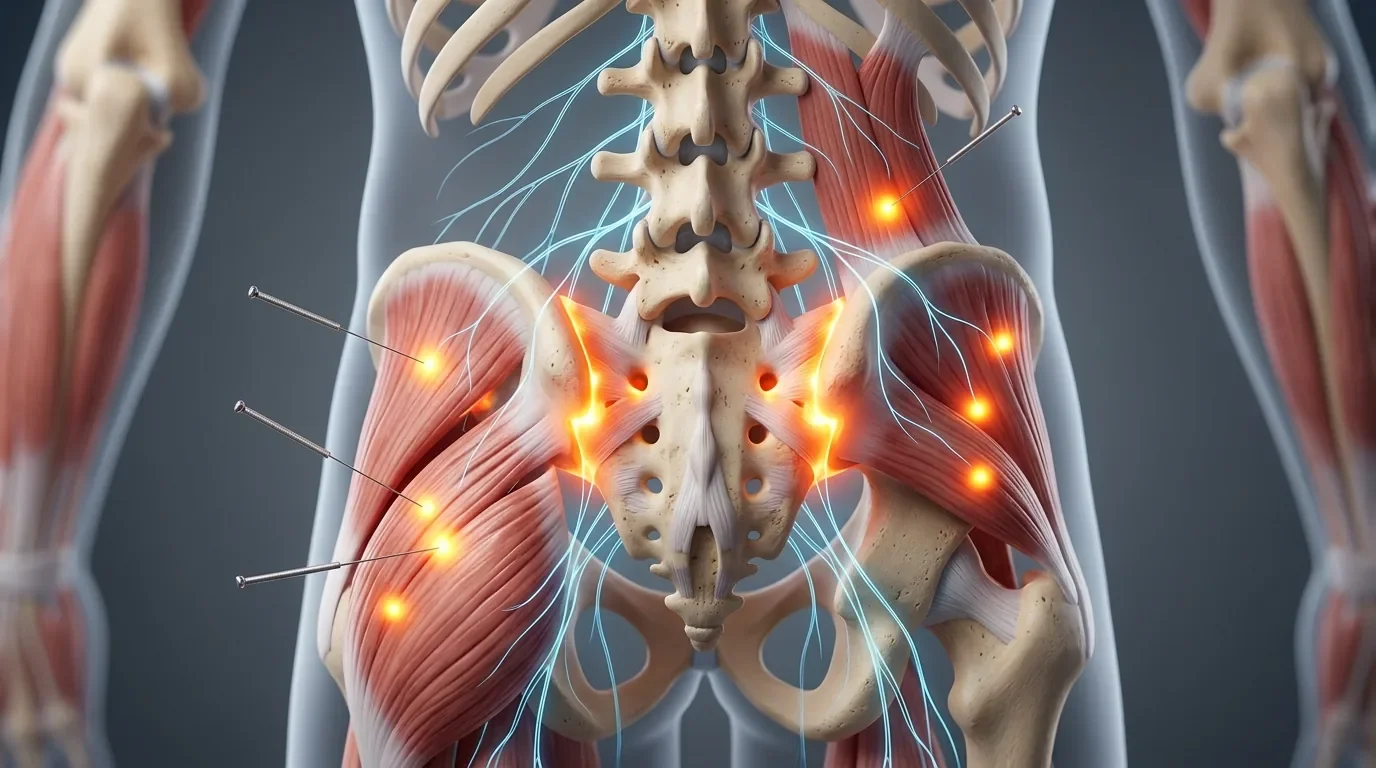
Force closure is the mechanism most relevant to muscular dry needling treatment. When muscles responsible for generating compressive force across the SIJ develop trigger points, they cannot produce force efficiently or in the correct timing pattern relative to joint loading. The result is a joint that experiences more shear stress than its ligaments and joint surface are designed to manage, leading to nociceptive sensitization and progressive pain amplification. The muscles involved include the gluteus maximus and medius (which compress the joint from the lateral side via the iliotibial band and sacrotuberous ligament connections), the multifidus (which compresses from posterior), the biceps femoris (which loads the sacrotuberous ligament from below), and the transverse abdominis (which provides anterior stability).
The clinical presentation of SI joint pain typically includes pain localized to the area just medial to the posterior superior iliac spine (PSIS), often described as a deep aching that radiates into the buttock and posterior thigh. Pain is usually unilateral, worsens with single-leg loading activities like climbing stairs or walking on uneven terrain, and is characteristically severe with rolling from side to side in bed. These features are shared with lumbar disc disease and gluteal trigger point pain, making SI joint involvement one of the more reliably misdiagnosed conditions in musculoskeletal care.
Related Lower Torso Pain Finder: SI Joint, Buttock, and Pelvic Pain SourcesThe Muscular Trigger Point Contribution to SI Joint Pain
One of the clinical challenges in treating SI joint pain is that the joint itself and the muscles surrounding it generate nearly identical pain patterns. Gluteus medius trigger points, for instance, refer pain directly over the PSIS, the sacrum, and into the posterior iliac crest in a distribution that is essentially indistinguishable from pain arising from the SIJ itself. When the gluteus medius is loaded with trigger points, palpation over the PSIS will reproduce the patient's pain not because the joint is the problem but because the referred zone from the trigger point overlies the joint.
This overlap means that clinical assessment of SI joint pain should always include palpation and provocation of the gluteal muscles, the quadratus lumborum, the piriformis, and the multifidus before attributing pain to the joint itself. A patient who responds to dry needling of the gluteus medius with complete resolution of their "SI joint pain" demonstrates that the trigger points were the primary source all along, and that no joint-directed intervention was ever needed. Conversely, when a patient has genuine SIJ pathology confirmed by diagnostic blocks, the muscle trigger points that developed in response to altered joint mechanics still need to be addressed for full recovery.
| Muscle | Role in SI Joint Stability | Trigger Point Referred Pain | Plain English |
|---|---|---|---|
| Gluteus Medius | Lateral pelvic stabilizer; compresses SIJ during single-leg stance | PSIS region, sacrum, posterior iliac crest, lateral hip | The most common muscular mimic of true SI joint pain; trigger points here refer right over the joint |
| Gluteus Maximus | Posterior SIJ compression via sacrotuberous ligament tension | Buttock, sacrococcygeal region, lateral hip | Compresses the SI joint from behind; trigger points reduce this protective force |
| Multifidus | Direct posterior segmental compression of L4-S1; inhibited in chronic SIJ pain | Lower lumbar spine, sacral region, buttock | A deep spinal muscle that becomes inhibited and develops trigger points when the SI joint is dysfunctional |
| Quadratus Lumborum | Pelvic lateral stabilizer; asymmetric tension distorts SIJ mechanics | Lateral lower back, posterior iliac crest, outer hip | Often the upstream driver; when tight on one side it torques the pelvis and loads the opposite SIJ |
| Piriformis | Sacral rotation stabilizer; co-activates during single-leg loading | Sacroiliac region, deep buttock, posterior hip | Refers pain directly over the SI joint; often involved alongside the gluteus medius in SI pain |
| Biceps Femoris | Loads sacrotuberous ligament from below, influencing SIJ nutation | Posterior knee, proximal posterior thigh | A hamstring that connects to the SI stability system; tension here influences pelvic position |
Has your sacroiliac pain been attributed to the joint when it might be muscular?
Gluteal and lumbar trigger points refer pain patterns that precisely overlap the SI joint region. At Morningside Acupuncture, we systematically assess both the joint mechanics and the surrounding muscle trigger points to clarify which is primary and ensure treatment is appropriately targeted for your presentation.
Schedule NowHow Dry Needling Supports SI Joint Recovery
Dry needling for SI joint pain targets the trigger points within the gluteal, lumbar, and posterior hip muscles that are both generating referred pain and failing to provide adequate force closure to the joint. The treatment sequence typically begins with the most active and symptomatic trigger points, which in the majority of cases are in the gluteus medius and quadratus lumborum, then progresses to the deeper muscles including the piriformis and multifidus as the more superficial presentations resolve.
The local twitch response during needling of the gluteus medius is often dramatic in SI joint presentations, reflecting the degree of motor end plate dysfunction that has accumulated in these chronically overloaded muscles. Following the twitch, patients frequently notice an immediate reduction in the tightness and pressure over the PSIS and sacral region, which provides confirmation that the trigger point rather than the joint itself was the primary pain source for that symptom.
Research on the biochemistry of trigger points shows elevated levels of sensitizing substances including substance P, calcitonin gene-related peptide, and bradykinin at active trigger point sites (Shah et al., 2008). Dry needling is thought to normalize these chemical concentrations through the twitch response-mediated changes in local circulation and neuromuscular signaling, reducing both the local and referred aspects of trigger point pain. For SI joint presentations, this normalization in the gluteal muscles directly reduces the nociceptive input to the joint region.
Related Dry Needling for Back Pain: Addressing the Lumbar Muscle ComponentPregnancy-Related Pelvic Girdle Pain
Pregnancy-related pelvic girdle pain (PGP) affecting the SI joints is a separate but related clinical entity that benefits from the same myofascial approach. Hormonal changes during pregnancy increase ligament laxity throughout the pelvis, which shifts more of the stabilization burden onto the muscles. When those muscles are unable to provide adequate force closure due to inhibition, fatigue, or trigger point development, the result is PGP that can range from mild discomfort to debilitating pain limiting walking and all weight-bearing activity.
Evidence from a randomized trial of 386 women with pregnancy-related pelvic pain found that stabilizing exercises and manual therapy produced superior outcomes to standard care, which typically consists of education and rest (Elden et al., 2005). Dry needling is a safe and appropriate addition to this management framework during pregnancy when performed by a qualified clinician, targeting the gluteal, hip abductor, and lumbar muscle trigger points that accumulate as postural adaptation to a changing center of gravity increases muscular demand.
Related Trigger Points Treatment: How Dry Needling Deactivates Muscle PainReady to address the muscular drivers of your SI joint pain?
At Morningside Acupuncture, we are the highest-rated acupuncture and dry needling clinic in New York City with over 500 five-star Google reviews. We treat sacroiliac joint pain, pelvic girdle dysfunction, and the gluteal trigger point patterns that mimic and perpetuate SI joint symptoms. Whether your pain is post-pregnancy, trauma-related, or has developed gradually, a comprehensive pelvic and lumbar assessment is the right first step.
Schedule NowFrequently Asked Questions
How do I know if my pain is from the SI joint or from a muscle?
The pain patterns of SI joint dysfunction and gluteal trigger points overlap almost completely, which is why clinical examination rather than location of pain is used to differentiate them. Pain directly medial to the PSIS that worsens with specific provocation tests, is unilateral, and increases with single-leg loading suggests SI joint involvement. When trigger point palpation of the gluteus medius and piriformis reproduces the identical pain the patient experiences, the myofascial source is likely primary or contributing significantly. In many cases both are present and both need treatment.
Is dry needling safe near the sacroiliac joint?
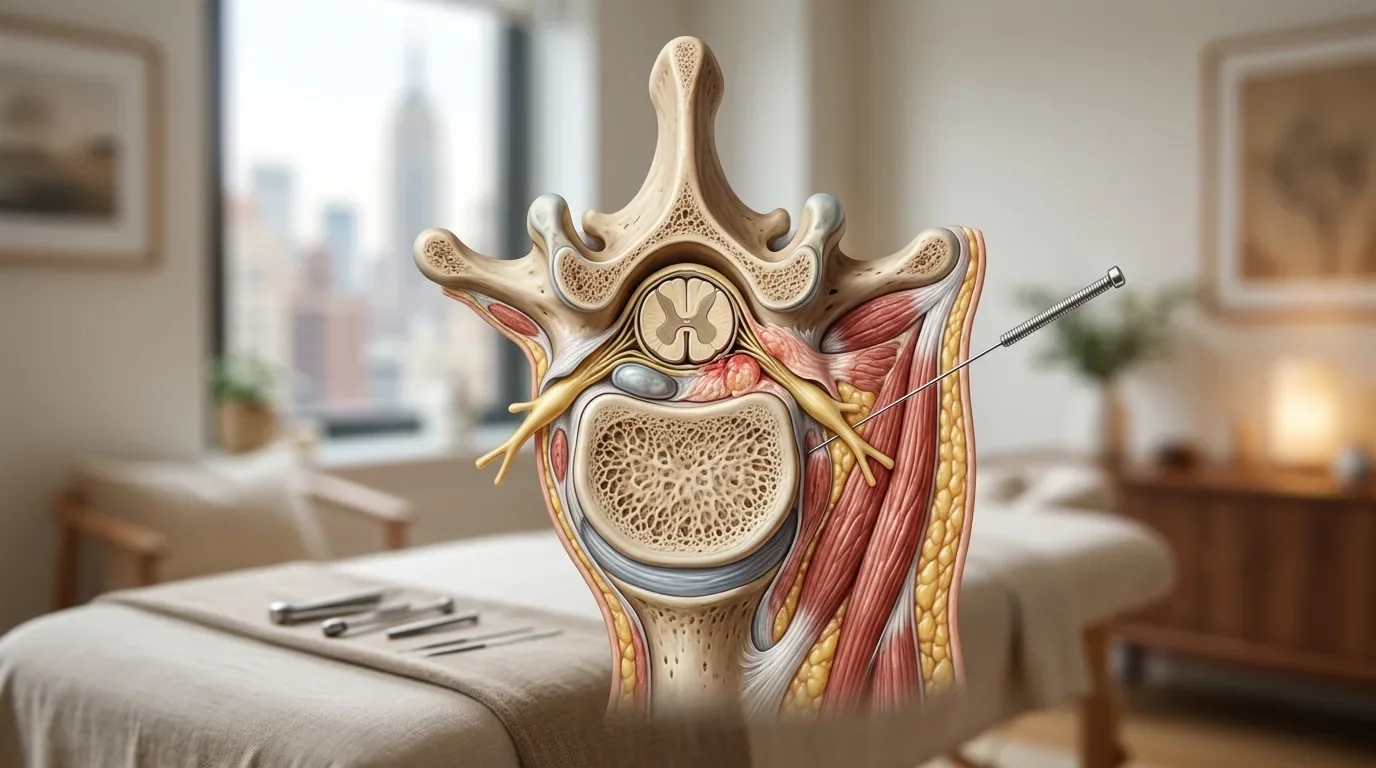
Dry needling in the SI joint region targets the overlying muscles, not the joint itself. The gluteus medius, gluteus maximus, piriformis, and multifidus are all accessible with standard needling technique without proximity to the joint capsule or intra-articular space. When performed by a trained clinician who understands the anatomy of the region, this is a well-established and safe approach.
Can dry needling help pregnancy-related SI joint pain?
Dry needling during pregnancy is considered safe when performed by an appropriately trained clinician using appropriate positioning and technique. The gluteal muscles and lumbar stabilizers that are commonly involved in pregnancy-related pelvic girdle pain are fully accessible and appropriate targets. Many pregnant patients find dry needling helpful for managing the pelvic discomfort that increases with advancing gestation, particularly in the second and third trimesters.
Does Morningside Acupuncture treat SI joint pain specifically?
Yes. SI joint pain, pelvic girdle dysfunction, and the muscular presentations that mimic SI joint pain are among the more common presentations we evaluate and treat. Our clinicians perform a full assessment of the lumbopelvic region including provocative testing, trigger point palpation, and movement assessment before determining the treatment approach. This ensures that dry needling is targeted to the structures actually generating your symptoms.
How many sessions does SI joint pain typically require?
Cases where the pain is primarily muscular, with gluteal and lumbar trigger points as the main drivers, often respond within four to six sessions. Cases where genuine SIJ pathology is present alongside myofascial dysfunction typically require a longer course and often benefit from concurrent stabilization exercise to rebuild the force closure capacity of the surrounding muscles. Your clinician will discuss realistic expectations based on your specific examination findings at the initial consultation.
References
- Vleeming, A., Albert, H. B., Ostgaard, H. C., Sturesson, B., & Stuge, B. (2008). European guidelines for the diagnosis and treatment of pelvic girdle pain. European Spine Journal, 17(6), 794–819. https://doi.org/10.1007/s00586-008-0602-4
- Laslett, M. (2008). Evidence-based diagnosis and treatment of the painful sacroiliac joint. Journal of Manual & Manipulative Therapy, 16(3), 142–152. https://doi.org/10.1179/jmt.2008.16.3.142E
- Elden, H., Ladfors, L., Olsen, M. F., Ostgaard, H. C., & Hagberg, H. (2005). Effects of acupuncture and stabilising exercises as adjunct to standard treatment in pregnant women with pelvic girdle pain: randomised single blind controlled trial. BMJ, 330(7494), 761. https://doi.org/10.1136/bmj.38397.507014.E0
- Shah, J. P., Danoff, J. V., Desai, M. J., Parikh, S., Nakamura, L. Y., Phillips, T. M., & Gerber, L. H. (2008). Biochemicals associated with pain and inflammation are elevated in sites near to and remote from active myofascial trigger points. Archives of Physical Medicine and Rehabilitation, 89(1), 16–23. https://doi.org/10.1016/j.apmr.2007.10.018
- Travell, J. G., & Simons, D. G. (1992). Myofascial Pain and Dysfunction: The Trigger Point Manual, Volume 2: The Lower Extremities. Williams & Wilkins.
- Dommerholt, J., & Fernandez-de-las-Penas, C. (Eds.). (2013). Trigger Point Dry Needling: An Evidence and Clinical-Based Approach. Churchill Livingstone.
Disclaimer: This web site is intended for educational and informational purposes only. Reading this website does not constitute providing medical advice or any professional services. This information should not be used for diagnosing or treating any health issue or disease. Those seeking medical advice should consult with a licensed physician. Seek the advice of a medical doctor or other qualified health professional for any medical condition. If you think you have a medical emergency, call 911 or go to the emergency room. No acupuncturist-patient relationship is created by reading this website or using the information. Morningside Acupuncture PLLC and its employees and contributors do not make any express or implied representations with respect to the information on this site or its use. For any legal interpretation of scope of practice in your state, consult a licensed attorney or regulatory authority.
Read more from our blog