Acupuncture for SI Joint Dysfunction
Treating Sacroiliac Pain Through the Myofascial Layer, Neural Regulation, and Evidence-Based Needling
Sacroiliac joint dysfunction is one of the most underdiagnosed sources of lower back and buttock pain, and the gluteal and paraspinal trigger points that develop alongside it are frequently the most treatable component of the picture.
- The sacroiliac joint is richly innervated by branches of the L4-S3 dorsal rami, making it a genuine pain generator when inflamed or mechanically stressed, with pain referral patterns that extend into the buttock, posterior thigh, and groin.
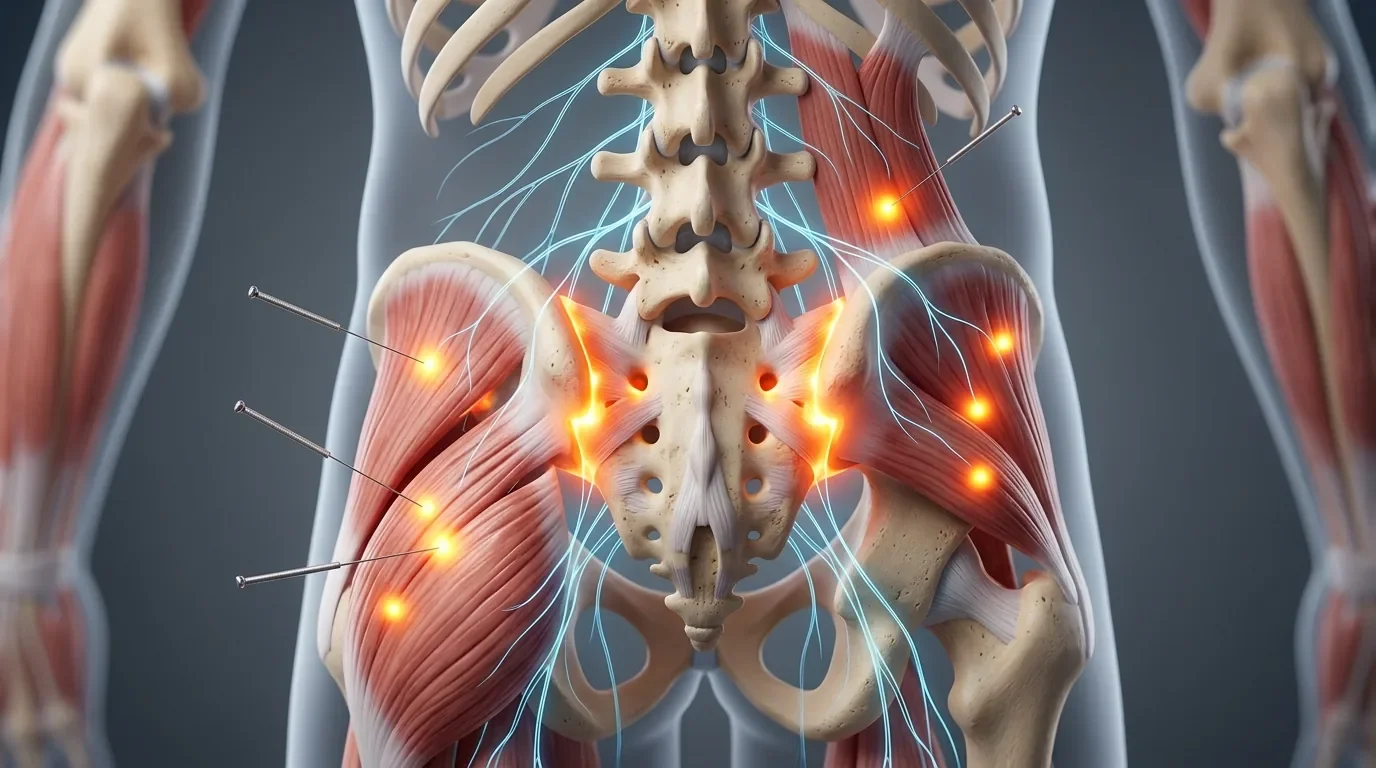
- Active trigger points in the gluteus medius, gluteus minimus, and piriformis produce referred pain patterns nearly identical to true SIJ pain, making myofascial assessment essential before attributing all symptoms to the joint itself.
- A randomized controlled trial demonstrated that acupuncture produced significantly better outcomes than physiotherapy alone for pregnancy-related pelvic girdle pain, a form of SIJ dysfunction driven by hormonal joint laxity (Elden et al., 2005).
- Acupuncture activates descending inhibitory pathways from the periaqueductal gray and rostral ventromedial medulla, reducing central sensitization that develops in chronic SIJ pain (Zhao, 2008).
- Dry needling the gluteal and paraspinal muscles around the SIJ addresses the myofascial drivers of pain, reduces protective muscle guarding that perpetuates joint stress, and restores normal neuromuscular activation patterns.
- A large individual patient data meta-analysis confirmed clinically meaningful acupuncture effects on chronic low back pain, the anatomical region that includes sacroiliac pain (Vickers et al., 2018).
- Stabilization exercise targeting the gluteus medius, deep hip rotators, and lumbar multifidus is complementary to needling and addresses the mechanical perpetuating factors of SIJ dysfunction.
Is SIJ Pain Keeping You from Moving Normally?
Sacroiliac pain that does not respond to rest or standard treatment is often being sustained by active trigger points in the surrounding gluteal and paraspinal muscles. At Morningside, our clinicians combine dry needling with acupuncture and exercise guidance to address the full picture of SIJ dysfunction, not just the joint in isolation.
Schedule NowUnderstanding SIJ Pain: What Needs Treatment
The sacroiliac joint connects the sacrum to the ilium on each side of the pelvis, transferring load between the spine and the lower extremities. Despite its relatively small range of motion (roughly 2 to 4 degrees of rotation and 1 to 2 millimeters of translation under normal physiological loading), it is densely innervated and capable of generating substantial pain when mechanically stressed or inflamed.
Pain from the SIJ typically concentrates just medial to the posterior superior iliac spine (PSIS), identifiable by the small dimple visible in the lower back, and commonly spreads into the buttock, posterior thigh, groin, and occasionally below the knee. The Fortin finger sign, where patients point directly to the PSIS with one finger, is one of the more reliable clinical indicators of SIJ origin.
A thorough assessment of SIJ pain requires distinguishing between three overlapping contributors: actual joint inflammation or mechanical dysfunction, myofascial referred pain from the gluteal and paraspinal muscles that frequently coexists with or mimics joint pain, and central sensitization that develops when pain has been present for more than a few months. Effective treatment generally needs to address all three layers.
Related What Is SI Joint Dysfunction? Anatomy, Diagnosis, and What It Means for Your PainThe Myofascial Layer: Trigger Points That Drive or Amplify SIJ Pain
The gluteal muscles and lumbar paraspinals function as both stabilizers of the SIJ and common sites of trigger point development when that joint is painful or mechanically compromised. The relationship is bidirectional: a stressed SIJ alters gluteal activation patterns, creating the conditions for trigger point formation, while active trigger points in those muscles then add their own referred pain on top of the articular symptoms and perpetuate the mechanical stress through altered load transfer.
| Muscle | Referred Pain Pattern | How It Affects SIJ |
|---|---|---|
| Gluteus Medius | Lower back; sacroiliac region; buttock; lateral hip | Directly overlies the SIJ; primary driver of SIJ-mimicking referred pain; inhibited in SIJ dysfunction |
| Gluteus Minimus | Buttock; posterior or lateral thigh to ankle | Adds leg pain component; commonly confused with radiculopathy |
| Piriformis | Sacroiliac region; buttock; posterior thigh | Attaches to the sacrum; hypertonia alters sacral mechanics and SIJ stress |
| Quadratus Lumborum | Deep flank; sacroiliac region; greater trochanter | Creates asymmetric lumbar loading that increases unilateral SIJ stress |
| Multifidus | Deep spinal pain; medial buttock | L5-S1 multifidus atrophy is common with SIJ dysfunction; loss of local spinal stability perpetuates SIJ load transfer problems |
| Iliocostalis Lumborum | Lateral lower back; buttock; hip | Contributes to lumbar stiffness and lateral pelvic asymmetry |
| Obturator Internus | Sacrococcygeal region; posterior thigh | Deep hip rotator; hypertonia alters pelvic floor dynamics affecting SIJ compression force |
How Acupuncture Addresses Sacroiliac Pain
Acupuncture produces analgesia for SIJ-related pain through several neurophysiological mechanisms operating simultaneously. Needling activates Adelta and C afferent fibers in the local tissue, which in turn stimulate the periaqueductal gray (PAG) in the midbrain to release endogenous opioids including enkephalin and beta-endorphin. The PAG then activates the raphe nuclei and noradrenergic brainstem nuclei that provide descending inhibitory signaling to the spinal cord dorsal horn, reducing the transmission of nociceptive input from the SIJ and surrounding tissues (Zhao, 2008).
For chronic SIJ pain, this descending inhibition is particularly important because central sensitization maintains pain even after the original peripheral stimulus has resolved or diminished. The dorsal horn neurons in the L4-S3 spinal segments that receive SIJ input become wind-up sensitized over time, meaning they fire more readily and produce greater pain from the same or lesser peripheral input. Acupuncture's ability to dampen this central sensitization is one of the mechanisms by which it produces improvements that persist beyond the treatment session itself.
Related What Does Acupuncture Do to Your Body? The Neurophysiology ExplainedEvidence: Acupuncture for SIJ and Pelvic Girdle Pain
A randomized controlled trial by Elden and colleagues enrolled 386 pregnant women with pelvic girdle pain, a condition driven primarily by hormonal SIJ laxity during pregnancy, and compared standard physiotherapy alone to physiotherapy plus acupuncture, and physiotherapy plus stabilizing exercise. The acupuncture group reported significantly lower pain intensity during the evening and fewer disability-related sick leaves compared to physiotherapy alone, with the stabilizing exercise group also performing better than the control (Elden et al., 2005). This trial represents direct randomized evidence for acupuncture efficacy in a cohort with documented SIJ dysfunction.
Beyond pregnancy-related SIJ pain, the broader evidence base for acupuncture in chronic low back pain provides relevant support. An individual patient data meta-analysis by Vickers and colleagues pooled data from 39 trials and nearly 20,000 patients, finding that acupuncture produced statistically significant and clinically meaningful reductions in chronic low back and hip pain compared to both sham acupuncture and usual care, with effects persisting at 12-month follow-up (Vickers et al., 2018). Given that SIJ pain manifests in the same anatomical region as lumbar pain and shares many of the same central sensitization mechanisms, this evidence is directly applicable.
Have You Tried PT or Injections without Lasting Relief?
Patients with SIJ dysfunction who have not responded fully to physical therapy or cortisone injections often have a significant myofascial component that was never directly addressed. Our clinicians at Morningside assess and treat the gluteal and paraspinal trigger points that perpetuate SIJ pain, frequently producing improvement in cases where other approaches plateaued.
Schedule NowDry Needling for the SIJ Region: Clinical Approach
Dry needling for SI joint dysfunction focuses primarily on the muscles that directly influence SIJ mechanics and commonly harbor active trigger points in this patient population. The treatment addresses the myofascial layer rather than the joint itself, reducing the muscle guarding and trigger point-referred pain that frequently account for the majority of a patient's daily symptom burden.
| Component | Primary Target | Clinical Goal |
|---|---|---|
| Gluteal dry needling | Gluteus medius, gluteus minimus trigger points | Eliminate primary referred pain generators; restore gluteal activation |
| Deep hip rotator needling | Piriformis, obturator internus trigger points | Reduce sacral torsion and asymmetric SIJ loading |
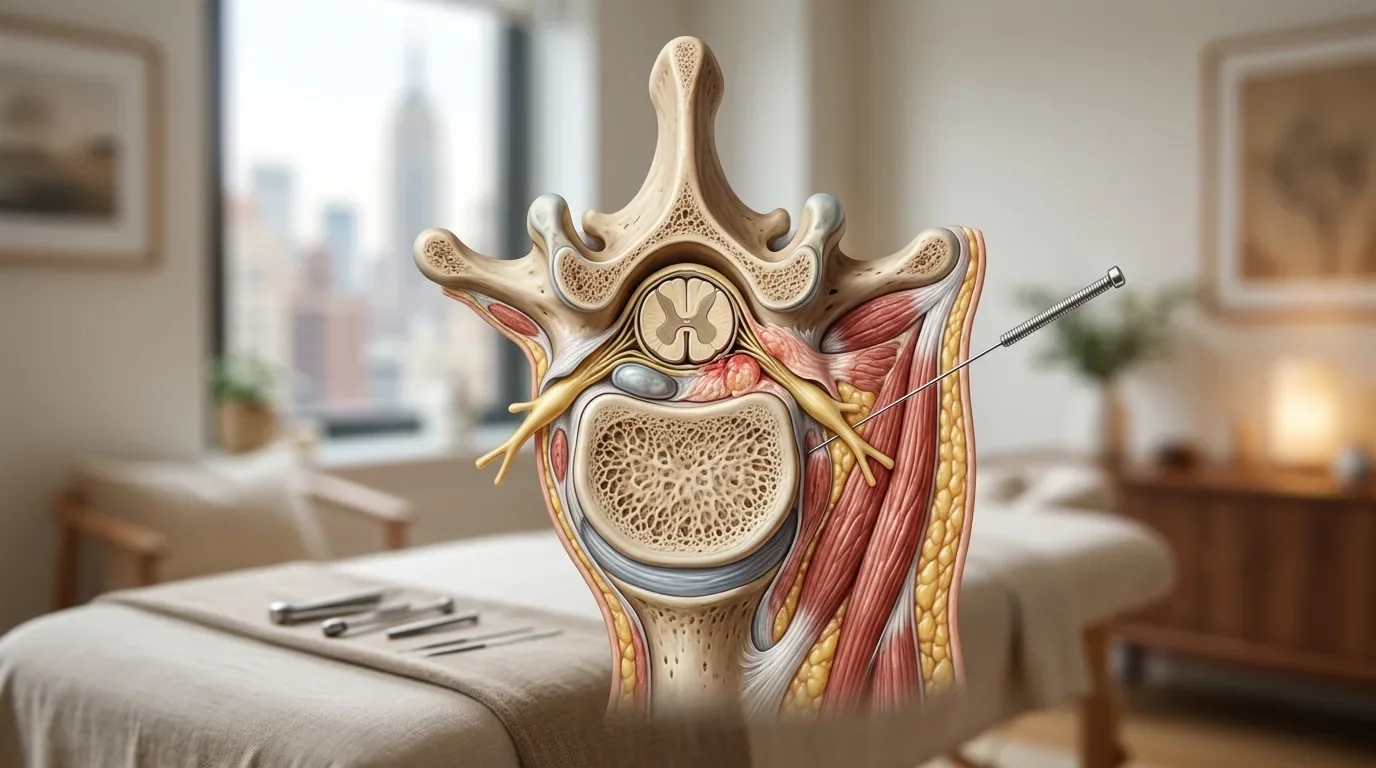
| Paraspinal needling | Multifidus, iliocostalis, quadratus lumborum | Address lumbar guarding; support local segmental stability |
| Systemic acupuncture | PAG/descending inhibitory pathways | Reduce central sensitization; improve global pain tolerance |
| Exercise guidance | Gluteus medius, multifidus, deep hip rotators | Address the mechanical perpetuating factors of SIJ instability |
The sequence of treatment matters. Dry needling active gluteal and paraspinal trigger points first often produces immediate improvements in pain and range of motion that allow the patient to engage more effectively with stabilizing exercise. Patients who attempt SIJ stabilization exercises while significant trigger point activity remains in the gluteus medius or piriformis frequently find the exercises uncomfortable and ineffective because the inhibited muscles cannot recruit properly. Resolving the myofascial component creates the neuromuscular conditions for exercise to work.
Special Considerations: Pregnancy and Postpartum SIJ Pain
Pregnancy-related pelvic girdle pain, driven by relaxin-mediated ligamentous laxity and the biomechanical demands of a shifting center of gravity, is a common and frequently undertreated condition. The Elden 2005 trial confirmed that acupuncture is safe and effective during pregnancy for this indication. Postpartum SIJ dysfunction often persists because the ligamentous laxity from relaxin resolves but the muscular guarding and trigger points that developed during pregnancy do not automatically clear. Addressing the gluteal and pelvic floor musculature after delivery with dry needling and targeted exercise can substantially accelerate recovery.
Related What Is SI Joint Dysfunction? Clinical Diagnosis and the Gluteal Muscle MimicsReady to Find Relief from SIJ Pain?
At Morningside Acupuncture, we are the highest-rated acupuncture and dry needling clinic in New York City with over 500 five-star Google reviews. We specialize in sacroiliac joint dysfunction, pelvic girdle pain, and the complex gluteal and paraspinal trigger point presentations that frequently drive SIJ symptoms. Our clinicians combine dry needling, acupuncture, and evidence-based exercise guidance in an integrated approach to address the full picture of your pain. We would be glad to assess your specific case and develop a targeted treatment plan.
Schedule NowFrequently Asked Questions
How is SIJ pain different from regular lower back pain?
SI joint pain typically concentrates just medial to the dimple in the lower back (the posterior superior iliac spine), often spreading into the buttock and posterior thigh but rarely below the knee without a significant leg component. It is commonly worse with activities that load one leg more than the other, such as climbing stairs, rolling over in bed, or standing on one leg. Lumbar disc or facet pain tends to be more central or bilateral, though the two conditions frequently coexist and clinical tests are needed to differentiate them.
Can acupuncture help SIJ pain during pregnancy?
Yes. A randomized controlled trial involving nearly 400 pregnant women found that acupuncture, combined with standard physiotherapy, produced significantly greater pain reduction and functional improvement than physiotherapy alone for pregnancy-related pelvic girdle pain (Elden et al., 2005). Acupuncture is generally considered safe during pregnancy and is one of the few treatments appropriate for this population that avoids the risks associated with medications or injections.
Will I need injections for my SI joint?
Not necessarily. SIJ injections (typically cortisone) can provide diagnostic information and short-term relief for inflammatory SIJ pain, but their effect is often temporary and they do not address the myofascial component. Many patients find that dry needling and acupuncture targeting the gluteal and paraspinal muscles produce comparable or superior lasting results to injections, particularly when trigger points are a significant driver of their symptoms.
How many sessions will I need at Morningside for SIJ dysfunction?
Most patients with SIJ-related pain notice meaningful improvement within four to six sessions over three to four weeks. Chronic presentations or those with significant central sensitization may require eight to twelve sessions for durable results. We typically reassess after every four to five sessions and adjust the plan based on your progress.
Can dry needling make SIJ pain worse?
A temporary increase in local soreness for 12 to 36 hours after dry needling is common and expected, particularly when treating the gluteus medius and piriformis. This post-needling soreness reflects normal tissue response and typically resolves quickly. Lasting worsening is uncommon. At your first session, our clinicians discuss what to expect and adjust needle depth and technique based on your response.
References
- Elden, H., Ladfors, L., Olsen, M. F., Ostgaard, H. C., & Hagberg, H. (2005). Effects of acupuncture and stabilising exercises as adjunct to standard treatment in pregnant women with pelvic girdle pain: Randomised single blind controlled trial. BMJ, 330(7494), 761. https://doi.org/10.1136/bmj.38397.507014.E0
- Vickers, A. J., Vertosick, E. A., Lewith, G., MacPherson, H., Foster, N. E., Sherman, K. J., Irnich, D., Witt, C. M., & Linde, K. (2018). Acupuncture for chronic pain: Update of an individual patient data meta-analysis. JAMA Internal Medicine, 178(11), 1444-1453. https://doi.org/10.1001/jamainternmed.2018.4242
- Zhao, Z. Q. (2008). Neural mechanism underlying acupuncture analgesia. Progress in Neurobiology, 85(4), 355-375. https://doi.org/10.1016/j.pneurobio.2008.05.004
- Simons, D. G., Travell, J. G., & Simons, L. S. (1999). Travell & Simons' myofascial pain and dysfunction: The trigger point manual (2nd ed.). Williams & Wilkins.
- van der Wurff, P., Buijs, E. J., & Groen, G. J. (2006). A multitest regimen of pain provocation tests as an aid to reduce unnecessary minimally invasive sacroiliac joint procedures. Archives of Physical Medicine and Rehabilitation, 87(1), 10-14. https://doi.org/10.1016/j.apmr.2005.09.016
- Kietrys, D. M., Palombaro, K. M., Azzaretto, E., Huber, R., Schaller, B., Schlussel, J. M., & Tucker, M. (2013). Effectiveness of dry needling for upper-quarter myofascial pain: A systematic review and meta-analysis. Journal of Orthopaedic & Sports Physical Therapy, 43(9), 620-634. https://doi.org/10.2519/jospt.2013.4668
Disclaimer: This web site is intended for educational and informational purposes only. Reading this website does not constitute providing medical advice or any professional services. This information should not be used for diagnosing or treating any health issue or disease. Those seeking medical advice should consult with a licensed physician. Seek the advice of a medical doctor or other qualified health professional for any medical condition. If you think you have a medical emergency, call 911 or go to the emergency room. No acupuncturist-patient relationship is created by reading this website or using the information. Morningside Acupuncture PLLC and its employees and contributors do not make any express or implied representations with respect to the information on this site or its use. For any legal interpretation of scope of practice in your state, consult a licensed attorney or regulatory authority.
Read more from our blog