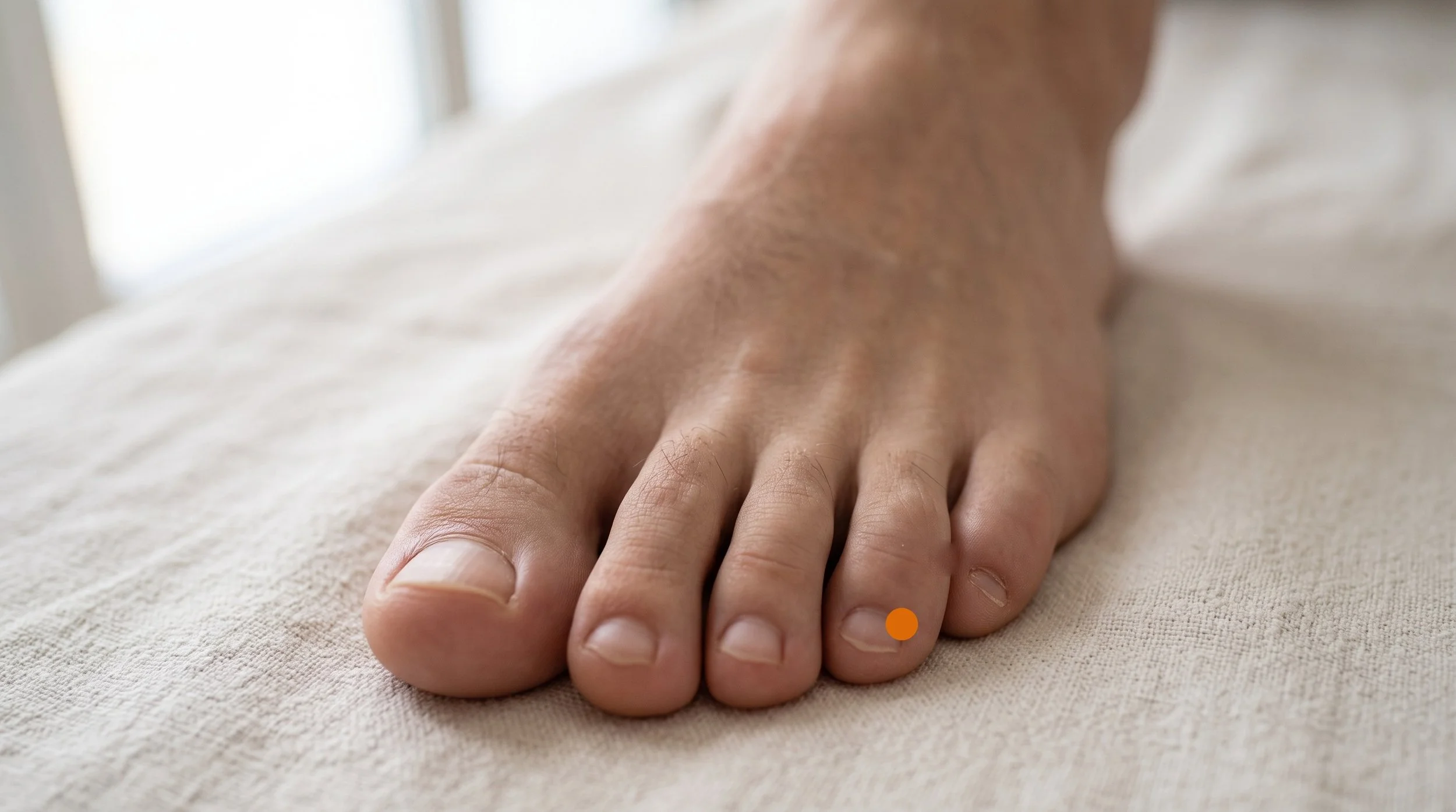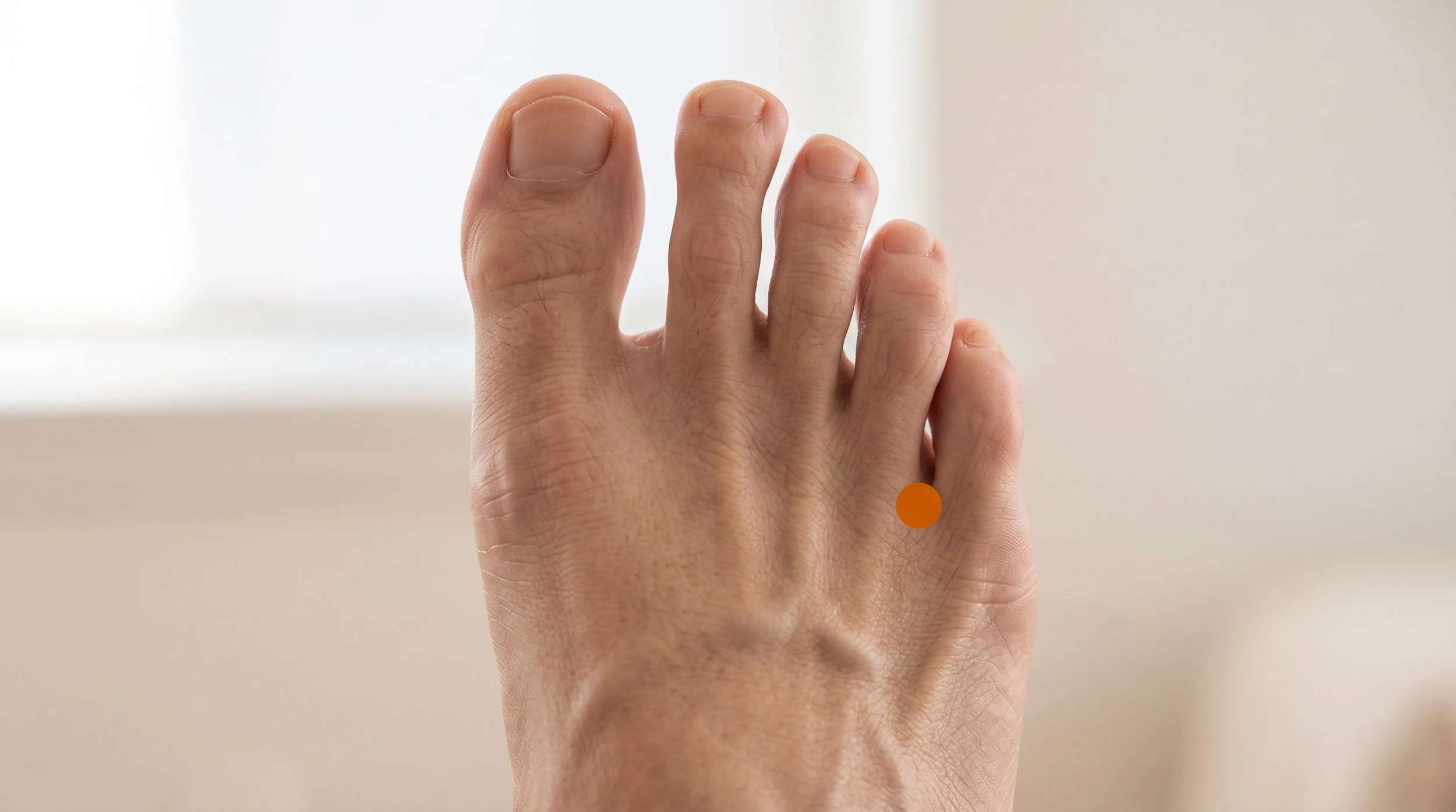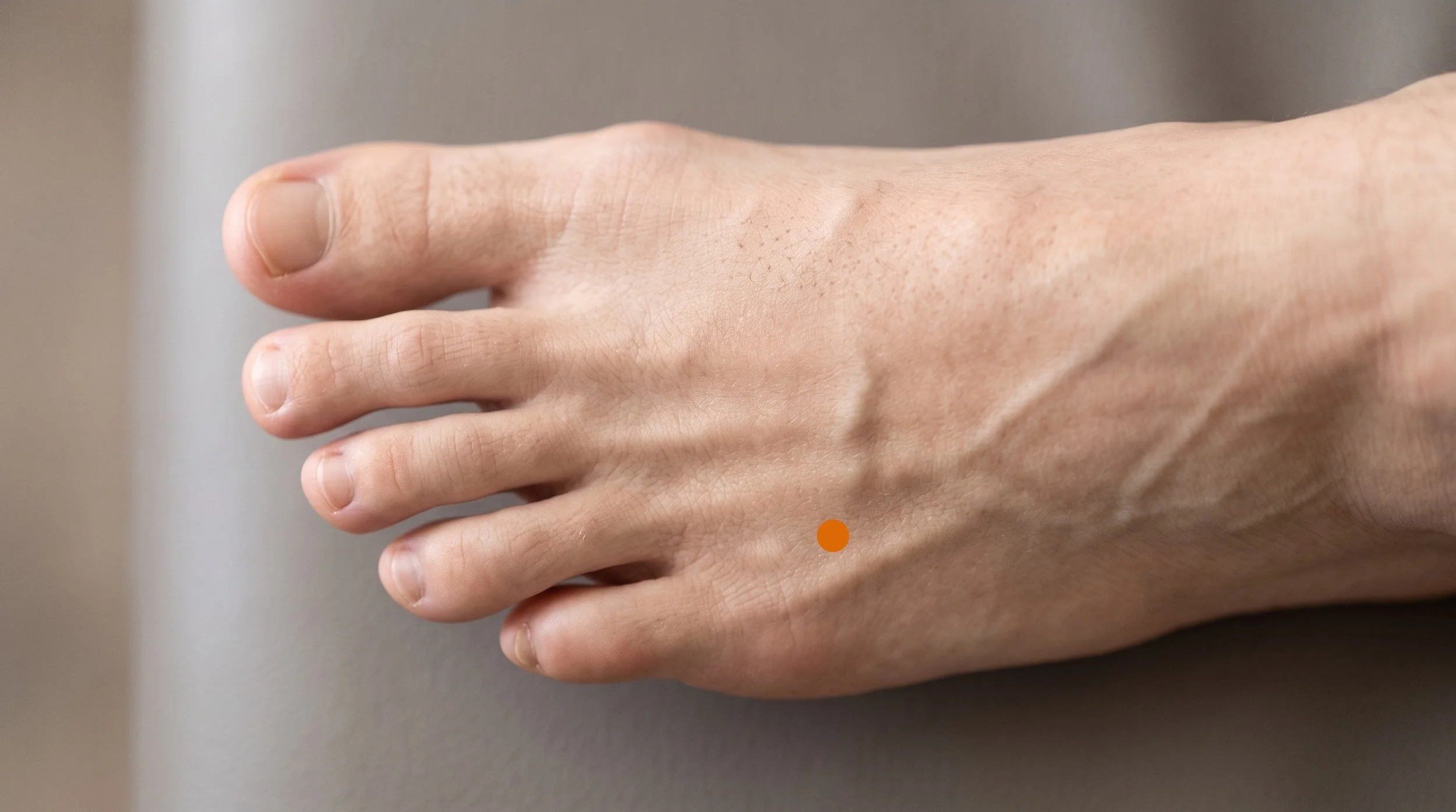
Baichongwo Acupuncture Point (M-LE-34)
The Hundred Insect Burrow Above the Knee: Anatomy, Itch Neurophysiology, and Why This Extra Point of the Inner Thigh Was Reserved for Relentless Skin Itching
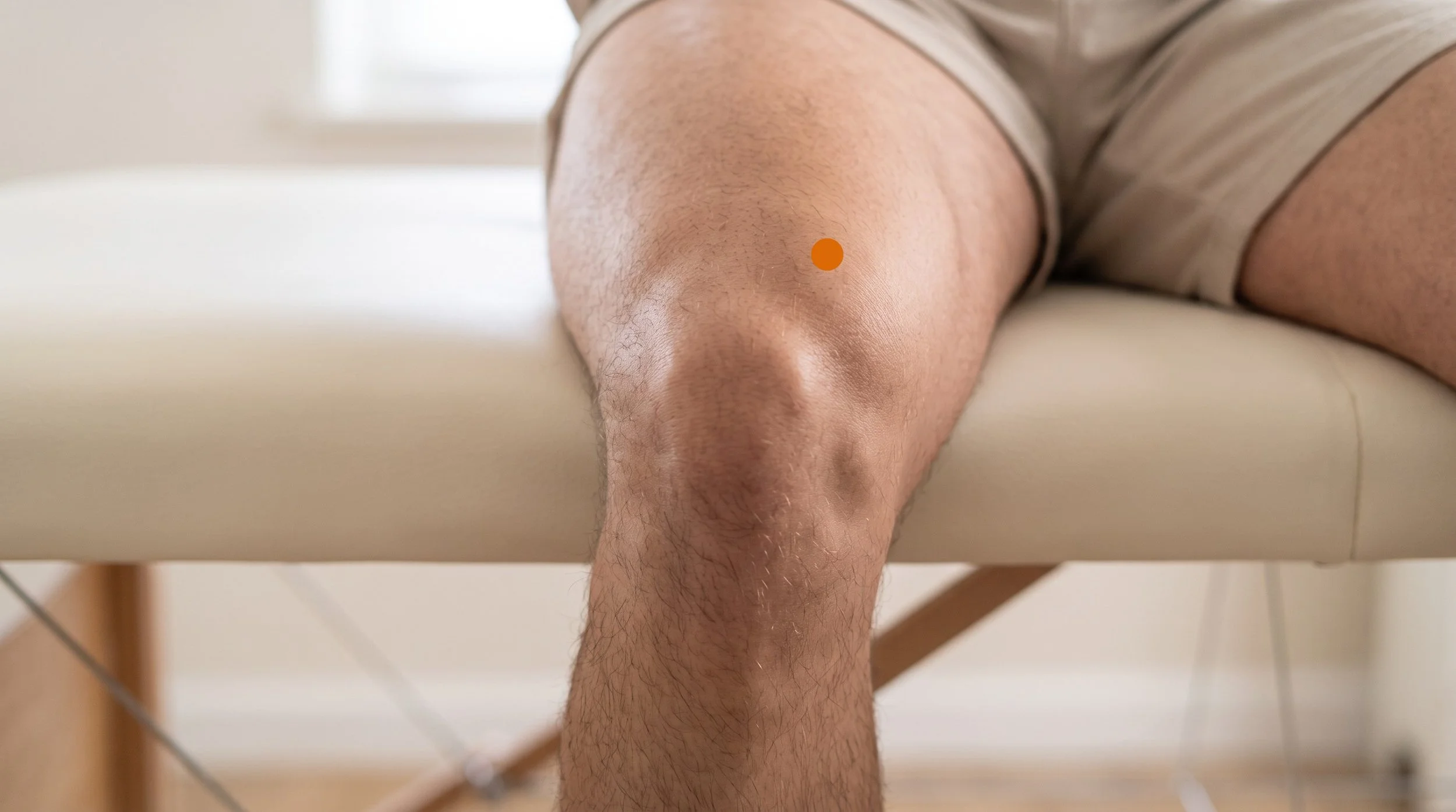
Baichongwo (M-LE-34), whose name is usually rendered in English as Hundred Insect Burrow, is an extra point on the inner thigh that sits 3 cun above the top edge of the kneecap, in a tender dip on the bulge of the vastus medialis muscle, exactly 1 cun above Xuehai SP10 (Deadman et al., 2009). The name is a description of a symptom rather than a diagnosis: the crawling, biting, burrowing quality of severe itch, as though insects were nesting under the skin.
Classical sources first discussed the point in the Great Compendium of Acupuncture and Moxibustion and grouped it with its neighbor SP10 as a blood-cooling location for skin disease, with indications that read as wind-rash, itching, and sores of the lower body (Deadman et al., 2009). Modern texts keep it in the extra point chapter for urticaria and eczema, and clinicians in New York now use the Baichongwo acupuncture point in two ways at once: as an itch-modulating point on the thigh and as a needling target inside a muscle that frequently drives medial knee pain.
- Location and layers: the point lies in skin and subcutaneous tissue of the anteromedial thigh, then in the muscle belly of vastus medialis, 3 cun above the upper patellar border and 1 cun proximal to SP10, and it is normally located by palpating for tenderness rather than measuring alone (Deadman et al., 2009).
- Traditional attribution: classical texts describe Baichongwo as clearing heat from the blood and eliminating wind and dampness, with indications limited to a narrow band of problems (itchy skin, wind-rash eruptions, and sores of the lower body), a level of focus that is unusual for an extra point (Deadman et al., 2009; O'Connor & Bensky, 1981).
- Mechanism in plain terms: itch is carried largely by slow unmyelinated C-fibers into the dorsal horn, where the signal can be dampened by competing input from faster mechanoreceptive and nociceptive afferents, and by descending pathways from the brainstem that acupuncture needling appears to recruit (Zhao, 2008).
- Research picture: an early meta-analysis of randomized trials cautiously supported acupuncture for itch (Yu et al., 2015), controlled crossover trials using the neighboring points LI11 and SP10 reduced experimentally induced itch and skin reaction in atopic eczema (Pfab et al., 2010; Pfab et al., 2012), and imaging work has mapped changes in itch-related brain activity after needling (Napadow et al., 2014).
- Clinical framing: Baichongwo is a secondary or supporting point, not a standalone treatment for a dermatologic condition, and it is typically added to a broader protocol alongside SP10, LI11 and SP6 while the patient continues care with a dermatologist (Deadman et al., 2009).
- De qi: because the needle enters a thick, well-innervated muscle belly, patients usually report a spreading dull ache or heaviness through the inner thigh toward the knee, and a brief visible twitch of vastus medialis is common when a taut band is engaged (Simons et al., 1999).
Struggling With Itchy Skin That Keeps You Up at Night?
Persistent itching is exhausting in a way that is hard to describe to people who have not lived with it. At Morningside Acupuncture we use Baichongwo alongside SP10, LI11 and SP6 within a full treatment plan that respects the care you are already receiving from your dermatologist or allergist. Acupuncture may help take the edge off itch intensity and sleep disruption while your primary treatment does its work. Schedule a visit and let's build a plan around your skin and your sleep.
Schedule NowAnatomy of Baichongwo: Why the Vastus Medialis Bulge Is Such an Important Location
Run your hand up from the top of the kneecap along the inner thigh and you will feel the muscle bulk swell under your fingers. That swell is vastus medialis, the innermost head of the quadriceps, and Baichongwo sits on it roughly a hand's width above the patella, one thumb width above SP10 (Deadman et al., 2009). The layers under the needle are simple and forgiving: thin skin, a variable pad of subcutaneous fat, fascia lata, and then dense muscle.
This muscle works hardest in the last portion of knee extension and during eccentric loading, which is why stairs, deep squats, hills and long walks on hard city pavement tend to make it tender. Palpation here often turns up a discrete sore spot before the practitioner has measured anything, which is exactly how classical texts describe finding the point.
The skin over this region is supplied by branches of the anterior femoral cutaneous nerve, while the muscle itself is innervated by femoral nerve branches, placing the whole area in the upper lumbar segments. That matters for mechanism. Sensory information about itch travels mostly along slow unmyelinated C-fibers into the dorsal horn, where it competes with input from faster fibers arriving in the same segmental neighborhood, and where descending pathways from the midbrain and brainstem can turn the volume up or down.
Needling recruits a broad mix of afferents and has been shown to engage these descending inhibitory systems along with endogenous opioid and monoamine signaling (Zhao, 2008). Imaging research adds a central layer to the story: needling in patients with atopic dermatitis was associated with reduced itch ratings and altered activity in brain regions that process itch and the urge to scratch (Napadow et al., 2014). Scratching works for a few seconds by flooding the same circuits with competing input, and a retained needle is, in a sense, a slower and more controlled version of that same gating.
Deep and slightly posterior to this point lies the adductor canal, which carries the femoral artery and vein along with the saphenous nerve. For that reason needling stays in the muscle belly and is directed perpendicular or obliquely rather than angled backward toward the canal. Standard depth is 1 to 1.5 cun, which is comfortably within the vastus medialis in most adults, and moxibustion is described as suitable at this location in modern Chinese texts (Deadman et al., 2009; Cheng, 1999).
Needle-size selection and depth should always be scaled to the patient's build, and the point is avoided over broken, infected or actively inflamed skin.
Related Vastus Medialis Trigger Points Related Acupuncture For Vastus Medialis PainBaichongwo at a Glance: Classification, Location, and Clinical Use
| Category | Detail |
|---|---|
| Traditional Name | Baichongwo, translated as Hundred Insect Burrow (also seen as Hundred Insects' Nest) |
| Channel Classification | Extra point, M-LE-34 in Deadman numbering (listed as Extra 35 in Chinese Acupuncture and Moxibustion); not a point of the fourteen channels, though it lies immediately proximal to Xuehai SP10 on the Spleen channel |
| Point Categories | No five-shu, luo, xi-cleft, back-shu, front-mu, hui-meeting or extraordinary vessel designations, since extra points sit outside the channel point system. Traditional actions recorded for it are cooling heat in the blood and eliminating wind while draining dampness. |
| Precise Location | Inner thigh, 3 cun proximal to the superior border of the patella, in a tender depression on the bulge of vastus medialis, 1 cun above Xuehai SP10 |
| Tissue Stimulated | Skin and subcutaneous tissue of the anteromedial thigh, fascia lata, and the muscle belly of vastus medialis; anterior femoral cutaneous nerve territory with femoral nerve supply to the muscle |
| Needle Depth / Direction | Perpendicular or oblique insertion, 1 to 1.5 cun, kept within the muscle belly and never angled posteromedially toward the adductor canal; moxibustion is described as applicable |
| De Qi Sensation | A heavy, spreading ache through the inner thigh that may travel toward the medial knee; a brief local twitch response is common when a taut band in vastus medialis is engaged |
| Primary Clinical Uses | Traditionally used for itchy skin conditions, wind-rash (urticaria-type) eruptions, eczema and sores of the lower body, with older sources also listing intestinal parasitic complaints; in modern orthopedic practice, medial knee pain and vastus medialis tension |
| Common Point Combinations |
|
Deadman, Al-Khafaji and Baker record that Baichongwo entered the literature in the Great Compendium of Acupuncture and Moxibustion, and they present its traditional actions as cooling heat in the blood and eliminating wind while draining dampness, with indications restricted to itching of the skin, wind-rash and sores of the lower region (Deadman et al., 2009). What makes the classical pattern striking is its narrowness. Most extra points of the leg accumulate indications over the centuries, drifting toward knee pain, leg qi and paralysis, but this one stayed anchored to a single sensation.
The Shanghai text keeps the same tight focus with urticaria and eczema, while Chinese Acupuncture and Moxibustion adds rubella-type rashes and intestinal parasitic complaints, an addition that fits the insect imagery of the name (O'Connor & Bensky, 1981; Cheng, 1999).
Read as a traditional attribution rather than a physiological claim, the point represents an old clinical observation that a tender spot just above SP10 seemed to quiet itching that other points did not touch.
Why Baichongwo Is Used for Itching That Has Nothing to Do With the Leg
Patients reasonably ask why a point above the knee would be selected for a rash on the trunk or arms. Part of the answer is segmental and part of it is central. Needling a densely innervated muscle belly sends a strong volley of afferent traffic into the spinal cord, where signals from skin, muscle and deeper tissues converge on shared dorsal horn neurons. Itch-carrying fibers are relatively slow, and they are vulnerable to being gated by competing input in that same relay, which is the reason scratching temporarily helps.
A retained needle produces a longer-lasting and more controllable version of that competition, and the effect is not confined to the segment being needled because the same input recruits descending inhibitory pathways from the midbrain and brainstem that act more widely (Zhao, 2008).
The second part of the answer comes from the brain. Functional imaging in patients with atopic dermatitis found that needling reduced itch ratings and was associated with changes in activity across regions that encode itch intensity and the urge to scratch (Napadow et al., 2014). That is a plausible route by which a point on the thigh could influence a symptom felt elsewhere.
Experimental trials using Baichongwo's immediate neighbors, LI11 and SP10, reported reductions in allergen-induced itch and in the associated skin response compared with placebo needling, and one crossover trial compared needling directly with an oral antihistamine in the same participants (Pfab et al., 2010; Pfab et al., 2012). Baichongwo itself has not been isolated in that research, so the fairest statement is that it sits within a small cluster of thigh and elbow points that experimental work has treated as an antipruritic combination.
There is also a straightforward local reason to use the point. Vastus medialis is a common source of aching along the inner knee, and trigger points in the distal fibers of this muscle are described as referring pain deep into the anteromedial knee (Simons et al., 1999). When a patient's tender spot at Baichongwo turns out to be a taut band rather than a skin-related finding, the point serves a completely different clinical purpose, and needling accuracy matters more than point theory.
Acupuncture for musculoskeletal pain has the strongest evidence base of any of its applications, with individual patient data pooling across thousands of participants in chronic pain trials (Vickers et al., 2018).
What the Research Shows for Baichongwo
Very little research has tested Baichongwo on its own. Trials in this area study multi-point protocols, and the point most likely to appear in a published skin protocol is its neighbor SP10, sometimes with LI11, so any evidence for Baichongwo is indirect and inferential. Reviews in this field also carry familiar limitations: many trials come from a small number of centers, blinding is difficult, sham comparisons are imperfect, and outcome measures such as global effective rate are not always validated.
What follows should be read as reasonable support for the general strategy of needling for itch-related conditions, not as proof that one specific extra point above the knee does the work.
| Study | Type | Focus | Key Finding |
|---|---|---|---|
| Yu et al., 2015 | Systematic review and meta-analysis | Acupuncture for itch across skin and systemic causes | Pooling three eligible randomized trials, the authors cautiously suggested acupuncture may improve itch compared with placebo needling or no treatment, while calling the evidence base small. |
| Pfab et al., 2010 | Blinded randomized placebo-controlled crossover trial | Needling at LI11 and SP10 for allergen-induced itch in adults with atopic eczema | Itch intensity was significantly lower after needling at the selected points than with placebo-point needling or no intervention in this experimental model. |
| Pfab et al., 2012 | Patient and examiner blinded randomized crossover trial | Acupuncture compared with oral cetirizine for type I hypersensitivity itch in atopic dermatitis | Both needling and the antihistamine reduced experimentally induced itch relative to placebo conditions, suggesting acupuncture may be worth studying as a complementary option. |
| Napadow et al., 2014 | Functional MRI mechanistic study | Brain circuitry underlying antipruritic effects of needling | Needling was linked to lower itch ratings alongside altered activity in regions associated with itch processing, offering a plausible central mechanism. |
| Zheng et al., 2023 | Randomized controlled trial | Acupuncture for chronic spontaneous urticaria | This multicenter trial reported improvement in urticaria activity with acupuncture compared with control conditions, though effect sizes and durability require confirmation. |
| Wei et al., 2025 | Systematic review and meta-analysis | Efficacy and safety of acupuncture for chronic spontaneous urticaria | Across 22 randomized trials the review reported improvements in response rate, urticaria activity scores and quality of life, with the caveat that trial quality varied considerably. |
| Vickers et al., 2018 | Individual patient data meta-analysis | Acupuncture for chronic musculoskeletal and other chronic pain | Acupuncture outperformed both sham and no-acupuncture controls for chronic pain, supporting the orthopedic use of points such as this one in the quadriceps. |
Medial Knee Pain and a Tight Inner Thigh?
The Hundred Insect Burrow sits directly in vastus medialis, one of the muscles most often implicated in aching along the inside of the knee. We palpate this area carefully, needle taut bands where we find them, and combine that work with movement-based rehab so the quadriceps track better under load. Runners, cyclists and lifters across Manhattan use this approach to get back to training without guessing. Book an evaluation and we'll assess the whole knee, not just the sore spot.
Schedule NowBaichongwo in the Context of Trigger Point Work
Baichongwo and the distal vastus medialis trigger point region occupy nearly the same real estate. Trigger points in this muscle are described as referring a deep ache into the anteromedial knee, sometimes with a buckling or giving-way sensation, and they are frequently perpetuated by prolonged sitting, heavy stair use and quadriceps overload (Simons et al., 1999).
At Morningside we treat that overlap as an advantage. When a patient arrives with medial knee pain, the tender depression that classical texts describe as the location of the point is often the same taut band we would select for dry needling, and the local twitch response is a useful confirmation that the needle is in the right tissue.
In practice we rarely needle this one spot alone. Depending on findings we add work in vastus lateralis and vastus intermedius to address the whole quadriceps group, plus adductor and sartorius assessment when the medial thigh is broadly tight. Points such as SP10, medial Xiyan and Heding often join the treatment for knee-focused cases, and GB34 is a common distal addition.
Acupuncture, as we use the term, means treatment with an acupuncture needle across many styles, including dry needling of myofascial targets, so the same insertion can be framed traditionally or orthopedically without changing what actually happens in the tissue.
Baichongwo Itching and Knee Treatment at NYC's Highest-Rated Acupuncture Clinic
Morningside Acupuncture is the highest-rated acupuncture and dry needling clinic in New York City with over 500 five-star Google reviews, and our practitioners are licensed acupuncturists trained in both classical point theory and modern orthopedic needling. That means Baichongwo can be used as a traditional blood-cooling point for skin complaints or as a precise myofascial target in vastus medialis, depending on what your case calls for. Every session begins with a full history and hands-on assessment, so nothing gets needled on autopilot. Schedule your appointment today and see the difference a careful evaluation makes.
Schedule NowFrequently Asked Questions
What does Baichongwo feel like when needled?
Most patients feel a brief pinch at the skin followed by a heavy, spreading ache in the inner thigh that may drift down toward the knee. Because the needle sits in the vastus medialis muscle belly, the sensation tends to be deeper and duller than at points over bone or tendon, and a quick involuntary twitch of the muscle is common when a taut band is engaged. That twitch is brief and is generally taken as a sign of accurate placement rather than a problem. Some soreness for a day afterward, similar to post-workout muscle soreness, is normal.
Why would a point above the knee help itching on my arms or torso?
Itch signals travel on slow unmyelinated fibers into the spinal cord, where they can be dampened by competing sensory input and by descending inhibitory pathways from the brainstem that needling appears to recruit (Zhao, 2008). Those descending systems are not limited to the segment being needled, which is why a distant point can influence a symptom felt elsewhere. Imaging work has also shown changes in itch-related brain activity after needling in patients with atopic dermatitis (Napadow et al., 2014). Traditionally, the explanation was different: this point and its neighbor SP10 were classified as cooling heat in the blood, an attribution rather than a physiological claim (Deadman et al., 2009).
Can I press Baichongwo myself between sessions?
Yes, and it is easy to find. Sit with your knee bent to about ninety degrees, place the base of your palm at the top edge of your kneecap, and let your fingers rest along the inner thigh; the point lies roughly four finger widths above the kneecap, on the fleshy bulge you can feel tighten when you straighten your leg. Explore that area with your thumb until you find the tender spot, then apply steady pressure for 30 to 60 seconds while breathing slowly, release, and repeat two or three times. Two or three rounds a day is plenty, and you can add a slow rocking or cross-fiber motion if the muscle feels ropy. Pressure should register as a satisfying ache, never sharp pain, and acupressure is a supportive measure rather than a replacement for dermatologic or medical care for a rash.
Is Baichongwo safe to needle?
In trained hands it is a low-risk point, since the needle stays within a thick muscle belly at a depth of 1 to 1.5 cun. The main anatomical consideration is the adductor canal, which lies deeper and more posteriorly on the medial thigh and carries the femoral artery, femoral vein and saphenous nerve, so the needle is directed perpendicular or obliquely into the muscle and not angled backward. Practitioners also avoid needling through broken, infected or actively inflamed skin, use extra caution with patients on anticoagulants or with bleeding disorders, and expect occasional minor bruising in the thigh. Anyone with a new, rapidly spreading or systemically unwell rash should be evaluated by a physician first.
Where exactly is Baichongwo located?
It is on the inner thigh, 3 cun above the upper border of the kneecap, in a tender depression on the bulge of the vastus medialis muscle, which places it 1 cun directly above Xuehai SP10 (Deadman et al., 2009). A practical way to find it is to locate SP10 first (2 cun above the top inner corner of the patella, on the muscle bulge) and then move one thumb width higher. Tenderness on palpation is part of the location, so the exact spot varies slightly from person to person and side to side.
References
- Deadman, P., Al-Khafaji, M., & Baker, K. (2009). A manual of acupuncture. Journal of Chinese Medicine Publications.
- O'Connor, J., & Bensky, D. (Eds. & Trans.). (1981). Acupuncture: A comprehensive text. Shanghai College of Traditional Medicine. Eastland Press.
- Cheng, X. (Ed.). (1999). Chinese acupuncture and moxibustion (Rev. ed.). Foreign Languages Press.
- Simons, D. G., Travell, J. G., & Simons, L. S. (1999). Travell & Simons' myofascial pain and dysfunction: The trigger point manual, Vol. 1: Upper half of body (2nd ed.). Williams & Wilkins.
- Yu, C., Zhang, P., Lv, Z. T., Li, J. J., Li, H. P., Wu, C. H., Gao, F., Yuan, X. C., Zhang, J., He, W., Jing, X. H., & Li, M. (2015). Efficacy of acupuncture in itch: A systematic review and meta-analysis of clinical randomized controlled trials. Evidence-Based Complementary and Alternative Medicine, 2015, 208690. https://doi.org/10.1155/2015/208690
- Pfab, F., Huss-Marp, J., Gatti, A., Fuqin, J., Athanasiadis, G. I., Irnich, D., Raap, U., Schober, W., Behrendt, H., Ring, J., & Darsow, U. (2010). Influence of acupuncture on type I hypersensitivity itch and the wheal and flare response in adults with atopic eczema: A blinded, randomized, placebo-controlled, crossover trial. Allergy, 65(7), 903-910. https://doi.org/10.1111/j.1398-9995.2009.02284.x
- Pfab, F., Kirchner, M. T., Huss-Marp, J., Schuster, T., Schalock, P. C., Fuqin, J., Athanasiadis, G. I., Behrendt, H., Ring, J., Darsow, U., & Napadow, V. (2012). Acupuncture compared with oral antihistamine for type I hypersensitivity itch and skin response in adults with atopic dermatitis: A patient- and examiner-blinded, randomized, placebo-controlled, crossover trial. Allergy, 67(4), 566-573. https://doi.org/10.1111/j.1398-9995.2012.02789.x
- Napadow, V., Li, A., Loggia, M. L., Kim, J., Schalock, P. C., Lerner, E., Tran, T. N., Ring, J., Rosen, B. R., Kaptchuk, T. J., & Pfab, F. (2014). The brain circuitry mediating antipruritic effects of acupuncture. Cerebral Cortex, 24(4), 873-882. https://doi.org/10.1093/cercor/bhs363
- Zheng, H., Xiao, X. J., Shi, Y. Z., Zhang, L. X., Cao, W., Zheng, Q. H., et al. (2023). Efficacy of acupuncture for chronic spontaneous urticaria: A randomized controlled trial. Annals of Internal Medicine, 176(12), 1617-1624. https://doi.org/10.7326/M23-1043
- Wei, W., Wu, Y., Zhang, S., Li, B., Cheng, Z., & Zhao, W. (2025). Clinical efficacy and safety of acupuncture in the treatment for chronic spontaneous urticaria: A systematic review and meta-analysis. Frontiers in Medicine, 12, 1498795. https://doi.org/10.3389/fmed.2025.1498795
- Zhao, Z. Q. (2008). Neural mechanism underlying acupuncture analgesia. Progress in Neurobiology, 85(4), 355-375. https://doi.org/10.1016/j.pneurobio.2008.05.004
- Vickers, A. J., Vertosick, E. A., Lewith, G., MacPherson, H., Foster, N. E., Sherman, K. J., Irnich, D., Witt, C. M., & Linde, K. (2018). Acupuncture for chronic pain: Update of an individual patient data meta-analysis. Journal of Pain, 19(5), 455-474. https://doi.org/10.1016/j.jpain.2017.11.005
Disclaimer: This web site is intended for educational and informational purposes only. Reading this website does not constitute providing medical advice or any professional services. This information should not be used for diagnosing or treating any health issue or disease. Those seeking medical advice should consult with a licensed physician. Seek the advice of a medical doctor or other qualified health professional for any medical condition. If you think you have a medical emergency, call 911 or go to the emergency room. No acupuncturist-patient relationship is created by reading this website or using the information. Morningside Acupuncture PLLC and its employees and contributors do not make any express or implied representations with respect to the information on this site or its use. For any legal interpretation of scope of practice in your state, consult a licensed attorney or regulatory authority.
Read more from our blog