What Is the Cinderella Hypothesis?
Why Sustained Low-Level Muscle Activity Can Hurt More Than Heavy Exercise
The Cinderella hypothesis offers a compelling explanation for one of clinical pain medicine's persistent puzzles: why people who spend their days sitting at desks develop severe chronic neck and shoulder pain, while athletes performing heavy exertion often do not. The answer lies in how the nervous system recruits muscle fibers and which fibers never get to rest.
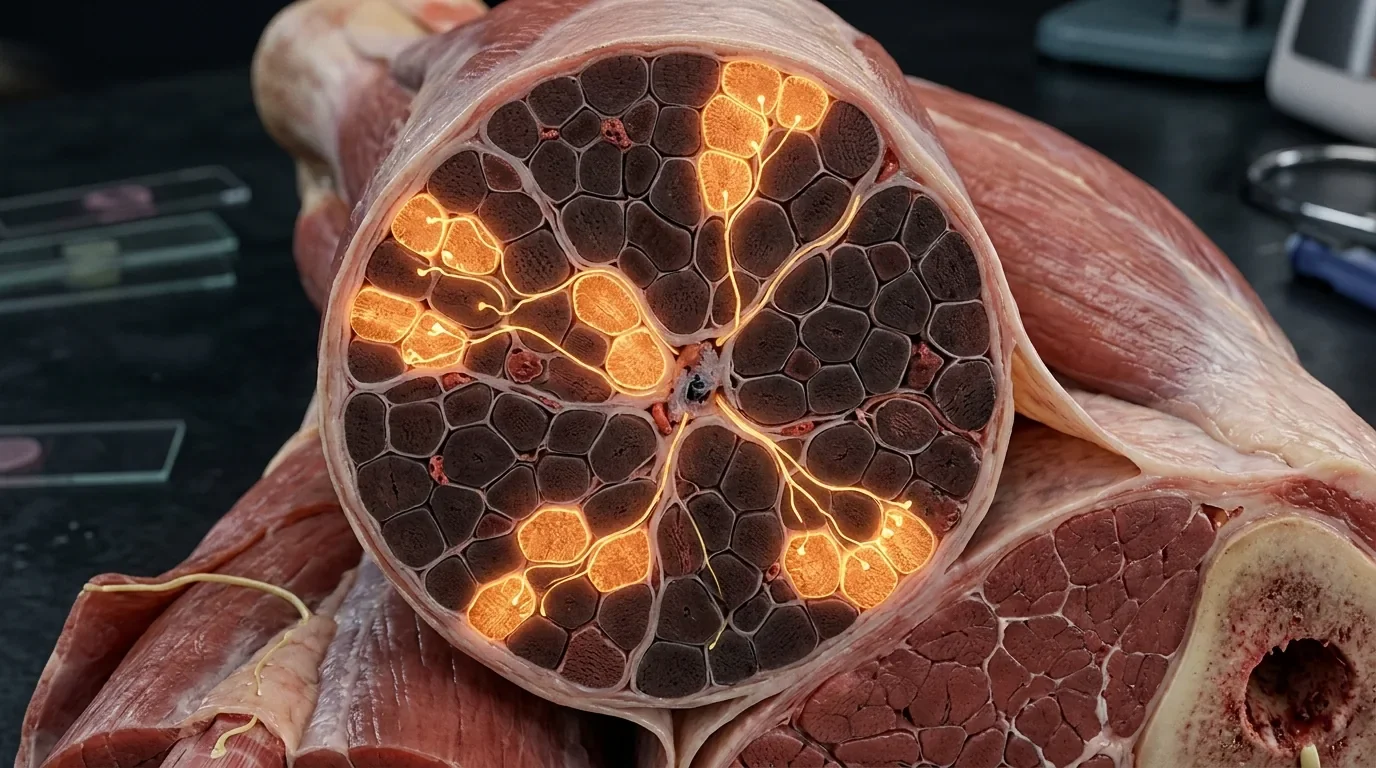
- The Cinderella hypothesis proposes that the smallest, slowest motor units, called Type I or slow-twitch units, are recruited first during any muscle activity and are the last to be released. During sustained low-level tasks, these units may be active continuously without meaningful rest periods.
- Like the fairy tale character who works relentlessly while others sleep, these motor units accumulate metabolic stress over hours of sustained activation, leading to calcium dysregulation, intracellular energy depletion, and eventual trigger point formation (Bron & Dommerholt, 2012).
- Controlled research has shown that myofascial trigger points developed in the upper trapezius of computer operators after sustained low-level work involving postural and visual stress, supporting the hypothesis that even modest exertion can be sufficient to induce trigger point pathology (Treaster et al., 2006).
- The biochemical environment at active trigger points confirms the predicted effects of overloaded motor units: elevated inflammatory mediators, acidic pH, and sensitizing neuropeptides that directly activate and sustain peripheral nociception (Shah et al., 2008).
- A more recent model challenges the original Cinderella hypothesis, arguing that postural muscles may use motor unit rotation rather than fixed hierarchical recruitment, which would require a different mechanistic explanation for how sustained work leads to pain in these muscles (Minerbi & Vulfsons, 2018).
- Regardless of which recruitment model is correct, the clinical evidence is clear that sustained low-level muscle activation produces trigger points, and dry needling remains an effective treatment for the resulting pathology.
Is Your Desk Job Causing Your Neck and Shoulder Pain?
The Cinderella mechanism helps explain why office workers and computer users so frequently develop persistent upper trapezius, levator scapulae, and suboccipital pain that seems disproportionate to what they're doing physically. At Morningside Acupuncture, we treat trigger points caused by occupational overload using dry needling, addressing the motor endplate dysfunction and ischemic energy crisis that develops in overloaded postural muscles.
Schedule NowThe Paradox of the Sedentary Worker
Manual laborers who lift, carry, and perform heavy physical work often develop muscle soreness and acute injuries, but these injuries are generally well-understood and frequently resolve with rest. The body is stressed, the tissue heals, and normal function returns. What is harder to explain is why the computer worker, performing tasks that require almost no muscular force, develops severe, persistent neck and shoulder pain that resists treatment and accumulates over years of desk work.
Conventional thinking would predict that light exertion produces less muscle damage than heavy exertion. For certain types of muscle use, this is true. For sustained, low-level postural contractions, it may be exactly wrong. The reason has to do with which muscle fibers are being used and how long they are forced to stay active.
Swedish ergonomist Gunnar Hägg proposed an explanation for this phenomenon in 1991, drawing on established principles of neuromuscular physiology. His model, which became known as the Cinderella hypothesis, offered a mechanistic account of why the most overworked muscle fibers in postural tasks are not the strongest ones but the weakest, and why this matters enormously for the development of myofascial pain.
Related What Is a Trigger Point? The Clinical Definition and What It Feels LikeHow the Nervous System Recruits Muscle Fibers
To understand the Cinderella hypothesis, it helps to know how the nervous system controls muscle contraction. Muscles are composed of motor units, each consisting of a single motor neuron and all the muscle fibers it innervates. Different motor units have different properties. Small motor units, also called Type I or slow-twitch units, contain fatigue-resistant oxidative fibers that generate relatively modest force but can sustain activity for extended periods. Large motor units, called Type II or fast-twitch units, generate much greater force but fatigue rapidly and rely more heavily on glycolytic metabolism.
When the nervous system wants a muscle to produce force, it recruits motor units according to a principle first described by Elwood Henneman in the 1960s: smaller units are recruited first and larger units are added progressively as more force is required. This size principle ensures that low-force activities use only the most efficient, fatigue-resistant units, while high-force activities recruit additional units as needed. Crucially, when force demand decreases, units are released in the reverse order: large units first, small units last.
| Property | Type I (Slow-Twitch) | Type II (Fast-Twitch) |
|---|---|---|
| Recruitment order | First recruited, last released | Recruited at higher force levels, released first |
| Force production | Low force per unit | High force per unit |
| Fatigue resistance | High (aerobic metabolism) | Low (glycolytic metabolism) |
| Calcium handling | Relies on sustained, lower-level calcium cycling | Rapid, high-amplitude calcium transients; more robust recovery |
| Vulnerability to sustained activation | High: extended periods without rest allow calcium overload | Lower: typically recruited in bursts with rest periods |
| Common in | Postural muscles (trapezius, erector spinae, cervical extensors) | Power muscles used for rapid, forceful movements |
The Cinderella Mechanism: Never Getting to Rest
The Cinderella hypothesis identifies the critical vulnerability created by this recruitment order. During sustained, low-level muscular activity, such as holding the arms forward to type, maintaining cervical posture while looking at a screen, or stabilizing the shoulder girdle during prolonged seated work, only the smallest motor units need to be active. These Type I units are sufficient to generate the modest force required, and the larger Type II units remain largely uninvolved.
The problem is that because the task never demands enough force to require larger unit recruitment, and because the task is sustained rather than intermittent, the smallest motor units are essentially on duty continuously. They are the first to be recruited at the start of the workday and the last to be released at the end. While their larger counterparts cycle in and out of activation or remain dormant entirely, the Cinderella fibers, like the character in the folk tale, are working without pause while others rest.
Even though these fibers are designed for sustained activity, they are not designed for continuous activation without recovery. The Cinderella hypothesis proposes that extended periods without rest allow metabolic byproducts to accumulate, calcium to build up in the sarcoplasm beyond what the sarcoplasmic reticulum can recapture, and the sarcomere machinery to enter a state of sustained partial contracture. This is the same energy crisis and calcium overload described in the integrated trigger point hypothesis, initiated here specifically by the recruitment dynamics of sustained low-level work (Bron & Dommerholt, 2012).
The Evidence: Trigger Points From Computer Work
The Cinderella hypothesis generated testable predictions that have since received empirical support. If sustained low-level activation of postural muscles is sufficient to produce trigger point pathology, then monitored computer work should be capable of inducing trigger points in previously unaffected muscles within a measurable time frame.
A controlled study examined exactly this question. Subjects performed computer tasks involving both visual and postural demands while researchers monitored the upper trapezius for trigger point development using expert clinical assessment, self-report, and electromyographic recordings. Active trigger points developed in a substantial proportion of subjects following sustained computer work, with the combination of postural load and visual stress producing the most consistent findings (Treaster et al., 2006).
This finding has significant clinical implications. It suggests that trigger point pathology is not restricted to high-effort occupational tasks or acute injury events. Given sufficient duration of sustained postural activation, even the modest muscular demands of computer work can generate the metabolic overload that initiates trigger point formation. In a workforce where the majority of working adults spend most of their day at screens, this mechanism likely accounts for a substantial portion of the neck, shoulder, and upper back pain burden.
Neck and Shoulder Pain That Comes From Sitting, Not Lifting?
The Cinderella mechanism is a common underlying contributor to upper trapezius, levator scapulae, and suboccipital trigger points in office workers. Dry needling directly addresses the motor endplate dysfunction and energy crisis that develops in these overloaded postural fibers, and many patients notice significant relief after their first treatment. Acupuncture can complement this by addressing the neurological sensitization that develops when trigger points have been active for an extended period.
Schedule NowThe Biochemical Consequences of Cinderella Fiber Overload
If the Cinderella hypothesis correctly predicts the initiation of trigger point formation, the biochemical changes that follow are consistent with the inflammatory and sensitizing milieu documented in active trigger points. Once sarcomere contracture is established and local circulation is impaired by the compressed capillaries within the taut band, the tissue environment shifts in ways that directly activate pain-sensing neurons.
Research using microdialysis at trigger point sites has confirmed that active trigger points contain significantly elevated levels of substance P, calcitonin gene-related peptide, bradykinin, serotonin, norepinephrine, and pro-inflammatory cytokines, along with markedly acidic pH relative to adjacent healthy tissue or latent trigger point sites (Shah et al., 2008). Each of these substances has nociceptive properties: bradykinin and hydrogen ions activate nociceptors directly, while substance P and the cytokines amplify peripheral and central sensitization. The result is a local environment that sustains pain even in the absence of continued mechanical loading.
This explains a clinical observation that puzzles many patients: the pain and tenderness in their upper trapezius or neck persists through weekends and vacations, even when they are completely away from the computer. Once the Cinderella mechanism has generated an active trigger point with its associated inflammatory milieu, the trigger point sustains itself through the ischemic energy crisis cycle. Removing the original stimulus, the sustained desk work, does not automatically break the cycle that has already been established.
| Factor | Mechanism | Common Example |
|---|---|---|
| Sustained static posture | Keeps same motor units continuously active with no rotation | Holding arms forward at keyboard for hours without breaks |
| Prolonged visual concentration | Visual fixation activates cervical and trapezius stabilizers reflexively | Extended screen work; microscopy; close detail work |
| Psychological stress | Sympathetic activation increases baseline muscle tone, compounding motor unit load | Deadline pressure while working at a desk |
| Insufficient recovery breaks | No opportunity for Cinderella fibers to replete metabolic substrates and clear waste | Working through lunch; no micro-breaks during concentrated screen time |
| Poor workstation ergonomics | Suboptimal posture increases the force required to stabilize head and shoulders, activating additional motor units | Monitor height too low; chair too high or too low; unsupported arms |
| Repetitive fine motor tasks | Proximal stabilizer muscles must remain active throughout fine distal movements | Mouse use; instrument playing; laboratory pipetting |
The Challenge to the Original Model
While the Cinderella hypothesis has been influential and clinically useful, it is not without scientific challenge. Minerbi and Vulfsons published a detailed critique arguing that the hypothesis does not apply straightforwardly to postural muscles, which have different recruitment dynamics than the limb muscles on which much of the original evidence was based (Minerbi & Vulfsons, 2018).
Their argument centers on evidence that in true postural muscles, motor units may not follow strict Henneman size-order recruitment. Instead, research has suggested that postural muscles may employ a rotation strategy, cycling different motor units in and out of activation to distribute the metabolic load more equitably. If this is correct, no single population of fibers would be condemned to continuous activation in the way the original Cinderella hypothesis describes.
This challenge does not invalidate the clinical observation that sustained postural work produces trigger points. Rather, it suggests that the mechanism may be more complex than the original model proposed, and possibly involves additional factors including oscillating load demands that create periods of high activity in specific units, individual variation in recruitment patterns, and the interaction between motor unit physiology and the sensitizing effects of psychological stress on baseline muscle tone.
The clinical bottom line from both the original and revised models is consistent: sustained low-level postural activation generates conditions that can produce myofascial trigger points in susceptible muscles, with the upper trapezius, levator scapulae, and cervical extensors being particularly common sites in desk workers. The precise recruitment mechanism that initiates this process remains an area of ongoing research.
Related Upper Trapezius Trigger Points: Referred Pain Patterns and Dry NeedlingTreatment Implications
Whether the Cinderella hypothesis or the rotation model better describes how occupational myalgia develops, the treatment implications converge on the same targets. The trigger points that result from sustained postural work contain the same dysfunctional motor endplate activity, ischemic energy crisis, and sensitizing chemical milieu documented in trigger points of any etiology. Dry needling addresses this pathology directly by mechanically disrupting the contracted sarcomere zone and eliciting the local twitch response that is associated with endplate normalization and improved local circulation.
Addressing occupational trigger points also requires considering the ongoing exposure that generated them. Patients who return to the same postural demands without ergonomic modification or movement pattern changes are likely to regenerate trigger points even after effective treatment. This makes acupuncture particularly well-suited to occupational myalgia: it can address both the active pathology and the systemic factors, including stress response and autonomic tone, that lower the threshold for trigger point formation under sustained load.
Related Dry Needling for Trigger Points at Morningside AcupunctureOccupational Neck and Shoulder Pain That Won't Go Away?
At Morningside Acupuncture, we are the highest-rated acupuncture and dry needling clinic in New York City with over 500 five-star Google reviews. We see many patients whose neck, shoulder, and upper back pain is driven by the Cinderella mechanism: sustained postural overload of specific muscle fibers producing persistent, treatment-resistant trigger points. If your pain is worst at the end of a long workday and has not responded well to massage, stretching, or rest, dry needling targeting the specific motor endplate pathology may be the most effective next step.
Schedule NowFrequently Asked Questions
Why does sitting at a desk cause more neck pain than physical work?
The Cinderella hypothesis provides one explanation: sustained low-level postural activity keeps the smallest, most continuously active muscle fibers under load for extended periods without the rotation or rest that more forceful activities tend to produce. These fibers accumulate metabolic stress that can exceed what brief, intense exertion produces in fibers that work hard but then rest. This is one reason why neck and shoulder pain is common in office workers despite the apparently minimal physical demands of their work.
What muscles are most affected by the Cinderella mechanism?
Postural muscles responsible for stabilizing the head and shoulder girdle during sustained seated work are the most commonly involved. The upper trapezius is probably the most studied and most frequently affected, but the levator scapulae, cervical extensors, infraspinatus, and suboccipital muscles are also common sites of occupationally generated trigger points in computer users. These are also the muscles most commonly associated with tension-type headache referred from trigger points.
Does taking breaks at work actually help prevent trigger point development?
Research supports this. The proposed mechanism requires sustained activation without recovery periods, so movement breaks that allow the postural muscles to rest and replete their metabolic resources should reduce the risk of Cinderella fiber overload. Brief micro-breaks every 30 to 45 minutes that involve postural change, neck movement, or upper body mobilization are thought to be more effective than longer but less frequent breaks.
If I already have trigger points from desk work, will changing my ergonomics fix them?
Ergonomic improvements address the ongoing stimulus but do not resolve already-established trigger points. Once a trigger point has developed with its associated ischemic energy crisis, the self-sustaining cycle tends to persist regardless of changes in load. Direct treatment of the trigger point, through dry needling or other targeted interventions, is typically needed to break the cycle. Ergonomic changes are more important for preventing re-development after treatment.
Is the Cinderella hypothesis still considered valid?
It remains a useful and widely cited explanatory model, though it has been scientifically challenged on specific mechanistic points. The core clinical prediction that sustained low-level postural activation can produce myofascial trigger points in postural muscles is well-supported by evidence. The specific motor unit recruitment dynamics underlying this process are still an area of active research, with newer models proposing more nuanced recruitment patterns in postural muscles than the original size-principle hierarchy describes.
References
- Treaster, D., Marras, W. S., Burr, D., Sheedy, J. E., & Hart, D. (2006). Myofascial trigger point development from visual and postural stressors during computer work. Journal of Electromyography and Kinesiology, 16(2), 115–124. https://doi.org/10.1016/j.jelekin.2005.06.016
- Bron, C., & Dommerholt, J. D. (2012). Etiology of myofascial trigger points. Current Pain and Headache Reports, 16(5), 439–444. https://doi.org/10.1007/s11916-012-0289-4
- Shah, J. P., Danoff, J. V., Desai, M. J., Parikh, S., Nakamura, L. Y., Phillips, T. M., & Gerber, L. H. (2008). Biochemicals associated with pain and inflammation are elevated in sites near to and remote from active myofascial trigger points. Archives of Physical Medicine and Rehabilitation, 89(1), 16–23. https://doi.org/10.1016/j.apmr.2007.10.018
- Minerbi, A., & Vulfsons, S. (2018). Challenging the Cinderella hypothesis: A new model for the role of the motor unit recruitment pattern in the pathogenesis of myofascial pain syndrome in postural muscles. Rambam Maimonides Medical Journal, 9(3), e0024. https://doi.org/10.5041/RMMJ.10336
- Gerwin, R. D., Dommerholt, J., & Shah, J. P. (2004). An expansion of Simons' integrated hypothesis of trigger point formation. Current Pain and Headache Reports, 8(6), 468–475. https://doi.org/10.1007/s11916-004-0069-x
Disclaimer: This web site is intended for educational and informational purposes only. Reading this website does not constitute providing medical advice or any professional services. This information should not be used for diagnosing or treating any health issue or disease. Those seeking medical advice should consult with a licensed physician. Seek the advice of a medical doctor or other qualified health professional for any medical condition. If you think you have a medical emergency, call 911 or go to the emergency room. No acupuncturist-patient relationship is created by reading this website or using the information. Morningside Acupuncture PLLC and its employees and contributors do not make any express or implied representations with respect to the information on this site or its use. For any legal interpretation of scope of practice in your state, consult a licensed attorney or regulatory authority.
Read more from our blog