KI27 Acupuncture Point (Shufu)
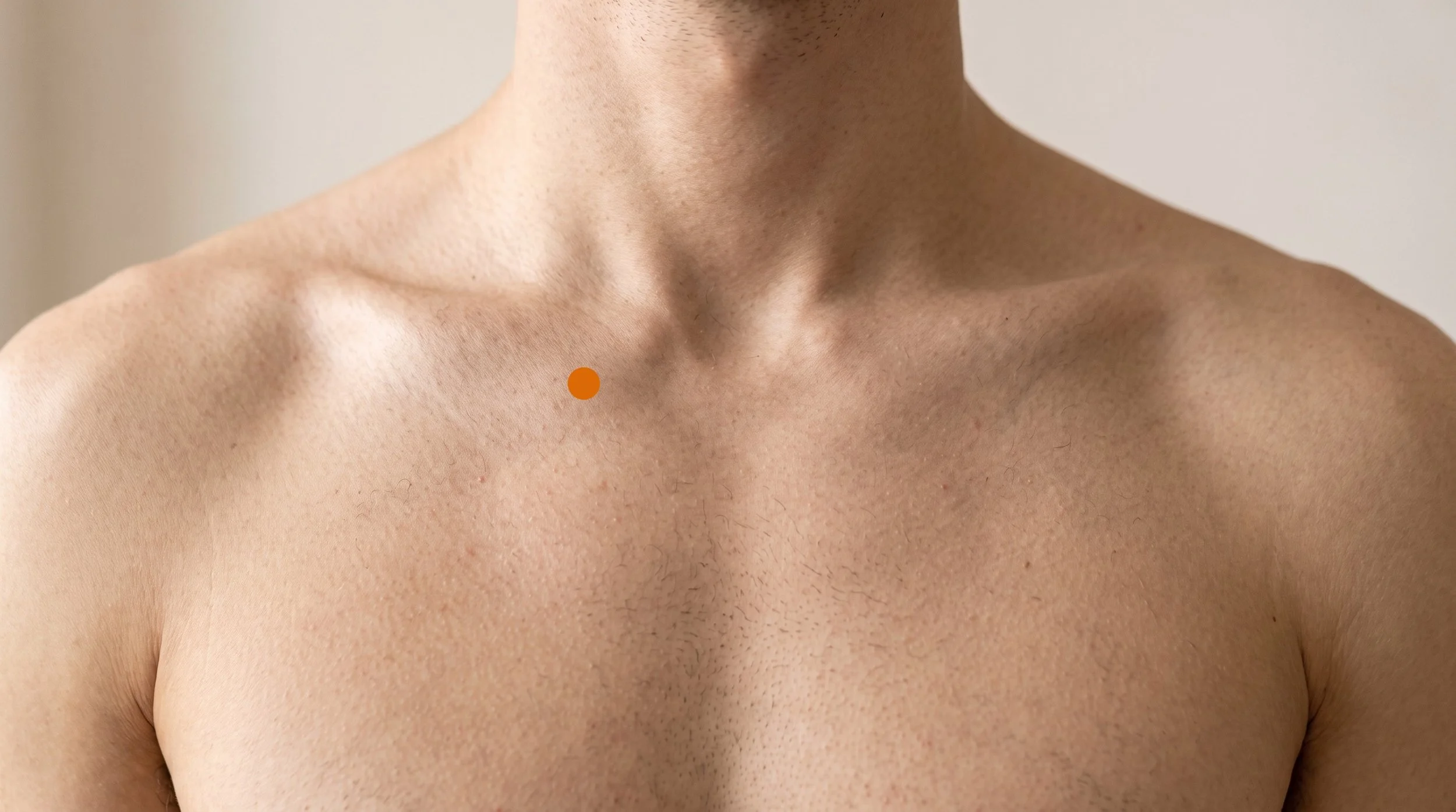
KI27 Acupuncture Point (Shufu)
The Blazing Valley Below the Navicular: Anatomy, Mechanism, and Why This Arch Point Sits at the Crossroads of Night Sweats, Throat Symptoms, and Foot Pain
KI2, known in Chinese as Rangu and usually translated as Blazing Valley, is the second point on the Kidney channel and one of the few classical points that lives in the soft hollow of the medial arch. You can find it by tracing the inside of the foot until you feel the navicular tuberosity, the small bony bump roughly midway between the ball of the foot and the heel, then dropping into the depression just below and slightly in front of it.
In traditional terms KI2 is the ying-spring point and the fire point of the Kidney channel, which is why classical texts reach for it when heat appears in a body that is fundamentally depleted: night sweats, a dry and sore throat, a hoarse or lost voice, restless hot feet. In modern practice the same spot is also a common tender point in arch strain and medial foot pain, which makes the ki2 acupuncture point unusually versatile for a location most patients have never thought about.
- Location and layers: KI2 sits on the inner foot in the depression distal and inferior to the navicular tuberosity, over thin skin, the upper border of abductor hallucis, and the fascial envelope that blends with the spring ligament and the tibialis posterior insertion (Deadman et al., 2007).
- Traditional category, translated: classical sources place Rangu as the ying-spring and fire point of the Kidney channel and some texts also list it as a starting point of the Yin Qiao vessel, a way of saying that this is where the channel's most heat-clearing actions were historically concentrated (Deadman et al., 2007; Kim, 2015).
- Mechanism: needling here recruits cutaneous and deep afferents in medial plantar and saphenous nerve territory, which engages segmental processing in the lumbosacral dorsal horn and descending inhibitory pathways involving opioid, serotonergic, and noradrenergic systems (Zhao, 2008).
- Research picture: reviews of acupuncture for vasomotor symptoms are mixed, with a Cochrane review finding no clear advantage over sham (Dodin et al., 2013) while pragmatic trials comparing acupuncture with usual care report meaningful symptom reduction (Lesi et al., 2016), and a sham-controlled trial found no difference from sham needling (Ee et al., 2016).
- Foot pain evidence: systematic reviews of acupuncture and of trigger point dry needling for plantar heel pain suggest short term pain reduction, though the trials are small and methodologically uneven (Clark & Tighe, 2012; Llurda-Almuzara et al., 2021).
- Clinical framing and de qi: KI2 is rarely used alone; it is typically one point inside a protocol, and because the arch is sensitive the sensation is usually a distinct dull ache or spreading heaviness through the medial foot rather than the deep pressure people feel at larger muscles (Vickers et al., 2018).
Night Sweats, Hot Flashes, or Sleep That Breaks at 3 AM?
Deficiency heat patterns are one of the oldest reasons practitioners reach for KI2, and they remain one of the most common reasons patients come to us. At Morningside Acupuncture we build individualized protocols that may combine Rangu with points on the Kidney, Spleen, and Heart channels, alongside sleep and stress support. Acupuncture may reduce the frequency and intensity of vasomotor symptoms for some people, and we track your response session by session. Schedule a visit and let's map out what your pattern actually looks like.
Schedule NowAnatomy of KI2: Why the Navicular Tuberosity Is Such an Important Location
The navicular tuberosity is the keystone landmark of the medial arch. Just below and in front of it, where KI2 sits, the skin is thin and mobile, and underneath it lies the superior border of abductor hallucis, the plantar fascia's medial edge, and the fibrous tissue that blends into the spring ligament (the plantar calcaneonavicular ligament) supporting the head of the talus. The tibialis posterior tendon anchors onto the tuberosity itself, so this small area is loaded every time you push off, land from a run, or stand for hours on hard surfaces.
Patients with fallen arches, sudden increases in mileage, or new minimalist shoes frequently develop tenderness precisely here, which is why the ki 2 foot location is so often reactive on palpation even in people who came in for something unrelated (Deadman et al., 2007).
Sensory supply in this region comes from the medial plantar nerve, a terminal branch of the tibial nerve, with contribution from the saphenous nerve over the medial skin. These afferents enter the cord at lumbosacral levels, where input from skin, fascia, muscle, and joint converges on shared dorsal horn neurons.
Needling KI2 stimulates small diameter A-delta and group III fibers, and that input can modulate the sensitivity of those shared neurons segmentally while also triggering supraspinal responses through the periaqueductal gray and the rostral ventromedial medulla, which release endogenous opioids along with serotonergic and noradrenergic mediators (Zhao, 2008). Practically, that is why a needle in the arch can change how the whole foot and sometimes the calf feels, and why sensory effects are not limited to the millimeter of tissue the needle occupies.
The deeper structures worth respecting are the medial plantar artery and its branches, along with the medial plantar nerve trunk running deep to abductor hallucis. Classical texts describe perpendicular insertion of roughly 0.5 to 1 cun at Rangu, while several modern manuals use a shallower 0.3 to 0.5 cun, and both are reasonable depending on foot size and tissue thickness (Deadman et al., 2007).
We insert with the foot supported and slightly everted, angle away from the tendon insertion rather than through it, and stop advancing immediately if a patient reports a sharp electrical sensation into the toes, which suggests nerve proximity rather than de qi. Bleeding is uncommon but bruising can occur in this vascular corner of the foot, so gentle pressure on withdrawal is standard.
Related Kidney Channel Related Abductor Hallucis Trigger PointsKI2 at a Glance: Classification, Location, and Clinical Use
| Category | Detail |
|---|---|
| Traditional Name | Rangu (Blazing Valley), Kidney 2, also written KID-2 or K-2 |
| Channel Classification | Second point of the Kidney channel of the foot Shao Yin |
| Point Categories | Ying-spring point of the Kidney channel; Fire point of the Kidney channel; listed in some texts as a starting point of the Yin Qiao (Yin Motility) vessel |
| Precise Location | On the medial side of the foot, in the depression distal and inferior to the navicular tuberosity, the bony prominence above the midpoint between the ball of the foot and the heel |
| Tissue Stimulated | Thin medial arch skin and subcutaneous fascia, the superior border of abductor hallucis, fascia continuous with the spring ligament, near the tibialis posterior insertion; medial plantar nerve territory |
| Needle Depth / Direction | Perpendicular insertion 0.5 to 1 cun in most sources, with 0.3 to 0.5 cun common in modern texts; angled slightly away from the tibialis posterior insertion, needle withdrawn or redirected if sharp electrical sensation occurs |
| De Qi Sensation | A dull, spreading ache or heavy fullness through the medial arch, sometimes traveling toward the heel or big toe; the area is sensitive, so gentle technique matters more than strong stimulation |
| Primary Clinical Uses | Traditionally used for deficiency heat patterns including night sweats and hot flashes, dry or sore throat with hoarseness or loss of voice, thirst, genital itching, irregular menstruation, and seminal emission; in modern practice also for medial arch, instep, and plantar heel pain |
| Common Point Combinations |
|
In the classical literature summarized by Deadman and colleagues, Rangu is presented as the principal Kidney channel point for clearing heat that arises from depletion rather than excess, a distinction the tradition took seriously because the Kidneys were understood to store the body's foundational yin and yang and therefore never to suffer true excess (Deadman et al., 2007). The traditional actions attributed to KI2 cluster into three themes: clearing this deficiency heat, regulating the Kidneys, and regulating the lower abdomen and pelvis.
Classical indication lists follow the same logic. Heat rising along the channel toward the throat was said to produce painful swallowing, dryness with too little saliva, and inability to speak; heat surfacing at night was said to produce sweating during sleep; heat disturbing the chest was linked to breathlessness and blood in the sputum; and heat in the lower body was linked to genital itching, seminal emission, irregular menstruation, and infertility. Maciocia's treatment protocols for empty heat patterns include KI2 for exactly this purpose alongside points that nourish rather than drain (Maciocia, 2015).
What is striking is that the same point was also moxaed by classical practitioners for cold patterns such as cold diarrhea, cold feet, and swelling, a reminder that traditional attributions for a single location could point in two directions depending on the pattern in front of the physician.
Why KI2 Is Used for Night Sweats and Throat Dryness, Not Just Arch Pain
The honest answer starts with what needling does and does not do. There is no anatomical channel carrying heat from the arch of the foot to the throat. What there is, is a nervous system that reads needle input as a moderate, non-damaging sensory stimulus and responds with coordinated changes well beyond the site. Afferent traffic from the medial plantar nerve enters the lumbosacral cord, converges with other inputs, and ascends to brainstem and hypothalamic regions that also regulate autonomic tone, thermoregulatory set points, and stress reactivity.
That anatomy is why a needle in the foot can plausibly influence sweating, skin blood flow, and arousal, and why the classical association between distal Kidney channel points and heat symptoms has a mechanistic story that does not require any literal flow of qi (Zhao, 2008).
The second layer is descending inhibition. Needle stimulation activates midbrain and brainstem structures that project back down to the dorsal horn, damping nociceptive transmission through opioid, serotonergic, and noradrenergic mediators (Zhao, 2008). For a patient with medial arch pain, this pairs with the segmental effect of needling tissue that shares innervation with the painful structures, which is why local treatment at KI2 and neighboring foot muscles can be more effective than treating the heel alone.
For a patient with hot flashes, the relevant effects are more autonomic than analgesic, and the evidence there is genuinely mixed, with pragmatic trials more favorable than sham-controlled ones (Lesi et al., 2016; Ee et al., 2016).
In our clinic, KI2 is a supporting player. It earns its place when a patient's presentation includes both a heat-and-dryness picture and tenderness at the medial arch, or when we want a distal Kidney channel point to round out a protocol for menopausal symptoms, sleep disruption, or menstrual irregularity. It is not a standalone treatment for any of those conditions, and no responsible practitioner should present it that way.
What the Research Shows for KI2
No clinical trial has tested KI2 on its own. Like nearly all point-specific questions in acupuncture research, the available evidence tests multi-point protocols in which Rangu may or may not have been included, which means the honest framing is that KI2 is one plausible component of protocols that have been studied, not an independently validated intervention. The literature below covers the two domains where this point is most often used, vasomotor symptoms and plantar foot pain, plus the mechanistic and pain-outcome work that underpins acupuncture generally. Results are inconsistent, especially when acupuncture is compared with sham needling, and we think patients deserve to see that plainly.
| Study | Type | Focus | Key Finding |
|---|---|---|---|
| Dodin et al., 2013 | Cochrane systematic review | Acupuncture for menopausal hot flushes | The review found no evidence that acupuncture outperformed sham acupuncture for hot flush frequency or severity, though it appeared better than no treatment in some comparisons. |
| Lesi et al., 2016 | Multicenter randomized controlled trial | Acupuncture plus enhanced self-care for hot flashes in women with breast cancer | Adding acupuncture to enhanced self-care was associated with reduced hot flash scores and improved quality of life compared with self-care alone in this pragmatic design. |
| Ee et al., 2016 | Randomized sham-controlled trial | Acupuncture for menopausal hot flashes | Both real and sham needling produced similar improvement, suggesting that non-specific effects account for a substantial share of the benefit patients experience. |
| Clark & Tighe, 2012 | Systematic review | Acupuncture for plantar heel pain | The authors concluded that acupuncture may reduce heel pain with effects broadly comparable to other conservative options, while noting substantial heterogeneity and quality limitations. |
| Llurda-Almuzara et al., 2021 | Systematic review and meta-analysis | Dry needling for plantar heel pain and plantar fasciitis | Pooled results suggested short and medium term pain reduction from trigger point dry needling, with small samples and variable protocols limiting confidence. |
| Vickers et al., 2018 | Individual patient data meta-analysis | Acupuncture for chronic musculoskeletal, headache, and osteoarthritis pain | Acupuncture was associated with modest but persistent pain reduction versus sham and no-acupuncture controls across nearly 21,000 patients. |
| Zhao, 2008 | Narrative review of mechanisms | Neural mechanisms of acupuncture analgesia | Needle stimulation of small diameter afferents engages segmental inhibition and descending opioid, serotonergic, and noradrenergic pathways. |
Arch Pain, Instep Soreness, or Plantar Heel Pain That Will Not Settle?
Medial arch and instep pain often involves the tibialis posterior insertion, abductor hallucis, and the deep intrinsic foot muscles, and KI2 sits directly over that territory. We combine classical point selection with dry needling of the specific muscles that reproduce your symptoms, plus loading and footwear guidance so relief holds between sessions. Studies suggest needling approaches may reduce plantar heel pain in the short term when paired with active care. Book an evaluation and we'll find out which tissues are actually driving your foot pain.
Schedule NowKI2 in the Context of Trigger Point Work
Acupuncture, defined by the use of an acupuncture needle, includes hundreds of styles, and dry needling is one of them. At Morningside we move between frameworks in the same session. When a patient's medial foot pain reproduces on palpation at the KI2 depression, we treat that spot as both a classical point and a clinically tender site, then work outward to the muscles that refer pain into the arch.
Abductor hallucis is the closest neighbor and a frequent contributor to medial arch and heel symptoms, and the deep intrinsic foot muscles, flexor hallucis brevis, and adductor hallucis often need attention as well (Simons et al., 1999).
Foot pain also travels upward in the kinetic chain, so we routinely assess and needle tibialis posterior, soleus, and the peroneals when arch loading is the driver, rather than treating the foot in isolation. The overlap between the KI2 location and myofascial targets is close but not identical: KI2 is a fixed anatomical landmark under the navicular tuberosity, while trigger points are palpated where they actually are on a given day.
Combining the two gives us local input at a sensitive fascial junction plus deeper input at the muscles doing the work, which fits both the segmental logic of pain science and the classical logic of treating the channel where it passes.
KI2 Deficiency Heat and Foot Pain Treatment at NYC's Highest-Rated Acupuncture Clinic
Morningside Acupuncture is the highest-rated acupuncture and dry needling clinic in New York City with over 500 five-star Google reviews, and our practitioners are licensed acupuncturists who treat both internal medicine patterns and stubborn musculoskeletal pain. We use points like Rangu inside a plan that reflects your history, your labs, your training load, and your goals, never as a formula pulled off a chart. Every session includes reassessment, so you always know whether the treatment is working. Schedule your appointment on the Upper West Side and get started.
Schedule NowFrequently Asked Questions
What does KI2 feel like when needled?
Most people feel a brief pinch as the needle passes the skin, which is thin here, followed by a dull, spreading ache or a sense of heaviness through the medial arch. Some patients feel the sensation drift toward the heel or the base of the big toe. That spreading quality is de qi, and it is a good sign of appropriate stimulation. What you should not feel is a sharp, electric zing into the toes; if that happens, tell your practitioner immediately so the needle can be adjusted, since it usually means the needle is close to the medial plantar nerve.
Why would a point on the arch of the foot help symptoms in the throat or with night sweats?
Traditionally, the answer is that the Kidney channel ascends from the foot through the body to the throat, and that Rangu is the channel's fire point for clearing heat generated by depletion. Neurophysiologically, the answer is different: needling the medial foot sends afferent input into the lumbosacral spinal cord and up to brainstem and hypothalamic centers involved in autonomic regulation, thermoregulation, and stress responses (Zhao, 2008). Nothing literally travels from your arch to your throat. What changes is the way the nervous system is modulating tone and sensitivity throughout the body, and the classical map turned out to be a useful clinical shorthand for effects that we now describe in neural terms.
Can I press KI2 myself between sessions?
Yes, and acupressure at Rangu is easy to do while sitting. Cross one ankle over the opposite knee, run your thumb along the inside of your foot until you feel the navicular tuberosity (the bony bump above the midpoint between the ball of the foot and the heel), then slide just below and slightly forward into the soft hollow. Apply steady, moderate pressure with your thumb for 30 to 60 seconds, release for 10 seconds, and repeat two or three times per foot. Small circular movements are fine. One to two rounds a day is plenty, and for arch soreness you can add a slow roll of the arch over a ball afterward. Pressure should feel like a satisfying ache, never sharp or numbing. Stop if you feel tingling into the toes, and skip the area entirely if the skin is broken, infected, or recently injured.
Is KI2 safe to needle?
In trained hands, yes. KI2 has no organ underneath it and carries none of the pneumothorax risk associated with chest and upper back points. The cautions are local: the medial plantar artery and nerve run deeper in this region, so needling is kept to the conventional depth and the practitioner redirects if a patient reports electrical sensation. Bruising is the most common minor side effect. Because the arch is sensitive, technique tends to be gentler here than at large muscles. As with all points, single-use sterile needles and clean technique are non-negotiable, and patients on blood thinners or with peripheral neuropathy, diabetes-related foot changes, or any active foot infection should tell their practitioner before treatment so the plan can be adjusted.
Where exactly is KI2 located?
Sit and cross one leg so you can see the inside of your foot. Trace along the medial border from the base of the big toe back toward the heel, and you will meet a rounded bony prominence roughly halfway between the ball of the foot and the heel: that is the navicular tuberosity. KI2 is in the depression immediately below and slightly in front of that bump, on the softer tissue rather than on the bone itself. It sits between KI1 in the sole and KI3 behind the inner ankle bone, and it is usually tender to firm pressure, particularly if you have any history of arch strain or plantar heel pain.
References
- Deadman, P., Al-Khafaji, M., & Baker, K. (2009). A manual of acupuncture. Journal of Chinese Medicine Publications.
- Maciocia, G. (2005). The foundations of Chinese medicine: A comprehensive text for acupuncturists and herbalists (2nd ed.). Elsevier Churchill Livingstone.
- Kim, H. (2008). Handbook of Oriental medicine (3rd ed.). Harmony & Balance Press.
- Simons, D. G., Travell, J. G., & Simons, L. S. (1999). Travell & Simons' myofascial pain and dysfunction: The trigger point manual, Vol. 1: Upper half of body (2nd ed.). Williams & Wilkins.
- Zhao, Z. Q. (2008). Neural mechanism underlying acupuncture analgesia. Progress in Neurobiology, 85(4), 355-375. https://doi.org/10.1016/j.pneurobio.2008.05.004
- Vickers, A. J., Vertosick, E. A., Lewith, G., MacPherson, H., Foster, N. E., Sherman, K. J., Irnich, D., Witt, C. M., & Linde, K. (2018). Acupuncture for chronic pain: Update of an individual patient data meta-analysis. Journal of Pain, 19(5), 455-474. https://doi.org/10.1016/j.jpain.2017.11.005
- Dodin, S., Blanchet, C., Marc, I., Ernst, E., Wu, T., Vaillancourt, C., Paquette, J., & Maunsell, E. (2013). Acupuncture for menopausal hot flushes. Cochrane Database of Systematic Reviews, 2013(7), CD007410. https://doi.org/10.1002/14651858.CD007410.pub2
- Lesi, G., Razzini, G., Musti, M. A., Stivanello, E., Petrucci, C., Benedetti, B., Rondini, E., Ligabue, M. B., Scaltriti, L., Botti, A., Artioli, F., Mancuso, P., Cardini, F., & Pandolfi, P. (2016). Acupuncture as an integrative approach for the treatment of hot flashes in women with breast cancer: A prospective multicenter randomized controlled trial (AcCliMaT). Journal of Clinical Oncology, 34(15), 1795-1802. https://doi.org/10.1200/JCO.2015.63.2893
- Ee, C., Xue, C., Chondros, P., Myers, S. P., French, S. D., Teede, H., & Pirotta, M. (2016). Acupuncture for menopausal hot flashes: A randomized trial. Annals of Internal Medicine, 164(3), 146-154. https://doi.org/10.7326/M15-1380
- Clark, R. J., & Tighe, M. (2012). The effectiveness of acupuncture for plantar heel pain: A systematic review. Acupuncture in Medicine, 30(4), 298-306. https://doi.org/10.1136/acupmed-2012-010183
- Llurda-Almuzara, L., Labata-Lezaun, N., Meca-Rivera, T., Navarro-Santana, M. J., Cleland, J. A., Fernandez-de-las-Penas, C., & Perez-Bellmunt, A. (2021). Is dry needling effective for the management of plantar heel pain or plantar fasciitis? An updated systematic review and meta-analysis. Pain Medicine, 22(7), 1630-1641. https://doi.org/10.1093/pm/pnab114
Disclaimer: This web site is intended for educational and informational purposes only. Reading this website does not constitute providing medical advice or any professional services. This information should not be used for diagnosing or treating any health issue or disease. Those seeking medical advice should consult with a licensed physician. Seek the advice of a medical doctor or other qualified health professional for any medical condition. If you think you have a medical emergency, call 911 or go to the emergency room. No acupuncturist-patient relationship is created by reading this website or using the information. Morningside Acupuncture PLLC and its employees and contributors do not make any express or implied representations with respect to the information on this site or its use. For any legal interpretation of scope of practice in your state, consult a licensed attorney or regulatory authority.
Read more from our blog



