Best Acupuncture Points for Sports Recovery
ST36, GB34, BL40, LI4, and SP10 — How Acupuncture Reduces Delayed Onset Muscle Soreness, Resolves Latent Trigger Points, and Supports Faster Return to Training
Elite athletes and recreational exercisers alike are increasingly using acupuncture as part of their recovery toolkit, not because it is a wellness trend but because its neurophysiological effects on pain modulation, autonomic balance, and local tissue inflammation address the specific physiological processes that slow recovery between training sessions. The goal is not just feeling better but training more effectively by reducing the residual neuromuscular dysfunction that accumulates with high training loads.
- Delayed onset muscle soreness (DOMS) and the latent trigger points that develop after heavy training both involve local sensitization of muscle nociceptors, elevated inflammatory mediators in the muscle tissue, and reduced motor neuron efficiency — all of which acupuncture can address through peripheral and central mechanisms (Shah et al., 2015).
- ST36 (Zusanli) is the primary systemic recovery point, with documented effects on reducing markers of exercise-induced oxidative stress, supporting immune function during heavy training loads, and activating the parasympathetic nervous system to counteract the sympathetic overdrive that limits recovery after intense exercise (Zhao, 2008).
- GB34 (Yanglingquan), the hui-meeting point of all sinews, is the most important point for systemic musculoskeletal recovery, addressing global muscle and tendon tone and reducing the heightened sensitivity of the motor neuron pool that produces the muscle stiffness and soreness characteristic of post-training fatigue.
- BL40 (Weizhong) provides targeted recovery support for the posterior chain — hamstrings, gluteals, and lumbar musculature — that bears the highest load in most athletic activities, with its tibial nerve stimulation reducing dorsal horn sensitization at the S1-S2 levels most affected by running, jumping, and lifting.
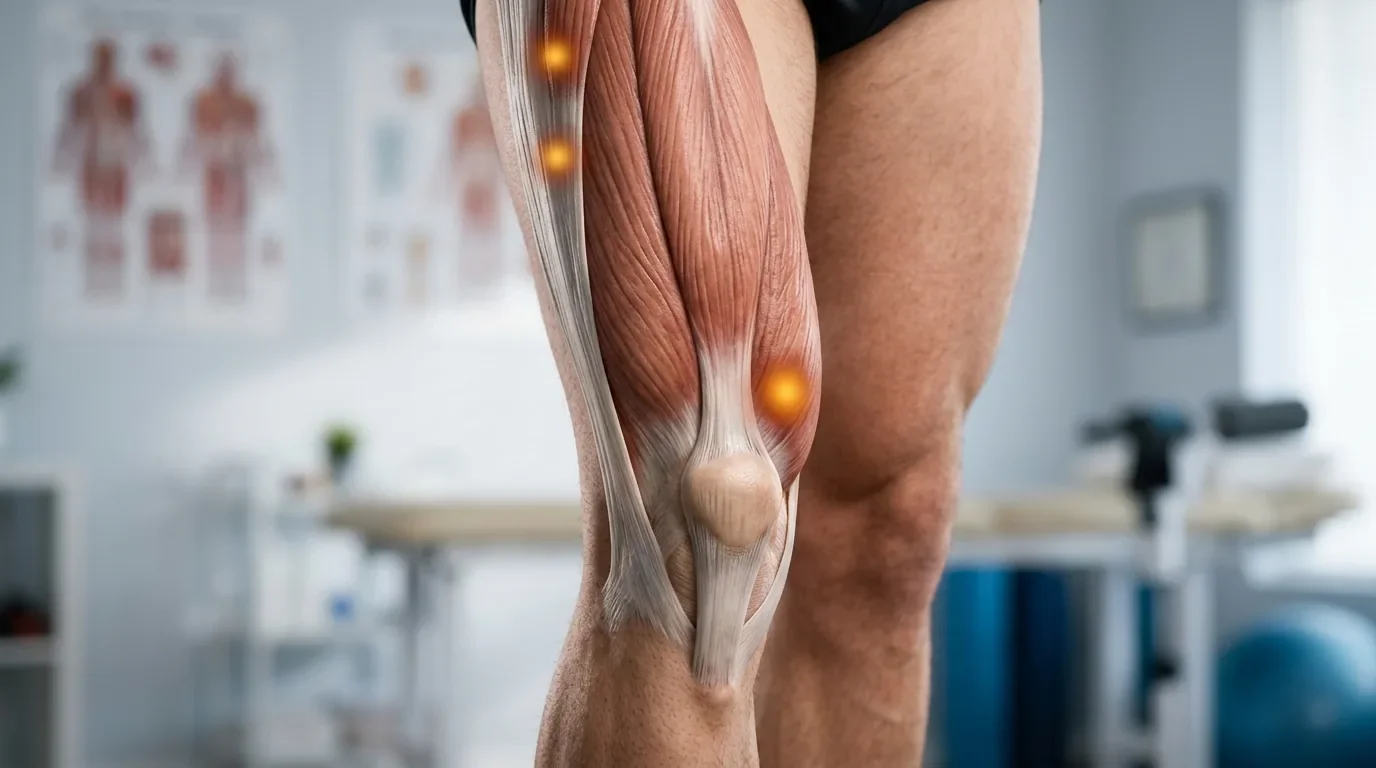
- SP10 (Xuehai), located at the vastus medialis on the medial thigh, is classically designated the "sea of blood" and is included in recovery protocols for its proposed effects on local circulation and muscle tissue nutrition, which may support the clearance of metabolic byproducts that accumulate in heavily worked quadriceps and medial thigh musculature.
- LI4 (Hegu) provides systemic anti-nociceptive support by activating supraspinal descending inhibitory pathways, reducing the global pain sensitivity that elevates in athletes with high training loads and can contribute to overtraining syndrome presentations (Yarnitsky, 2010).
Is soreness and recovery time limiting your training frequency?
At Morningside Acupuncture, sports recovery sessions combine systemic recovery points with targeted work on the muscle groups and neural pathways most stressed by your specific sport and training phase. Whether you are dealing with DOMS, latent trigger points, or the accumulated neuromuscular fatigue of a heavy training block, our practitioners design sessions that fit into your training schedule.
Schedule NowWhat Acupuncture Does to the Recovering Athlete's Body
Sports recovery requires the body to accomplish several overlapping tasks after intense exercise: clear metabolic byproducts including lactic acid and reactive oxygen species from muscle tissue, resolve the micro-inflammatory response that drives DOMS, restore normal motor neuron excitability and muscle coordination, and shift the autonomic nervous system from the sympathetic dominance of training effort back toward the parasympathetic state that enables tissue repair.
Acupuncture influences all four of these processes through distinct but overlapping mechanisms. The needling stimulus at peripheral nerves generates afferent signals that activate the autonomic regulatory centers in the brainstem and hypothalamus, shifting autonomic tone toward parasympathetic dominance, which promotes blood flow to peripheral tissues, supports immune surveillance of muscle damage, and activates the rest-and-repair state. This autonomic shift is measurable in heart rate variability studies, which show increases in parasympathetic indices after acupuncture that parallel the autonomic signature of adequate recovery.
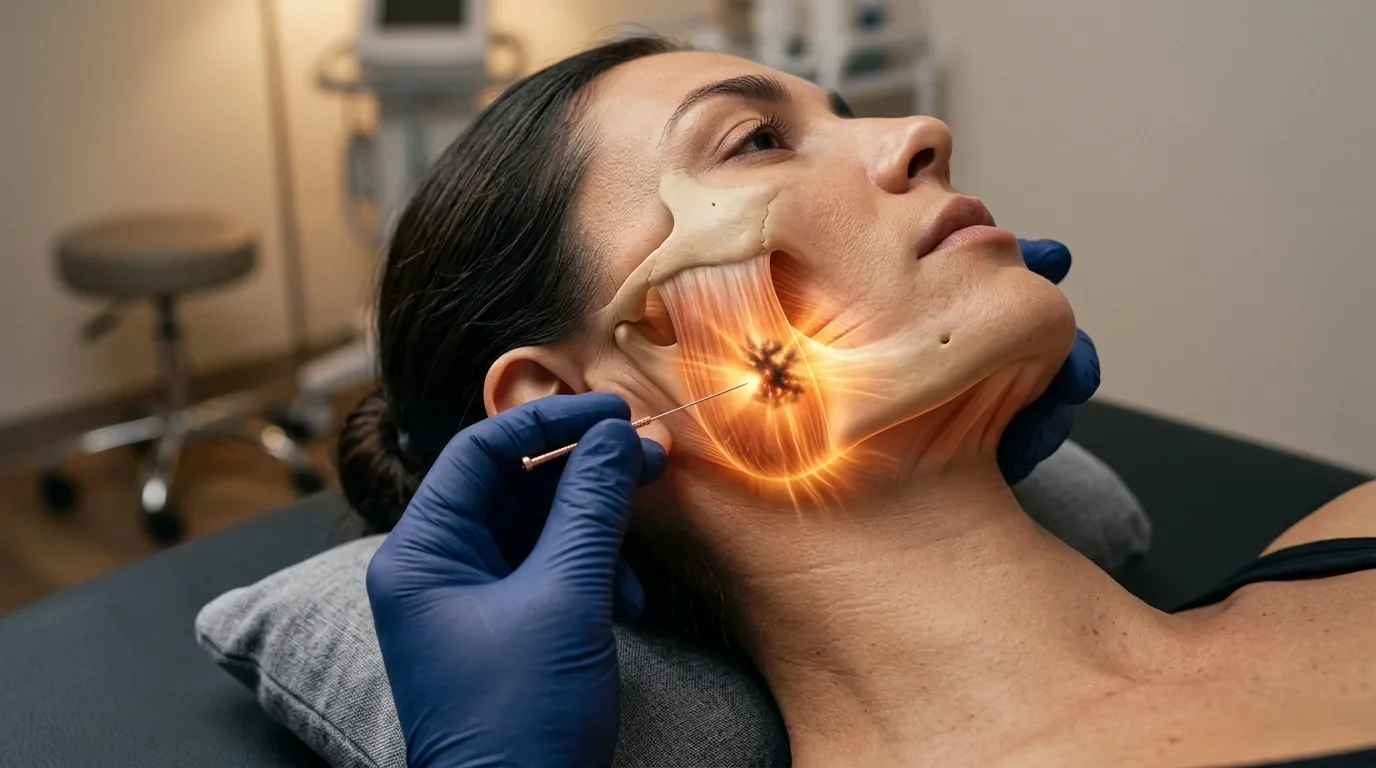
Local needling into muscles with active or latent trigger points — trigger points that have not yet generated spontaneous pain but are reducing motor efficiency and predisposing the athlete to injury — restores normal muscle fiber firing patterns by deactivating the hyperactive motor endplates responsible for the sustained sarcomere contraction characteristic of trigger points (Shah et al., 2015). This local effect on muscle tissue complements the central pain modulation effects and the autonomic shift to create a comprehensive recovery stimulus.
The Key Acupuncture Points for Sports Recovery
| Point | Location | Recovery Mechanism | Best For |
|---|---|---|---|
| ST36 (Zusanli) | Anterior lower leg, 3 cun below the knee, 1 cun lateral to the tibial crest | Vagal activation; immune modulation; oxidative stress reduction; systemic parasympathetic shift | Overall recovery support; reducing systemic inflammation; immune resilience during training blocks |
| GB34 (Yanglingquan) | Anterior and inferior to the fibular head, lateral lower leg | Peroneal nerve stimulation; hui-meeting point of sinews — broad musculoskeletal regulatory effect; supraspinal pain inhibition | Global muscle and tendon soreness; reducing post-training stiffness; improving range of motion recovery |
| BL40 (Weizhong) | Midpoint of the popliteal crease, tibial nerve | S1-S2 dorsal horn modulation; tibial nerve supraspinal activation; posterior chain neural recovery | Hamstring, glute, and lumbar recovery; runners, cyclists, weightlifters; posterior chain sports |
| SP10 (Xuehai) | Medial thigh, 2 cun proximal to the superomedial patella on the vastus medialis | Vastus medialis local tissue; tibial nerve branch afferents; local circulation support | Quadriceps recovery; medial knee soreness; runners and cyclists with VMO fatigue |
| LI4 (Hegu) | Dorsal hand, between 1st and 2nd metacarpals | Radial nerve; supraspinal descending inhibition; systemic pain threshold elevation | Reducing global pain sensitivity; upper extremity recovery (climbing, racket sports, rowing) |
| LV3 (Taichong) | Dorsal foot, between 1st and 2nd metatarsals | Deep peroneal nerve; limbic deactivation; autonomic regulation; Four Gates with LI4 | Reducing training stress and cortisol-driven recovery impairment; emotional component of overtraining |
ST36: The Recovery Point With the Strongest Evidence Base
ST36 is the most extensively researched acupuncture point for exercise recovery and sports performance support. Multiple studies have examined its effects on exercise-induced oxidative stress markers, immune function during heavy training, and autonomic recovery after high-intensity exercise. Research demonstrates that acupuncture or electroacupuncture at ST36 can reduce post-exercise levels of creatine kinase and lactate dehydrogenase (markers of muscle damage), reduce malondialdehyde (a marker of oxidative stress), and increase superoxide dismutase (an endogenous antioxidant enzyme).
ST36 is also a point where electroacupuncture has shown particularly robust effects compared to manual needling alone, with the electrical component potentially adding a more consistent and quantifiable neural stimulus than variable manual needle manipulation. Sports medicine practitioners interested in evidence-based acupuncture approaches often prefer electroacupuncture at ST36 and GB34 for post-competition and post-training recovery sessions because of the greater standardization it provides.
GB34: The Sinew-Recovery Point
As the hui-meeting point of all sinews, GB34 has the broadest musculoskeletal regulatory effect of any single acupuncture point, making it the most logical choice for a generalized muscle and tendon recovery session. Its position at the fibular head, where the common peroneal nerve transitions into its deep and superficial branches, means that needling activates afferent pathways spanning the L4-S1 territory with simultaneous stimulation of multiple peroneal nerve branches. This broad peripheral nerve activation generates strong supraspinal descending inhibition, reducing the global pain sensitivity that accumulates in the athlete's nervous system during heavy training loads.
Clinically, GB34 is included in virtually every sports recovery session at Morningside because it addresses the universal post-exercise state of elevated musculoskeletal sensitization that slows the return to full training capacity. It pairs naturally with ST36, which is located just below and medially on the same lower leg, allowing practitioners to address both the systemic autonomic-immune recovery (ST36) and the systemic musculoskeletal recovery (GB34) efficiently in the same treatment region.
BL40: Recovery for the Posterior Chain
The posterior chain — hamstrings, gluteals, lumbar paraspinals, and gastrocnemius — is the primary power-generating system for running, jumping, cycling, and weightlifting. It is also the most frequently overloaded and under-recovered region in the athletic body. BL40 at the popliteal fossa provides the most efficient single-point access to the tibial nerve and the S1-S2 spinal territory that controls posterior chain neural function, making it the most important recovery point specifically for posterior chain-dominant athletes.
Latent trigger points in the hamstrings, particularly the biceps femoris and semitendinosus, accumulate rapidly during running and cutting sport training and significantly reduce muscle fiber recruitment efficiency and hamstring extensibility. BL40 sits at the popliteal fossa surrounded by these muscle tendons, and needling here addresses both the direct trigger point activity in the adjacent muscle tissue and the central dorsal horn sensitization at S1-S2 that perpetuates the heightened muscle tone throughout the posterior chain.
Related Best Acupuncture Points for Hip Pain: Recovery for Gluteal and Posterior Hip LoadingIs accumulated muscle tension from training reducing your performance?
Latent trigger points that develop silently during heavy training phases reduce muscle coordination, limit range of motion, and predispose athletes to acute injuries without causing obvious pain. Morningside's practitioners assess where latent trigger points are accumulating in your specific athletic loading pattern and address them before they become performance limiters or injury risks.
Schedule NowAcupuncture for DOMS: What the Research Shows
Delayed onset muscle soreness typically peaks 24–72 hours after unaccustomed or high-intensity exercise and involves local inflammation, micro-damage to muscle fibers, and sensitization of muscle nociceptors. Several randomized controlled trials have examined acupuncture for DOMS, with generally positive findings for pain reduction compared to sham and no-treatment controls, though study heterogeneity makes firm conclusions about specific protocols difficult.
A systematic review of acupuncture for muscle soreness found that needling within 24–72 hours of the exercise bout producing DOMS reduced pain intensity and improved pressure pain threshold (a measure of local sensitization) compared to sham needling, with effects lasting through 72 hours post-treatment. The most effective protocols combined local needling in the affected muscles with distal systemic points like ST36 and LI4.
The clinical experience at sports-focused acupuncture practices is consistent with this research: recovery sessions within 24–48 hours after intense training or competition produce the most noticeable subjective improvement in athletes, while sessions more than 72 hours after the exercise bout are more useful for addressing residual latent trigger points and maintaining overall recovery capacity across a training block.
Sport-Specific Considerations
Runners and Cyclists
Recovery protocols emphasize BL40 for the posterior chain, ST36 and GB34 for the lower extremity broadly, SP10 for quadriceps and VMO recovery, and BL57 at the posterior calf for gastrocnemius and Achilles tissue. Iliotibial band-related lateral knee and hip symptoms that develop with high mileage benefit from GB34 and GB29 targeting the TFL and IT band fascial attachments.
Strength and Power Athletes
Heavy lifting and Olympic weightlifting stress the lumbar paraspinals, gluteals, quadriceps, and upper trapezius/shoulder girdle simultaneously. Recovery protocols add BL23 at the lumbar paraspinals, GB21 at the upper trapezius, and LI11 at the elbow for the upper body loading component, combined with the lower body posterior chain points.
Racket Sports and Overhead Athletes
Tennis, squash, volleyball, and overhead throwing athletes accumulate rotator cuff trigger point loads at SI9, TE14, and LI15, with forearm extensor overload at LI10 and LI11. Recovery protocols for this group emphasize the shoulder and elbow region while maintaining the systemic recovery foundation from ST36 and GB34.
Ready to make recovery a priority in your training plan?
At Morningside Acupuncture, the highest-rated acupuncture and dry needling clinic in New York City with over 500 five-star Google reviews, we work with athletes at all levels from recreational runners to professional competitors. Book a new patient visit to discuss how an individualized sports recovery protocol can fit into your training schedule.
Schedule NowFrequently Asked Questions About Acupuncture for Sports Recovery
When in relation to training or competition should I schedule acupuncture?
For recovery purposes, within 24–48 hours after a hard training session or competition is optimal. For performance preparation, 48–72 hours before competition allows time for the initial local response to settle while maintaining the systemic pain modulation benefits. Some athletes use a regular weekly session regardless of training schedule as a maintenance approach to prevent trigger point accumulation. Avoid hard training immediately after a session that included significant trigger point needling, as the local tissue response can temporarily increase soreness for 12–24 hours.
Is acupuncture legal in competitive sports?
Yes. Acupuncture involves no substances and does not appear on any prohibited list from WADA, USADA, or any major sports governing body. It is used by Olympic athletes across many countries and sports and is not subject to any competition-related restrictions. If you are under competitive drug testing protocols, there are no concerns with using acupuncture at any time during your training or competition calendar.
How does acupuncture compare to massage or foam rolling for recovery?
These approaches address complementary aspects of recovery. Massage primarily increases local circulation and provides mechanical disruption of superficial trigger points through manual pressure. Foam rolling applies sustained pressure to the fascial surface. Acupuncture reaches deeper trigger points that surface pressure cannot access, generates afferent nerve stimulation that produces central and systemic effects no mechanical approach can replicate, and activates the autonomic and endocrine recovery mechanisms at the level of the brainstem and hypothalamus. For athletes with heavy training loads, combining acupuncture with massage and foam rolling typically produces better recovery outcomes than any single modality alone.
Can acupuncture help prevent sports injuries?
Regular acupuncture may reduce injury risk by resolving latent trigger points before they compromise muscle coordination and predispose athletes to acute strains, by improving range of motion that compensates load away from vulnerable tissues, and by maintaining lower levels of central sensitization that allow the athlete to perceive early warning signals from overloaded tissues before they reach injury threshold. These are plausible mechanisms, but sports injury prevention research specific to acupuncture is limited, and we present these as reasonable clinical extrapolations rather than established findings.
References
- Shah, J. P., Thaker, N., Heimur, J., Aredo, J. V., Sikdar, S., & Gerber, L. H. (2015). Myofascial trigger points then and now: A historical and scientific perspective. PM&R, 7(7), 746–761. https://doi.org/10.1016/j.pmrj.2015.01.024
- Zhao, Z. Q. (2008). Neural mechanism underlying acupuncture analgesia. Progress in Neurobiology, 85(4), 355–375. https://doi.org/10.1016/j.pneurobio.2008.05.004
- Vickers, A. J., Vertosick, E. A., Lewith, G., MacPherson, H., Foster, N. E., Sherman, K. J., Irnich, D., Witt, C. M., & Linde, K. (2018). Acupuncture for chronic pain: Update of an individual patient data meta-analysis. The Journal of Pain, 19(5), 455–474. https://doi.org/10.1016/j.jpain.2017.11.005
- Yarnitsky, D. (2010). Conditioned pain modulation (the diffuse noxious inhibitory control-like effect): Its relevance for acute and chronic pain states. Current Opinion in Anaesthesiology, 23(5), 611–615. https://doi.org/10.1097/ACO.0b013e32833c348b
- Simons, D. G., Travell, J. G., & Simons, L. S. (1999). Travell and Simons' Myofascial Pain and Dysfunction: The Trigger Point Manual (2nd ed.). Lippincott Williams & Wilkins.
Disclaimer: This web site is intended for educational and informational purposes only. Reading this website does not constitute providing medical advice or any professional services. This information should not be used for diagnosing or treating any health issue or disease. Those seeking medical advice should consult with a licensed physician. Seek the advice of a medical doctor or other qualified health professional for any medical condition. If you think you have a medical emergency, call 911 or go to the emergency room. No acupuncturist-patient relationship is created by reading this website or using the information. Morningside Acupuncture PLLC and its employees and contributors do not make any express or implied representations with respect to the information on this site or its use. For any legal interpretation of scope of practice in your state, consult a licensed attorney or regulatory authority.
Read more from our blog