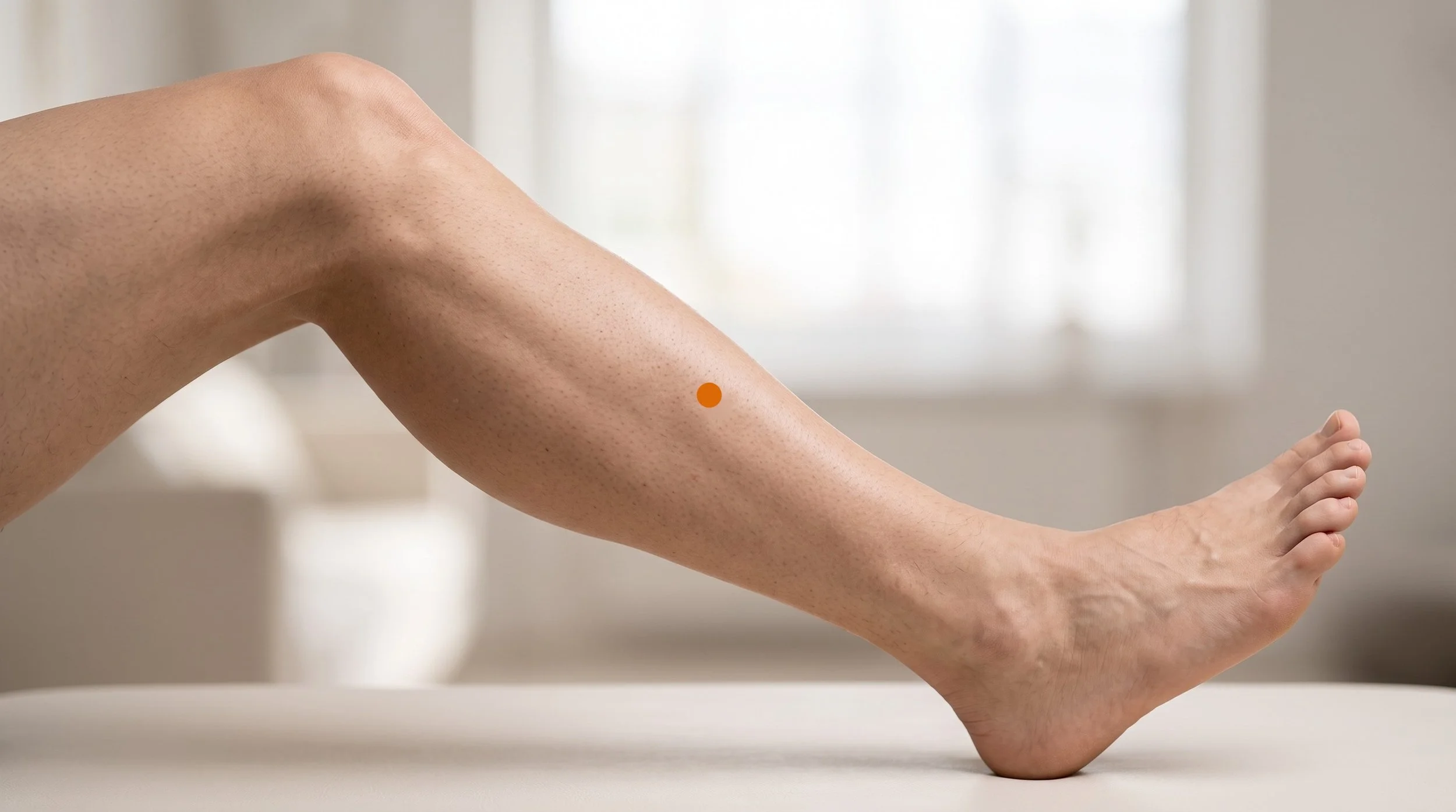
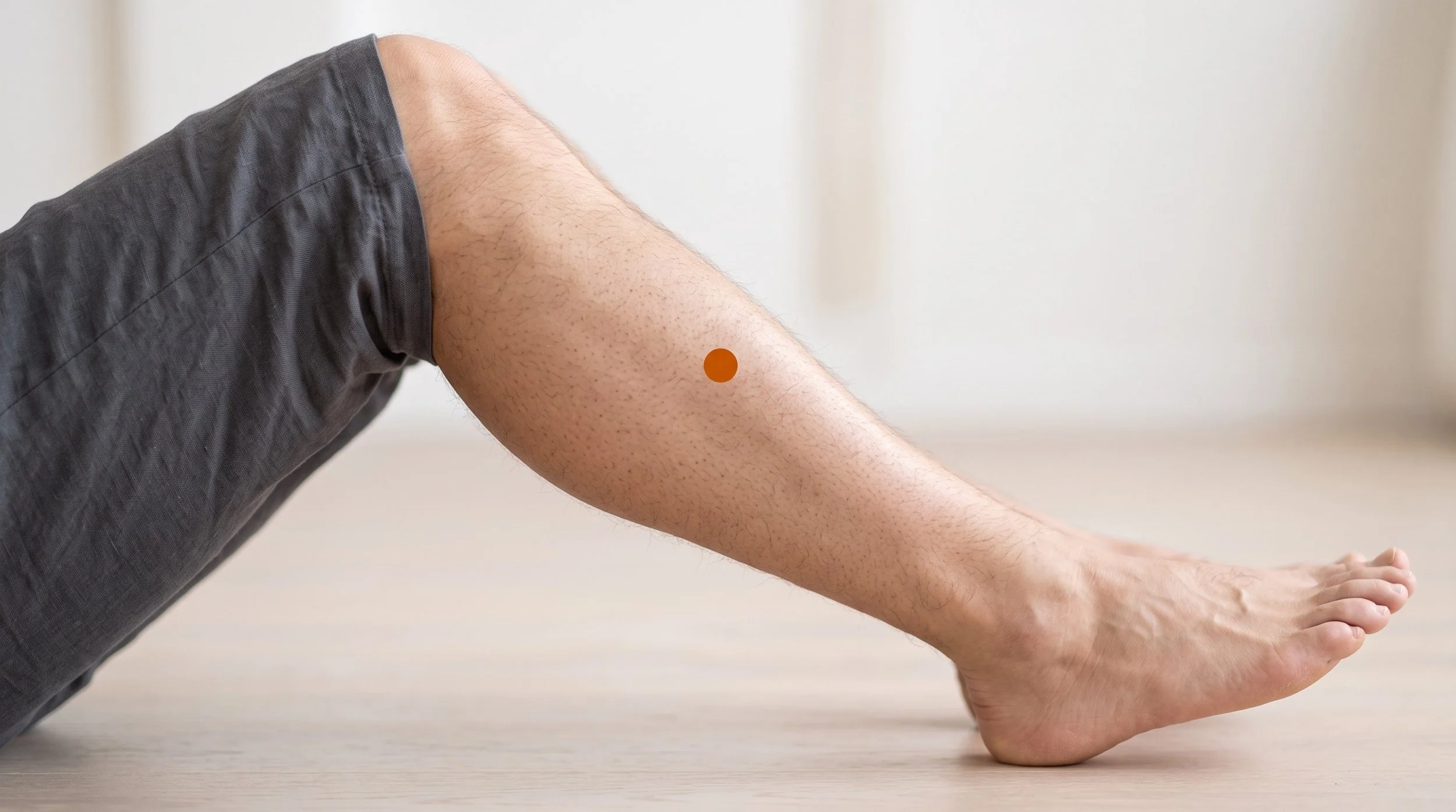
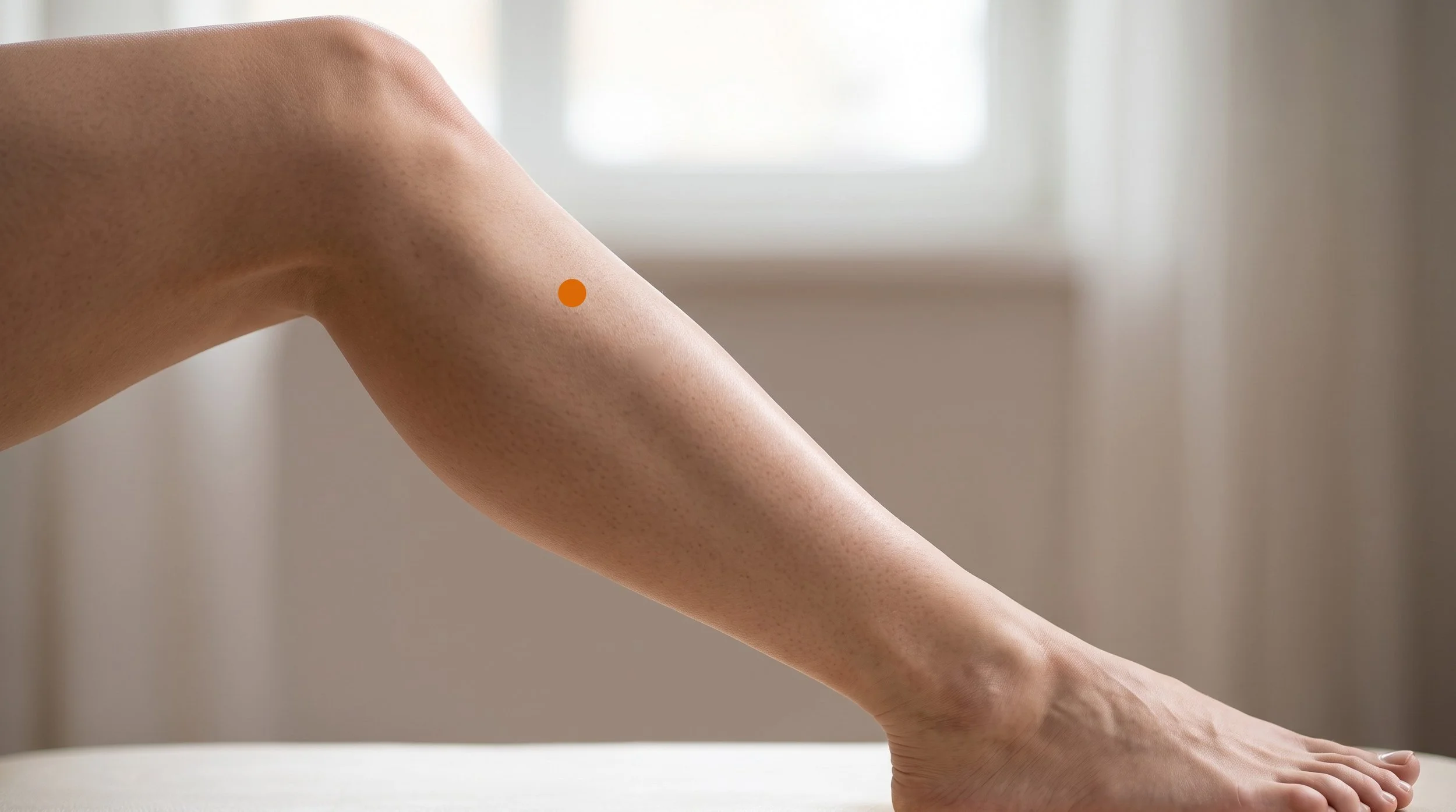
ST33 Acupuncture Point (Yinshi)
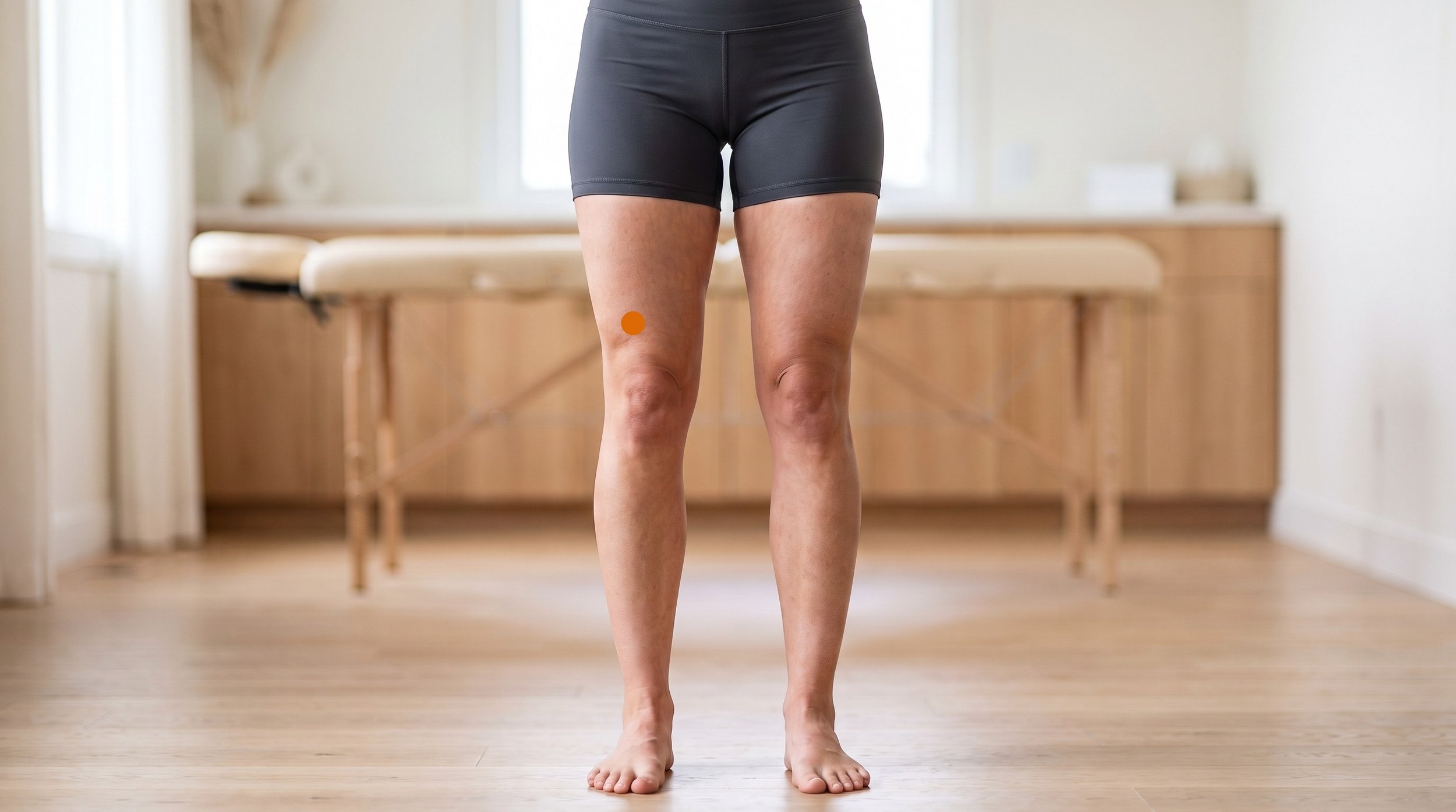
ST33 Acupuncture Point (Yinshi)
The Yin Market Above the Knee: Anatomy, Mechanism, and Why This Quadriceps Point Anchors Anterior Thigh and Knee Treatment
ST33, known as Yinshi (Yin Market), sits on the anterior thigh three cun (about one handbreadth) above the upper edge of the kneecap, on a line running from the outer corner of the patella up toward the bony point of the hip (the anterior superior iliac spine).
In plain terms, it lands in the meaty bulk of the quadriceps, right where the rectus femoris and vastus lateralis do most of their work. That location makes the ST33 acupuncture point a practical, unglamorous workhorse: it's close enough to the knee to influence anterior knee pain, high enough on the thigh to treat quadriceps tightness and fatigue, and squarely inside the femoral nerve's territory, which is why practitioners reach for stomach 33 when the thigh feels heavy, weak, stiff, or oddly cold.
- Location and layers: the ST 33 location is 3 cun proximal to the superior border of the patella on the line toward the anterior superior iliac spine, and a needle placed there passes through skin and subcutaneous fascia into rectus femoris and vastus lateralis (Deadman et al., 2001).
- Traditional attribution: classical sources describe ST33 as activating the channel, relieving pain, and dispelling wind-damp, with indications for thigh and knee pain, difficulty bending and straightening the leg, weakness and atrophy of the leg, and a distinctive sensation of cold water in the low back and legs (Deadman et al., 2001).
- Mechanism: the quadriceps at this level is innervated by the femoral nerve from roughly L2 to L4, the same segmental neighborhood that supplies the anterior knee, so needling here feeds afferent input into spinal segments that already receive knee and thigh signals, a plausible route for segmental modulation and descending inhibition (Zhao, 2008).
- Research picture: acupuncture protocols that include local thigh and knee points have been studied mostly for knee osteoarthritis, where reviews report modest short-term pain relief with meaningful uncertainty about how much reflects specific needling effects (Manheimer et al., 2010; Corbett et al., 2013), while individual patient data from chronic pain trials suggests effects that persist beyond a single session (Vickers et al., 2018).
- Clinical practice: at Morningside we treat ST33 as quadriceps territory first, combining it with dry needling of rectus femoris and vastus lateralis trigger points, which are classic referrers of anterior thigh and knee pain (Simons et al., 1999; Ma et al., 2023).
- De qi: patients usually report a deep, spreading ache or heaviness in the front of the thigh, sometimes with a brief twitch response if a taut band is engaged, and occasionally a dull sensation that travels toward the kneecap.
Front of the Thigh Aching Every Time You Climb Stairs?
Anterior thigh and knee pain often traces back to overloaded quadriceps rather than the joint itself. At Morningside Acupuncture we use ST33 alongside adjacent points above the knee and targeted needling of rectus femoris and vastus lateralis to reduce muscle guarding and improve comfortable range of motion. Treatment is paired with simple loading strategies so the change holds between visits. Schedule a session and let's map where your thigh pain is actually coming from.
Schedule NowAnatomy of ST33: Why the Quadriceps Three Cun Above the Patella Is Such an Important Location
Under the skin at ST33 there's a thin layer of subcutaneous fat and fascia, then the quadriceps proper: rectus femoris in the midline of the anterior thigh with vastus lateralis just to its outer side, and vastus intermedius sitting deeper against the femur. This is high-load tissue. Rectus femoris crosses both the hip and the knee, so it gets stressed by sprinting, cycling, stair climbing, deep squatting, and prolonged sitting with the hip flexed. The vasti take the brunt of decelerating the body during walking downhill and lowering into a chair.
When these muscles develop taut, tender bands, the resulting pain is often felt over the front of the knee rather than in the thigh itself, which is one reason a point three cun above the patella can matter for a complaint the patient localizes to the joint (Simons et al., 1999).
Neurologically, this territory belongs to the femoral nerve, drawing on roughly the L2 to L4 spinal levels, with the anterior and lateral femoral cutaneous nerves supplying the overlying skin. The knee joint capsule and the patellar region share much of that same segmental supply. That overlap matters: sensory input from a needle in the quadriceps converges on the same dorsal horn neurons that receive input from the knee, and repeated stimulation of that kind can dampen how vigorously those neurons respond.
Needling also recruits brainstem-mediated descending inhibitory pathways using endogenous opioid and monoamine signaling, which broadens the effect beyond the segment being needled (Zhao, 2008). A third, more local contribution involves changes in muscle and skin microcirculation after needle insertion, though the review evidence here is preliminary and the link to clinical outcomes is not yet established (Kim et al., 2016).
The deeper vascular neighborhood includes descending branches of the lateral circumflex femoral artery running within the quadriceps, so ST33 is not an anatomically risky point, but it isn't a place for careless deep needling either. Standard technique is perpendicular or oblique insertion of about 1 to 1.5 cun, aiming into muscle rather than driving toward the femur (Deadman et al., 2001). Practitioners typically position the knee flexed or supported to relax the quadriceps, palpate for tenderness or a taut band before inserting, and adjust depth for body size. Bruising is the most common minor side effect in muscular thigh tissue, and it resolves on its own.
Related Acupuncture For Rectus Femoris Pain Related Acupuncture For Vastus Lateralis PainST33 at a Glance: Classification, Location, and Clinical Use
| Category | Detail |
|---|---|
| Traditional Name | Yinshi (Yin Market), also rendered Yin Garment; stomach 33 |
| Channel Classification | Stomach channel of Foot Yangming, anterior thigh; the 33rd point of the channel |
| Point Categories | No five-shu, xi-cleft, luo-connecting, or hui-meeting designation and no extraordinary vessel intersection is recorded for this point in the classical sources consulted. It is described as a local channel point of the anterior thigh, with traditional actions of activating the channel, alleviating pain, and dispelling wind-damp (Deadman et al., 2001), and additionally as warming the lower limb and benefiting the knee joint in some commentaries. |
| Precise Location | On the anterior thigh, 3 cun proximal to the superior border of the patella, on the line joining the lateral border of the patella and the anterior superior iliac spine. Two quick methods: one handbreadth above the top of the kneecap, or midway between ST32 and the upper patellar border. |
| Tissue Stimulated | Skin and subcutaneous fascia, then rectus femoris and vastus lateralis, with vastus intermedius deeper against the femur; femoral nerve supply around L2 to L4 |
| Needle Depth / Direction | Perpendicular or oblique insertion 1 to 1.5 cun into the quadriceps, angle and depth adjusted for tissue thickness; moxibustion is traditionally applied here |
| De Qi Sensation | A deep, dull, spreading ache or heaviness in the front of the thigh, sometimes with a fleeting twitch if a taut band is engaged, occasionally radiating toward the knee |
| Primary Clinical Uses | Anterior thigh and knee pain, quadriceps weakness and fatigue, knee stiffness with difficulty bending and straightening, and the classical pattern of cold, heavy sensations in the legs |
| Common Point Combinations |
|
Deadman, Al-Khafaji, and Baker's A Manual of Acupuncture presents Yinshi ST-33 as a channel point for the leg, credited traditionally with activating the channel, easing pain, and dispelling wind-damp. Its classical indication list is unusually physical: pain of the thigh and knee, difficulty extending and flexing the leg, wasting and painful obstruction of the leg, leg qi, and weakness of the leg and knee.
Alongside those familiar musculoskeletal entries sits something stranger, a sensation described as cold water in the lumbar region and legs, plus older references to cold shan disorder and abdominal distention that fit the Yangming channel's abdominal course rather than the thigh. Traditional commentary also reads the point's name through an old garment that covered the front of the body down to about knee level, roughly where ST33 sits, and the point was often treated with moxibustion rather than needling alone.
What's striking is that the classical picture isn't simply local pain. It's a pattern of coldness, heaviness, and loss of strength in the whole limb, which is close to how many patients still describe a deconditioned or post-injury leg today.
Why ST33 Is Used for Cold, Heavy Legs and Stubborn Knee Weakness
The first reason is segmental. The quadriceps at ST33 and the front of the knee share a nerve supply through the femoral nerve and roughly the L2 to L4 spinal levels. Sensory signals from a needle placed in the thigh arrive at the same spinal segments that process input from the knee joint, and that convergence gives needling a route to influence how loudly the knee's pain signals are transmitted (Zhao, 2008). Practically, this is why a patient who points to their kneecap may still get relief from a point four inches higher up the thigh.
The second reason is systemic. Needle stimulation also engages descending inhibitory pathways from the brainstem that use endogenous opioids and monoamines to reduce pain transmission across the body, not just at the segment treated (Zhao, 2008). Effects of this kind appear to accumulate rather than vanish immediately, which is consistent with individual patient data from chronic pain trials showing that benefit persists over time rather than fading the moment the needles come out (Vickers et al., 2018).
The classical sensation of cold in the leg is harder to map cleanly onto physiology, but there are reasonable partial explanations rather than mystical ones. Reduced use, guarding after injury, and altered sympathetic tone can all leave a limb feeling cool and heavy, and needling has been shown in preliminary studies to alter local skin and muscle blood flow, though the evidence base is small and the connection to symptom change remains unproven (Kim et al., 2016). We treat this as a plausible contributing mechanism, not a settled one.
What the Research Shows for ST33
There's no clinical trial of ST33 on its own, and that's true for nearly every individual acupuncture point. What the research actually tests is multi-point protocols for defined conditions, most often knee osteoarthritis and chronic musculoskeletal pain, in which local thigh and knee points like ST33, ST34, ST35, and ST36 are frequently included.
So the fair way to read the evidence is this: the protocols ST33 belongs to have been studied reasonably well, results suggest modest short-term benefit with real uncertainty about the contribution of specific needling versus context, and any individual point's share of that effect is unknown.
| Study | Type | Focus | Key Finding |
|---|---|---|---|
| Manheimer et al., 2010 | Cochrane systematic review | Acupuncture for peripheral joint osteoarthritis, including the knee | Sham-controlled trials showed statistically significant but small benefits that did not meet the authors' thresholds for clinical relevance, while waiting-list comparisons showed larger effects likely influenced by expectation. |
| Corbett et al., 2013 | Systematic review with network meta-analysis | Acupuncture compared with other physical treatments for knee osteoarthritis pain | Across 114 analyzable trials, acupuncture ranked among the more effective physical treatments for short-term knee pain, though much of the underlying evidence was judged poor quality with high risk of bias. |
| Vickers et al., 2018 | Individual patient data meta-analysis | Acupuncture for chronic musculoskeletal, headache, and osteoarthritis pain | Acupuncture outperformed both sham and no-acupuncture controls, with effects that appeared to persist over time rather than dissipate immediately after treatment. |
| Ma et al., 2023 | Randomized controlled trial | Dry needling of latent and active trigger points in knee-associated muscles versus oral diclofenac in knee osteoarthritis | Needling trigger points in the muscles around the knee, combined with stretching, produced improvements in pain, disability, and range of motion, supporting muscle-directed needling as part of knee care. |
| Kim et al., 2016 | Systematic review | Local microcirculatory changes after acupuncture stimulation | Most included trials reported some change in skin or muscle blood flow after needling, but the studies were few and small, and the relationship to clinical improvement remains unclear. |
Legs Feeling Weak, Heavy, or Slow to Warm Up?
Quadriceps weakness and that dragging, heavy-legged feeling are common after knee injury, long desk hours, or a season of reduced training. Our clinicians combine ST33 with points down the anterior leg, gentle electroacupuncture where appropriate, and manual muscle work to support strength and comfort. We also look upstream at the hip and downstream at the knee, since neither works in isolation. Book an evaluation and we'll build a plan around your specific pattern.
Schedule NowST33 in the Context of Trigger Point Work
ST33 sits directly over territory that trigger point clinicians already care about. Rectus femoris harbors taut bands that commonly refer pain to the front of the knee, and vastus lateralis can produce a band of lateral thigh pain along with a knee that feels stiff or reluctant to bend fully (Simons et al., 1999). When a patient walks in complaining about their kneecap, palpating the quadriceps four to six inches above the patella often reproduces at least part of their symptom picture. In that situation, the classical Yinshi point and the myofascial target are effectively the same piece of tissue approached from two traditions.
At Morningside, we needle ST33 as part of a quadriceps-focused approach rather than as an isolated point. That usually means combining the yinshi point with dry needling of rectus femoris, vastus lateralis, and sometimes vastus intermedius, plus local knee points such as ST34 and ST35 and a distal point like ST36 or GB34. Trial evidence supports needling the muscles around the knee as a component of care for knee osteoarthritis (Ma et al., 2023), and in practice the muscle work and the point-based treatment tend to reinforce each other. We follow needling with loading work, because reducing muscle irritability without restoring capacity rarely holds for long.
ST33 Knee and Thigh Pain Treatment at NYC's Highest-Rated Acupuncture Clinic
Morningside Acupuncture is the highest-rated acupuncture and dry needling clinic in New York City with over 500 five-star Google reviews. Our licensed acupuncturists blend classical point selection, including Yinshi and its traditional pairings, with modern orthopedic assessment and trigger point dry needling. Every plan is built around your history, your imaging if you have it, and how your leg actually behaves under load. Schedule your visit and start treating the thigh and knee together.
Schedule NowFrequently Asked Questions
What does ST33 feel like when needled?
Most people feel a deep, dull, spreading ache or a sense of pressure and heaviness in the front of the thigh once the needle reaches muscle. This is de qi, and it's a different sensation from the sharp sting of skin penetration, which is usually brief or absent. If the needle engages a taut band in rectus femoris or vastus lateralis, you may notice a quick involuntary twitch followed by a few seconds of stronger ache, then a softening. Some patients feel the sensation travel down toward the kneecap. Mild soreness the next day, similar to post-workout muscle soreness, is common and typically settles within a day or two.
Why needle the thigh when my pain is in my knee?
Because the two are wired together and mechanically linked. The quadriceps at ST33 and the anterior knee share innervation through the femoral nerve at roughly L2 to L4, so sensory input from the thigh reaches the same spinal segments that process knee signals, giving needling a route to modulate that traffic (Zhao, 2008). There's also a straightforward mechanical reason: the quadriceps controls the kneecap's tracking and absorbs load every time you descend stairs or lower into a chair, and taut bands in these muscles frequently refer pain to the front of the knee rather than to the thigh itself (Simons et al., 1999). Treating only the joint while ignoring the muscles that move it often leaves the problem half addressed.
Can I press ST33 myself between sessions?
Yes, and it's an easy point to find on yourself. Sit with your knee bent and your foot on the floor, place one hand flat across the front of your thigh with the edge of your index finger just above the top of the kneecap, and ST33 is roughly at the upper edge of your hand, slightly toward the outer side of the thigh on a line toward the bony point of your hip. Press in with your thumb or the heel of your hand using firm, steady pressure until you feel a dull ache rather than sharp pain, hold for 30 to 60 seconds, release, and repeat two or three times. You can also work slowly up and down the muscle for a minute or two to find tender spots. Doing this once or twice a day, or before activity as part of a warm-up, is reasonable. Skip it over bruises, open skin, varicose veins, or any area of numbness, and stop if pressure sharply increases your pain.
Is ST33 safe to needle?
It's one of the more forgiving points on the body when handled by a trained clinician. The target is thick quadriceps muscle with no lung, major joint cavity, or superficial major vessel directly beneath it, and standard practice is perpendicular or oblique insertion of 1 to 1.5 cun (Deadman et al., 2001). The main considerations are ordinary ones: bruising is the most common minor effect since the thigh is well vascularized, depth should be adapted to body size, and clean needle technique applies as always. Extra caution is warranted for people on anticoagulants, those with a recent thigh injury or hematoma, and anyone with a knee or hip implant with hardware in the region. Always work with a licensed acupuncturist who takes a full history first.
Where exactly is ST33 located?
ST33 is on the anterior thigh, 3 cun proximal to the superior border of the patella, on the line drawn between the lateral border of the patella and the anterior superior iliac spine (the bony prominence at the front of the hip). Two practical shortcuts make the ST 33 location easy to find: place one handbreadth above the top edge of the kneecap, or locate the midpoint between ST32 and the upper border of the patella. Flexing the knee helps define the patellar border. From there, palpate slightly laterally along that hip-to-patella line and look for the tender or ropy spot in the quadriceps, which is where the needle usually goes.
References
- Deadman, P., Al-Khafaji, M., & Baker, K. (2009). A manual of acupuncture. Journal of Chinese Medicine Publications.
- Cunningham, P. M. (2000). Acupuncture points: A practical guide to classical and modern usage. Odyssey Press.
- Simons, D. G., Travell, J. G., & Simons, L. S. (1999). Travell & Simons' myofascial pain and dysfunction: The trigger point manual, Vol. 1: Upper half of body (2nd ed.). Williams & Wilkins.
- Zhao, Z. Q. (2008). Neural mechanism underlying acupuncture analgesia. Progress in Neurobiology, 85(4), 355-375. https://doi.org/10.1016/j.pneurobio.2008.05.004
- Vickers, A. J., Vertosick, E. A., Lewith, G., MacPherson, H., Foster, N. E., Sherman, K. J., Irnich, D., Witt, C. M., & Linde, K. (2018). Acupuncture for chronic pain: Update of an individual patient data meta-analysis. Journal of Pain, 19(5), 455-474. https://doi.org/10.1016/j.jpain.2017.11.005
- Manheimer, E., Cheng, K., Linde, K., Lao, L., Yoo, J., Wieland, S., van der Windt, D. A. W. M., Berman, B. M., & Bouter, L. M. (2010). Acupuncture for peripheral joint osteoarthritis. Cochrane Database of Systematic Reviews, 2010(1), CD001977. https://doi.org/10.1002/14651858.CD001977.pub2
- Corbett, M. S., Rice, S. J. C., Madurasinghe, V., Slack, R., Fayter, D. A., Harden, M., Sutton, A. J., MacPherson, H., & Woolacott, N. F. (2013). Acupuncture and other physical treatments for the relief of pain due to osteoarthritis of the knee: Network meta-analysis. Osteoarthritis and Cartilage, 21(9), 1290-1298. https://doi.org/10.1016/j.joca.2013.05.007
- Ma, Y. T., Dong, Y. L., Wang, B., Xie, W. P., Huang, Q. M., & Zheng, Y. J. (2023). Dry needling on latent and active myofascial trigger points versus oral diclofenac in patients with knee osteoarthritis: A randomized controlled trial. BMC Musculoskeletal Disorders, 24, 36. https://doi.org/10.1186/s12891-022-06116-9
- Kim, S. Y., Min, S., Lee, H., Cheon, S., Zhang, X., Park, J. Y., Song, T. J., & Park, H. J. (2016). Changes of local blood flow in response to acupuncture stimulation: A systematic review. Evidence-Based Complementary and Alternative Medicine, 2016, 9874207. https://doi.org/10.1155/2016/9874207
Disclaimer: This web site is intended for educational and informational purposes only. Reading this website does not constitute providing medical advice or any professional services. This information should not be used for diagnosing or treating any health issue or disease. Those seeking medical advice should consult with a licensed physician. Seek the advice of a medical doctor or other qualified health professional for any medical condition. If you think you have a medical emergency, call 911 or go to the emergency room. No acupuncturist-patient relationship is created by reading this website or using the information. Morningside Acupuncture PLLC and its employees and contributors do not make any express or implied representations with respect to the information on this site or its use. For any legal interpretation of scope of practice in your state, consult a licensed attorney or regulatory authority.
Read more from our blog