BL9 Acupuncture Point (Yuzhen)
BL9 Acupuncture Point (Yuzhen)
The Jade Pillow at the Back of the Skull: Anatomy, Mechanism, and Why BL9 Sits at the Center of Occipital Headache and Neck Pain Treatment
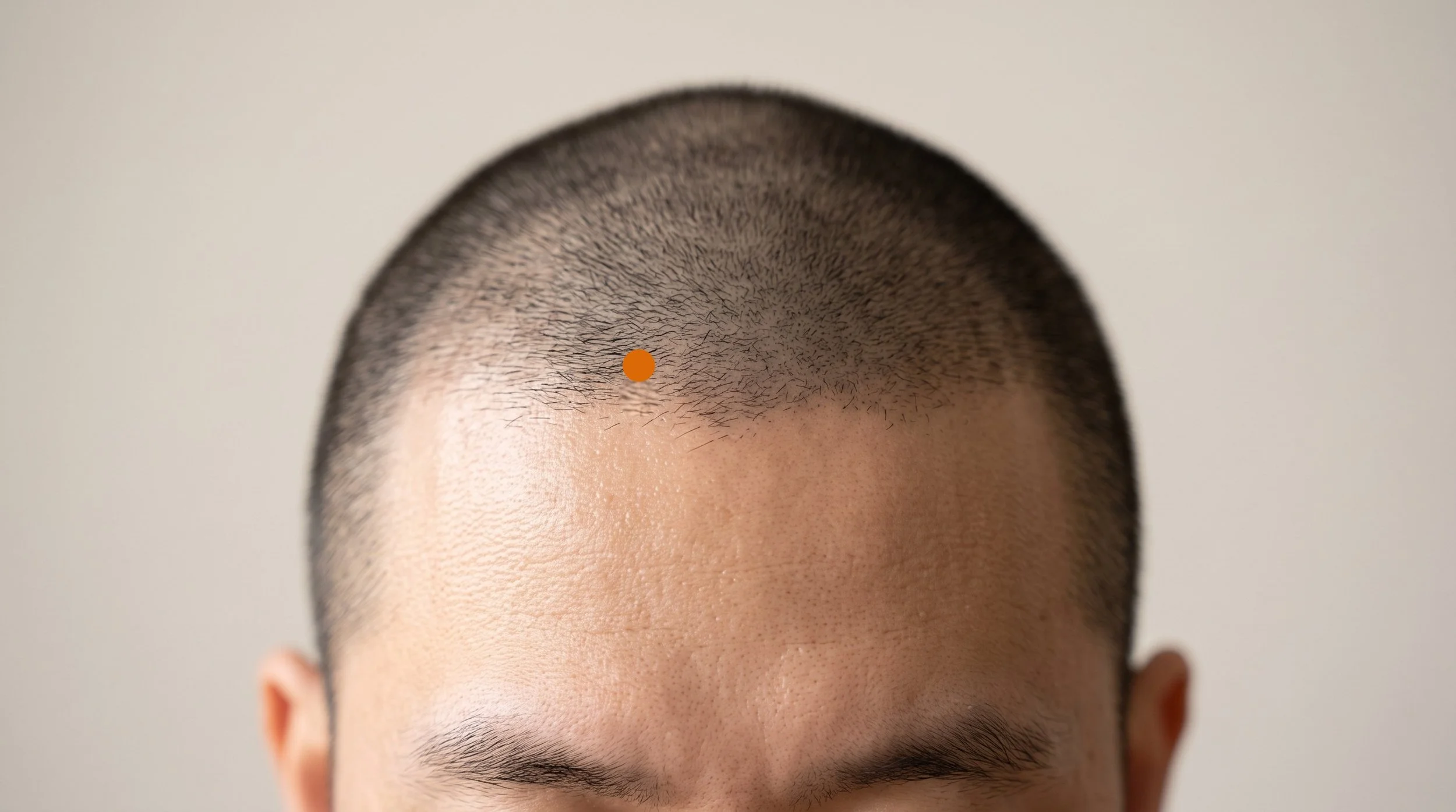
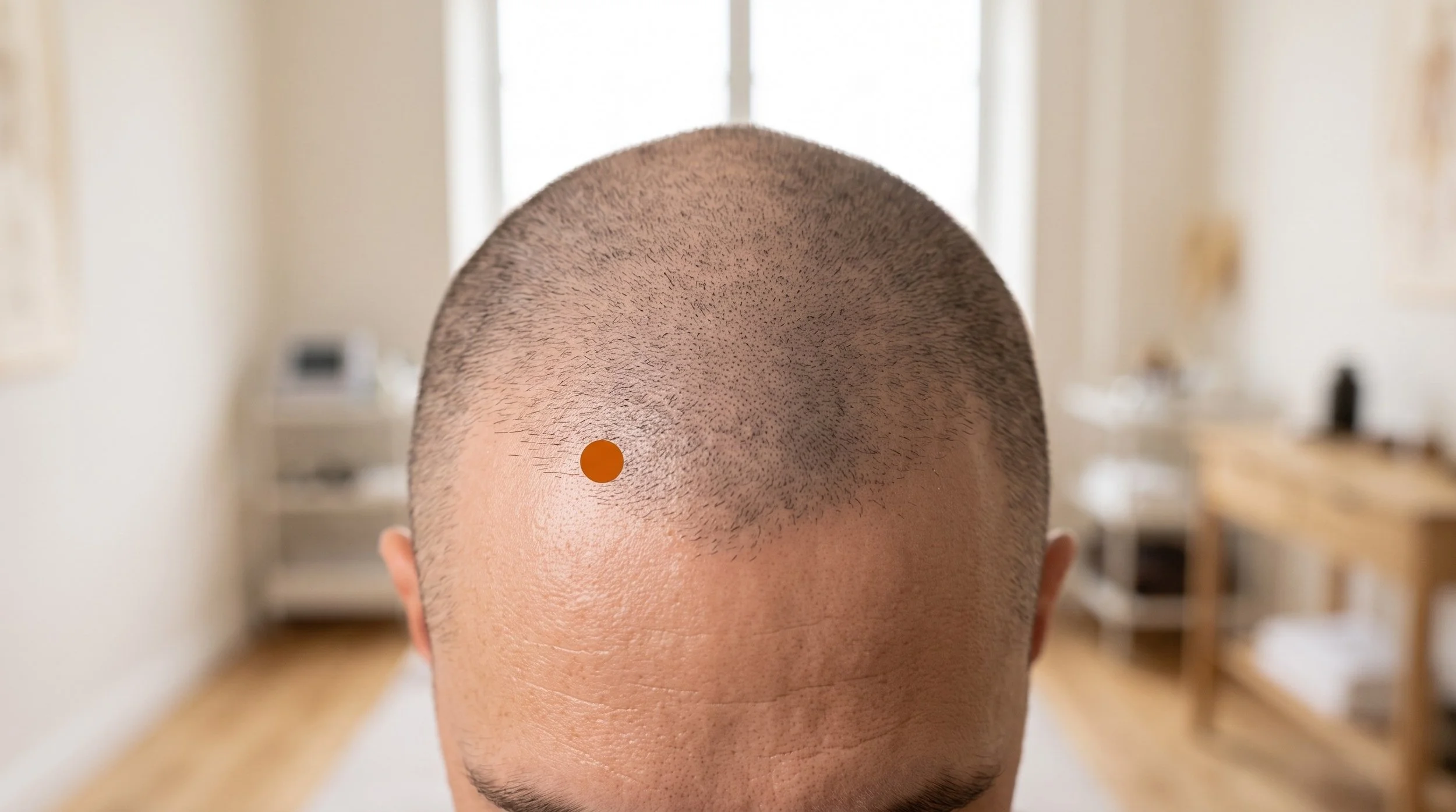
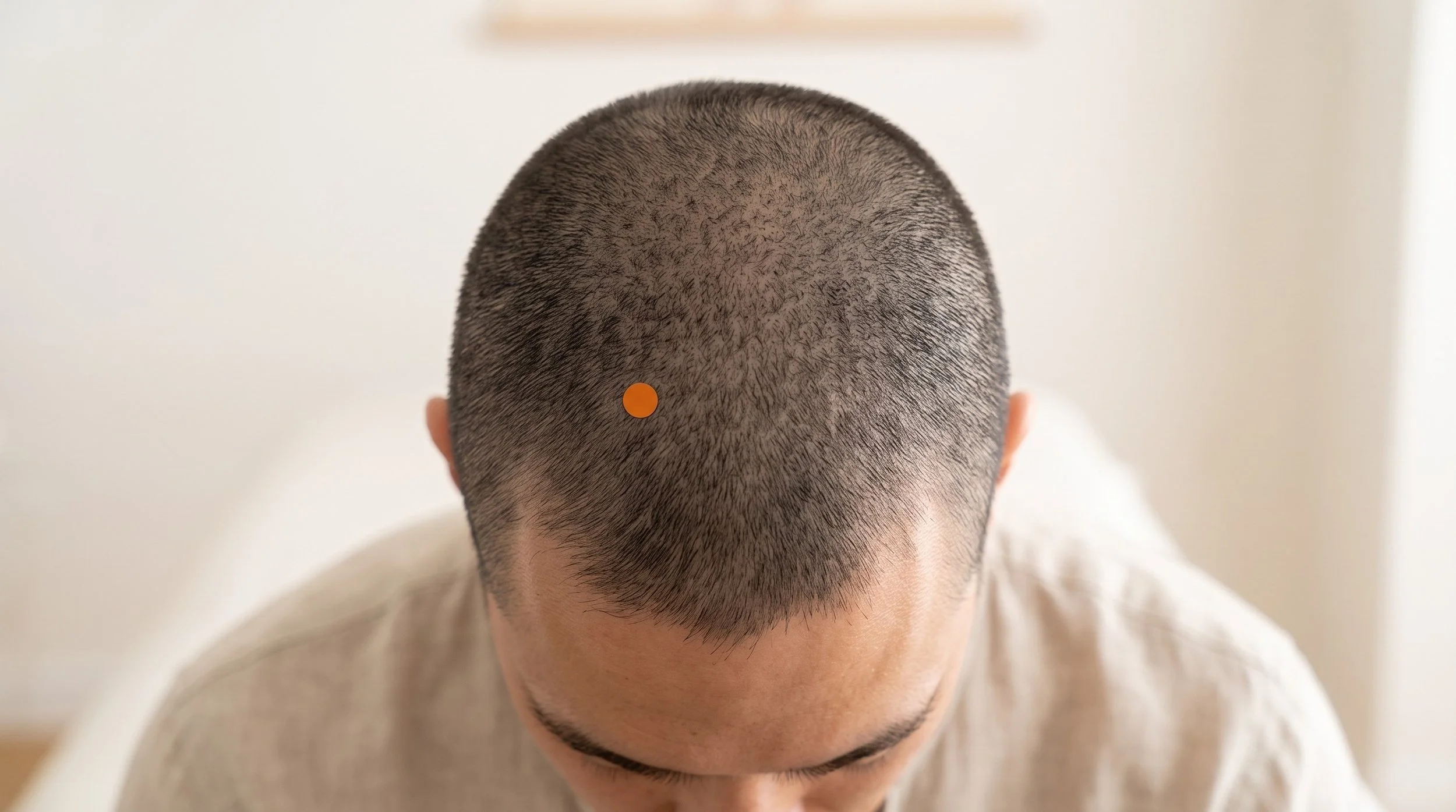
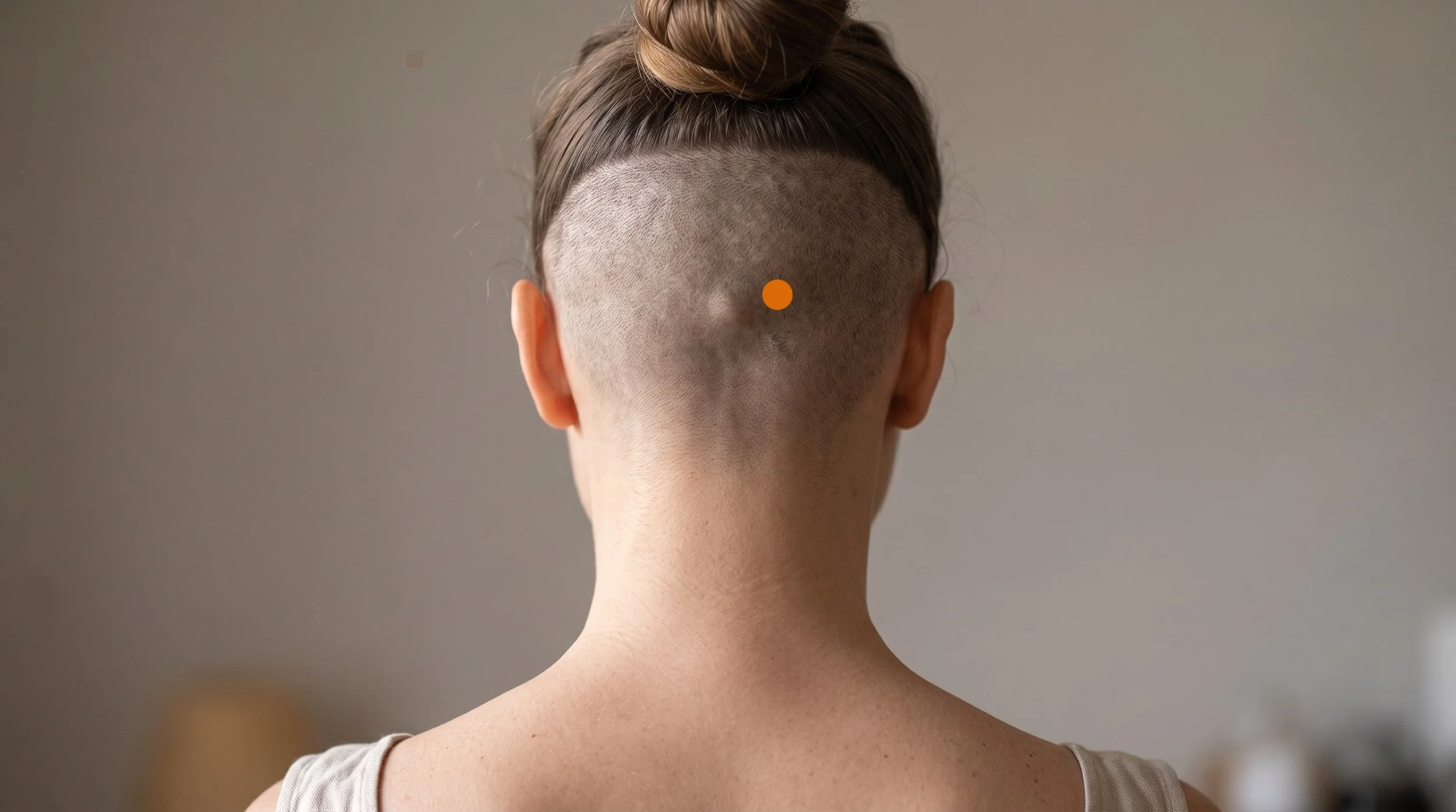
BL9, known in Chinese as Yuzhen and in English as Jade Pillow, is the last point of the Bladder channel on the back of the head before the channel drops onto the neck. You'll find the BL 9 location on the occiput, 1.3 cun lateral to GV17, which sits in the small depression just above the bony bump at the back of your skull (the external occipital protuberance). That places bladder 9 directly over the attachment zone where trapezius and semispinalis capitis anchor to the occipital bone, and squarely in the sensory territory of the greater occipital nerve.
For anyone who gets headaches that start at the base of the skull and climb over the back of the head, this small patch of scalp is one of the most anatomically interesting pieces of real estate on the body, and the bl9 acupuncture point is a practical way to reach it.
- The jade pillow point sits on the occiput, 1.3 cun lateral to GV17 at the upper border of the external occipital protuberance, so a needle placed here passes through hair-bearing scalp and the dense tendinous attachment zone of trapezius and semispinalis capitis before reaching the periosteum of the occipital bone (Deadman, 2007).
- Classical sources describe BL9 as expelling wind and cold, easing pain, and benefiting the nose and eyes, with indications that cluster around occipital headache, neck pain with difficulty turning the head, heaviness or coldness of the head and neck, and eye and nose complaints (Deadman, 2007). Read neurophysiologically, that's a description of upper cervical nociception with referred cranial and periorbital symptoms.
- Bladder 9 lies in greater occipital nerve territory, a C2 sensory field whose afferents converge with trigeminal input in the trigeminocervical complex, which helps explain why input from the back of the skull can be felt behind the eye or across the forehead (Hoffmann et al., 2021).
- Needling likely works through segmental inhibition at the level of C2, activation of descending pain-modulating pathways, and local changes in blood flow and muscle tone rather than through anything mystical (Zhao, 2008). Individual patient data from nearly 21,000 patients suggest acupuncture produces modest but real effects for chronic pain that persist over time (Vickers et al., 2018).
- Cochrane reviews of acupuncture for tension-type headache and episodic migraine prevention support acupuncture as a reasonable option within multi-point protocols, though the advantage over sham needling tends to be small (Linde et al., 2016a; Linde et al., 2016b). BL9 is one component of those protocols, never the whole treatment.
- Because the needle runs transversely under the scalp, de qi at BL9 tends to feel like heavy pressure or a spreading dull ache rather than a deep grabbing sensation, and some patients notice the feeling drift toward the vertex, the ear, or behind the eye on the same side.
Do Your Headaches Start at the Base of Your Skull?
Headaches that begin at the occiput and wrap over the back of the head are one of the most common presentations we see at Morningside Acupuncture. We use BL9 alongside GB20, BL10, and GV17 to address the skull base directly, then add dry needling of the upper trapezius, semispinalis capitis, and splenius capitis when the exam points to myofascial involvement. Most patients feel a change in scalp tenderness and neck rotation within the first few visits. Schedule a visit and let's map out where your headache pattern actually originates.
Schedule NowAnatomy of BL9: Why the Ridge Beside the External Occipital Protuberance Is Such an Important Location
Start at the bony knob in the middle of the back of your skull, then move roughly a thumb's width to either side and slightly up. That's the neighborhood of BL9. Under the fingertip there's hair-bearing skin, a thin and densely tethered subcutaneous layer, the fibrous sheet of the epicranial aponeurosis, and then the tendinous fan where trapezius and semispinalis capitis anchor onto the occipital bone along and just below the superior nuchal line. Bone is immediately deep to all of it.
This attachment zone takes a beating from ordinary modern life: hours of forward head posture at a laptop, phone use, driving, heavy bag straps, and sustained jaw clenching all load the muscles that end here. When those attachments become irritable, patients typically describe a band of soreness across the back of the skull that's worse late in the day.
The nerve story is what makes this point clinically distinctive. The greater occipital nerve arises from the C2 dorsal ramus, curves around the obliquus capitis inferior, pierces semispinalis capitis and the trapezius aponeurosis near the nuchal line, and then fans out over the back of the scalp. BL9 sits in that fan.
Second-order neurons receiving C1 to C3 input share territory with trigeminal afferents in the trigeminocervical complex, and blocking the greater occipital nerve has been shown to modulate nociceptive processing within that shared relay (Hoffmann et al., 2021). That convergence is the modern reading of a classical listing that pairs occipital headache with eye pain: input arriving from the back of the head and the front of the head can be processed by overlapping neurons, so the brain's localization gets blurry.
Needling in this territory is thought to engage small-diameter afferents, dampen segmental transmission, and recruit descending inhibitory pathways from the brainstem (Zhao, 2008).
Vascularly, branches of the occipital artery and vein run through this region, and the scalp bleeds readily, so a small bead of blood or a minor bruise after needling here is common and not concerning. Standard practice is transverse insertion along the scalp, 0.5 to 1 cun, sliding the needle just above the periosteum rather than aiming perpendicular (Deadman, 2007). Some texts describe a shallower slanted insertion of 0.3 to 0.5 cun.
Because the occipital bone forms a solid floor beneath the point, BL9 does not carry the deep-structure cautions that apply to points lower in the suboccipital hollow, where angling matters a great deal. Practitioners commonly needle BL9 laterally toward the ear or medially toward GV17 depending on where the palpated tenderness sits.
Moxibustion is traditionally applied at this point, though in practice most clinicians simply pair the needle with warmth or manual work on the surrounding nuchal attachments.
Related Acupuncture For Occipital Neuralgia Related Best Acupuncture Points For HeadachesBL9 at a Glance: Classification, Location, and Clinical Use
| Category | Detail |
|---|---|
| Traditional Name | Yuzhen (Jade Pillow), an old anatomical term for the occipital bone itself |
| Channel Classification | Ninth point of the Bladder channel of Foot Taiyang, the last Bladder point on the occiput before the channel descends to the neck |
| Point Categories | No five-shu, hui-meeting, or extraordinary vessel intersection designations are recorded for this point in the classical literature; it's classified simply as a point of the Bladder channel on the occiput. Traditional actions listed are expelling wind and cold to alleviate pain and benefiting the nose and eyes, with some sources adding releasing the exterior, dispersing wind through the collaterals, and brightening the eyes. The name Yuzhen also denotes the broader occipital region, described in qigong literature as one of the three gates along the Governing vessel. |
| Precise Location | On the occiput, 1.3 cun lateral to GV17, which lies in the depression just superior to the external occipital protuberance and 1.5 cun above GV16 |
| Tissue Stimulated | Scalp, epicranial aponeurosis, and the occipital attachment zone of trapezius and semispinalis capitis, with nearby splenius capitis fibers; periosteum of the occipital bone; terminal branches of the greater occipital nerve (C2) and occipital artery |
| Needle Depth / Direction | Transverse insertion along the scalp, 0.5 to 1 cun, directed laterally toward the ear or medially toward GV17; shallower slanted insertion of 0.3 to 0.5 cun is also described. Moxibustion is traditionally applicable. |
| De Qi Sensation | Heavy pressure or a spreading dull ache under the scalp rather than a deep grabbing sensation; the feeling may travel toward the vertex, the ear, or behind the eye on the same side. Sharp or electric sensations are not the goal and should be reported. |
| Primary Clinical Uses | Occipital headache, headache at the skull base with neck stiffness, neck pain with limited rotation, occipital neuralgia-pattern pain, and in classical listings eye pain, sensitivity to cold or wind in the head and neck, and nasal congestion |
| Common Point Combinations |
|
In Deadman's Manual of Acupuncture, the entry for Yuzhen BL-9 organizes its traditional indications into three groups: head and neck complaints (occipital headache, head wind pain described as hard to bear, dizziness, neck pain with an inability to turn the head, heaviness of the head and neck, aversion to wind without sweating, and the striking image of coldness felt in half the head), disorders of the nose and eyes (eye pain, bursting pain of the eye, short sightedness, nasal congestion, and loss of smell), and a third cluster of disturbed mental states and sudden collapse on standing.
The commentary also notes that the name Yuzhen refers not only to the point but to the whole occipital region, which qigong literature counts as one of three gates along the circuit of the Governing and Conception vessels. What stands out about the classical pattern is how closely the first two groups track what a modern clinician would call occipital neuralgia with referred periorbital symptoms: a single small area of scalp linked, centuries before anyone described the trigeminocervical complex, to pain that shows up in the eye.
Why BL9 Is Used for Eye Pain and Cold Sensations in the Head, Not Just Headaches
Patients are often surprised that a point on the back of the skull is listed for eye pain. The explanation sits in the spinal cord and brainstem. Sensory fibers from the upper cervical segments, carried peripherally by the greater occipital nerve, terminate on the same population of second-order neurons that receive trigeminal input from the face, forehead, and the lining of the skull. Researchers call this shared relay the trigeminocervical complex, and blocking the greater occipital nerve has been shown to change how nociceptive signals are handled there (Hoffmann et al., 2021).
When those neurons are sensitized, the nervous system loses precision about where a signal originated, so irritation at the occiput can be experienced as pressure behind the eye. Classical authors couldn't have known the wiring, but they recorded the referral pattern accurately.
The second half of the mechanism story is descending control. Needle stimulation of small-diameter afferents activates brainstem structures that send inhibitory signals back down to the dorsal horn, alongside local segmental gating and the release of endogenous opioids (Zhao, 2008). That's why treatment at the occiput can reduce pain that's felt over a much wider area than the needle covers, and why effects often build across a course of sessions rather than appearing all at once.
Individual patient data pooled from high-quality trials support modest, durable benefit for chronic pain conditions (Vickers et al., 2018), and a recent meta-analysis reported that acupuncture used alongside standard care provided pain relief in chronic neck pain that was still measurable three and six months after treatment ended (Fang et al., 2024).
The classical listings for coldness and heaviness of the head and neck, and aversion to wind without sweating, are harder to translate cleanly, but they describe something clinicians still see: patients whose occipital pain flares in cold weather, in air conditioning, or after sleeping under a draft, often with a sense of tightness rather than sharp pain. Local vasomotor and autonomic responses to needling in a highly vascular scalp region may contribute, though this specific claim hasn't been isolated in controlled research and is best described as a traditional attribution with a plausible physiological reading.
What the Research Shows for BL9
There's no body of trials testing BL9 as a stand-alone intervention, and any clinic that claims otherwise is overstating the evidence. What exists are reviews of multi-point protocols for headache and neck pain in which occipital and suboccipital points, BL9 among them, appear regularly in the treatment formulas. The reasonable way to read the literature is that acupuncture as a whole treatment shows modest benefit for these conditions, and that BL9 is one anatomically sensible component of the protocols tested.
Individual results vary, and acupuncture works best here as part of a plan that includes movement, ergonomics, and medical assessment when headaches are new, severe, or changing.
| Study | Type | Focus | Key Finding |
|---|---|---|---|
| Linde et al., 2016a | Cochrane systematic review | Acupuncture for the prevention of tension-type headache, 12 trials with 2,349 adults | The review concluded that a course of at least six sessions may be a worthwhile option for people with frequent tension-type headache, though the added benefit over sham needling was small. |
| Linde et al., 2016b | Cochrane systematic review | Acupuncture for the prevention of episodic migraine, 22 trials with 4,985 participants | Acupuncture reduced migraine frequency compared with no prophylactic treatment and appeared at least non-inferior to prophylactic drugs, with a modest advantage over sham. |
| Vickers et al., 2018 | Individual patient data meta-analysis | Acupuncture for chronic pain including headache and neck pain | Pooled patient-level data suggest acupuncture produces statistically significant effects over both sham and no-acupuncture controls, with benefits that decline only modestly over 12 months. |
| Yun et al., 2020 | Systematic review and meta-analysis | Acupuncture for occipital neuralgia, 11 randomized controlled trials | Pooled results favored acupuncture over control interventions on pain scores, but the included trials were generally small and at risk of bias, so the findings should be read cautiously. |
| Pourahmadi et al., 2021 | Systematic review and meta-analysis | Dry needling for tension-type, cervicogenic, and migraine headache | Dry needling produced effects on short-term headache pain similar to other interventions, with a possible advantage for short-term headache-related disability in tension-type and cervicogenic headache. |
| Fang et al., 2024 | Systematic review and meta-analysis | Durability of acupuncture effects in chronic neck pain, 18 randomized controlled trials | Acupuncture used as an adjunct therapy was associated with sustained pain relief at three and six months after treatment ended. |
| Lei et al., 2024 | Randomized controlled trial | Electroacupuncture protocol for greater occipital neuralgia that included Yuzhen BL9 alongside GV16, BL10, GB20, GB12, and SI3 | Both study arms used a nape-region protocol containing BL9, and the combined intervention group showed greater reductions in pain severity, offering point-level context rather than proof of BL9's individual contribution. |
| Hoffmann et al., 2021 | Mechanistic imaging study | Greater occipital nerve block and nociceptive processing | Blocking the greater occipital nerve modulated nociceptive signaling within the trigeminocervical complex, supporting convergence between occipital and trigeminal input. |
Neck Stiffness That Won't Let You Turn Your Head?
Limited rotation with soreness at the skull base is a classic BL9 presentation, described in the older texts as pain of the neck with an inability to turn the head. Our acupuncturists combine the jade pillow point with GB12 and BL60, then reassess range of motion in the same session so you can feel what changed. We pair the needling with practical desk setup and posture adjustments so the relief lasts past the treatment table. Book an appointment and get your neck moving again.
Schedule NowBL9 in the Context of Trigger Point Work
Acupuncture is the use of an acupuncture needle, and that includes the hundreds of styles practiced worldwide, dry needling among them. At the occiput, the classical point and the myofascial target overlap almost perfectly. Trigger points in semispinalis capitis are described as referring pain in a band that wraps around the head toward the eye, while upper trapezius and splenius capitis referral patterns climb the back and side of the skull (Simons et al., 1999).
BL9 sits right at the occipital attachment of these muscles, so tenderness found on palpation at the jade pillow point frequently reflects irritable tissue in exactly the structures a trigger point exam would identify.
At Morningside Acupuncture, we typically treat BL9 transversely along the scalp for the local occipital component, then needle the muscle bellies below it based on what palpation reveals: upper trapezius, semispinalis capitis and cervicis, splenius capitis, and the suboccipital group. Adding GB20 and BL10 covers the deeper suboccipital hollow, and a distal point such as BL60 or LI4 is often included.
Systematic review evidence for dry needling in headache populations is mixed, with a possible short-term advantage for headache-related disability rather than a clear advantage for pain intensity (Pourahmadi et al., 2021), so we treat it as one useful tool within a broader plan rather than a stand-alone solution.
BL9 Occipital Headache Treatment at NYC's Highest-Rated Acupuncture Clinic
Morningside Acupuncture is the highest-rated acupuncture and dry needling clinic in New York City with over 500 five-star Google reviews, and occipital headache is one of the conditions we treat most often. Every session begins with a hands-on exam of the suboccipital region, the nuchal line, and cervical rotation so needle placement follows your findings rather than a template. We combine classical point selection with trigger point needling and clear home strategies between visits. Schedule your first visit today.
Schedule NowFrequently Asked Questions
What does BL9 feel like when needled?
Because the needle is threaded transversely just under the scalp rather than pushed straight in, BL9 usually feels like localized pressure, a mild pinch as the needle enters the skin, and then a heavy or spreading dull ache. Some patients feel the sensation drift toward the top of the head, the ear, or behind the eye on the same side, which is consistent with the shared cervical and trigeminal wiring in this region. Scalp points can feel slightly more sensitive on insertion than points on the limbs. Sharp, burning, or electric sensations aren't the goal, and you should tell your acupuncturist right away if you feel them so the needle can be adjusted or removed.
Why needle a point on the back of the head for pain I feel behind my eye?
Sensory fibers from the upper cervical segments and from the trigeminal nerve converge on the same second-order neurons in the trigeminocervical complex, so signals arriving from the occiput and signals arriving from the face and forehead get processed in overlapping territory (Hoffmann et al., 2021). When that relay is sensitized, pain localization becomes imprecise and occipital irritation can be experienced as pressure behind the eye. Treating the occipital source may therefore reduce symptoms felt at the front of the head. The classical texts recorded this pairing of occipital headache with eye pain long before the anatomy was described (Deadman, 2007).
Can I press BL9 myself between sessions?
Yes, and it's one of the easier points to self-treat. Sit upright, tuck your chin very slightly, and run your fingers up the back of your neck until you find the bony bump in the middle of the back of your skull. Move about a thumb's width to one side and slightly up, onto the ridge of bone, and you should find a tender spot. Press with the pad of your thumb or middle finger using firm, tolerable pressure, either holding steady or making small circles, for 30 to 60 seconds on each side. Repeat for two or three rounds, and do this two or three times a day if it helps. Keep your jaw and shoulders relaxed while you press. Ease off if you feel sharp, electric, or shooting sensations, and don't press on broken skin, recent injuries, or surgical sites.
Is BL9 safe to needle?
In trained hands, yes. The occipital bone lies directly beneath the point and the needle is inserted transversely along the scalp, so there's no pathway to deep structures the way there can be with poorly angled needling lower in the suboccipital hollow. The main practical consideration is that the scalp is well supplied by branches of the occipital artery and vein, so a small bead of blood or a minor bruise after needle removal is fairly common and usually resolves quickly. Tell your practitioner if you take blood thinners or have a bleeding disorder. As always, new, severe, or rapidly changing headaches deserve medical evaluation before or alongside acupuncture treatment.
Where exactly is BL9 located?
BL9 is on the occiput, 1.3 cun lateral to GV17. To find it, feel for the external occipital protuberance, the bony bump in the midline at the back of your skull. GV17 sits in the small depression just above that bump, roughly 1.5 cun above GV16. From there, move about 1.3 cun (approximately a thumb's width plus a little) to either side, along the upper border of the occipital ridge. In most people the spot corresponds to a tender band of tissue where the neck muscles attach to the skull, which is a useful confirmation when you're locating it by feel.
References
- Deadman, P., Al-Khafaji, M., & Baker, K. (2009). A manual of acupuncture. Journal of Chinese Medicine Publications.
- Cheng, X. (Ed.). (1999). Chinese acupuncture and moxibustion (Rev. ed.). Foreign Languages Press.
- Cunningham, P. M. (2000). Acupuncture points: A practical guide to classical and modern usage. Odyssey Press.
- O'Connor, J., & Bensky, D. (Eds. & Trans.). (1981). Acupuncture: A comprehensive text. Shanghai College of Traditional Medicine. Eastland Press.
- Simons, D. G., Travell, J. G., & Simons, L. S. (1999). Travell & Simons' myofascial pain and dysfunction: The trigger point manual, Vol. 1: Upper half of body (2nd ed.). Williams & Wilkins.
- Linde, K., Allais, G., Brinkhaus, B., Fei, Y., Mehring, M., Shin, B. C., Vickers, A., & White, A. R. (2016a). Acupuncture for the prevention of tension-type headache. Cochrane Database of Systematic Reviews, 2016(4), CD007587. https://doi.org/10.1002/14651858.CD007587.pub2
- Linde, K., Allais, G., Brinkhaus, B., Fei, Y., Mehring, M., Vertosick, E. A., Vickers, A., & White, A. R. (2016b). Acupuncture for the prevention of episodic migraine. Cochrane Database of Systematic Reviews, 2016(6), CD001218. https://doi.org/10.1002/14651858.CD001218.pub3
- Vickers, A. J., Vertosick, E. A., Lewith, G., MacPherson, H., Foster, N. E., Sherman, K. J., Irnich, D., Witt, C. M., & Linde, K. (2018). Acupuncture for chronic pain: Update of an individual patient data meta-analysis. Journal of Pain, 19(5), 455-474. https://doi.org/10.1016/j.jpain.2017.11.005
- Zhao, Z. Q. (2008). Neural mechanism underlying acupuncture analgesia. Progress in Neurobiology, 85(4), 355-375. https://doi.org/10.1016/j.pneurobio.2008.05.004
- Yun, J. M., Lee, S. H., Cho, J. H., Kim, K. W., & Ha, I. H. (2020). The effects of acupuncture on occipital neuralgia: A systematic review and meta-analysis. BMC Complementary Medicine and Therapies, 20, 171. https://doi.org/10.1186/s12906-020-02955-y
- Pourahmadi, M., Dommerholt, J., Fernández-de-Las-Peñas, C., Koes, B. W., Mohseni-Bandpei, M. A., Mansournia, M. A., Delavari, S., Keshtkar, A., & Bahramian, M. (2021). Dry needling for the treatment of tension-type, cervicogenic, or migraine headaches: A systematic review and meta-analysis. Physical Therapy, 101(5), pzab068. https://doi.org/10.1093/ptj/pzab068
- Fang, J., Shi, H., Wang, W., Chen, H., Yang, M., Gao, S., Yao, H., Zhu, L., Yan, Y., & Liu, Z. (2024). Durable effect of acupuncture for chronic neck pain: A systematic review and meta-analysis. Current Pain and Headache Reports, 28(9), 957-969. https://doi.org/10.1007/s11916-024-01267-x
- Hoffmann, J., Mehnert, J., Koo, E. M., & May, A. (2021). Greater occipital nerve block modulates nociceptive signals within the trigeminocervical complex. Journal of Neurology, Neurosurgery and Psychiatry, 92(11), 1206-1211. https://doi.org/10.1136/jnnp-2021-326433
- Lei, T., Shi, Y., Li, Y., Ma, Y., & Hu, X. (2024). Guasha-fangsha therapy combined with electroacupuncture in treatment of greater occipital neuralgia: A randomized controlled trial. Zhongguo Zhen Jiu (Chinese Acupuncture and Moxibustion), 44(8), 889-893. https://doi.org/10.13703/j.0255-2930.20230828-k0008 [VERIFY BEFORE PUBLISHING]
Disclaimer: This web site is intended for educational and informational purposes only. Reading this website does not constitute providing medical advice or any professional services. This information should not be used for diagnosing or treating any health issue or disease. Those seeking medical advice should consult with a licensed physician. Seek the advice of a medical doctor or other qualified health professional for any medical condition. If you think you have a medical emergency, call 911 or go to the emergency room. No acupuncturist-patient relationship is created by reading this website or using the information. Morningside Acupuncture PLLC and its employees and contributors do not make any express or implied representations with respect to the information on this site or its use. For any legal interpretation of scope of practice in your state, consult a licensed attorney or regulatory authority.
Read more from our blog