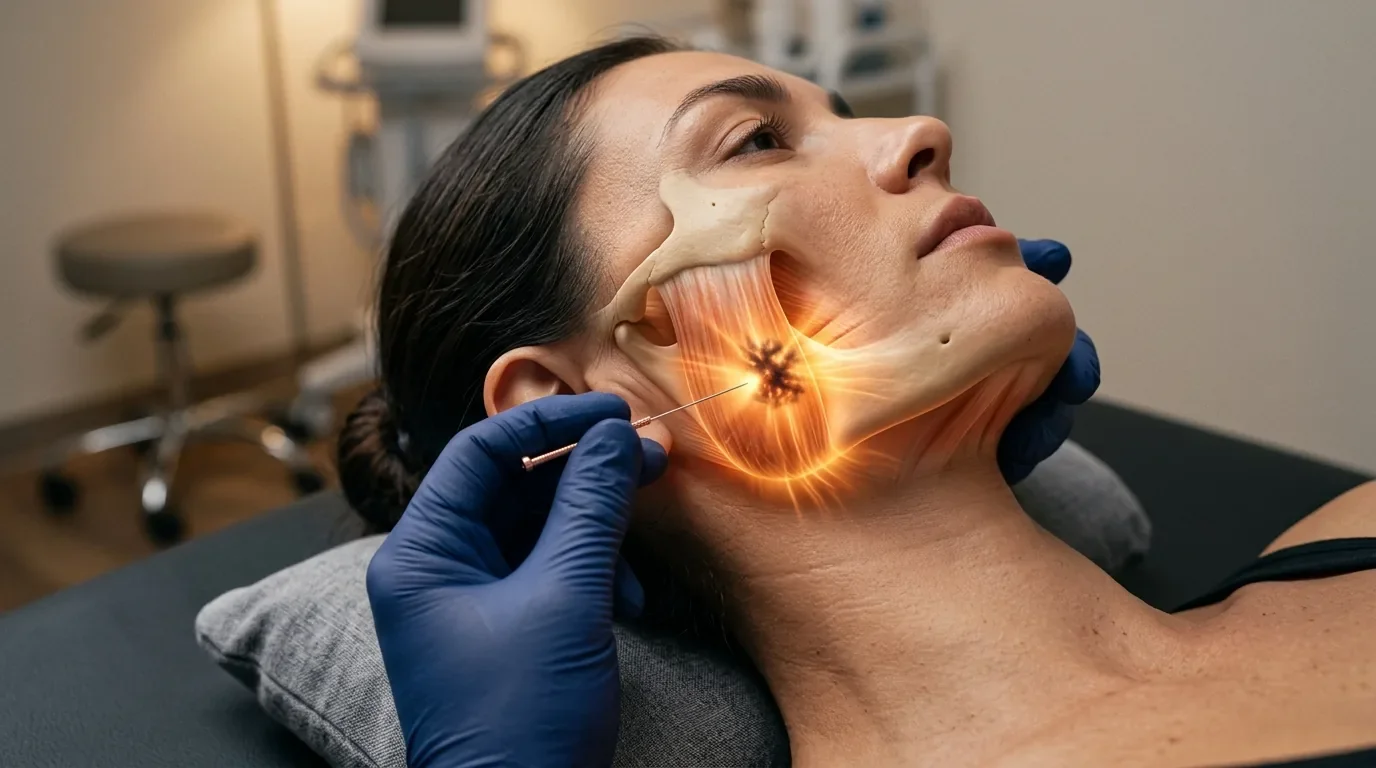
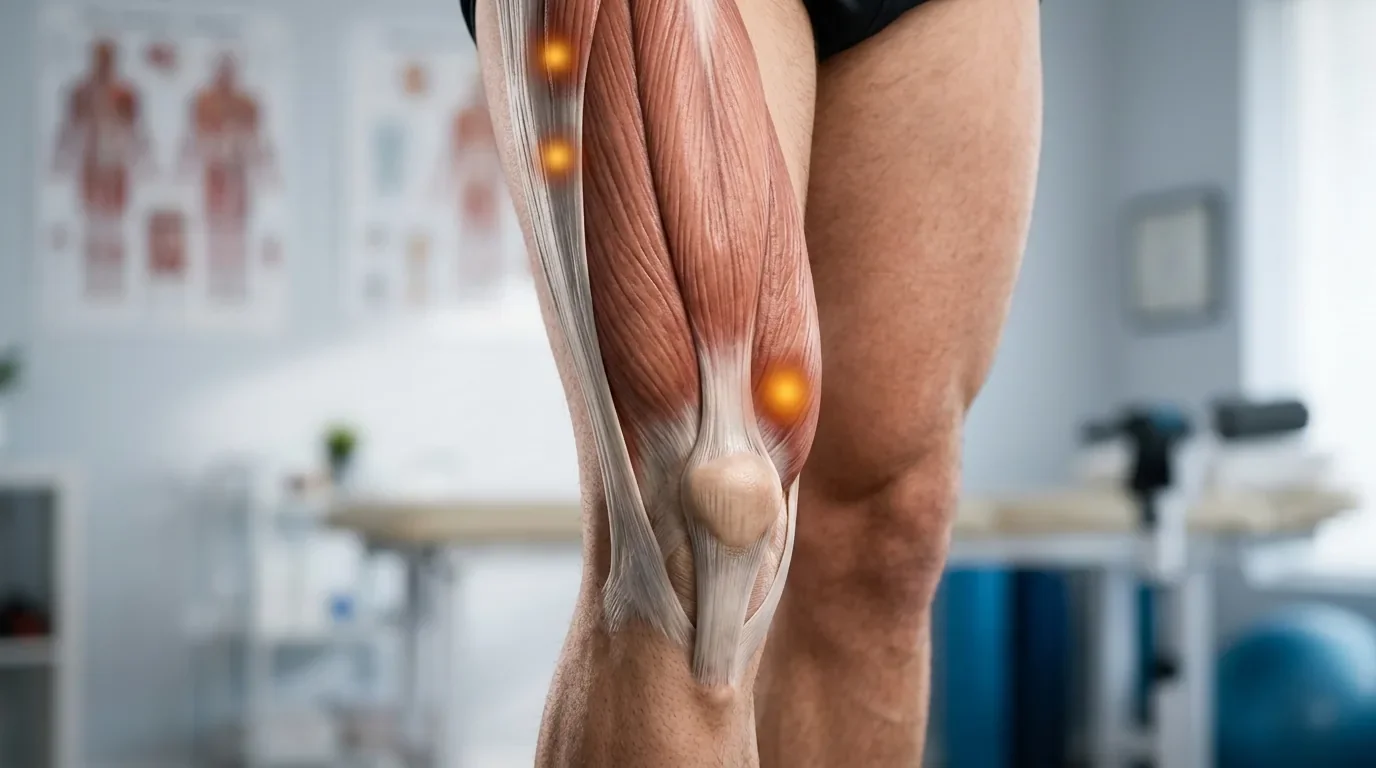
Acupuncture for Hip Bursitis
Lateral Hip Pain, Gluteus Medius Tendinopathy, and Why the Trigger Points Matter More Than the Bursa
Hip bursitis, more accurately called greater trochanteric pain syndrome, is driven by gluteus medius tendinopathy and trigger points far more than by bursal inflammation alone, making dry needling and targeted exercise more effective than repeated cortisone injections for lasting relief.
- Greater trochanteric pain syndrome (GTPS) is the preferred clinical term for lateral hip pain, reflecting the understanding that the primary pathology in most patients is gluteus medius tendinopathy, often with concurrent bursal irritation rather than primary bursitis.
- Gluteus medius trigger points produce referred pain directly over the greater trochanter and lateral thigh, closely mimicking or amplifying GTPS symptoms; in many patients, the trigger points are the primary pain generator and the bursa secondary.
- The characteristic pain pattern includes lateral hip pain with walking, standing on one leg, climbing stairs, and nocturnal pain when lying on the affected side or crossing the legs during sleep.
- Compressive tendinopathy from repetitive hip adduction is the mechanical driver in most cases; activities that increase hip adduction load such as cross-legged sitting, hip-drop gait, and single-leg yoga poses perpetuate the condition.
- Cortisone injections provide short-term relief but show reversal of benefit at 6 to 12 months, with worse long-term outcomes than physiotherapy in clinical trials (Coombes et al., 2010).
- Dry needling the gluteus medius, tensor fasciae latae, and gluteus minimus deactivates trigger points, reduces the compression loading on the trochanteric bursa, and restores normal hip abductor activation (Simons et al., 1999).
- A large meta-analysis confirms clinically meaningful acupuncture effects on chronic hip and lower extremity pain beyond usual care (Vickers et al., 2018).
Lateral Hip Pain Keeping You Awake at Night?
Nocturnal pain when lying on your side is one of the most characteristic features of greater trochanteric pain syndrome, and it is also one of the most responsive symptoms to targeted gluteal dry needling. At Morningside, many patients with longstanding hip bursitis find meaningful improvement in their sleep quality and daytime function within just a few sessions.
Schedule NowRethinking "Hip Bursitis": The Modern Understanding
The term "trochanteric bursitis" implies that the trochanteric bursa is primarily inflamed. While bursal involvement is real and contributes to the inflammatory picture in acute presentations, research has established that the primary pathological tissue in most patients with lateral hip pain is the gluteus medius tendon at its insertion on the upper facet of the greater trochanter, not the bursa itself. This is why the condition is now classified as greater trochanteric pain syndrome, a term that acknowledges the involvement of multiple tissues without implying that any single one is definitively the source.
The distinction matters clinically because treating bursal inflammation alone with cortisone does not address the tendinopathy driving the mechanical irritation, nor the trigger points in the gluteus medius that are generating referred pain over the trochanter. This is why patients who respond well to their first cortisone injection often find the second and third injections progressively less helpful, and why the condition recurs reliably unless the tendinopathy and muscle dysfunction are addressed.
| Tissue | Pathological Change | Pain Contribution | Best Addressed By |
|---|---|---|---|
| Gluteus medius tendon | Tendinopathy (collagen disorganization, neovascularization) at greater trochanter insertion | Direct tendon pain with loading; lateral hip ache | Progressive loading exercise; dry needling for associated TrPs |
| Trochanteric bursa | Reactive bursal inflammation from repeated compression | Inflammatory local pain; nocturnal pain with lateral lying | Reduce compressive loading; cortisone for acute severe flares |
| Gluteus medius trigger points | Taut bands with referred pain to lateral hip and thigh | Primary referred pain generator; often accounts for majority of daily symptoms | Dry needling; first-line treatment target |
| Tensor fasciae latae | Trigger points increasing iliotibial band tension over trochanter | Lateral hip compression during gait; anterolateral hip pain | Dry needling; address hip adduction gait pattern |
| Gluteus minimus trigger points | Trigger points at smaller trochanteric facet insertion | Lateral hip to ankle referred pain; adds to confusion with radiculopathy | Dry needling |
Compressive Tendinopathy: The Mechanical Driver
The gluteus medius inserts on the upper facet of the greater trochanter, and it is subject to compressive tendinopathy rather than simple tensile overload. Compression occurs when the hip is adducted, placing the ITB and overlying fascia against the tendon and trochanter like a bowstring under a pulley. Activities that repeatedly place the hip in adduction, such as sitting cross-legged, sleeping with the hips crossed, walking with a hip adduction gait (common in individuals with weak hip abductors), or performing high-volume adduction-loaded yoga postures, gradually break down the tendon's collagen structure.
Runners are particularly susceptible because the foot-strike pattern in distance running involves a brief period of hip adduction with each stride, and cumulative compressive load at high training volumes eventually exceeds the tendon's capacity for repair. Pregnant women and those in the early postpartum period develop GTPS from hormonal ligamentous laxity combined with the altered pelvic mechanics of carrying the baby, which changes hip abductor loading patterns.
Has Your Hip Bursitis Responded to Injections but Keeps Coming Back?
Recurring hip bursitis after cortisone injections is the norm rather than the exception when the underlying gluteus medius tendinopathy and trigger points have not been treated. Our clinicians at Morningside address the full picture of lateral hip pain, producing more durable results by targeting the tissue that is actually driving the recurrence.
Schedule NowHow Dry Needling and Acupuncture Help
Dry needling for GTPS focuses on the gluteus medius and tensor fasciae latae trigger points that are generating referred pain to the lateral hip and compressing the trochanteric tendon-bursa complex during normal movement. Deactivating these trigger points produces immediate improvements in local tenderness and referred pain, and restores normal gluteus medius muscle length, which reduces the compressive stress on the tendinous insertion during loading activities.
Research on cortisone for tendinopathy consistently shows short-term benefit with reversal at 12 months and worse outcomes compared to exercise at longer follow-up (Coombes et al., 2010). This finding reflects a fundamental problem with anti-inflammatory approaches for tendinopathy: the pathological tissue is not inflamed in the traditional sense but is undergoing collagen disorganization and failed intrinsic repair that cortisone may actually impair by suppressing the growth factor signaling needed for remodeling.
Dry needling stimulates the local release of platelet-derived growth factor and transforming growth factor beta, which support tendon collagen remodeling. Combined with progressive loading exercise targeting the gluteus medius, this creates the conditions for genuine tendon healing rather than temporary symptom suppression. Acupuncture complements the approach by reducing central sensitization in the L4-L5 spinal segments relevant to hip abductor innervation, improving the quality of neuromuscular signaling to the gluteal muscles during rehabilitation (Zhao, 2008).
| Phase | Primary Intervention | Goal |
|---|---|---|
| Initial symptom reduction (weeks 1-4) | Gluteus medius, TFL, gluteus minimus dry needling; activity modification advice (no adduction loading) | Reduce daily pain; improve nocturnal sleep; eliminate compressive aggravation |
| Load building (weeks 4-8) | Continued dry needling as needed; progressive hip abductor loading exercise; acupuncture for sensitization | Restore tendon load tolerance; strengthen hip abductors; normalize gait |
| Return to full activity (8+ weeks) | Sport-specific loading; gait retraining for runners; maintenance needling as needed | Sustained full function; prevent recurrence through habit and strength |
Expert Hip Bursitis Treatment in New York City
At Morningside Acupuncture, we are the highest-rated acupuncture and dry needling clinic in New York City with over 500 five-star Google reviews. We specialize in greater trochanteric pain syndrome and the complex interplay of gluteal tendinopathy, trigger points, and hip abductor dysfunction that drives most lateral hip pain presentations. Our integrated approach of dry needling, acupuncture, and loading exercise guidance produces durable results for patients who have cycled through cortisone injections without lasting improvement. We welcome a consultation to evaluate your specific case.
Schedule NowFrequently Asked Questions
What is the difference between hip bursitis and gluteus medius tendinopathy?
In most patients with lateral hip pain, both are present simultaneously. The gluteus medius tendon degenerates under repetitive compressive loading, and the nearby trochanteric bursa becomes secondarily inflamed from the same mechanical irritation. The term greater trochanteric pain syndrome acknowledges both, but current evidence indicates that tendinopathy is usually the primary structural problem and the bursa is a secondary casualty. Treating only the bursa without addressing the tendinopathy tends to produce temporary results.
How long does hip bursitis take to improve with treatment?
Most patients notice meaningful reduction in pain within four to six sessions of dry needling combined with activity modification. Returning to full pain-free function, including running or high-demand activities, typically requires eight to twelve weeks when progressive loading exercise is included. Patients who continue to expose the hip to compressive loading (cross-legged sitting, sleeping without a pillow between the knees) during treatment will have slower recovery.
Can hip bursitis resolve without treatment?
Mild acute presentations can resolve with activity modification and rest from the provocative loading. Most chronic hip bursitis, particularly when tendinopathy has developed, does not self-resolve reliably because the structural changes in the tendon require specific mechanical stimulation (loading exercise) to remodel, and the trigger points in the gluteus medius require direct treatment to deactivate. Untreated GTPS commonly persists for months to years.
Is it safe to exercise with hip bursitis?
Exercise is generally recommended, with the key distinction being the type of loading. Compressive activities (crossing legs, high-adduction movements, heavy single-leg squats in adduction) should be avoided during the acute phase. Progressive hip abductor strengthening in the neutral or slightly abducted range is actually the most important component of long-term recovery, as it restores the tendon's structural capacity. Our clinicians provide specific guidance on which exercises are appropriate at each stage of your recovery.
Do I need an MRI for hip bursitis?
MRI is not required for most straightforward GTPS presentations where the clinical picture is clear. Imaging becomes useful when there is concern about a partial or complete gluteus medius tear, hip joint pathology (FAI, labral tear), or when the presentation is atypical. We assess whether imaging is indicated at your initial consultation and can coordinate referrals when needed.
References
- Coombes, B. K., Bisset, L., & Vicenzino, B. (2010). Efficacy and safety of corticosteroid injections and other injections for management of tendinopathy: A systematic review of randomised controlled trials. The Lancet, 376(9754), 1751-1767. https://doi.org/10.1016/S0140-6736(10)61160-9
- Vickers, A. J., Vertosick, E. A., Lewith, G., MacPherson, H., Foster, N. E., Sherman, K. J., Irnich, D., Witt, C. M., & Linde, K. (2018). Acupuncture for chronic pain: Update of an individual patient data meta-analysis. JAMA Internal Medicine, 178(11), 1444-1453. https://doi.org/10.1001/jamainternmed.2018.4242
- Zhao, Z. Q. (2008). Neural mechanism underlying acupuncture analgesia. Progress in Neurobiology, 85(4), 355-375. https://doi.org/10.1016/j.pneurobio.2008.05.004
- Simons, D. G., Travell, J. G., & Simons, L. S. (1999). Travell & Simons' myofascial pain and dysfunction: The trigger point manual (2nd ed.). Williams & Wilkins.
- Kietrys, D. M., Palombaro, K. M., Azzaretto, E., Huber, R., Schaller, B., Schlussel, J. M., & Tucker, M. (2013). Effectiveness of dry needling for upper-quarter myofascial pain: A systematic review and meta-analysis. Journal of Orthopaedic & Sports Physical Therapy, 43(9), 620-634. https://doi.org/10.2519/jospt.2013.4668
Disclaimer: This web site is intended for educational and informational purposes only. Reading this website does not constitute providing medical advice or any professional services. This information should not be used for diagnosing or treating any health issue or disease. Those seeking medical advice should consult with a licensed physician. Seek the advice of a medical doctor or other qualified health professional for any medical condition. If you think you have a medical emergency, call 911 or go to the emergency room. No acupuncturist-patient relationship is created by reading this website or using the information. Morningside Acupuncture PLLC and its employees and contributors do not make any express or implied representations with respect to the information on this site or its use. For any legal interpretation of scope of practice in your state, consult a licensed attorney or regulatory authority.
Read more from our blog