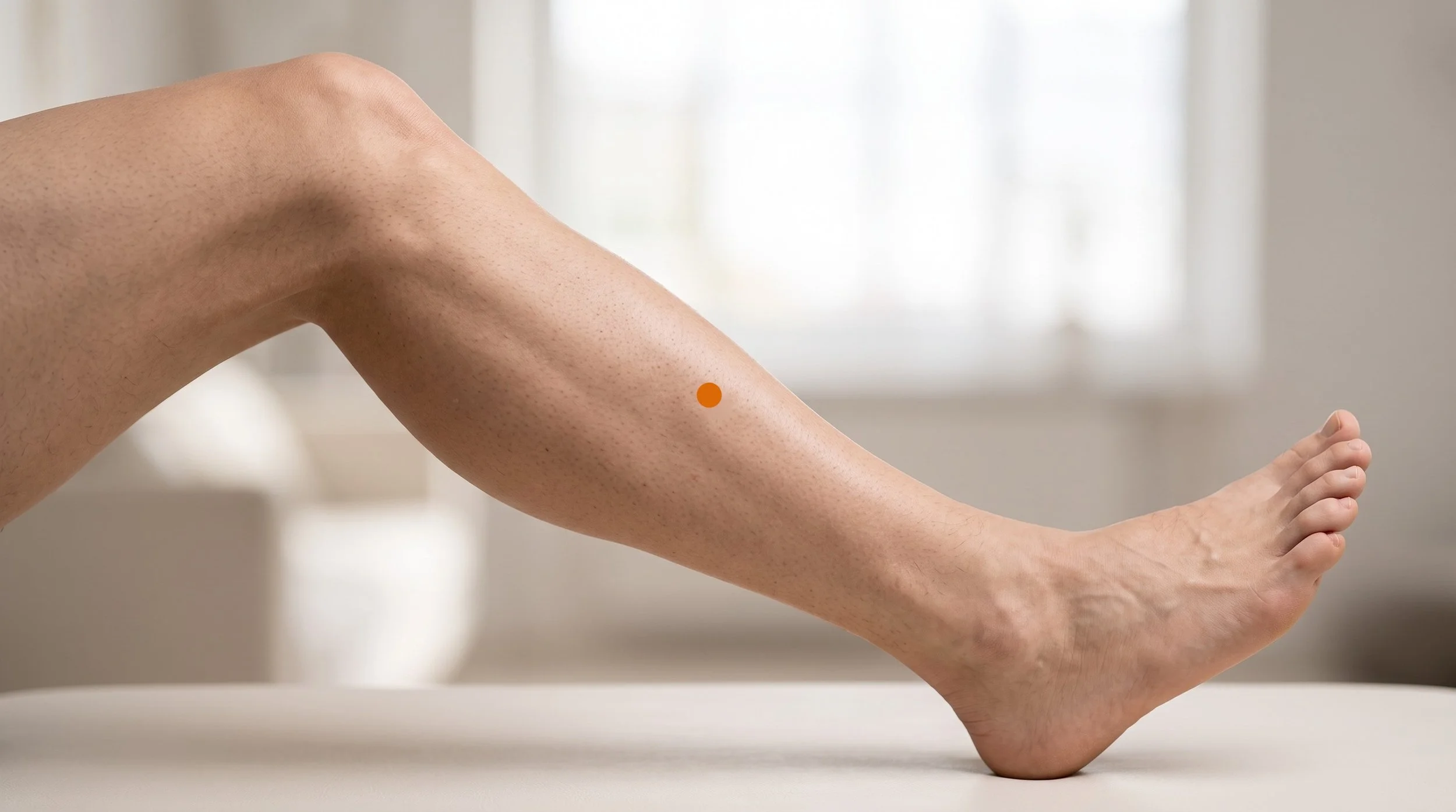
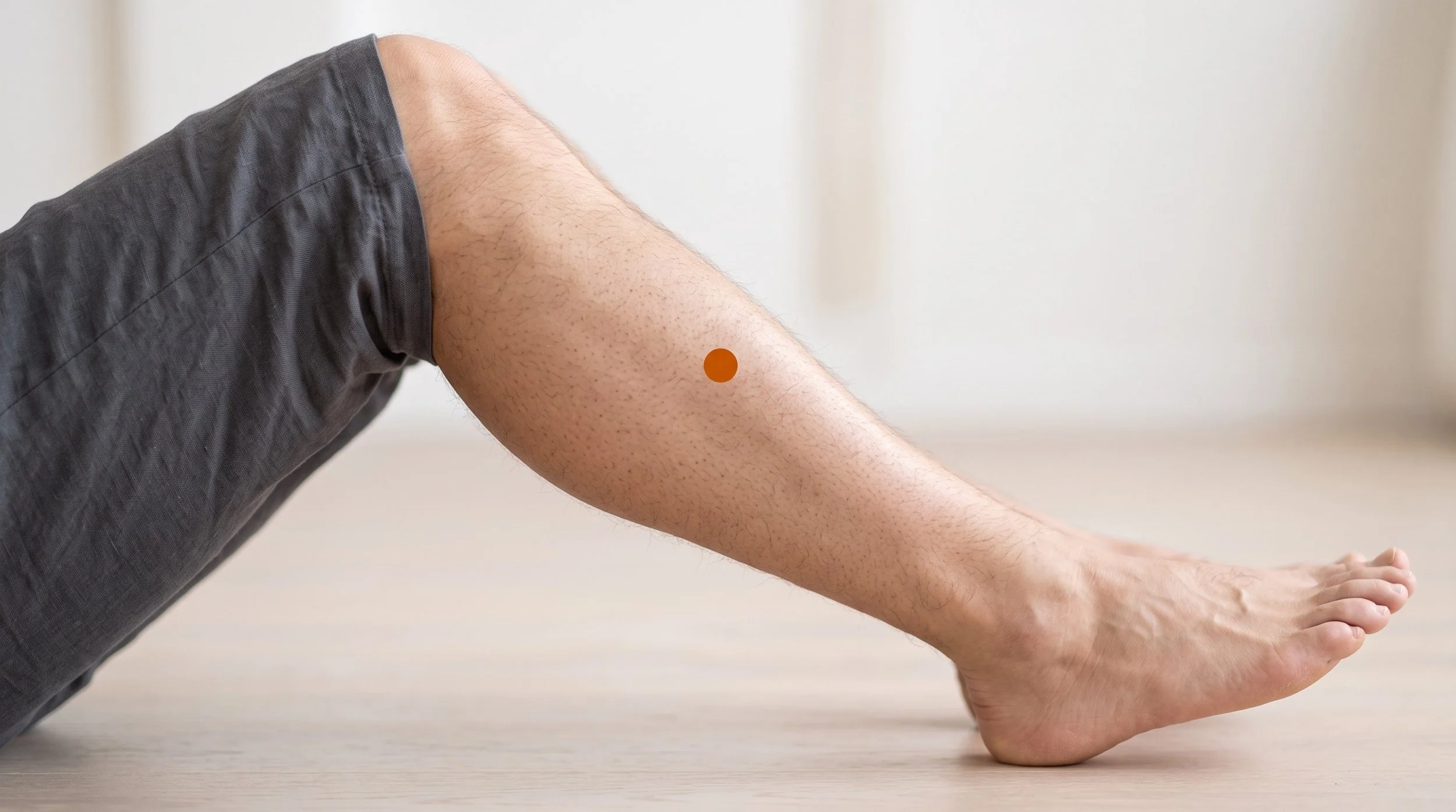
ST19 Acupuncture Point (Burong)
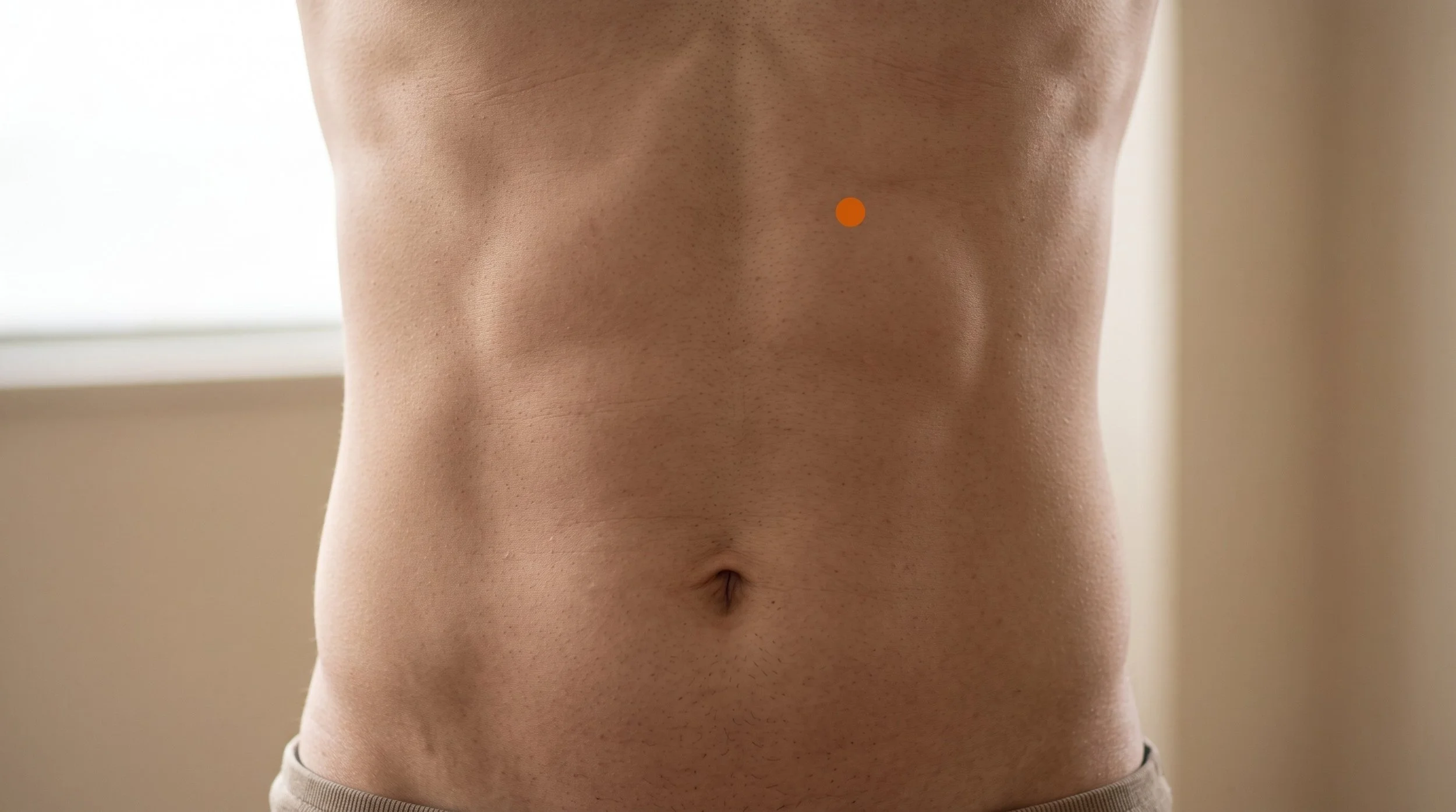
ST19 Acupuncture Point (Burong)
Not Contained: Anatomy, Mechanism, and Why This Upper Abdominal Stomach Point Sits Where Epigastric Pain, Nausea, and Abdominal Wall Tension Overlap
ST19 (Burong, often translated as "Not Contained") is the highest abdominal point of the Stomach channel, sitting 2 cun lateral to the midline and 6 cun above the navel, level with CV14 and just below the costal margin. The name is a clinical description rather than a metaphor: classical texts grouped this point with presentations in which the stomach fails to hold its contents, meaning fullness, reflux-like discomfort, and vomiting. For a modern clinic, the st19 acupuncture point matters for a simpler reason.
It lies over the upper rectus abdominis in a segment (roughly T7 and T8) that also carries afferent traffic from the stomach and liver, so needling here reaches both a common myofascial source of epigastric-feeling pain and a somatic window onto upper digestive reflexes.
- Stomach 19 sits high on the abdominal wall, 2 cun off the midline and 6 cun above the umbilicus, level with CV14. The needle passes through skin, superficial fascia, the anterior rectus sheath, and the upper fibers of rectus abdominis, a shallow layer stack that leaves little room before the costal margin and the structures beneath it.
- Traditional texts assign ST19 the actions of harmonizing the middle burner, directing rebellious qi downward, and easing cough and wheezing. Read neurophysiologically, those categories describe a point used for upper digestive symptoms and for tension in the muscular wall between the ribs and the stomach.
- The seventh and eighth intercostal nerves supply this region, and their spinal segments overlap with visceral afferents that reach the cord through the greater splanchnic pathway. That convergence is the accepted basis for somatoautonomic effects, with abdominal (same-segment) stimulation tending to reduce gastric motor activity through sympathetic reflexes while limb points tend to facilitate it through vagal routes (Li et al., 2007; Guo et al., 2020).
- The trial evidence is modest and protocol-based rather than point-specific. A Cochrane review of acupuncture for functional dyspepsia found some improvement in symptom and quality of life measures but rated the certainty of evidence as low (Lan et al., 2014), and a pooled analysis of acupoint stimulation for chemotherapy-related nausea and vomiting reported a reduction in acute vomiting without clear effects on nausea severity (Ezzo et al., 2005).
- Upper abdominal wall pain is frequently mistaken for a stomach problem, and tenderness that increases when the abdominal muscles are tensed points toward the wall rather than the viscera (Sweetser, 2019). Rectus abdominis trigger points can refer pain across the epigastrium and are associated with nausea-like sensations, which places ST19 squarely on a common myofascial target (Simons et al., 1999).
- De qi at ST19 is usually a dull, spreading heaviness under the rib edge rather than a sharp signal, and the needle stays shallow. Depth of 0.5 to 0.8 cun perpendicular is the textbook range, with oblique or transverse angling preferred in thin patients or when a narrow costal angle brings the rib edge into the point.
Struggling With Epigastric Pain, Bloating, or Nausea That Keeps Coming Back?
Upper abdominal discomfort often has more than one driver, including a tense, guarded abdominal wall that keeps feeding the sensation of fullness. At Morningside Acupuncture we combine points like ST19 with CV12, PC6, and ST36, then check the rectus abdominis and lower intercostals for tender bands that reproduce your symptoms. Treatment is gentle, shallow, and paced to how your body responds. Schedule a visit and let us map what is actually generating the discomfort.
Schedule NowAnatomy of ST19: Why the Upper Rectus Abdominis Below the Costal Margin Is Such an Important Location
From the surface inward, ST19 passes through skin, a variable layer of subcutaneous fat, the anterior rectus sheath, and then the upper belly of rectus abdominis close to where it attaches toward the costal cartilages. This is a short runway. In lean patients the rib edge can sit almost at the point, and in patients with a narrow subcostal angle the location may fall directly on cartilage, which is why point texts describe shifting slightly medially or laying the needle down along the rib margin instead.
The tissue here is loaded by anything that repeatedly tenses the upper abdomen: chronic coughing, bracing against pain, heavy core training, post-surgical guarding, and the sustained flexed posture of desk and phone work.
The nerve geography is what gives this location its clinical reach. Cutaneous and muscular supply comes from the seventh and eighth intercostal nerves, and those same spinal segments receive visceral afferents traveling from the stomach and liver region.
Because somatic and visceral inputs converge on shared dorsal horn neurons, stimulation of the abdominal wall can influence autonomic outflow to the upper gut, and experimental work in animals has repeatedly shown that needling same-segment abdominal sites reduces gastric motor activity through sympathetic pathways while distal limb points facilitate it through vagal pathways (Li et al., 2007; Guo et al., 2020). The same convergence explains the reverse problem clinically, since taut bands in the upper rectus abdominis can produce pain and queasiness that feel visceral (Simons et al., 1999; Sweetser, 2019).
Broader acupuncture analgesia also recruits descending inhibitory control from the brainstem, which is one reason effects are not confined to the needled spot (Zhao, 2008).
Depth discipline is non-negotiable at this point. Behind the upper abdominal wall lie the diaphragm, peritoneum, the liver on the right, and the heart and pericardium under and to the left of the xiphoid region, and standard texts warn that deep perpendicular insertion may reach an enlarged liver or the cardiac region.
The conventions that follow are simple: perpendicular insertion limited to 0.5 to 0.8 cun, shallower or angled technique in thin patients, no aggressive deep needling, and a brief screening conversation about organ enlargement, recent abdominal surgery, or unexplained upper abdominal pain that has not yet been evaluated medically.
Related Rectus Abdominis Trigger Points Related Stomach ChannelST19 at a Glance: Classification, Location, and Clinical Use
| Category | Detail |
|---|---|
| Traditional Name | Burong (Not Contained), Stomach 19, ST-19 |
| Channel Classification | Stomach channel of Foot Yangming, upper abdominal region |
| Point Categories | No five-shu, luo, xi-cleft, or hui-meeting designation and no crossing-point status recorded in the standard point texts; classified simply as a local upper abdominal point of the Stomach channel. Maciocia's channel text pairs it with KI21 as a Stomach-related option when treating patterns attributed to the Penetrating Vessel, a traditional attribution rather than a formal intersection. |
| Precise Location | On the upper abdomen, 2 cun lateral to the anterior midline and 6 cun above the umbilicus, level with CV14. The 2 cun line falls midway between the midline and the palpable lateral border of rectus abdominis. |
| Tissue Stimulated | Skin and superficial fascia, anterior rectus sheath, and upper rectus abdominis near the costal margin, with adjacent influence on the lower intercostal muscles and, deeper in the wall, the transverse abdominis layer |
| Needle Depth / Direction | Perpendicular 0.5 to 0.8 cun; oblique or transverse along the costal margin in thin patients or when a narrow subcostal angle places the point on cartilage. Deep perpendicular needling is avoided. |
| De Qi Sensation | A dull, heavy, slightly spreading ache under the rib edge, sometimes with a sense of warmth or softening across the epigastrium; sharp or radiating sensation means the needle should be adjusted |
| Primary Clinical Uses | Epigastric pain and fullness, nausea and vomiting in classical listings, poor appetite, and tension or tenderness of the upper abdominal wall |
| Common Point Combinations |
|
Deadman's point text presents Burong as a point whose name says what it treats: the stomach unable to keep hold of what it has taken in. The traditional indications listed there cluster into three groups, an upper digestive group (abdominal distention, epigastric pain, vomiting including vomiting of blood, poor appetite, rumbling), a chest and breathing group (cough, breathlessness, labored breathing with the shoulders lifting), and a pain group spanning the chest, back, shoulder, and lateral costal region, with dry mouth appearing alongside.
The traditional actions attached to it are harmonizing the middle burner, sending rebellious qi downward, and descending qi to quiet cough and wheezing, and the commentary notes that its position under the ribs led practitioners to select it for hypochondriac pain with nausea in gallbladder conditions. What makes the classical picture striking is that a single point below the rib margin was credited with both stomach symptoms and breathing symptoms, which is exactly the overlap a modern clinician sees when the upper abdominal wall and diaphragm are chronically tense.
Why ST19 Is Used for Symptoms That Feel Like a Stomach Problem but Live in the Abdominal Wall
Patients often arrive convinced that a burning, gnawing, or full sensation below the sternum must be coming from the stomach itself. Sometimes it is. Often the abdominal wall is contributing, because the nerves supplying skin and muscle in this region enter the spinal cord at the same levels as afferents from the upper digestive organs.
When somatic and visceral signals converge on shared neurons, the brain can misattribute the source, and gastroenterology literature describes upper abdominal wall pain as a common, underrecognized cause of chronic abdominal pain, identified largely by tenderness that persists or worsens when the abdominal muscles are tensed (Sweetser, 2019). Taut bands in the rectus abdominis can generate exactly this pattern, sometimes with accompanying queasiness (Simons et al., 1999). Needling ST19 places the needle inside that suspect tissue.
The second mechanism is reflex rather than muscular. Experimental studies show that needling the abdomen produces different autonomic effects than needling the limbs, with same-segment abdominal stimulation reducing gastric motor activity through sympathetic pathways while distal points such as ST36 tend to increase it through vagal pathways (Li et al., 2007).
A systematic review of acupuncture and electroacupuncture in functional dyspepsia describes similar themes, reporting changes in gastric accommodation, motility, and central processing across the included work while noting the variability of protocols (Guo et al., 2020). Broader analgesia adds a third layer, since needle stimulation engages descending inhibitory systems that dampen dorsal horn transmission well beyond the treated segment (Zhao, 2008).
In practice this means ST19 is rarely used alone. It is a local, same-segment point that tends to be paired with distal points that pull in a complementary direction, which is exactly what the classical combinations do when they set Burong alongside PC7, LV14, or LV13. The clinical goal is a quieter abdominal wall and a calmer segmental input, not a claim about moving qi through a channel.
What the Research Shows for ST19
There is no clinical trial that isolates ST19. Like most abdominal points, it appears inside multi-point protocols for dyspepsia, nausea, and abdominal pain, so the honest reading of the evidence is that reviews tell us about acupuncture treatment as delivered, not about this point's individual contribution. The reviews below set reasonable expectations: modest and often low-certainty benefits for functional upper digestive symptoms, better established effects for chronic pain conditions, and a mechanistic literature that explains why an abdominal point behaves differently from a limb point.
| Study | Type | Focus | Key Finding |
|---|---|---|---|
| Lan et al., 2014 | Cochrane systematic review | Manual acupuncture and electroacupuncture for functional dyspepsia | Some improvement in symptoms and quality of life was reported, but the authors judged the evidence low in certainty and called for better designed trials. |
| Guo et al., 2020 | Systematic review of effects and mechanisms | Acupuncture and electroacupuncture in functional dyspepsia | The review describes plausible effects on gastric accommodation, motility, and central pain processing while noting wide variability in protocols and study quality. |
| Ezzo et al., 2005 | Pooled analysis of randomized trials | Acupoint stimulation for chemotherapy-related nausea and vomiting | Acupoint stimulation reduced the proportion of patients with acute vomiting, with no clear effect on nausea severity. |
| Li et al., 2007 | Experimental animal study | Neural mechanisms of acupuncture effects on gastric motility | Stimulation of same-segment abdominal sites inhibited gastric motility through sympathetic pathways, while limb stimulation facilitated it through vagal pathways. |
| Sweetser, 2019 | Clinical review | Abdominal wall pain as a cause of chronic abdominal symptoms | Abdominal wall pain is common and underrecognized, and simple bedside testing can distinguish it from visceral pain before further workup. |
| Vickers et al., 2018 | Individual patient data meta-analysis | Acupuncture for chronic pain across conditions | Acupuncture outperformed sham and usual care for chronic pain, with effects that persisted over time, supporting its use as a component of care. |
Is Your Upper Abdominal Wall Doing More of the Work Than You Think?
Coughing, heavy lifting, post-surgical guarding, and long hours hunched at a desk all load the upper rectus abdominis, the exact tissue ST19 sits over. Our licensed acupuncturists use precise, hygienic needling plus dry needling of the abdominal wall and intercostals to release that tension and calm the segmental input feeding your symptoms. Most patients notice easier breathing through the ribcage within a few sessions. Book an evaluation to get a clear plan.
Schedule NowST19 in the Context of Trigger Point Work
Because acupuncture means the use of an acupuncture needle across hundreds of styles, dry needling of the abdominal wall belongs in the same conversation as classical point selection. The burong point sits in the upper rectus abdominis, a muscle whose trigger points are described as referring pain across the upper abdomen and back and as being associated with nausea, indigestion, and a sense of fullness (Simons et al., 1999).
At Morningside we palpate along the upper rectus, the rib margin, and the lower intercostal spaces before needling. If pressure at or near ST19 reproduces the patient's familiar symptom and the tenderness increases when they lift their head off the table, the wall is a legitimate target.
In a typical session, ST19 may be needled shallowly on the affected side along with CV12 and CV13 on the midline, PC6 or ST36 distally, and targeted dry needling of rectus abdominis, external oblique, or intercostal bands where they are clearly involved. Angles stay flat or shallow near the costal margin, and treatment is always paired with medical screening, since abdominal wall findings do not rule out a visceral problem. Patients whose upper abdominal pain has never been evaluated, or who have red flag features such as weight loss, vomiting blood, or progressive pain, are referred for workup first.
ST19 Digestive and Abdominal Wall Treatment at NYC's Highest-Rated Acupuncture Clinic
Morningside Acupuncture is the highest-rated acupuncture and dry needling clinic in New York City with over 500 five-star Google reviews. We integrate classical point selection with modern pain science, so a point like Burong is chosen for the segment it reaches and the tissue it treats, never as a formula applied by rote. Every session includes screening, careful depth control near the costal margin, and clear home guidance. Schedule your appointment and start with an assessment that respects both traditions.
Schedule NowFrequently Asked Questions
What does ST19 feel like when needled?
Most people feel a brief pinch at the skin, then a dull, heavy, slightly spreading ache under the rib edge. Some describe a wave of warmth or a sense of the upper abdomen letting go. Because the needle stays shallow here, the sensation is usually milder than at thick limb muscles. Sharp, electric, or radiating sensations are not the goal, and the needle should be withdrawn slightly or repositioned if they occur.
Why needle the abdomen for a stomach complaint instead of a distal point like ST36?
Both approaches are used, and they are not interchangeable. Experimental work shows that needling the abdomen and needling the limbs recruit different autonomic pathways, with same-segment abdominal stimulation tending to quiet gastric motor activity through sympathetic reflexes and distal limb points tending to facilitate it through vagal routes (Li et al., 2007). ST19 also treats the abdominal wall itself, which is a frequent and easily missed source of upper abdominal pain (Sweetser, 2019). Many treatment plans use a local point such as ST19 alongside a distal point such as ST36 or PC6.
Can I press ST19 myself between sessions?
Yes, with a light touch. Lie on your back with your knees bent so the abdominal wall softens. Find the level halfway between your navel and the notch at the base of the breastbone, then move about two finger widths out from the midline, staying below the rib edge. Press gently with the pads of two fingers using pressure you would rate 3 or 4 out of 10, hold for 30 to 60 seconds while breathing slowly into the lower ribs, then release. Repeat on both sides for a total of two to three minutes, once or twice a day. Skip it after a large meal, during pregnancy unless your practitioner has cleared it, and any time the pressure produces sharp pain, pulsation, or nausea that worsens.
Is ST19 safe to needle?
In trained hands, yes, with specific precautions. Standard texts limit insertion to 0.5 to 0.8 cun perpendicular and warn that deep insertion may reach an enlarged liver on the right or the cardiac region on the left, so depth stays modest and angles are adjusted in lean patients. A brief history matters more here than at most points, including recent abdominal surgery, known organ enlargement, hernia, pregnancy, and any upper abdominal pain that has not been medically evaluated. Practitioners at Morningside use single use sterile needles and clean needle technique, and they refer out when red flag symptoms are present.
Where exactly is ST19 located?
The st 19 location is on the upper abdomen, 2 cun lateral to the anterior midline and 6 cun above the umbilicus, level with CV14. A practical way to find it: the distance from the navel to the sternocostal angle is measured as 8 cun, so ST19 sits three quarters of the way up that line; the 2 cun mark is halfway between the midline and the palpable outer edge of the rectus abdominis. In people with a narrow rib angle the point can land on the costal cartilage, in which case practitioners locate slightly more medially or needle flat along the rib margin.
References
- Deadman, P., Al-Khafaji, M., & Baker, K. (2009). A manual of acupuncture. Journal of Chinese Medicine Publications.
- Kim, H. (2008). Handbook of Oriental medicine (3rd ed.). Harmony & Balance Press.
- Cunningham, P. M. (2000). Acupuncture points: A practical guide to classical and modern usage. Odyssey Press.
- Maciocia, G. (2006). The channels of acupuncture: Clinical use of the secondary channels and eight extraordinary vessels. Churchill Livingstone Elsevier.
- Simons, D. G., Travell, J. G., & Simons, L. S. (1999). Travell & Simons' myofascial pain and dysfunction: The trigger point manual, Vol. 1: Upper half of body (2nd ed.). Williams & Wilkins.
- Lan, L., Zeng, F., Liu, G. J., Ying, L., Wu, X., Liu, M., & Liang, F. R. (2014). Acupuncture for functional dyspepsia. Cochrane Database of Systematic Reviews, 2014(10), CD008487. https://doi.org/10.1002/14651858.CD008487.pub2
- Guo, Y., Wei, W., & Chen, J. D. (2020). Effects and mechanisms of acupuncture and electroacupuncture for functional dyspepsia: A systematic review. World Journal of Gastroenterology, 26(19), 2440-2457. https://doi.org/10.3748/wjg.v26.i19.2440
- Li, Y. Q., Zhu, B., Rong, P. J., Ben, H., & Li, Y. H. (2007). Neural mechanism of acupuncture-modulated gastric motility. World Journal of Gastroenterology, 13(5), 709-716. https://doi.org/10.3748/wjg.v13.i5.709
- Ezzo, J., Vickers, A., Richardson, M. A., Allen, C., Dibble, S. L., Issell, B., Lao, L., Pearl, M., Ramirez, G., Roscoe, J. A., Shen, J., Shivnan, J., Streitberger, K., Treish, I., & Zhang, G. (2005). Acupuncture-point stimulation for chemotherapy-induced nausea and vomiting. Journal of Clinical Oncology, 23(28), 7188-7198. https://doi.org/10.1200/JCO.2005.06.028
- Sweetser, S. (2019). Abdominal wall pain: A common clinical problem. Mayo Clinic Proceedings, 94(2), 347-355. https://doi.org/10.1016/j.mayocp.2018.04.031
- Vickers, A. J., Vertosick, E. A., Lewith, G., MacPherson, H., Foster, N. E., Sherman, K. J., Irnich, D., Witt, C. M., & Linde, K. (2018). Acupuncture for chronic pain: Update of an individual patient data meta-analysis. Journal of Pain, 19(5), 455-474. https://doi.org/10.1016/j.jpain.2017.11.005
- Zhao, Z. Q. (2008). Neural mechanism underlying acupuncture analgesia. Progress in Neurobiology, 85(4), 355-375. https://doi.org/10.1016/j.pneurobio.2008.05.004
Disclaimer: This web site is intended for educational and informational purposes only. Reading this website does not constitute providing medical advice or any professional services. This information should not be used for diagnosing or treating any health issue or disease. Those seeking medical advice should consult with a licensed physician. Seek the advice of a medical doctor or other qualified health professional for any medical condition. If you think you have a medical emergency, call 911 or go to the emergency room. No acupuncturist-patient relationship is created by reading this website or using the information. Morningside Acupuncture PLLC and its employees and contributors do not make any express or implied representations with respect to the information on this site or its use. For any legal interpretation of scope of practice in your state, consult a licensed attorney or regulatory authority.
Read more from our blog