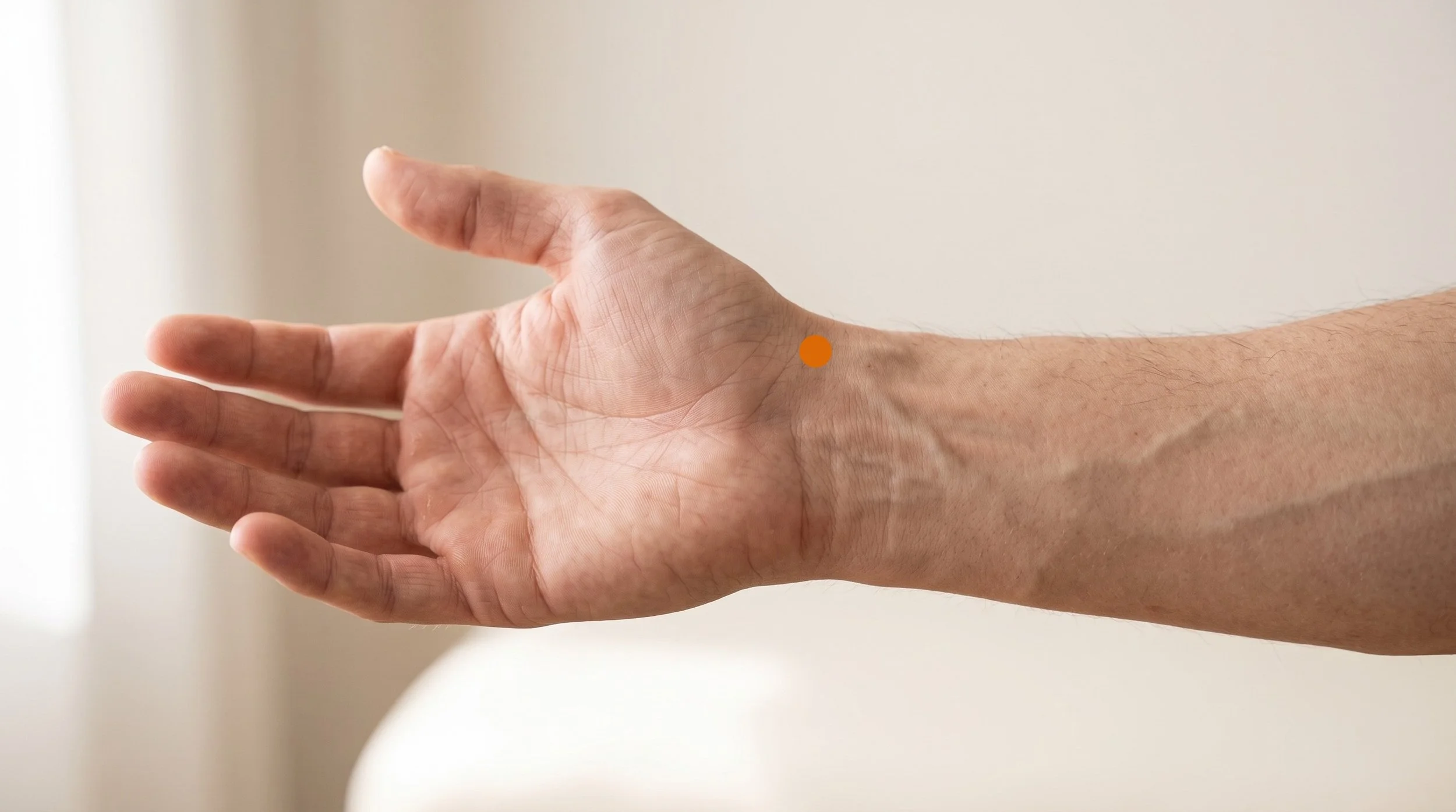
KI3 Acupuncture Point (Taixi)
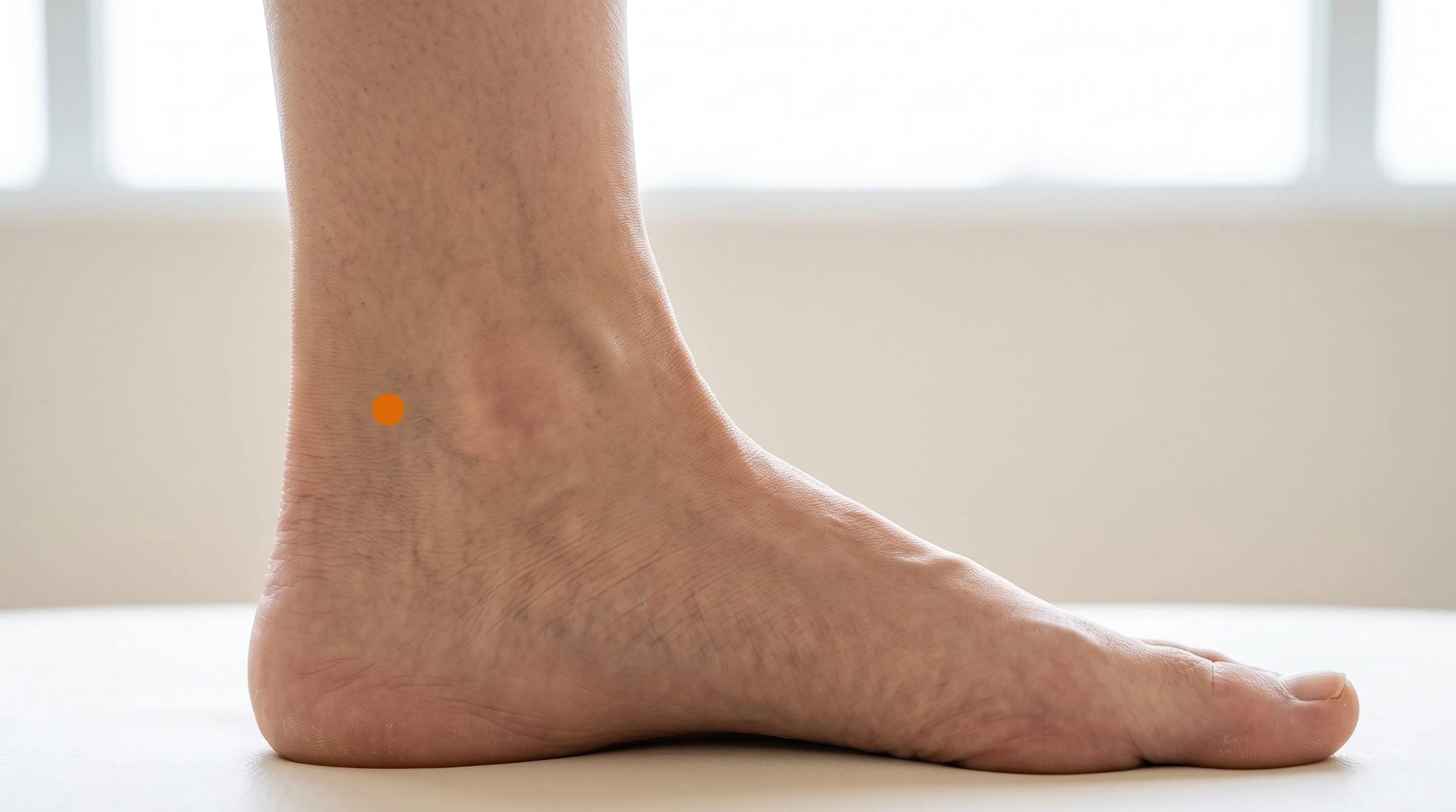
KI3 Acupuncture Point
The Great Ravine Behind the Inner Ankle: Anatomy, Mechanism, and Why This Small Hollow Anchors Treatment for Ankle, Heel, and Low Back Pain
KI3 (Taixi, often translated as Great Ravine or Supreme Stream) sits in the soft hollow between the bony bump of the inner ankle and the front edge of the Achilles tendon, level with the tip of that bump. It's the third point of the Kidney channel, and in classical theory it carries three designations at once: shu-stream, yuan-source, and Earth point (Deadman et al., 2001). That combination made it the main point on the channel for constitutional treatment in traditional practice, but the reason modern clinicians reach for it is more concrete.
The needle lands in the tarsal tunnel region, a dense crossroads of tibial nerve branches, deep flexor tendons, and vascular tissue that connects directly to the heel, the sole, and the whole posterior chain of the leg. That makes the ki3 acupuncture point useful for medial ankle pain, heel and Achilles complaints, tibialis posterior irritation, and, as part of larger prescriptions, for low back pain, fatigue, sleep quality, and tinnitus support.
- Location and layers: kidney 3 lies midway between the prominence of the medial malleolus and the posterior border of the Achilles tendon, level with the malleolar tip (Deadman et al., 2001). The needle passes through thin skin and subcutaneous fascia into the retromalleolar space that houses the tibialis posterior, flexor digitorum longus, and flexor hallucis longus tendons.
- Classical categories, read neurophysiologically: traditional texts classify Taixi as the shu-stream, yuan-source, and Earth point of the Kidney channel and attribute to it nourishing of Kidney yin and yang, anchoring of qi, and strengthening of the lumbar spine (Deadman et al., 2001). We treat those as traditional attributions and describe the effects we can measure: local tissue and vascular change, tibial nerve input, and central modulation.
- Mechanism: needling here recruits A-delta and C fiber afferents whose signals reach the sacral and lumbar cord segments that also serve the heel, sole, and posterior leg, then engage descending inhibitory pathways involving endogenous opioids, serotonin, and noradrenaline (Zhao, 2008). That segmental plus supraspinal pairing is the plainest explanation for why an ankle point can influence pain felt farther up the chain.
- Point-specific imaging: resting-state fMRI work has repeatedly used KI3 as the test point, reporting changes in cortical activity and connectivity after needling compared with sham or non-point stimulation (Zhu et al., 2015; He et al., 2020). These are small mechanistic studies rather than clinical trials, so they suggest central engagement rather than proving clinical benefit.
- Research picture: individual patient data from chronic pain trials support modest, durable benefits for acupuncture overall (Vickers et al., 2018), while Cochrane found only low certainty evidence for chronic nonspecific low back pain and cautioned about trial quality (Mu et al., 2020). KI3 is one component inside those multi-point protocols, never the tested variable on its own.
- De qi and practice framing: patients usually report a deep, heavy ache or a spreading fullness that travels toward the heel or the sole rather than a sharp pinch. Deadman et al. (2001) note that for heel pain the sensation should be directed strongly into the heel region, which matches how we needle it for plantar and Achilles complaints.
Struggling With Inner Ankle, Heel, or Achilles Pain That Won't Settle?
Medial ankle and heel pain rarely comes from one tissue, which is why we assess the tibial nerve corridor, the deep flexor tendons, and the calf before we needle anything. At Morningside Acupuncture we use KI3 as a precise local point in that corridor and pair it with dry needling of the deep posterior compartment when the exam points there. Treatment is combined with loading advice so the gains hold between visits. Schedule a visit and we'll map out where your pain is actually coming from.
Schedule NowAnatomy of KI3: Why the Hollow Behind the Medial Malleolus Is Such an Important Location
Run a finger along the inside of your ankle and you'll find a soft valley between the round bump of the medial malleolus and the firm front edge of the Achilles tendon. That valley is the surface expression of the tarsal tunnel, a fibro-osseous passage roofed by the flexor retinaculum. Under the skin and superficial fascia sit the tendons of tibialis posterior and flexor digitorum longus, and deeper still the flexor hallucis longus.
These structures are loaded every time you push off, decelerate, or control pronation, which is why runners, dancers, and people with flat or collapsing arches often feel tender and thickened tissue exactly where kidney 3 sits.
The nerve geography is what gives this location its reach. The tibial nerve travels through the same tunnel before dividing into the medial and lateral plantar nerves and the medial calcaneal branch, so the tissue at KI3 shares innervation with the heel pad and the sole. Afferent input generated by needling here converges in the lumbosacral dorsal horn with input from those distal territories, which is a straightforward account of why local needling can change sensation in the heel and arch.
Beyond the segment, needle-evoked afferent traffic recruits descending inhibitory control from the midbrain and brainstem, mediated by endogenous opioid, serotonergic, and noradrenergic systems (Zhao, 2008). Imaging studies using this exact point report measurable cortical and connectivity changes after needling relative to sham or non-point control, which is consistent with central rather than purely local effects (Zhu et al., 2015; He et al., 2020).
The deep structure that governs technique is vascular. The posterior tibial artery and vein run just anterior to the point alongside the nerve, and the artery's pulse is often palpable in the hollow itself (Deadman et al., 2001). Standard needling is perpendicular, roughly 0.5 to 1 cun, and some classical texts describe joining the point through to BL60 on the opposite side of the ankle (Deadman et al., 2001).
In practice we palpate for the pulse first, angle slightly away from it, use moderate rather than aggressive stimulation, and stop and redirect immediately if a patient reports a sharp electric sensation into the sole, which suggests the needle is too close to the nerve.
Related Kidney Channel Related Pain Finder Leg Ankle FootKI3 at a Glance: Classification, Location, and Clinical Use
| Category | Detail |
|---|---|
| Traditional Name | Taixi (Great Ravine, also translated Supreme Stream or Greater Stream) |
| Channel Classification | Third point of the Kidney channel of Foot Shaoyin |
| Point Categories | Shu-stream point, yuan-source point, and Earth point of the Kidney channel |
| Precise Location | In the depression between the prominence of the medial malleolus and the anterior border of the Achilles tendon, level with the tip of the medial malleolus |
| Tissue Stimulated | Skin and superficial fascia of the medial retromalleolar hollow, flexor retinaculum, and the tendon sheaths of tibialis posterior and flexor digitorum longus; clinically overlaps with referral from tibialis posterior trigger points |
| Needle Depth / Direction | Perpendicular insertion 0.5 to 1 cun; classically may be joined through toward BL60. Palpate and avoid the posterior tibial artery, which lies close by |
| De Qi Sensation | Deep, heavy ache or spreading fullness in the ankle hollow, often traveling toward the heel or sole; a sharp electric zing means the needle should be withdrawn and redirected |
| Primary Clinical Uses | Medial ankle pain, heel and Achilles-region pain, tibialis posterior irritation, low back pain within larger protocols, fatigue, sleep complaints, and tinnitus support |
| Common Point Combinations |
|
In the classical literature summarized by Deadman and colleagues (2001), the Kidneys were understood as the root of both yin and yang for the whole body, storing essence and housing the fire that warms every other organ, so any point that treats them directly carries unusual weight. Because Taixi is simultaneously the shu-stream and the yuan-source point, and because the Nei Jing recommended those categories for disorders of the internal organs, classical authors treated it as the chief point for Kidney patterns of every kind.
The traditional indication lists are correspondingly wide: ear and hearing complaints, chronic dry throat and toothache, headache and dizziness, cough and breathlessness, chronic insomnia with excessive dreaming and poor memory, urinary and reproductive complaints, dry constipation, cold and numb legs, and pain of the lumbar region, ankle, and heel.
Underlying most of those entries is a single logic, that the Kidneys were said to fill the marrow, moisten the throat and bowel, anchor the breath drawn down by the Lung, and root the spirit stored by the Heart, so treating them was thought to reach all of those places at once. What's striking is how a point tucked into a small hollow at the ankle came to be regarded as one of the most systemically important locations on the body, chosen for depletion, chronicity, and slow decline rather than for acute crisis.
Why KI3 Is Used for Low Back Pain, Heel Pain, and Sleep Complaints
The first reason is anatomical. The tissue at kidney 3 is served by the tibial nerve just before it branches to the heel and sole, and those branches carry information back to lumbosacral spinal segments. When several inputs converge on the same dorsal horn neurons, stimulating one of them can change how the others are processed, which is the standard explanation for why a needle at the ankle can influence heel and arch symptoms and why it's a reasonable adjunct in posterior chain and low back protocols (Zhao, 2008).
There's also a mechanical layer that has nothing to do with theory: in people with tibialis posterior overload, the tissue right at this point is frequently thickened and tender, so needling it is treating the involved structure directly.
The second reason is central. Needle stimulation activates descending inhibitory systems that dampen nociceptive transmission across multiple segments, which is why acupuncture effects are not confined to the treated limb (Zhao, 2008).
Studies that used this specific point in the scanner reported altered spontaneous brain activity and functional connectivity after needling compared with sham or non-point conditions, including in regions linked to attention, sensory integration, and cognition (Zhu et al., 2015; He et al., 2020), and similar work in older adults with mild cognitive impairment found needling here activated cortical regions associated with cognitive processing (Chen et al., 2014).
These are small, mechanistic studies and none of them show that KI3 treats a disease, but they do support the idea that the point's effects are mediated through the nervous system.
That framing also explains the traditional sleep and fatigue indications without invoking energy flow. Needling in a quiet, supported position tends to shift autonomic balance toward parasympathetic dominance, and many patients describe a distinct settling within a few minutes of the needles being placed. Systematic review evidence suggests acupuncture may improve sleep quality measures in insomnia, though the trials are heterogeneous and the certainty is limited (Kim et al., 2021).
We present it that way to patients: a plausible adjunct with a reasonable safety profile, not a replacement for sleep behavior change or medical care.
What the Research Shows for KI3
It's worth being clear about what the research can and can't say. No high-quality trial has tested KI3 as a standalone intervention for the conditions it's traditionally used for. Reviews test whole protocols in which this point is one of several needles, so the honest reading is that KI3 appears within prescriptions that have been studied, and that the overall evidence for those prescriptions ranges from moderate for chronic musculoskeletal pain to low or uncertain for tinnitus and ankle sprain.
The point-specific research that does exist is mechanistic imaging work, which speaks to how the point engages the nervous system rather than to clinical outcomes.
| Study | Type | Focus | Key Finding |
|---|---|---|---|
| Vickers et al., 2018 | Individual patient data meta-analysis | Chronic musculoskeletal, headache, and osteoarthritis pain | Acupuncture was better than sham and no-acupuncture controls, with effects that persisted over about a year. |
| Mu et al., 2020 | Cochrane systematic review | Chronic nonspecific low back pain | Low certainty evidence suggested acupuncture may relieve pain in the immediate term versus sham, with results downgraded for bias and imprecision. |
| Park et al., 2013 | Systematic review and meta-analysis | Acupuncture for ankle sprain | More participants reported global symptom improvement with acupuncture, but trial quality was generally poor so conclusions stay tentative. |
| Kim et al., 2021 | Systematic review and meta-analysis | Acupuncture for insomnia | Pooled trials suggested improvement in sleep quality scores, though methodological limitations restrict how strongly this can be stated. |
| Huang et al., 2021 | Systematic review and meta-analysis | Acupuncture for tinnitus | No significant difference was found on the primary loudness outcome, and the authors judged the evidence insufficient for firm conclusions. |
| Zhu et al., 2015 | fMRI mechanistic study | Needling KI3 versus sham and non-point in healthy volunteers | Needling this point produced different patterns of spontaneous brain activity than sham or non-point stimulation. |
| He et al., 2020 | fMRI mechanistic study | KI3 needling in healthy younger and older adults | Regional brain activity and large-scale connectivity shifted after needling, with responses differing between age groups. |
| Chen et al., 2014 | fMRI mechanistic study | KI3 needling in older adults with mild cognitive impairment | Needling activated cortical regions associated with cognitive processing, an exploratory finding needing replication. |
Low Back Pain, Fatigue, and Restless Sleep Showing Up Together?
When back pain, low energy, and poor sleep arrive as a cluster, single-symptom treatment tends to underperform. Kidney 3 acupuncture is one of the points we use in these cases, combined with lumbar and paraspinal needling and autonomic-calming points to support both pain and sleep quality. We keep the plan measurable, tracking pain, function, and how you feel the next morning. Book an appointment and let's build a plan that addresses the whole pattern.
Schedule NowKI3 in the Context of Trigger Point Work
Acupuncture means the use of an acupuncture needle, and dry needling is one of the hundreds of styles that use it, so at Morningside there's no wall between selecting KI3 and needling a myofascial target a few centimeters away. When someone presents with medial ankle, arch, or heel pain, we assess the deep posterior compartment first. Tibialis posterior, flexor digitorum longus, and flexor hallucis longus can all refer pain along the inner ankle and into the sole, and soleus is a classic source of posterior heel pain (Simons et al., 1999).
KI3 sits directly over the retromalleolar tendon sheaths of the first two, which means needling the point and treating the tendinous tissue are frequently the same act.
A typical session might combine KI3 and one or two neighboring Kidney channel points with dry needling of tibialis posterior at the mid-calf, soleus, and the gastrocnemius when calf tightness is limiting dorsiflexion, followed by graded calf and arch loading.
For patients whose primary complaint is low back pain, we work the opposite direction: lumbar multifidus, quadratus lumborum, and gluteal targets get the local needling, and KI3 is added as a distal point for its segmental and descending-inhibition contribution rather than as a local treatment (Zhao, 2008). Either way the point earns its place through the exam, not through habit.
KI3 Ankle and Back Pain Treatment at NYC's Highest-Rated Acupuncture Clinic
Morningside Acupuncture is the highest-rated acupuncture and dry needling clinic in New York City with over 500 five-star Google reviews. Our licensed acupuncturists blend classical point selection with orthopedic assessment and myofascial dry needling, so a point like KI3 is chosen for anatomical reasons and not by formula. Sessions are unhurried, hygienic, and built around your goals, whether that's running again or sleeping through the night. Schedule your appointment at our Midtown Manhattan clinic today.
Schedule NowFrequently Asked Questions
What does KI3 feel like when needled?
Most people feel a dull, heavy ache or a sense of pressure and fullness filling the hollow behind the inner ankle, sometimes spreading toward the heel or the arch. That's the de qi sensation practitioners aim for, and it usually builds over several seconds rather than arriving as a sting. A brief pinch at the skin is normal. A sharp electric shock into the sole is not what we want, and it means the needle is near the tibial nerve and should be withdrawn slightly and redirected. Tell your acupuncturist right away if you feel that.
Why would an ankle point be used for low back pain or sleep problems?
Two reasons, one anatomical and one central. The tissue at KI3 is supplied by nerves that report to lumbosacral spinal segments, so input from the needle converges with input from the heel, sole, and posterior chain and can change how those signals are processed (Zhao, 2008). Beyond that segment, needling recruits descending inhibitory pathways that reduce pain transmission body-wide, and imaging studies using this point specifically show changes in brain activity and connectivity after needling (Zhu et al., 2015; He et al., 2020). In traditional terms, classical texts assigned this point a role in strengthening the lumbar spine and settling the mind, which we present as a traditional attribution rather than a mechanism (Deadman et al., 2001).
Can I press KI3 myself between sessions?
Yes, and it's one of the easier points to self-treat because the landmarks are obvious. Sit with the ankle resting across the opposite knee, find the bony bump of the inner ankle, and slide back toward the Achilles tendon until your finger drops into the soft hollow, level with the tip of the bump. Press your thumb straight in with steady, moderate pressure, enough to feel a dull ache but not enough to make you tense up, and hold for 30 to 60 seconds. Then either sustain the hold or make small circles for another minute, and repeat on the other ankle. Two or three rounds per side, once or twice daily, is plenty. If you feel a pulse under your thumb, ease off and shift a few millimeters back toward the tendon, and if you get shooting or electric sensations into the sole, stop and let your clinician know.
Is KI3 safe to needle?
In trained hands it's a safe and very commonly used point. The main structures to respect are the posterior tibial artery and vein and the tibial nerve, which run just anterior to the point inside the tarsal tunnel (Deadman et al., 2001). Practitioners palpate for the arterial pulse before insertion, angle away from it, and keep to standard depths of roughly 0.5 to 1 cun. Minor bruising is the most likely side effect, and it's slightly more common here than at many points because of the local vasculature, so tell your acupuncturist if you take blood thinners. We also avoid needling directly into broken skin, active cellulitis, or a recently operated ankle, and we adjust technique for anyone with known tarsal tunnel syndrome or significant neuropathy.
Where exactly is KI3 located?
KI3 is on the inside of the ankle, in the depression between the prominence of the medial malleolus and the anterior border of the Achilles tendon, level with the tip of the malleolus (Deadman et al., 2001). The most reliable way to find the ki 3 point location is to place one finger on the highest part of the inner ankle bump and another on the front edge of the Achilles tendon at the same height, then settle into the soft midpoint between them. It's directly opposite BL60, which occupies the matching hollow on the outer side of the ankle, and about 1 cun above KI4.
References
- Deadman, P., Al-Khafaji, M., & Baker, K. (2009). A manual of acupuncture. Journal of Chinese Medicine Publications.
- Cheng, X. (Ed.). (1999). Chinese acupuncture and moxibustion (Rev. ed.). Foreign Languages Press.
- Maciocia, G. (2005). The foundations of Chinese medicine: A comprehensive text for acupuncturists and herbalists (2nd ed.). Elsevier Churchill Livingstone.
- Simons, D. G., Travell, J. G., & Simons, L. S. (1999). Travell & Simons' myofascial pain and dysfunction: The trigger point manual, Vol. 1: Upper half of body (2nd ed.). Williams & Wilkins.
- Zhao, Z. Q. (2008). Neural mechanism underlying acupuncture analgesia. Progress in Neurobiology, 85(4), 355-375. https://doi.org/10.1016/j.pneurobio.2008.05.004
- Vickers, A. J., Vertosick, E. A., Lewith, G., MacPherson, H., Foster, N. E., Sherman, K. J., Irnich, D., Witt, C. M., & Linde, K. (2018). Acupuncture for chronic pain: Update of an individual patient data meta-analysis. Journal of Pain, 19(5), 455-474. https://doi.org/10.1016/j.jpain.2017.11.005
- Mu, J., Furlan, A. D., Lam, W. Y., Hsu, M. Y., Ning, Z., & Lao, L. (2020). Acupuncture for chronic nonspecific low back pain. Cochrane Database of Systematic Reviews, 12(12), CD013814. https://doi.org/10.1002/14651858.CD013814
- Park, J., Hahn, S., Park, J. Y., Park, H. J., & Lee, H. (2013). Acupuncture for ankle sprain: Systematic review and meta-analysis. BMC Complementary and Alternative Medicine, 13, 55. https://doi.org/10.1186/1472-6882-13-55
- Kim, S. A., Lee, S. H., Kim, J. H., van den Noort, M., Bosch, P., Won, T., Yeo, S., & Lim, S. (2021). Efficacy of acupuncture for insomnia: A systematic review and meta-analysis. American Journal of Chinese Medicine, 49(5), 1135-1150. https://doi.org/10.1142/S0192415X21500543
- Huang, K., Liang, S., Chen, L., & Grellet, A. (2021). Acupuncture for tinnitus: A systematic review and meta-analysis of randomized controlled trials. Acupuncture in Medicine, 39(4), 264-271. https://doi.org/10.1177/0964528420938380
- Zhu, B., Wang, Y., Zhang, G., Ouyang, H., Zhang, J., Zheng, Y., Zhang, S., Wu, C., Qu, S., Chen, J., Huang, Y., & Tang, C. (2015). Acupuncture at KI3 in healthy volunteers induces specific cortical functional activity: An fMRI study. BMC Complementary and Alternative Medicine, 15, 361. https://doi.org/10.1186/s12906-015-0881-3
- He, L., Chen, G., Zheng, R., Hu, Y., Chen, X., & Ruan, J. (2020). Heterogeneous acupuncture effects of Taixi (KI3) on functional connectivity in healthy youth and elder: A functional MRI study using regional homogeneity and large-scale functional connectivity analysis. Neural Plasticity, 2020, 8884318. https://doi.org/10.1155/2020/8884318
- Chen, S., Xu, M., Li, H., Liang, J., Yin, L., Liu, X., Jia, X., Zhu, F., Wang, D., Shi, X., & Zhao, L. (2014). Acupuncture at the Taixi (KI3) acupoint activates cerebral neurons in elderly patients with mild cognitive impairment. Neural Regeneration Research, 9(11), 1163-1168. https://doi.org/10.4103/1673-5374.135319
Disclaimer: This web site is intended for educational and informational purposes only. Reading this website does not constitute providing medical advice or any professional services. This information should not be used for diagnosing or treating any health issue or disease. Those seeking medical advice should consult with a licensed physician. Seek the advice of a medical doctor or other qualified health professional for any medical condition. If you think you have a medical emergency, call 911 or go to the emergency room. No acupuncturist-patient relationship is created by reading this website or using the information. Morningside Acupuncture PLLC and its employees and contributors do not make any express or implied representations with respect to the information on this site or its use. For any legal interpretation of scope of practice in your state, consult a licensed attorney or regulatory authority.
Read more from our blog