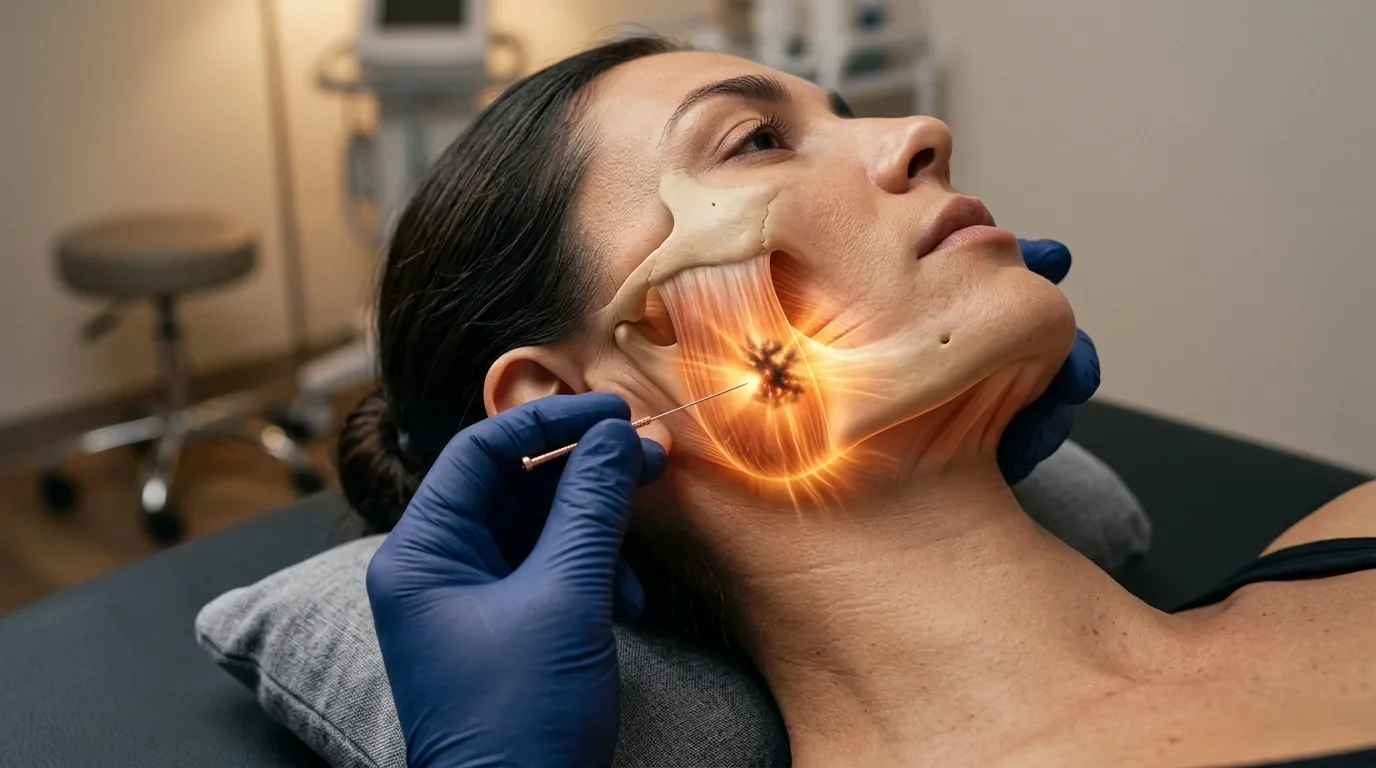
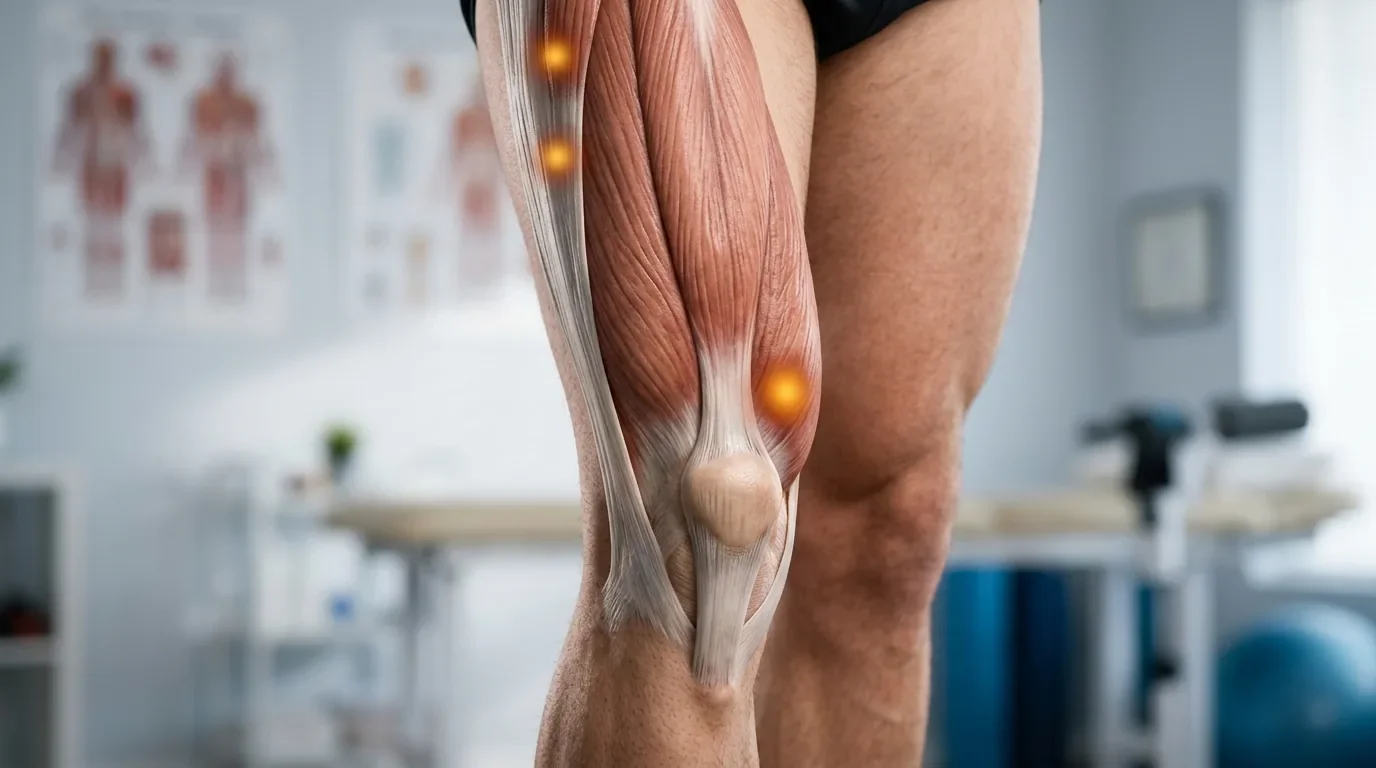
Tennis Elbow, Rotator Cuff Conditions, Wrist Tendinopathy, Trunk Rotation Overuse, and the Trigger Point Anatomy of the Most Common Tennis Injuries
Tennis generates a highly asymmetric load on the dominant arm, shoulder, and trunk, producing the overuse injury patterns that have been collectively labelled "tennis elbow," "tennis shoulder," and "tennis back." Most of these conditions involve trigger points in the muscles upstream from the painful structure, which is why treating the elbow alone for tennis elbow so often produces incomplete recovery.
- Lateral epicondylalgia (tennis elbow) involves both structural changes in the common extensor tendon and trigger points in the extensor carpi radialis brevis, extensor digitorum, and triceps brachii lateral head that sensitize the tendon through biochemical diffusion; treating the tendon without the trigger points leaves the sensitization source unaddressed (Shah et al., 2008).
- The triceps brachii lateral head refers pain directly to the lateral epicondyle, producing a referred pain component to tennis elbow that explains why lateral elbow pain is often greater at rest (when the referred pain dominates) than during gripping (when the structural tendon component is most loaded).
- Rotator cuff trigger points in the infraspinatus, supraspinatus, and subscapularis accumulate from the high-velocity eccentric loading of the serve deceleration phase and contribute to shoulder impingement symptoms in competitive and recreational tennis players alike.
- Trunk rotation in tennis generates trigger points in the thoracolumbar paraspinal muscles and the obliques on both sides, producing the low back and side pain that tennis players commonly experience across a season; asymmetric rotation loading of a single side compound these patterns (Simons et al., 1999).
- Dry needling of upper extremity trigger points produces clinically significant pain reduction and functional improvement for the musculoskeletal conditions common in racquet sport athletes (Kietrys et al., 2013; Vickers et al., 2018).
- Wrist extensor and flexor trigger points contribute to the chronic wrist fatigue and tendinopathy that high-volume players accumulate across a season, and they are distinct from the acute wrist injuries produced by falls or racquet impacts.
Tennis Elbow, Shoulder Pain, or Wrist Tightness Affecting Your Game?
The elbow, shoulder, and wrist conditions common in tennis players consistently involve trigger points in muscles above the painful joint that are generating the sensitization through biochemical diffusion. At Morningside Acupuncture, the assessment identifies the specific upstream muscles driving your symptoms, so treatment addresses the source rather than the symptom location. Schedule for a sports acupuncture assessment.
Schedule NowTennis Elbow: Why the Elbow Is Usually Not the Only Problem
Lateral epicondylalgia is named for where the pain is felt, but the pain generators are usually in the muscle belly above the elbow rather than in the tendon at the elbow. The extensor carpi radialis brevis (ECRB) and extensor digitorum muscles, which attach to the lateral epicondyle via the common extensor tendon, develop trigger points in their belly from the repetitive wrist extension and forearm supination loads of topspin groundstrokes. The biochemical milieu at these trigger points, elevated in substance P and CGRP, diffuses distally to sensitize the common extensor tendon at its attachment on the lateral epicondyle (Shah et al., 2008). The tendon, made hyperalgesic by this diffusion, generates pain on gripping and wrist extension even when the tendon itself has minimal structural pathology.
The triceps brachii lateral head adds a referred pain dimension to tennis elbow that is often overlooked. The lateral head trigger point, located at the mid-posterior upper arm, refers directly to the lateral epicondyle in a pattern that closely mirrors the tender area of tennis elbow. Players with lateral elbow pain that persists at rest as a background ache, not only during gripping, are typically experiencing this referred pain component from the triceps in addition to the tendon sensitization from the forearm extensor trigger points.
| Condition | Primary Trigger Points | Treatment Approach |
|---|---|---|
| Lateral epicondylalgia (tennis elbow) | Extensor carpi radialis brevis, extensor digitorum, triceps lateral head, supinator | Dry needling forearm extensors and triceps; traditional acupuncture for descending inhibitory activation; progressive wrist extensor loading rehabilitation |
| Medial epicondylalgia (golfer's/thrower's elbow in tennis) | Flexor carpi radialis, pronator teres, flexor digitorum superficialis | Dry needling the medial forearm flexors; tendon loading rehabilitation for the common flexor origin |
| Shoulder impingement / serve arm pain | Infraspinatus, subscapularis, supraspinatus, pectoralis minor, serratus anterior | Rotator cuff and scapular stabilizer trigger point assessment; dry needling and scapular strengthening to restore cuff-to-deltoid activation balance |
| Wrist extensor tendinopathy | Extensor carpi radialis longus/brevis, extensor carpi ulnaris | Dry needling the wrist extensor muscle bellies; load management during competitive season |
| Low back pain from trunk rotation | Quadratus lumborum, iliocostalis thoracis, external oblique (dominant side), multifidus | Paraspinal and QL trigger point dry needling; rotational loading assessment; hip mobility work to reduce lumbar compensatory rotation |
| Knee pain from lateral movements | Vastus lateralis, TFL, gluteus medius | IT band complex trigger point dry needling; hip stabilizer strengthening to reduce lateral knee loading on split-steps and direction changes |
| Hip pain from serve rotation | Piriformis, quadratus femoris, iliacus | Deep hip rotator trigger point dry needling; hip flexor length restoration for serve mechanics |
Serve Mechanics and Rotator Cuff Trigger Points
The tennis serve is one of the highest-demand shoulder movements in sport: the shoulder internally rotates at up to 2,000 degrees per second in the acceleration phase, and the posterior rotator cuff decelerates this rotation at equivalent velocities in the follow-through. The infraspinatus, teres minor, and posterior deltoid absorb the deceleration forces on every serve, accumulating fatigue that generates trigger points across a high-volume serving session.
Infraspinatus trigger points refer pain to the anterior shoulder and down the lateral arm, producing the anterior shoulder aching that players typically attribute to impingement or bicipital tendinopathy. The subscapularis generates trigger points from the internal rotation acceleration demand that refer to the posterior shoulder and the medial scapular border. Pectoralis minor trigger points from the forward arm carriage position between points contribute to anterior shoulder position changes that reduce the subacromial space and compound the impingement symptom picture.
Dry needling the rotator cuff trigger points, combined with scapular stabilization work, produces faster symptom reduction for serve-related shoulder pain than impingement-focused rehabilitation alone because the trigger point sensitization component is addressed alongside any structural subacromial narrowing.
Related Dry Needling for Shoulder Pain: How Trigger Point Treatment Addresses Rotator Cuff ConditionsShoulder Pain That Gets Worse as a Match Progresses or After High-Volume Serving?
Progressive within-session shoulder pain in tennis is characteristic of rotator cuff trigger points that worsen with cumulative loading, as the sensitizing biochemical milieu at the trigger points builds across a long match or serving session. At Morningside, the rotator cuff muscles are evaluated as a standard part of any tennis shoulder assessment. Schedule for a trigger point assessment and dry needling.
Schedule NowSports Acupuncture for Tennis Players in New York City
At Morningside Acupuncture, we are the highest-rated acupuncture and dry needling clinic in New York City with over 500 five-star Google reviews. Tennis elbow, rotator cuff conditions, wrist tendinopathy, and the trunk and lower extremity injuries that accumulate across a competitive season all respond to the targeted trigger point dry needling approach at Morningside. Whether you play recreationally or compete regularly, schedule to address the trigger points that are limiting your game and putting you at risk for chronic injury.
Schedule NowFrequently Asked Questions
I've had tennis elbow for two years. Can acupuncture still help?
Yes. Chronic tennis elbow that has persisted despite standard treatments, including cortisone injections, bracing, and physical therapy loading protocols, typically has a significant trigger point sensitization component that those treatments have not addressed. Two or more years of sensitization means the central nervous system has also amplified the pain signal through central sensitization, so a combination of local trigger point dry needling and traditional acupuncture for descending inhibitory pathway activation often produces the improvement that previous treatments did not. Many of Morningside's tennis elbow patients have had the condition for more than a year when they first present.
Does playing through tennis elbow make it worse?
Playing through active tennis elbow without addressing the trigger point source tends to perpetuate and worsen the condition because each session re-loads the sensitized common extensor tendon while the trigger points in the extensor muscle belly continue to generate the sensitizing biochemical milieu. Modifying technique (reducing wrist snap on groundstrokes, using a looser grip tension), reducing volume temporarily, and treating the trigger points concurrently produces better outcomes than either rest alone or continuing to play without treatment.
Can acupuncture help with preventing tennis injuries, not just treating them?
Proactive trigger point assessment and treatment is one of the best injury prevention tools available for competitive tennis players. Many overuse injuries begin as latent trigger points that accumulate silently before crossing the threshold of active referral and symptom generation. Regular in-season sessions (every 2 to 4 weeks at high training volumes) identify and deactivate developing trigger points before they become clinically significant, keeping the forearm extensors, rotator cuff, and thoracolumbar muscles clear of the sensitized taut bands that generate injury when training load increases.
How many sessions does it take to treat tennis elbow with acupuncture at Morningside?
Acute tennis elbow from a recent increase in playing volume typically responds within 3 to 6 sessions. Chronic tennis elbow that has been present for more than six months, or that has involved cortisone injection and is now in a sensitized state, usually requires 6 to 10 sessions for sustained improvement. Concurrent load management, progressive tendon loading exercises, and any technique modifications identified as contributing to the overload are part of the treatment plan alongside trigger point dry needling.
References
- Simons, D. G., Travell, J. G., & Simons, L. S. (1999). Travell & Simons' Myofascial Pain and Dysfunction: The Trigger Point Manual (2nd ed.). Williams & Wilkins.
- Shah, J. P., Danoff, J. V., Desai, M. J., Parikh, S., Nakamura, L. Y., Phillips, T. M., & Gerber, L. H. (2008). Biochemicals associated with pain and inflammation are elevated in sites near to and remote from active myofascial trigger points. Archives of Physical Medicine and Rehabilitation, 89(1), 16-23. https://doi.org/10.1016/j.apmr.2007.10.018
- Kietrys, D. M., Palombaro, K. M., Azzaretto, E., Hubler, R., Schaller, B., Schlussel, J. M., & Tucker, M. (2013). Effectiveness of dry needling for upper-quarter myofascial pain: A systematic review and meta-analysis. Journal of Orthopaedic & Sports Physical Therapy, 43(9), 620-634. https://doi.org/10.2519/jospt.2013.4668
- Vickers, A. J., Vertosick, E. A., Lewith, G., MacPherson, H., Foster, N. E., Sherman, K. J., Irnich, D., Witt, C. M., & Linde, K. (2018). Acupuncture for chronic pain: Update of an individual patient data meta-analysis. Journal of Pain, 19(5), 455-474. https://doi.org/10.1016/j.jpain.2017.11.005
- Zhao, Z. Q. (2008). Neural mechanism underlying acupuncture analgesia. Progress in Neurobiology, 85(4), 355-375. https://doi.org/10.1016/j.pneurobio.2008.05.004
Disclaimer: This web site is intended for educational and informational purposes only. Reading this website does not constitute providing medical advice or any professional services. This information should not be used for diagnosing or treating any health issue or disease. Those seeking medical advice should consult with a licensed physician. Seek the advice of a medical doctor or other qualified health professional for any medical condition. If you think you have a medical emergency, call 911 or go to the emergency room. No acupuncturist-patient relationship is created by reading this website or using the information. Morningside Acupuncture PLLC and its employees and contributors do not make any express or implied representations with respect to the information on this site or its use. For any legal interpretation of scope of practice in your state, consult a licensed attorney or regulatory authority.
Read more from our blog