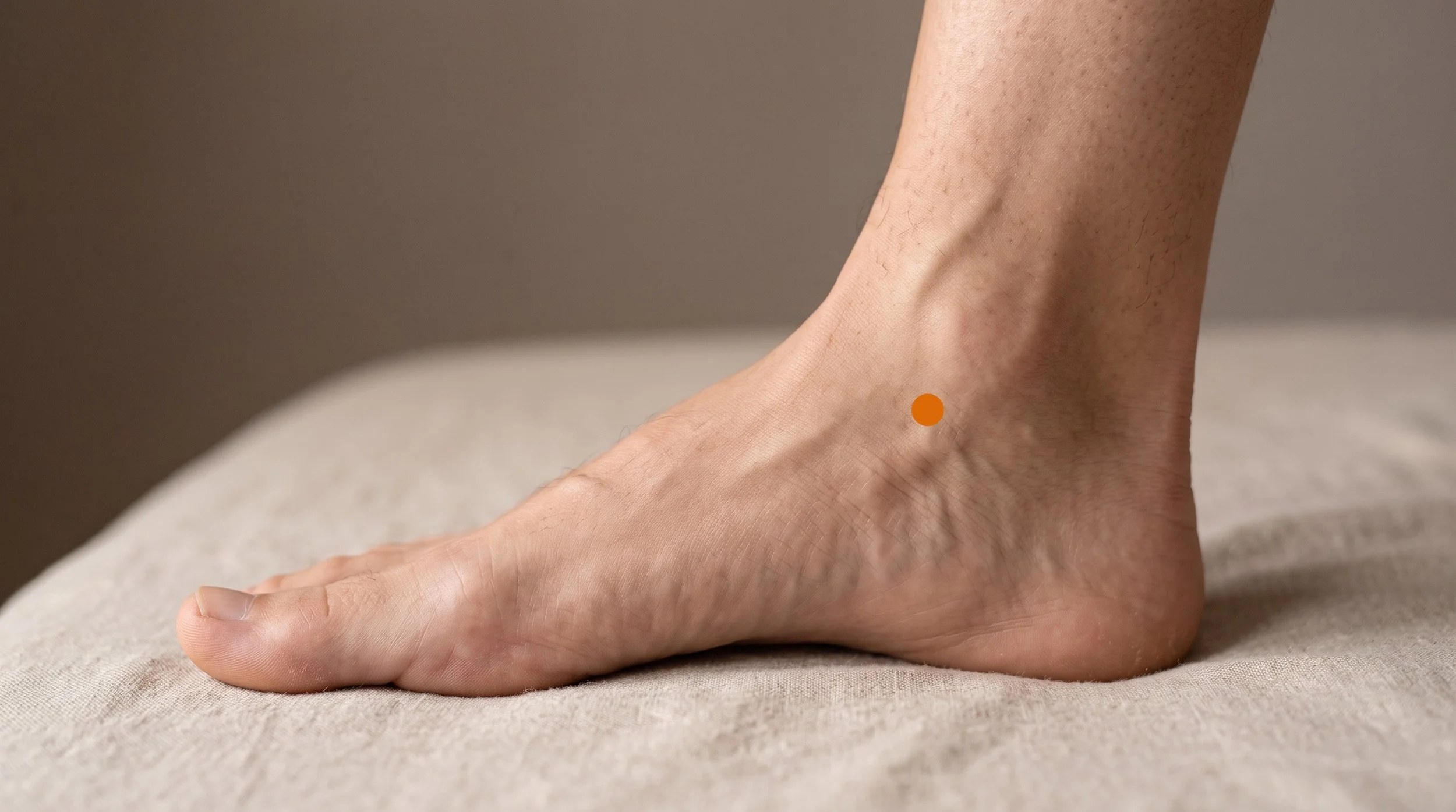
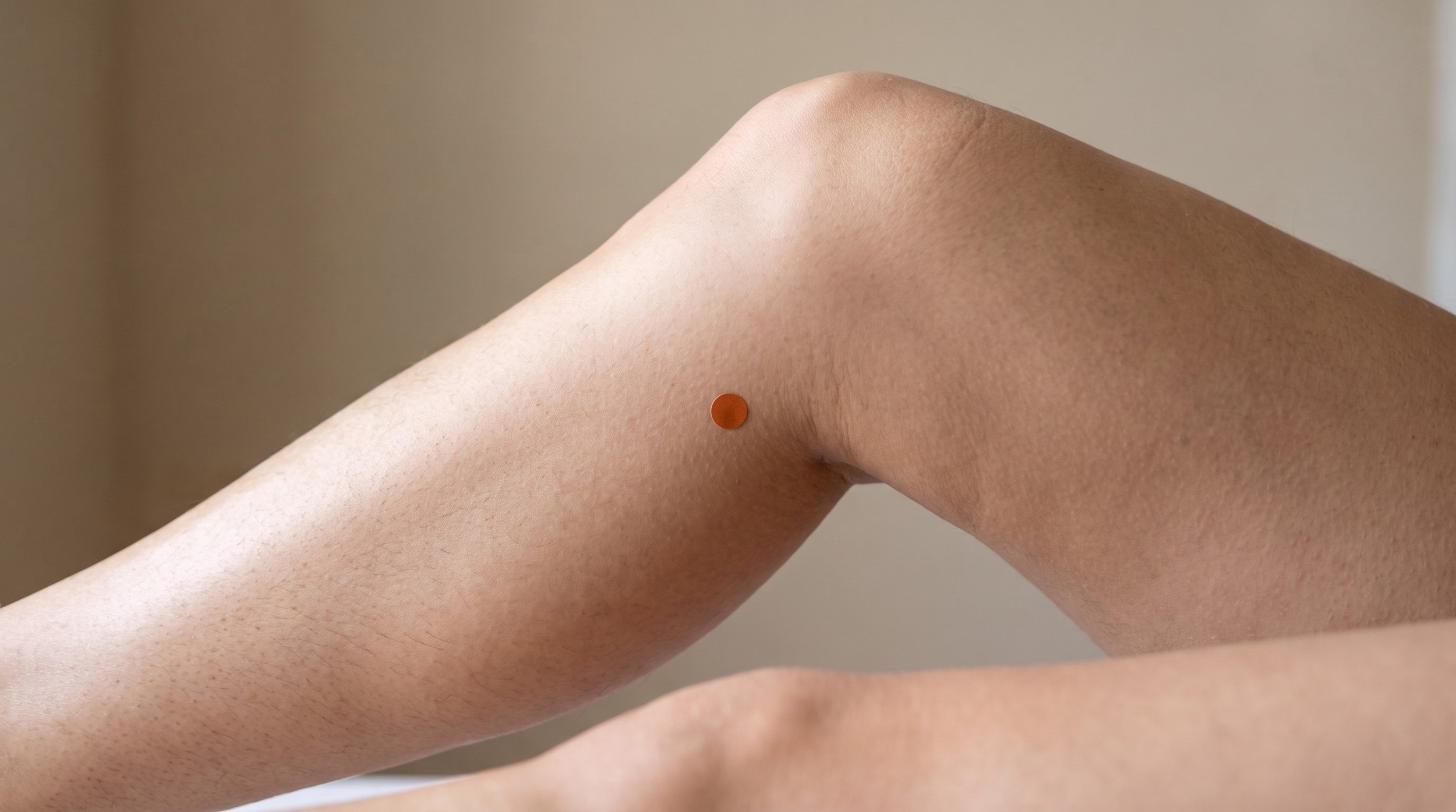
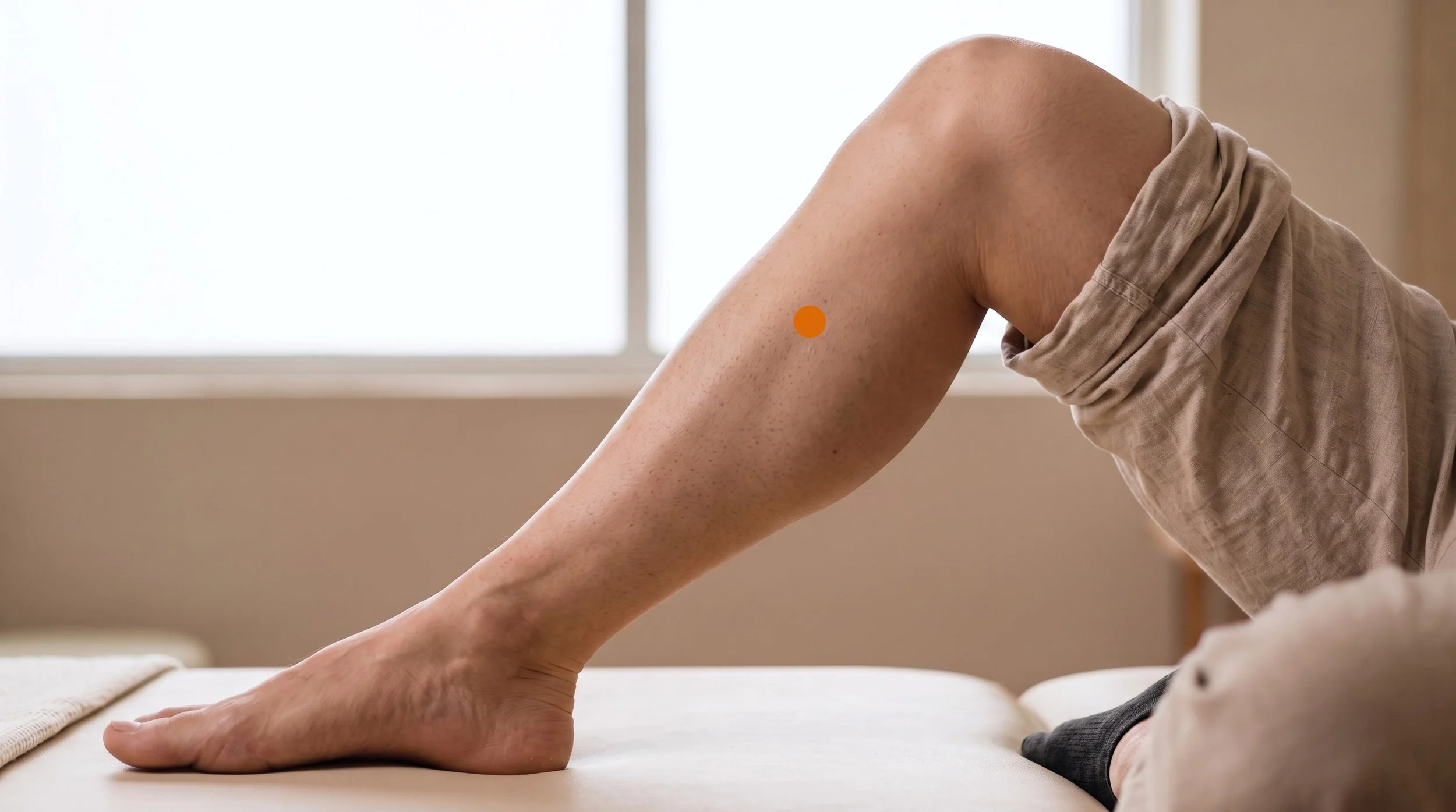
SP7 Acupuncture Point (Lougu)
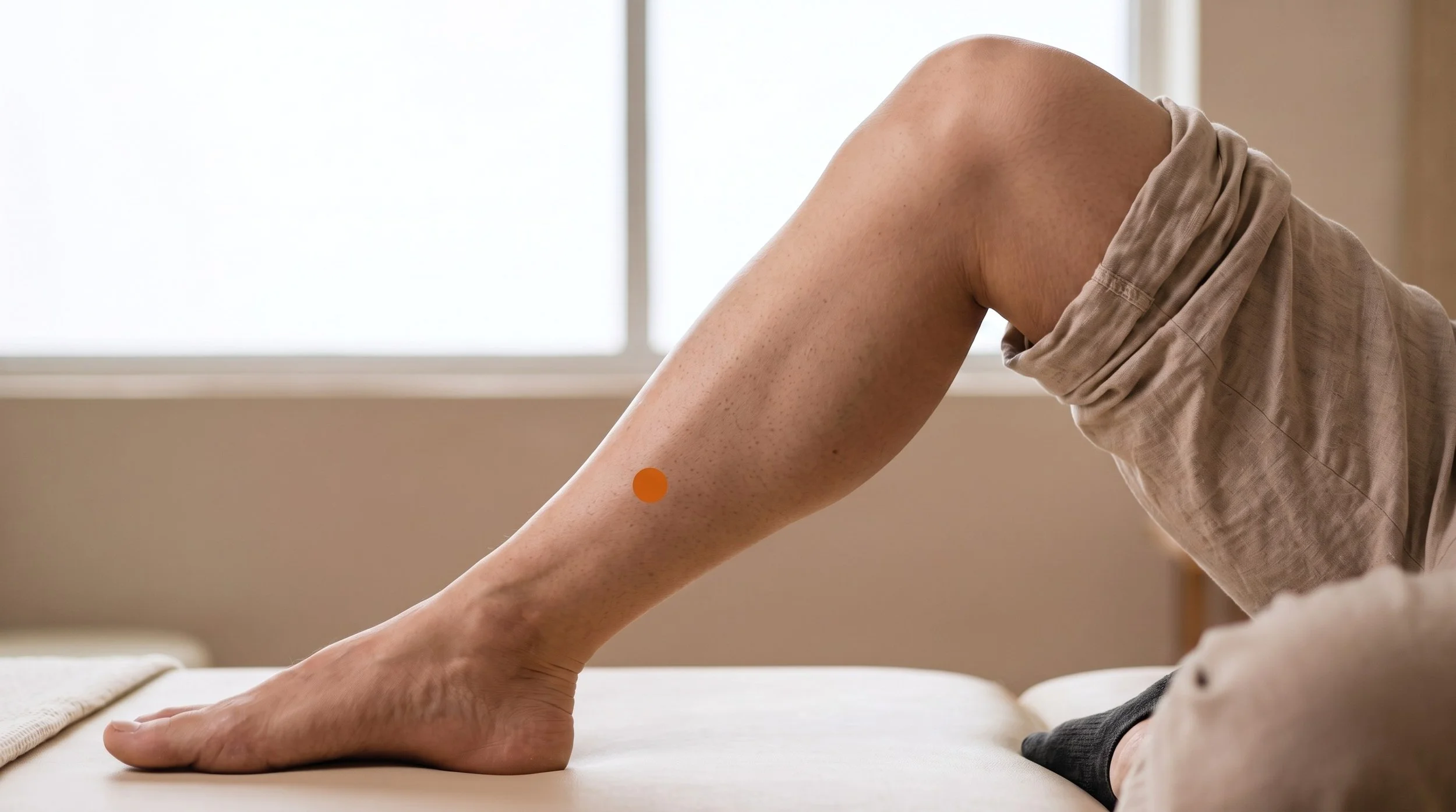
SP7 Acupuncture Point (Lougu)
The Leaking Valley Above the Ankle: Anatomy, Mechanism, and Why This Quiet Spleen Channel Point Belongs in Medial Shin and Calf Treatment
SP7, known in Chinese as Lougu and usually translated as Leaking Valley or Seeping Valley, sits in the soft groove behind the medial border of the tibia, roughly one handbreadth (3 cun) above the better known SP6. The name describes the terrain rather than any function: a valley shaped depression between the sharp edge of the shin bone and the bulk of the calf muscles. It has never been one of the busiest points in the classical repertoire, yet the sp7 acupuncture point earns its place in a modern clinic for a simple anatomical reason.
The exact strip of tissue it occupies is where runners, walkers and standing-all-day New Yorkers develop deep medial shin and calf pain, and it sits on the same medial leg corridor (SP6 up to SP9) that traditional texts reached for when patients complained of abdominal fullness, gurgling and swollen legs.
- Location and layers: spleen 7 is found 3 cun above SP6 in the depression just behind the medial crest of the tibia, with the needle passing through skin and subcutaneous tissue into soleus and, more deeply, flexor digitorum longus (Deadman et al., 2007; Cheng, 1987). This is loaded tissue in anyone who runs, hikes stairs or stands for long shifts.
- Traditional attributions: classical sources credit Lougu with fortifying the spleen, resolving dampness, promoting urination and dispersing swelling, and list abdominal distension, borborygmus, loose stools, edema, difficult urination and heaviness or weakness of the leg among its indications (Deadman et al., 2007; Cheng, 1987). We present these as historical categories, not as claims about fluid physiology.
- Mechanism: needling here recruits saphenous nerve territory superficially and deep calf muscle afferents that enter the cord around the L4 to S1 segments, which is the same segmental neighborhood that carries pain from the medial shin, calf and ankle, giving a plausible route for local and regional pain modulation (Zhao, 2008).
- Distant effects: hindlimb needling has been shown in animal work to change gut motility through somatoautonomic reflex pathways, which offers a modern reading of why medial leg points were traditionally used for abdominal symptoms (Iwa et al., 2006; Uchida et al., 2017).
- Research picture: no trial has isolated SP7, so the honest framing is indirect. Large individual patient data analyses support acupuncture for chronic musculoskeletal pain (Vickers et al., 2018), a small case series described acupuncture for shin splints (Riegleman & Creech, 2021), and a randomized trial found dry needling of soleus trigger points helped pain and dorsiflexion in athletes with medial tibial stress syndrome (Singh et al., 2025).
- De qi at SP7 is usually a deep, dull, slightly heavy ache that spreads up toward the inner knee or down toward the inner ankle, and clinicians often feel the tissue soften around the needle before the patient reports the calf letting go.
Struggling With Medial Shin Pain That Comes Back Every Training Cycle?
Shin and calf pain rarely stays fixed with rest alone because the deep calf compartment keeps getting reloaded the moment you run again. At Morningside Acupuncture we use SP7 alongside dry needling of soleus, flexor digitorum longus and tibialis posterior to reduce local muscle tone and calm the segmental input driving the pain. Treatment is paired with loading advice so you can return to mileage without simply restarting the cycle. Schedule a visit and let's map out where your shin pain is actually coming from.
Schedule NowAnatomy of SP7: Why the Posterior Border of the Tibia Is Such an Important Location
Slide your thumb along the inner edge of your shin bone and you will feel it drop off into a soft trough. That trough is the sp 7 location. Under the skin and a thin layer of subcutaneous fat, the needle enters the medial edge of soleus, the broad postural muscle that works every time you stand, walk, climb subway stairs or push off in a run. Deeper still lies flexor digitorum longus, one of the deep compartment muscles that controls the toes and helps support the arch.
Both of these muscles are chronically busy in city life, and both refer pain into the medial shin, calf and inner ankle when they develop taut bands and trigger points (Simons et al., 1999). That overlap is why a point named after a valley in a classical text keeps showing up in modern shin splint treatment.
The neurology here is straightforward and clinically useful. Superficially, the skin over SP7 is supplied by branches of the saphenous nerve, while the muscles beneath draw motor and sensory supply from the tibial nerve, with input converging on roughly the L4 to S1 spinal segments. Those are the same segments that receive nociceptive traffic from the medial tibial periosteum, the deep calf compartment and the inner ankle.
When needle stimulation and the small twitch or ache of de qi enter that shared segmental pool, they engage the spinal and supraspinal machinery associated with acupuncture analgesia, including local inhibitory circuits and descending pathways that use endogenous opioids, serotonin and noradrenaline (Zhao, 2008). In plain terms, you are speaking to the pain system in its own language and at its own address.
Deep to the point runs the posterior tibial neurovascular bundle, so the practical rule is respect rather than fear. Standard technique is perpendicular or oblique insertion of about 1 to 1.5 cun, angled along the tissue plane behind the tibia rather than driven straight toward the bone or the deep vessels (Deadman et al., 2007). Sharp, electric or radiating sensations mean the needle should be withdrawn and redirected.
One historical wrinkle is worth noting: Deadman and colleagues record that several classical texts marked this point as contraindicated to moxibustion, while the standard modern Chinese text lists moxibustion as applicable (Deadman et al., 2007; Cheng, 1987). We simply follow the more cautious classical convention and needle it.
Related Flexor Digitorum Longus Trigger Points Related Calf Pain Treatment NYCSP7 at a Glance: Classification, Location, and Clinical Use
| Category | Detail |
|---|---|
| Traditional Name | Lougu (Leaking Valley, also translated as Seeping or Dripping Valley) |
| Channel Classification | Spleen channel of the foot taiyin, lower leg region, between SP6 and SP9 |
| Point Categories | No five-shu, luo-connecting, xi-cleft, hui-meeting or extraordinary vessel designation appears in the reference sources; SP7 is a regular channel point of the spleen channel on the medial lower leg. Deadman and colleagues note that several classical texts list it as contraindicated to moxibustion. |
| Precise Location | Medial lower leg, 3 cun (about one handbreadth) directly above SP6, in the depression just posterior to the medial crest of the tibia, on the line from the tip of the medial malleolus toward SP9 |
| Tissue Stimulated | Skin and subcutaneous tissue over the medial tibial border, medial fibers of soleus, and deeper flexor digitorum longus, with saphenous nerve supply superficially and tibial nerve supply to the deep muscles |
| Needle Depth / Direction | Perpendicular or oblique insertion 1 to 1.5 cun, angled along the plane behind the tibia; avoid driving toward the deep posterior tibial neurovascular bundle |
| De Qi Sensation | Deep, dull, heavy ache in the calf that may spread toward the inner knee or inner ankle, sometimes with a brief muscular twitch when a taut band in soleus is engaged |
| Primary Clinical Uses | Medial shin and calf pain, deep calf tightness and leg heaviness, and traditionally abdominal fullness, borborygmus, loose stools, difficult urination and swelling of the ankle |
| Common Point Combinations |
|
Deadman, Al-Khafaji and Baker note in A Manual of Acupuncture that SP7 was never a heavily used point, yet it carried a distinctive and rather specific reputation. Traditionally it was said to fortify the spleen, resolve dampness, promote urination and disperse swelling, with indications spanning abdominal distension, intestinal rumbling, diarrhea, painful belching, edema, difficult urination, swollen ankles, weakness or paralysis of the legs and knee pain.
The commentary that stands out concerns wasting of the muscles despite a normal appetite, a picture Li Dong-yuan discussed in his writing on the spleen and stomach, where hidden stomach heat drives a large appetite while an underperforming spleen fails to translate food into flesh. Some later authors added grief and sadness, and losses that weaken the body, to the picture. All of this is traditional attribution rather than physiology, but the pattern is striking for how coherently it hangs together: a point named for leakage, gathered around symptoms of things escaping or failing to be held.
Why SP7 Is Used for Abdominal Fullness and Leg Heaviness, Not Just Shin Pain
Patients are often surprised that a point on the inner calf gets used for bloating, gurgling or that end-of-day sensation of heavy, puffy legs. The first part of the answer is local and mechanical. The deep calf compartment is a working pump: soleus and the deep flexors contract with every step and help move venous blood and lymph back up the leg. When those muscles are tight, guarded or simply underused during a day of sitting, the leg feels heavy and the medial shin gets tender.
Needling into that tissue reduces muscle tone and changes local blood flow, and it feeds afferent input into the L4 to S1 segments that also serve the ankle and lower leg, which is a familiar route for regional pain relief (Zhao, 2008).
The abdominal side of the story runs through the autonomic nervous system rather than through any channel of flowing energy. Somatic stimulation of the limbs can reflexively alter visceral function, a pathway studied for decades and summarized as the somatoautonomic reflex (Uchida et al., 2017). Experimental work has shown that electroacupuncture at a hindlimb point can accelerate colonic motility in conscious animals through a parasympathetic pathway (Iwa et al., 2006).
That does not prove SP7 specifically changes anyone's digestion, and it is a long way from a rat colon to a bloated human abdomen. It does, however, give a testable modern reading of why classical authors kept pairing medial leg points with abdominal and urinary complaints, and why patients frequently report a settled, quieter gut after a lower limb treatment.
In clinic we hold both ideas loosely. SP7 is used with confidence as a local and segmental point for medial shin and calf pain, where the anatomy is obvious and the reasoning is direct. Its traditional use for fullness, rumbling and fluid retention is offered as part of a broader treatment rather than as a standalone promise, and always alongside appropriate medical evaluation when swelling or digestive change is new, one sided or progressive.
What the Research Shows for SP7
There is no clinical trial that isolates SP7, and any honest discussion has to start there. Acupuncture research almost always tests multi-point protocols, so what we can reasonably say is that SP7 sits inside treatment approaches that have been studied, in a region of the body where needling has been examined for shin and calf pain, and on a channel used in trials of abdominal complaints. The evidence below should be read as context for the whole treatment rather than proof of a single point.
| Study | Type | Focus | Key Finding |
|---|---|---|---|
| Vickers et al., 2018 | Individual patient data meta-analysis | Acupuncture for chronic musculoskeletal, headache and osteoarthritis pain | Acupuncture was associated with modest but persistent improvements over both sham and usual care, supporting its use as a reasonable option for chronic pain. |
| Singh et al., 2025 | Randomized controlled trial | Dry needling of soleus trigger points in athletes with medial tibial stress syndrome | Needling of the soleus was reported to improve pain and ankle dorsiflexion in the short term, which is relevant given the tissue SP7 overlies. |
| Riegleman & Creech, 2021 | Case series | Acupuncture technique for medial tibial stress syndrome in a military clinic | The authors described meaningful short-term pain reduction, though a small uncontrolled series cannot establish effectiveness. |
| Manheimer et al., 2012 | Cochrane systematic review | Acupuncture for irritable bowel syndrome | Acupuncture was not clearly superior to sham for symptom severity, although it compared favorably with usual care in pragmatic settings. |
| Uchida et al., 2017 | Narrative review of experimental studies | Somatoautonomic reflex responses to somatic stimulation | Needling and related somatic stimulation can reflexively modulate visceral and autonomic activity, mostly demonstrated in anesthetized animals. |
| Iwa et al., 2006 | Animal experimental study | Electroacupuncture at a hindlimb point and colonic motility | Hindlimb stimulation increased distal colonic motility through a parasympathetic pathway in conscious rats. |
| Zhao, 2008 | Mechanistic review | Neural mechanisms of acupuncture analgesia | Analgesic effects are attributed to segmental inhibition and descending control involving opioid, serotonergic and noradrenergic systems. |
Heavy, Swollen Legs and a Bloated Belly After Long Days on Your Feet?
The medial leg corridor from SP6 through SP7 to SP9 has been used for centuries for leg heaviness, abdominal fullness and gurgling, and it remains a comfortable, low-risk area to needle. We combine the lougu point with ST36 and abdominal work, then look at your breathing, hydration and standing patterns rather than treating the leg in isolation. Sessions are calm, quiet and designed so you leave feeling lighter. Book an appointment and we'll build a plan around how your body actually feels at 6pm.
Schedule NowSP7 in the Context of Trigger Point Work
Acupuncture, defined simply as the use of an acupuncture needle, covers hundreds of styles, and dry needling is one of them. That matters at SP7 because the classical point and a common myofascial target sit in nearly the same place. The medial edge of soleus and the underlying flexor digitorum longus both develop taut bands that refer pain into the medial shin, calf and inner ankle, which is exactly the pattern most patients describe when they walk in with shin splints (Simons et al., 1999). When we needle here we are usually treating both maps at once: the point as classical texts located it, and the muscle as palpation finds it.
In practice a session for medial shin pain rarely uses SP7 alone. We assess the whole chain, then needle soleus and gastrocnemius for calf tightness, flexor digitorum longus and tibialis posterior for inner ankle and arch symptoms, and add points along the spleen channel corridor from SP6 up toward SP9 to broaden the segmental input.
A randomized trial of soleus dry needling in athletes with medial tibial stress syndrome reported short-term gains in pain and dorsiflexion (Singh et al., 2025), and a small case series described acupuncture for the same condition (Riegleman & Creech, 2021), so the tissue-level rationale has at least preliminary support. Needling is then paired with calf loading, footwear review and a sane return-to-running plan, because the tissue has to be built back up, not just quieted down.
SP7 Shin and Calf Pain Treatment at NYC's Highest-Rated Acupuncture Clinic
Morningside Acupuncture is the highest-rated acupuncture and dry needling clinic in New York City with over 500 five-star Google reviews, and our approach blends classical point selection with orthopedic assessment. SP7 is one of several tools we use for medial shin pain, calf tightness and post-run leg heaviness, always chosen based on what your exam shows. You get a licensed acupuncturist who explains the reasoning behind every needle. Schedule your session and see what a precise, anatomy-first treatment feels like.
Schedule NowFrequently Asked Questions
What does SP7 feel like when needled?
Most people feel a dull, heavy, slightly spreading ache deep in the calf rather than a sharp sting. That sensation, called de qi, may travel toward the inner knee or down to the inner ankle. If soleus has an active taut band you may notice a quick involuntary twitch, which is normal and usually followed by the muscle softening. Sharp, electric or shooting sensations are not the goal and should be reported right away so the needle can be adjusted.
Why needle the calf for abdominal fullness instead of the abdomen itself?
Traditional practice grouped medial leg points with abdominal and urinary complaints long before there was a nervous system explanation for it. The modern reading is that somatic stimulation of the limbs can reflexively influence autonomic activity and gut motility through spinal and vagal pathways, a mechanism studied under the heading of somatoautonomic reflexes (Uchida et al., 2017; Iwa et al., 2006). Practically speaking, leg points are comfortable, easy to access and easy to combine with abdominal points, so we often use both in the same treatment rather than choosing one.
Can I press SP7 myself between sessions?
Yes, and it is an easy one to find. Sit with your ankle resting on the opposite knee, run your thumb up the inner edge of your shin bone about a handbreadth above SP6 (which is four finger widths above the inner ankle bone), and slide just off the bone into the soft groove behind it. Press in slowly at moderate pressure until you feel a dull ache, then hold for 30 to 60 seconds, release, and repeat two or three times per leg. Doing this once or twice a day, or after long walks and runs, is plenty. Ease off if the pressure is sharp, if the area is bruised or swollen, or if you notice new one-sided leg swelling, which should be evaluated by a physician before you press on it at all.
Is SP7 safe to needle?
In trained hands it is a routine and well tolerated point. The main structure to respect is the deep posterior tibial neurovascular bundle, which is why the needle is angled along the tissue plane behind the tibia to a depth of about 1 to 1.5 cun rather than driven straight in (Deadman et al., 2007). Mild post-needling soreness in the calf for a day is common. Clinicians avoid needling over broken skin, active infection, cellulitis or a suspected deep vein thrombosis, and patients on anticoagulants should mention it so technique can be adjusted. Deadman and colleagues also note that several classical texts listed this point as contraindicated to moxibustion, a convention many practitioners still follow.
Where exactly is SP7 located?
SP7 is on the medial lower leg, 3 cun (roughly the width of your four fingers plus a bit, or one handbreadth) directly above SP6, in the depression just behind the medial crest of the tibia. Another way to find it is along the line running from the tip of the inner ankle bone toward SP9 at the top of the calf, about 6 cun above the malleolus. The easiest landmark is bone: find the sharp inner edge of the shin, then step just off it into the soft trough where the calf muscle begins.
References
- Deadman, P., Al-Khafaji, M., & Baker, K. (2009). A manual of acupuncture. Journal of Chinese Medicine Publications.
- Cheng, X. (Ed.). (1999). Chinese acupuncture and moxibustion (Rev. ed.). Foreign Languages Press.
- Cunningham, P. M. (2000). Acupuncture points: A practical guide to classical and modern usage. Odyssey Press.
- Simons, D. G., Travell, J. G., & Simons, L. S. (1999). Travell & Simons' myofascial pain and dysfunction: The trigger point manual, Vol. 1: Upper half of body (2nd ed.). Williams & Wilkins.
- Vickers, A. J., Vertosick, E. A., Lewith, G., MacPherson, H., Foster, N. E., Sherman, K. J., Irnich, D., Witt, C. M., & Linde, K. (2018). Acupuncture for chronic pain: Update of an individual patient data meta-analysis. Journal of Pain, 19(5), 455-474. https://doi.org/10.1016/j.jpain.2017.11.005
- Zhao, Z. Q. (2008). Neural mechanism underlying acupuncture analgesia. Progress in Neurobiology, 85(4), 355-375. https://doi.org/10.1016/j.pneurobio.2008.05.004
- Manheimer, E., Cheng, K., Wieland, L. S., Min, L. S., Shen, X., Berman, B. M., & Lao, L. (2012). Acupuncture for treatment of irritable bowel syndrome. Cochrane Database of Systematic Reviews, 2012(5), CD005111. https://doi.org/10.1002/14651858.CD005111.pub3
- Singh, A., Wadhwani, N., & Sharma, M. (2025). Short-term effectiveness of dry needling on pain and ankle range of motion in athletes with medial tibial stress syndrome: A randomized control trial. Journal of Manual & Manipulative Therapy, 33(1), 47-53. https://doi.org/10.1080/10669817.2024.2384611 [VERIFY BEFORE PUBLISHING]
- Riegleman, D. L., & Creech, J. A. (2021). Successful treatment of medial tibial stress syndrome with interosseous membrane acupuncture: A case series. Medical Acupuncture, 33(2), 150-152. https://doi.org/10.1089/acu.2020.1448
- Uchida, S., Kagitani, F., & Sato-Suzuki, I. (2017). Somatoautonomic reflexes in acupuncture therapy: A review. Autonomic Neuroscience, 203, 1-8. https://doi.org/10.1016/j.autneu.2016.11.001
- Iwa, M., Matsushima, M., Nakade, Y., Pappas, T. N., Fujimiya, M., & Takahashi, T. (2006). Electroacupuncture at ST-36 accelerates colonic motility and transit in freely moving conscious rats. American Journal of Physiology: Gastrointestinal and Liver Physiology, 290(2), G285-G292. https://doi.org/10.1152/ajpgi.00068.2005
Disclaimer: This web site is intended for educational and informational purposes only. Reading this website does not constitute providing medical advice or any professional services. This information should not be used for diagnosing or treating any health issue or disease. Those seeking medical advice should consult with a licensed physician. Seek the advice of a medical doctor or other qualified health professional for any medical condition. If you think you have a medical emergency, call 911 or go to the emergency room. No acupuncturist-patient relationship is created by reading this website or using the information. Morningside Acupuncture PLLC and its employees and contributors do not make any express or implied representations with respect to the information on this site or its use. For any legal interpretation of scope of practice in your state, consult a licensed attorney or regulatory authority.
Read more from our blog