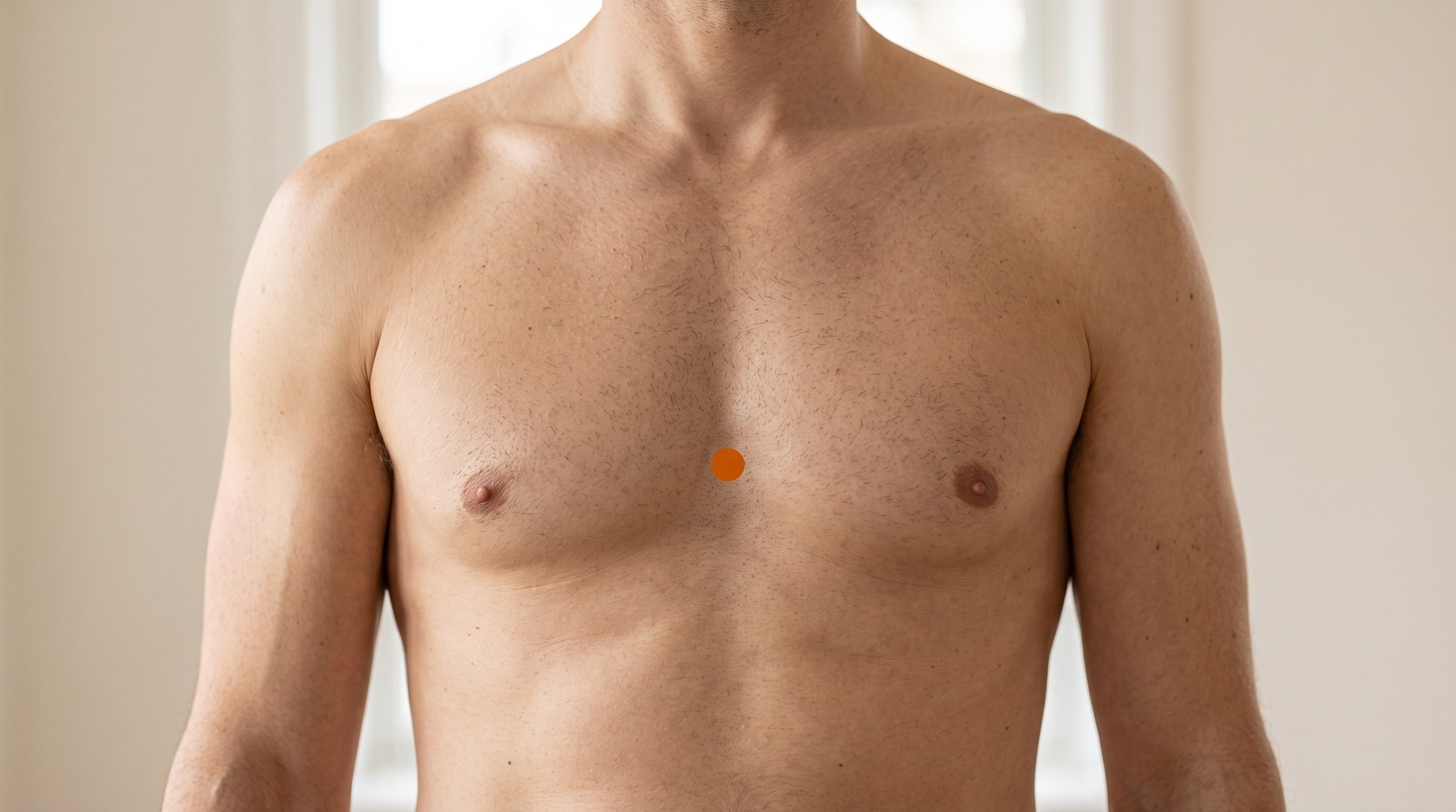
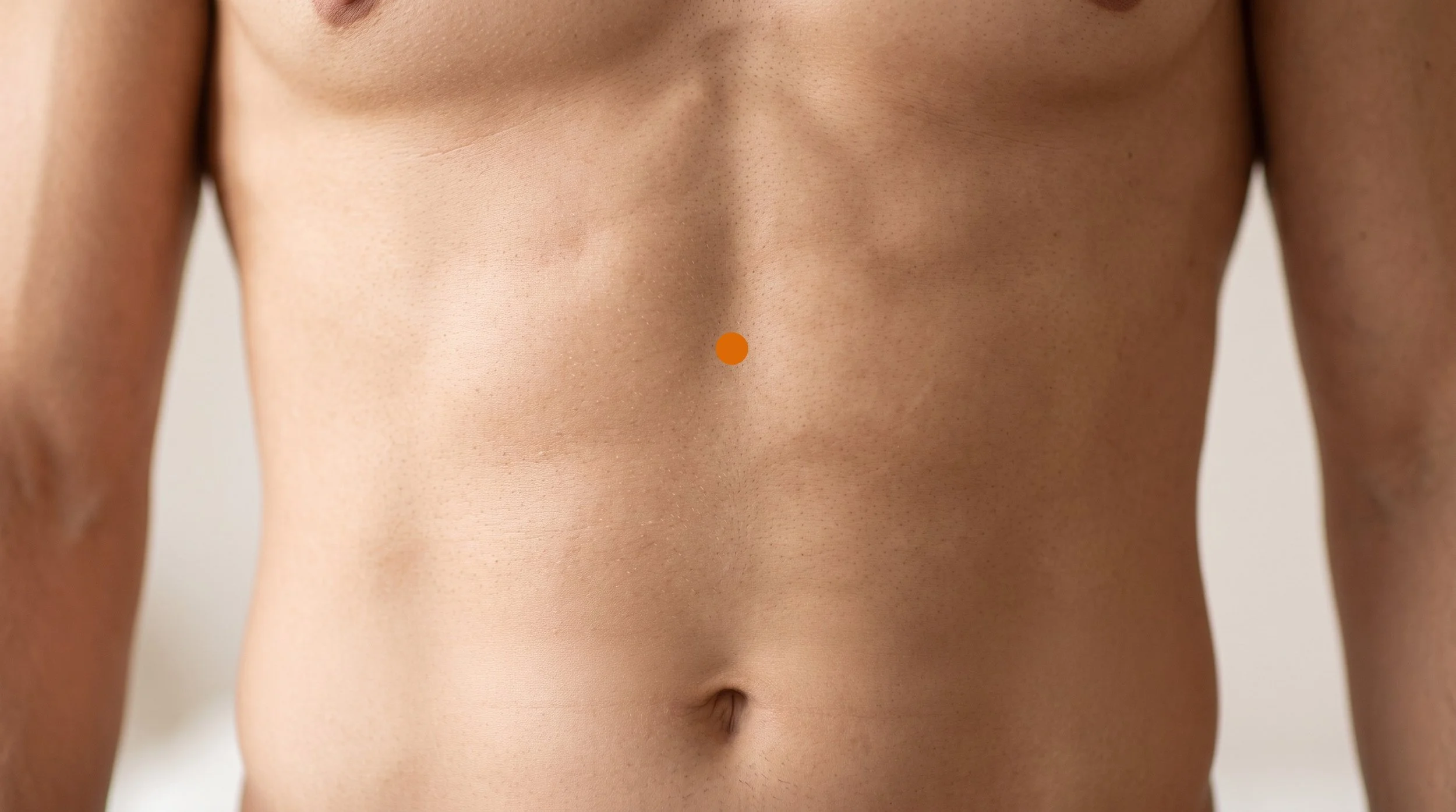
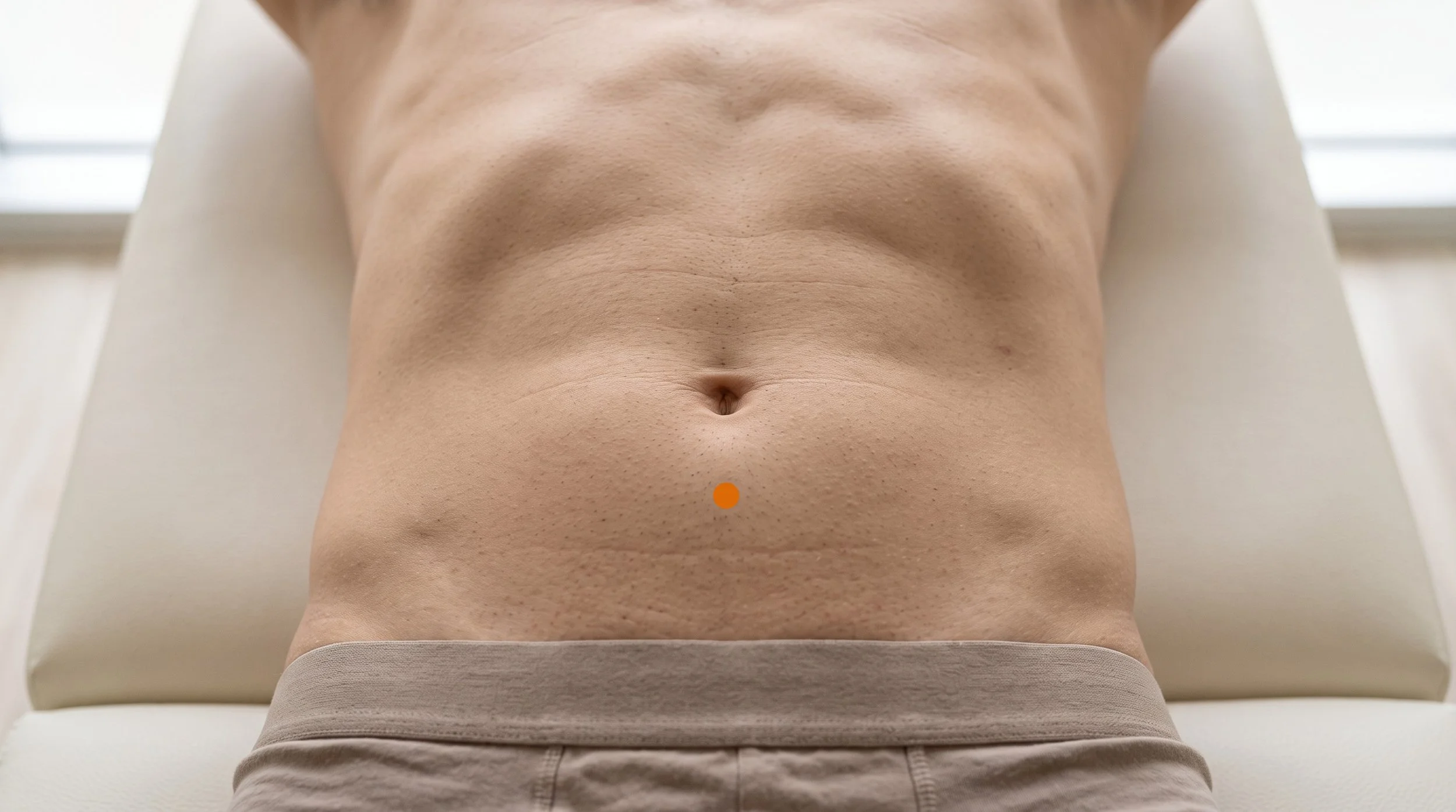
CV4 Acupuncture Point (Guanyuan)
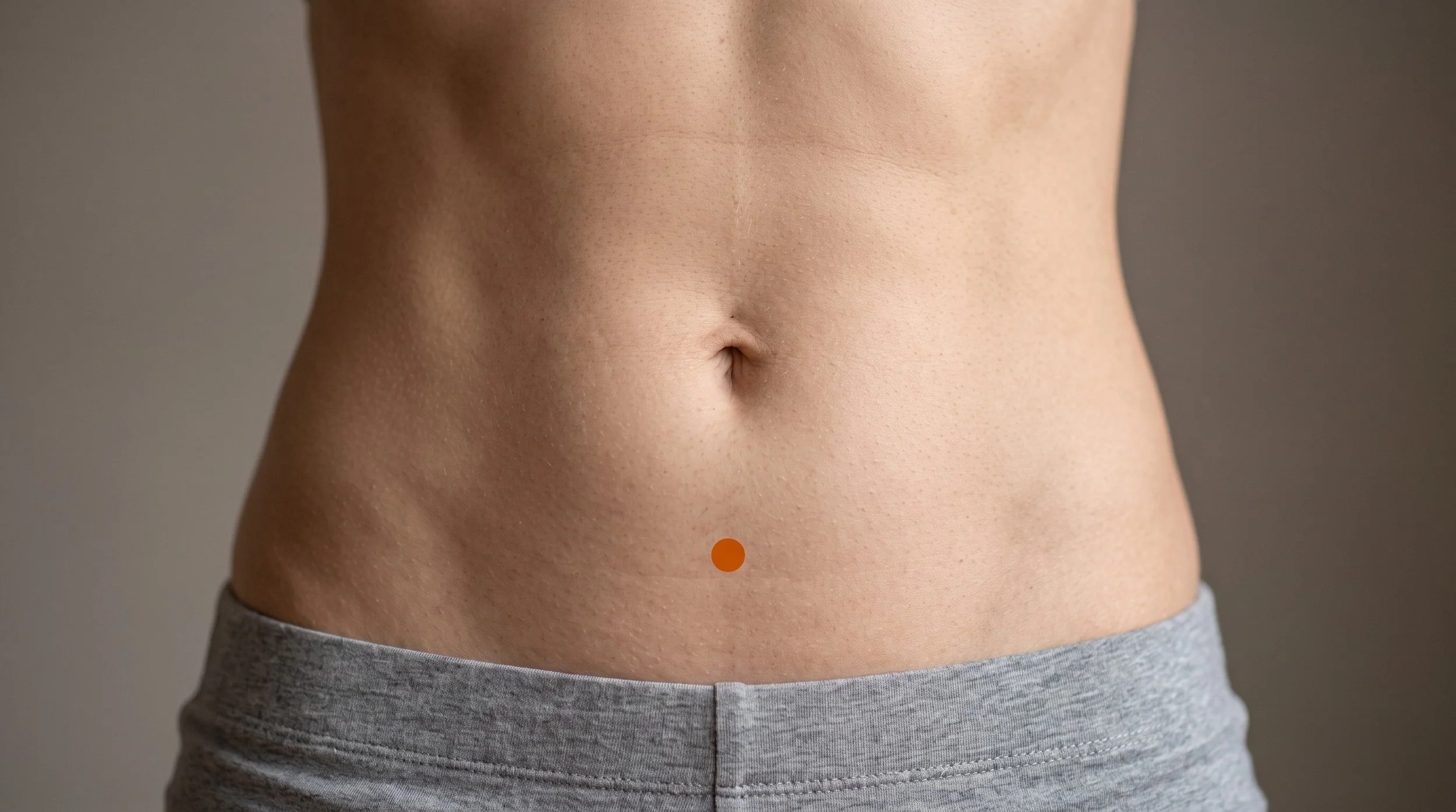
CV4 Acupuncture Point
The Gate of Origin Below the Navel: Anatomy, Mechanism, and Why This Lower Abdominal Point Anchors Fertility, Menstrual, and Urinary Treatment
CV4, known in Chinese as Guanyuan and usually translated as Gate of Origin, sits on the midline of the lower abdomen, three cun below the navel and two cun above the top of the pubic bone, roughly two thirds of the way from the umbilicus toward the pubic symphysis. Also written as Ren 4 or Conception Vessel 4, it is one of the most heavily used points in the entire acupuncture repertoire, and in classical sources it is the heart of the lower dantian point region, the area of the abdomen that older texts treated as the reservoir of constitutional reserve (Deadman et al., 2009). For a modern clinician the appeal is simpler: CV4 sits directly over the segmental territory of the uterus, bladder, and lower bowel, which makes it a practical place to influence pelvic sensitivity, autonomic tone, and lower abdominal muscle guarding in patients dealing with fertility questions, painful periods, urinary urgency, or persistent low abdominal ache.
- Location and layers: the cv4 acupuncture point lies on the linea alba, the tendinous midline seam between the two rectus abdominis sheaths, so the needle passes through skin and superficial fascia into a dense aponeurotic layer rather than through muscle belly (Deadman et al., 2009).
- Traditional categories, translated: classical texts list Ren 4 as the front-mu point of the Small Intestine and as a meeting point of the Conception vessel with the Spleen, Liver, and Kidney channels, which in practical terms marks it as a lower abdominal reflex zone linked to the pelvic organs and to the medial leg channels used alongside it (Deadman et al., 2009).
- Mechanism: needling here stimulates anterior cutaneous branches of the lower thoracoabdominal nerves near the T12 level, whose spinal segments overlap with visceral afferents from the uterus and bladder, and needle stimulation also engages descending inhibitory and opioid-mediated pathways that modulate how much of that input reaches conscious pain (Zhao, 2008).
- Point-specific physiology: in an animal model of pelvic inflammatory pain, electroacupuncture at CV4 was associated with reduced pain behavior, lower markers of sympathetic activity, and reduced inflammatory and neuropeptide signaling in pelvic tissue, which offers a plausible autonomic and neuroinflammatory explanation for its traditional pelvic reputation (Shen et al., 2025).
- Research picture: reviews of acupuncture in menstrual pain, PCOS, and assisted reproduction remain cautious and often rate certainty as low, while trial evidence in stress urinary incontinence has been more encouraging, so CV4 is best framed as one component of a multi-point plan rather than a standalone answer (Smith et al., 2016; Cheong et al., 2013; Zhang et al., 2025; Liu et al., 2017).
- De qi and practice framing: patients usually describe a dull, spreading heaviness or warmth low in the abdomen rather than a sharp sensation, the bladder is emptied before treatment, and lower abdominal points including CV4 are traditionally avoided once pregnancy is established or suspected (Deadman et al., 2009).
Struggling With Painful Periods, Irregular Cycles, or Fertility Questions?
At Morningside Acupuncture we use CV4 as a lower abdominal anchor within a full plan that usually includes points on the medial leg such as SP6 and ST36, gentle warming techniques when appropriate, and cycle tracking so treatment timing matches your luteal and follicular phases. We coordinate with your OB-GYN or reproductive endocrinologist rather than working around them, and we set realistic expectations about what a course of care can and cannot influence. Sessions are calm, unhurried, and built around what your body reports session to session. Schedule a visit and we'll map out a plan that fits your cycle and your calendar.
Schedule NowAnatomy of CV4: Why the Linea Alba Below the Navel Is Such an Important Location
The cv 4 location sits on the midline seam of the abdominal wall. From the surface inward, the needle meets skin, then the fatty and membranous layers of superficial fascia, then the linea alba, the tough tendinous strip where the aponeuroses of the rectus abdominis sheaths interweave with the flat abdominal muscles from each side (Deadman et al., 2009). That midline seam is a mechanical crossroads: every cough, sit-up, heavy lift, pregnancy, and abdominal surgery loads it, and patients with chronic lower abdominal pain often present with a tender, thickened, restricted midline plus guarded rectus and oblique tissue on either side. Because the point overlies aponeurosis rather than a thick muscle belly, the sensation reported here tends to be broad and heavy rather than the twitchy grab patients notice in a limb muscle.
The nerve geography is what makes CV4 clinically interesting. Anterior cutaneous branches of the lower thoracoabdominal nerves, in the region of T12, supply this patch of skin and fascia, and those same spinal segments receive afferent traffic from the lower abdominal and pelvic organs through sympathetic pathways, with additional pelvic input arriving at sacral levels (Deadman et al., 2009). When somatic and visceral afferents converge on shared dorsal horn neurons, stimulating the somatic side can change how the shared circuitry behaves, which is the standard segmental explanation for why an abdominal wall point can influence bladder and uterine symptoms. Layered on top of that, needle stimulation recruits descending inhibitory control from the brainstem along with endogenous opioid and monoamine mechanisms, so effects are not limited to the segment being needled (Zhao, 2008). Experimental work at this specific point has also linked electroacupuncture at CV4 to reduced sympathetic markers and reduced inflammatory and neuropeptide signaling in pelvic tissue in an animal pelvic pain model (Shen et al., 2025).
Depth matters here more than at most points. Beneath the linea alba lie extraperitoneal fat, the peritoneum, loops of small intestine, and, when it is full, the bladder rising up out of the pelvis, which is why the standard caution is to have the patient empty the bladder before treatment (Deadman et al., 2009). Conventional needling is perpendicular at roughly 0.5 to 1 cun, or oblique and directed inferiorly at 1 to 1.5 cun, angles and depths chosen to stay in the abdominal wall rather than to challenge what sits behind it. The midline is comparatively poor in large vessels, since the inferior epigastric arteries run deep to the rectus muscles off to each side, but body habitus, prior surgery, hernia, and pregnancy all change the calculus, and lower abdominal points are classically approached with caution in pregnancy (Deadman et al., 2009).
Related Conception Vessel Related Optimizing Menstrual HealthCV4 at a Glance: Classification, Location, and Clinical Use
| Category | Detail |
|---|---|
| Traditional Name | Guanyuan (Gate of Origin), also called Ren 4 or Conception Vessel 4, and known in classical sources by many alternate names including Dantian (Cinnabar Field) |
| Channel Classification | Conception Vessel (Ren mai), point 4, on the anterior midline of the lower abdomen |
| Point Categories | Front-mu point of the Small Intestine; meeting point of the Conception vessel with the Spleen, Liver, and Kidney channels (hence the alternate name Sanjiejiao, or Triple Intersection); situated within the classical lower dantian region |
| Precise Location | On the midline of the lower abdomen, 3 cun inferior to the umbilicus and 2 cun superior to the pubic symphysis |
| Tissue Stimulated | Skin and superficial fascia over the linea alba, the aponeurotic midline between the paired rectus abdominis sheaths, with segmental relationships to the lower abdominal and pelvic viscera; adjacent myofascial targets include the transverse abdominis, the abdominal obliques, and the pelvic floor |
| Needle Depth / Direction | Perpendicular insertion 0.5 to 1 cun, or oblique insertion directed inferiorly 1 to 1.5 cun; the bladder is emptied before treatment because deep insertion can penetrate a full bladder |
| De Qi Sensation | A dull, spreading heaviness or fullness low in the abdomen, sometimes with a warm sensation drifting toward the pubic bone or groin; sharp, electric, or radiating pain is not the goal and means the needle should be adjusted |
| Primary Clinical Uses | Fertility and reproductive support, menstrual health including cramping and irregular cycles, urinary frequency and urgency, lower abdominal and pelvic pain, and low energy or post-illness fatigue described traditionally as depletion |
| Common Point Combinations |
|
The commentary in Deadman, Al-Khafaji, and Baker's A Manual of Acupuncture treats Guanyuan as one of the great tonifying points, traditionally credited with fostering original qi, supporting essence, warming and strengthening the Kidneys and Spleen, benefiting the uterus and assisting conception, regulating the lower abdomen and bladder, and, in emergencies, restoring collapsed yang (Deadman et al., 2009). Those traditional attributions rest on the point's place in the lower dantian, the abdominal region older Chinese sources described as the storehouse of constitutional reserve, and on its status as a crossing point of the Conception vessel with the Spleen, Liver, and Kidney channels. The classical indication lists are unusually broad and cluster into a few recognizable families: reproductive complaints such as infertility, absent or irregular menses, discharge, and postpartum pain; urinary complaints ranging from frequency and bedwetting to painful and bloody urination; lower abdominal and groin pain, especially with a cold or twisting quality; chronic digestive weakness with loose stools and heaviness of the limbs; and a striking set of whole-body depletion states including exhaustion, wasting, night sweats with cough, dizziness, and fear that older texts read as the mind reflecting a drained constitution (Deadman et al., 2009). What is remarkable is how coherent that sprawl looks when read as one pattern: nearly every entry describes a person whose pelvic function and overall stamina have both dropped, which is close to what a modern clinician means when they say a patient's reserve is low and their pelvis is symptomatic at the same time.
Why CV4 Is Used for Fatigue and Low Energy, Not Just Pelvic Symptoms
Start with the pelvic story, because it is the easiest to explain physically. The skin and fascia at CV4 are supplied by anterior cutaneous branches of the lower thoracoabdominal nerves around the T12 level, and the uterus, bladder, and lower bowel send their own sensory traffic into overlapping spinal segments (Deadman et al., 2009). Those two streams converge on shared neurons in the spinal cord, which is why organ irritation so often shows up as a tender, guarded patch of lower abdominal wall, and why stimulating that wall can change the sensitivity of the shared circuit. Needling also recruits descending inhibitory pathways from the brainstem and endogenous opioid mechanisms, so the effect is not purely local, and it is one reason a lower abdominal point can ease cramping that patients feel deep in the pelvis and radiating into the low back (Zhao, 2008).
The fatigue side is where patients are most skeptical, and reasonably so. No acupuncture point creates energy. What plausibly happens is autonomic: lower abdominal points sit in a region richly connected to sympathetic outflow to the pelvis, and experimental work at CV4 specifically has linked electroacupuncture here to reduced markers of sympathetic activity and reduced inflammatory signaling in pelvic tissue in an animal model (Shen et al., 2025). Clinically, people who arrive wired, braced, and sleeping badly often report a distinct settling during and after treatment at this area, and better sleep and less pain are the most ordinary explanations for feeling less depleted a few sessions in. That is a modest claim, and it is the honest one.
It also helps to know that broad pain research supports acupuncture having effects beyond expectation alone, with a large individual patient data analysis finding modest but persistent benefits over both sham and no-acupuncture controls across chronic pain conditions (Vickers et al., 2018). CV4 is rarely used alone in those protocols, so the fair reading is that this point contributes a segmental lower abdominal input inside a larger treatment, not that it carries the result by itself.
What the Research Shows for CV4
A caution worth stating plainly before the table: almost no clinical trial tests CV4 in isolation. Reviews evaluate whole protocols, usually five to fifteen points including lower abdominal, medial leg, and sometimes sacral locations, so the evidence below describes the company CV4 keeps rather than the point itself. The picture is mixed by condition. Reproductive outcome reviews have generally found low certainty evidence and no clear effect on live birth, menstrual pain reviews report insufficient evidence with low or very low certainty, and the strongest signals sit in urinary and pelvic pain research where lower abdominal points including CV4 are standard protocol members. Read the table as a map of where the questions are still open, not as a verdict.
| Study | Type | Focus | Key Finding |
|---|---|---|---|
| Smith et al., 2016 | Cochrane systematic review | Acupuncture and acupressure for primary dysmenorrhoea, where lower abdominal points including CV4 are common protocol members | The review concluded there is insufficient evidence to determine whether acupuncture or acupressure helps period pain, with certainty rated low or very low across comparisons. |
| Cheong et al., 2013 | Cochrane systematic review | Acupuncture as an adjunct to assisted reproductive technology cycles | The reviewers found no evidence that acupuncture improved live birth or pregnancy rates in assisted conception. |
| Zhang et al., 2025 | Cochrane systematic review | Acupuncture for fertility and symptom control in oligo/anovulatory women with polycystic ovary syndrome | Compared with sham, acupuncture may have little or no effect on live birth, ovulation, clinical pregnancy, or miscarriage, and minor side effects were probably more common with acupuncture. |
| Liu et al., 2017 | Multicenter randomized clinical trial (JAMA) | Electroacupuncture versus sham for urinary leakage in women with stress urinary incontinence | Electroacupuncture was associated with greater reduction in urine leakage than sham over six weeks, supporting a role for needling in lower urinary tract symptoms while leaving individual point contributions unresolved. |
| Pan et al., 2023 | Systematic review and meta-analysis | Acupuncture for chronic prostatitis and chronic pelvic pain syndrome, protocols in which CV4 and CV3 are among the most frequently selected points | Pooled results favored acupuncture over sham and medication for pain and symptom scores, though the authors noted the small number of trials and called for larger studies. |
| Shen et al., 2025 | Controlled animal mechanistic study | Electroacupuncture at CV4 in a rat model of pelvic inflammatory pain | Treatment at CV4 reduced pain behavior and hypersensitivity and was associated with lower sympathetic and inflammatory markers in pelvic tissue, offering a mechanistic rationale that still requires human confirmation. |
| Vickers et al., 2018 | Individual patient data meta-analysis | Acupuncture across chronic pain conditions, providing general context for pain-related use of points like CV4 | Acupuncture produced modest but statistically significant benefits over both sham and no-acupuncture controls, with effects that persisted over twelve months. |
Acupuncture Points for Fertility: Why Guanyuan (CV4) Appears in Almost Every Protocol
Safety framing first, because this point deserves it. CV4 sits low on the abdominal midline, directly over the segmental territory of the uterus, and classical texts urge caution with lower abdominal points during pregnancy (Deadman et al., 2009). In our clinic, lower abdominal needling including CV4 is avoided once pregnancy is established or even suspected, treatment shifts to other regions at that point, and the bladder is emptied before any session that involves this area. This is also not a self-treatment point: needling belongs to a licensed acupuncturist working alongside your OB-GYN or reproductive endocrinologist, particularly if you are mid-cycle in an IVF or IUI protocol, using ovarian stimulation medication, or managing endometriosis, fibroids, or a known pelvic condition.
With that established, why does guanyuan fertility work show up in so many point lists? Traditionally, Ren 4 is described as benefiting the uterus and assisting conception, and it carries alternate classical names that translate roughly as infant's door and infant's palace, along with dantian, the abdominal region older sources treated as the seat of constitutional reserve (Deadman et al., 2009). The modern reading is more prosaic and more useful: the point overlies the spinal segments that also serve the uterus and ovaries, so it is a reasonable place to influence pelvic autonomic tone, local blood flow, and abdominal wall guarding, and experimental work at CV4 has linked stimulation here to reduced sympathetic and inflammatory signaling in pelvic tissue in animal models (Shen et al., 2025). People searching for fertility pressure points usually want a single lever, and that is the part worth adjusting: CV4 is one input in a plan, not a switch.
On outcomes, honesty serves patients better than enthusiasm. Cochrane reviewers found no evidence that acupuncture improves live birth or pregnancy rates as an adjunct to assisted reproductive technology, and the 2025 Cochrane review in polycystic ovary syndrome concluded that acupuncture compared with sham may have little or no effect on live birth, ovulation, clinical pregnancy, or miscarriage, with minor side effects probably more common in the acupuncture group (Cheong et al., 2013; Zhang et al., 2025). What many patients do report, and what treatment can reasonably target, is less cramping, better sleep, steadier stress response, and a calmer experience of a demanding medical process. Those are legitimate goals, and they are the ones we set.
Lower Abdominal Pain or Urinary Urgency That Keeps Coming Back?
Persistent low abdominal ache and bladder irritability often involve a mix of visceral sensitivity, abdominal wall guarding, and pelvic floor overactivity, and CV4 sits in exactly the segmental territory where those overlap. We combine careful needling of this point with dry needling of the abdominal wall and pelvic floor when indicated, plus breathing and load strategies you can use between sessions. Every treatment begins with an exam so we know what we are treating and what needs a medical referral first. Book an evaluation and let's find out what is driving your symptoms.
Schedule NowCV4 in the Context of Trigger Point Work
Patients with chronic lower abdominal pain frequently have two things happening at once: a sensitized visceral system and a guarded abdominal wall. CV4 addresses the midline, but the muscles that hold the guarding sit on either side of it, so at Morningside we commonly pair needling at this point with dry needling of the rectus abdominis, the internal and external obliques, and the transverse abdominis, and with pelvic floor work when examination points that way. Because dry needling and acupuncture both mean the therapeutic use of an acupuncture needle, this is not a switch between two medicines, just a shift in target and reasoning from a channel and segmental map to a specific muscle band.
The overlap also runs the other direction. Lower abdominal wall trigger points can refer pain into the groin, low back, and bladder region and can mimic or amplify visceral symptoms, so treating them sometimes clarifies a picture that looked purely gynecologic or urologic. Practically, that means examination comes before needle selection: we palpate the linea alba and the rectus and oblique bands, check breathing mechanics and pelvic floor tone, and choose whether CV4 leads the treatment or supports it. Anything suggesting infection, an undiagnosed mass, a hernia, or pregnancy sends the patient to a physician first.
CV4 Fertility and Menstrual Health Treatment at NYC's Highest-Rated Acupuncture Clinic
Morningside Acupuncture is the highest-rated acupuncture and dry needling clinic in New York City with over 500 five-star Google reviews, and reproductive and menstrual care is one of our most requested areas. Our licensed acupuncturists use CV4 alongside distal points, evidence-informed protocols, and clear communication about timelines and safety, including the cautions that apply once pregnancy is confirmed. You will always know what we are needling and why. Schedule your first session and start with a plan instead of a guess.
Schedule NowFrequently Asked Questions
What does CV4 feel like when needled?
Most people report a dull, spreading heaviness or fullness low in the abdomen, sometimes with mild warmth drifting toward the pubic bone or groin. Some feel a brief ache that softens within a few seconds, and a subset notice a settled, sleepy relaxation that continues for the rest of the session. Because the point sits on the tendinous midline rather than in a thick muscle, you are less likely to feel the sudden twitch that trigger point needling in a limb muscle can produce. Sharp, burning, or electrical sensations are not the goal and should be reported immediately so the needle can be adjusted or removed.
Why needle a point on my abdomen for period pain or bladder symptoms rather than treating the organ directly?
Because the abdominal wall and the pelvic organs share spinal segments. The skin and fascia at CV4 are supplied by anterior cutaneous branches of the lower thoracoabdominal nerves around T12, and sensory traffic from the uterus, bladder, and lower bowel enters overlapping levels of the spinal cord (Deadman et al., 2009). Somatic and visceral inputs converge on shared dorsal horn neurons, so stimulating the accessible somatic side can change how that shared circuitry processes pelvic signals, and needling additionally recruits descending inhibitory and opioid-mediated systems that act more broadly (Zhao, 2008). Traditional sources arrived at the same territory by a different route, calling Ren 4 the front-mu point of the Small Intestine and a point that regulates the lower abdomen and bladder.
Can I press CV4 myself between sessions?
Yes, with a few conditions. Find the spot on the midline about three finger widths plus a bit more below the navel, roughly two thirds of the way from the belly button toward the top of the pubic bone, and use flat fingertips or the pad of the thumb rather than a poking point. Empty your bladder first, lie down with knees supported, and apply slow, steady, moderate pressure for 30 to 60 seconds at a time, or small circular massage for one to two minutes, repeated two or three times and paired with slow nasal breathing into the lower ribs. A warm compress over the area for 10 to 15 minutes is often more comfortable than pressure during menstrual cramping. Stop if pressure sharpens the pain, and skip lower abdominal work entirely if you are pregnant or might be, if you have unexplained abdominal pain, fever, a known hernia, recent abdominal surgery, or an IUD insertion or procedure within the last several days.
Is CV4 safe to needle?
In trained hands, yes, with specific precautions that exist for anatomical reasons. The peritoneum, small intestine, and, when full, the bladder lie deep to the point, so the bladder is emptied before treatment and depth is kept conservative at roughly 0.5 to 1 cun perpendicular or 1 to 1.5 cun angled inferiorly (Deadman et al., 2009). Lower abdominal points are classically approached with caution in pregnancy, and our practice is to avoid CV4 once pregnancy is established or suspected. Clinicians also adjust for body habitus, abdominal wall hernia, recent surgery, and any implanted device, and mild transient soreness or a small bruise are the most common side effects. Undiagnosed abdominal pain, fever, or urinary symptoms with blood or systemic signs warrant medical evaluation before acupuncture.
Where exactly is CV4 located?
On the front midline of the lower abdomen, three cun below the center of the umbilicus and two cun above the upper border of the pubic symphysis (Deadman et al., 2009). Since the umbilicus to pubic bone distance is treated as five cun, CV4 falls about three fifths of the way down that line, which places it between CV6 above it and CV3 below it. Cun are proportional to the individual, so on a taller person the same landmark sits further from the navel in inches than on a shorter person, which is why clinicians measure from both ends rather than using a fixed distance.
Can I use CV4 as a fertility acupressure point at home while trying to conceive?
Light self-massage over the lower abdomen is generally low risk when you are not pregnant, and many people find warm, slow circular pressure over the dantian area soothing during the days around a period. Two important limits apply. First, stop lower abdominal pressure work once you could be pregnant or have a positive test, since classical practice urges caution with these points in pregnancy and there is no reason to take an unnecessary risk (Deadman et al., 2009). Second, treat acupressure as comfort care rather than fertility treatment, because the clinical evidence for acupuncture improving conception rates is weak and inconsistent (Cheong et al., 2013; Zhang et al., 2025). If you are in an active IVF or IUI cycle, ask both your acupuncturist and your reproductive team what they want you doing at home.
References
- Deadman, P., Al-Khafaji, M., & Baker, K. (2009). A manual of acupuncture. Journal of Chinese Medicine Publications.
- Zhao, Z. Q. (2008). Neural mechanism underlying acupuncture analgesia. Progress in Neurobiology, 85(4), 355-375. https://doi.org/10.1016/j.pneurobio.2008.05.004
- Vickers, A. J., Vertosick, E. A., Lewith, G., MacPherson, H., Foster, N. E., Sherman, K. J., Irnich, D., Witt, C. M., & Linde, K. (2018). Acupuncture for chronic pain: Update of an individual patient data meta-analysis. Journal of Pain, 19(5), 455-474. https://doi.org/10.1016/j.jpain.2017.11.005
- Smith, C. A., Armour, M., Zhu, X., Li, X., Lu, Z. Y., & Song, J. (2016). Acupuncture for dysmenorrhoea. Cochrane Database of Systematic Reviews, 2016(4), CD007854. https://doi.org/10.1002/14651858.CD007854.pub3
- Cheong, Y. C., Dix, S., Hung Yu Ng, E., Ledger, W. L., & Farquhar, C. (2013). Acupuncture and assisted reproductive technology. Cochrane Database of Systematic Reviews, 2013(7), CD006920. https://doi.org/10.1002/14651858.CD006920.pub3
- Zhang, G. S., et al. (2025). Acupuncture for polycystic ovary syndrome. Cochrane Database of Systematic Reviews, 2025(10), CD007689. https://doi.org/10.1002/14651858.CD007689.pub5
- Liu, Z., Liu, Y., Xu, H., He, L., Chen, Y., Fu, L., et al. (2017). Effect of electroacupuncture on urinary leakage among women with stress urinary incontinence: A randomized clinical trial. JAMA, 317(24), 2493-2501. https://doi.org/10.1001/jama.2017.7220
- Pan, J., Jin, S., Xie, Q., Wang, Y., Wu, Z., Sun, J., Guo, T. P., & Zhang, D. (2023). Acupuncture for chronic prostatitis or chronic pelvic pain syndrome: An updated systematic review and meta-analysis. Pain Research and Management, 2023, 7754876. https://doi.org/10.1155/2023/7754876
- Shen, X., et al. (2025). Electroacupuncture of Guanyuan (CV4) acupoint improved pelvic inflammatory disease pain by inhibiting neuroinflammation and sympathetic activity. Immunity, Inflammation and Disease, 13(11), 1-12. https://doi.org/10.1002/iid3.70299
Disclaimer: This web site is intended for educational and informational purposes only. Reading this website does not constitute providing medical advice or any professional services. This information should not be used for diagnosing or treating any health issue or disease. Those seeking medical advice should consult with a licensed physician. Seek the advice of a medical doctor or other qualified health professional for any medical condition. If you think you have a medical emergency, call 911 or go to the emergency room. No acupuncturist-patient relationship is created by reading this website or using the information. Morningside Acupuncture PLLC and its employees and contributors do not make any express or implied representations with respect to the information on this site or its use. For any legal interpretation of scope of practice in your state, consult a licensed attorney or regulatory authority.
Read more from our blog