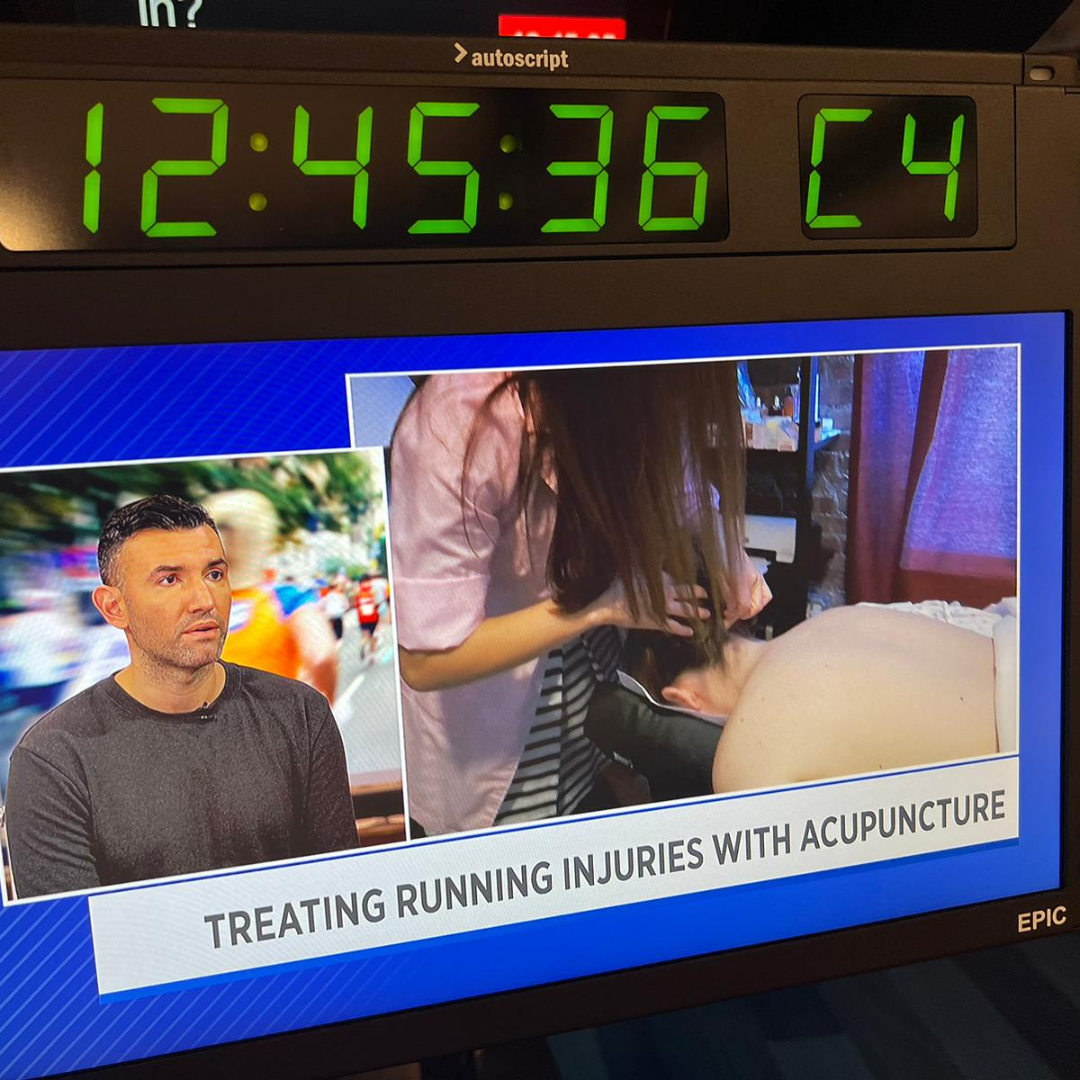
Acupuncture for NYC Marathon Runners 2026
Training for the TCS New York City Marathon? How Acupuncture and Dry Needling Help You Train Through Injury, Reach the Start Line Healthy, and Recover After Race Day
The TCS New York City Marathon draws tens of thousands of runners through all five boroughs each November, and the months of training required to get there generate a predictable cascade of overuse injuries that peak in the weeks before race day, when training volume is highest and tapering anxiety encourages pushing through warning signs. Morningside Acupuncture in the Upper West Side serves the NYC Marathon community through training season, race week, and post-race recovery.
- The NYC Marathon training cycle, typically 16 to 20 weeks in duration with peak weeks reaching 50 to 60 miles, generates the highest cumulative running load most non-elite runners ever experience, and the overuse injuries that appear in weeks 10 through 16 of training reflect the accumulated muscle and connective tissue loading rather than a single identifiable event (Simons et al., 1999).
- The most common marathon training injuries at Morningside Acupuncture are IT band syndrome, patellofemoral syndrome, plantar fasciitis, hip flexor pain, and low back pain, all driven by trigger points in the muscles generating them rather than by structural damage to tendons or joints in most cases, and all responding well to dry needling within a small number of sessions.
- Dry needling during marathon training does not require rest from running: deactivating a trigger point in the TFL or gastrocnemius does not necessitate reducing mileage, and most runners can continue their scheduled training through a course of treatment, with the treatment reducing the pain load that would otherwise force a voluntary mileage reduction.
- Acupuncture's clinically meaningful and durable effects on chronic musculoskeletal pain are established in large-scale meta-analyses (Vickers et al., 2018), providing the evidence base that NYC Marathon runners, who tend to be well-informed about training science, expect before committing to a treatment approach.
- Post-race recovery acupuncture in the days following the marathon addresses the acute muscle damage and the specific trigger points generated by 26.2 miles of sustained running, reducing recovery time and restoring normal muscle function faster than passive rest alone.
Training for the 2026 NYC Marathon and Dealing With an Injury That's Threatening Your Race Day?
Morningside Acupuncture is located in the Upper West Side, minutes from Central Park's running paths where thousands of NYC Marathon runners train each season. We specialize in the running overuse injuries that emerge during marathon training: IT band pain, knee pain, plantar fasciitis, hip pain, and low back tightness. Most training injuries respond within two to four dry needling sessions. Schedule for an assessment before training volume peaks.
Schedule NowThe NYC Marathon Training Injury Calendar
NYC Marathon training begins in late June or July for most runners using standard 16 to 18-week plans, with the race typically held on the first Sunday of November. The injury pattern follows the training load: few significant injuries in the first four to six weeks when mileage is still building, a first wave of overuse injuries around weeks eight to ten as weekly mileage crosses the 30 to 40-mile threshold for many recreational runners, and a second more serious wave in weeks twelve to sixteen as cumulative fatigue compounds with peak training volume.
The clinical distinction that matters for each of these injuries is whether the pain is being generated by a trigger point or by structural damage to a tendon, joint, or fascia. For most marathon training injuries in runners without a prior history of significant injury to the area, the answer is trigger points. The iliotibial band does not tear during marathon training in most cases: the pain of IT band syndrome is driven by TFL and gluteus medius trigger points that generate referred pain down the lateral thigh and sensitize the ITB-femoral contact zone at the lateral knee. The plantar fascia does not rupture during a training run in most cases: the heel pain of plantar fasciitis is driven by gastrocnemius, soleus, and tibialis posterior trigger points that shorten the calf complex and increase fascial tension at the calcaneal insertion.
| Injury | Primary Trigger Point Sources | Typical Onset in Training | Recommended Treatment Window |
|---|---|---|---|
| IT band syndrome (lateral knee pain) | Tensor Fasciae Latae, Gluteus Medius, Vastus Lateralis | Weeks 8-12; earlier in runners adding significant mileage too quickly | At first onset; 2-4 sessions typically resolve active training symptoms |
| Patellofemoral syndrome (anterior knee pain) | Vastus Medialis, Rectus Femoris, Vastus Lateralis | Weeks 8-14; often precipitated by a longer long run or consecutive back-to-back training days | Before peak long runs begin; 3-5 sessions for established presentations |
| Plantar fasciitis | Gastrocnemius, Soleus, Tibialis Posterior | Weeks 10-16; progressive morning heel pain that worsens during long runs | Within 1-2 weeks of onset; early calf TrP treatment prevents escalation to full plantar fasciitis |
| Hip flexor and anterior hip pain | Iliacus, Psoas Major, Rectus Femoris | Weeks 6-12; hip flexors shorten progressively as weekly mileage increases | Ongoing through training; hip flexor TrPs also drive low back pain in runners |
| Low back pain from running posture | Quadratus Lumborum, Iliocostalis Lumborum, Multifidus | Weeks 8-16; QL tightness from hip flexor imbalance; multifidus from high-mileage lumbar fatigue | Before low back pain becomes acute; monthly sessions during high-mileage training |
| Calf pain and Achilles tendon sensitization | Gastrocnemius, Soleus, Plantaris | Weeks 6-14; calf loading increases significantly with longer long runs | When calf tightness first appears; prevents progression to Achilles tendinopathy |
The Three-Week Taper and Why It Does Not Resolve Injuries
The standard marathon training taper involves reducing weekly mileage from peak levels to approximately 50 percent in the final three weeks before race day, with the goal of allowing accumulated training fatigue to clear while maintaining fitness. Many runners assume that the taper will allow any training injuries to fully resolve. This assumption is incorrect for trigger point-driven injuries and leads to the experience of arriving at the start line of the NYC Marathon still limited by the IT band, plantar fascia, or hip pain that appeared three weeks earlier.
Trigger points do not resolve during passive rest. The motor endplate dysfunction and sustained sarcomere shortening that define a trigger point persist in the absence of stimulation, because they are not simply fatigued tissue that recovers with rest. A runner's gastrocnemius trigger point that developed in week fourteen of training will still be present at race day if the only intervention was reducing mileage during the taper. Dry needling the trigger point directly, with the local twitch response that indicates successful deactivation, is the only reliable way to resolve it before the race. The three-week taper is a valuable treatment window, but only for runners who use that window for active treatment rather than passive rest.
NYC Marathon Training Injury That Appeared Mid-Training Cycle and Isn't Going Away With Rest?
At Morningside Acupuncture, we treat dozens of NYC Marathon runners each training season for the IT band, knee, plantar fasciitis, hip, and back injuries that emerge as mileage builds. Dry needling during training allows you to continue running in most cases while the trigger points generating the pain are actively treated. Sessions are available on weekends and early mornings to fit around training schedules. Schedule for an assessment and do not arrive at the start line still managing a training injury.
Schedule NowPost-Marathon Recovery: What Happens to Your Muscles After 26.2 Miles
The NYC Marathon is one of the most demanding courses of any major marathon: five borough crossings, the Verrazzano-Narrows Bridge elevation, the rolling terrain of Central Park in the final miles, and the city pavement surface combine to produce a post-race muscle damage profile that exceeds many other marathon courses in its impact on recovery time. Most NYC Marathon finishers experience significant muscle soreness, difficulty descending stairs, and general lower extremity fatigue for the first two to three days after the race. What is less commonly discussed is the specific trigger point generation that the race produces on top of any trigger points already present from training.
The eccentric muscle loading of the final miles, when running economy deteriorates from fatigue and the stride mechanics become increasingly inefficient, generates new trigger points in the quadriceps, hamstrings, gastrocnemius, and foot intrinsics that were not present at the start line. These new trigger points, combined with the pre-existing training load that the taper did not fully resolve, produce the characteristic post-marathon body that feels fundamentally different from normal muscle soreness. Dry needling in the 48 to 72 hours after the race, when the acute soreness has passed its peak, directly addresses both the new race-generated trigger points and any residual training load, significantly reducing the two to three weeks of compromised walking and stair-use that many finishers experience.
NYC Marathon 2026 Training Support at NYC's Highest-Rated Acupuncture Clinic
At Morningside Acupuncture, we are the highest-rated acupuncture and dry needling clinic in New York City with over 500 five-star Google reviews. We serve the NYC Marathon community through every phase of the race: training season injury prevention and treatment, taper-phase pre-race preparation, and post-race recovery. Located in the Upper West Side near Central Park, we are conveniently accessible to thousands of NYC Marathon runners who train in the park. Schedule for a marathon training assessment today.
Schedule NowFrequently Asked Questions
I have IT band pain in week 12 of training. Can I still run the marathon?
IT band pain in week twelve of marathon training is a very common presentation, and for most runners it does not mean you cannot race. The pain is almost always driven by TFL and gluteus medius trigger points rather than structural damage to the IT band itself, and it responds well to dry needling within two to four sessions. Most runners with IT band pain in week twelve can continue training at a modified volume while receiving dry needling, and the majority arrive at race day with the symptoms well controlled. The key is beginning treatment immediately rather than hoping it resolves during a mileage reduction, because passive rest alone rarely resolves trigger point-driven IT band pain.
Is it safe to get acupuncture in the week before the NYC Marathon?
Yes, with appropriate timing. A dry needling session in the 3-10 days before the marathon, targeting any residual trigger points from training, is one of the most valuable pre-race interventions available. The session should not be in the final one to two days before the race to allow any post-treatment soreness to fully clear (although if there is pain treatment can be adjusted and may still help - just know you may be sore going into the race). Most runners schedule a pre-race session approximately either the week before the race or early in the week of the race, allowing the post-session recovery period to complete while the trigger point deactivation benefits are still present at race day.
How soon after the NYC Marathon can I get post-race acupuncture?
Most runners are best served by scheduling post-race acupuncture 48 to 72 hours after finishing, when the acute inflammatory response has passed its peak and the muscles are accessible to dry needling without the generalized tenderness of the first day or two. A single post-race session targeting the quadriceps, gastrocnemius, and hip muscles typically produces a noticeable acceleration in recovery compared to rest alone, with most runners reporting significantly improved stair use and walking comfort within 24 hours of treatment.
How far is Morningside Acupuncture from Central Park, where I do most of my training runs?
Morningside Acupuncture is located at 900 West End Ave off 104th and Broadway in Upper West Side / Morningside Heights, just a few blocks west of Central Park's West Drive near the 110th Street park entrance. Many NYC Marathon runners who train in Central Park pass within a few blocks of the clinic on their way to and from park entrances. The proximity makes it practical to schedule training-day appointments on days when you are already coming to the park area, combining a training run with a post-run or pre-run session.
References
- Simons, D. G., Travell, J. G., & Simons, L. S. (1999). Travell & Simons' Myofascial Pain and Dysfunction: The Trigger Point Manual (2nd ed.). Williams & Wilkins.
- Vickers, A. J., Vertosick, E. A., Lewith, G., MacPherson, H., Foster, N. E., Sherman, K. J., Irnich, D., Witt, C. M., & Linde, K. (2018). Acupuncture for chronic pain: Update of an individual patient data meta-analysis. Journal of Pain, 19(5), 455-474. https://doi.org/10.1016/j.jpain.2017.11.005
- Shah, J. P., Danoff, J. V., Desai, M. J., Parikh, S., Nakamura, L. Y., Phillips, T. M., & Gerber, L. H. (2008). Biochemicals associated with pain and inflammation are elevated in sites near to and remote from active myofascial trigger points. Archives of Physical Medicine and Rehabilitation, 89(1), 16-23. https://doi.org/10.1016/j.apmr.2007.10.018
- Kietrys, D. M., Palombaro, K. M., Azzaretto, E., Hubler, R., Schaller, B., Schlussel, J. M., & Tucker, M. (2013). Effectiveness of dry needling for upper-quarter myofascial pain: A systematic review and meta-analysis. Journal of Orthopaedic & Sports Physical Therapy, 43(9), 620-634. https://doi.org/10.2519/jospt.2013.4668
- Zhao, Z. Q. (2008). Neural mechanism underlying acupuncture analgesia. Progress in Neurobiology, 85(4), 355-375. https://doi.org/10.1016/j.pneurobio.2008.05.004
Disclaimer: This web site is intended for educational and informational purposes only. Reading this website does not constitute providing medical advice or any professional services. This information should not be used for diagnosing or treating any health issue or disease. Those seeking medical advice should consult with a licensed physician. Seek the advice of a medical doctor or other qualified health professional for any medical condition. If you think you have a medical emergency, call 911 or go to the emergency room. No acupuncturist-patient relationship is created by reading this website or using the information. Morningside Acupuncture PLLC and its employees and contributors do not make any express or implied representations with respect to the information on this site or its use. For any legal interpretation of scope of practice in your state, consult a licensed attorney or regulatory authority.
Read more from our blog