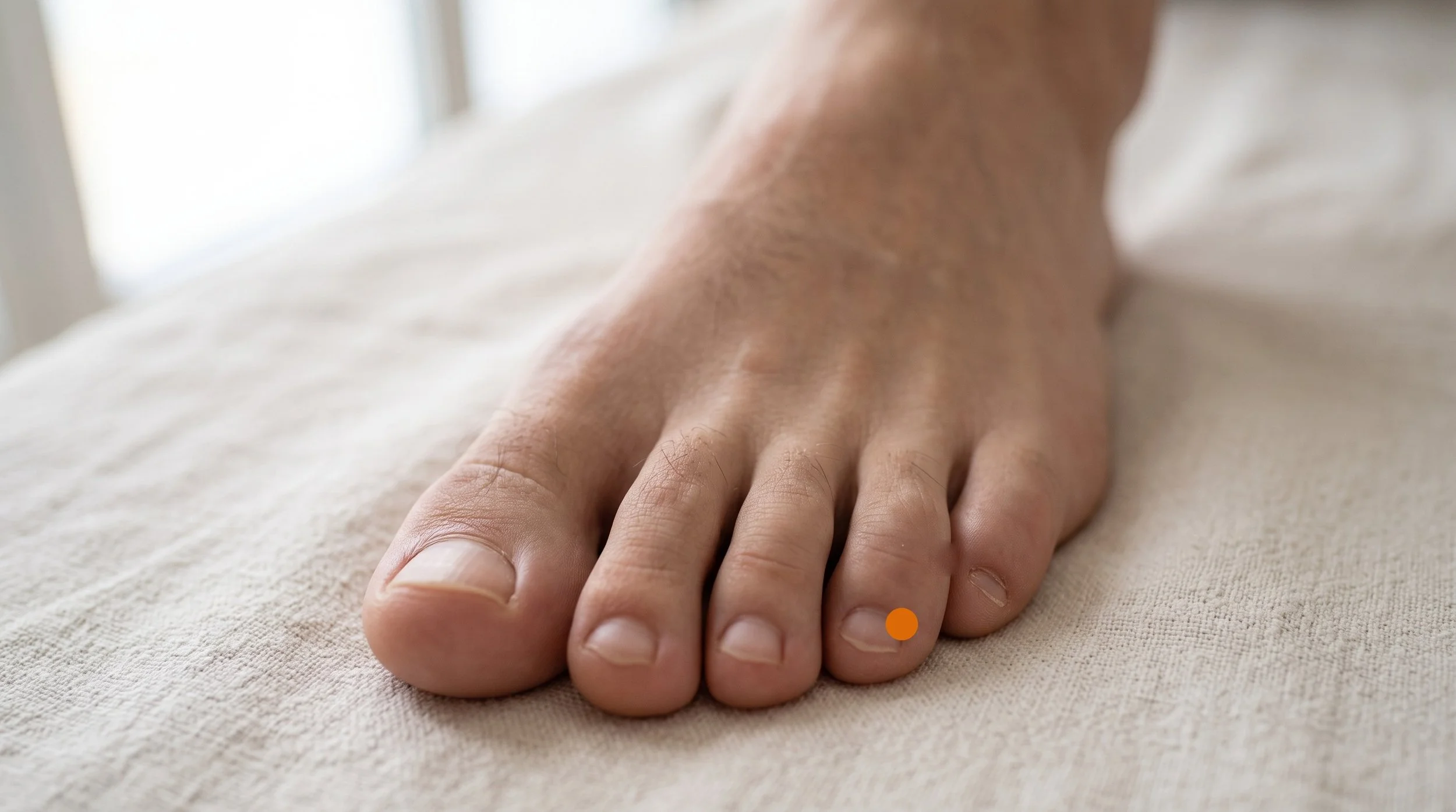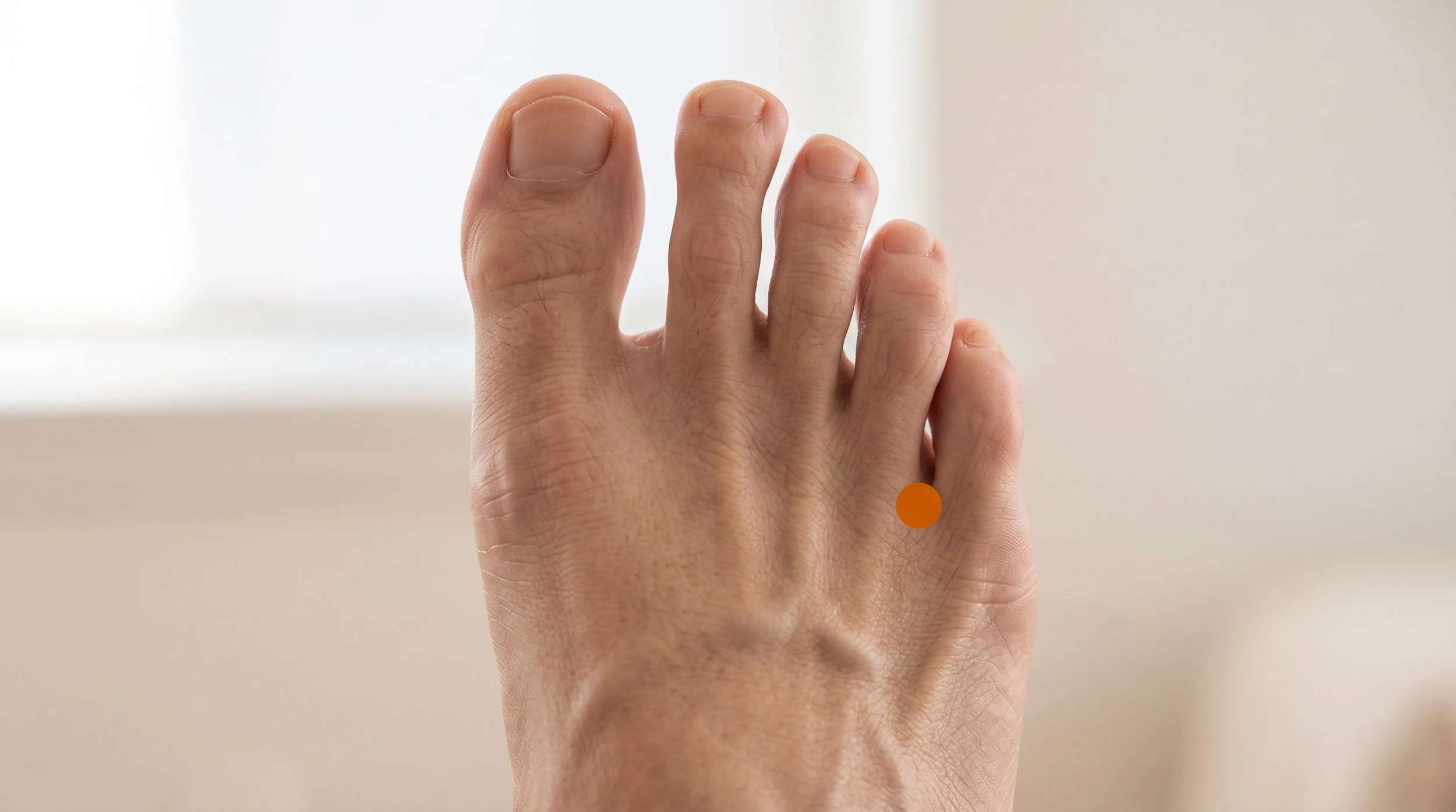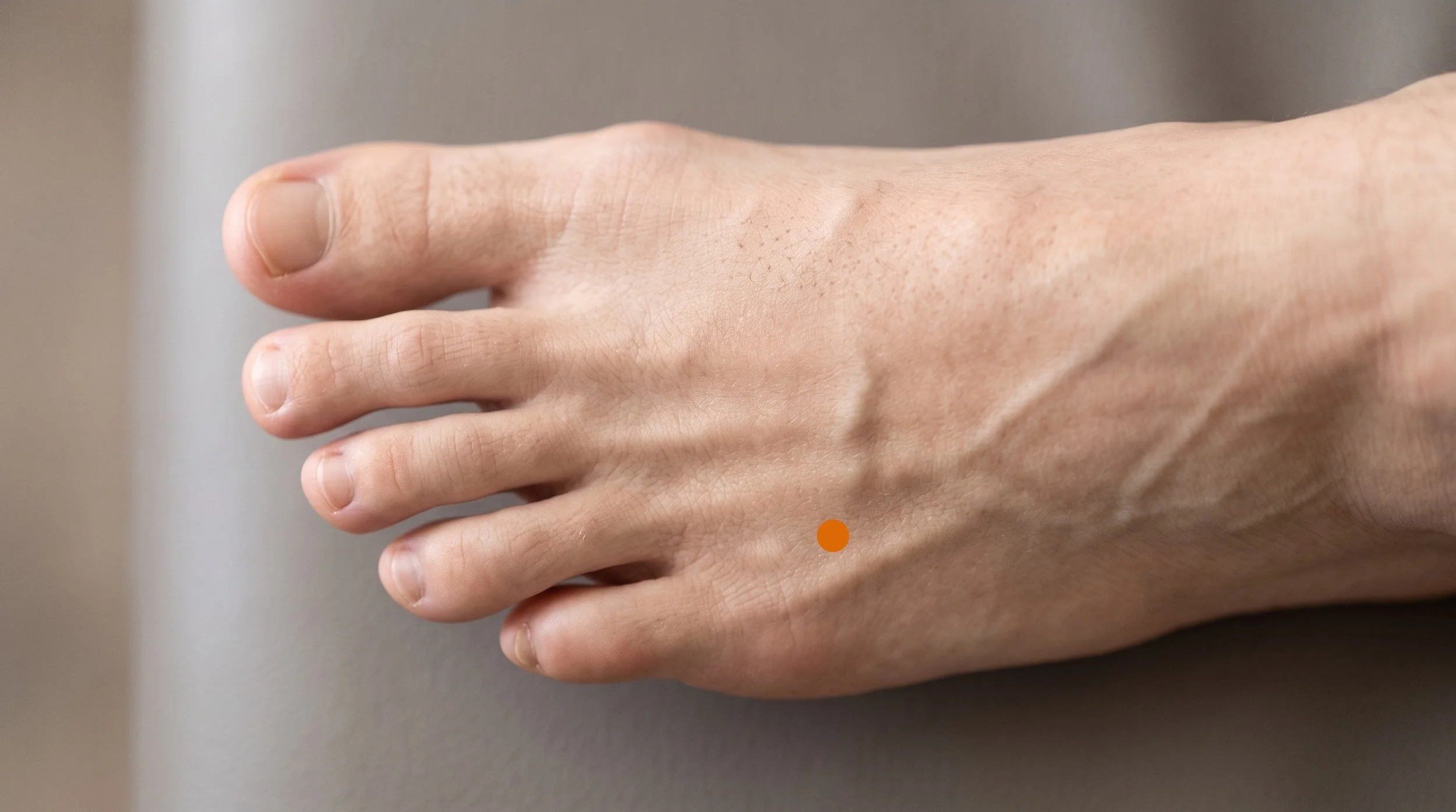
Shixuan Acupuncture Point (M-UE-1)
The Ten Diffusions at the Fingertips: Anatomy, Mechanism, and Why This Classical First Aid Group Still Has a Place in Modern Practice
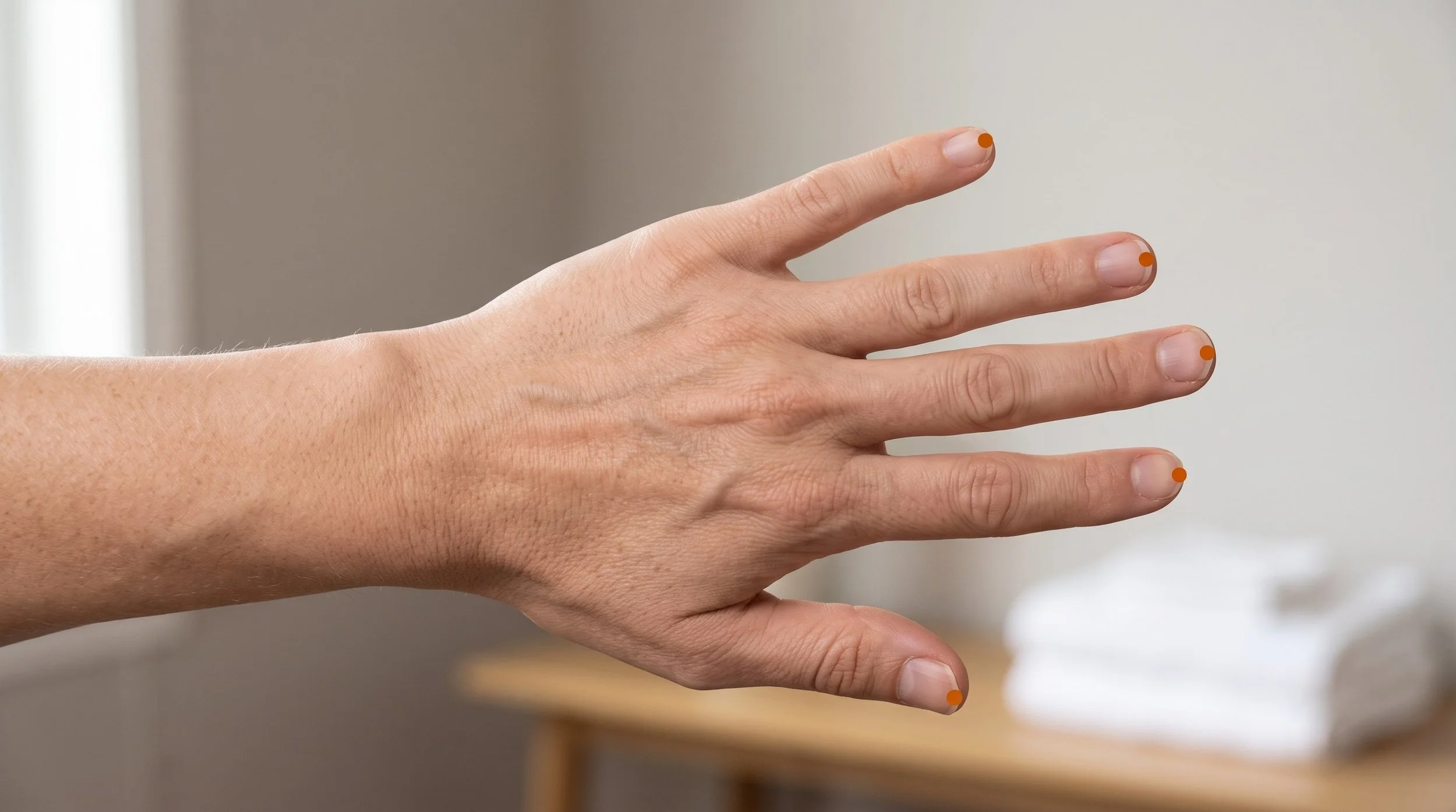
Shixuan (M-UE-1), usually translated as Ten Diffusions or Ten Dispersions, is not one point but a set of ten, sitting on the apex of each finger about 0.1 cun from the nail. It belongs to the extraordinary (extra) points rather than to any of the twelve channels, and it has an unusual history: classical sources reserved it almost entirely for emergencies, where the fingertips were pricked to release a few drops of blood in collapse, high fever, heat-stroke, convulsions and the acute phase of windstroke.
The shixuan acupuncture points matter clinically for two reasons. First, they sit in the most densely innervated skin on the body, which makes the stimulus unusually arousing and gives modern researchers something concrete to study.
Second, in a contemporary clinic like ours they are used far more modestly than the classics suggest, mostly for numb or tingling fingertips and as a brief adjunct within a larger treatment, never as a substitute for emergency medical care.
- Shixuan is a ten-point extra group (M-UE-1) located on the tip of every finger, roughly 0.1 cun from the edge of the nail, and the standard technique is a quick prick to bleed rather than a retained needle, occasionally followed by moxibustion (Deadman et al., 2007; Chinese Acupuncture and Moxibustion, 1987).
- Traditional texts credit the ten diffusions points with opening the portals to restore consciousness, draining heat and settling internal wind, and list them for loss of consciousness, windstroke, summer-heat stroke, febrile illness, throat swelling, childhood fright wind, convulsions and finger numbness (Deadman et al., 2007). Those are traditional attributions, and they translate reasonably well into modern language as a very strong, brief sensory input plus a small local vascular response.
- Mechanistically the fingertip pulp is packed with low-threshold mechanoreceptors and free nerve endings supplied by the terminal branches of the proper palmar digital nerves (median and ulnar, C6 to C8), and it occupies an outsized share of primary somatosensory cortex, so needling here produces an intense, highly localized afferent barrage that engages brainstem arousal and descending modulatory systems (Zhao, 2008).
- The most relevant clinical research does not study Shixuan itself but the closely related hand jing-well points at the nail corners, which classical writers treated as functionally similar to the fingertip group (Maciocia, 2006). A multicenter randomized trial of jing-well bloodletting added to standard care in acute stroke with impaired consciousness reported improvements in Glasgow Coma Scale scores with no serious adverse events (Yu et al., 2021), while Cochrane reviews of acupuncture in stroke still rate the overall evidence as low certainty (Xu et al., 2018).
- In practice we treat Shixuan as a small, targeted tool, most often for stubborn fingertip numbness, tingling or coldness alongside forearm and neck treatment, and we say plainly that sudden collapse, suspected stroke, seizure or heat-stroke require calling 911 first, with acupuncture playing no role in the acute rescue.
- The sensation is different from most points: instead of the dull, spreading ache of de qi, patients feel a brief sharp prick similar to a fingerstick glucose test, sometimes followed by a warm throb in the finger, and the whole procedure at each digit lasts a second or two.
Numb Or Tingling Fingertips That Will Not Settle?
Fingertip numbness rarely starts in the fingertip, so we work up the chain: median and ulnar entrapment at the wrist and elbow, forearm and scalene muscle tension, and lower cervical irritation. Shixuan gives us a precise way to stimulate the far end of that nerve territory when sensation feels dull or absent, and we pair it with local needling, dry needling and hands-on work. Our acupuncturists will also tell you honestly when imaging or a nerve conduction study is the right next step. Schedule a visit and let's map out where your numbness is actually coming from.
Schedule NowAnatomy of SHIXUAN: Why the Ten Fingertips Are Such an Important Location
Each Shixuan point sits on the apex of a finger pad, about 0.1 cun from the nail edge. The tissue there is unlike almost anywhere else on the body: thick glabrous (hairless) skin with a heavy stratum corneum and papillary ridges, then a compartmentalized cushion of fat held in fibrous septa that anchor the skin directly to the tuft of the distal phalanx. That construction lets the pad grip and resist shear without sliding, which is exactly what makes fingertips durable at work and also what makes them easy to irritate.
Typing, tool use, instrument playing, cold exposure and repeated pressure all load this small area, and patients frequently describe the resulting symptoms as numbness or buzzing that seems to live in the tips rather than in the hand as a whole.
Sensory supply comes from the terminal branches of the proper palmar digital nerves, which arise from the median nerve for the thumb, index, middle and radial half of the ring finger, and from the ulnar nerve for the little finger and ulnar half of the ring finger, carrying fibers from roughly the C6 to C8 roots. Receptor density here is the highest in the body, and the corresponding representation in primary somatosensory cortex is disproportionately large.
Needling or pricking at this site therefore delivers a short, very high-intensity volley into a heavily weighted cortical territory, which is a plausible reason classical writers found the stimulus so rousing. In pain-science terms, that afferent input recruits spinal segmental processing and the descending inhibitory pathways that involve the periaqueductal gray, rostral ventromedial medulla and serotonergic and noradrenergic projections, systems that are well described for acupuncture stimulation generally (Zhao, 2008).
Imaging work in carpal tunnel syndrome has also shown that acupuncture applied to hand-related territories is associated with measurable remapping of the fingertip representation in somatosensory cortex alongside symptom and nerve conduction changes, which is a useful reminder that treating the fingertip is not purely local (Maeda et al., 2017).
The fingertip is also a vascular showpiece. Terminal branches of the digital arteries form a dense subpapillary plexus, and glomus bodies (arteriovenous anastomoses) shunt blood for thermoregulation, which is why fingertips bleed readily and why they blanch and burn in cold. Practically, that means Shixuan bleeds easily and stops easily.
Standard technique is a single-use sterile lancet or the tip of a fine filiform needle, an immediate shallow prick, and one to a few drops expressed with gentle squeezing, or alternatively a very shallow insertion of about 0.1 to 0.2 cun without bleeding (Chinese Acupuncture and Moxibustion, 1987). Classical sources note that moxibustion may occasionally follow (Deadman et al., 2007), though this is rarely done today.
Sharps are disposed of immediately, the nail matrix is avoided, and we skip the technique entirely in people on anticoagulants, with bleeding disorders, with peripheral neuropathy or impaired circulation, or with any local infection or skin breakdown.
Related Acupuncture For Pinched Nerve Research And Treatment Options Related Acupuncture May Lower Stroke In Ra PatientsSHIXUAN at a Glance: Classification, Location, and Clinical Use
| Category | Detail |
|---|---|
| Traditional Name | Shixuan, Ten Diffusions (also translated Ten Declarations or Ten Dispersions) |
| Channel Classification | Extraordinary (extra) point group, M-UE-1, upper extremity; also numbered Extra 24 in some modern Chinese texts |
| Point Categories | Extra point group of ten, not a channel point and therefore with no five-shu, luo, xi-cleft, hui-meeting or extraordinary vessel designation; classically grouped with, and considered functionally similar to, the jing-well points at the ends of the fingers (Deadman et al., 2007; Maciocia, 2006) |
| Precise Location | On the tip of each of the ten fingers, at the center of the pad, approximately 0.1 cun from the free edge of the fingernail |
| Tissue Stimulated | Glabrous fingertip skin with the highest receptor density in the body, fibrofatty pulp septa over the tuft of the distal phalanx, terminal branches of the proper palmar digital nerves (median and ulnar, C6 to C8), and a dense subpapillary vascular plexus. Related hand muscles we may needle in the same session include the adductor pollicis and abductor digiti minimi. |
| Needle Depth / Direction | Prick to bleed with a sterile single-use lancet or the tip of a fine needle, expressing one to a few drops; alternatively a very shallow perpendicular insertion of about 0.1 to 0.2 cun without retention. Moxibustion is described in classical sources as an occasional follow-up. |
| De Qi Sensation | Not the usual dull, heavy de qi. Patients report a brief sharp prick like a fingerstick, sometimes with a warm pulsing feeling in the digit afterward. The stimulus is intentionally alerting and lasts only a moment. |
| Primary Clinical Uses | Classically: loss of consciousness including the acute phase of windstroke, heat-stroke and sunstroke, high fever, convulsions and childhood fright wind, throat swelling. In modern clinics: numbness, tingling or pain of the fingertips, as an adjunct within a broader treatment. |
| Common Point Combinations |
|
According to Deadman, Al-Khafaji and Baker's point compendium, the Shixuan points were first recorded by the seventh century physician Sun Si-miao in his Thousand Ducat Formulas, and their traditional profile has barely changed since.
Classical writers assigned them the actions of opening the portals and reviving consciousness, draining heat and pacifying wind, and used them almost exclusively in crisis: sudden loss of consciousness including the acute stage of windstroke, summer-heat stroke, high fever, epilepsy and mania, convulsions and childhood fright wind, severe throat swelling, and vomiting or diarrhea, with finger numbness and pain appearing as a quieter modern indication (Deadman et al., 2007; Chinese Acupuncture and Moxibustion, 1987).
Maciocia notes that the fingertip group was understood to act much like the jing-well points, extinguishing internal wind and cooling the blood when pricked (Maciocia, 2006). What is striking about the classical pattern is its narrowness: a whole named point group, on the most sensitive skin we have, kept in reserve for the worst moments rather than folded into routine treatment.
Why SHIXUAN Is Used for Sudden Collapse, High Fever, and Numb Fingertips
Start with the segmental picture. The fingertips are supplied by the terminal branches of the median and ulnar nerves, carrying C6 to C8 fibers, so stimulating them feeds into the same lower cervical spinal segments that handle sensation for the whole hand and forearm. When someone has fingertip numbness from a compressed median nerve, an irritated cervical root, or simply hands that have been cold and underused, the far end of that pathway is often under-stimulated.
A brief, high-intensity input at the tip is one way to load that territory deliberately. This is also why we rarely use Shixuan alone: the more useful work usually happens further up the chain at the wrist, forearm and neck, with the fingertips added for precision.
The arousal story is what the classics were describing, even if they used different vocabulary. Fingertip skin has the densest sensory innervation and one of the largest cortical representations in the body, so a sharp prick there produces a large, unmistakable signal that reaches brainstem arousal networks along with the spinal and descending pain-modulating systems that acupuncture research has mapped in some detail (Zhao, 2008). Experimental work on hand jing-well bloodletting, the group most similar to Shixuan, has explored these mechanisms directly.
In rodent models of permanent middle cerebral artery occlusion, jing-well bloodletting was associated with reduced brain water content and better preservation of blood-brain barrier tight junctions (Yu et al., 2017), and in mouse traumatic brain injury models it was linked to improved neurological recovery through effects on injury-related coagulopathy (Li et al., 2020). A separate study implicated purinergic P2RX7 signaling in dopaminergic neurons of the ventral periaqueductal gray in the consciousness-promoting effect of the same technique (Tang et al., 2021). These are animal findings, and they do not tell us what happens in a person, but they give the classical claim a testable shape.
For fingertip symptoms specifically, the more directly relevant human evidence comes from hand-focused acupuncture trials rather than from Shixuan studies. A randomized neuroimaging trial in carpal tunnel syndrome found that acupuncture was accompanied by changes in the fingertip representation in primary somatosensory cortex along with symptom and nerve conduction improvements, which supports the general idea that treating the hand can shift how the brain maps it (Maeda et al., 2017). We use that as a working rationale, not as proof that pricking a fingertip resolves numbness.
What the Research Shows for SHIXUAN
Two cautions belong up front. First, almost no clinical research isolates Shixuan itself. The studies below examine bloodletting at the hand jing-well points at the nail corners, a closely adjacent group that classical writers treated as functionally similar, or they examine acupuncture protocols in which many points are used together, so nothing here can be attributed to the fingertips alone.
Second, acupuncture's strongest evidence sits in chronic pain, where large individual patient data meta-analyses support modest but real effects (Vickers et al., 2018), and not in emergency medicine. The acute-care literature is smaller, mostly from a single research network, and rated low in certainty. Read the table as a map of what has been asked, not as a verdict.
| Study | Type | Focus | Key Finding |
|---|---|---|---|
| Yu et al., 2021 | Multicenter randomized controlled trial | Bloodletting at the hand twelve jing-well points added to routine care in 360 acute stroke patients with disturbed consciousness | Adding jing-well bloodletting was reported to improve Glasgow Coma Scale scores relative to routine care alone, with no serious adverse events, though blinding of an obviously visible procedure is not possible. |
| Xu et al., 2018 | Cochrane systematic review | Acupuncture during the acute phase of ischemic or hemorrhagic stroke, death or dependency as the primary outcome | The review judged the evidence low to very low certainty because of risk of bias and variability in technique, and concluded that larger, better-designed trials are needed. |
| Yang et al., 2016 | Cochrane systematic review | Acupuncture for subacute and chronic stroke rehabilitation | Some improvements in function were reported, but the certainty of evidence was low and the authors called for adequately powered, well-conducted trials. |
| Yu et al., 2017 | Animal mechanistic study (rat) | Jing-well bloodletting after permanent middle cerebral artery occlusion, cerebral edema and blood-brain barrier integrity | Treated animals showed less brain water accumulation and better preserved tight junction structure, suggesting a barrier-protective mechanism that has not been confirmed in humans. |
| Li et al., 2020 | Animal mechanistic study (mouse) | Jing-well bloodletting after acute traumatic brain injury, coagulopathy and neurological recovery | Neurological recovery scores improved in treated mice, with the authors attributing the effect to reduced injury-related coagulopathy. |
| Tang et al., 2021 | Preclinical neuroscience study | P2RX7 signaling in ventral periaqueductal gray dopaminergic neurons during jing-well acupuncture after traumatic brain injury | The consciousness-promoting effect appeared to depend on a specific brainstem purinergic pathway, offering a candidate mechanism for the classical revival claim. |
| Maeda et al., 2017 | Randomized neuroimaging trial | Acupuncture in carpal tunnel syndrome, fingertip representation in primary somatosensory cortex and nerve conduction | Verum acupuncture was associated with remapping of digit representation in somatosensory cortex alongside symptom improvement, supporting a central component to hand-focused treatment. |
| Zhao, 2008 | Narrative review of mechanisms | Segmental, spinal and descending pathways engaged by acupuncture stimulation | Acupuncture analgesia is described as depending on peripheral afferent activation with recruitment of descending inhibitory and neurochemical systems, the general framework we apply to fingertip stimulation. |
Want Acupuncture That Explains Itself In Plain Anatomy?
Every point we use, including a classical group like the ten diffusions points, gets explained in terms of nerves, muscles and blood flow rather than vague talk about energy. At Morningside Acupuncture we combine classical point selection with orthopedic assessment and dry needling so you understand exactly why a given site was chosen. You will leave with a working explanation and a home plan, not just a treatment. Book an appointment to get started.
Schedule NowSHIXUAN in the Context of Trigger Point Work
There is no muscle at the fingertip, so Shixuan is never a trigger point target in the usual sense. Its relevance to myofascial work is referral. Numbness, tingling and burning felt in the fingertips can be produced or amplified by trigger points well upstream, including the scalenes, pectoralis minor, infraspinatus, brachialis and the long finger flexors and extensors of the forearm, all of which have documented referral patterns reaching the hand and digits (Simons et al., 1999).
When a patient points at their fingertips, we examine those muscles first, and we needle intrinsic hand muscles such as the [adductor pollicis](https://www.morningsideacupuncturenyc.com/adductor-pollicis-trigger-points) and [abductor digiti minimi](https://www.morningsideacupuncturenyc.com/abductor-digiti-minimi-trigger-points) when local grip fatigue is part of the picture.
In a typical Morningside session for a hand complaint, dry needling of the forearm flexors and the scalene or pectoralis region does the heavy lifting, wrist and forearm points address the median or ulnar territory directly, and Shixuan is used at the end, sparingly, when a patient still reports that the tips themselves feel dull or dead. We treat it as a finishing sensory input rather than a primary technique, and we always discuss it beforehand, since a deliberate prick to a fingertip is not what most people expect from an acupuncture visit.
SHIXUAN Hand and Finger Treatment at NYC's Highest-Rated Acupuncture Clinic
Morningside Acupuncture is the highest-rated acupuncture and dry needling clinic in New York City with over 500 five-star Google reviews, and hand, wrist and nerve complaints are a large part of what we see. We use shixuan fingertip points selectively, within treatments that also address the forearm flexors, carpal tunnel region and lower neck. If your fingers feel numb, cold or clumsy at the keyboard, we can help you sort out why. Schedule your appointment at our Upper West Side clinic today.
Schedule NowFrequently Asked Questions
What does SHIXUAN feel like when needled?
Sharp and brief. Because the standard method is a quick prick to bleed rather than a retained needle, there is no slow build of the dull, heavy, spreading de qi you feel at points like LI4 or ST36. Most patients compare it to a fingerstick blood glucose test: a fast sting, then a warm throb in the finger for a few seconds. If a very shallow insertion is used instead of bleeding, the sensation is a localized sting with a slight ache. The fingertip is sensitive, so we tell people exactly what to expect, work quickly, and stop at whichever fingers are relevant rather than automatically doing all ten.
Why would treating the fingertips help anything happening in the brain or the whole body?
Two reasons, one traditional and one physiological. Traditionally, the fingertips were seen as the far ends of the channels, where the classical texts said pathogens could be released and consciousness roused, which is why Shixuan and the jing-well points were reserved for crisis (Deadman et al., 2007; Maciocia, 2006). Physiologically, fingertip skin carries the densest sensory innervation in the body and a very large representation in the brain, so a sharp stimulus there sends a disproportionately strong signal into spinal and brainstem circuits, including the descending systems that modulate pain and arousal (Zhao, 2008). That does not mean fingertip bleeding treats brain disease. It means the classical choice of site was not arbitrary, and preclinical studies of the adjacent jing-well group are actively testing which pathways might be involved (Tang et al., 2021).
Can I press SHIXUAN myself between sessions?
Yes, and pressing is the only version you should do at home. Never prick your own fingertips to bleed. For acupressure, pinch the tip of one finger between your thumb and index finger so that pressure lands on the pad just behind the nail, and squeeze firmly enough to feel a clear pressure sensation without sharp pain. Hold for 10 to 20 seconds per finger, release, and move to the next, working through all ten in about two to three minutes. Repeat two or three times a day, and pair it with something more useful for circulation: soaking the hands in warm water for a few minutes, rolling a soft ball under the fingers, or ten slow open-and-close fists. If your fingers are numb, cold or you have diabetes or neuropathy, keep the pressure gentle, check the skin afterward, and skip it entirely if you cannot feel how hard you are pressing.
Is SHIXUAN safe to needle?
In trained hands, for the right patient, yes, but it has more restrictions than most points. It is a bleeding technique, so we use a sterile single-use lancet or needle, express only a drop or two, and dispose of sharps immediately. We avoid the nail matrix to prevent nail damage. We do not use it in people taking anticoagulants or antiplatelet medication, in anyone with a bleeding disorder, in poorly controlled diabetes or peripheral neuropathy where fingertip healing and sensation are compromised, in poor peripheral circulation such as advanced Raynaud phenomenon, or over any cut, infection or paronychia. It is also a firm no for needle-phobic patients and for children who cannot consent to a startling stimulus. Most importantly: if someone has collapsed, is unresponsive, is having a seizure, or shows signs of stroke or heat-stroke, call 911. The classical indications describe emergencies that require emergency medicine, and no acupuncturist should be pricking fingertips instead of getting that person to a hospital.
Where exactly is SHIXUAN located?
On the very tip of each finger, at the center of the pad, roughly 0.1 cun (about 1 to 2 millimeters in practical terms) from the free edge of the fingernail. To find it, look at the finger from the side: the point sits at the highest part of the curve of the tip, level with the middle of the nail and just distal to where the nail ends. There are ten in total, one per finger including both thumbs, which is where the name Ten Diffusions comes from. Do not confuse the shixuan fingertip points with the jing-well points such as LU11 or PC9, which sit at the corners of the nails rather than on the pad itself, although classical practice treats the two groups as close relatives.
References
- Deadman, P., Al-Khafaji, M., & Baker, K. (2009). A manual of acupuncture. Journal of Chinese Medicine Publications.
- Cheng, X. (Ed.). (1999). Chinese acupuncture and moxibustion (Rev. ed.). Foreign Languages Press.
- Maciocia, G. (2006). The channels of acupuncture: Clinical use of the secondary channels and eight extraordinary vessels. Churchill Livingstone Elsevier.
- O'Connor, J., & Bensky, D. (Eds. & Trans.). (1981). Acupuncture: A comprehensive text. Shanghai College of Traditional Medicine. Eastland Press.
- Maciocia, G. (2005). The foundations of Chinese medicine: A comprehensive text for acupuncturists and herbalists (2nd ed.). Elsevier Churchill Livingstone.
- Simons, D. G., Travell, J. G., & Simons, L. S. (1999). Travell & Simons' myofascial pain and dysfunction: The trigger point manual, Vol. 1: Upper half of body (2nd ed.). Williams & Wilkins.
- Yu, N. N., Xu, Z. F., Gao, Y., Zhou, Z. L., Zhao, X., Zhou, D., Wang, Z. G., Chen, Z. L., Pan, X. F., & Guo, Y. (2021). Wake-promoting effect of bloodletting puncture at hand twelve Jing-well points in acute stroke patients: A multi-center randomized controlled trial. Chinese Journal of Integrative Medicine, 27(8), 570-577. https://doi.org/10.1007/s11655-020-3093-8
- Xu, M., Li, D., & Zhang, S. (2018). Acupuncture for acute stroke. Cochrane Database of Systematic Reviews, 2018(3), CD003317. https://doi.org/10.1002/14651858.CD003317.pub3
- Yang, A., Wu, H. M., Tang, J. L., Xu, L., Yang, M., & Liu, G. J. (2016). Acupuncture for stroke rehabilitation. Cochrane Database of Systematic Reviews, 2016(8), CD004131. https://doi.org/10.1002/14651858.CD004131.pub3
- Yu, N., Wang, Z., Chen, Y., Yang, J., Lu, X., Guo, Y., Chen, Z., & Xu, Z. (2017). The ameliorative effect of bloodletting puncture at hand twelve Jing-well points on cerebral edema induced by permanent middle cerebral ischemia via protecting the tight junctions of the blood-brain barrier. BMC Complementary and Alternative Medicine, 17, 470. https://doi.org/10.1186/s12906-017-1979-6
- Li, B., Zhou, X., Yi, T. L., Xu, Z. W., Peng, D. W., Guo, Y., Guo, Y. M., Cao, Y. L., Zhu, L., Zhang, S., & Cheng, S. X. (2020). Bloodletting puncture at hand twelve Jing-well points improves neurological recovery by ameliorating acute traumatic brain injury-induced coagulopathy in mice. Frontiers in Neuroscience, 14, 403. https://doi.org/10.3389/fnins.2020.00403
- Tang, H., Qin, S., Li, W., Chen, X., Ulloa, L., Zhu, Q., Liu, B., Gong, Y., Zhao, Y., Yu, S., Wang, S., Chen, Z., Guo, Y., Xu, Z., & Guo, Y. (2021). P2RX7 in dopaminergic neurons of ventral periaqueductal gray mediates HTWP acupuncture-induced consciousness in traumatic brain injury. Frontiers in Cellular Neuroscience, 14, 598198. https://doi.org/10.3389/fncel.2020.598198
- Maeda, Y., Kim, H., Kettner, N., Kim, J., Cina, S., Malatesta, C., Gerber, J., McManus, C., Ong-Sutherland, R., Mezzacappa, P., Libby, A., Mawla, I., Morse, L. R., Kaptchuk, T. J., Audette, J., & Napadow, V. (2017). Rewiring the primary somatosensory cortex in carpal tunnel syndrome with acupuncture. Brain, 140(4), 914-927. https://doi.org/10.1093/brain/awx015
- Zhao, Z. Q. (2008). Neural mechanism underlying acupuncture analgesia. Progress in Neurobiology, 85(4), 355-375. https://doi.org/10.1016/j.pneurobio.2008.05.004
- Vickers, A. J., Vertosick, E. A., Lewith, G., MacPherson, H., Foster, N. E., Sherman, K. J., Irnich, D., Witt, C. M., & Linde, K. (2018). Acupuncture for chronic pain: Update of an individual patient data meta-analysis. Journal of Pain, 19(5), 455-474. https://doi.org/10.1016/j.jpain.2017.11.005
Disclaimer: This web site is intended for educational and informational purposes only. Reading this website does not constitute providing medical advice or any professional services. This information should not be used for diagnosing or treating any health issue or disease. Those seeking medical advice should consult with a licensed physician. Seek the advice of a medical doctor or other qualified health professional for any medical condition. If you think you have a medical emergency, call 911 or go to the emergency room. No acupuncturist-patient relationship is created by reading this website or using the information. Morningside Acupuncture PLLC and its employees and contributors do not make any express or implied representations with respect to the information on this site or its use. For any legal interpretation of scope of practice in your state, consult a licensed attorney or regulatory authority.
Read more from our blog