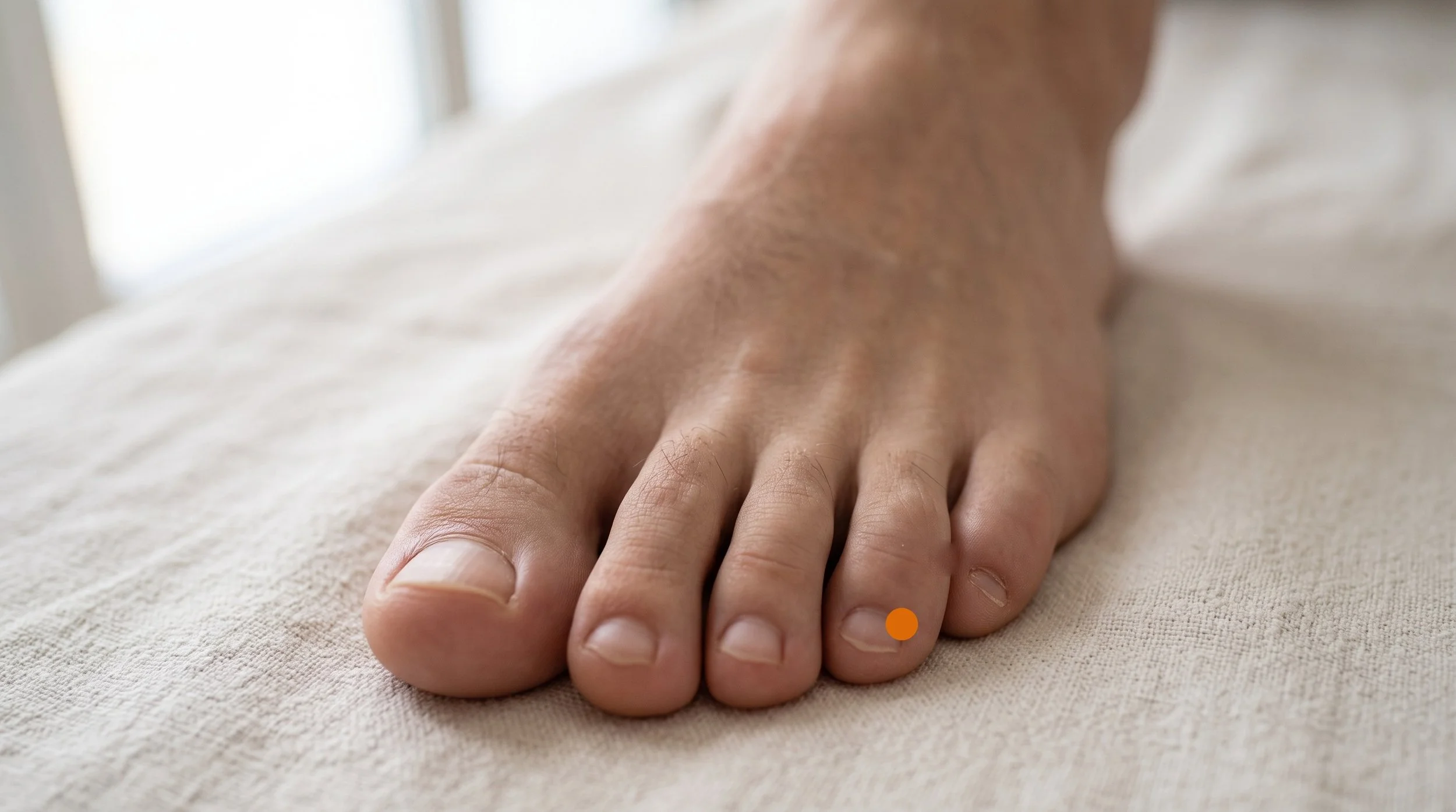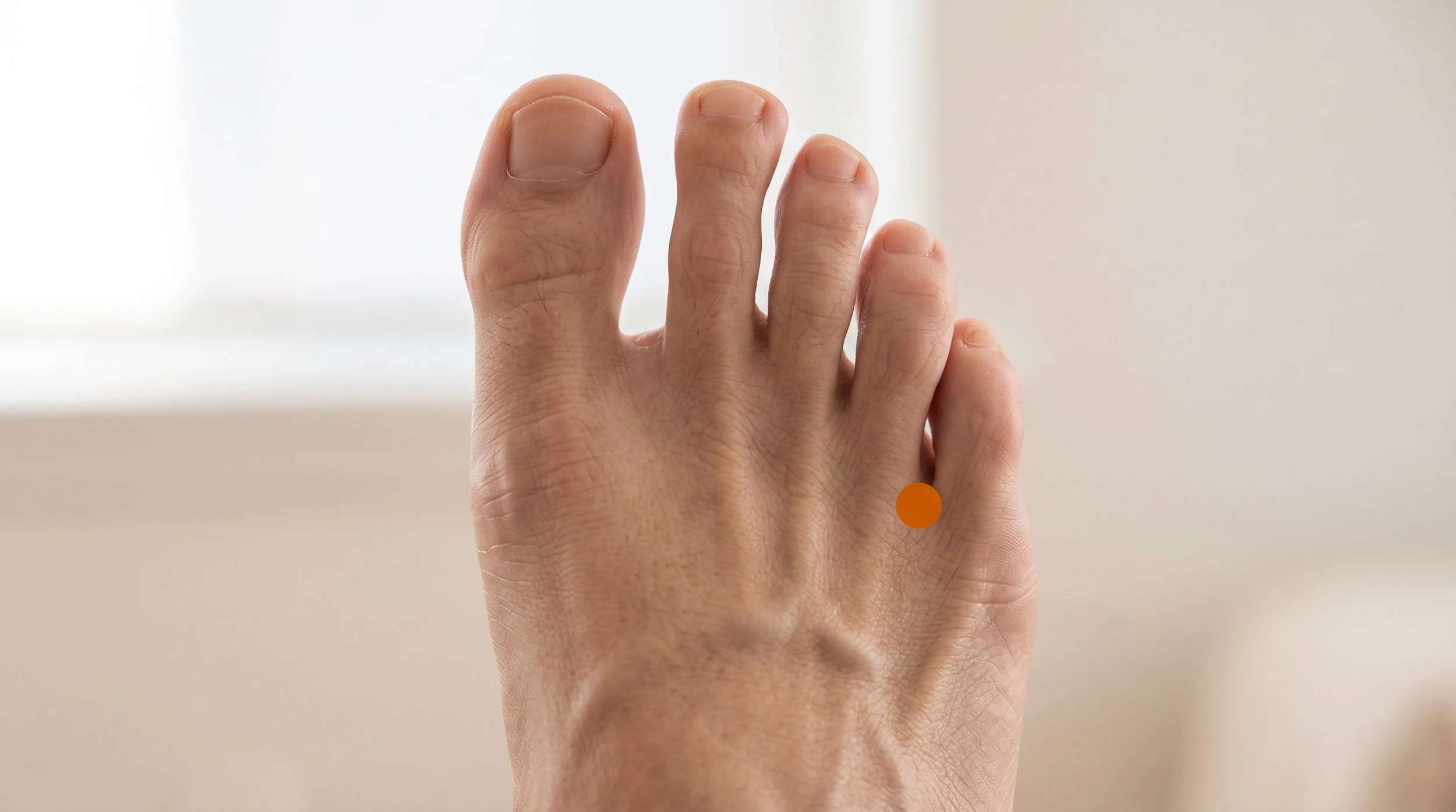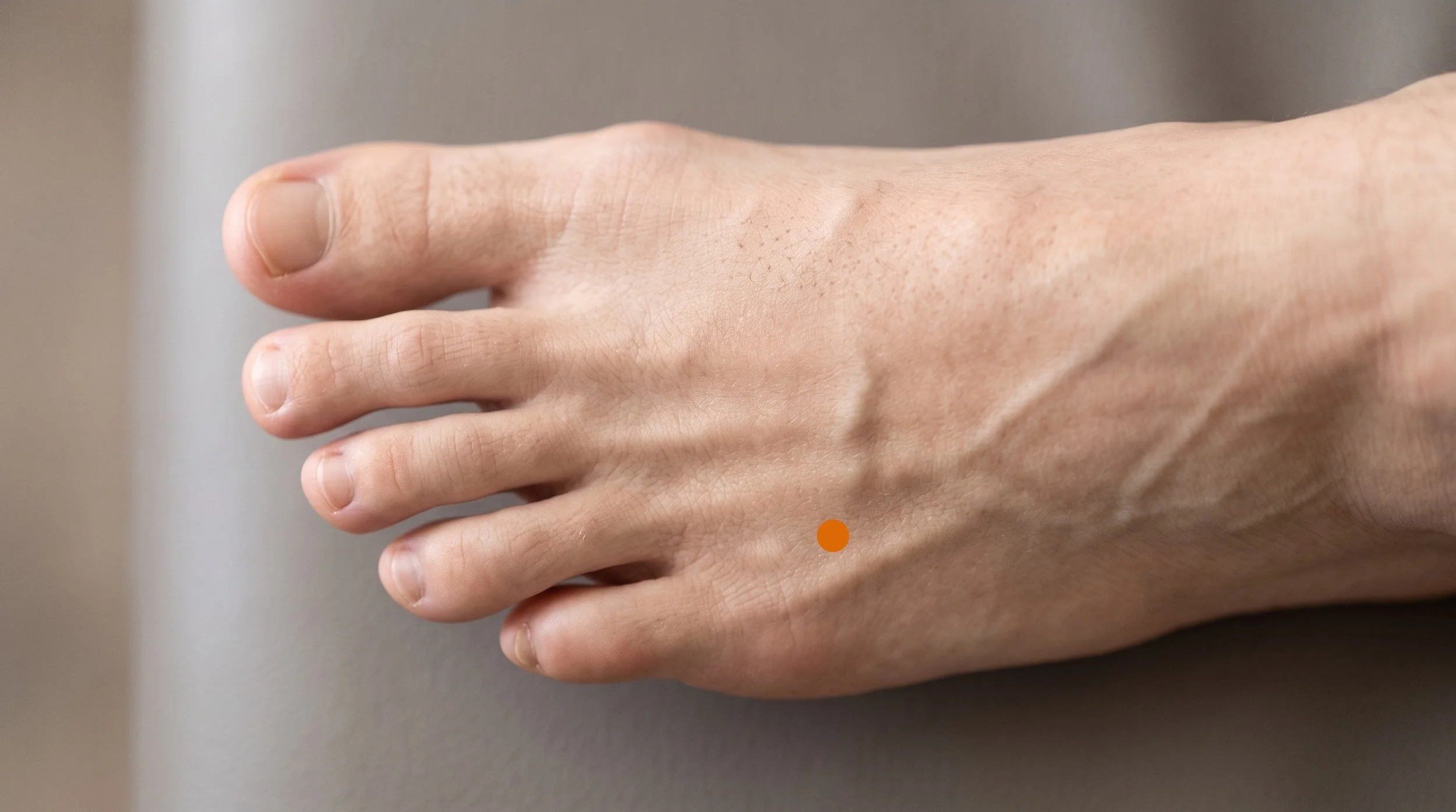
HT9 Acupuncture Point (Shaochong)
The Lesser Rushing Point at the Corner of the Little Fingernail: Anatomy, Mechanism, and Why This Jing-Well Point Sits at the Center of Classical First Aid and Modern Calming Protocols
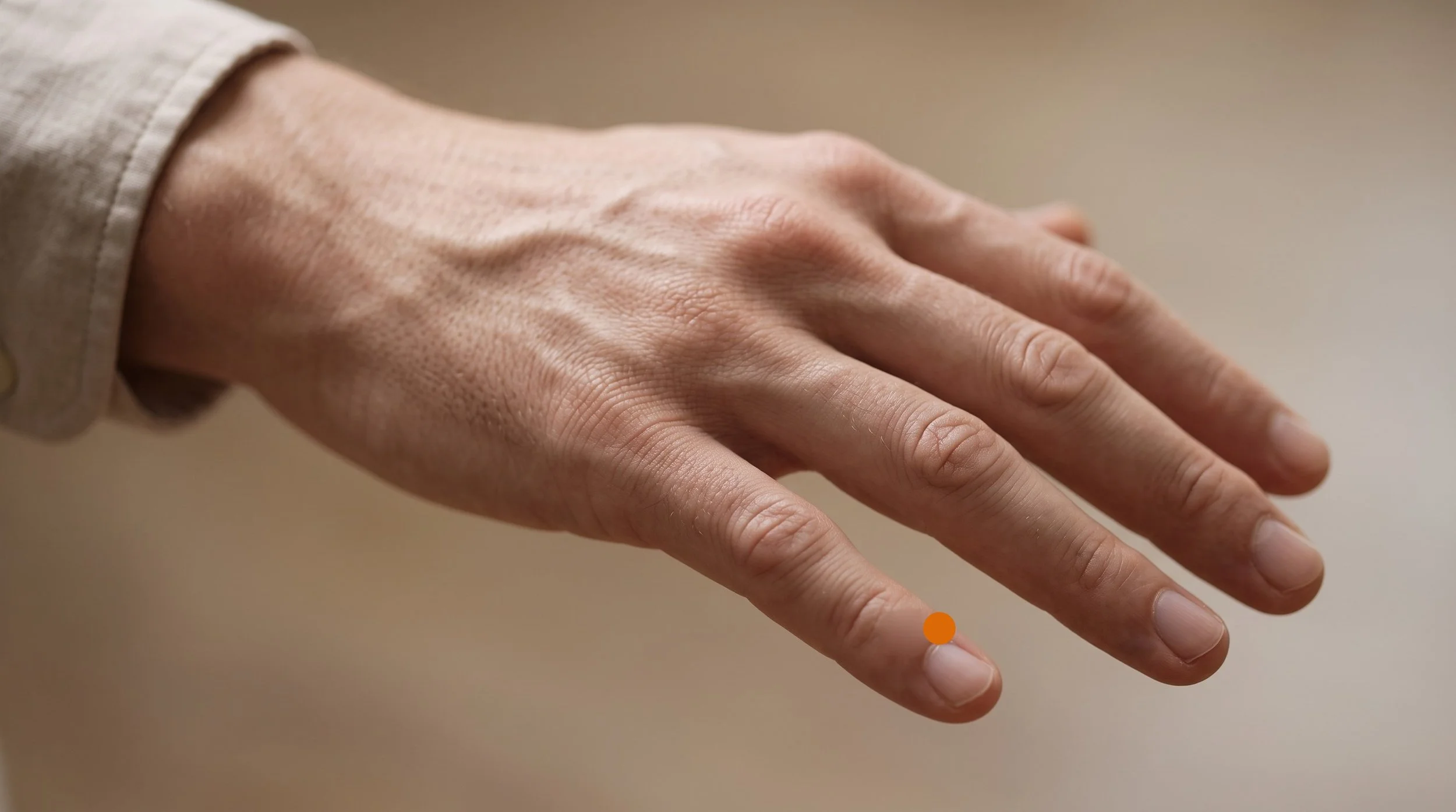
HT9 (Shaochong, often translated as Lesser Rushing) is the final point of the Heart channel, sitting on the thumb side of the little finger just off the corner of the nail. In plain terms, if you look at your pinky nail and find the corner closest to your ring finger, HT9 is roughly a nail's width back from that corner, in the fold of skin beside the nail.
It is the jing-well point of the Heart channel and the wood point among its five-shu points, which in classical texts made it the go-to location for sudden, dramatic presentations: collapse and loss of consciousness, agitation and fright, heat in the tongue and throat, and pain in the chest.
Modern clinicians reach for the ht9 acupuncture point far less often than HT7 or PC6, but when they do, it is usually for a specific reason: this is one of the most densely innervated pieces of skin on the body, and stimulating it produces a fast, unmistakable sensory event that can be used to interrupt an escalating state of arousal.
- HT9 sits at the radial nail corner of the little finger, about 0.1 cun from the angle of the nail, in skin and nail fold rather than over any muscle belly. Needling conventions are shallow: 0.1 to 0.2 cun angled back toward the hand, or a quick prick to bleed with a sterile lancet (Deadman & Al-Khafaji, 2001).
- Traditionally, HT9 is classified as the jing-well point and the wood point of the Heart channel, and classical sources attribute to it the ability to revive consciousness, clear heat affecting the tongue, throat, mouth and eyes, and settle the spirit in states of fright and agitation (Deadman & Al-Khafaji, 2001; Maciocia, 2006).
- Anatomically the point lies in the terminal field of digital branches derived from the ulnar nerve (Cheng, 1987), a C8 to T1 territory with extremely high receptor density, which is why even shallow stimulation here registers strongly in the central nervous system.
- The mechanism story is neurophysiological rather than energetic: intense small-fiber input from the fingertip reaches dorsal horn segments that neighbor those receiving cardiac and upper thoracic visceral afferents, and drives brainstem circuits associated with descending inhibition and autonomic modulation (Zhao, 2008).
- Research on this specific point is thin and mostly indirect. Animal work on bloodletting at the twelve hand jing-well points, HT9 among them, reports changes in cerebral perfusion and coagulation profiles after experimental brain injury (Li et al., 2020), while human evidence for the conditions HT9 is traditionally used for comes from multi-point protocols in anxiety reviews (Yang et al., 2021; Li et al., 2022).
- De qi at HT9 is not the deep, spreading ache patients associate with ST36 or GB34. It is sharp, bright and brief, sometimes with a small electric flick up the ulnar side of the hand, and it settles within seconds, which is exactly the quality clinicians are after when the point is used to break a spiral of panic.
Feeling Anxious, Wired, or Aware of Every Heartbeat?
Racing thoughts, chest tightness and a pounding pulse are among the most common reasons people first walk into our clinic. At Morningside Acupuncture we treat these presentations with calming distal points such as HT7 and PC6, and we may add a brief, shallow stimulation at HT9 when a session needs a sharper sensory anchor. Treatment is paired with breathing work and practical between-session self-care so the effect carries into your week. Schedule a visit and let's build a plan around how your nervous system actually behaves.
Schedule NowAnatomy of HT9: Why the Corner of the Little Fingernail Is Such an Important Location
The tissue at HT9 is simple and shallow. Just under the surface lies thin epidermis over a richly papillated dermis, then a very slim layer of subcutaneous tissue sitting almost directly on the periosteum of the distal phalanx, with the lateral nail fold and the edge of the nail matrix immediately adjacent. There is no muscle belly at this location and no joint capsule to enter, which is why every major text describes only a shallow insertion or a bleeding technique.
What loads this region in daily life is not overuse in the muscular sense but mechanical and thermal exposure: gripping, typing, phone use, cold hands in winter, and the constant micro-trauma the fingertips absorb. Patients frequently describe the little finger as the coldest, most reactive digit, and clinically that reactivity is part of the point's appeal.
Nerve geography is where HT9 earns its reputation. The point sits in the terminal distribution of the digital nerve branches derived from the ulnar nerve, accompanied by a dense arterial and venous network from the proper palmar digital vessels (Cheng, 1987). Fingertip skin carries one of the highest densities of mechanoreceptors and free nerve endings anywhere in the body, so a needle here recruits a large volume of A-delta and C-fiber traffic from a tiny surface area.
That input enters the cord at roughly the C8 to T1 level, immediately adjacent to the upper thoracic segments where cardiac and thoracic visceral afferents arrive, which offers a plausible segmental basis for the classical association between this finger point and sensations in the chest. From there, spinal projections reach brainstem structures involved in descending pain modulation and autonomic regulation, mechanisms described in detail in the acupuncture analgesia literature (Zhao, 2008).
Studies pooling heart rate variability outcomes suggest that needling can shift markers of sympathetic and parasympathetic balance, although effects vary considerably between trials (Chung et al., 2014).
Vascular anatomy is the main safety consideration. Fingertips are packed with arteriovenous anastomoses and glomus bodies that regulate temperature, so this area bleeds readily and is exquisitely sensitive. That is a feature when a bleeding technique is intended and a nuisance when it is not. Standard practice is perpendicular or oblique insertion directed proximally to 0.1 to 0.2 cun, or a single quick prick with a sterile disposable lancet to release one or two drops (Deadman & Al-Khafaji, 2001).
Clean technique matters more here than almost anywhere else, and needling is avoided over broken skin, paronychia, or any local infection. Patients on anticoagulants, those with bleeding disorders, and anyone with compromised peripheral circulation, including poorly controlled diabetes, are better served by other points or by acupressure. Because the sensation is strong, treating the patient in a reclined position reduces the small risk of a vasovagal response.
Related Heart Channel Related Best Acupuncture Points For AnxietyHT9 at a Glance: Classification, Location, and Clinical Use
| Category | Detail |
|---|---|
| Traditional Name | Shaochong (Lesser Rushing), HE-9 in Deadman's A Manual of Acupuncture |
| Channel Classification | Ninth and final point of the Heart channel of hand shaoyin (HT9, also written HE9) |
| Point Categories | Jing-well point of the Heart channel; wood point among the five-shu points, making it the mother or tonification point of a fire channel; exit point of the Heart channel; one of the twelve hand jing-well points used together in classical revival technique |
| Precise Location | On the little finger, at the intersection of a line along the thumb-side (radial) border of the nail and a line along the base of the nail, roughly 0.1 cun from the nail corner |
| Tissue Stimulated | Nail fold skin, dermis and thin subcutaneous tissue over the distal phalanx, with terminal digital nerve branches from the ulnar nerve and a dense capillary network; no muscle is engaged at the point itself, though nearby hand intrinsics such as the Abductor Digiti Minimi and Adductor Pollicis are common companion dry needling targets |
| Needle Depth / Direction | Shallow perpendicular or oblique insertion directed proximally, 0.1 to 0.2 cun, or a quick prick to bleed with a sterile single-use lancet |
| De Qi Sensation | Sharp and bright rather than deep and dull, often a brief electric flick along the ulnar side of the hand that fades within seconds; one of the more intense point sensations, so it is used briefly and with warning |
| Primary Clinical Uses | Traditionally used for acute agitation and fright-type presentations, palpitations and chest discomfort, sore throat and tongue-root pain, and for reviving consciousness in classical emergency technique; in modern practice it is an occasional accent point within anxiety and stress protocols |
| Common Point Combinations |
|
Deadman and Al-Khafaji's A Manual of Acupuncture presents HT9 as the terminal and most dynamic point of the Heart channel, and the traditional actions attributed to it follow the general logic of the jing-well points: restoring consciousness after collapse, clearing heat from the far end of the channel, and relieving fullness in the chest region.
Because the Heart channel and its branches are described as reaching the throat, the root of the tongue and the tissues around the eye, classical writers used this small finger point for swelling and pain of the tongue, throat dryness and obstruction, heat in the mouth, and red painful eyes, as well as for febrile agitation and restlessness. Its indication list also includes heart and hypochondriac pain, palpitations, mania-depression, epilepsy, fright with sadness, and contraction of the hand with arm pain.
What makes the classical picture striking is its symmetry: while modern use leans almost entirely toward excess and acute presentations, older sources including the Song of the Jade Dragon recommended HT9 for deficiency states of the Heart and Gall Bladder, a reading that follows from its status as the wood point, and therefore the mother point, of a fire channel. These are traditional attributions from the classical literature rather than claims tested in modern trials.
Why HT9 Is Used for Panic-Type Anxiety and Palpitations Rather Than Finger Problems
The first part of the explanation is segmental. Sensory information from the little finger travels through digital branches of the ulnar nerve (Cheng, 1987) and enters the spinal cord around the C8 and T1 levels. Afferent traffic from the heart and the structures of the upper chest arrives in the same neighborhood of the upper thoracic cord, and the classic referral pattern of cardiac pain into the medial arm and little finger is a familiar clinical illustration of that convergence.
Stimulating HT9 does not treat the heart directly, but it delivers a large, sharply defined volley of input into a segment of the cord that also processes chest and upper limb sensation. Patients often report that the tight, gripped feeling in the chest loosens slightly in the moments after the point is stimulated, and convergence within these shared segments is the most straightforward way to describe why.
The second part is central. Intense fingertip input recruits brainstem circuits associated with descending inhibition, a system in which the periaqueductal gray and rostral ventromedial medulla dampen incoming signals through serotonergic, noradrenergic and endogenous opioid pathways (Zhao, 2008).
Those same brainstem regions overlap heavily with autonomic control, which is why needling anywhere on the body can shift heart rate and heart rate variability measures, with pooled analyses suggesting effects on markers of sympathetic and parasympathetic balance while acknowledging substantial variability between studies (Chung et al., 2014). In practical terms, a brief strong stimulus that the patient must attend to can act as an interruption: attention shifts, breathing changes, and the escalating loop of interoceptive alarm loses momentum.
There is also a small body of experimental work on the jing-well points as a group. In a mouse model of traumatic brain injury, bloodletting puncture at the twelve hand jing-well points, HT9 included, was associated with better cerebral perfusion pressure and changes in coagulation measures compared with untreated injury, with the authors proposing that peripheral nerve stimulation and modest blood loss both contribute (Li et al., 2020).
Animal findings do not transfer directly to a person sitting on a treatment table with palpitations, and they should not be read as evidence that HT9 treats brain injury or heart disease. What they do support is the more modest idea that stimulation at these fingertip locations produces measurable systemic physiological responses rather than nothing at all.
What the Research Shows for HT9
It is worth being direct about the state of the evidence. There are no high-quality human trials isolating HT9, and almost every relevant study tests a multi-point protocol in which this point may or may not appear. Reviews of acupuncture for anxiety, for example, evaluate combinations that typically feature HT7, PC6, Yintang and Du20, so any conclusion applies to the treatment package rather than to a single finger point. The animal literature that does name HT9 studies it as one of twelve points used together, usually with a bleeding technique in acute injury models.
The reasonable reading is that HT9 is a traditional and physiologically plausible accent within broader protocols, not a standalone intervention with its own evidence base.
| Study | Type | Focus | Key Finding |
|---|---|---|---|
| Li et al., 2020 | Controlled animal study (mice) | Bloodletting puncture at the twelve hand jing-well points, including HT9, after experimental traumatic brain injury | Treated animals showed better cerebral perfusion and altered coagulation measures than untreated injured animals, though animal models cannot be extrapolated to human clinical care. |
| Yue et al., 2015 | Randomized controlled trial protocol | Puncturing and bloodletting at the twelve hand jing-well points as an adjunct in acute carbon monoxide poisoning | The protocol illustrates that jing-well first aid technique is being formally studied, but a published protocol reports design rather than results. |
| Xu, Li, & Zhang, 2018 | Cochrane systematic review | Acupuncture given during acute stroke, the setting closest to the classical revival indication | The review found the overall quality of evidence low to very low, with variation in technique and duration, and called for larger reliable trials. |
| Yang et al., 2021 | Systematic review and meta-analysis | Acupuncture for anxiety disorders across English and Chinese language randomized trials | Pooled results favored acupuncture over control conditions for anxiety symptoms, with a modest effect size and methodological limitations across included trials. |
| Li et al., 2022 | PRISMA-compliant systematic review and meta-analysis | Acupuncture for generalized anxiety disorder | The authors reported symptom reduction with few side effects while stating that larger, higher-quality randomized trials are still needed. |
| Chung, Yan, & Zhang, 2014 | Systematic review with meta-analysis | Effects of acupuncture on heart rate variability as a marker of autonomic activity | Included trials suggested reductions in low frequency and low frequency to high frequency ratio measures, supporting an autonomic effect while noting heterogeneity. |
| Vickers et al., 2018 | Individual patient data meta-analysis | Acupuncture for chronic pain conditions across nearly 21,000 patients | Acupuncture outperformed both sham and no-acupuncture controls for chronic pain, providing general support for needling as an active treatment rather than point-specific evidence. |
Want a Treatment Plan That Works With Your Nervous System, Not Against It?
Points on the fingers and toes are powerful precisely because they are so sensitive, which means dosing matters more than needle count. Our acupuncturists read your response in real time and adjust technique, retention and stimulation so you leave settled rather than rattled. HT9 is used sparingly and deliberately, usually as one accent within a broader Heart channel and autonomic-focused prescription. Book an appointment to see how a measured, individualized approach feels.
Schedule NowHT9 in the Context of Trigger Point Work
HT9 itself is not a trigger point, since there is no muscle at the corner of the fingernail. What makes it relevant to dry needling practice is the company it keeps. Patients who present with tightness in the chest, a heavy ulnar forearm, or tingling into the ring and little fingers often have myofascial contributors in the scalenes, pectoralis minor, subclavius and the ulnar-side forearm flexors, muscles whose referral patterns can reach the medial hand and small digits (Simons, Travell, & Simons, 1999).
At Morningside we assess those tissues first, because reproducing a patient's symptom by palpating a taut band is far more informative than treating a distal point in isolation.
In a typical session, dry needling of the neck, chest wall and forearm may be paired with hand intrinsic work at the abductor digiti minimi or adductor pollicis when grip strain and hand fatigue are part of the picture, then finished with quiet distal points such as HT7 and PC6. HT9 comes into play as a brief accent, most often when a patient is highly keyed up and needs a clear sensory reset before settling into a longer retention. Because the point is sharp, we describe what it will feel like beforehand, use it once rather than repeatedly, and skip it entirely for patients who find intense sensation unhelpful.
HT9 Anxiety and Palpitation Treatment at NYC's Highest-Rated Acupuncture Clinic
Morningside Acupuncture is the highest-rated acupuncture and dry needling clinic in New York City with over 500 five-star Google reviews, and our Upper West Side practice is built around clear explanations and measurable change. We combine classical point selection, including Heart channel points such as HT7, HT9 and PC6, with modern dry needling for the neck, chest and forearm tissues that so often accompany stress-driven symptoms. Every plan is documented, reviewed and adjusted based on how you respond. Schedule your first session and start with an assessment rather than a guess.
Schedule NowFrequently Asked Questions
What does HT9 feel like when needled?
Sharp and bright, not deep and dull. Because fingertip skin is so densely innervated, patients usually feel a quick sting followed by a small electric flick that may run a short distance along the ulnar side of the hand, and it typically fades within seconds. Practitioners insert very shallowly, 0.1 to 0.2 cun, and rarely retain the needle for long. If a bleeding technique is used, most people describe it as similar to a finger-stick blood test, with the whole procedure taking a moment.
Why would a point on the little finger be used for chest symptoms and anxiety?
Two reasons, one traditional and one physiological. Classically, HT9 is the endpoint of the Heart channel and jing-well points are described as the most dynamic points on a channel, used for acute and dramatic presentations. Physiologically, sensation from the little finger enters the spinal cord around the C8 and T1 levels, close to the segments receiving afferent input from the heart and upper chest, which offers a convergence-based explanation for the traditional pairing (Zhao, 2008). The intensity of the stimulus also gives it a strong attentional and autonomic effect, and needling has been associated with shifts in heart rate variability measures across trials (Chung et al., 2014).
Can I press HT9 myself between sessions?
Yes, acupressure at HT9 is easy and safe for most people. Find the corner of your little fingernail on the thumb side, then move about a nail's width back into the skin fold beside the nail. Squeeze that corner firmly between the tip of your thumb and the side of your index finger, using enough pressure to feel a clear sensation but not enough to bruise. Hold for 10 to 30 seconds while you exhale slowly, release, and repeat three to five times on each hand. Many patients find it most useful during a wave of anxiety or before a stressful meeting, and it can be repeated several times a day. Stop if the skin becomes sore or discolored, and never use acupressure in place of emergency care for chest pain or a suspected stroke.
Is HT9 safe to needle?
In trained hands, yes, with a few specific cautions. The insertion is shallow and there are no deep structures at risk, but the fingertip is highly vascular and highly sensitive, so bleeding and momentary pain are common and a vasovagal response is possible, which is why the point is often needled with the patient lying down. Sterile single-use needles or lancets are essential, and the point is avoided over infected, broken or inflamed skin. People taking anticoagulants, those with bleeding disorders, and anyone with impaired peripheral circulation such as poorly controlled diabetes should generally be treated with other points or with acupressure instead. HT9 is a traditional adjunct and is never a substitute for emergency medical care.
Where exactly is HT9 located?
On the little finger, at the corner of the nail closest to the ring finger, which is the radial or thumb-side corner. Draw one imaginary line along the thumb-side border of the nail and another along the base of the nail; HT9 is where those lines cross, roughly 0.1 cun from the nail angle, which is about the width of the nail edge itself. A useful reference point is that HT9 and SI1 sit on opposite corners of the same nail, with SI1 on the outer, pinky-side corner. If you are unsure, a licensed acupuncturist can locate it precisely in a few seconds.
References
- Deadman, P., Al-Khafaji, M., & Baker, K. (2009). A manual of acupuncture. Journal of Chinese Medicine Publications.
- Cheng, X. (Ed.). (1999). Chinese acupuncture and moxibustion (Rev. ed.). Foreign Languages Press.
- Maciocia, G. (2006). The channels of acupuncture: Clinical use of the secondary channels and eight extraordinary vessels. Churchill Livingstone Elsevier.
- Simons, D. G., Travell, J. G., & Simons, L. S. (1999). Travell & Simons' myofascial pain and dysfunction: The trigger point manual, Vol. 1: Upper half of body (2nd ed.). Williams & Wilkins.
- Zhao, Z. Q. (2008). Neural mechanism underlying acupuncture analgesia. Progress in Neurobiology, 85(4), 355-375. https://doi.org/10.1016/j.pneurobio.2008.05.004
- Vickers, A. J., Vertosick, E. A., Lewith, G., MacPherson, H., Foster, N. E., Sherman, K. J., Irnich, D., Witt, C. M., & Linde, K. (2018). Acupuncture for chronic pain: Update of an individual patient data meta-analysis. Journal of Pain, 19(5), 455-474. https://doi.org/10.1016/j.jpain.2017.11.005
- Li, B., Zhou, X., Yi, T.-L., Xu, Z.-W., Peng, D.-W., Guo, Y., Guo, Y.-M., Cao, Y.-L., Zhu, L., Zhang, S., & Cheng, S.-X. (2020). Bloodletting puncture at hand twelve Jing-well points improves neurological recovery by ameliorating acute traumatic brain injury-induced coagulopathy in mice. Frontiers in Neuroscience, 14, 403. https://doi.org/10.3389/fnins.2020.00403
- Yue, Y., Pan, X., Zhang, S., Jin, J., Wang, W., Wang, D., Han, D., Wang, G., Hu, Q., Kang, J., Ding, S., Yang, Y., Bu, H., & Guo, Y. (2015). A randomized controlled trial of puncturing and bloodletting at twelve hand Jing points to treat acute carbon monoxide poisoning as adjunct to first aid treatment: A study protocol. Evidence-Based Complementary and Alternative Medicine, 2015, 827305. https://doi.org/10.1155/2015/827305
- Xu, M., Li, D., & Zhang, S. (2018). Acupuncture for acute stroke. Cochrane Database of Systematic Reviews, 2018(3), CD003317. https://doi.org/10.1002/14651858.CD003317.pub3
- Yang, X.-Y., Yang, N.-B., Huang, F.-F., Ren, S., & Li, Z.-J. (2021). Effectiveness of acupuncture on anxiety disorder: A systematic review and meta-analysis of randomised controlled trials. Annals of General Psychiatry, 20(1), 9. https://doi.org/10.1186/s12991-021-00327-5
- Li, M., Liu, X., Ye, X., & Zhuang, L. (2022). Efficacy of acupuncture for generalized anxiety disorder: A PRISMA-compliant systematic review and meta-analysis. Medicine (Baltimore), 101(49), e30076. https://doi.org/10.1097/MD.0000000000030076
- Chung, J. W. Y., Yan, V. C. M., & Zhang, H. (2014). Effect of acupuncture on heart rate variability: A systematic review. Evidence-Based Complementary and Alternative Medicine, 2014, 819871. https://doi.org/10.1155/2014/819871
Disclaimer: This web site is intended for educational and informational purposes only. Reading this website does not constitute providing medical advice or any professional services. This information should not be used for diagnosing or treating any health issue or disease. Those seeking medical advice should consult with a licensed physician. Seek the advice of a medical doctor or other qualified health professional for any medical condition. If you think you have a medical emergency, call 911 or go to the emergency room. No acupuncturist-patient relationship is created by reading this website or using the information. Morningside Acupuncture PLLC and its employees and contributors do not make any express or implied representations with respect to the information on this site or its use. For any legal interpretation of scope of practice in your state, consult a licensed attorney or regulatory authority.
Read more from our blog