HT8 Acupuncture Point (Shaofu)
The Lesser Palace in the Hollow of the Hand: Anatomy, Mechanism, and Why This Palm Point Sits at the Crossroads of Anxiety, Palpitations, and Hand Pain
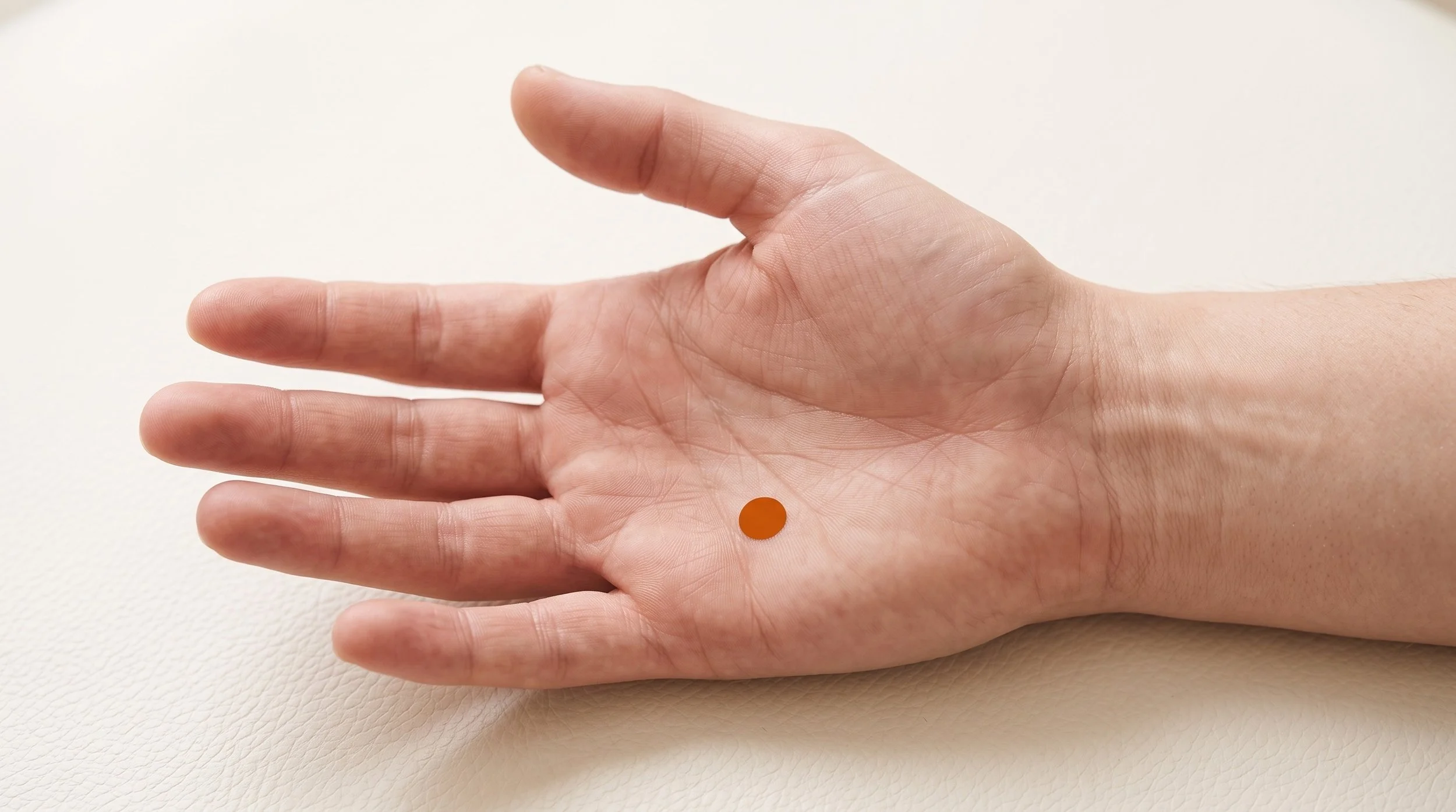
HT8 (Shaofu, translated as Lesser Palace) is the eighth point of the Heart channel and one of only two Heart channel points that sit on the hand itself. You can find it by curling your fingers into a loose fist: the spot where the tip of the little finger lands on the palm, in the soft groove between the fourth and fifth metacarpal bones and generally between the two transverse palmar creases, is the ht8 acupuncture point (Deadman et al., 2001).
Classically it's the ying-spring point and the fire point of the Heart channel, a combination that made it the traditional choice for what practitioners described as heat in the Heart with restlessness, palpitations, and hot palms. In modern terms, the ht 8 palm location places a needle in a densely innervated ulnar nerve field whose spinal segments overlap with those carrying cardiac and upper limb afferents, which is why this small, sensitive point still earns a place in treatments for anxiety, hand pain, and stress-related symptoms.
- HT8 sits in the fourth intermetacarpal space of the palm, passing through thick palmar skin and aponeurosis into the lumbrical and interosseous layer. Needling is shallow and perpendicular, usually around 0.5 cun, because the common palmar digital nerves and vessels run in this space (Deadman et al., 2001; Park & Kim, 2013).
- Traditionally, Shaofu is categorized as the ying-spring point and the fire point of the Heart channel, and classical sources attribute to it the actions of clearing heat from the Heart and Small Intestine, calming the spirit, regulating Heart qi, and relieving pain along the channel (Deadman et al., 2001). We present those categories as traditional attributions, not as physiology.
- Neurophysiologically, the point lies in territory served by the ulnar nerve, with sensory input entering the cord around C8 and T1, segments that also receive sympathetic and visceral afferent traffic from the upper thorax. Needling activates A-delta and C fibers, engaging segmental spinal circuits and descending inhibitory pathways from the periaqueductal gray and rostral ventromedial medulla (Zhao, 2008).
- The research picture is honest and mixed: meta-analyses suggest acupuncture protocols may reduce anxiety symptoms compared with control conditions, though trial quality is variable (Yang et al., 2021), and needling has been shown to shift heart rate variability toward greater parasympathetic tone (Hamvas et al., 2023). A small study needling Shaofu alone in healthy young adults found no measurable change in blood pressure, heart rate, pulse wave velocity, or ejection time, a useful reminder that single points in healthy people often produce no dramatic systemic shift (Saleem et al., 2024).
- In clinical practice we rarely use heart 8 in isolation. It's typically added to a broader prescription for palpitations with anxiety, restlessness with heat in the palms, or contraction and pain of the little finger and hand, where its palm location makes it both a channel point and a direct local target.
- De qi at the lesser palace point is distinctive: the initial insertion is sharp because palmar skin is richly innervated, then a heavy, aching, sometimes electric fullness spreads across the palm and toward the little finger. Most clinicians use a fine needle, minimal manipulation, and a brief warning to the patient.
Anxious, Wired, and Feeling Your Heartbeat in Your Chest?
Palpitations that show up with stress, a racing mind at 2 a.m., and hot restless hands are patterns acupuncturists have been treating with Heart channel points for centuries. At Morningside Acupuncture we combine HT8 and HT7 with autonomic-calming points and breath-paced needle retention, then adjust session to session based on how your sleep and heart rate variability respond. Treatment is quiet, unhurried, and built around your nervous system rather than a fixed protocol. Schedule a visit and let's map out a realistic plan.
Schedule NowAnatomy of HT8: Why the Fourth Intermetacarpal Space Is Such an Important Location
The palm is not a simple soft surface. At HT8 the needle passes through thick, highly innervated palmar skin, then through the palmar aponeurosis, a dense fibrous sheet that tethers skin to the deeper hand structures and resists shear during gripping. Below that sit the fourth lumbrical and the interosseous muscles filling the space between the fourth and fifth metacarpal bones. These small muscles flex the metacarpophalangeal joints and spread and close the fingers, and they work constantly during typing, gripping tools, holding a phone, carrying bags by the handle, and playing instruments.
Repetitive gripping loads this layer, which is one reason the fourth intermetacarpal space becomes tender in people who use their hands hard, quite apart from any Heart channel interpretation.
The nerve geography here belongs mostly to the ulnar nerve. Its superficial branch supplies the common palmar digital nerve running in this intermetacarpal space toward the fourth and fifth fingers, while its deep branch innervates the interossei and the medial lumbricals. Those fibers carry sensation back to the spinal cord around the C8 and T1 segments, the same neighborhood where visceral afferents from the upper thorax and sympathetic outflow to the heart and arm converge.
Needling here recruits small-diameter A-delta and C fibers, which drives segmental inhibition in the dorsal horn and activates descending pain-modulating pathways involving the periaqueductal gray, rostral ventromedial medulla, and endogenous opioid systems (Zhao, 2008). That convergence framework, rather than any notion of energy moving through the palm, is how we explain the sensation that spreads from the ht 8 palm point up along the ulnar side of the hand.
Safety at HT8 is about depth and precision, not about serious structural risk: there's no body cavity, organ, or lung anywhere nearby. What does matter is that the common palmar digital artery and nerve travel in this space, and the superficial palmar arch lies just proximal, so shallow perpendicular insertion of roughly 0.5 cun is the standard convention (Deadman et al., 2001).
Ultrasound work validating insertion depth ranges at five-shu points supports the general principle that distal hand and foot points need conservative, individualized depth rather than textbook numbers applied blindly (Park & Kim, 2013). Practically, we use a fine gauge needle, insert on an exhale, and warn patients that palm points sting on entry before settling.
Related Heart Channel Related PC6 Acupuncture PointHT8 at a Glance: Classification, Location, and Clinical Use
| Category | Detail |
|---|---|
| Traditional Name | Shaofu (Lesser Palace), HT8, also written HE-8 or Heart 8 |
| Channel Classification | Heart channel of Hand Shaoyin, eighth point (HT8, also written HE8) |
| Point Categories | Ying-spring point of the Heart channel; Fire point of the Heart channel (the channel's own element point in five-shu theory) |
| Precise Location | On the palm, in the depression between the fourth and fifth metacarpal bones, where the tip of the little finger rests when a loose fist is made, generally between the two transverse palmar creases |
| Tissue Stimulated | Palmar skin and palmar aponeurosis, fourth lumbrical, and the palmar and dorsal interosseous muscles of the fourth intermetacarpal space, adjacent to the hypothenar group including abductor digiti minimi |
| Needle Depth / Direction | Perpendicular insertion, approximately 0.5 cun, using a fine needle and conservative depth given the common palmar digital nerve and vessels in the space |
| De Qi Sensation | Sharp on entry, then a heavy, distending ache or mild electric spread across the palm and toward the little finger |
| Primary Clinical Uses | Palpitations with anxiety, restlessness with heat in the palms, urinary discomfort in the classical Heart-fire framing, and contraction or pain of the little finger, palm, and arm |
| Common Point Combinations |
|
In A Manual of Acupuncture, Deadman, Al-Khafaji, and Baker describe Shaofu as the ying-spring and fire point of the Heart channel, and the traditional logic of the name follows from that: a lesser palace belonging to the lesser yin channel of the hand.
Classical texts assigned ying-spring points to conditions involving heat in the body, and Chinese medicine held that clearing heat from the Heart allowed urine to pass freely, since Heart heat was thought to transfer to the coupled Small Intestine channel and from there to the Bladder. That inherited chain of reasoning explains why a point on the palm collected indications for difficult urination, bedwetting, and genital itching or pain, usually alongside insomnia, thirst, emotional agitation, and mouth or tongue sores.
The commentary also credits HT8 with regulating Heart qi in both stagnation and deficiency, covering chest oppression with frequent sighing and globus sensation on one hand, and fright-induced palpitations, worry, and fearfulness on the other, and it notes classical use for uterine prolapse based on the old idea that the uterine vessel connects to the Heart. What's striking is the reach of the pattern: an entire pelvic and emotional symptom picture organized around one tender hollow in the palm, all of it presented as traditional attribution rather than verified mechanism.
Why HT8 Is Used for Urinary Urgency and Discomfort
The idea that a point on the palm could influence bladder symptoms sounds strange until you separate the classical rationale from the physiological one. Traditionally, the connection ran through channel pairings: Heart to Small Intestine, Small Intestine to Bladder, with heat traveling along that route (Deadman et al., 2001). Physiologically, we'd frame it differently. Strong somatic input from a densely innervated distal site produces widespread effects on autonomic balance rather than an organ-specific effect, and pelvic and bladder function is heavily autonomic.
Meta-analytic data show that needling can shift heart rate variability measures toward parasympathetic predominance, which is the general direction of change most patients describe as feeling calmer and less urgent (Hamvas et al., 2023).
Beyond autonomic shifts, needling recruits small-diameter afferents that engage descending inhibitory control through brainstem circuits and endogenous opioid, serotonergic, and noradrenergic systems (Zhao, 2008). That mechanism doesn't respect organ boundaries neatly, which is exactly why single-point claims should be modest. The Shaofu-specific data we have are limited: an eight-person study of healthy young adults found that needling this point alone produced no significant change in blood pressure, heart rate, arterial stiffness measures, or left ventricular ejection time (Saleem et al., 2024).
Small samples and healthy subjects at rest rarely show much, but the honest takeaway is that HT8 is not a switch for cardiovascular or urinary function.
For bladder symptoms specifically, the best available synthesis is cautious. A Cochrane review of acupuncture for overactive bladder in adults found the evidence uncertain against sham and no treatment, with low-certainty evidence that acupuncture may produce slight improvement compared with medication and fewer minor adverse events, and no major adverse events reported (Hargreaves et al., 2022).
In practice that means HT8 may be a reasonable component of a broader treatment plan for urinary urgency or discomfort in the classical Heart-fire pattern, used alongside medical care, not as a replacement for urological evaluation.
What the Research Shows for HT8
Almost no clinical trial tests HT8 by itself. Reviews evaluate whole protocols, usually six to twelve points chosen for a diagnosis, delivered over multiple sessions, so any conclusion about this point is inferential: it may contribute to results attributed to Heart channel and calming protocols, but the isolated contribution has not been measured. The table below summarizes what's actually been studied, including one small study that needled Shaofu specifically and found no cardiovascular change in healthy volunteers. Read these as reasons for measured optimism and honest uncertainty, not as evidence that a single palm point treats anxiety or bladder symptoms.
| Study | Type | Focus | Key Finding |
|---|---|---|---|
| Hargreaves et al., 2022 | Cochrane systematic review | Acupuncture for overactive bladder in adults | Evidence versus sham and no treatment was uncertain, with low-certainty evidence suggesting acupuncture may slightly improve symptoms compared with medication and cause fewer minor adverse events. |
| Yang et al., 2021 | Systematic review and meta-analysis | Acupuncture for anxiety disorder | Pooled results favored acupuncture over control conditions for anxiety symptoms, though most included trials were methodologically weak and heterogeneous. |
| Hamvas et al., 2023 | Systematic review and meta-analysis | Manual acupuncture and heart rate variability versus placebo | Analysis of nine randomized trials found significant pre-post changes in high-frequency power and the LF/HF ratio in the verum group, consistent with increased parasympathetic tone. |
| Saleem et al., 2024 | Small controlled physiological study | Needling Shaofu (HT8) in eight healthy adults | No significant change in blood pressure, heart rate, pulse wave velocity, or left ventricular ejection time during or after needling, suggesting no acute cardiovascular effect in healthy young people. |
| Park & Kim, 2013 | Ultrasound validation pilot study | Insertion depth ranges at five-shu points including Heart channel points | Measured tissue depths supported individualized, conservative insertion at distal points rather than uniform textbook depths. |
| Vickers et al., 2018 | Individual patient data meta-analysis | Acupuncture for chronic pain across 39 trials | Acupuncture was superior to sham and to no-acupuncture control for chronic pain conditions, with effects that persisted over time, supporting needling as a reasonable option within multimodal care. |
Hand Pain, Palm Cramping, or a Little Finger That Won't Relax?
Grip-heavy work, climbing, instruments, and hours of keyboard and mouse use load the small intrinsic muscles of the palm, and the fourth intermetacarpal space is a frequent tender spot. Our clinicians assess the interossei, lumbricals, and hypothenar group, then use precise, shallow needling at HT8 and nearby myofascial targets to reduce local tenderness and restore comfortable finger motion. We pair that with grip mechanics and loading advice so the relief holds. Book an evaluation and get your hands working again.
Schedule NowHT8 in the Context of Trigger Point Work
The palm is a legitimate dry needling region, and the tissue under HT8 is the same tissue a manual therapist palpates when a patient reports deep, poorly localized palm ache after heavy gripping. Trigger points in the interossei and hypothenar muscles refer pain along the adjacent fingers and into the palm, and the intrinsic hand muscles are documented sources of hand pain and stiffness in the myofascial literature (Simons et al., 1999).
At Morningside we assess the fourth dorsal interosseous, the third palmar interosseous, and the hypothenar group, and we frequently pair precise needling at the HT8 location with treatment of [abductor digiti minimi](https://www.morningsideacupuncturenyc.com/abductor-digiti-minimi-trigger-points) and [adductor pollicis](https://www.morningsideacupuncturenyc.com/adductor-pollicis-trigger-points) when the whole hand feels tight.
We also look upstream. Palm and finger symptoms often travel with forearm flexor overload, ulnar nerve irritation at the elbow or wrist, and shoulder girdle guarding, so hand-only treatment tends to disappoint. A typical session might combine shallow needling at HT8 for the local intermetacarpal tissue, forearm flexor and pronator work, and a few autonomic-calming points, because grip tension and stress arousal frequently show up together.
Since acupuncture and dry needling both mean the use of an acupuncture needle, we move fluidly between the classical point map and the myofascial map depending on what the exam shows, and evidence for needling in chronic pain supports using it as one part of an active plan (Vickers et al., 2018).
HT8 Anxiety and Palpitation Treatment at NYC's Highest-Rated Acupuncture Clinic
Morningside Acupuncture is the highest-rated acupuncture and dry needling clinic in New York City with over 500 five-star Google reviews, and we treat stress-related symptoms every single day. Our licensed acupuncturists use Heart channel points like HT8 and Shaofu-based combinations within evidence-informed treatment plans that also address sleep, breathing, and musculoskeletal tension. You'll get clear explanations, gentle technique, and measurable goals rather than vague promises. Schedule your first session at our Upper West Side clinic today.
Schedule NowFrequently Asked Questions
What does HT8 feel like when needled?
Honestly, more than most points. Palmar skin is densely innervated, so the first millimeter is sharp, often described as a quick sting or pinch. Once the needle settles into the intermetacarpal space, that fades into a heavy, distending ache or a mild electric sensation that can spread across the palm and toward the little finger, which is the de qi response clinicians look for. Good technique makes a real difference here: a fine needle, a firm fingernail press beside the point beforehand, insertion timed with your exhale, and minimal manipulation once the needle is in. If it stays sharply painful, tell your acupuncturist, since the needle can be withdrawn slightly or repositioned.
Why needle a point in the palm for anxiety and palpitations rather than the chest?
Two reasons, one traditional and one physiological. Traditionally, HT8 is the fire point of the Heart channel, and classical sources used distal channel points to address patterns they described as Heart heat with agitation, hot palms, and fright palpitations (Deadman et al., 2001). Physiologically, distal hand points are richly innervated and provide strong, reliable afferent input with almost no risk, and needling is associated with shifts in autonomic balance toward parasympathetic predominance (Hamvas et al., 2023). Distal points are also practical: you can keep a patient comfortable, supine, and clothed while the needle stays in for twenty to thirty minutes. That said, no serious clinician treats new or worsening palpitations with acupuncture alone. Cardiac symptoms need medical evaluation first.
Can I press HT8 myself between sessions?
Yes, and it's easy to find. Curl your fingers into a loose fist and note where the tip of your little finger touches the palm, then relax the hand and press into that soft groove between the fourth and fifth metacarpal bones with the thumb of your opposite hand. Use steady, moderately firm pressure, enough to feel a distinct ache but not enough to make you tense up or hold your breath. Hold for thirty to sixty seconds, release for ten, and repeat three to five times per hand, breathing slowly with a longer exhale than inhale. Two or three rounds a day is plenty, and it pairs well with pressing HT7 at the wrist crease. Stop if you get numbness, tingling into the fingers, or lingering soreness, and skip it over broken skin, infection, or a recent hand injury.
Is HT8 safe to needle?
It's a low-risk point in trained hands. There's no lung, organ, or body cavity anywhere near the palm, so the serious risks associated with chest and neck points don't apply. The relevant cautions are local: the common palmar digital nerve and vessels run in this intermetacarpal space, so shallow perpendicular insertion of about 0.5 cun is the standard, and small bruises are the most commonly reported occurrence (Deadman et al., 2001; Park & Kim, 2013). The point is also simply more sensitive than most, which is worth knowing in advance. Our sources record no pregnancy contraindication specific to HT8. If you take anticoagulants, bruise easily, have reduced sensation in the hand, or have had hand surgery or a nerve injury, mention it so your acupuncturist can adjust technique or choose an alternative point.
Where exactly is HT8 located?
HT8 sits on the palm side of the hand, in the depression between the fourth and fifth metacarpal bones. The classic way to find it is to make a loose fist and mark where the tip of the little finger rests on the palm, then open the hand and palpate that spot. It generally falls between the two transverse palmar creases, and it's usually noticeably more tender than the tissue around it. For orientation, PC8 sits one intermetacarpal space over, between the second and third metacarpals, where the middle finger tip lands. Small variations in hand size and finger length mean palpation matters more than measurement here: find the tender hollow in the fourth space and you're at the lesser palace point.
References
- Deadman, P., Al-Khafaji, M., & Baker, K. (2009). A manual of acupuncture. Journal of Chinese Medicine Publications.
- Cunningham, P. M. (2000). Acupuncture points: A practical guide to classical and modern usage. Odyssey Press.
- Simons, D. G., Travell, J. G., & Simons, L. S. (1999). Travell & Simons' myofascial pain and dysfunction: The trigger point manual, Vol. 1: Upper half of body (2nd ed.). Williams & Wilkins.
- Zhao, Z. Q. (2008). Neural mechanism underlying acupuncture analgesia. Progress in Neurobiology, 85(4), 355-375. https://doi.org/10.1016/j.pneurobio.2008.05.004
- Vickers, A. J., Vertosick, E. A., Lewith, G., MacPherson, H., Foster, N. E., Sherman, K. J., Irnich, D., Witt, C. M., & Linde, K. (2018). Acupuncture for chronic pain: Update of an individual patient data meta-analysis. Journal of Pain, 19(5), 455-474. https://doi.org/10.1016/j.jpain.2017.11.005
- Hargreaves, E., Baker, K., Barry, G., Harding, C., Zhang, Y., Kandala, N. B., Zhang, X., Kernohan, A., & Clarkson, C. E. (2022). Acupuncture for treating overactive bladder in adults. Cochrane Database of Systematic Reviews, 2022(9), CD013519. https://doi.org/10.1002/14651858.CD013519.pub2
- Yang, X. Y., Yang, N. B., Huang, F. F., Ren, S., & Li, Z. J. (2021). Effectiveness of acupuncture on anxiety disorder: A systematic review and meta-analysis of randomised controlled trials. Annals of General Psychiatry, 20, 9. https://doi.org/10.1186/s12991-021-00327-5
- Hamvas, S., Hegyi, P., Kiss, S., Lohner, S., McQueen, D., & Havasi, M. (2023). Acupuncture increases parasympathetic tone, modulating HRV: Systematic review and meta-analysis. Complementary Therapies in Medicine, 72, 102905. https://doi.org/10.1016/j.ctim.2022.102905
- Park, M., & Kim, S. (2013). A validation study on the insertion depth ranges of the five phase points by using musculoskeletal ultrasound: A pilot study. Complementary Therapies in Medicine, 21(6), 641-648. https://doi.org/10.1016/j.ctim.2013.08.003
- Saleem, A. F., Al-Wahab, Z. N., & Al-Gailani, B. T. (2024). Effect of acupuncture at Shaofu acupoint on the cardiovascular system of healthy individuals. Polish Journal of Medical Physics and Engineering, 30(3), 127-130. https://doi.org/10.2478/pjmpe-2024-0015
Disclaimer: This web site is intended for educational and informational purposes only. Reading this website does not constitute providing medical advice or any professional services. This information should not be used for diagnosing or treating any health issue or disease. Those seeking medical advice should consult with a licensed physician. Seek the advice of a medical doctor or other qualified health professional for any medical condition. If you think you have a medical emergency, call 911 or go to the emergency room. No acupuncturist-patient relationship is created by reading this website or using the information. Morningside Acupuncture PLLC and its employees and contributors do not make any express or implied representations with respect to the information on this site or its use. For any legal interpretation of scope of practice in your state, consult a licensed attorney or regulatory authority.
Read more from our blog