ST44 Acupuncture Point (Neiting)
The Inner Court of the Second Web Space: Anatomy, Mechanism, and Why This Small Foot Point Anchors Toothache, Facial Pain, and Digestive Treatment
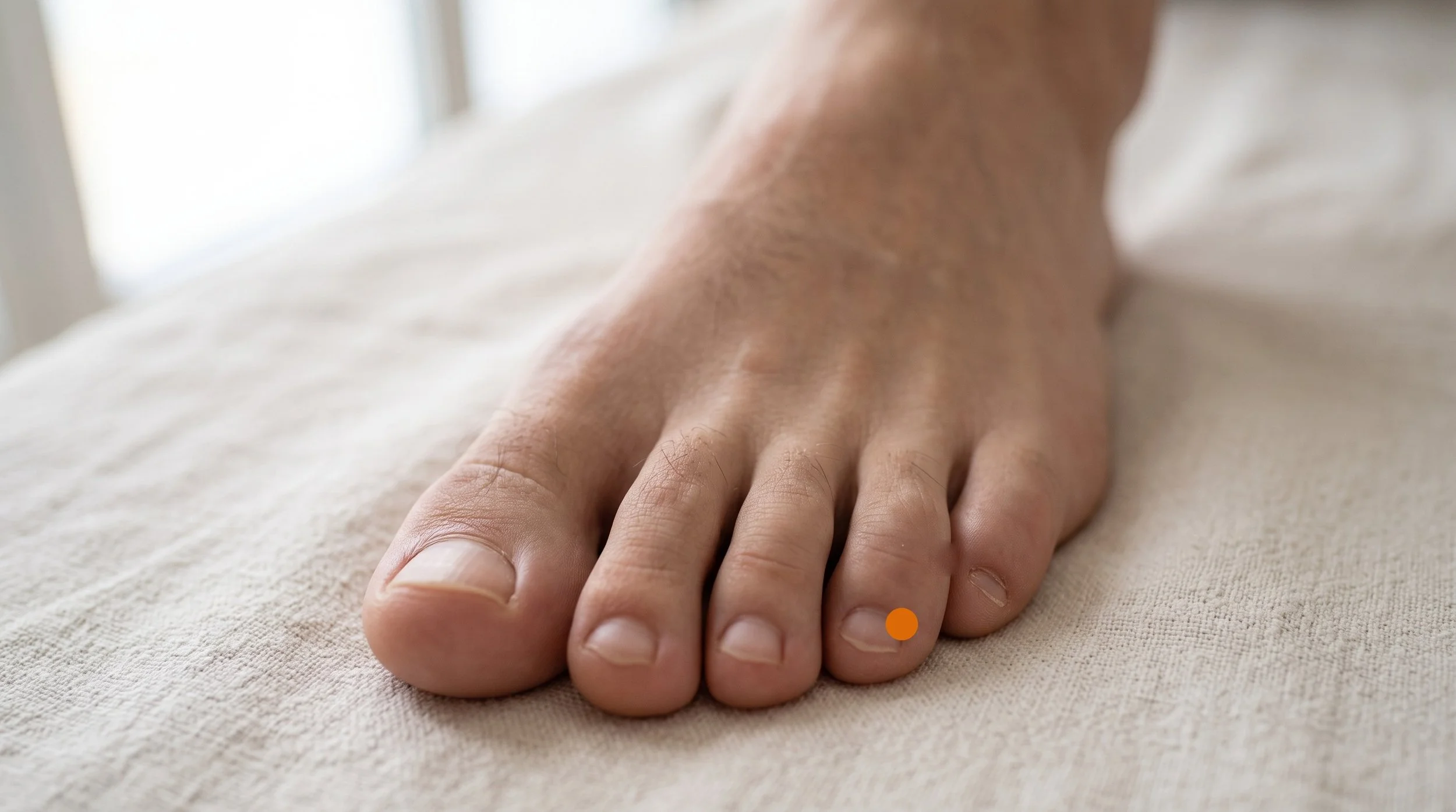
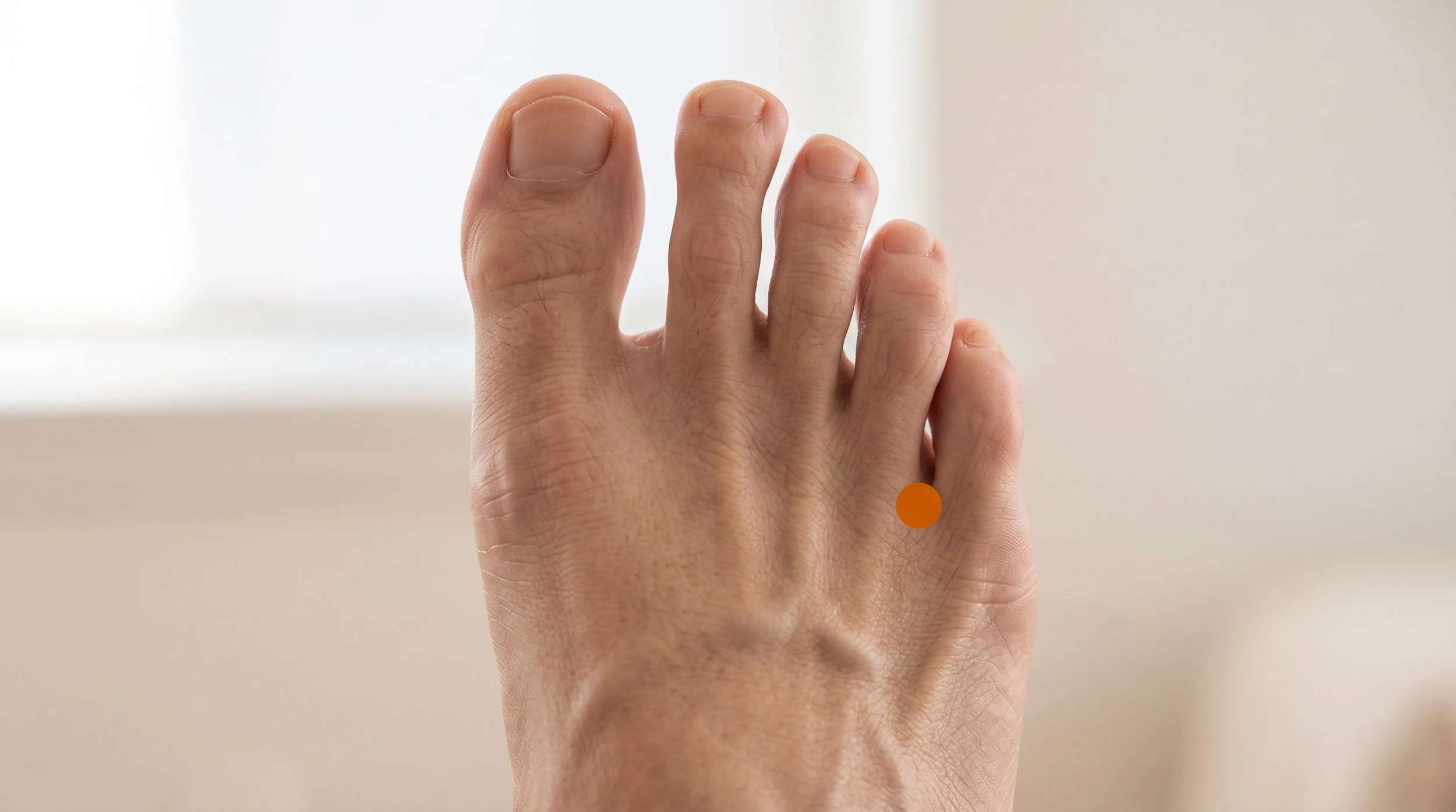
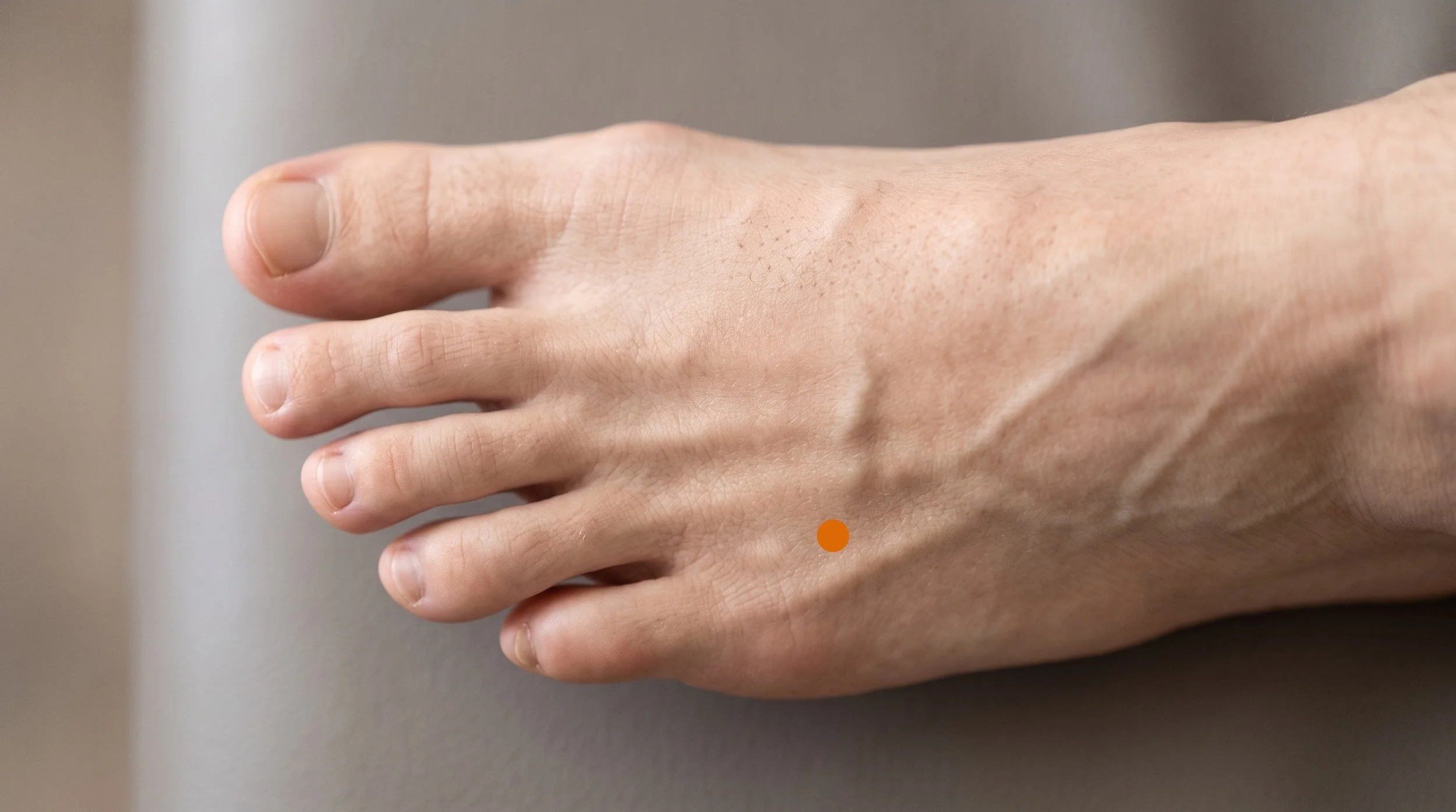
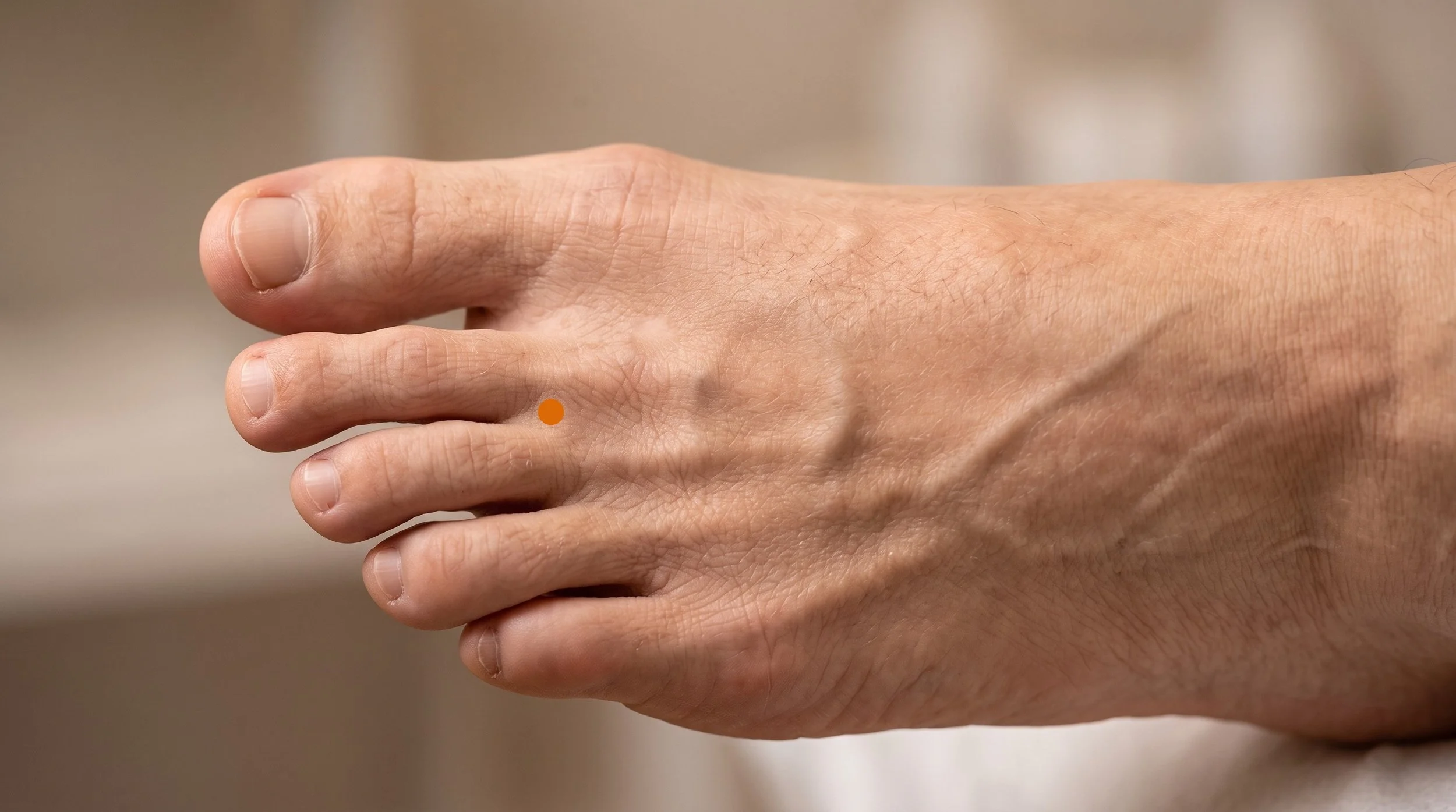
ST44, called Neiting or Inner Court, sits in the small notch of skin between the second and third toes on the top of the foot, right where the tan skin of the dorsum meets the paler skin of the sole. It's the ying-spring and water point of the Stomach channel, and despite being about as far from the jaw as a point can get, it's one of the most heavily used distal points in the entire classical repertoire for toothache, facial pain, and heat-type digestive complaints.
Patients often find it surprising that a needle placed between two toes is chosen for pain in the face, but the logic is consistent: the Stomach channel runs from the face to the foot, and distal points on that channel have been used for well over a thousand years to influence its far end. Modern clinicians also use ST44 for local forefoot and web space pain, which makes it a genuinely dual-purpose point.
- Location and layers: ST44 lies at the margin of the web between the second and third toes at the junction of the red and white skin, where the tissue is thin, mobile, and only a few millimeters deep before the needle reaches the fascia over the interossei. Standard needling is shallow, roughly 0.3 to 0.5 cun perpendicular, with an option to angle proximally along the web.
- Traditional categories, translated: classical texts designate ST44 as the ying-spring and water point of the Stomach channel and one of Ma Dan-yang's celebrated heavenly star points, with actions described as clearing heat from the Stomach channel, harmonizing the intestines, and calming the spirit. In neurophysiological terms, those descriptions map onto a strong distal somatic input that recruits spinal and brainstem pain modulation plus autonomic reflex effects.
- Nerve story: the point is supplied by dorsal digital nerve branches between the second and third toes, feeding into lumbar and upper sacral segments, and needling here activates small-diameter afferents that engage descending inhibitory pathways from the midbrain and brainstem (Zhao, 2008).
- Research picture: ST44 is one of the few classical foot points studied directly with functional imaging, where manual needling produced broad deactivation across limbic and paralimbic regions alongside activation of sensorimotor cortex, thalamus, and insula, though similar patterns appeared at neighboring points (Fang et al., 2009). Reviews of acupuncture for acute dental pain and for trigeminal neuralgia report favorable but methodologically limited results (Müller et al., 2023; Yin et al., 2022).
- Clinical framing: at Morningside we rarely use ST44 alone. It's typically part of a distal and local pairing, most often with LI4 for jaw and facial pain, or with ST36 when the goal is digestive regulation, an approach consistent with the individual patient data showing acupuncture's modest but durable effects across chronic pain conditions (Vickers et al., 2018).
- De qi: because the skin here is thin and richly innervated, insertion is briefly sharp for many people, then settles into a heavy, spreading ache through the web that may travel toward the ankle. That spreading quality is the sensation practitioners look for, and it usually fades within a minute of the needle settling.
Dealing With Jaw, Tooth, or Facial Pain That Won't Settle?
Facial and dental pain often involves more than one tissue, from the jaw muscles to the nerves that supply the teeth and gums. At Morningside Acupuncture we combine distal points like ST44 and LI4 with careful local needling around the masseter, temporalis, and lateral pterygoid region when the exam supports it. Treatment is built around your history and a hands-on assessment, not a fixed protocol. Schedule a visit and we'll map out where your pain is actually coming from.
Schedule NowAnatomy of ST44: Why the Second Web Space Is Such an Important Location
ST44 sits at the proximal margin of the web between the second and third toes, on the dorsal surface, at the transition line where dorsal skin meets plantar skin. The skin here is thin and freely mobile, subcutaneous fat is sparse, and small dorsal digital veins run just beneath the surface. Deep to that thin layer, the needle encounters the fascia covering the interosseous space between the second and third metatarsals, with the long and short toe extensor tendons flanking the point on either side.
This is a mechanically busy corner of the body. Push-off loads the forefoot heavily, narrow toe boxes compress the metatarsal heads together, and forefoot splay from bunions or a collapsed transverse arch changes how load is distributed across the second and third rays. Patients with metatarsalgia, forefoot burning, or web space irritation are often tender exactly here.
The neural supply at ST44 comes from dorsal digital nerve branches serving the adjacent sides of the second and third toes, which feed back through the superficial fibular nerve into the lower lumbar and upper sacral segments. Needling engages small-diameter group III and IV afferents in skin and fascia, and those signals converge in the dorsal horn before ascending to brainstem structures that drive descending inhibition through the periaqueductal gray and rostral ventromedial medulla, with endogenous opioid and monoamine involvement (Zhao, 2008).
This is the practical reason a foot point can influence pain felt in the face: the effect isn't a local one, it's a change in how the central nervous system is grading and gating incoming nociception, including input arriving at the trigeminal brainstem complex. Imaging work that included ST44 specifically found widespread modulation of limbic and paralimbic regions during needling, along with activation of somatosensory cortex, thalamus, and insula, which fits the observation that patients often report a general settling as well as local relief (Fang et al., 2009).
The vascular structures to respect here are the dorsal digital arteries and the dorsal metatarsal artery running in the interosseous space, along with the superficial venous network draining the toes. Because there's so little tissue depth, needling is kept shallow, typically 0.3 to 0.5 cun perpendicular, or angled proximally along the web when a stronger sensation is wanted, as described in Deadman's A Manual of Acupuncture. Kim's atlas notes that moxibustion is also applicable at this point.
Clean technique matters more than usual in a web space, since skin between the toes is prone to maceration and fungal irritation, and we skip the point entirely if the skin is broken, inflamed, or infected. Extra caution applies in people with diabetes, peripheral neuropathy, or compromised circulation in the feet, where slow healing is a real consideration.
Related Dorsal Interossei Trigger Points Related Stomach ChannelST44 at a Glance: Classification, Location, and Clinical Use
| Category | Detail |
|---|---|
| Traditional Name | Neiting, translated as Inner Court or Inner Courtyard |
| Channel Classification | Stomach channel of Foot Yangming, 44th point |
| Point Categories | Ying-spring point and Water point of the Stomach channel; listed among Ma Dan-yang's heavenly star points |
| Precise Location | On the dorsum of the foot, at the margin of the web between the second and third toes, at the junction of the red and white skin, just distal to the metatarsophalangeal joints. Deadman's manual describes the point as roughly 0.5 cun proximal to the web margin. |
| Tissue Stimulated | Thin dorsal web space skin and loose subcutaneous tissue, dorsal digital nerves and small veins, extensor tendon margins, and the fascia overlying the dorsal interossei and other deep intrinsic foot muscles |
| Needle Depth / Direction | Perpendicular or oblique insertion 0.3 to 0.5 cun; classical sources also describe oblique proximal insertion along the web up to about 1 cun. Moxibustion is applicable. |
| De Qi Sensation | A brief bright or stinging sensation on insertion, followed by a heavy, spreading ache through the web space that may travel toward the toes or up the dorsum of the foot |
| Primary Clinical Uses | Toothache and lower jaw pain (traditional), facial pain including trigeminal presentations, forefoot and web space pain, sore throat and nosebleed (traditional), and heat-type digestive symptoms such as burning epigastric discomfort, constipation, and diarrhea (traditional) |
| Common Point Combinations |
|
Deadman's A Manual of Acupuncture presents ST44 as a distal point whose traditional job is to clear heat and fire from the Stomach channel, particularly along its upper course through the face, which is why classical indication lists cluster so heavily around head and face complaints: pain in the upper and lower teeth, eye and facial pain, deviation of the mouth and eye, nosebleed, sore throat, tinnitus, and thirst.
A second cluster covers the digestive tract, with abdominal pain and distention, rumbling, diarrhea, dysenteric disorder, blood in the stool, and constipation, all traditionally attributed to the point's action of harmonizing the intestines and clearing damp-heat. A third and much smaller cluster is behavioral, including an aversion to hearing people talk, a wish for quiet, and frequent yawning, which classical writers grouped under calming the spirit. Local indications for swelling and pain of the dorsum of the foot round out the picture.
Sources differ on whether ST44 favors the lower jaw while LI4 favors the upper, or whether it handles both equally well, and Deadman notes that the Stomach channel's own described pathway, which enters the upper gum and circles the lips, supports the broader reading. What's striking is the internal consistency of the classical picture: a single foot point assigned to the hottest, most inflamed presentations at the opposite end of one channel, a pattern that predates any modern understanding of segmental convergence or descending pain control by many centuries.
Why ST44 Is Used for Toothache and Facial Pain When the Needle Goes Between Your Toes
The short answer is that pain relief from acupuncture is largely a nervous system event, not a local tissue event. When a needle stimulates the small nerve fibers in the web space, that input travels to the spinal cord and then upward to brainstem centers that control how much nociceptive traffic gets through from anywhere in the body, including the face. Those descending pathways use endogenous opioids and monoamines to dampen signal transmission, and they aren't restricted to the body region where the needle sits (Zhao, 2008).
This is the same principle behind using a hand point for a headache or an ankle point for low back pain, and it's why distal needling has survived as a strategy across so many acupuncture styles.
There may also be a second layer. Studies that needled ST44 during functional imaging found broad deactivation across the limbic and paralimbic network, regions closely tied to the emotional and attentional dimensions of pain, along with activation of sensorimotor and insular areas (Fang et al., 2009).
That said, the same study observed similar patterns at nearby points and at a sham location, so it's better read as evidence that manual needling of the foot reliably engages central pain and affect networks rather than proof that ST44 has a unique brain signature. For patients, the practical upshot is that a well-placed distal needle can change both how intense pain feels and how much it bothers you.
Clinically, this is why we almost always pair ST44 rather than use it alone. For jaw and facial pain we combine it with LI4 and with local needling near the tender structures, an arrangement that classical texts and modern clinics arrived at independently. For digestive complaints we tend to pair it with ST36 and abdominal points. Across chronic pain conditions generally, the best available individual patient data show acupuncture producing real but moderate effects that persist over time, which is the honest expectation to set for any single point within a treatment (Vickers et al., 2018).
What the Research Shows for ST44
It's worth being clear about what the research can and can't tell us. Almost no trial studies ST44 in isolation. Clinical studies test multi-point protocols, and ST44 usually appears as one component of a face and jaw formula or a digestive formula, so the evidence below speaks to whether acupuncture as a whole helps these conditions rather than to the specific contribution of this point. Several of the relevant reviews also flag serious methodological limitations in the underlying trials.
The one place ST44 shows up by name is in mechanistic imaging work, which describes what needling does to brain activity without establishing clinical benefit. Read together, the picture is cautiously encouraging for pain and digestive applications, and still short on high-quality trials.
| Study | Type | Focus | Key Finding |
|---|---|---|---|
| Vickers et al., 2018 | Individual patient data meta-analysis | Acupuncture for chronic pain across musculoskeletal, headache, and osteoarthritis conditions | Acupuncture was associated with modest but statistically significant improvements over both sham and no-acupuncture controls, with effects that persisted over roughly a year. |
| Müller et al., 2023 | Systematic review and meta-analysis | Acupuncture for acute dental pain, including intraoperative and postoperative settings | Pooled results suggested lower postoperative pain scores with acupuncture compared with sham, though the authors emphasized that methodological shortcomings limit confidence in the estimate. |
| Yin et al., 2022 | Systematic review and network meta-analysis | Acupuncture methods for primary trigeminal neuralgia | Several acupuncture approaches outperformed conventional medication for pain reduction and response rate across 58 trials, but trial quality was a consistent concern. |
| Li et al., 2026 | Systematic review and meta-analysis | Acupuncture for functional dyspepsia compared with sham acupuncture | Across 23 randomized trials, acupuncture probably improved dyspepsia symptoms and quality of life without an increase in adverse events, at moderate to high certainty. |
| Fang et al., 2009 | Functional MRI mechanistic study | Manual needling at ST44, LV3, LV2, and a sham point on the foot | Needling produced extensive deactivation of limbic and paralimbic regions with activation of sensorimotor cortex, thalamus, and insula, though patterns were broadly similar across the points tested. |
| Zhao, 2008 | Narrative review of mechanisms | Neural pathways underlying acupuncture analgesia | Analgesic effects are attributed largely to activation of small-diameter afferents engaging spinal and supraspinal descending inhibition with opioid and monoamine mediation. |
Forefoot Pain, Web Space Burning, or Digestive Complaints?
ST44 sits directly over territory that gets irritated by narrow shoes, heavy forefoot loading, and long days on hard city floors, and it's also a long-standing choice for heat-type digestive symptoms like burning epigastric discomfort and constipation. We use it alongside dry needling of the intrinsic foot muscles for local complaints, or with ST36 and abdominal points when digestion is the focus. Every session includes movement and load advice you can use immediately. Book an appointment to get started.
Schedule NowST44 in the Context of Trigger Point Work
Acupuncture and dry needling both use an acupuncture needle, and at Morningside we move between classical point selection and myofascial targeting depending on what the exam shows. When a patient's main complaint is forefoot pain, burning between the toes, or the feeling of walking on a pebble, the tissue immediately around ST44 becomes a candidate for direct treatment rather than a distal lever. The dorsal interossei fill the spaces between the metatarsals just deep to the point, and the adductor hallucis and other deep intrinsic muscles sit plantar to that plane.
Trigger points in the interossei are described as referring pain along the corresponding toe and into the adjacent forefoot, a pattern that patients frequently describe as radiating or electric (Simons et al., 1999). Needling into these muscles is done with careful depth control, since the space between metatarsals is narrow and neurovascular structures run in it.
In practice this often means treating both ends of the problem in the same session. We might needle ST44 and ST43 in the web spaces, then work proximally into tibialis anterior, extensor digitorum longus, and the calf if push-off mechanics are involved, and finish with footwear and loading advice. When the same patient's chief complaint is facial or dental pain instead, ST44 keeps its distal role and the dry needling happens in the jaw and neck musculature. The point stays the same, but its job in the treatment changes completely depending on what we're trying to influence.
ST44 Toothache and Facial Pain Treatment at NYC's Highest-Rated Acupuncture Clinic
Morningside Acupuncture is the highest-rated acupuncture and dry needling clinic in New York City with over 500 five-star Google reviews, and our practitioners integrate classical point selection with modern pain science in every visit. For facial pain, dental discomfort, and forefoot complaints, ST44 is one of several tools we use within a broader plan that includes manual therapy and self-care. You'll always leave knowing why each point was chosen. Schedule your appointment today.
Schedule NowFrequently Asked Questions
What does ST44 feel like when needled?
Most people notice a brief sharp or bright sensation as the needle passes through the thin skin of the web space, since this area is densely innervated. That fades quickly and gives way to a heavy, dull, spreading ache that fills the web and sometimes travels toward the toes or up the dorsum of the foot. That spreading quality is the de qi sensation practitioners are looking for. It's a sensitive point compared with fleshier locations, so we use fine needles and shallow depth, and we adjust immediately if the sensation stays sharp rather than settling.
Why treat a point on the foot for pain in the teeth or face?
Because acupuncture analgesia is largely mediated centrally rather than locally. Needling small nerve fibers in the foot recruits spinal and brainstem circuits that reduce how much nociceptive signal gets through, including signals arriving from the face and jaw (Zhao, 2008). Classical practitioners arrived at the same pairing from a different direction, reasoning that the Stomach channel runs from the face down to the foot, so its distal points can influence its upper course. Imaging work that included ST44 found needling modulated brain networks involved in both the sensory and emotional dimensions of pain (Fang et al., 2009). The distal-plus-local combination remains one of the most reliable ways to structure a facial pain treatment.
Can I press ST44 myself between sessions?
Yes, and it's one of the easier points to self-treat. Sit with one foot resting on the opposite knee, slide your fingertip down the groove between the second and third toes until you reach the fleshy web at the base, then press upward into the notch where the skin changes color from the top of the foot to the sole. Apply firm, steady pressure with your thumb or index finger for 30 to 60 seconds, enough to feel a distinct ache without sharp pain, then release for a few seconds and repeat two or three times. You can do this two or three times a day on both feet. Skip it if the skin between your toes is broken, irritated, or infected, and stop if pressure produces numbness, tingling, or pain that lingers afterward. Acupressure is a reasonable between-session tool, not a substitute for evaluation of tooth pain, which needs a dental exam.
Is ST44 safe to needle?
In trained hands it's a low-risk point, with the main considerations being depth and hygiene rather than deep organ structures. Needling stays shallow, generally 0.3 to 0.5 cun, because there's very little tissue between the skin and the interosseous space, and practitioners angle away from the dorsal digital vessels that run alongside. Minor bruising is the most common side effect given the superficial veins here. Because web space skin is prone to moisture and fungal irritation, we don't needle through compromised skin, and we take extra care in people with diabetes, peripheral neuropathy, or reduced circulation in the feet where healing may be slower. Tell your practitioner about any of these conditions before treatment.
Where exactly is ST44 located?
For ST 44 location, look at the top of your foot and find the web of skin between the second and third toes. ST44 sits at the proximal margin of that web, at the junction of the red and white skin where the darker skin of the dorsum meets the paler skin of the sole, just distal to the knuckle joints of those two toes. Deadman's manual describes the point as roughly 0.5 cun proximal to the web margin, so you'll find slight variation between texts and styles, and practitioners palpate for the most tender or responsive spot in that small area. If you slide your finger up the groove between the second and third metatarsals from the web, stomach 44 is in the first depression you reach.
References
- Deadman, P., Al-Khafaji, M., & Baker, K. (2009). A manual of acupuncture. Journal of Chinese Medicine Publications.
- Kim, H. (2008). Handbook of Oriental medicine (3rd ed.). Harmony & Balance Press.
- Maciocia, G. (2005). The foundations of Chinese medicine: A comprehensive text for acupuncturists and herbalists (2nd ed.). Elsevier Churchill Livingstone.
- Maciocia, G. (2006). The channels of acupuncture: Clinical use of the secondary channels and eight extraordinary vessels. Churchill Livingstone Elsevier.
- Cunningham, P. M. (2000). Acupuncture points: A practical guide to classical and modern usage. Odyssey Press.
- Simons, D. G., Travell, J. G., & Simons, L. S. (1999). Travell & Simons' myofascial pain and dysfunction: The trigger point manual, Vol. 1: Upper half of body (2nd ed.). Williams & Wilkins.
- Fang, J., Jin, Z., Wang, Y., Li, K., Kong, J., Nixon, E. E., Zeng, Y., Ren, Y., Tong, H., Wang, Y., Wang, P., & Hui, K. K. S. (2009). The salient characteristics of the central effects of acupuncture needling: Limbic-paralimbic-neocortical network modulation. Human Brain Mapping, 30(4), 1196-1206. https://doi.org/10.1002/hbm.20583
- Müller, M., Schmucker, C., Naumann, J., Schlueter, N., Huber, R., & Lederer, A. K. (2023). Acupuncture in management of acute dental pain: A systematic review and meta-analysis. Japanese Dental Science Review, 59, 114-128. https://doi.org/10.1016/j.jdsr.2023.02.005
- Yin, Z., Wang, F., Sun, M., Zhao, L., & Liang, F. (2022). Acupuncture methods for primary trigeminal neuralgia: A systematic review and network meta-analysis of randomized controlled trials. Evidence-Based Complementary and Alternative Medicine, 2022, 3178154. https://doi.org/10.1155/2022/3178154
- Li, X.-X., Hu, Z.-Y., Li, Z.-C., Tang, J., Liu, Y.-Y., Zeng, D.-H., Zhou, Q.-Q., Ma, W.-B., Lan, L., & Wang, L. (2026). Efficacy and safety of acupuncture for functional dyspepsia: An updated meta-analysis of randomized controlled trials. Frontiers in Medicine, 13, 1718632. https://doi.org/10.3389/fmed.2026.1718632
- Vickers, A. J., Vertosick, E. A., Lewith, G., MacPherson, H., Foster, N. E., Sherman, K. J., Irnich, D., Witt, C. M., & Linde, K. (2018). Acupuncture for chronic pain: Update of an individual patient data meta-analysis. Journal of Pain, 19(5), 455-474. https://doi.org/10.1016/j.jpain.2017.11.005
- Zhao, Z. Q. (2008). Neural mechanism underlying acupuncture analgesia. Progress in Neurobiology, 85(4), 355-375. https://doi.org/10.1016/j.pneurobio.2008.05.004
Disclaimer: This web site is intended for educational and informational purposes only. Reading this website does not constitute providing medical advice or any professional services. This information should not be used for diagnosing or treating any health issue or disease. Those seeking medical advice should consult with a licensed physician. Seek the advice of a medical doctor or other qualified health professional for any medical condition. If you think you have a medical emergency, call 911 or go to the emergency room. No acupuncturist-patient relationship is created by reading this website or using the information. Morningside Acupuncture PLLC and its employees and contributors do not make any express or implied representations with respect to the information on this site or its use. For any legal interpretation of scope of practice in your state, consult a licensed attorney or regulatory authority.
Read more from our blog