LI1 Acupuncture Point (Shangyang)
The Metal Well Point at the Index Fingernail: Anatomy, Mechanism, and Why Such a Small Point Shows Up in Acute Throat, Tooth, and Fever Protocols
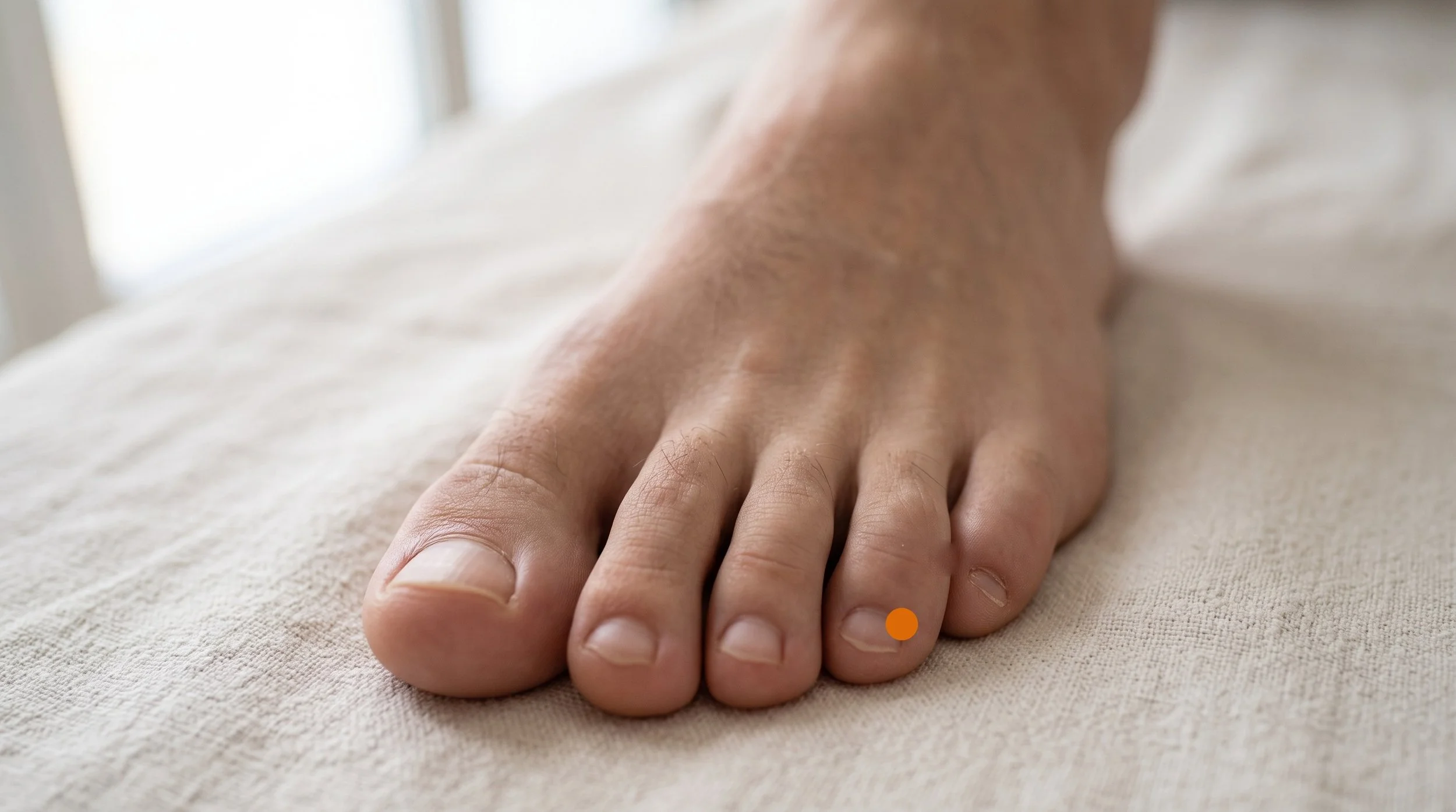
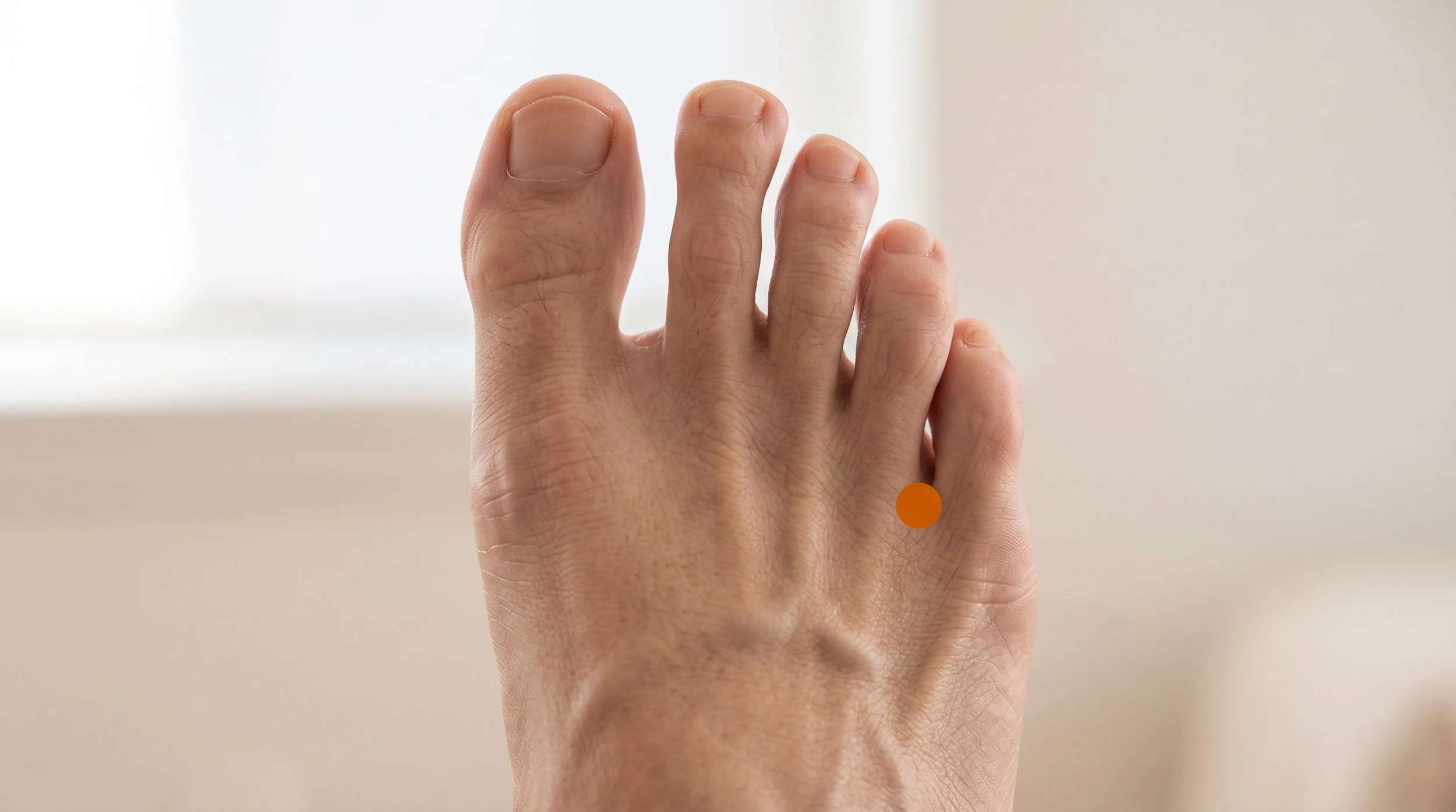
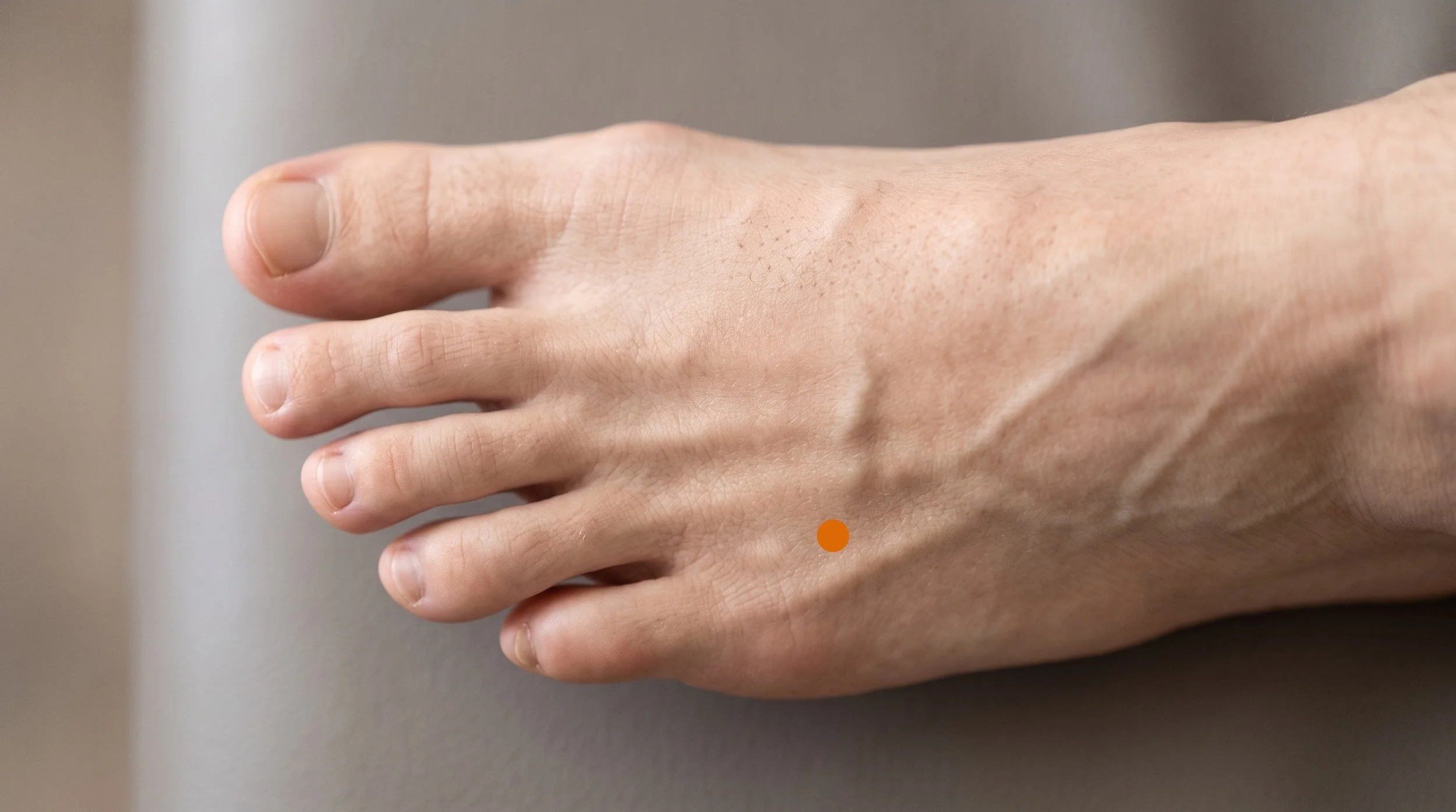
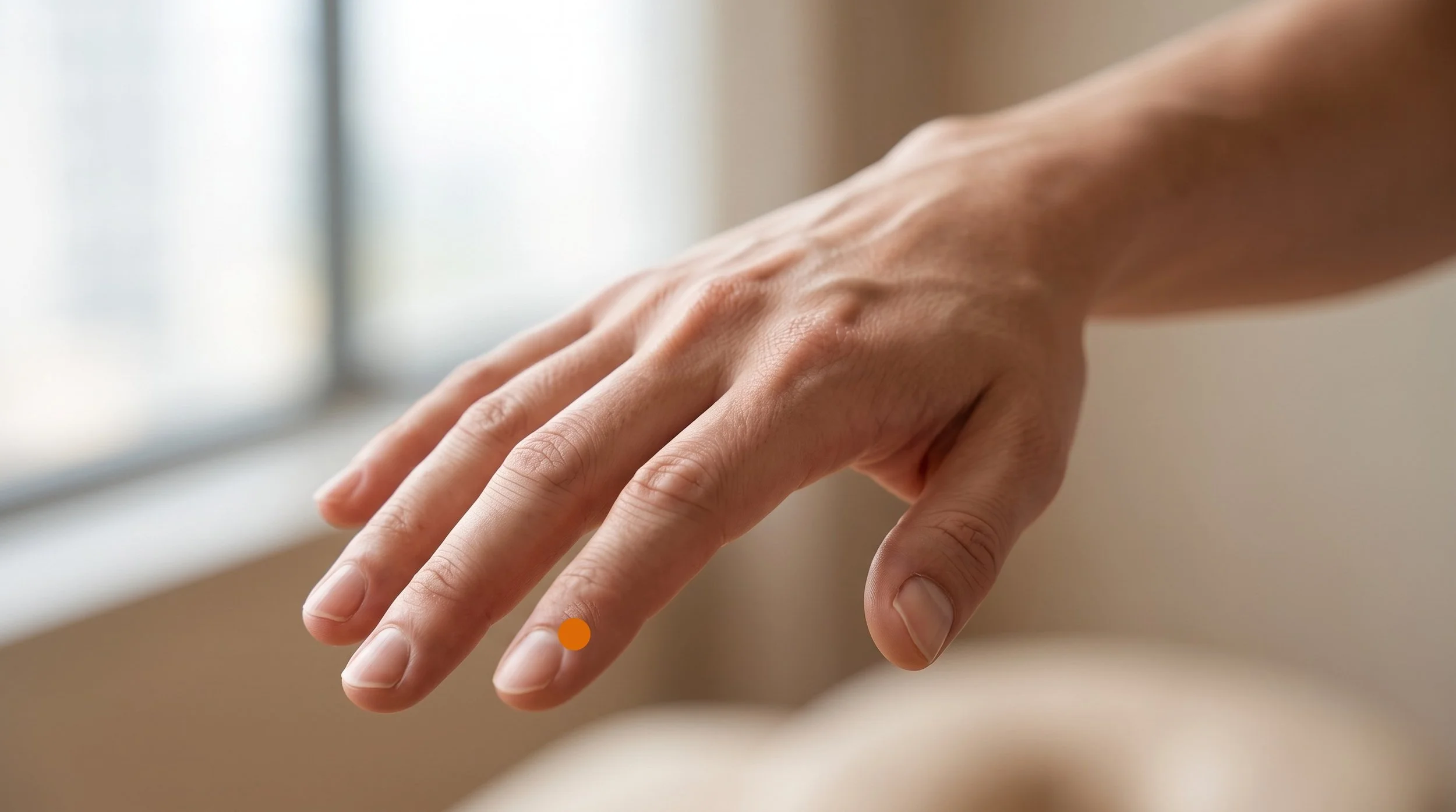
LI1 (Shangyang, often written Shang Yang, and listed in point charts as Large Intestine 1) sits at the outer corner of the index fingernail, on the thumb side, about a tenth of a cun back from where the nail edge meets the skin fold. It's the first point of the Large Intestine channel and its jing-well point, which in classical terms also makes it the Metal point of a Metal channel.
Clinically it matters for two reasons that have nothing to do with the finger itself: the fingertip is one of the most densely innervated patches of skin on the body, and classical sources reached for this tiny site in acute, hot, swollen presentations at the far end of the channel, especially sore throat, lower jaw toothache, and fevers that won't break. Modern practitioners still use the li1 acupuncture point sparingly and briefly, often with a shallow prick rather than a retained needle.
- Shangyang point location is straightforward: find where a line along the thumb-side border of the index fingernail crosses a line along the base of the nail, roughly 0.1 cun from the nail corner. The tissue there is thin skin over the nail fold and dermal papillae, tethered by fibrous septa to the distal phalanx, so needling stays extremely superficial.
- Traditional sources classify LI1 as the jing-well and Metal point of the Large Intestine channel and attribute to it the actions of clearing heat, reducing swelling, easing pain, and reviving consciousness. Translated into physiological language, those attributions describe a high-intensity, short-duration sensory stimulus rather than any movement of substance along the arm.
- The radial side of the index fingertip is served by digital branches of the median nerve, with segmental representation around C6 and C7 and an unusually large cortical footprint, which is why even a brief stimulus here generates a strong afferent volley (Zhao, 2008).
- The research picture is mixed and mostly indirect. Reviews of acupuncture for acute pharyngeal infection and for acute dental pain report modest benefits with important methodological limits (Zhang et al., 2023; Müller et al., 2023), while a controlled trial of a single Large Intestine channel point in acute tonsillitis and pharyngitis found no advantage over sham laser (Fleckenstein et al., 2009).
- In practice this is a supporting point, not a standalone treatment. We use li 1 finger stimulation as a brief adjunct inside a larger session that usually includes LI4, neck and jaw points, and manual or dry needling work on the muscles that refer into the face and throat.
- De qi at LI1 is not the dull, spreading ache people expect from ST36 or LI4. It's sharp and bright for a second or two, then fades quickly, which is one reason the point is often needled shallowly, stimulated once, and withdrawn.
Struggling With Recurring Sore Throat, Jaw Pain, or Tooth Sensitivity?
Acute throat and jaw complaints deserve a medical workup first, and we'll always say so. When infection has been ruled out or treated and discomfort lingers, we build sessions around neck, jaw, and hand points, with LI1 used briefly as a distal accent. Our acupuncturists combine channel-based point selection with careful palpation of the masseter, temporalis, and anterior neck muscles. Schedule a visit at Morningside Acupuncture and we'll map out what's driving the symptom pattern.
Schedule NowAnatomy of LI1: Why the Corner of the Index Fingernail Is Such an Important Location
At LI1 the needle meets very little tissue. Above the distal phalanx of the index finger sits a thin epidermis, a dermis packed with sensory end organs, the lateral nail fold, and fibrous septa that anchor skin directly to the periosteum. There's no muscle belly and essentially no fat to speak of. Mechanically, the index fingertip absorbs pinch and grip loads all day and takes more small trauma than almost any other part of the body, which partly explains why the region is so richly monitored by the nervous system in the first place.
The nerve geography is the whole story here. The thumb side of the index finger, including the skin around the nail, is supplied by proper digital branches of the median nerve, with dorsal contributions from the radial nerve more proximally, and the segmental representation sits around C6 and C7. Fingertip skin carries an exceptionally high density of low-threshold mechanoreceptors and free nerve endings, and it commands a disproportionately large area of somatosensory cortex.
A brief stimulus here therefore produces an afferent barrage far out of proportion to the size of the point, and that kind of input is exactly what engages spinal and supraspinal pain-modulating circuits, including endogenous opioid and monoamine systems (Zhao, 2008).
Vascularly, the fingertip is a specialized structure: paired digital arteries form a distal arch, and the pulp contains dense arteriovenous anastomoses and glomus bodies used for thermoregulation. That's relevant because stimulation here can produce visible local color and temperature changes, and because bleeding technique at this site is easy to perform but should be done deliberately. Conventional needling is perpendicular or oblique with the tip directed back toward the hand, 0.1 to 0.2 cun, or a quick prick to release a drop or two of blood.
Sterile single-use needles or lancets, no deep insertion, no repeated jabbing at the nail matrix, and extra caution in anyone on anticoagulants, with bleeding disorders, with poor peripheral circulation, or with diabetes.
Related Large Intestine Channel Related LI4 Acupuncture PointLI1 at a Glance: Classification, Location, and Clinical Use
| Category | Detail |
|---|---|
| Traditional Name | Shangyang (Shang Yang), commonly translated as Metal Yang or Shang Yang, with shang naming the note linked to the metal phase in the old five-note system |
| Channel Classification | Large Intestine channel (Hand Yangming), point 1 of 20, the most distal point of the channel |
| Point Categories | Jing-well point of the Large Intestine channel; Metal point of the five-shu sequence on a yang metal channel; one of the twelve hand well points traditionally grouped for reviving consciousness; classically described as the site where a branch of the Lung channel terminates |
| Precise Location | On the index finger, at the junction of a line along the thumb-side (radial) border of the nail and a line along the base of the nail, roughly 0.1 cun from the nail corner |
| Tissue Stimulated | Thin nail-fold skin, dermal papillae, and the terminal digital nerve field of the median nerve over the distal phalanx; no muscle is engaged at the point itself, though nearby hand targets such as Adductor Pollicis Trigger Points are often needled in the same session |
| Needle Depth / Direction | Perpendicular or oblique insertion angled proximally (back toward the hand), 0.1 to 0.2 cun, or a quick prick to bleed a few drops |
| De Qi Sensation | Sharp and bright rather than dull; a brief sting that may flash up the finger and settle within seconds, sometimes with local redness |
| Primary Clinical Uses | Acute sore throat (classically by pricking), lower jaw toothache and lower cheek pain, febrile presentations without sweating in classical use, tinnitus and hearing complaints in classical lists, index finger numbness, and emergency use with the other hand well points |
| Common Point Combinations |
|
The Deadman point manual explains the name this way: shang is the note assigned to the metal phase in an old five-note musical system, and yang marks this as the yang channel version, distinguishing it from Shaoshang LU-11 at the thumb. Traditionally, LI1 is credited with clearing heat, reducing swelling, easing pain, and reviving from collapse, and the commentary notes an ode describing the hand yangming as rooting at Shangyang and knotting near LI-18 and LI-6, which classical authors used to explain the point's listed indications for ear complaints.
Because the Large Intestine primary channel is described as crossing the lower cheek and entering the lower jaw while its divergent branch ascends the throat, the classical literature applied this point to sudden, hot, swollen problems in those regions: throat painful obstruction, lower jaw toothache, swelling under the jaw.
A branch of the Lung channel is also said to end here, which is how the older sources justified indications for chest fullness, cough, and breathlessness, and the muscle and divergent channels' connection to the spine accounts for entries about shoulder and back pain radiating toward the hollow above the collarbone. What's striking is the geometry of the pattern: a point the size of a pinhead, at the very end of the arm, credited with the most urgent effects at the opposite end of the channel.
Why LI1 Is Used for Sore Throat and Lower Jaw Toothache When It Sits on the Index Finger
The honest answer is that this isn't a segmental relationship. The throat and lower jaw are supplied largely by trigeminal and upper cervical nerves, while the index fingertip reports to C6 and C7, so there's no shared spinal segment where local convergence could explain the effect. What LI1 does offer is intensity. Fingertip skin is one of the most densely innervated surfaces on the body, and a brief, sharp stimulus there generates a large, fast-arriving afferent signal that the central nervous system cannot ignore.
That kind of strong, distant input is the classic trigger for heterosegmental pain modulation. Noxious stimulation at one body site can dampen pain processing elsewhere through descending inhibitory pathways running from the periaqueductal gray and rostral ventromedial medulla back to the dorsal horn, with opioid, serotonergic, and noradrenergic signaling involved (Zhao, 2008). Autonomic effects belong in the picture too, since stimulation at the digits reliably shifts sympathetic vasomotor tone and local blood flow in the hand. None of this requires energy to travel up the arm; it requires a nervous system that treats a fingertip signal as high-priority information.
Point-specific research on Shangyang alone is thin, and most of what exists studies the hand well points as a group. A multicenter randomized trial of bloodletting puncture at the twelve hand well points reported wake-promoting effects in acute stroke patients receiving standard care (Yu et al., 2021), and animal work has looked at how the same technique influences coagulation and neurological recovery after traumatic brain injury (Li et al., 2020). These findings are interesting mechanistically but they don't translate into everyday outpatient claims, and we don't present them that way to patients.
What the Research Shows for LI1
Very little research isolates a single fingertip point, so evidence for LI1 has to be read carefully and at arm's length. Clinical trials in sore throat, dental pain, and stroke test multi-point protocols, different needling techniques, and varied comparison groups, and LI1 is usually one contributor among several when it appears at all. The reasonable interpretation is that the broader literature offers modest, inconsistent support for acupuncture in the conditions this point is classically associated with, while the point's specific contribution remains unquantified.
| Study | Type | Focus | Key Finding |
|---|---|---|---|
| Zhang et al., 2023 | Systematic review and meta-analysis (19 RCTs, 1,701 patients) | Acupuncture for acute pharyngeal infection | Pooled results favored acupuncture on response rate and symptom measures with few adverse events, though the authors urge caution given trial quality. |
| Fleckenstein et al., 2009 | Randomized placebo-controlled trial (60 patients) | A single Large Intestine channel point treatment in acute tonsillitis and pharyngitis | A single point treatment was no better than sham laser applied to the same area for immediate sore throat pain. |
| Müller et al., 2023 | Systematic review and meta-analysis | Acupuncture in acute dental pain, including postoperative pain | Results suggested a possible role for acupuncture in acute dental pain, limited by methodological shortcomings across included trials. |
| Ernst & Pittler, 1998 | Systematic review (16 controlled trials) | Acupuncture for acute dental pain | Most included trials pointed toward an analgesic effect, but the review flagged unresolved questions about technique and comparative efficacy. |
| Yu et al., 2021 | Multicenter randomized controlled trial | Bloodletting puncture at the twelve hand well points in acute stroke | Reported wake-promoting effects alongside standard care, a hospital emergency context that does not extend to routine outpatient practice. |
| Li et al., 2020 | Controlled animal study | Hand well point bloodletting after traumatic brain injury in mice | Reported improved neurological recovery associated with changes in coagulopathy, offering mechanistic hypotheses rather than clinical guidance. |
| Vickers et al., 2018 | Individual patient data meta-analysis (about 21,000 patients) | Acupuncture for chronic pain conditions | Acupuncture outperformed both no-acupuncture and sham controls for chronic pain, with effects persisting over time. |
| Zhao, 2008 | Narrative review of mechanism research | Neural mechanisms of acupuncture analgesia | Describes segmental and descending inhibitory pathways plus opioid and monoamine signaling as the main documented mechanisms. |
Numbness or Tingling in the Index Finger and Thumb Side of the Hand?
Index finger numbness is a classical LI1 indication and a common modern complaint tied to nerve compression at the wrist, forearm, or neck. We assess where the signal is actually being pinched, then treat with a mix of local needling, dry needling of forearm and scalene muscles, and distal points along the Large Intestine channel. Treatment is graded, evidence-informed, and paired with home strategies. Book an evaluation and let's find out what your hand is telling you.
Schedule NowLI1 in the Context of Trigger Point Work
LI1 doesn't sit on a muscle, so it's never a dry needling target in the myofascial sense. What it does is pair well with muscle-focused work. When someone comes in with jaw and lower tooth pain that dentistry has cleared, we're usually palpating the masseter, temporalis, and medial pterygoid, since referral patterns from those muscles can mimic toothache convincingly (Simons et al., 1999). Throat tightness and swallowing discomfort often bring the digastric, sternocleidomastoid, and anterior scalene into the assessment. LI1 then becomes a brief distal accent at the start or end of the session rather than the main event.
For the classical indication of index finger numbness, the muscle map matters even more. We look at the first dorsal interosseous and adductor pollicis in the hand, the pronator teres and forearm flexors, and the scalenes and pectoralis minor higher up, because compression or irritation anywhere along that path can produce fingertip symptoms. Dry needling those structures addresses the mechanical contributors, while shallow stimulation at the li1 acupuncture point adds a strong sensory input at the symptomatic fingertip itself. Every needle we use, at every one of these sites, is a sterile single-use acupuncture needle.
LI1 Sore Throat and Jaw Pain Treatment at NYC's Highest-Rated Acupuncture Clinic
Morningside Acupuncture is the highest-rated acupuncture and dry needling clinic in New York City with over 500 five-star Google reviews, and our approach blends classical point knowledge with modern pain science. We use Shangyang the way the old texts did, briefly and for acute presentations, inside protocols that also address the neck, jaw, and upper back. Every session is licensed, single-use needles only, and tailored to your presentation. Schedule your appointment today and see how thoughtful, conservative needling feels.
Schedule NowFrequently Asked Questions
What does LI1 feel like when needled?
Sharp and quick. Fingertip points don't produce the heavy, spreading ache people associate with points like LI4 or ST36. Expect a brief sting, sometimes with a flash of sensation up the finger, that settles within a few seconds. If we prick the point to bleed, you'll feel a fast pinch and see a drop or two of blood, and the whole thing takes under ten seconds. Most patients find it easier than they expected because the stimulus is over so quickly.
Why treat a sore throat or a lower tooth with a point on the index finger?
Classically, because the Large Intestine channel is described as running from this fingertip up the arm to the lower jaw and cheek, with a divergent branch through the throat, so the most distal point was used for the most acute problems at the far end. Physiologically, the explanation is different: the fingertip is densely innervated and a short intense stimulus there recruits descending pain-inhibiting pathways that act broadly rather than only at one spinal level (Zhao, 2008). It's a systemic modulation effect, not a signal traveling up the arm. In practice we combine it with local neck and jaw points rather than relying on it alone.
Can I press LI1 myself between sessions?
Yes, and acupressure here is simple. Pinch the corner of your index fingernail on the thumb side between the thumbnail and index finger of the other hand, applying firm, steady pressure at the spot about a tenth of an inch back from the nail corner. Hold for 10 to 20 seconds, release, and repeat three to five times per hand, up to a few rounds a day. Aim for a sensation that's strong but tolerable, not something that leaves the fingertip bruised. Skip it entirely if the skin is broken, the nail fold is infected or inflamed, or you have circulation problems in the hands, and never attempt bleeding technique on yourself.
Is LI1 safe to needle?
In trained hands, yes. Insertion is only 0.1 to 0.2 cun, there are no organs, major vessels, or nerve trunks at risk, and the main considerations are comfort and hygiene. We use sterile single-use needles, keep the technique shallow, avoid the nail matrix, and stimulate once rather than repeatedly. Bleeding technique needs more caution: we generally avoid it in people on blood thinners, with clotting disorders, with poor peripheral circulation or neuropathy, or anyone who is faint, depleted, or anemic. Anyone who feels lightheaded during treatment should say so immediately, and we'll reposition and pause.
Where exactly is LI1 located?
On the index finger, at the corner of the nail on the thumb side. Picture one line running along the thumb-side edge of the nail and another running along the base of the nail; Shangyang point location is where those two lines meet, roughly 0.1 cun (about a tenth of a finger-width unit, or a couple of millimeters) away from the nail corner itself. It's the mirror image of LU11 at the thumb, and it's the first point of the Large Intestine channel, which then runs up the back of the hand through LI4 and continues along the arm toward the face.
References
- Deadman, P., Al-Khafaji, M., & Baker, K. (2009). A manual of acupuncture. Journal of Chinese Medicine Publications.
- Kim, H. (2008). Handbook of Oriental medicine (3rd ed.). Harmony & Balance Press.
- Maciocia, G. (2005). The foundations of Chinese medicine: A comprehensive text for acupuncturists and herbalists (2nd ed.). Elsevier Churchill Livingstone.
- Cunningham, P. M. (2000). Acupuncture points: A practical guide to classical and modern usage. Odyssey Press.
- Simons, D. G., Travell, J. G., & Simons, L. S. (1999). Travell & Simons' myofascial pain and dysfunction: The trigger point manual, Vol. 1: Upper half of body (2nd ed.). Williams & Wilkins.
- Zhao, Z. Q. (2008). Neural mechanism underlying acupuncture analgesia. Progress in Neurobiology, 85(4), 355-375. https://doi.org/10.1016/j.pneurobio.2008.05.004
- Vickers, A. J., Vertosick, E. A., Lewith, G., MacPherson, H., Foster, N. E., Sherman, K. J., Irnich, D., Witt, C. M., & Linde, K. (2018). Acupuncture for chronic pain: Update of an individual patient data meta-analysis. Journal of Pain, 19(5), 455-474. https://doi.org/10.1016/j.jpain.2017.11.005
- Zhang, S., Cui, Y., Zhou, X., Wang, D., Yin, J., Meng, X., Cao, Y., Li, Q., & Yin, H. (2023). Efficacy of acupuncture on acute pharynx infections: A systematic review and meta-analysis. Medicine, 102(25), e34124. https://doi.org/10.1097/MD.0000000000034124
- Fleckenstein, J., Lill, C., Lüdtke, R., Gleditsch, J., Rasp, G., & Irnich, D. (2009). A single point acupuncture treatment at large intestine meridian: A randomized controlled trial in acute tonsillitis and pharyngitis. Clinical Journal of Pain, 25(7), 624-631. https://doi.org/10.1097/AJP.0b013e3181a49e35
- Müller, M., Schmucker, C., Naumann, J., Schlueter, N., Huber, R., & Lederer, A. K. (2023). Acupuncture in management of acute dental pain: A systematic review and meta-analysis. Japanese Dental Science Review, 59, 114-128. https://doi.org/10.1016/j.jdsr.2023.02.005
- Ernst, E., & Pittler, M. H. (1998). The effectiveness of acupuncture in treating acute dental pain: A systematic review. British Dental Journal, 184(9), 443-447. https://doi.org/10.1038/sj.bdj.4809654
- Yu, N. N., Xu, Z. F., Gao, Y., Zhou, Z. L., Zhao, X., Zhou, D., et al. (2021). Wake-promoting effect of bloodletting puncture at hand twelve Jing-well points in acute stroke patients: A multi-center randomized controlled trial. Chinese Journal of Integrative Medicine, 27(8), 570-577. https://doi.org/10.1007/s11655-020-3093-8
- Li, B., Zhou, X., Yi, T. L., Xu, Z. W., Peng, D. W., Guo, Y., Guo, Y. M., Cao, Y. L., Zhu, L., Zhang, S., & Cheng, S. X. (2020). Bloodletting puncture at hand twelve Jing-well points improves neurological recovery by ameliorating acute traumatic brain injury-induced coagulopathy in mice. Frontiers in Neuroscience, 14, 403. https://doi.org/10.3389/fnins.2020.00403
Disclaimer: This web site is intended for educational and informational purposes only. Reading this website does not constitute providing medical advice or any professional services. This information should not be used for diagnosing or treating any health issue or disease. Those seeking medical advice should consult with a licensed physician. Seek the advice of a medical doctor or other qualified health professional for any medical condition. If you think you have a medical emergency, call 911 or go to the emergency room. No acupuncturist-patient relationship is created by reading this website or using the information. Morningside Acupuncture PLLC and its employees and contributors do not make any express or implied representations with respect to the information on this site or its use. For any legal interpretation of scope of practice in your state, consult a licensed attorney or regulatory authority.
Read more from our blog