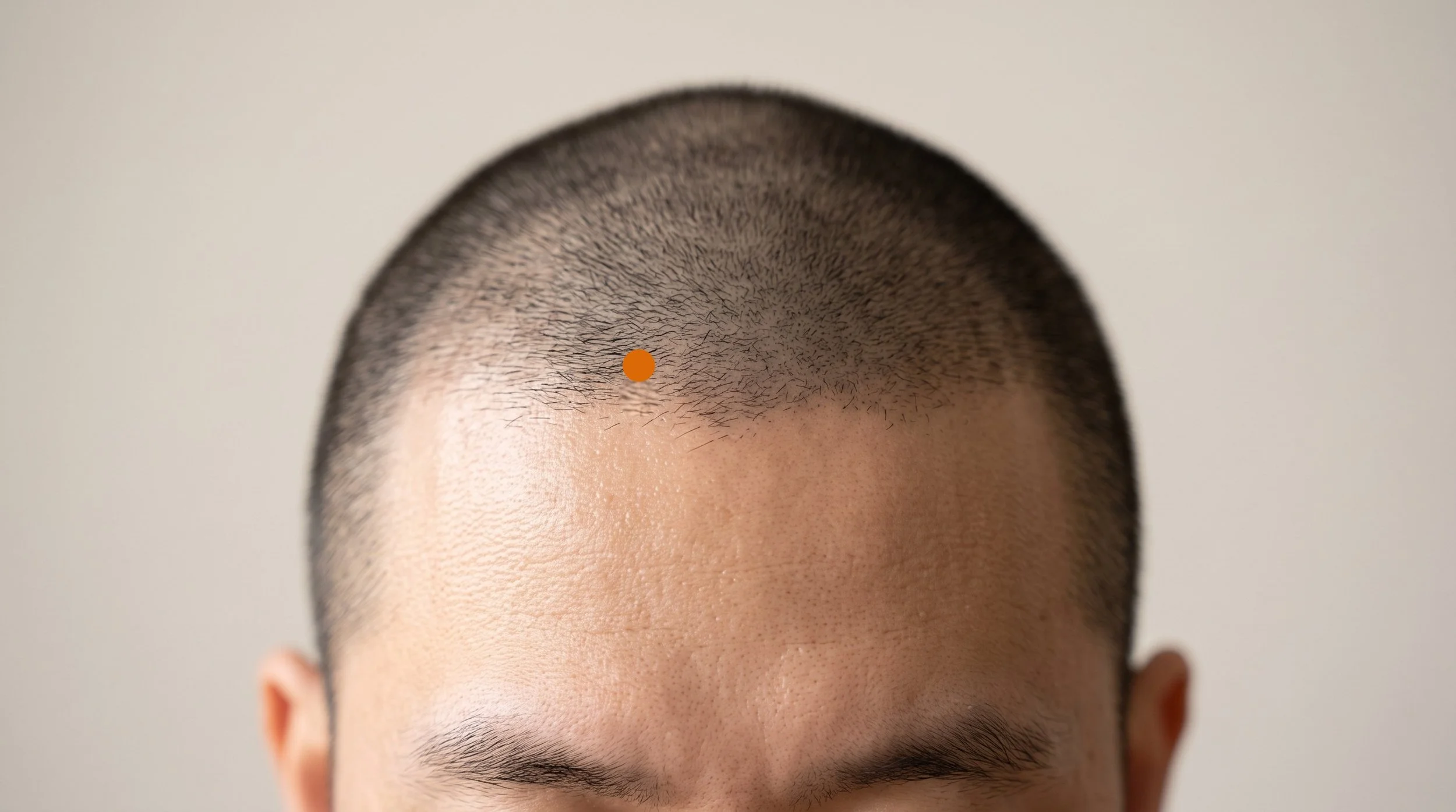
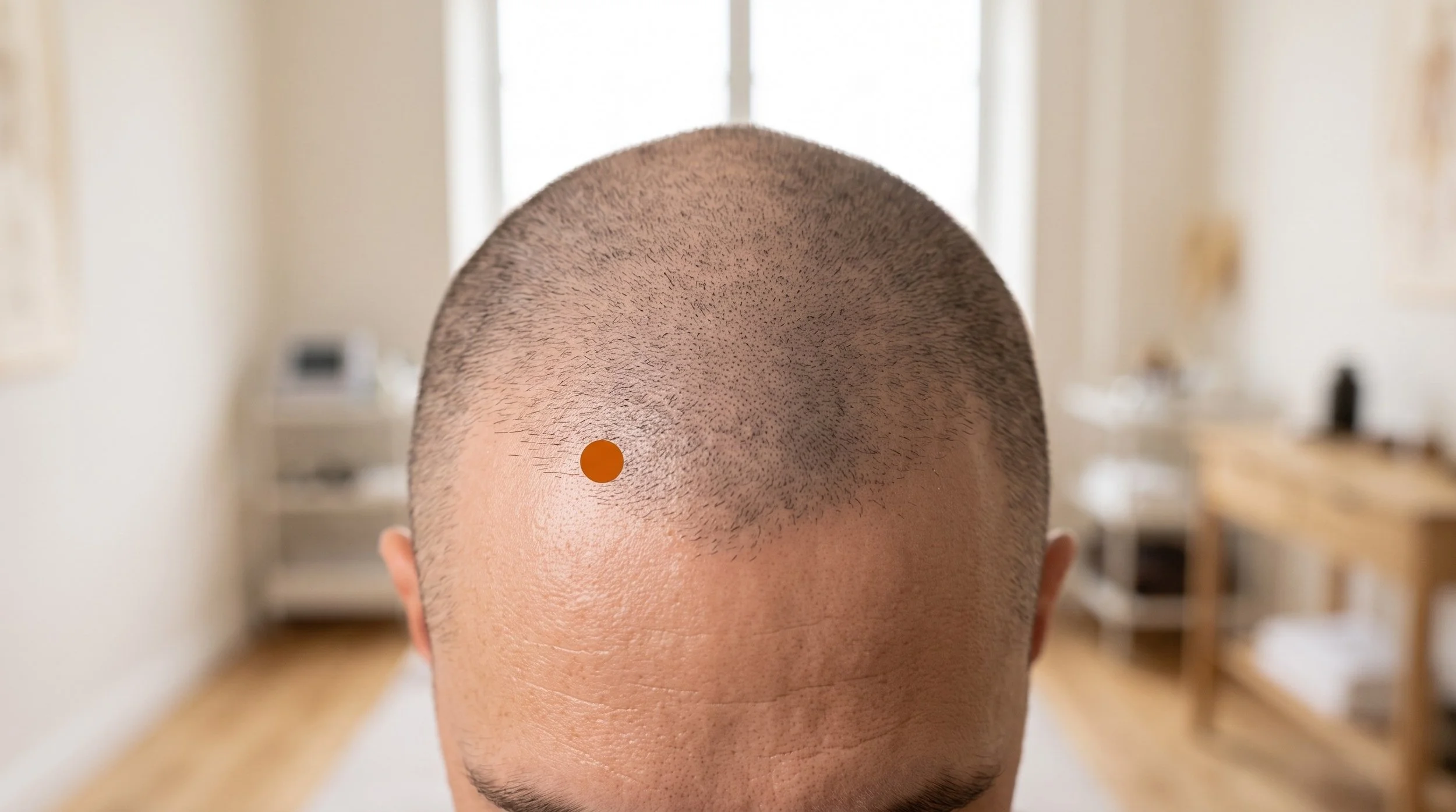
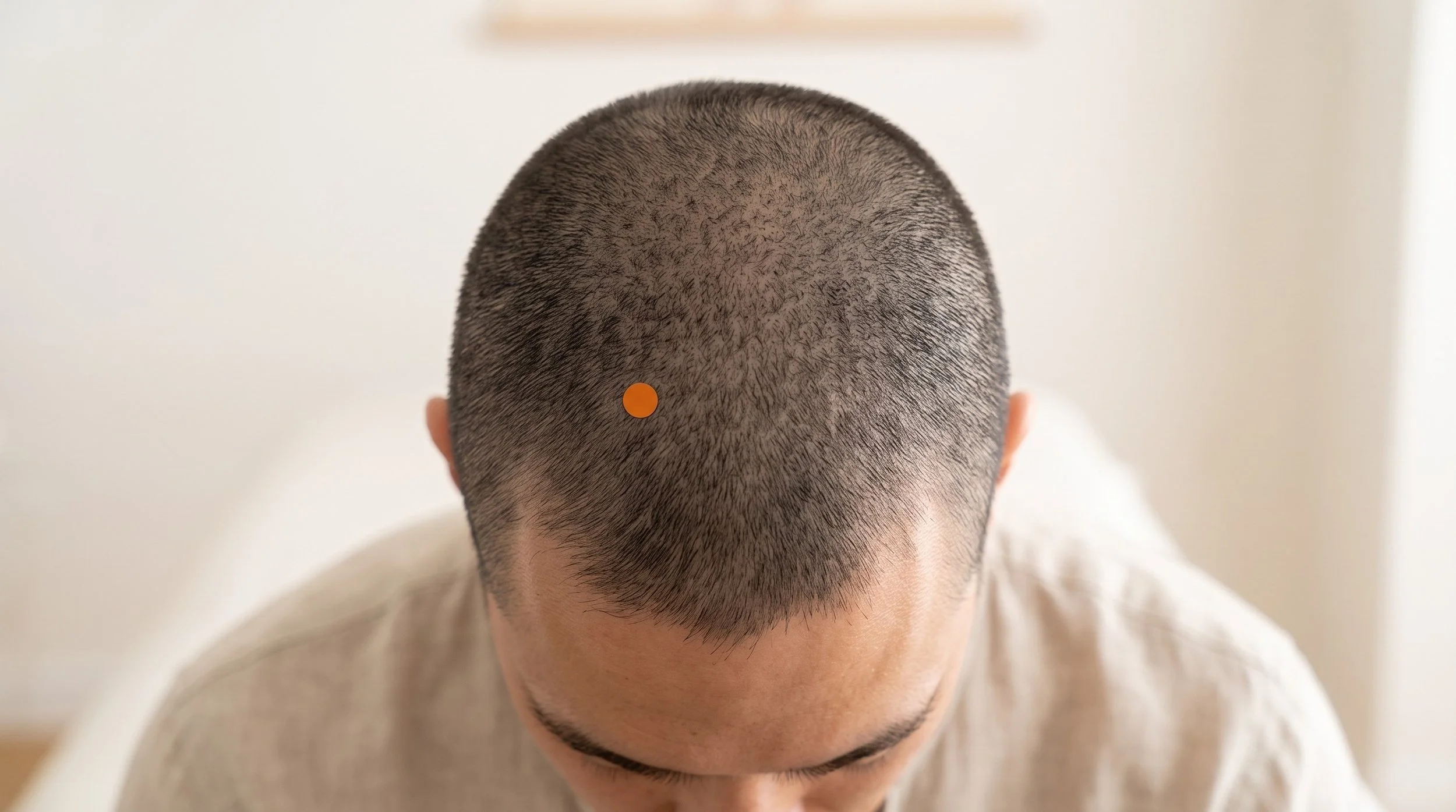
BL41 Acupuncture Point (Fufen)
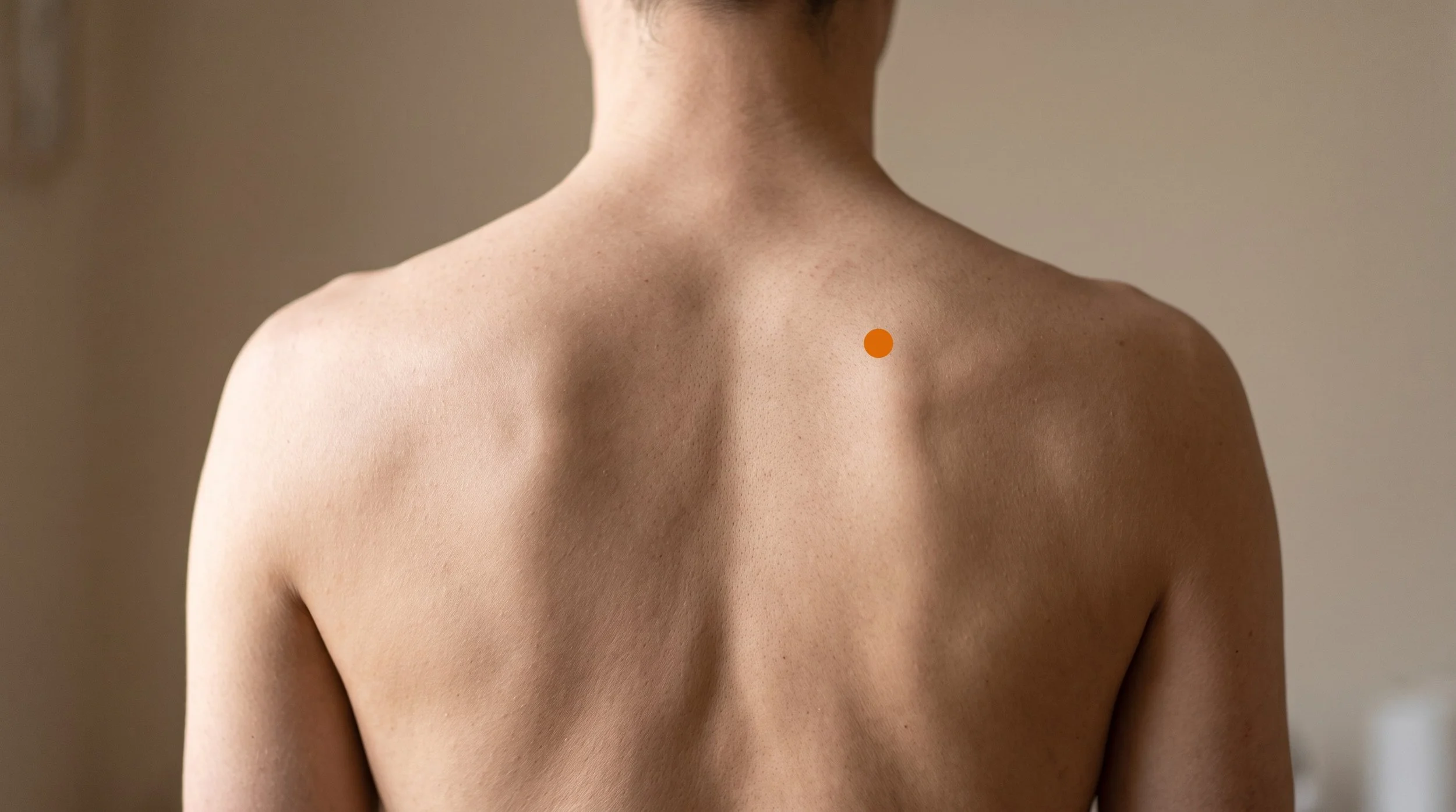
BL41 Acupuncture Point (Fufen)
The Attached Branch Beside the Shoulder Blade: Anatomy, Mechanism, and Why the First Outer Bladder Line Point Matters for Upper Back and Neck Tension
BL41 (Fufen), translated as Attached Branch, is the first point on the outer Bladder line, the second vertical channel pathway that runs 3 cun lateral to the spine across the back. You'll find it on the upper back at the level of the lower border of the T2 spinous process, level with BL12, and when the shoulder is relaxed that 3 cun line sits right at the inner edge of the shoulder blade.
It's classically described as a meeting point of the Bladder and Small Intestine channels, and it's traditionally used for tightness and pain across the shoulder blade, neck and upper back, along with wind-cold pattern aches that settle in this region. In a modern clinic, the bl41 acupuncture point is valuable because it lands over a dense, hard-working layer of trapezius and rhomboid tissue that takes the load of desk work, phone use and overhead carrying, and because that same location demands a careful, shallow needling technique.
- BL41 sits 3 cun lateral to the midline at the lower border of the T2 spinous process, level with BL12, just medial to the vertebral border of the scapula (Deadman et al., 2001). Under the skin lie the upper trapezius and rhomboid minor, with the rib cage and intercostal spaces deeper still.
- Traditional sources classify Fufen as a meeting point of the Bladder and Small Intestine channels and give it the actions of moving the channel to relieve pain and dispersing wind and cold (Deadman et al., 2001). In neurophysiological terms, that reads as segmental input into upper thoracic and lower cervical spinal levels that share convergence with the neck, shoulder girdle and arm.
- Needling here stimulates cutaneous branches of the posterior rami of the first and second thoracic nerves, with the dorsal scapular nerve running deeper to supply the rhomboids. Needle input at this depth engages A-delta and C fiber signaling that recruits spinal and descending pain modulating pathways, including opioid and monoaminergic systems (Zhao, 2008).
- The region overlaps directly with well described trigger points in upper trapezius and rhomboid, which refer pain up the neck, along the medial scapular border and into the shoulder (Simons et al., 1999). This overlap is why bladder 41 is often used interchangeably as an acupuncture point and a trigger point target in the same session.
- The research picture is regional rather than point specific: individual patient data meta-analysis supports acupuncture for chronic musculoskeletal pain (Vickers et al., 2018), a Cochrane review of neck disorders found moderate quality evidence favoring acupuncture over sham for pain and disability (Trinh et al., 2016), and a 2024 meta-analysis reported that benefits for chronic neck pain may persist for months after treatment ends (Fang et al., 2024).
- Because the pleura sits deep to the interspaces, standard technique is oblique insertion of about 0.3 to 0.5 cun, and deep perpendicular or medially angled needling is specifically cautioned against because of substantial pneumothorax risk (Deadman et al., 2001). De qi here is usually a dull, heavy ache that spreads along the shoulder blade, sometimes with a brief muscle twitch when a taut band is contacted.
Tired of Upper Back Tightness That Comes Back Every Week?
That gripping band along the inner edge of the shoulder blade rarely responds to stretching alone, because the tissue is being loaded all day at a desk. At Morningside Acupuncture we treat BL41 alongside the surrounding trapezius and rhomboid tissue, using shallow, precise technique that respects the rib cage underneath. Most patients notice the upper back feels looser and easier to hold upright within a few sessions. Schedule a visit and we'll map exactly where your upper back is holding.
Schedule NowAnatomy of BL41: Why the Medial Scapular Border at T2 Is Such an Important Location
BL41 lies on the upper back, 3 cun out from the midline at the level of the lower edge of the T2 spinous process, which places it level with BL12 and, when the shoulder hangs relaxed, just medial to the inner border of the shoulder blade (Deadman et al., 2001). Under the fingertip there's skin and a thin fat layer, then the upper and middle fibers of trapezius, then rhomboid minor anchoring the scapula to the spine.
This is a heavily loaded zone: every hour spent reaching forward to a keyboard, holding a phone, driving, or carrying a bag on one shoulder asks these muscles to work eccentrically to keep the shoulder blade from drifting. That sustained low-level load is a common reason patients describe a persistent knot or burning band right where bl 41 upper back palpation is most tender.
The nerve supply here is layered. Cutaneous and superficial muscular innervation comes from the lateral branches of the posterior rami of the first and second thoracic nerves, while deeper the dorsal scapular nerve travels along the medial scapular border to the rhomboids. Because upper thoracic and lower cervical segments share convergent input in the dorsal horn with the neck and shoulder girdle, needling here can influence how the nervous system processes pain from a broader region than the point itself.
Needle stimulation activates small-diameter afferents that engage segmental inhibition and descending modulation from the periaqueductal gray and rostral ventromedial medulla, with endogenous opioid and monoaminergic involvement (Zhao, 2008). Palpation across this region also frequently reveals taut bands in trapezius and rhomboid whose referral patterns cover the neck, medial scapula and shoulder (Simons et al., 1999).
The most important structure at BL41 is the one you never want to reach. The pleura and lung sit deep to the intercostal spaces just beyond the muscular layer, so classical and modern texts converge on shallow oblique insertion of roughly 0.3 to 0.5 cun, with an explicit caution against deep perpendicular or deep medially angled needling because of substantial pneumothorax risk (Deadman et al., 2001).
Vascular supply in the area comes from the descending branch of the transverse cervical artery and posterior branches of the intercostal vessels, which is why occasional small bruising is the most common minor side effect. Large prospective safety data suggest serious events are rare when acupuncture is delivered by trained practitioners, with pneumothorax reported only twice among more than 229,000 patients (Witt et al., 2009), and thoracic technique is precisely where that training matters.
Related Acupuncture For Neck Pain Related Pain Finder Upper Back Shoulder ArmBL41 at a Glance: Classification, Location, and Clinical Use
| Category | Detail |
|---|---|
| Traditional Name | Fufen (Attached Branch), BL41 or Bladder 41 |
| Channel Classification | Bladder channel of Foot Taiyang, upper back, first point of the outer Bladder line |
| Point Categories | Traditionally listed as a meeting (crossing) point of the Bladder and Small Intestine channels; the opening point of the second, more lateral Bladder line on the back. Not a five-shu, back-shu or hui-meeting point. |
| Precise Location | On the upper back, 3 cun lateral to the posterior midline at the level of the lower border of the T2 spinous process, level with BL12; with the shoulder relaxed this line corresponds to the medial border of the scapula |
| Tissue Stimulated | Skin and subcutaneous tissue, upper and middle trapezius fibers, and rhomboid minor over the T2 rib cage; cutaneous branches of the T1 and T2 posterior rami, with the dorsal scapular nerve deeper |
| Needle Depth / Direction | Oblique insertion 0.3 to 0.5 cun, angled away from the midline and away from the rib interspaces; deep perpendicular or medially directed needling is avoided because of pneumothorax risk. Moxibustion is traditionally applicable. |
| De Qi Sensation | A dull, heavy, spreading ache along the inner edge of the shoulder blade, sometimes traveling toward the neck or shoulder; a brief local twitch may occur if a taut band is engaged |
| Primary Clinical Uses | Upper back and shoulder blade tension, neck stiffness and pain, back pain that radiates toward the head, wind-cold pattern aches lodged in the upper back, and numbness of the elbow and arm in classical use |
| Common Point Combinations |
|
Deadman's A Manual of Acupuncture presents Fufen as a meeting point of the Bladder and Small Intestine channels with two traditional actions: activating the channel to relieve pain, and expelling wind and cold. The classical indications gathered there cluster tightly around one region, describing contraction of the shoulder, scapula and back, pain and stiffness of the neck, back pain that radiates up to the head, and numbness of the elbow and upper arm, along with wind-cold lodged in the interstices and the taxation pattern attributed to wind exposure.
Cunningham's Point Reference adds the observation, again as traditional attribution, that BL41 reinforces the action of BL12 next to it but is used more for neck, upper back and shoulder pain, stiffness and spasm. What's striking about this classical picture is how narrow and consistent it is: unlike most points, whose indication lists wander across organ systems, Fufen was recorded almost entirely as a local musculoskeletal point for one patch of the body, which is exactly how it's used today.
Why BL41 Is Used for Elbow and Arm Numbness, Not Just Local Upper Back Pain
Patients are often surprised that a point beside the shoulder blade appears in classical texts for numbness of the elbow and arm (Deadman et al., 2001). The anatomy makes it less surprising. Nerve roots that supply the arm exit at the lower cervical and first thoracic levels, and the dorsal horn segments serving the upper back region receive convergent input from structures across the same neighborhood. When tissue around the medial scapula is chronically irritated, that input can contribute to a sensitized segment where sensations in the arm feel altered, heavy or dull.
Needling into this territory delivers strong, well-localized afferent input into the same segments, which may help recalibrate how those signals are processed.
There's a mechanical layer too. Taut bands in trapezius, rhomboid and neighboring scapular muscles produce referred sensations that patients frequently describe as numbness or deep aching rather than sharp pain, and those referral maps extend along the medial scapula, into the shoulder and down the arm (Simons et al., 1999). Reducing that peripheral drive can change the overall picture even when the arm itself is structurally fine.
Beyond the segment, needle stimulation recruits descending inhibitory pathways involving endogenous opioids, serotonin and noradrenaline, which is the best-supported explanation for why effects often extend past the needled area (Zhao, 2008).
None of this means BL41 treats nerve compression. If you have progressive weakness, true sensory loss or symptoms following a clear dermatomal pattern, that deserves a medical workup first. What acupuncture at bladder 41 may reasonably offer is reduced muscular guarding, better scapular mobility and less overall sensitivity in a region that's frequently the mechanical source of neck, shoulder and arm complaints (Vickers et al., 2018).
What the Research Shows for BL41
No clinical trial has isolated BL41 on its own, and that's typical for point-level research. Reviews test multi-point protocols for a condition, so the honest framing is that BL41 is one component within upper back and neck protocols that have been studied as a whole. The evidence below tells us about acupuncture and dry needling for neck and upper quarter pain generally, plus the mechanistic and safety literature that shapes how this specific point is needled. Results vary between individuals, and acupuncture works best here as part of a plan that includes movement and load management.
| Study | Type | Focus | Key Finding |
|---|---|---|---|
| Trinh et al., 2016 | Cochrane systematic review | Acupuncture for acute, subacute and chronic neck disorders across 27 randomized trials | The review reported moderate quality evidence that acupuncture may relieve neck pain and disability better than sham or inactive comparison in the short term, with only minor side effects, though study quality limited confidence and the review has since been under revision. |
| Fang et al., 2024 | Systematic review and meta-analysis | Durability of acupuncture effects in chronic neck pain, 18 randomized controlled trials | Acupuncture used as an adjunct therapy was associated with sustained pain relief at three and six months after treatment ended, although heterogeneity between trials was considerable. |
| Vickers et al., 2018 | Individual patient data meta-analysis | Chronic musculoskeletal pain including neck and shoulder pain, roughly 21,000 patients | Acupuncture was superior to both sham and no-acupuncture controls, with effects that persisted over 12 months rather than fading immediately after treatment. |
| Gattie et al., 2017 | Systematic review and meta-analysis | Trigger point dry needling for musculoskeletal conditions, including upper quarter and neck pain | Dry needling may reduce pain and improve pressure pain threshold compared with sham or no treatment in the short term, with evidence quality rated low to moderate. |
| Zhao, 2008 | Narrative review of mechanisms | Neural pathways underlying acupuncture analgesia | Needle stimulation activates small-diameter afferents that engage segmental inhibition and descending control involving opioid, serotonergic and noradrenergic systems. |
| Witt et al., 2009 | Prospective observational safety study | Adverse effects across 229,230 patients receiving acupuncture | Most adverse effects were minor bleeding or bruising, and pneumothorax occurred in only two patients, supporting careful shallow technique over the thorax. |
Neck Stiffness That Limits How Far You Can Turn?
Neck rotation depends on more than the neck itself, and the upper back is often where the restriction actually lives. We combine BL41 with neck points like BL10 and GB21, plus targeted dry needling of the muscles that refer pain upward, so the whole chain gets addressed. Treatment is paired with practical desk and posture adjustments you can use between visits. Book an appointment and let's get your range of motion back.
Schedule NowBL41 in the Context of Trigger Point Work
Acupuncture means the use of an acupuncture needle, and that includes dry needling, so at Morningside there's no hard line between needling BL41 as a classical point and needling the tissue it sits on as a myofascial target. The area covered by Fufen overlaps with commonly involved bands in the upper and middle trapezius and rhomboid minor, muscles whose referral patterns reach the base of the skull, the medial scapular border and the shoulder (Simons et al., 1999).
In practice, a clinician palpates along the 3 cun line at T2, finds the tender taut band, and treats it with shallow oblique needling that stays within the muscular layer and never angles toward the rib interspaces.
A typical session for stubborn upper back and neck tension might pair BL41 with BL12 at the same level, GB21 for the upper trapezius, BL10 for the suboccipital region, and trigger point needling of rhomboid and levator scapulae as indicated. Dry needling of upper quarter trigger points has short-term support for reducing pain and pressure sensitivity (Gattie et al., 2017), and the more durable results in the neck literature come from repeated treatment combined with active care (Fang et al., 2024).
We generally add scapular retraction and thoracic extension work between sessions, since needling reduces the sensitivity but load management is what keeps it from returning.
BL41 Upper Back and Neck Pain Treatment at NYC's Highest-Rated Acupuncture Clinic
Morningside Acupuncture is the highest-rated acupuncture and dry needling clinic in New York City with over 500 five-star Google reviews. Our licensed acupuncturists use BL41 as part of a broader plan for upper back tension, scapular pain and stiff necks, always with anatomically careful technique over the thoracic cage. Every visit includes assessment, needling and a home plan tailored to how you actually work and train. Schedule your session today.
Schedule NowFrequently Asked Questions
What does BL41 feel like when needled?
Most people feel a dull, heavy ache that spreads along the inner edge of the shoulder blade and sometimes drifts toward the neck or shoulder. That sensation is de qi, and it usually settles within seconds. If the needle contacts a taut band in trapezius or rhomboid, you may feel a quick involuntary twitch followed by a brief cramping sensation and then a noticeable release. Because the needle stays shallow and angled here, the sensation tends to be more surface-level and muscular than the deep pressure some points produce.
Why treat the upper back for neck pain instead of just the neck?
The neck and the upper back share nerve segments, muscle attachments and daily loading patterns. Trapezius and levator scapulae both anchor to the shoulder blade region and pull on the neck, and upper thoracic segments converge with cervical input in the dorsal horn, so needling at BL41 can influence how the neck feels even though the point isn't in the neck (Zhao, 2008). Classically, Fufen was recorded for stiffness and pain across the neck, shoulder and back as a single territory (Deadman et al., 2001). Clinically, treating only where it hurts often misses the tissue that's actually generating the pull.
Can I press BL41 myself between sessions?
Yes, and it's a reasonable self-care option. Reach across your body with the opposite hand, or use a tennis ball or lacrosse ball against a wall, and find the tender spot about three finger-widths out from the spine at the level of the top of your shoulder blade. Apply steady, moderate pressure for 30 to 60 seconds per spot, breathing slowly, and repeat two or three times per side. A ball against the wall lets you control the pressure better than a hard floor. Stop if you feel numbness, tingling down the arm, or sharp pain, and don't press hard enough to bruise. Following pressure with a few sets of shoulder blade squeezes and gentle neck rotations tends to hold the change longer.
Is BL41 safe to needle?
In trained hands, yes, but this is a point where technique genuinely matters. The lung lies deep to the interspaces here, so standard practice is shallow oblique insertion of about 0.3 to 0.5 cun, and deep perpendicular or medially angled needling is specifically cautioned against because of substantial pneumothorax risk (Deadman et al., 2001). Large prospective data suggest that serious events are rare overall, with pneumothorax reported in only two patients among more than 229,000 receiving acupuncture (Witt et al., 2009). Minor bruising is the most likely side effect. Tell your practitioner if you're very lean, have lung disease, or take blood thinners, and always see a licensed acupuncturist for thoracic points.
Where exactly is BL41 located?
BL41 sits on the upper back, 3 cun lateral to the posterior midline, at the level of the lower border of the second thoracic spinous process, which puts it level with BL12 (Deadman et al., 2001). The simplest landmark is the shoulder blade: with your arm relaxed at your side, the 3 cun line corresponds to the inner border of the scapula, so the point is just medial to that bony edge at upper scapular level. It's the first point of the outer Bladder line, the more lateral of the two Bladder channel pathways running down the back.
References
- Deadman, P., Al-Khafaji, M., & Baker, K. (2009). A manual of acupuncture. Journal of Chinese Medicine Publications.
- Cunningham, P. M. (2000). Acupuncture points: A practical guide to classical and modern usage. Odyssey Press.
- Simons, D. G., Travell, J. G., & Simons, L. S. (1999). Travell & Simons' myofascial pain and dysfunction: The trigger point manual, Vol. 1: Upper half of body (2nd ed.). Williams & Wilkins.
- Trinh, K., Graham, N., Irnich, D., Cameron, I. D., & Forget, M. (2016). Acupuncture for neck disorders. Cochrane Database of Systematic Reviews, 2016(5), CD004870. https://doi.org/10.1002/14651858.CD004870.pub4 [VERIFY BEFORE PUBLISHING]
- Fang, J., Shi, H., Wang, W., Chen, H., Yang, M., Gao, S., Yao, H., Zhu, L., Yan, Y., & Liu, Z. (2024). Durable effect of acupuncture for chronic neck pain: A systematic review and meta-analysis. Current Pain and Headache Reports, 28(9), 957-969. https://doi.org/10.1007/s11916-024-01267-x
- Vickers, A. J., Vertosick, E. A., Lewith, G., MacPherson, H., Foster, N. E., Sherman, K. J., Irnich, D., Witt, C. M., & Linde, K. (2018). Acupuncture for chronic pain: Update of an individual patient data meta-analysis. Journal of Pain, 19(5), 455-474. https://doi.org/10.1016/j.jpain.2017.11.005
- Gattie, E., Cleland, J. A., & Snodgrass, S. (2017). The effectiveness of trigger point dry needling for musculoskeletal conditions by physical therapists: A systematic review and meta-analysis. Journal of Orthopaedic & Sports Physical Therapy, 47(3), 133-149. https://doi.org/10.2519/jospt.2017.7096
- Zhao, Z. Q. (2008). Neural mechanism underlying acupuncture analgesia. Progress in Neurobiology, 85(4), 355-375. https://doi.org/10.1016/j.pneurobio.2008.05.004
- Witt, C. M., Pach, D., Brinkhaus, B., Wruck, K., Tag, B., Mank, S., & Willich, S. N. (2009). Safety of acupuncture: Results of a prospective observational study with 229,230 patients and introduction of a medical information and consent form. Forschende Komplementärmedizin, 16(2), 91-97. https://doi.org/10.1159/000209315
Disclaimer: This web site is intended for educational and informational purposes only. Reading this website does not constitute providing medical advice or any professional services. This information should not be used for diagnosing or treating any health issue or disease. Those seeking medical advice should consult with a licensed physician. Seek the advice of a medical doctor or other qualified health professional for any medical condition. If you think you have a medical emergency, call 911 or go to the emergency room. No acupuncturist-patient relationship is created by reading this website or using the information. Morningside Acupuncture PLLC and its employees and contributors do not make any express or implied representations with respect to the information on this site or its use. For any legal interpretation of scope of practice in your state, consult a licensed attorney or regulatory authority.
Read more from our blog