Treating the Scalene Trigger Points and Brachial Plexus Compression at the Root of Most TOS Presentations
Thoracic outlet syndrome is most commonly driven by scalene muscle hypertonia and trigger points that compress the brachial plexus and subclavian vessels, making dry needling and acupuncture effective treatments for the majority of neurogenic TOS cases.
- Thoracic outlet syndrome occurs when neurovascular structures are compressed at one of three anatomical points: the interscalene triangle (most common), the costoclavicular space, or behind the pectoralis minor; in neurogenic TOS, scalene hypertonia is the primary driver at the first of these sites.
- Scalene trigger points in the anterior scalene refer pain and paresthesia into the thumb, index, and middle fingers, while the lower trunk pattern produces ring and little finger symptoms indistinguishable from ulnar nerve entrapment, making careful differentiation essential before treatment.
- Disputed neurogenic TOS, the most prevalent form, responds well to conservative management targeting the scalene muscles, and most clinicians now consider first rib elevation from scalene hypertonia as the primary structural mechanism (Sanders et al., 2007).
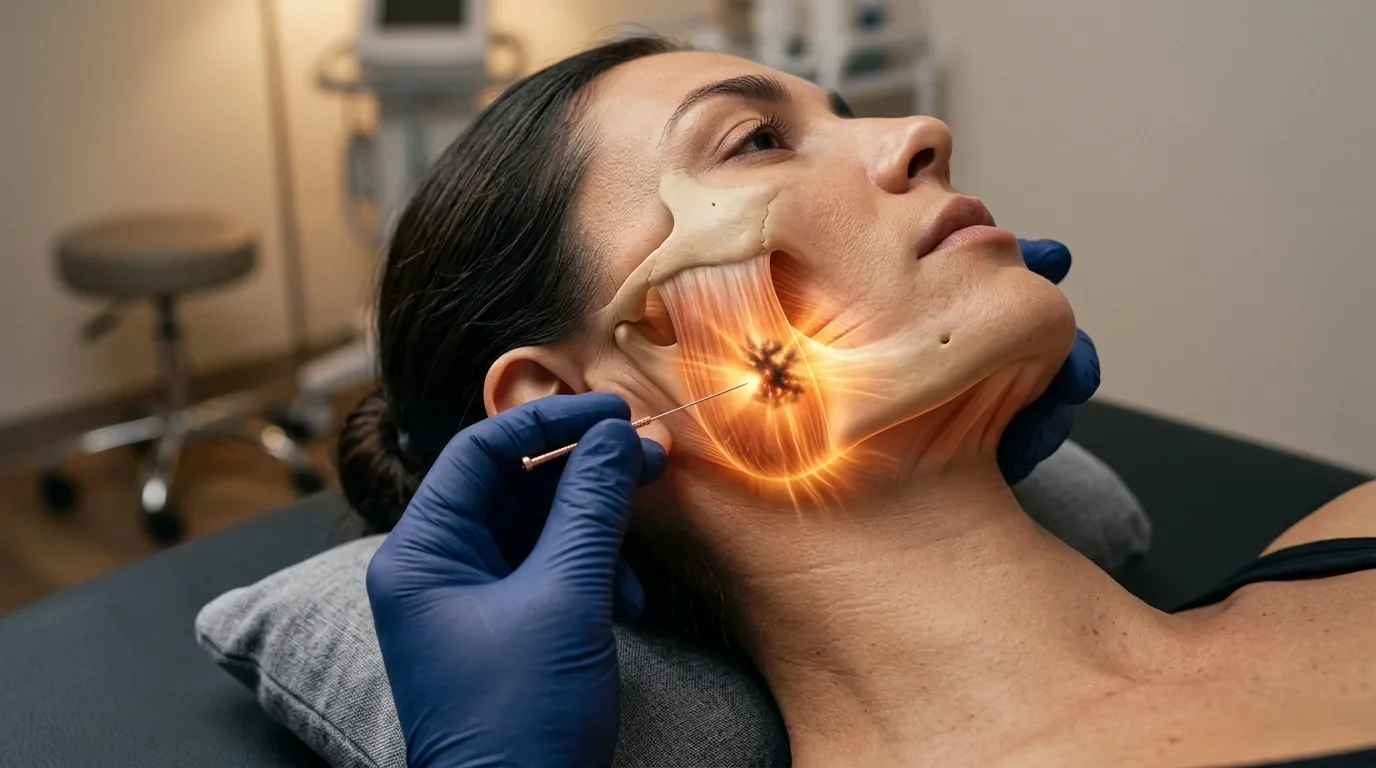
- Dry needling the anterior, middle, and posterior scalenes deactivates trigger points, reduces the chronic shortening that elevates the first rib and narrows the interscalene triangle, and normalizes brachial plexus clearance through the thoracic outlet.
- Pectoralis minor trigger points contribute to the retropectoralis minor compression component and produce an anterior shoulder and arm pain pattern that may overlap with TOS symptoms.
- Acupuncture reduces central sensitization in the cervical and thoracic spinal segments relevant to brachial plexus innervation, addressing the neural sensitization that persists even after mechanical compression is reduced (Zhao, 2008).
- Vascular TOS, involving arterial or venous compromise with limb ischemia or thrombosis, requires urgent vascular surgical evaluation and is not managed conservatively.
Arm, Hand, or Shoulder Symptoms That Have Defied Diagnosis?
Thoracic outlet syndrome is frequently misdiagnosed as carpal tunnel syndrome, cervical radiculopathy, or rotator cuff pathology because the symptom patterns overlap. At Morningside, our clinicians are experienced in distinguishing these presentations and targeting the scalene and pectoralis minor trigger points that are the primary drivers of most neurogenic TOS cases.
Schedule NowThe Compression Anatomy and Why Scalenes Matter Most
The thoracic outlet is not a single anatomical passage but a series of three potential compression points through which the brachial plexus and subclavian vessels travel from the neck to the arm. The interscalene triangle, bounded by the anterior and middle scalene muscles and the first rib, is the most clinically relevant, and scalene pathology is implicated in the vast majority of neurogenic TOS cases.
The anterior scalene attaches to the anterior tubercles of the C3-C6 transverse processes and inserts on the first rib's scalene tubercle. The middle scalene attaches to the posterior tubercles of C2-C7 and inserts on the first rib's superior surface just posterior to the subclavian groove. Together, they form a muscular V whose apex rests on the first rib, and whose opening contains the lower two trunks of the brachial plexus and the subclavian artery. When these muscles develop sustained hypertonia from forward head posture, repetitive occupational stress, or direct injury, the interscalene triangle narrows, compressing the neural and vascular structures within it.
First rib elevation compounds this problem. The scalenes are accessory muscles of respiration as well as cervical movers, and their continuous low-level activity during upper chest breathing gradually shortens them, pulling the first rib superiorly into the outlet space. This is why TOS is so commonly associated with upper chest breathing patterns and why training diaphragmatic breathing is an important component of conservative management alongside needle treatment of the scalenes themselves.
Related What Is Thoracic Outlet Syndrome? The Three Compression Points and Clinical TypesScalene Trigger Points: The Primary Target
Understanding scalene trigger point referral patterns is essential for diagnosing and treating TOS effectively, because these patterns directly overlap with the neurological symptoms patients experience (Simons et al., 1999).
| Muscle | Referral Pattern | Clinical Mimicry |
|---|---|---|
| Anterior Scalene | Chest and anterior shoulder; radial forearm; thumb, index, and middle fingers | Carpal tunnel syndrome (median nerve distribution); C6 radiculopathy |
| Middle Scalene | Posterior shoulder; posterolateral arm; entire dorsal forearm | Rotator cuff pathology; C6-C7 radiculopathy |
| Posterior Scalene | Posterior and lateral upper arm; radial forearm; posterior forearm to dorsal hand | Lateral epicondylitis; C7 radiculopathy |
The lower trunk pattern (ring and little finger paresthesia, mimicking ulnar nerve entrapment) receives less attention in most TOS descriptions but is clinically important. The lower trunk of the brachial plexus, formed by the C8 and T1 roots, runs in close proximity to the first rib and is the brachial plexus component most likely to be compressed when scalene hypertonia narrows the interscalene triangle. Patients with this pattern are frequently treated for cubital tunnel syndrome or carpal tunnel syndrome for months without improvement, then respond dramatically when the scalene trigger points are finally addressed.
Differentiating What Needs Surgery from What Needs Needles
Not all TOS presentations are appropriate for conservative management. Correct classification is critical before treatment (Sanders et al., 2007).
| Type | Key Features | Management | Role of Acupuncture/Dry Needling |
|---|---|---|---|
| Disputed neurogenic TOS | Arm pain, paresthesia, weakness; no definitive electrophysiological findings; scalene tenderness present | Conservative first-line; scalene rehabilitation; postural correction | Primary treatment: scalene and pectoralis minor dry needling; acupuncture for neural sensitization |
| True neurogenic TOS | Progressive intrinsic hand weakness; thenar or hypothenar atrophy; abnormal nerve conduction | Surgical decompression often required; conservative adjunct | Pre-surgical symptom management; post-surgical rehabilitation |
| Arterial TOS | Limb ischemia; pallor; cold hand; reduced or absent radial pulse; subclavian aneurysm on imaging | Urgent vascular surgical evaluation | Contraindicated until vascular emergency is resolved |
| Venous TOS | Arm swelling; cyanosis; dilated chest wall veins; venous thrombosis (Paget-Schroetter syndrome) | Urgent vascular evaluation; anticoagulation; possible surgical decompression | Contraindicated until venous emergency is resolved |
Have Upper Extremity Symptoms That No Treatment Has Fully Explained?
Disputed neurogenic TOS is chronically underdiagnosed because its symptoms mimic multiple other conditions and routine nerve conduction studies are often normal. Our clinicians at Morningside are skilled in the clinical assessment of brachial plexus compression at the thoracic outlet and in treating the scalene and pectoralis minor trigger points at its root. We would be glad to evaluate your presentation.
Schedule NowTreatment Approach: From Scalenes to Neural Regulation
Effective TOS treatment addresses multiple levels simultaneously: the trigger points creating scalene hypertonia, the pectoralis minor and subclavius contributing to the costoclavicular and retropectoralis minor compression components, the breathing pattern perpetuating scalene overactivation, and the neural sensitization that maintains symptoms between treatment sessions.
| Component | Primary Targets | Clinical Goal |
|---|---|---|
| Scalene dry needling | Anterior, middle, and posterior scalene trigger points | Reduce scalene hypertonia; lower first rib; open interscalene triangle |
| Pectoralis minor needling | Pectoralis minor trigger points (subcoracoid) | Reduce retropectoralis minor compression; decrease coracoid depression |
| Upper trapezius and levator | Upper trapezius, levator scapulae | Address cervical postural load; reduce forward head posture perpetuation |
| Subclavius needling | Subclavius | Reduce costoclavicular space compression from depressed clavicle |
| Systemic acupuncture | Cervical and thoracic spinal cord dorsal horn via descending inhibition | Reduce brachial plexus neural sensitization; improve arm pain and paresthesia between sessions |
| Breathing retraining | Diaphragmatic activation; reduce scalene accessory breathing | Reduce ongoing scalene activation between sessions; address primary perpetuating factor |
Results with scalene dry needling for neurogenic TOS are often dramatic and fast when the diagnosis is correct. Patients who have had arm paresthesia for months frequently notice significant improvement within the first two to three sessions. The reason is straightforward: the trigger points in the scalenes were the primary structural driver of the compression, and deactivating them reduces the narrowing of the interscalene triangle in a way that no amount of stretching, postural exercise, or anti-inflammatory medication alone achieves.
Related Scalene Trigger Points: Referral Patterns, TOS, and Treatment Related What Is Thoracic Outlet Syndrome? The Anatomy of Brachial Plexus CompressionGet Expert TOS Treatment in New York City
At Morningside Acupuncture, we are the highest-rated acupuncture and dry needling clinic in New York City with over 500 five-star Google reviews. We specialize in thoracic outlet syndrome, treating the scalene and pectoralis minor trigger points that drive most neurogenic TOS presentations with precision dry needling and acupuncture for neural pain regulation. If you have been told your symptoms are carpal tunnel, cervical radiculopathy, or "unexplained arm pain," a TOS evaluation may reveal a treatable cause that has been missed. We would be glad to assess your situation.
Schedule NowFrequently Asked Questions
How do I know if I have TOS rather than carpal tunnel syndrome?
The most useful distinguishing feature is that TOS symptoms typically involve the entire arm, shoulder, and sometimes the chest or neck, whereas carpal tunnel syndrome is usually limited to the hand and wrist in a median nerve distribution. TOS symptoms are often worse with overhead arm positions or sustained neck postures rather than wrist positions. Scalene palpation reproducing your hand symptoms, and improvement with scalene treatment, strongly suggests TOS rather than carpal tunnel.
Will I need surgery for TOS?
For disputed neurogenic TOS, which is the most prevalent form, conservative management with scalene-targeted dry needling, postural rehabilitation, and breathing retraining resolves or substantially reduces symptoms in the majority of patients without surgery. True neurogenic TOS with documented muscle atrophy and nerve conduction abnormalities may require surgical decompression, but this is a relatively uncommon presentation.
Is dry needling the scalenes safe?
Scalene dry needling requires precise technique and knowledge of the relevant anatomy, particularly regarding the proximity of the brachial plexus, lung apex, and subclavian vessels. At Morningside, our clinicians are trained in the specific protocols for safe scalene needling, using conservative needle angles and depths appropriate to the clinical presentation. A brief transient paresthesia into the arm during scalene needling is a normal response indicating the needle is near the brachial plexus and typically indicates correct placement.
How many sessions will TOS take to improve?
Patients with neurogenic TOS driven primarily by scalene trigger points often notice meaningful improvement within three to five sessions. More chronic presentations or those involving central sensitization from longstanding symptoms typically require eight to twelve sessions for durable results. Breathing retraining and postural correction at home between sessions significantly accelerates outcomes.
Can acupuncture help with the numbness and tingling in my arm and hand?
Yes, particularly when that numbness and tingling is being generated by scalene trigger points compressing the brachial plexus rather than a fixed structural lesion. Acupuncture also reduces the neural hypersensitivity that develops in the brachial plexus distribution after months of compression, which is why many TOS patients experience improvement in paresthesia between sessions as their neural sensitization gradually normalizes.
References
- Sanders, R. J., Hammond, S. L., & Rao, N. M. (2007). Diagnosis of thoracic outlet syndrome. Journal of Vascular Surgery, 46(3), 601-604. https://doi.org/10.1016/j.jvs.2007.04.050
- Simons, D. G., Travell, J. G., & Simons, L. S. (1999). Travell & Simons' myofascial pain and dysfunction: The trigger point manual (2nd ed.). Williams & Wilkins.
- Zhao, Z. Q. (2008). Neural mechanism underlying acupuncture analgesia. Progress in Neurobiology, 85(4), 355-375. https://doi.org/10.1016/j.pneurobio.2008.05.004
- Vickers, A. J., Vertosick, E. A., Lewith, G., MacPherson, H., Foster, N. E., Sherman, K. J., Irnich, D., Witt, C. M., & Linde, K. (2018). Acupuncture for chronic pain: Update of an individual patient data meta-analysis. JAMA Internal Medicine, 178(11), 1444-1453. https://doi.org/10.1001/jamainternmed.2018.4242
- Kietrys, D. M., Palombaro, K. M., Azzaretto, E., Huber, R., Schaller, B., Schlussel, J. M., & Tucker, M. (2013). Effectiveness of dry needling for upper-quarter myofascial pain: A systematic review and meta-analysis. Journal of Orthopaedic & Sports Physical Therapy, 43(9), 620-634. https://doi.org/10.2519/jospt.2013.4668
Disclaimer: This web site is intended for educational and informational purposes only. Reading this website does not constitute providing medical advice or any professional services. This information should not be used for diagnosing or treating any health issue or disease. Those seeking medical advice should consult with a licensed physician. Seek the advice of a medical doctor or other qualified health professional for any medical condition. If you think you have a medical emergency, call 911 or go to the emergency room. No acupuncturist-patient relationship is created by reading this website or using the information. Morningside Acupuncture PLLC and its employees and contributors do not make any express or implied representations with respect to the information on this site or its use. For any legal interpretation of scope of practice in your state, consult a licensed attorney or regulatory authority.
Read more from our blog