Classical Chinese Acupuncture: The Nei Jing Channel Systems, Jeffrey Yuen's Teaching, Main Texts, and How It Differs From TCM
Classical Chinese acupuncture refers to approaches that work directly from the early Chinese medical classics rather than from the standardized curriculum developed in China in the 1950s. In the United States it is closely linked with Jeffrey Yuen, who taught for many years in New York. This guide covers the classical texts, the channel systems they describe, how treatment differs from TCM and what research says.

- Classical Chinese acupuncture is based on early texts such as the Huang Di Nei Jing (Su Wen and Ling Shu) and the Nan Jing (Unschuld, 1986, 2016; Unschuld & Tessenow, 2011).
- Modern TCM was standardized in China in the 1950s and 1960s, and classical approaches return to older sources and methods (Scheid, 2002; Taylor, 2005).
- A key feature is use of all the channel systems described in the Ling Shu, including the sinew, luo, divergent and eight extraordinary channels (Cecil-Sterman, 2013).
- Jeffrey Yuen, a Daoist priest and teacher, is the best-known teacher of this approach in the United States.
- No trials test classical acupuncture as a distinct style; research on acupuncture for chronic pain and on the anatomy of points provides context (Vickers et al., 2018; Langevin & Yandow, 2002).
New to Acupuncture?
See what a first visit involves, how long sessions run (45 to 60 minutes), and what treatment costs.
New PatientsWhat Makes an Approach "Classical"?
In the 1950s and 1960s, the government of the People's Republic of China organized Chinese medicine into a standardized system for national colleges. That system, taught in English as Traditional Chinese Medicine (TCM), simplified many older ideas and emphasized pattern diagnosis using organ theory (Scheid, 2002; Taylor, 2005). Classical approaches go back to the earlier texts and lineages, read them closely, and use methods that the standardized curriculum gave less attention.
Related What Is Traditional Chinese Medicine?The Main Classical Texts
- Huang Di Nei Jing Su Wen (Basic Questions). The theoretical foundation of Chinese medicine, compiled roughly 2,000 years ago (Unschuld & Tessenow, 2011).
- Huang Di Nei Jing Ling Shu (Spiritual Pivot), also called the classic on needle therapy. It describes the channels, their branches and needling methods in detail (Unschuld, 2016).
- Nan Jing (Classic of Difficult Issues). It discusses pulse diagnosis, the five transport points and the eight extraordinary vessels (Unschuld, 1986).
- Zhen Jiu Jia Yi Jing (Systematic Classic of Acupuncture and Moxibustion) by Huangfu Mi, third century CE. It organized material from the Su Wen and Ling Shu by topic and became the first systematic acupuncture textbook (Huangfu, 1994).
Modern teaching texts
- Advanced Acupuncture: A Clinic Manual by Ann Cecil-Sterman, a student of Jeffrey Yuen, which sets out treatment protocols for the sinew, luo, divergent and eight extraordinary channels (Cecil-Sterman, 2013).
- Much of Jeffrey Yuen's own teaching circulates as transcribed and recorded lectures rather than formal textbooks.
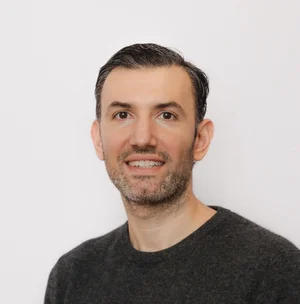
Jeffrey Yuen
Jeffrey Yuen is an 88th-generation priest of the Yu Qing Huang Lao Pai (Jade Purity) Daoist lineage and a 26th-generation priest of the Quan Zhen Long Men Pai (Complete Reality, Dragon Gate) lineage. He served as dean of academic affairs for the acupuncture program at the Swedish Institute in New York, helped develop the first doctoral program in classical Chinese medicine in California, and has lectured widely on the channel systems, the eight extraordinary vessels and Daoist ideas in Chinese medicine. Several of his students, including Ann Cecil-Sterman, have published clinical manuals based on his teaching (Cecil-Sterman, 2013).
The Channel Systems
The Ling Shu describes several layers of channels beyond the twelve primary channels that most acupuncture is built around. Classical teachers treat each as its own system with its own uses (Unschuld, 2016; Cecil-Sterman, 2013).
| System | Classical source | How it is used in this tradition |
|---|---|---|
| Sinew channels (jing jin) | Ling Shu chapter 13 | Muscle and tendon pain, stiffness, injury; often shallow needling and tender points |
| Primary channels (jing mai) | Ling Shu chapter 10 | The standard twelve channels and their points |
| Luo vessels | Ling Shu chapter 10 | Visible small vessels and acute or emotional conditions; sometimes bleeding small veins |
| Divergent channels (jing bie) | Ling Shu chapter 11 | Chronic and latent conditions, in this tradition's framework |
| Eight extraordinary vessels | Nan Jing issues 27 to 29 | Constitutional and long-standing conditions |
These channel systems are the tradition's own framework for organizing symptoms and choosing points. In anatomical terms, needles reach skin, fascia, muscle and nearby nerves, and one study of the human arm found that most classical points lie over planes of connective tissue between or within muscles (Langevin & Yandow, 2002).
Related What Is an Acupuncture Meridian?What a Treatment Looks Like
- Assessment: pulse and palpation along the channels are central, along with a detailed history.
- Choosing a channel system: the practitioner decides which layer best fits the problem, for example the sinew channels for a recent muscle strain.
- Technique: needling depth, speed and the order of points change with the channel system. Moxibustion is often used alongside needles.
- Fewer, chosen points: treatments often use a small number of points chosen for that layer rather than a long fixed list.
| Classical Chinese acupuncture | TCM acupuncture | |
|---|---|---|
| Main sources | Nei Jing, Nan Jing, Jia Yi Jing, lineage teaching | Modern standardized textbooks (Cheng, 1987) |
| Diagnosis | Pulse, channel palpation, channel system selection | Pattern diagnosis by organ |
| Channels used | All channel systems | Mainly primary channels |
| Training | Seminars, lineage teachers, some degree programs | Standard curriculum in most acupuncture schools |
What Research Shows
- Classical acupuncture as a style: no published trials compare it as a distinct approach with other styles.
- Chronic pain: patient-level data from 39 trials show acupuncture reduces chronic musculoskeletal pain, headache and osteoarthritis pain more than sham (Vickers et al., 2018).
- Anatomy of points: about 80% of acupuncture points mapped in the human arm matched connective tissue planes, which may help explain how needling affects surrounding tissue (Langevin & Yandow, 2002).
| Source | Type | Main point |
|---|---|---|
| Unschuld, 2016 | Translation | The Ling Shu, source of the channel systems |
| Unschuld, 1986 | Translation | The Nan Jing and the extraordinary vessels |
| Huangfu, 1994 | Translation | The first systematic acupuncture textbook |
| Cecil-Sterman, 2013 | Clinical manual | Protocols for the sinew, luo, divergent and extraordinary channels |
| Scheid, 2002 | History | How TCM was standardized in modern China |
| Vickers et al., 2018 | Patient-level meta-analysis | Acupuncture beat sham for chronic pain |
| Langevin & Yandow, 2002 | Anatomical study | Points align with connective tissue planes |
Frequently Asked Questions
Is classical Chinese acupuncture older than TCM?
Its sources are older. The texts it relies on date back about 2,000 years, while TCM as a standardized system took shape in the 1950s and 1960s (Scheid, 2002). The modern practice of classical acupuncture is itself a twentieth and twenty-first century movement.
What are the sinew channels?
A channel system described in the Ling Shu that follows muscles and tendons. Classical practitioners use it for muscle pain, stiffness and injuries (Unschuld, 2016).
Is it the same as Five Element acupuncture?
No. Five Element acupuncture is a separate tradition developed largely by J. R. Worsley in England, though both draw on the classics.
Does it work better than other styles?
There is no research comparing classical acupuncture with other styles. The broader evidence on acupuncture for chronic pain applies to many styles (Vickers et al., 2018).
Looking for Acupuncture or Dry Needling?
Morningside Acupuncture on the Upper West Side offers acupuncture and dry needling from New York licensed acupuncturists. See what a first visit involves and what treatment costs.
New PatientsReferences
- Cecil-Sterman, A. (2013). Advanced acupuncture: A clinic manual. Ann Cecil-Sterman, PLLC.
- Cheng, X. (Ed.). (1987). Chinese acupuncture and moxibustion. Foreign Languages Press.
- Huangfu, M. (1994). The systematic classic of acupuncture & moxibustion (S.-Z. Yang & C. Chace, Trans.). Blue Poppy Press.
- Langevin, H. M., & Yandow, J. A. (2002). Relationship of acupuncture points and meridians to connective tissue planes. The Anatomical Record, 269(6), 257-265. https://doi.org/10.1002/ar.10185
- Scheid, V. (2002). Chinese medicine in contemporary China: Plurality and synthesis. Duke University Press.
- Taylor, K. (2005). Chinese medicine in early communist China, 1945-63: A medicine of revolution. RoutledgeCurzon.
- Unschuld, P. U. (1986). Nan-ching: The classic of difficult issues. University of California Press.
- Unschuld, P. U. (2016). Huang Di nei jing ling shu: The ancient classic on needle therapy. University of California Press.
- Unschuld, P. U., & Tessenow, H. (2011). Huang Di nei jing su wen: An annotated translation of Huang Di's Inner Classic, Basic Questions (Vols. 1-2). University of California Press.
- Vickers, A. J., Vertosick, E. A., Lewith, G., MacPherson, H., Foster, N. E., Sherman, K. J., Irnich, D., Witt, C. M., Linde, K., & Acupuncture Trialists' Collaboration (2018). Acupuncture for Chronic Pain: Update of an Individual Patient Data Meta-Analysis. The Journal of Pain, 19(5), 455-474. https://doi.org/10.1016/j.jpain.2017.11.005
Disclaimer: This web site is intended for educational and informational purposes only. Reading this website does not constitute providing medical advice or any professional services. This information should not be used for diagnosing or treating any health issue or disease. Those seeking medical advice should consult with a licensed physician. Seek the advice of a medical doctor or other qualified health professional for any medical condition. If you think you have a medical emergency, call 911 or go to the emergency room. No acupuncturist-patient relationship is created by reading this website or using the information. Morningside Acupuncture PLLC and its employees and contributors do not make any express or implied representations with respect to the information on this site or its use.